REVIEW · ROYAL PALACE OF MADRID
Madrid: Royal Palace Fast-Access Admission Ticket
Book on GetYourGuide →Operated by Distributor: GetYourGuide Tours & Tickets GmbH · Bookable on GetYourGuide
Skip the palace line and feel the magic. A fast-access ticket gets you into the Royal Palace of Madrid with an express security check near Almudena, so you spend your time inside the rooms instead of standing outside. Two things I like right away: the straightforward entry process, and the chance to experience one of Europe’s most theatrical royal interiors up close. One thing to consider is that you can still have a wait once you arrive, just much shorter than for people buying at the door.
Inside, you’ll move through showrooms built to project power: the Throne Room, the Banquet Hall, and the Hall of Mirrors, tied to the reign of Charles IV. Then there’s the art side of the experience, with works by major names like Velázquez, Goya, Caravaggio, and others—plus lots of decorative details that make you slow down. If you’re expecting a long, guided tour that explains everything start to finish, you may find the visit compact and a bit crowded at times.
Finally, plan with practical rules in mind: you can’t bring food or drinks, and there’s no left luggage. Also, the Royal Armory may not always be open (renovations happen), so I’d treat it as a bonus you hope to see, not the only reason to go.
In This Review
- Key highlights worth planning for
- Royal Palace Fast Access: Where You Enter and Why It Matters
- The Salons: Royal Rooms, Frescoes, and What to Watch For
- Throne Room to Banquet Hall: Madrid’s Power Rooms
- Hall of Mirrors from Charles IV’s Reign: Light as a Royal Weapon
- Major Paintings: Velázquez, Goya, Caravaggio, and What They Mean in the Rooms
- Royal Armory Timing: Porcelain, Watches, Silverware, and Renovation Chances
- How Much Time You’ll Actually Need in the Palace
- Price and Value at About $26: Is Fast Access Worth It?
- Practical Rules That Matter: Bags, Food, and Finding the Right Gate
- Who This Ticket Fits Best
- Should You Book This Madrid Royal Palace Fast-Access Ticket?
- FAQ
- What’s included with this fast-access Royal Palace ticket?
- Where do I meet to enter?
- How long should I plan for the palace?
- Can I bring food, drinks, or luggage?
- Is the ticket refundable?
- Is it wheelchair accessible?
Key highlights worth planning for

- Express entry from the Almudena esplanade gate at Calle de Bailén to cut down your time in line
- Throne Room + Banquet Hall for the most classic royal interior payoff
- Hall of Mirrors from Charles IV’s era, a room built around light and spectacle
- Art stops with Velázquez, Goya, and Caravaggio, plus other notable artists
- Royal Armory with porcelain, watches, silverware, and more (timing matters)
- No left luggage means pack light and be ready to carry what you bring
Royal Palace Fast Access: Where You Enter and Why It Matters
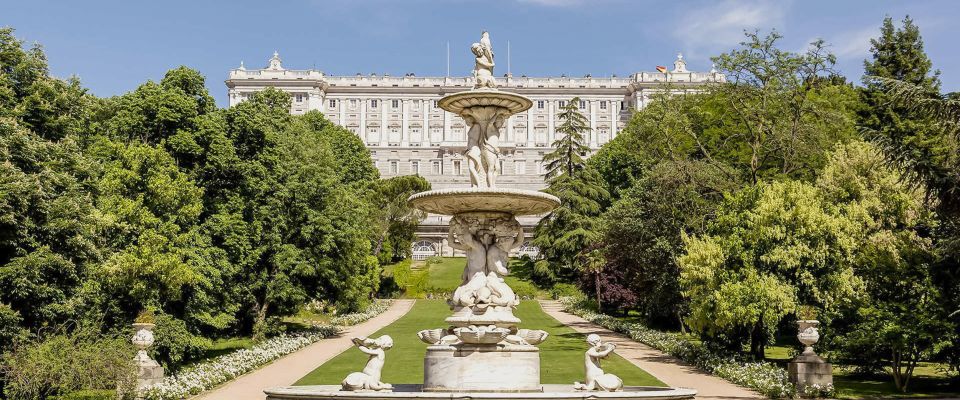
The Royal Palace sits in central Madrid, and this ticket focuses on one big goal: get you through security quickly. Your meeting point is the Almudena esplanade gate, on the corner of Calle de Bailén. Aim to find that exact gate, because it’s easy to drift toward the wrong entrance when you’re scanning signs with other people.
The process is simple. You’ll enter, use the express security check, and then you’re free to explore at your own pace. Many people love the pre-booked feel because there’s usually a long line for same-day tickets, and fast access cuts that down fast.
One practical thing I’m glad you should know: the palace doesn’t allow food and drinks, and it also limits luggage. There’s no left luggage service, so you’ll want to travel with only what you can comfortably carry. If you’re coming straight from a day of walking, keep it realistic—small daypack, bottled water already finished, and no oversized bag situation.
You’ll also want to save a little mental energy for crowds. Even with express entry, the palace is popular, and there’s a limit to how many people can be inside at once. That means you might get clusters in popular rooms, especially the showrooms people photograph first.
You can also read our reviews of more tours and experiences in Royal Palace Of Madrid.
The Salons: Royal Rooms, Frescoes, and What to Watch For
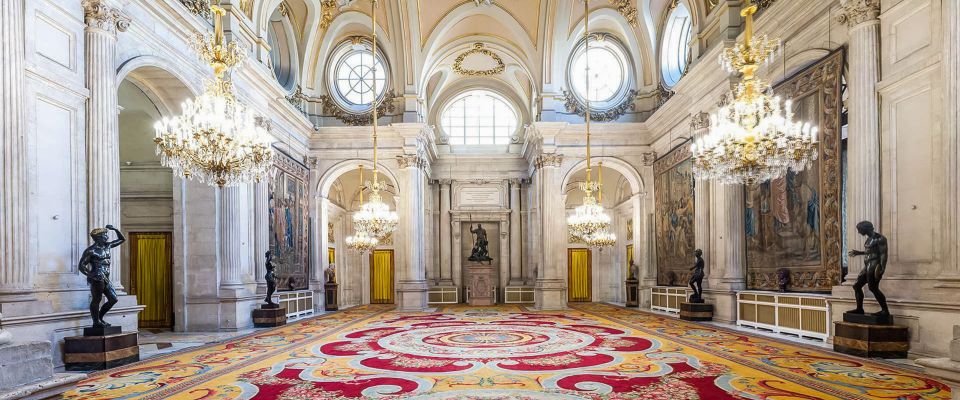
Most people come for the “wow” factor, but the Royal Palace delivers in a quieter way, too: the craftsmanship. You’ll see ornate salon rooms with decorative frescoes and careful architectural detailing. Look up—not just across ceilings but also along wall surfaces where colors and materials are matched to the paintings and framing.
You can also read along as you go. There are information displays inside the palace in both Spanish and English. That’s a big help if you don’t want to rely on an audio guide for every stop. In practice, it means you can pause when something catches your eye, then keep moving without feeling lost.
Timing helps here. The palace sets you up for about 45 minutes for the salones (salon rooms). That’s enough time to see the major rooms without sprinting, but it still requires choices. If you’re the type who stands close to paintings and reads labels, 45 minutes can turn into closer to an hour. If you’re traveling with kids or you just want the top rooms, 45 minutes might feel perfect.
The private apartment areas of the monarchs are part of the flow too. You’re not just walking through public grandeur; you get the sense of “lived-in royalty” through the layout. And for photo moments, the most dramatic interiors tend to be the rooms with bold color schemes, heavy gilding, and high-contrast lighting.
Throne Room to Banquet Hall: Madrid’s Power Rooms
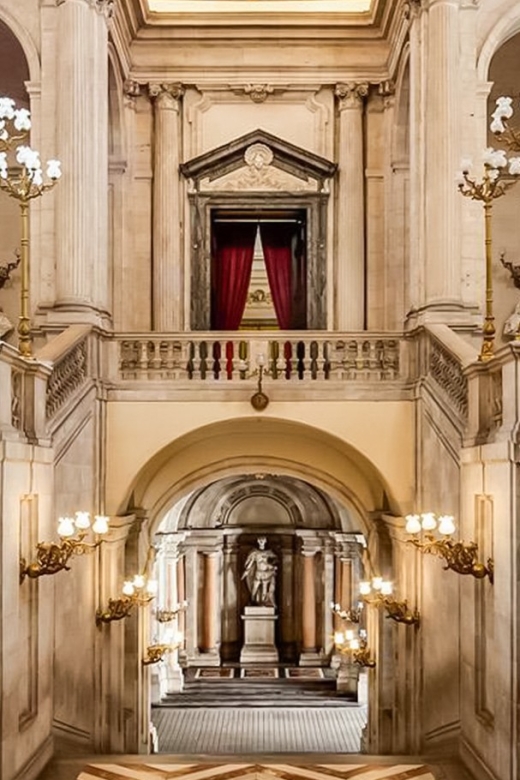
The Throne Room is the kind of space that changes how you walk. It’s designed to feel ceremonial and commanding—heavy red tones, gold accents, and a “this is where decisions happen” atmosphere. You’ll also get the sense that the palace isn’t only about art; it’s about stagecraft.
From there, the Banquet Hall keeps the momentum. This is where you see royal living translated into hospitality and display: grand spaces built for ceremony, with decorative elements intended to impress whoever entered. If you like architecture and interior design, you’ll probably find yourself slowing down here more than you expect.
Here’s a small tip that makes your visit more satisfying: don’t treat each room like a checklist. Pick one or two visual details per room and follow them. Maybe it’s a ceiling scene, maybe it’s the way ornament frames a wall, maybe it’s the overall color palette. When you do that, the palace stops feeling like “a bunch of rooms” and starts feeling like one connected design story.
Even with express access, you may feel mild pressure in the most popular spaces due to crowding. If that happens, step aside to the edges when you can, then come back for one closer look once traffic thins.
Hall of Mirrors from Charles IV’s Reign: Light as a Royal Weapon
The Hall of Mirrors is one of Madrid’s most famous interior set pieces, and it’s not just decorative—it’s functional theater. This hall connects directly to the reign of Charles IV, and you’ll feel that royal “performance” spirit in how the room is arranged.
The basic idea is simple: mirrors multiply light and reflection, which makes spaces feel bigger and more dazzling. It’s also a reminder that palaces like this were built to communicate status without saying a word. The Hall of Mirrors does that job well.
Plan to spend a little extra time here. People tend to rush because they’re excited, then they end up with blurry photos and no real memory of what they saw. If you give yourself 5–10 extra minutes—just standing still for a moment—this room becomes a highlight rather than a quick stop.
If you’re also thinking about art, use the Hall of Mirrors as a “context room.” After you’ve seen the theatrical interior design, you’ll notice the palace treats paintings and decorative arts like part of the same communication system.
Major Paintings: Velázquez, Goya, Caravaggio, and What They Mean in the Rooms
The Royal Palace’s art collection is one of the reasons this visit feels more than just architectural sightseeing. You can see works connected to major European masters, including Velázquez, Goya, and Caravaggio (plus other artists such as Juan de Flandes, depending on what’s on view in the palace spaces you reach).
The biggest value here is not only seeing famous names—it’s seeing how the palace frames them. The rooms aren’t neutral white galleries. They’re ornate, colored, and designed to reinforce the artwork’s importance. That makes you understand why these works mattered to the Spanish court.
If you like art history, you’ll get more out of the experience by thinking in time periods and context. One theme that helps is asking yourself what kind of power the art projects: religious authority, royal legitimacy, or cultural prestige. Once you start viewing the paintings that way, you’ll spend less time saying “pretty” and more time saying “I get why this was here.”
You may also find your visit gets a boost if you happen to get a guide-led explanation. Names like Alicia and John have shown up for people who wanted more story-level context, and when that kind of explanation is available, it can help you connect rooms to the people who lived through them. Even if you skip a guide, the bilingual info displays help you keep your bearings.
Royal Armory Timing: Porcelain, Watches, Silverware, and Renovation Chances
The Royal Armory is scheduled as a separate chunk of time—about 30 minutes. If the Armory is open during your visit, it offers a different angle on royal life. Instead of only paint and fresco, you get objects: porcelain, watches, furniture, silverware, and more.
This part matters because it makes “royalty” tangible. You see items that reflect wealth, craftsmanship, and daily display. It’s also a good stop for travelers who feel overwhelmed by too much walking—because the armory tends to give you structured exhibits rather than only rooms and ceilings.
There’s one wildcard: the Armory can be closed for renovations. When that happens, you’ll still have plenty to see in the main palace, but your time plan should stay flexible. If you’re going specifically for the armory, consider building a bit of buffer into your day so the visit doesn’t feel rushed.
How Much Time You’ll Actually Need in the Palace
The palace visit is self-paced, but you should still plan your time. A solid baseline is around 45 minutes for the salon rooms and around 30 minutes for the Armory, which lands you near 1.25 hours for a full experience.
I’d also factor in two real-life delays. First, popular rooms can slow your movement due to crowding. Second, if you decide to read more than usual—especially bilingual signs—your pace naturally changes. That doesn’t hurt the experience; it just means you shouldn’t schedule this palace visit like a train connection.
If you want an easy win, do this:
- Go straight to the main “must-see” rooms first (Throne Room and Hall of Mirrors).
- Then loop back for slower looking once you’ve gotten the big interior moments.
If you’re traveling with kids or you’re not sure how they’ll handle long museum pacing, skip the extra layers. The palace already has enough to keep younger visitors interested, especially the standout rooms and decorative details.
Audio guides can be helpful, but if you prefer lighter information, focus on the labels in each room instead. One common feeling is that an audio guide can be more in-depth than some people want for a short family visit, while room descriptions give just enough to enjoy the art and architecture.
Price and Value at About $26: Is Fast Access Worth It?
At about $26 per person (plus a booking fee), you’re paying for time saved and guaranteed access to a timed entry flow. In Madrid’s peak season, that value can be real—especially when the alternative is queueing for tickets and then waiting at security.
The fast access part matters because it reduces friction. You’re not only buying entry; you’re buying a more predictable start. That can be the difference between enjoying the palace and feeling cranky from waiting in lines.
That said, you should think about whether you qualify for free admission windows. There’s free admission Monday to Thursday from 4:00 PM to 6:00 PM in winter and from 5:00 PM to 7:00 PM in summer for EU citizens, residents, and holders of work permits in the EU, and for citizens of Ibero-American countries. You’ll need to show proof of concession. If you qualify and you can plan around that time, the ticket may be less of a bargain. If you don’t qualify or you’re visiting at other times, the fast-access ticket makes a lot of sense.
Also remember: the ticket is non-refundable. That’s not scary, but it does mean you should book when you’re genuinely set on going.
Practical Rules That Matter: Bags, Food, and Finding the Right Gate
A few rules can shape your day more than people expect.
Food and drinks are not allowed in the palace, and there’s no left luggage service. If you’re carrying a larger bag, you may find yourself stuck with carrying it longer than you want. The best move is to keep your load light and easy to handle.
Plan around the entrance. Your official entry point is the Almudena esplanade gate at the corner of Calle de Bailén. If you head to the wrong entrance, you’ll lose time, which kind of defeats the point of a fast-access ticket.
One more practical comfort note: the site is wheelchair accessible. If mobility support is part of your plan, you’ll still want to keep your day flexible because popular rooms can get busy.
Who This Ticket Fits Best
This ticket is ideal if you:
- Want the Royal Palace highlights without spending half your day in queues
- Like palace interiors, court art, and decorative rooms with major-name paintings
- Are on a tight schedule and need a clear structure for how long to spend
It’s also a good pick for rainy days. When the weather turns, a palace visit with lots of interior rooms turns into a perfect “stay dry and still feel wow” outing.
If you want a deep specialist lecture for every room, you might feel the self-paced format is short. In that case, consider pairing your visit with extra context, whether that’s an audio guide you truly use or a guide-led explanation when available.
Should You Book This Madrid Royal Palace Fast-Access Ticket?
I’d book it if you’re visiting when lines are long, you don’t qualify for the free admission window, or you want a smoother start. For around $26, you’re paying to buy time and reduce stress, and that’s often the best kind of travel value.
I’d think twice if the Armory is your top priority and you’re visiting on a day when renovations are likely. In that scenario, you might still have a fantastic palace visit, but it’s smarter to mentally separate “palace rooms” from “armory objects.”
If your schedule is flexible, you can also choose your timing. A palace is always packed, but you can make it feel more comfortable by planning around crowd patterns and by moving through rooms in a sensible order.
FAQ
What’s included with this fast-access Royal Palace ticket?
You get a fast-access admission ticket with an express security check, plus a booking fee. The palace visit includes main showrooms like the Throne Room, Banquet Hall, and Hall of Mirrors, and it also mentions access to the Royal Armory if it’s available during your visit.
Where do I meet to enter?
Enter at the Almudena esplanade gate, on the corner of Calle de Bailén.
How long should I plan for the palace?
Plan about 45 minutes for the salones (salon rooms) and about 30 minutes for the Royal Armory.
Can I bring food, drinks, or luggage?
No. Food and drinks are not allowed, and luggage or large bags are not allowed. There is no left luggage service.
Is the ticket refundable?
No. The activity is non-refundable.
Is it wheelchair accessible?
Yes, the experience is wheelchair accessible.