REVIEW · MADRID
Madrid: Panoramic Route City Tour
Book on GetYourGuide →Operated by Julia Travel Gray Line Spain · Bookable on GetYourGuide
Madrid can feel huge at first. This panoramic double-decker tour turns it into something you can handle.
I especially love the two-route format—one ticket lets you see Historical Madrid and Modern Madrid without overthinking transportation. You get a 14-language audio guide too, so you can keep your pace and still learn what you’re looking at.
The main thing to watch is how it feels on the ground: it’s more of a route ride than a classic free-for-all hop-on hop-off loop. Also, audio and headphone connections can be hit or miss, so I suggest you confirm they’re working the moment you sit down.
In This Review
- Key Things You’ll Actually Get From This Tour
- Why Madrid’s Two-Route Panoramic Bus Works for First-Timers
- Route 1 (Blue): Historical Madrid From Prado Street Life to Temple Views
- Paseo del Prado and Prado Museum area
- Puerta de Alcalá and the grand avenue geometry
- Salamanca District and Plaza de Colón
- Plaza de Cibeles and Gran Vía
- Plaza de España and the royal-side perspective
- Temple of Debod: the payoff viewpoint
- Puerta de San Vicente and Puerta de Toledo
- Colegiata/Mayor and the central old-town corridor
- Atocha and the Botanical Garden zone
- Route 2 (Green): Modern Madrid From Nuevos Ministerios to Puerta del Sol
- Plaza Neptuno, Plaza de Cibeles, and Plaza de Colón
- Museum of Natural Sciences and sculpture/picture-perfect stops
- Nuevos Ministerios and the modern business axis
- Santiago Bernabéu Stadium
- CSI Science Center and modern museum districts
- Serrano and the Puerta de Alcalá → Puerta del Sol corridor
- Plaza de las Cortes and a clean finish at Sol’s edge
- Night Route in Summer: Historic Madrid Under the Moon
- Ticket Timing, Route Logic, and How to Avoid Planning Headaches
- On-Board Comfort: Sliding Roofs, Headphones, and Top-Deck Photos
- Bonus Walking Tour and the La Quimera Flamenco Drink
- Price and Value Around $39: What You’re Really Paying For
- Who Should Book This Bus Tour, and Who Should Skip It
- Should You Book This Madrid Panoramic Route City Tour?
- FAQ
- Is the bus tour a true hop-on hop-off service?
- How many routes are included with the ticket?
- Can I ride the routes on different days?
- What happens on the night tour?
- Do you get an audio guide?
- Is the guided walking tour included, and when does it start?
- Is the flamenco drink included?
- What should I bring?
Key Things You’ll Actually Get From This Tour
- Two panoramic routes on one ticket: Historical and Modern Madrid, with a contrast that makes the city click
- Top-deck sightseeing comfort: open-top views with air-conditioning and sliding roofs
- Route 1 is built around the “big picture”: Paseo del Prado, plazas, royal-and-temple viewpoints
- Route 2 shows Madrid’s newer face: from Puerta de Alcalá to Puerta del Sol, plus stadium and modern landmarks
- Summer night option: Historic Madrid under lights, using the same classic route 1 line
- Bonuses that broaden your day: a 2-hour guided walking tour and a free drink at La Quimera tablao
Why Madrid’s Two-Route Panoramic Bus Works for First-Timers
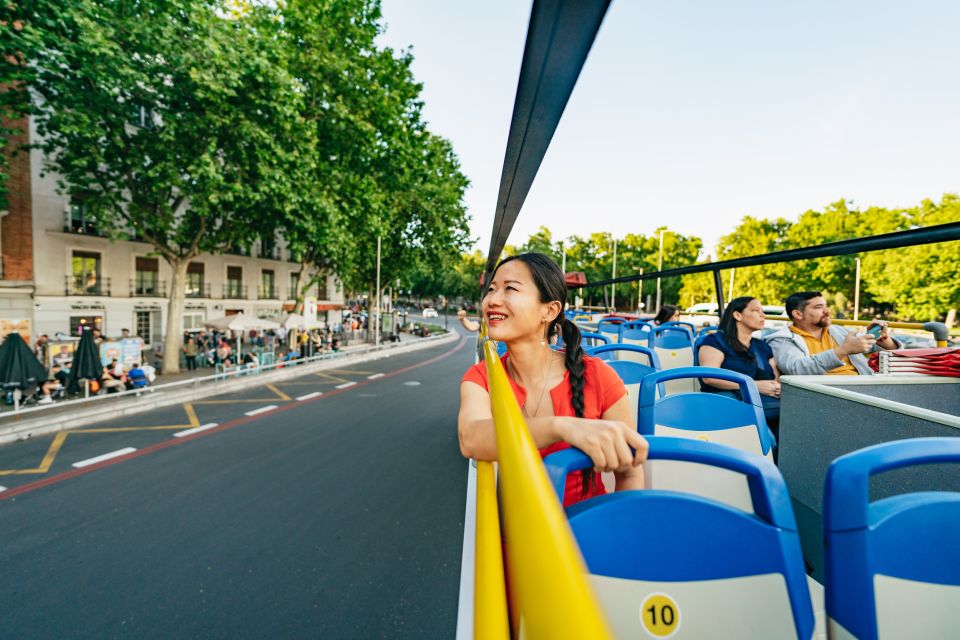
If you’re trying to see a lot of Madrid without burning your morning on transit confusion, this setup is practical. Route 1 and Route 2 are designed to cover two different ways of understanding the city: the monumental, museum-and-royals Madrid, and the more contemporary Madrid of stadiums, modern architecture, and everyday city life.
What I like for planning is that each route has a clear personality. Route 1 (Blue) is the “walk in your imagination” tour of historic Madrid—plazas, grand avenues, and viewpoints. Route 2 (Green) is the reality check—skyscrapers, public art, and places that feel like the capital’s future.
One more smart detail: the buses are open-top double-deckers with sliding roofs and air-conditioning. That means you can take photos from above, but you’re not totally at the mercy of sun, wind, or chill.
You can also read our reviews of more city tours in Madrid


Route 1 (Blue): Historical Madrid From Prado Street Life to Temple Views
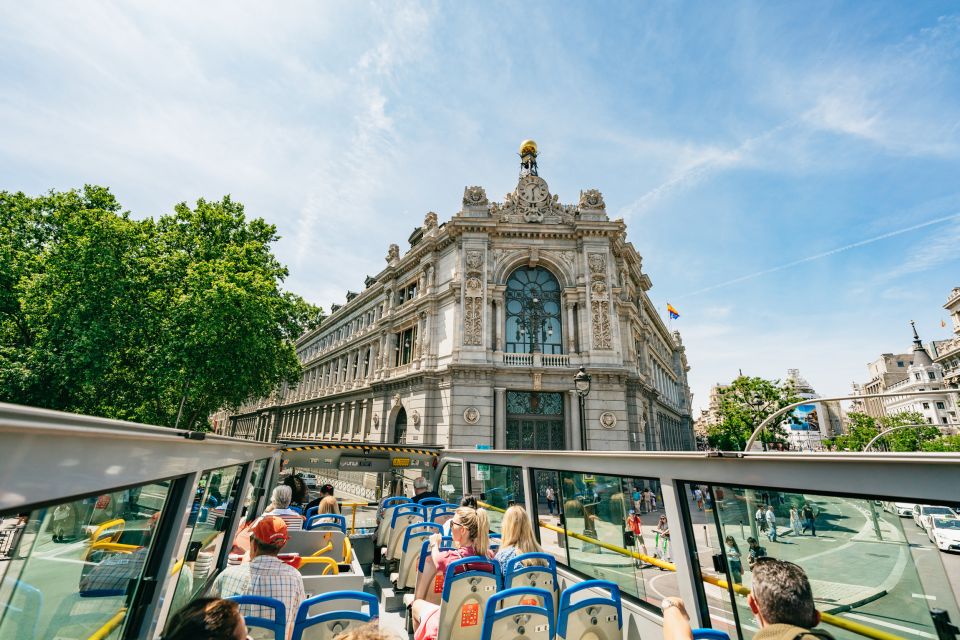
Route 1 is a circular loop that strings together Madrid’s major sights in a way that makes the center easy to understand. You’ll travel along the Paseo del Prado, one of the city’s signature corridors, and you’ll see that this area is packed with art, monumental buildings, and royal-era architecture.
Here are the stops that matter most, and why they’re worth paying attention from the top deck:
Paseo del Prado and Prado Museum area
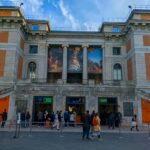
The route starts in the zone of Prado Museum and the wider museum district. Even if you don’t go inside a museum, this stretch helps you map where the art world sits in Madrid—and why everyone loops back here.
Puerta de Alcalá and the grand avenue geometry
When you reach Puerta de Alcalá, it’s a strong anchor point. This is one of those Madrid landmarks that makes directions make sense later, because it’s such a recognizable marker on the street grid.
Salamanca District and Plaza de Colón
You get a taste of the Salamanca District, plus Plaza de Colón. From the bus, you’ll see how the streets widen and how business and style sit near older monuments. It’s a good reminder that Madrid isn’t only historic stone—it’s also modern streetscapes.




Plaza de Cibeles and Gran Vía
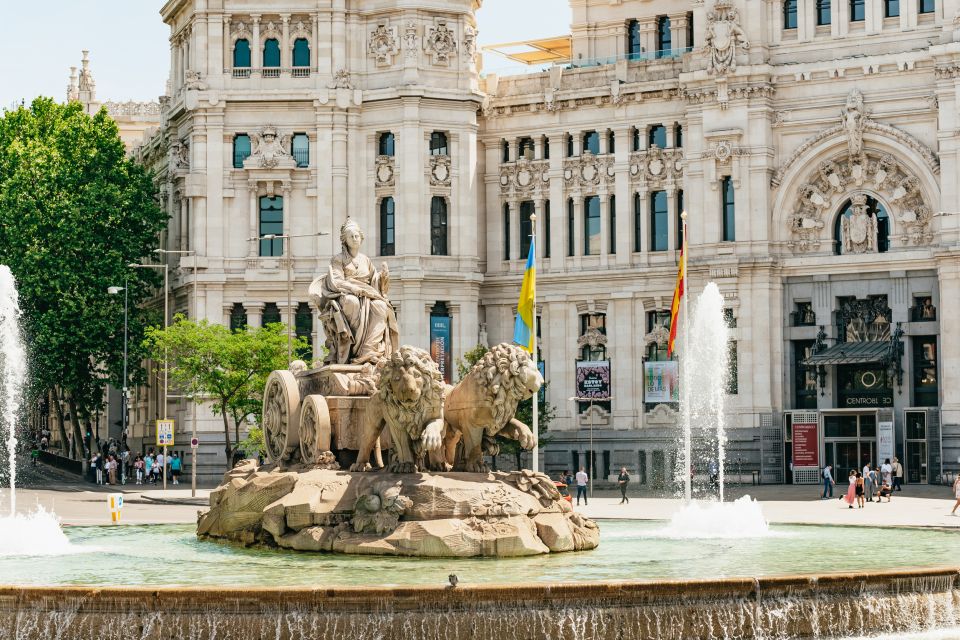
These are two of Madrid’s “icon” stops. Plaza de Cibeles gives you the big urban square feeling, while Gran Vía is where Madrid looks like Madrid—busy avenues, grand facades, and that classic sense of movement.
Plaza de España and the royal-side perspective
Plaza de España helps you understand how Madrid organizes its center around major crossings. It also sets you up for the next theme of route 1: royal-and-viewpoints.
Temple of Debod: the payoff viewpoint
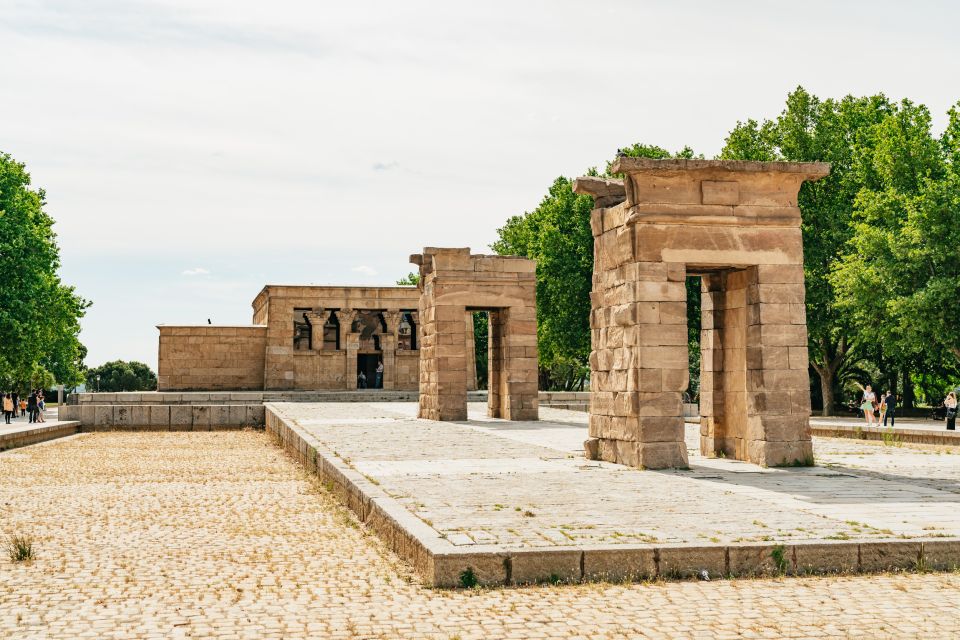
Temple of Debod is a highlight. Even if you’re just seeing it from the bus, it stands out because it’s a different kind of landmark—ancient-stone vibe in the middle of a modern city layout. If you go on the night option later, you’ll see why this stop is so famous.
Puerta de San Vicente and Puerta de Toledo
These gate stops help you visualize Madrid’s “edges” without leaving the comfort of your seat. Puerta de Toledo in particular is a great mental bookmark for the places you might want to walk to next.
Colegiata/Mayor and the central old-town corridor
The Colegiata/Mayor area brings you toward the older center. This helps if you want a future day plan: you’ll know which parts feel tighter and more medieval-adjacent, even though you started on a bus.
Atocha and the Botanical Garden zone
Atocha and the Botanical Garden/Prado area round out the route. It’s useful if you’re staying near a transit hub or planning a day trip: you’ll know where the rail connection sits relative to the major sights.
Small practical note: route 1 repeats Prado Museum at the end, which makes it convenient if you want to head back into the neighborhood after your ride.
Route 2 (Green): Modern Madrid From Nuevos Ministerios to Puerta del Sol
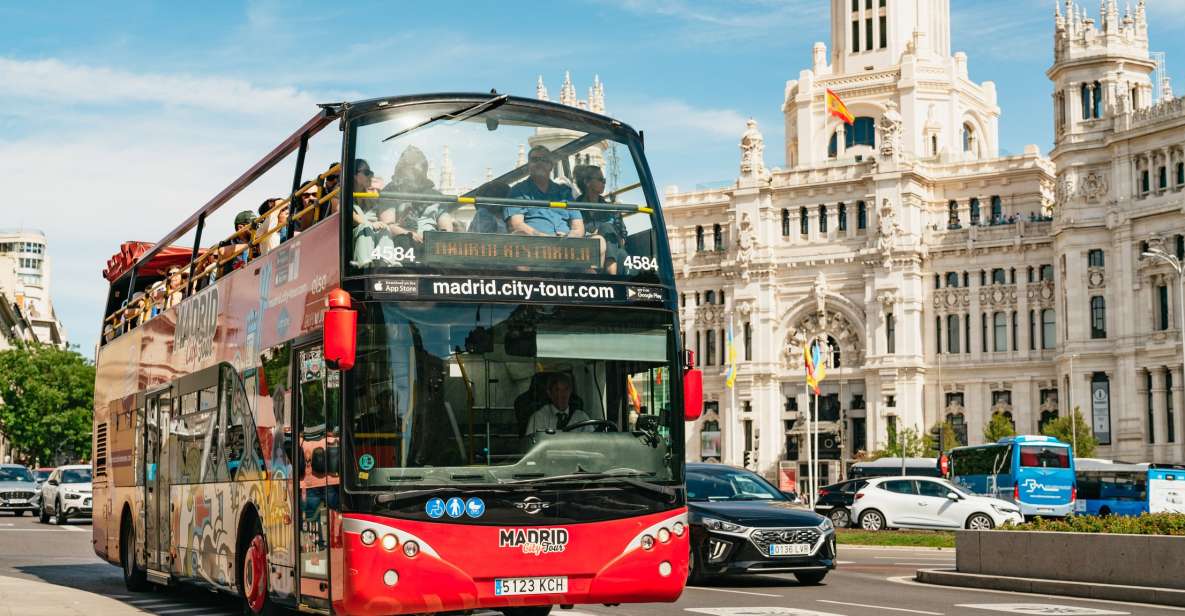
Route 2 is how you balance the picture. Instead of only castles and museums, you’ll see Madrid’s contemporary identity—modern architecture, public art, and big-name places.
This route travels through key modern corridors and ends in the classic city-center zone you’ll recognize right away.
Plaza Neptuno, Plaza de Cibeles, and Plaza de Colón
Route 2 starts in familiar territory—Plaza Neptuno, Plaza de Cibeles, Plaza de Colón—so you’re not lost. This overlap is helpful. It also makes it easier to understand how the modern route connects to the historic core.
Museum of Natural Sciences and sculpture/picture-perfect stops
You’ll pass the Museum of Natural Sciences and sculpture-focused stops. If you like architecture and design, these are quick wins from the bus, because the shapes are visible from the street and from above.
Nuevos Ministerios and the modern business axis
Nuevos Ministerios is a different Madrid experience: a more office-and-avenue feeling. It’s a good marker of where “downtown Madrid” transitions into the more business-forward side.
Santiago Bernabéu Stadium
For football fans, this is the magnet stop. Even if you don’t plan a match day, seeing Santiago Bernabéu Stadium from the double-decker helps you understand why this part of town has its own rhythm.
CSI Science Center and modern museum districts
The route also includes the CSI Science Center, plus museum zones like Lázaro Galdiano Museum and the Archaeological Museum. That mix works well because it shows Madrid’s modern approach to learning and culture, not just entertainment.
Serrano and the Puerta de Alcalá → Puerta del Sol corridor
Serrano gives you an upscale street feel, and then you hit Puerta de Alcalá again before continuing to Puerta del Sol. By the time you reach Puerta del Sol—Madrid’s central hub—you’ll feel like you’ve crossed the city rather than bounced between isolated landmarks.
Plaza de las Cortes and a clean finish at Sol’s edge
Ending near Plaza de las Cortes and returning around Plaza Neptuno helps you wrap up without ending in a random pocket. It’s an easy place to switch gears toward walking, shopping, or a meal plan.
Night Route in Summer: Historic Madrid Under the Moon
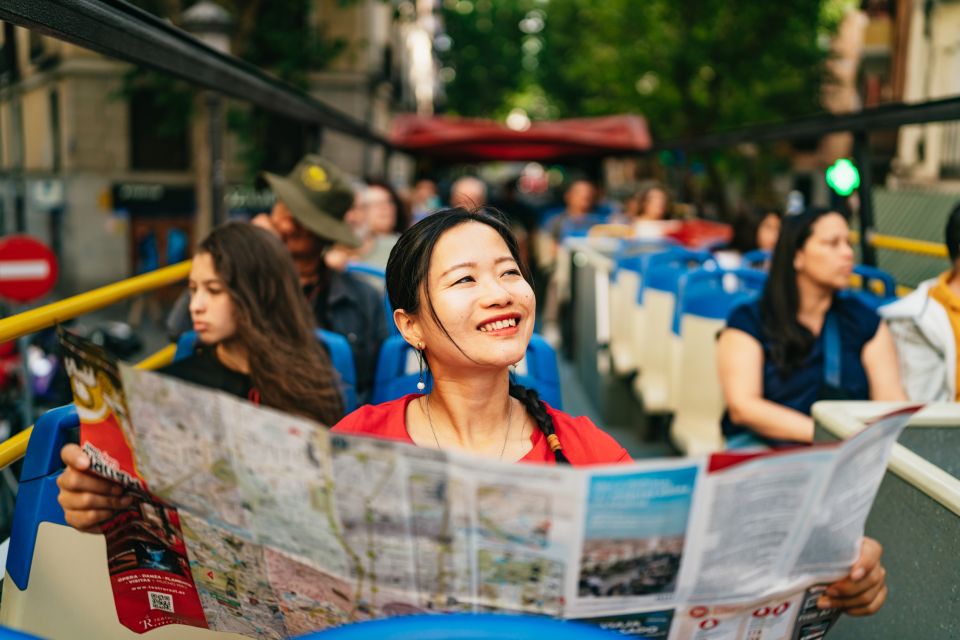
If you’re traveling in summer and can catch it, the night option is the simplest upgrade. It follows the same idea as route 1, but in the evening the city looks more dramatic.
You’ll see the major route 1 icons lit up—Royal Palace area viewpoints, Gran Vía, and Temple of Debod are named highlights for the nighttime experience. From a comfort standpoint, this is also a win: instead of walking around in heat to find the best angles, you’re seated with a view.
One thing to plan: night rides are more about photos and atmosphere than checking off tiny details. So bring patience, not a clipboard.
Ticket Timing, Route Logic, and How to Avoid Planning Headaches
This tour is built for organization. Your ticket is valid for both routes for 24 hours after redemption, and you can ride each route only once. That’s the main difference from the classic “hop on, hop off all day forever” model.
So your best strategy is straightforward:
- Do route 1 first if you want the strongest historical picture.
- Use route 2 as your contrast day or afternoon ride.
- If you’re trying to keep the whole day flowing, pick one route early and one route later, not both back-to-back with no breaks.
The walking tour is also timed in a way that benefits your day. The 2-hour guided walking tour runs daily at 10:45 from the city center. It’s based on tips, with a suggested price of €10 per person. It’s a good “connect-the-dots” add-on after your bus ride teaches you where the landmarks sit.
On-Board Comfort: Sliding Roofs, Headphones, and Top-Deck Photos
The buses are open-top double-deckers with air-conditioning and sliding roofs. That combo matters in Madrid because the city can swing from sunny to breezy to warm quickly. You’ll get the visibility for photos without suffering completely inside the cabin.
Headphones come with the tour and the audio guide covers Spanish, Basque, Chinese, Dutch, English, French, Galician, German, Italian, Portuguese, Russian, Catalan, Japanese, and Arabic. That’s a real help if your group isn’t all one language.
One caution from real-world use: headphone connections and audio quality can be inconsistent. I’d treat it as a quick pre-flight check:
- Once you sit, test the headphone jack.
- If something doesn’t work, ask staff right away rather than waiting.
Also, Route 2’s audio narration in English may not be perfect for everyone, so if you’re sensitive to pacing and clarity, you might still prefer following the street views and key stop names.
Bonus Walking Tour and the La Quimera Flamenco Drink
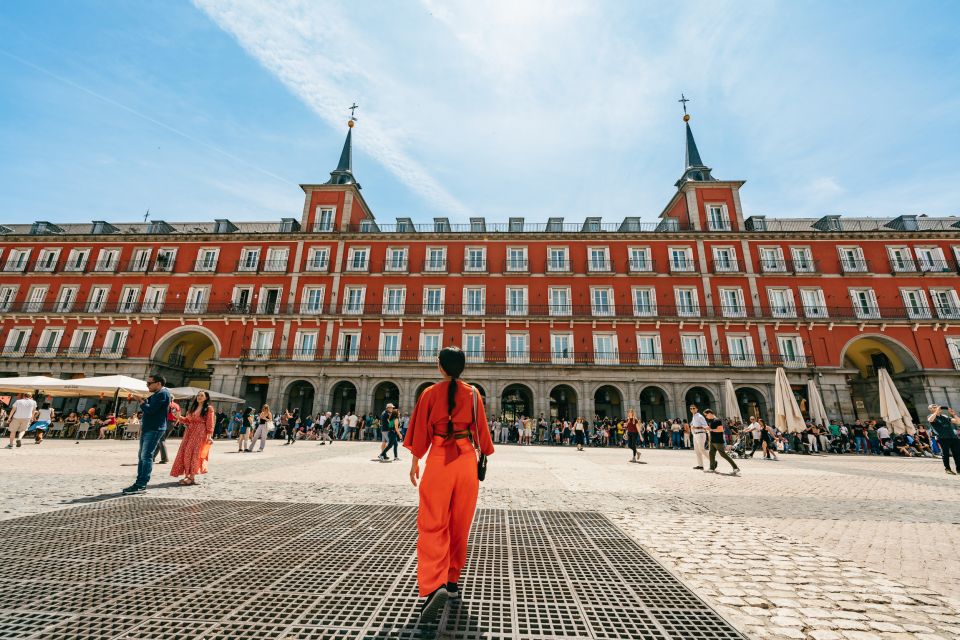
This is where the tour adds personality beyond sightseeing. The included 2-hour guided walking tour covers the historic center area. Because it’s tip-based, you’re in a more local-feeling model than a rigid scripted group walk. Suggested tip is €10 per person, but it’s ultimately up to you.
You also get a free drink at La Quimera Tablao Flamenco, just a few steps from Plaza Mayor. The idea here is simple: after the big sights, you add a slice of Madrid’s nightlife culture without it turning into a whole separate ticketed plan. You’ll check specific conditions on board, since the exact details can vary.
If you like flamenco but don’t want to spend your whole evening committing to a full show, this is a neat bridge.
Price and Value Around $39: What You’re Really Paying For
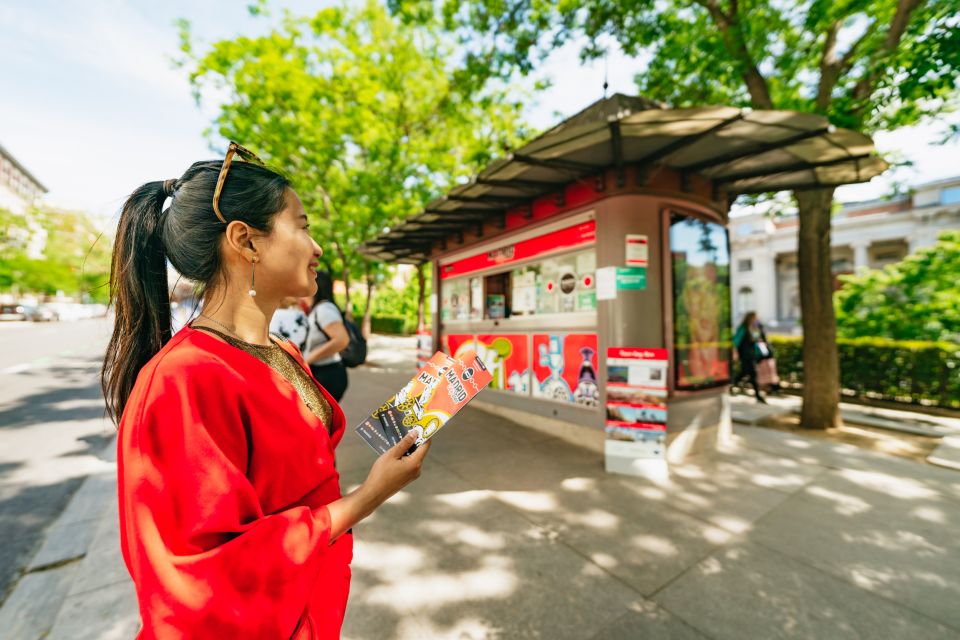
At about $39 per person, this tour is priced like a budget-friendly city orientation. The value comes from stacking multiple parts into one ticket bundle:
- Two panoramic routes (Historical + Modern)
- Audio guide in 14 languages
- Open-top double-decker comfort
- Optional night route in summer (for those dates)
- Included 2-hour guided walking tour
- A free drink at La Quimera tablao
What it does not include is also important. You still pay for food and drinks beyond that one free drink, and there’s no hotel pickup/drop-off.
From a planning point of view, this is the kind of tour that can save you more than money. It saves time: you don’t have to figure out which stops are worth your limited energy for the day. If you’re in Madrid briefly, that time savings can be the real deal.
Who Should Book This Bus Tour, and Who Should Skip It
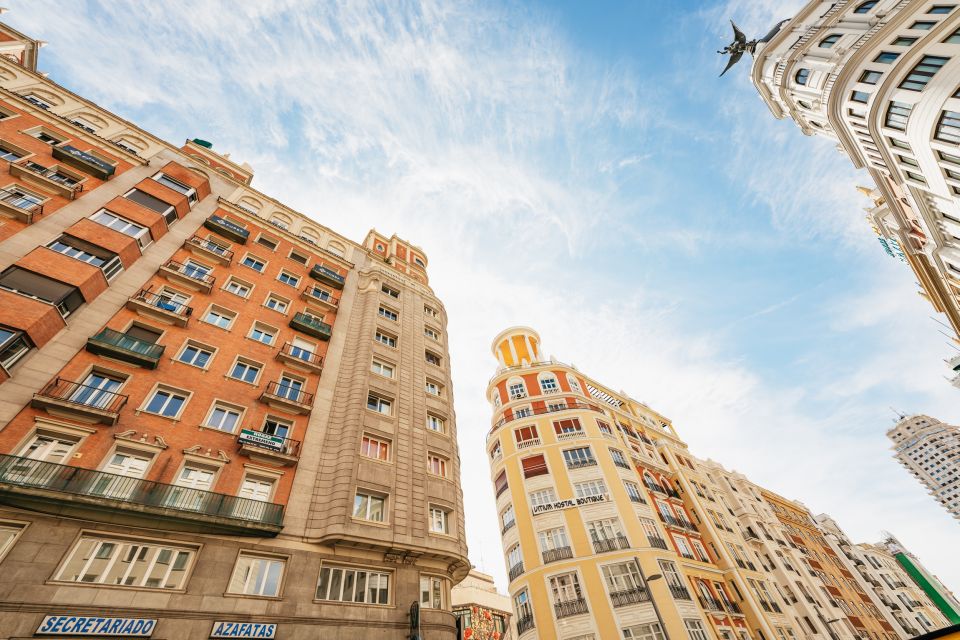
This fits best if you:
- Want a fast city overview with top-deck views
- Need help choosing what to see next after you get your bearings
- Are traveling with mixed interests (history + modern Madrid in one plan)
- Like audio commentary and multilingual support
I’d think twice if you:
- Expect a true hop-on hop-off service with lots of stops to get off whenever you want
- Are very sensitive to audio/headphone quirks and would rather use your own guide system
- Want a deep, museum-level experience during the ride itself (this is sightseeing and orientation, not entry tickets)
One small tip from how the route feels in practice: go early in the day if you can. It helps with crowding and keeps the ride more pleasant.
Should You Book This Madrid Panoramic Route City Tour?
Yes, you should book it if you want a smart first pass at Madrid that covers both the “grand historic” side and the “modern capital” side. The two-route design is the headline feature, and the bonuses (walking tour + La Quimera drink) help turn it from a simple bus ride into a fuller day.
Skip it only if your travel style demands a lot of spontaneous stop-and-stroll flexibility during the bus ride. If your plan is to sit back, watch the streets unfold, and then choose a few places to explore later, this tour is a solid match.
FAQ
Is the bus tour a true hop-on hop-off service?
The ticket lets you ride the routes as designed, and you can take each route only once on your ticket’s valid window. So it’s best to think of it as a structured panoramic ride rather than unlimited stopping and starting.
How many routes are included with the ticket?
If you choose the panoramic tour option, you get two routes: Route 1 (Historical Madrid, Blue) and Route 2 (Modern Madrid, Green). The ticket is valid for both routes within the stated time window.
Can I ride the routes on different days?
Your ticket is valid for both routes for 24 hours after redemption. That means you can plan within that window, and you should follow the tour’s redemption timing rules.
What happens on the night tour?
The optional night route follows the same route as Route 1 (blue), showing Historical Madrid under evening lights. It’s offered during the summer months.
Do you get an audio guide?
Yes. Audio guide is included, with headphones provided. It’s available in 14 languages.
Is the guided walking tour included, and when does it start?
Yes, the walking tour is included. It operates daily at 10:45 from the center of Madrid and is based on tips at your discretion (suggested price €10 per person).
Is the flamenco drink included?
A free drink at La Quimera Tablao Flamenco is included, and you’ll check the conditions on board.
What should I bring?
Bring comfortable shoes, especially if you plan to do the included walking tour. Also, bring your own comfort items if you’re picky about audio, since headphone connections can be inconsistent.