REVIEW · SAN LORENZO DE EL ESCORIAL
Royal Site of San Lorenzo de El Escorial Entrance Ticket
Book on GetYourGuide →Operated by Distributor: GetYourGuide Tours & Tickets GmbH · Bookable on GetYourGuide
El Escorial looks stern, then turns gorgeous inside. This Royal Site entrance ticket gets you into one of Spain’s most ambitious building projects, tied to Philip II and the Spanish Golden Age. I like the dramatic contrast: the outside can feel prison-like, but the interior is full of frescoes and royal decoration. The main catch: there’s no guide included, so you’ll get the best results if you’re happy reading your way through.
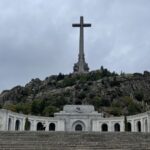
What I really love here is the sense of royal life continuing underground. You can work your way through key spaces like the library-to-palace complex and the Basilica (erected in 1574), and you may also encounter the crypt linked to royals who once lived there. Add the gardens and viewpoints, and on a clear day the scenery toward the Sierra de Guadarrama and the Valley of the Fallen’s basilica gives the whole visit extra weight.
In This Review
- Quick hits before you go
- Royal Site Entrance Ticket: What you actually get
- Outside first: why the “prison” look makes sense
- Entering the complex: a self-guided flow that works
- Monks of St. Jerome to Spanish empire: the big idea behind the visit
- Basilica built in 1574: the ceremonial center you shouldn’t skim
- Frescoes, royal decoration, and the art mix: what you’re looking for
- Library, palace, and the Charles V connection: spaces with status
- Gardens and courtyards: your reset after all that stone
- Juan de Villanueva’s art and architecture: why he matters here
- Getting there from Madrid: train, walk, and the uphill reality
- Price and value: is $21 worth it?
- The one drawback to plan around: no guide, plus meeting-point pitfalls
- Who this experience suits best (and who should reconsider)
- Should you book this El Escorial entrance ticket?
- FAQ
- How much is the Royal Site of San Lorenzo de El Escorial entrance ticket?
- How long is the visit?
- Is admission included?
- Is a guide included?
- Does this ticket help with waiting lines?
- When will I receive ticket confirmation?
- Is this activity refundable?
- Is the visit suitable for people with mobility impairments?
- Where is this experience located?
- What is the best way to schedule it from Madrid?
Quick hits before you go
- Express security check can help you get moving faster once you’re on site.
- Monastery to palace to basilica: the complex was built for multiple purposes, so your visit feels like walking through an empire.
- Spanish Golden Age art with Italian and Flemish influence: you’ll see how different European styles shaped the look of the place.
- Royal connections you can spot in the spaces: look for the Charles V connection and the royals’ crypt.
- Gardens plus big-sky views: outdoor areas are well-kept, and the perspective can be excellent on clear weather.
- Juan de Villanueva’s works add another layer if you care about architecture and artists of the era.
Royal Site Entrance Ticket: What you actually get
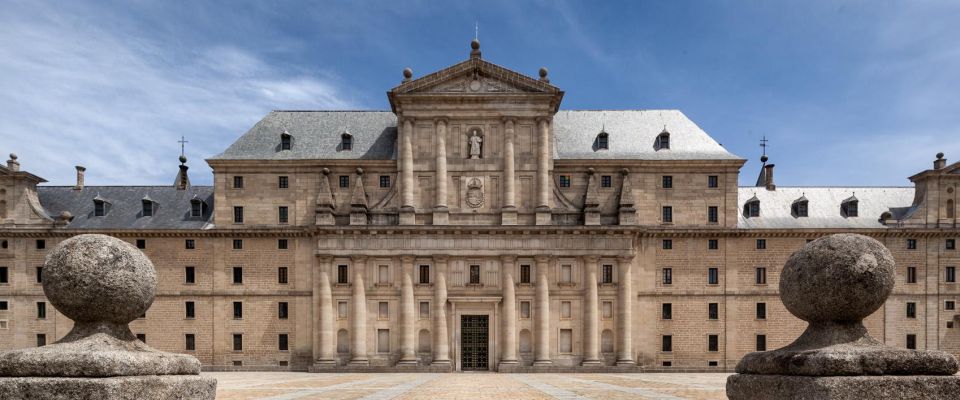
This is an admission ticket for the Monastery of San Lorenzo de El Escorial, sold for about $21 per person. The visit is listed as 1 day, but you’ll choose a time slot based on availability, then explore on your own.
Because a guide isn’t included, you’re basically buying two things: entry and time-saving express security access. If you love architecture, courtyards, chapels, and you don’t mind spending time with interpretive signs, that setup can work very well.
One more reality check: this activity is not suitable for people with mobility impairments. Plan for walking on uneven grounds, and expect the day to be more active than it sounds on paper.
You can also read our reviews of more tours and experiences in San Lorenzo De El Escorial.


Outside first: why the “prison” look makes sense
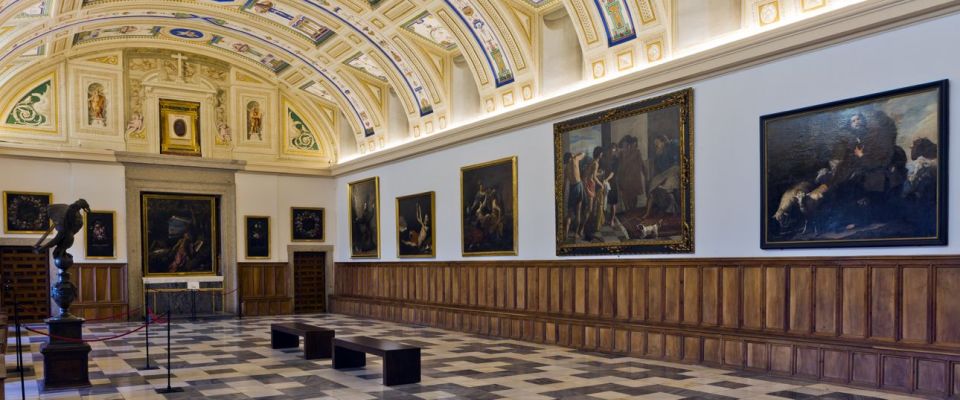
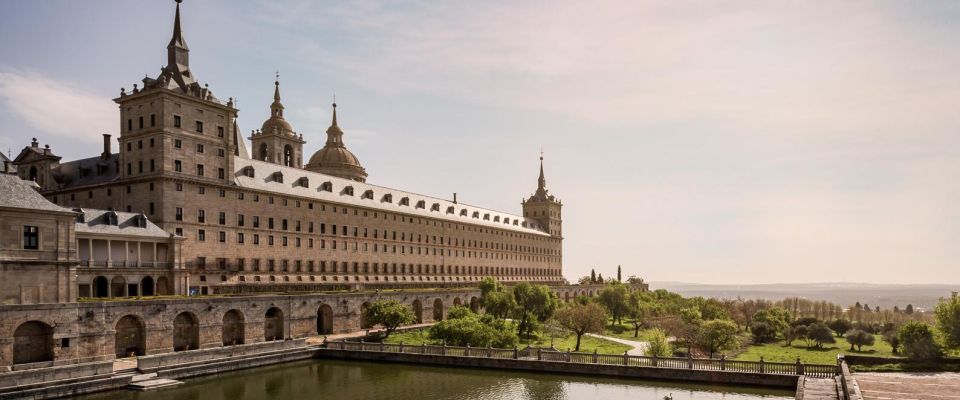
El Escorial’s exterior isn’t trying to be cute. From a distance, it can feel heavy, severe, and fortress-like. That’s actually part of what makes the place memorable: the building projects power and control, and then you walk inside and get hit with color, detail, and ceremony.
If you’re the type of visitor who needs to feel something instantly, give it a minute. The complex rewards patience. Start with the mindset that you’re entering a carefully planned world designed to reflect royal ideology, not a modern tourist attraction.
Entering the complex: a self-guided flow that works
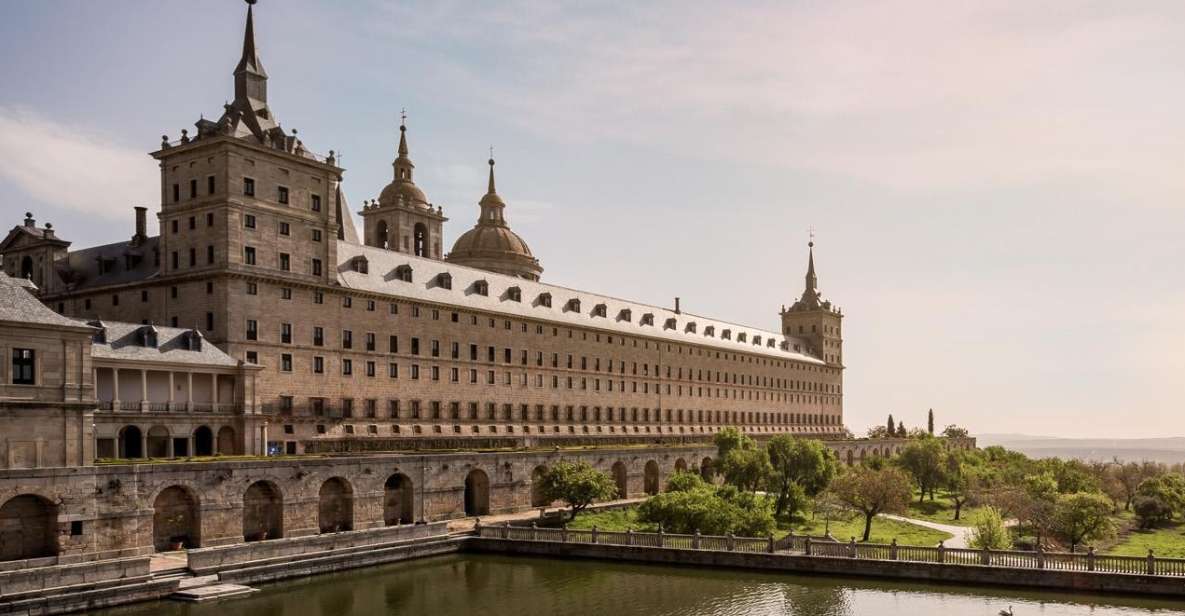
Once you’re inside, you’re in a structure that was built for different roles over time. You’ll encounter areas connected to monastic life and areas tied to courtly and royal functions. The layout is described as largely untouched, so it’s not a “museum makeover.” That matters, because you’re not just looking at objects behind glass—you’re moving through the original kind of spaces.
A self-guided visit can feel intimidating at first, but it helps to think in zones. I like a three-part approach:
- ceremonial spaces (where the building signals authority)
- scholarly and royal spaces (library and palace connections)
- outdoor areas (gardens and viewpoints)
You don’t need to rush. A ticket that’s meant for a full day works best when you give each zone a slow lap.
Monks of St. Jerome to Spanish empire: the big idea behind the visit
El Escorial’s origin points you toward how the Spanish monarchy wanted to be seen. The monastery of San Lorenzo el Real was created for the monks of the Order of St. Jerome. That monastic foundation is important because it shapes the mood of the site: it’s not just a palace with art on the walls, it’s a religious institution that became entangled with imperial power.
You’ll also come across spaces connected to Emperor Charles V and his wife, who once lived there. Even if you don’t memorize every name, this is the kind of place where the building itself tells you who mattered and why.
If you’re into how ideology becomes architecture, you’ll feel it quickly. The Golden Age wasn’t only about paintings and books. It was also about shaping physical environments so power could be experienced, not just claimed.
Basilica built in 1574: the ceremonial center you shouldn’t skim
One anchor point of the complex is the Basilica, erected in 1574. This is the kind of space that can reset your expectations: even if the exterior looks severe, the inside is designed for awe.
This is also a good place to slow down and look for the artwork that took years to complete. The ticket includes admission, so you can spend as long as you want in these high-impact areas without worrying that you’re “missing the best part” because you stayed too long elsewhere.
Practical tip: if you go when it’s busy, give yourself a little extra time here. Not because the basilica is hard to reach, but because everyone will want the same calm moments in the same few spots.

Frescoes, royal decoration, and the art mix: what you’re looking for
You came for Spanish Renaissance history, and the complex is structured to show how European styles merged into a Spanish statement. The experience is described as blending Italian and Flemish artistic forms—that’s the kind of detail you’ll feel as you move from one room or chapel to another.
When you’re walking, don’t only scan for big paintings. Pay attention to how decoration is layered: fresco work, ornamentation choices, and how the royal display language shows up in multiple spaces. The interior is where the building stops being a “fortress idea” and becomes a “lived-in royal stage.”
And yes, it’s worth aiming your attention at the juxtaposition. The contrast between the plain exterior and the decorated interior isn’t just a coincidence—it’s part of the charm.
Library, palace, and the Charles V connection: spaces with status
The complex includes areas ranging from the library to the palace, and that range is one reason the site feels like more than a church visit. Think of it as a full system: study, worship, and rule happening in one designed environment.
The Charles V connection gives you a timeline cue. You’re not just seeing a building from one moment. You’re seeing a site that collected history, then repackaged it into an imperial image.
Here’s how to make this section land: when you reach royal or scholarly rooms, ask yourself what the function would demand. Does the space feel built for ceremony? For quiet? For movement? El Escorial’s plan reflects those needs, and that’s why it feels “untouched” in a meaningful way.
Gardens and courtyards: your reset after all that stone
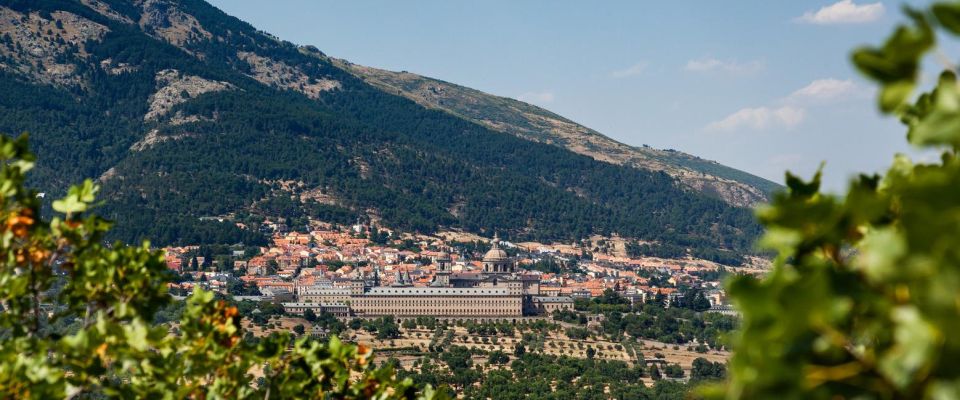
Outside areas are part of the payoff. The gardens are described as beautifully presented and maintained, and even when the weather is gray, the carefully kept grounds can make the whole day feel less heavy.
This is also where you may get the clearer sense of scale. The viewpoint potential ties into the wider region, including the Valley of the Fallen’s basilica and the Sierra de Guadarrama mountain range.
If your schedule allows, aim to step outside when the light changes. It’s the easiest way to get a mental break and still feel like you’re progressing through the visit.
Juan de Villanueva’s art and architecture: why he matters here
The experience highlights works by architect and artist Juan de Villanueva. If you’re the type who likes connecting buildings to the people who shaped them, this is a strong thread to follow.
Don’t treat his presence as a trivia moment. Use it as a lens: look for how design choices create transitions between monastic seriousness and royal display. When you notice those shifts, the site starts to feel like a controlled performance of meaning rather than a random collection of rooms.
Getting there from Madrid: train, walk, and the uphill reality
The good news: the journey from Madrid to El Escorial is under an hour by train. That makes it realistic as a one-day outing without turning the day into a marathon of transportation.
The trade-off is the final approach. There’s a walk from the train station to the monastery that’s described as pleasant but uphill, about 25–30 minutes. That doesn’t sound scary, but it’s still a real walk after a train ride—especially if you’re also planning museum time inside.
My advice: wear shoes you trust. Bring water. If you’re sensitive to hills, you’ll want to pace yourself before you ever reach the doors.
Price and value: is $21 worth it?
At $21 per person, you’re paying for an admission ticket plus an express security check. The value depends on what you fear most on the day.
If you’re visiting on a busy period or you really dislike waiting at the start, express access can be a big deal. It helps you spend your time where you actually want it: the interior rooms, the basilica center, the gardens.
If, however, you’re the kind of visitor who enjoys spontaneity and doesn’t mind lines, you might wonder if the money is mostly for convenience. There have been mentions of instances where visitors felt the price wasn’t better than what they could get on site, so it’s smart to compare expectations. Still, the express lane is the main reason this ticket can feel like a time-saver rather than just a permission slip.
Bottom line: if you want a smooth arrival and you’re okay exploring solo, $21 is a reasonable spend for a major national-level site.
The one drawback to plan around: no guide, plus meeting-point pitfalls
The ticket includes admission but not a guide. That’s the biggest planning difference from the tours that include narration. You’ll rely on signage and your own reading, which can be great if you like self-paced history. It can also feel frustrating if you want someone to connect names, artworks, and the building’s political purpose in real time.
There’s also a practical issue to watch for: some people report confusion about locating the correct area and experiencing lines after that. I can’t confirm what causes it in every situation, but I’d treat it as a reminder to:
- double-check the exact meeting/entry instructions on your confirmation
- go directly to the entrance guidance tied to your ticket, not to a generic tourist information spot
If you’re a stickler for details, this will save you stress.
Who this experience suits best (and who should reconsider)
This works best if you:
- care about Spanish Renaissance architecture and how art and power were linked
- enjoy self-guided exploration through chapels, gardens, and monumental interior spaces
- want a one-day trip that’s mostly concentrated at one site, not hopping around all day
You might reconsider if you:
- need mobility support (the activity is not suitable for people with mobility impairments)
- want a guided explanation included in the price
- hate any chance of walking uphill after a train ride
If you’re unsure, think of El Escorial as a place where you get out what you put in. Bring curiosity, and it will reward you fast.
Should you book this El Escorial entrance ticket?
Yes, I’d book it if you’re planning a focused day trip from Madrid and you’re happy doing the history part on your own. The express security element and the admission-only value make sense for visitors who want to control their pace—especially if you’ll want extra time in the basilica and in the decorated interior.
Skip it (or plan a different option) if you strongly prefer a guide for context, or if mobility constraints make walking the uphill approach and the on-site paths difficult. And before you go, take five minutes to confirm exactly where you should head for the express entry so you don’t waste time at the start.
FAQ
How much is the Royal Site of San Lorenzo de El Escorial entrance ticket?
It costs about $21 per person.
How long is the visit?
The activity is listed as 1 day. Starting times depend on availability.
Is admission included?
Yes. The ticket includes admission.
Is a guide included?
No. A guide is not included with this activity.
Does this ticket help with waiting lines?
Yes, it includes skip-the-line access through an express security check.
When will I receive ticket confirmation?
After purchase, you’ll receive a booking confirmation within 48 hours.
Is this activity refundable?
No. It’s non-refundable.
Is the visit suitable for people with mobility impairments?
No. It is not suitable for people with mobility impairments.
Where is this experience located?
It’s in the Community of Madrid, Spain.
What is the best way to schedule it from Madrid?
Plan a day trip. The train ride from Madrid to El Escorial is under an hour, followed by an uphill walk of about 25–30 minutes to reach the monastery.