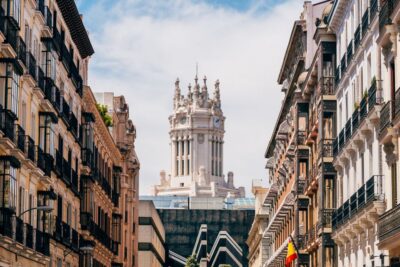
REVIEW · SAN LORENZO DE EL ESCORIAL
San Lorenzo de El Escorial Monastery: Private Tour
Book on GetYourGuide →Operated by Isabella Trébede - Licensed Guide · Bookable on GetYourGuide
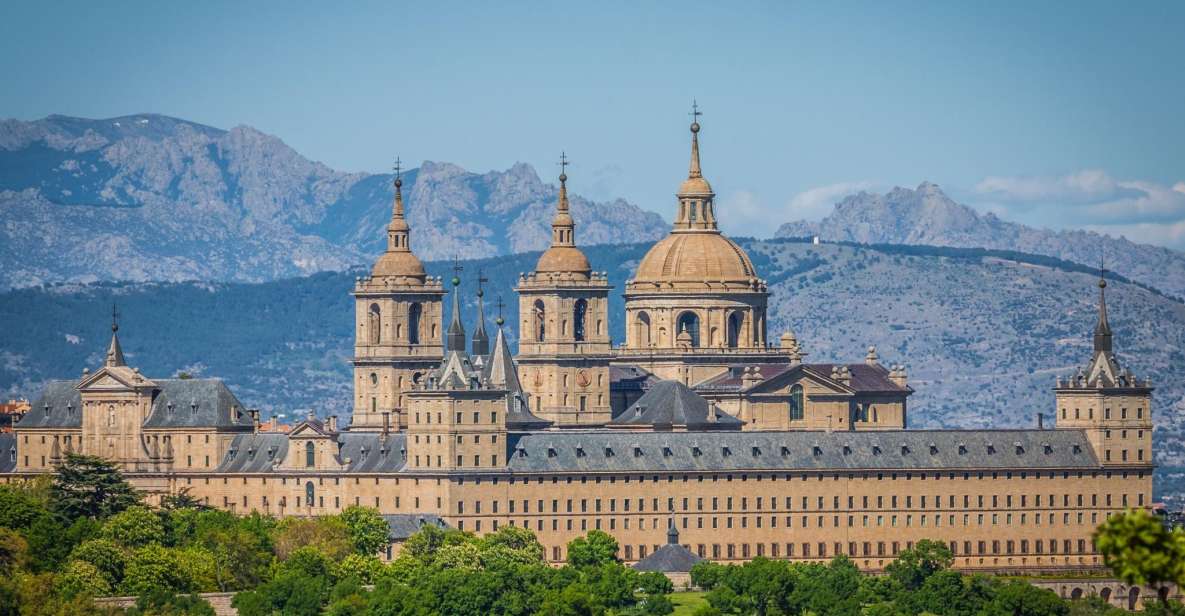
Stone power, art, and legends in one stop. This private tour through San Lorenzo de El Escorial lets you walk straight into a UNESCO monument without losing time in lines.
I especially love how the visit connects artwork to the people who commissioned it, not just the art itself. And I like that it’s built around the places you’ll actually remember: the basilica, the library, the Royal Pantheon, and the Hall of Battles.
The guide—Isabella Trébede—keeps the story clear and very personal, and you get individual headsets so you don’t miss a detail. I also appreciate the focus on major Spanish art names like Titian, El Greco, Velázquez, and Luca Giordano.
One thing to plan for: the site is not accessible, and you’ll climb lots of steps (even though the pace is eased).
In This Review
- Key highlights worth your attention
- Arriving at El Escorial: meeting point, security, and why time matters
- What you get for $79: value in a private, headset-guided format
- The first rooms you hit: basilica focus and religious context
- Library and main staircase: Phillip II’s Humanism on display
- Royal Pantheon: the dynasty story behind the names
- Hall of Battles: when murals do the storytelling for you
- Renaissance gardens and Sierra del Guadarrama views: the payoff outdoors
- The practical stuff you should actually plan for
- Who this private El Escorial tour is best for
- Should you book this San Lorenzo de El Escorial private tour?
- FAQ
- How long is the San Lorenzo de El Escorial private tour?
- What’s included in the price?
- Do I need to bring anything with me?
- Where do I meet the guide?
- What languages are offered?
- Is this tour accessible for wheelchair users or people with mobility impairments?
- What items are not allowed during the tour?
- What if the basilica is closed due to mass?
- How does storage work for backpacks and large bags?
Key highlights worth your attention
- Skip-the-line entry through a separate entrance, plus headsets so the guide stays easy to hear
- Isabella Trébede’s guided storytelling in English and Spanish with room-by-room context
- Phillip II’s library vision: science, arts, and the look of Humanism in stone and fresco
- The Royal Pantheon: the “who’s who” behind figures like John of Austria
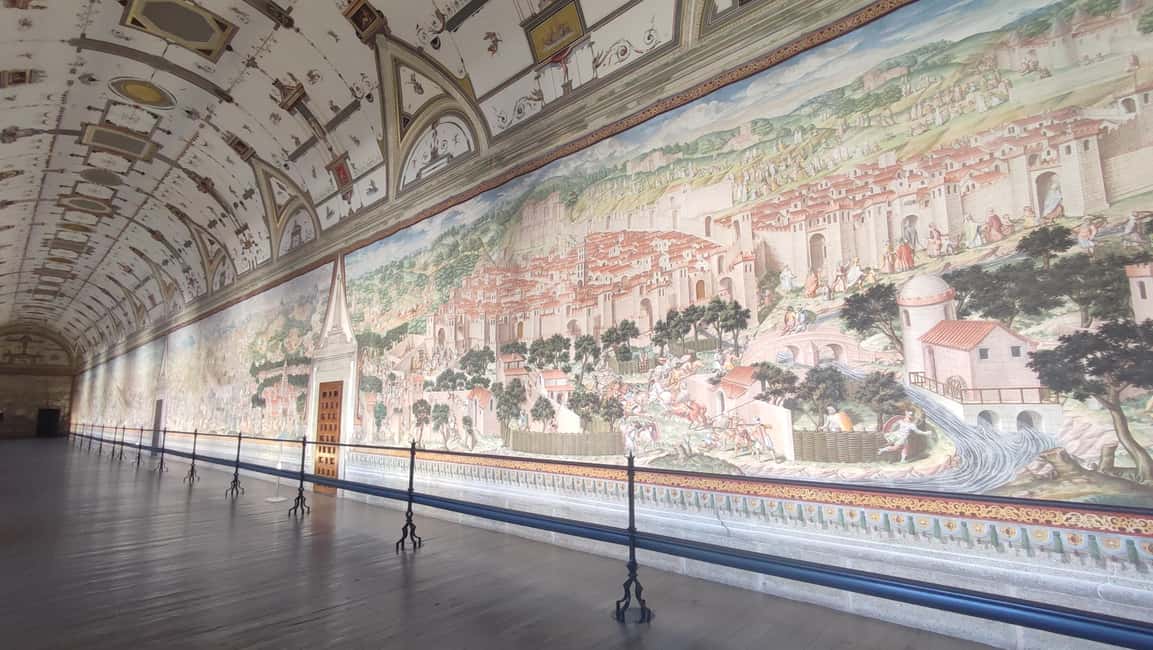
- Hall of Battles murals: dramatic painted scenes you’ll keep seeing after you leave
- Renaissance gardens + views over the Sierra del Guadarrama and sometimes even peacocks
Arriving at El Escorial: meeting point, security, and why time matters
San Lorenzo de El Escorial is one of those places where arriving “sometime around noon” can turn into a slow, stressful mess. This private format helps because you’re not stuck playing the timing lottery. You meet at the Office of Tourism area—look for the spot where the Spain flag is above the entrance and your guide stands right in front.
Your guide carries a Isabella Trébede tote bag, which is a small thing, but it saves you the usual first-2-minute scramble. From there, you’ll go through airport-style security like everyone else—so even on a private tour, you still want to show up ready to move.
What I like about this setup is that it keeps you focused on the building, not on logistics. The tour includes skip-the-line tickets (and you’ll use a separate entrance), which is a big deal for a place that can get crowded. You’re paying for momentum: less waiting, more looking.
Also, plan for your “carry stuff” load. No luggage or large bags are allowed inside. You’ll leave them in free individual lockers that use a €1 coin. Bring comfortable shoes too—this is a monastery complex, and the floors and stairs expect you to keep up.
You can also read our reviews of more private tours in San Lorenzo De El Escorial

What you get for $79: value in a private, headset-guided format
At $79 per person for 2.5 hours, the obvious question is: is this worth it? In my view, it’s the right price if you care about context. You’re not paying to “see rooms.” You’re paying to understand why these rooms were built the way they were.
Here’s what’s included that makes the time feel high-quality:
- A licensed tour guide (so you’re not wandering and guessing)
- Skip-the-line tickets (you’re not paying extra time tax)
- Individual headsets, so the guide’s voice stays clear inside a big, echo-prone monument
And the private group format matters more than people think. It’s easier to ask a question, linger when something catches your eye, and keep the tour pace aligned to what you want. If you like art and political history, this works especially well because El Escorial is both—religion, dynasty, and visual power all folded into one complex.
If you’re traveling with someone who loves details, this tour can feel like a personal mini-lesson. If you’re more of a “show me the main things” person, it still works because the route is built around the most memorable spaces: library, basilica, royal tomb area, and the Hall of Battles murals.
The first rooms you hit: basilica focus and religious context
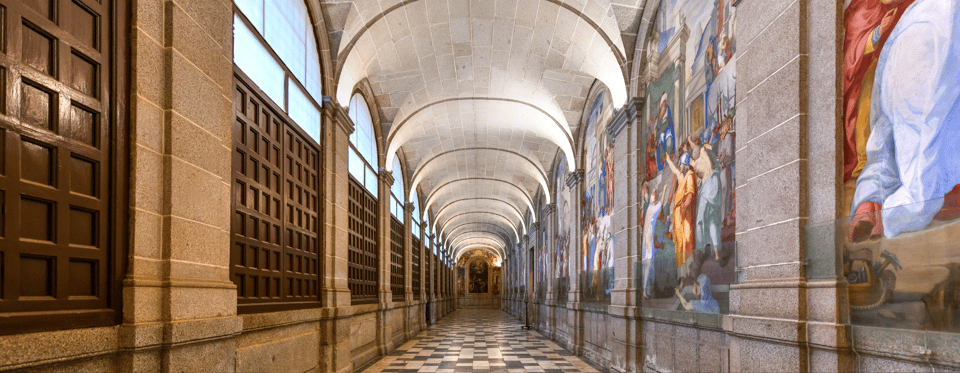
The monastery’s interior doesn’t treat you like a casual visitor. It treats you like you’re stepping into a system—religion at the center, and everything else orbiting around it.
The tour centers on the basilica and takes time to explain the religious context of the era. That’s important because El Escorial can be misunderstood if you only look at it as “cool royal architecture.” The basilica isn’t just impressive. It signals the purpose of the entire complex.
A practical note: the basilica closes during masses. On Sundays and religious holidays, that can mean it’s closed for the entire morning. If that happens, your guide doesn’t leave you stuck. The visit gets extended in other areas like the Library or the Chapter Rooms. So even with closure, you still keep moving through key highlights.
This flexibility is one of the quiet advantages of a guided tour. You don’t have to panic if a room is inaccessible at that time—you follow the logic of what’s available right then.
Library and main staircase: Phillip II’s Humanism on display
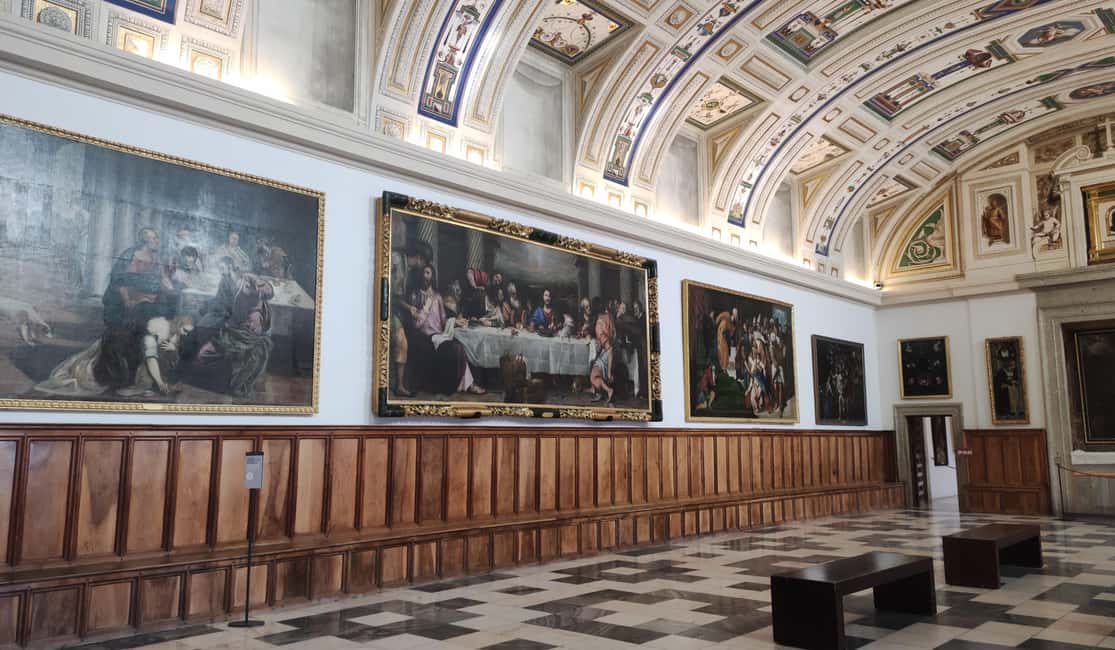
If you only visit one “mode” of El Escorial, make it the library. This is where the monument shows a different side of power: not just ruling, but collecting, thinking, and shaping culture.
You’ll spend time in the library, described as the finest example of Phillip II Humanism—and the guide connects that idea to science and arts. In other words, this isn’t a quiet room full of books. It’s a statement that knowledge mattered, and that the monarchy wanted to control what knowledge looked like.
The highlight here is the impressive frescoes inside the library and also the main staircase. Frescoes are meant to be “read,” and when someone explains the symbolism, you’ll notice things you would otherwise miss. You start seeing how the art supports the bigger message: authority, belief, learning, and the engineered feeling of grandeur.
What I appreciate most is that the guide ties these visuals back to the people behind them, instead of letting them float as decoration. El Escorial’s art can feel overwhelming on your own. With a guide, it turns into a set of understandable chapters.
Royal Pantheon: the dynasty story behind the names
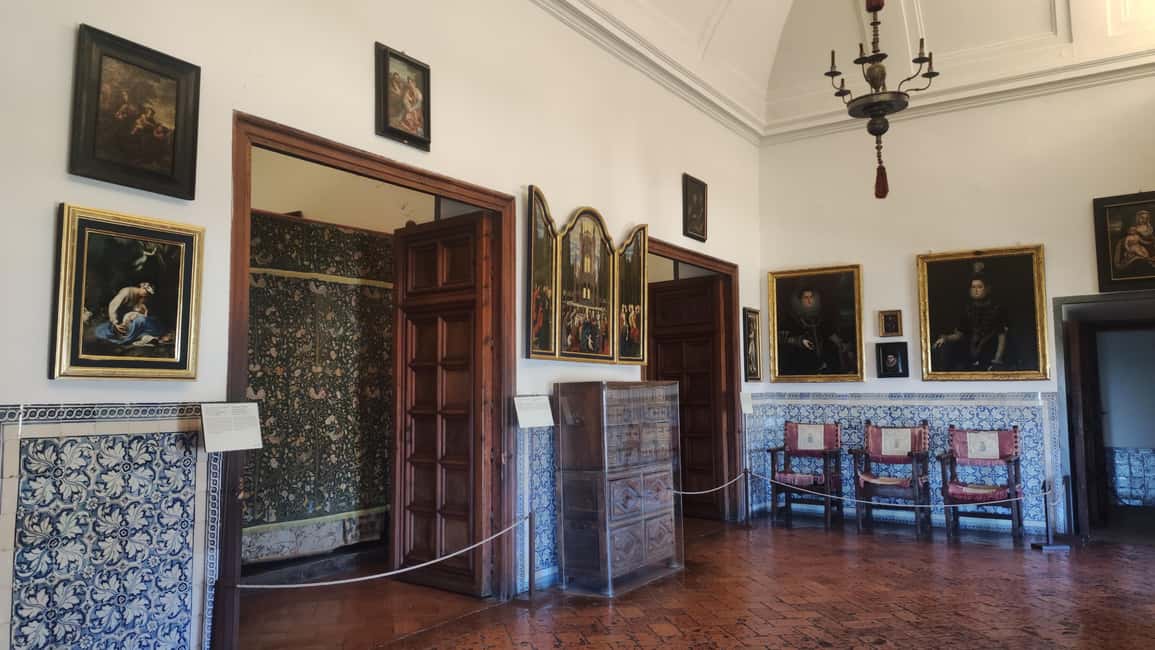
Then you move into the Royal Pantheon, and this is where the tour turns from art viewing to character viewing.
You’ll hear the story behind major figures, including John of Austria, described as the bastard son of Emperor Charles V. That detail matters. It tells you El Escorial isn’t only for “pure royal lines.” It’s where the Habsburgs display power across politics, legitimacy, and influence.
The inside of the pantheon is impressive in a very physical way—your eyes keep adjusting as you look for the right angle to take everything in. And this is a great spot for the private format: you can slow down and let the guide explain who mattered and why, without feeling rushed.
If you like history but dislike museum lectures, this is a sweet spot. You’re given a story that stays tied to the space. You can look up, look around, and understand what you’re seeing.



Hall of Battles: when murals do the storytelling for you
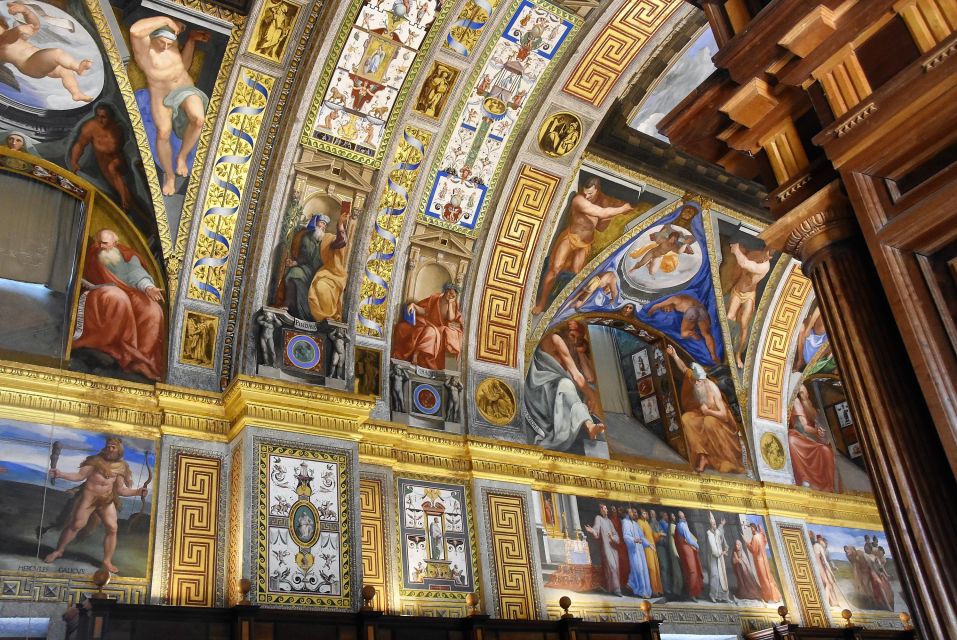
The final interior anchor is the Hall of the Battles, and it’s the part people often remember most.
This is where mural paintings take over the narration. You’ll discover the “astonishing” wall art that you’ll probably end up replaying in your mind afterward. Battles sound simple on paper, but mural cycles can get complicated quickly—who, when, what outcome, and why the ruling power cared.
This tour helps you read the murals instead of just staring at them. The guide turns the paintings into a sequence, and suddenly you understand what you’re looking at and why it was chosen.
The pacing also makes sense. After you’ve absorbed the library’s intellectual messaging and the pantheon’s dynasty stories, the Hall of Battles lands like a dramatic conclusion—visual proof of influence and reach.
Renaissance gardens and Sierra del Guadarrama views: the payoff outdoors
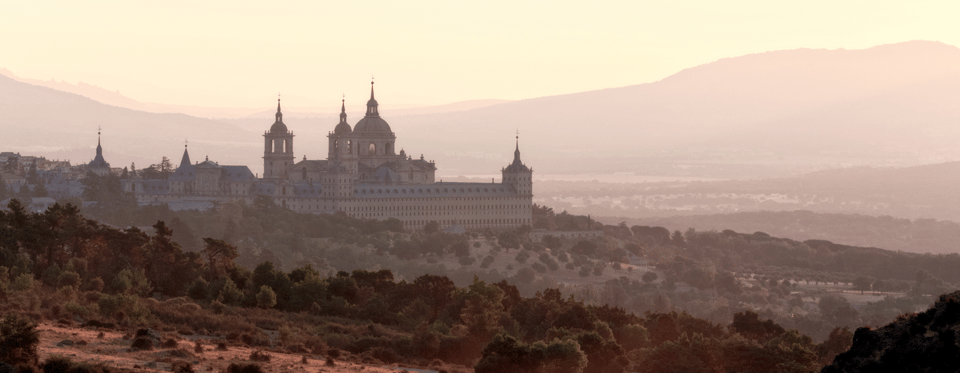
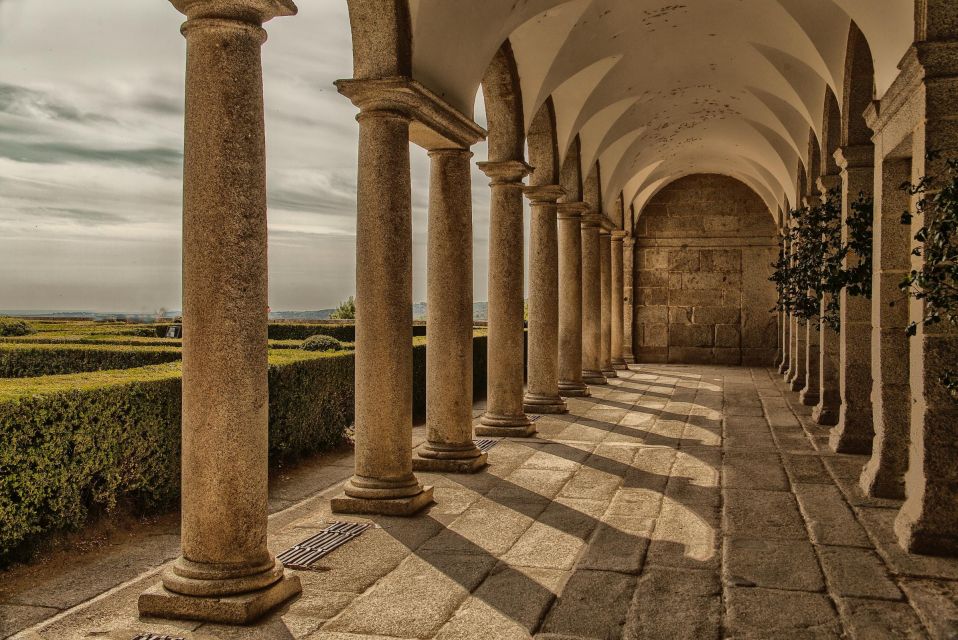
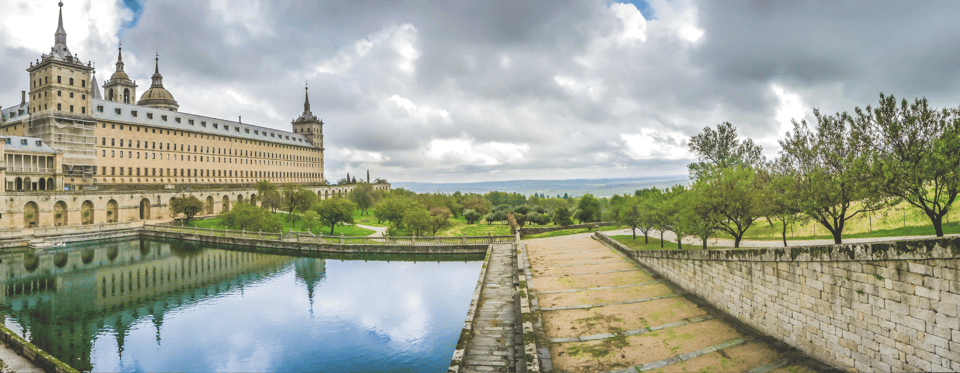
After the interior, you step into the Renaissance gardens—created for the kings and the monks. This is where El Escorial stops feeling like a fortress and starts feeling like a carefully framed landscape.
The gardens also give you an essential contrast: shade, open air, and that slow shift from stone detail to horizon lines. You’ll get panoramic views of the forest and mountains surrounding San Lorenzo de El Escorial, part of the Sierra del Guadarrama.
And yes, the gardens can come with a bit of theater. If you’re lucky, you may even meet the peacocks that live in the area. Even if you don’t, the outdoor setting is still a strong final note—especially because you’ve been climbing and looking for 2.5 hours straight.
This is also the kind of ending that helps the whole visit “stick.” The monastery’s messages are intense. The gardens let you reset your eyes and emotions before you head back.
The practical stuff you should actually plan for
This tour is not built for people who need a flat, easy route. The monument is not accessible, and you’ll climb many steps. The pace is said to be taken easy, but the building is still a building with stairs and uneven moments.
So, ask yourself:
- Can you handle a lot of walking and stairs for 2.5 hours?
- Do you wear supportive shoes?
- Are you traveling without a big bag (since lockers require a coin)?
Also note what’s not allowed: pets, food, bikes, and luggage or large bags. You’ll pass security like at an airport, so keep your daypack manageable.
A small but useful tip: since you’re using lockers that need €1 coin, have that coin ready. It prevents a minor scramble at the start and keeps your energy for the art.
Who this private El Escorial tour is best for
This is a strong choice if you:
- Want a private guide who can answer questions in real time (and in a way you can actually follow)
- Care about major artworks and artists, since the tour covers big names like Titian, El Greco, Velázquez, and Luca Giordano
- Enjoy the connection between politics, religion, and art—because El Escorial was designed for that blend
- Prefer a focused route that hits basilica, library, pantheon, and Hall of Battles without wandering
It’s also ideal if you’re short on time and want a high-impact day trip feeling from Madrid.
If you’re the type who wants zero interpretation and just wants to “look at things,” you might find the guide’s storytelling adds structure that you don’t need. But if you want the monument to make sense, the format fits.
Should you book this San Lorenzo de El Escorial private tour?
I’d book it if you want the best version of El Escorial for a limited amount of time. The key reasons are simple: skip-the-line access, headsets, and a guide who clearly connects art to meaning. When a tour can teach you how to read spaces like the library and Hall of Battles, you don’t just visit—you understand.
I would hesitate only if stairs are a real problem for you or if you need full accessibility. Otherwise, this tour is a smart way to experience one of Spain’s most commanding monuments without wasting your day waiting around. If El Escorial is on your Madrid hit list, this is the kind of tour that turns it from a photo stop into a story you can tell later.
FAQ
How long is the San Lorenzo de El Escorial private tour?
The tour lasts 2.5 hours.
What’s included in the price?
The tour includes a licensed tour guide, skip-the-line tickets, and individual headsets.
Do I need to bring anything with me?
Bring your passport or ID card and wear comfortable shoes.
Where do I meet the guide?
Meet at Busca la entrada con la bandera de España encima, right in front of the Oficina de Turismo. Your guide will carry a tote bag.
What languages are offered?
The live tour guide is available in Spanish and English.
Is this tour accessible for wheelchair users or people with mobility impairments?
No. The monument is not accessible, and the tour is not suitable for wheelchair users or people with mobility impairments.
What items are not allowed during the tour?
No pets, no luggage or large bags, and no food. Bikes and baby carriages are also not allowed.
What if the basilica is closed due to mass?
If the basilica is closed during masses, especially on Sundays and religious holidays (when it can be closed the entire morning), your guide will extend the visit at the Library or Chapter Rooms.
How does storage work for backpacks and large bags?
Backpacks and big bags must be left at free individual lockers that require a €1 coin.