REVIEW · MADRID
Avila and Segovia Guided Tour from Madrid
Book on Viator →Operated by Express Toledo · Bookable on Viator
Ávila and Segovia are built for good wandering. This full-day trip from Madrid strings together two UNESCO World Heritage cities with guided walking time in both stops, plus big-name sights like Ávila’s walls and Segovia’s Roman aqueduct, cathedral, and Alcázar. I like that the day is structured enough to keep you from getting lost, but still leaves room to enjoy each place on your own.
Two things I especially like: first, the guided walking tours in both cities help you “read” what you’re seeing instead of just passing by stone. Second, the overall value is strong because round-trip bus, local guidance, tourist maps, and even a Madrid city tour add-on are included. One possible drawback: it’s a long day (about 11 hours), and if your Spanish is limited, you’ll want to pay attention to how much English the guide uses on your departure.
In This Review
- Key things to know before you go
- Why Ávila and Segovia in one day actually makes sense
- Price and value: what about $60 covers
- Getting started in Madrid: the 9:00am meeting point
- The long ride: comfort, timing, and where to rest your brain
- Ávila: the Town of Stones and Saints and your walking orientation
- The Walls of Ávila: why these fortifications still feel impressive
- Segovia in three big images: aqueduct, cathedral square, Alcázar
- The Roman aqueduct: old water, still dramatic
- Segovia Cathedral: Gothic in the main square
- The Alcázar of Segovia: the ship-bow silhouette
- Free time strategy in Segovia: maps, directions, and food costs
- English guide expectations: what to do if you rely on English
- Group size and the pace: the value of staying together
- Who this tour fits best, and who should think twice
- Should you book Ávila and Segovia from Madrid?
- FAQ
- How long is the Ávila and Segovia guided tour from Madrid?
- How much does the tour cost?
- What time does the tour start?
- Where do we meet for the tour in Madrid?
- Is the tour round-trip from Madrid?
- Are walking tours included in both cities?
- Is the tour available in English?
- Is there a limit on group size?
- Are there entry fees included for major landmarks?
- Can I get a refund if I cancel?
Key things to know before you go
- UNESCO in two cities: Ávila and Segovia both bring major heritage sites into one nonstop planning day.
- Top sights without entry-fee pressure: the tour highlights landmarks like the Segovia Cathedral and the Alcázar without adding entry fees.
- Guided walking time twice: you get orientation in Ávila and in Segovia, not just a bus drop-off.
- Maps included: you’ll have a tourist map to help you navigate once you’re on your own.
- Small-to-medium group size: up to 55 people, which is large enough to be efficient but still manageable for directions.
- Madrid add-on included: a Madrid city tour is included for you to use when it fits your schedule.
Why Ávila and Segovia in one day actually makes sense
This is the kind of trip that works for first-timers, because it compresses three big heritage stories into one day: medieval fortification culture in Ávila, Roman engineering in Segovia, and Gothic-to-royal power centered around the cathedral square and the Alcázar.
The key advantage is the handoff between “guided” and “free.” You get a guide to explain the why behind the stone—then you can walk at your own pace around the walls and through the Segovia center. That’s how you avoid the common problem of feeling rushed at each stop.
It also helps that the sights are visually dramatic even from a distance. The Segovia aqueduct shows up like a skyline feature. Ávila’s walls define the town shape. And the Alcázar’s silhouette makes people stop in their tracks, even before you get into the details.
You can also read our reviews of more guided tours in Madrid

Price and value: what about $60 covers
At about $60.01 per person, the price is competitive for what’s included. You’re not just paying for transport. You’re paying for a full-day structure with:
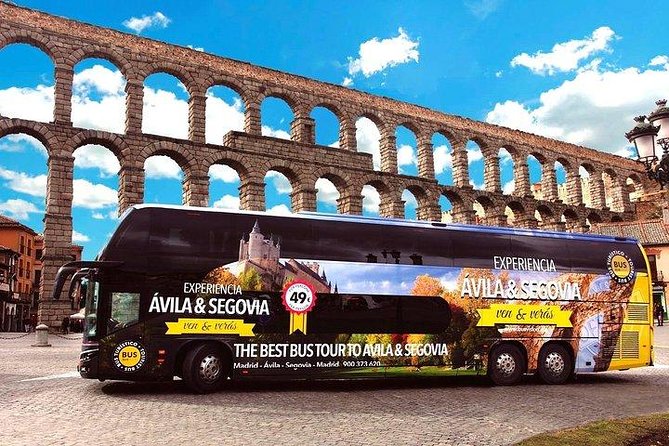
- round-trip high-end bus from Madrid
- an English-Spanish guide
- guided walking tours in Ávila and Segovia
- tourist maps for two cities
- plus an included Madrid city tour you can take later when it’s convenient
The no-entry-fees note matters too. When a day trip includes the main landmarks without forcing extra ticket purchases, it lowers the chances that your final cost jumps after you arrive. (Still, if anything costs money on the day you go, treat it as an extra, not a surprise bill.)
Where value gets personal is your tolerance for long travel time. If you’re the type who wants to maximize sights per day, this delivers. If you hate spending hours on a bus, you’ll likely feel it.
Getting started in Madrid: the 9:00am meeting point
The tour starts at C. de San Bernardo, 5, Centro, Madrid, with a 9:00am departure. The meeting point is described as being near public transportation, which is useful if you’re staying somewhere that isn’t walkable to the center.
This is also a tour you’ll want to treat like a timed appointment. One late minute can cost you the departure window. When the group is 55 people, there’s not much buffer time built in.
Tip I’d follow: on the morning you go, give yourself extra slack to find the exact pickup spot and avoid Metro-route surprises. You’ll be happier when the day starts calm.
The long ride: comfort, timing, and where to rest your brain
The day runs for about 11 hours, because you’re crossing from Madrid out to Ávila and Segovia and back. That’s the price of seeing two UNESCO cities in one shot.
On comfort: you’re on a high-end bus, which typically means better seating and better ride feel than older coaches. That said, comfort can still be affected by weather and ventilation, so if heat affects you, dress in light layers and carry a water bottle. (This doesn’t mean the bus will be uncomfortable, but it’s smart to plan for Spanish spring or summer conditions.)
Timing-wise, you can use the bus ride as a reset. Many people enjoy using that time to nap or just recharge for the walking segments. You’ll have enough steps that you want your energy for the walls and the Segovia center.
Ávila: the Town of Stones and Saints and your walking orientation
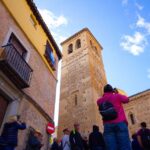
Ávila is often described with a nickname that points to its religious architecture: a town with a very high number of Romanesque and Gothic churches per capita in Spain. Even if you don’t count them, you can feel the density of history in the way the streets and church sites seem woven into everyday life.
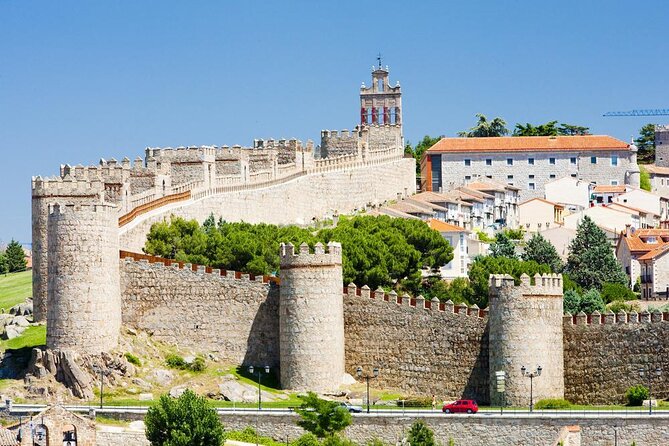
Your time in Ávila includes a guided walking tour, plus a focus on the city’s signature defensive feature: the Walls of Ávila. The guide helps you connect the stone to a timeline, including why these walls mattered and why they’re considered such a major survival of medieval fortification design.
What you’ll notice quickly is how the walls set a visual frame around the whole town. Even when you’re not right on top of the wall line, you’re seeing the town through that medieval boundary.






The Walls of Ávila: why these fortifications still feel impressive
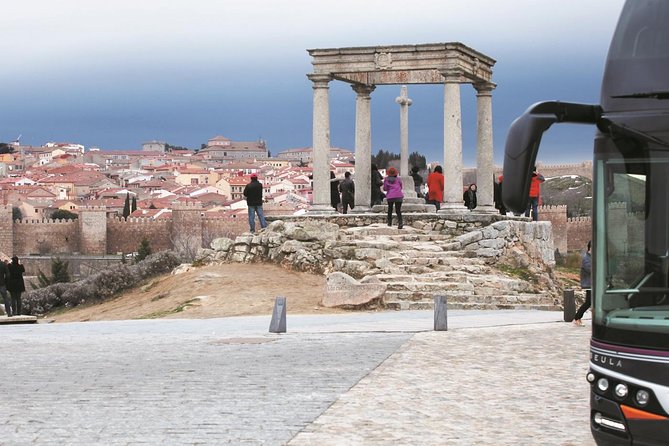
The Walls of Ávila, completed between the 11th and 14th centuries, are described as the principal historic feature of the city and the most complete in all of Spain. That’s a big claim, but it matches what the walls do visually: they still read as a continuous system, not just scattered sections.
As you walk and look, focus on the engineering logic. Fortification walls aren’t only about blocking enemies. They’re also about controlling movement, signaling status, and defining the city’s edge. When you get a guide talking through that, the walls stop being “old stone” and start being a design.
Practical advice: wear comfortable shoes. The walls and viewpoints often reward a slow stroll. If your legs get tired, use the map to pick the best sections rather than trying to cover every corner.
Segovia in three big images: aqueduct, cathedral square, Alcázar
Segovia is the kind of city that gives you famous landmarks fast. You don’t need a deep GPS hunt to see why it’s famous.
The Roman aqueduct: old water, still dramatic
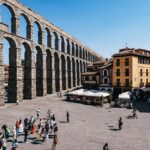
Segovia’s aqueduct is described as one of the best-preserved elevated Roman aqueducts and a foremost symbol of the city. It’s not a museum piece behind glass. You see it in the open, and you can walk close enough to appreciate the scale.
The wow factor here is proportion. Roman architecture is often about survival through time, but the aqueduct also shows Roman confidence in moving water across real terrain. When you stand under or near it, you start understanding how the city functioned before modern plumbing.
Segovia Cathedral: Gothic in the main square
The Segovia Cathedral is Gothic-style Roman Catholic, located in the main square. The dedication is to the Virgin Mary, and the building is described as built in Gothic style in the mid-16th century.
Even if you don’t go inside, the cathedral’s placement matters. It anchors the city center. It also helps explain why Segovia developed around the civic and religious heartbeat, with the cathedral square acting like a natural meeting point.
The Alcázar of Segovia: the ship-bow silhouette
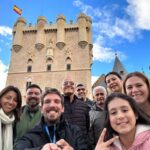
The Alcázar of Segovia is one of Spain’s most distinctive castle-palaces, rising above a rocky crag near the confluence of two rivers by the Guadarrama mountains. The tour description highlights a key visual: it looks like the bow of a ship.
That shape is part of why it’s so easy to recognize. It’s also why the building has had multiple lives: originally a fortress, later used as a royal palace, a state prison, a Royal Artillery College, and a military academy. Today, it functions as a museum and a military archives building.
When your guide points these roles out, it changes how you look at the walls and towers. You stop seeing only “castle” and start seeing a building that kept getting re-invented as power needs changed.
Free time strategy in Segovia: maps, directions, and food costs
You’ll have some time to explore on your own in Segovia, with a tourist map and directions given by the guide. This is where you can slow down and do what makes these places enjoyable: linger for views, pick a side street, and walk back toward the central sights when you want.
One consideration: food can be pricey in the center. If you’re cost-conscious, treat meal planning as part of your day strategy, not an afterthought. Pick a place early enough that you’re not stuck with the first tourist menu you see.
Also note that there may be an optional extra guided walking tour when you arrive. In at least one case, the communicated price differed from what was presented at payment time. So if you’re interested in any add-on, confirm the exact price before you hand over cash. This small step can save real stress.
English guide expectations: what to do if you rely on English
The tour is offered in English, and the guide role is described as English-Spanish. That’s a good sign for most people.
But language balance can vary by group mix and by guide style. Some departures have guides who keep their English clear and directions easy to follow. Others may tilt more Spanish than you’d want, especially if the group is mostly Spanish-speaking.
My practical advice:
- Choose this tour if you’re comfortable with some Spanish, but you still expect English explanations.
- If English is a must, consider messaging before booking to confirm the guide will work in English for your group.
You’ll get the most out of the day if you can follow the story behind each stop, not just the location name.
Group size and the pace: the value of staying together
With a maximum of 55 travelers, you’re not in a private tour, but you’re also not in a huge crowd. The guide’s job is to keep everyone on track between the bus and walking segments.
This matters because the day includes multiple landmarks that can’t be reached efficiently if people scatter too far. A strong guide will point out where you should be and what order makes sense when you’re on your own.
If you’re the type who needs frequent rest breaks, build those in during the bus ride and during the town walking areas where you can step aside without losing the main route.
Who this tour fits best, and who should think twice
This is a good match if:
- you want two UNESCO cities in one day from Madrid
- you like structured history plus some personal wandering time
- you’re interested in major icons like the Segovia aqueduct, cathedral square, and the Alcázar
It’s worth thinking twice if:
- you dislike long travel days (about 11 hours)
- you need consistently strong English throughout the full day
- you’re extremely sensitive to discomfort from crowding or hot weather on transport (a day like this can get warm)
Also, if you enjoy planning your own route and you’re confident with public transit, you might prefer building your own Madrid day plan. But if you’d rather let someone else handle the timing, this setup is built for that.
Should you book Ávila and Segovia from Madrid?
I’d book it if you want a high-value heritage day with just enough guidance to make the architecture and fortifications click. The walls of Ávila, the Roman aqueduct, the Gothic cathedral square, and the Alcázar’s ship-bow silhouette are the kind of sights that feel worth the bus ride, especially when they’re paired with walking tours and maps.
I wouldn’t rush if your main goal is a slow, relaxed day with minimal transportation. This trip is a classic “see a lot” day.
One last thing: if you’re traveling with someone who gets stressed by tight timing, treat arrival at the meeting point as non-negotiable. This is one of those tours where calm starts on the curb.
FAQ
How long is the Ávila and Segovia guided tour from Madrid?
It runs for about 11 hours.
How much does the tour cost?
The price listed is $60.01 per person.
What time does the tour start?
The start time is 9:00am.
Where do we meet for the tour in Madrid?
The meeting point is C. de San Bernardo, 5, Centro, 28013 Madrid, Spain.
Is the tour round-trip from Madrid?
Yes. Round trip transport by high-end bus to Segovia and Ávila is included.
Are walking tours included in both cities?
Yes. You get a guided walking tour in Ávila and a guided walking tour in Segovia.
Is the tour available in English?
Yes. It is offered in English, and the guide provides English-Spanish guidance.
Is there a limit on group size?
Yes. The maximum group size is 55 travelers.
Are there entry fees included for major landmarks?
The tour highlights landmarks like the Cathedral and Alcázar of Segovia with no entry fees.
Can I get a refund if I cancel?
There is free cancellation up to 24 hours before the experience’s start time for a full refund.
If you want, tell me your travel month and whether you prefer lots of free time or more explanation, and I’ll help you decide if this pace fits your style.