REVIEW · MADRID
Guided tour of the Madrid of spies
Book on Viator →Operated by Carlos · Bookable on Viator
Madrid has a second map: the spy one.
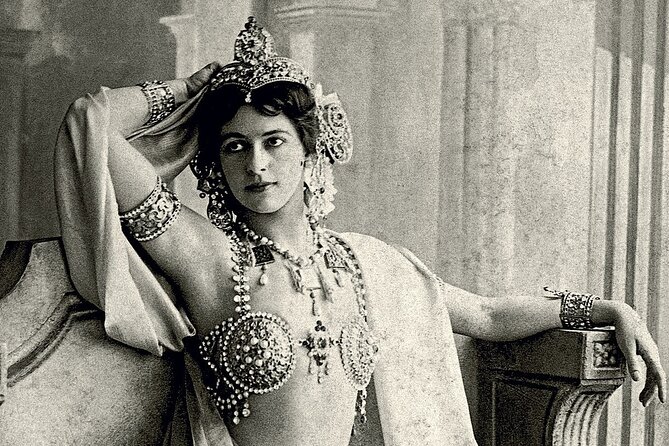
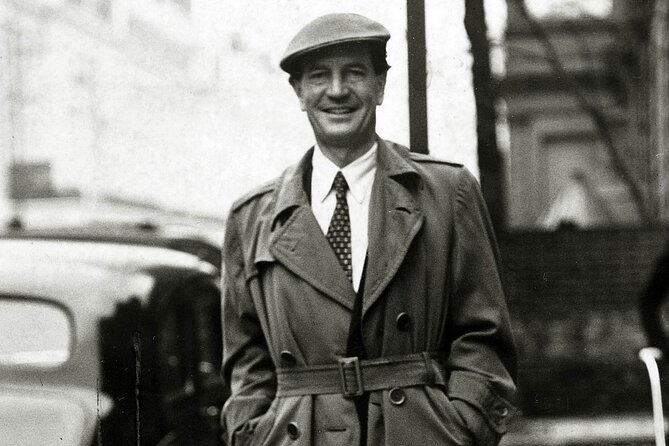
This guided route strings together espionage landmarks tied to the Golden Age of spies, with stories that connect figures like Mata Hari, Garbo, the Countess of Romanones, and Philby to the city streets. I like that it stays human-scale: you’re not just staring at plaques, you’re learning how these networks worked, and what kind of places helped them operate. One thing to consider is that it’s a compact 2-hour walk with moderate fitness needed, so wear shoes you trust.
I also like how the tour is anchored in specific sites: a former British Embassy, a preserved German-embassy church, and meeting points like Old Cafe Lion and Horcher. The guide, Carlos, answers questions and keeps the pace moving so the story actually lands, not just as trivia but as a clear picture of who met where and why. The route is limited to a maximum of 20 people, which helps you ask follow-ups instead of getting lost in the crowd.
If you’re hoping for heavy museum time or lots of interior access, this isn’t that kind of tour. Most stops are short city blocks at key landmarks, so you’ll want to show up ready to walk and pay close attention at each one.
In This Review
- Key highlights you’ll feel fast
- Madrid of Spies: what you’re really buying with the low price
- Meet Carlos, and match the day language to your schedule
- Stop 1: Antigua Embajada Británica at the start of the spy story
- Stop 2: Robuchon Madrid and the feel of a secret embassy
- Stop 3: Friedenskirche, the preserved German-embassy peace church
- Stop 4: Calle Alcalá 57 and Old Cafe Lion, where stories begin
- Stop 5: Horcher, German elite meetings, and a spy hunter’s trail
- Stop 6: Mandarin Oriental Ritz, Madrid and secret negotiations in style
- How to make the most of the 2-hour pacing
- The spy-story thread: why these names and places belong together
- Should you book the Madrid of Spies tour?
- FAQ
- FAQ
- What is the duration of the Madrid of spies guided tour?
- What languages are offered, and which days?
- How much does it cost?
- Is the tour a group experience?
- Do I need a printed ticket?
- Where do I start and where does it end?
- Are there any admission fees at the stops?
- Is the tour accessible for people with limited mobility?
- Is the tour near public transportation?
- Are service animals allowed?
- What if my plans change and I need to cancel?
Key highlights you’ll feel fast
- A tight 2-hour route focused on spy meeting places around Madrid’s core neighborhoods
- Carlos guides in English or Spanish depending on the day of the week
- WWII and beyond context that explains how the spy world functioned, not just who was famous
- Free admission listed at each stop, which makes the price feel unusually fair
- Small-group size (max 20) so Q&A actually happens
- A guided story with a playful confidential vibe that keeps it fun, not lecture-only
Madrid of Spies: what you’re really buying with the low price

The price is listed at $3.44 per person, which sounds almost too good for a guided, English/Spanish experience. What makes it believable is that the tour’s stops are built around landmarks where there’s no paid add-on admission listed at each stop, so you’re mainly paying for the guide and the story thread that connects the places.
And the value isn’t only the number. The tour lasts about 2 hours, which is long enough to get the “how it all connects” effect, but short enough to fit into a day of museums and food stops. You’re also getting a mobile ticket, so you can keep things simple and not fuss over paper.
Think of this as a pay-for-your-guide kind of walking tour. The sites do the scenery work, and Carlos does the explanation work—turning Madrid into a readable spy map.
You can also read our reviews of more guided tours in Madrid
Meet Carlos, and match the day language to your schedule
Carlos is the provider, and he’s the key variable here—because this kind of tour lives or dies on whether the guide can answer questions. From what you’re told in the experience description and supported by the guide reputation, Carlos is willing and able to respond thoughtfully when you ask.
Language depends on the day:
- English runs Mon, Tue, and Sat
- Spanish runs Wed, Fri, and Sun
That matters if you’re planning more than one activity in Madrid. You can line this up with your Spanish study goals or keep it comfortable in English. Either way, the tour stays focused on the same storyline.
The group is capped at 20 travelers, which is a big deal for this subject. Spy stories get better when the guide can pace the talk around your questions, not just deliver a monologue.
Stop 1: Antigua Embajada Británica at the start of the spy story
You begin at Antigua Embajada Británica on C. de Fernando el Santo, 16 in Chamberí. This is the kind of starting point that instantly sets the mood. A former British Embassy is not a generic “interesting building”—it’s the epicenter for British espionage activity in Spain during World War II, at least as the tour presents it.
This stop is your anchor. Carlos uses it to set expectations for the walk: this isn’t about vague espionage myths; it’s about where operations formed, where people had reasons to look casual, and how buildings became tools. If you’ve ever wondered why embassies mattered beyond diplomacy, this is where the answer starts.
Time here is about 20 minutes, which is longer than the rest of the route. That’s smart. You need a foundation before you sprint to the next names and addresses.
Stop 2: Robuchon Madrid and the feel of a secret embassy
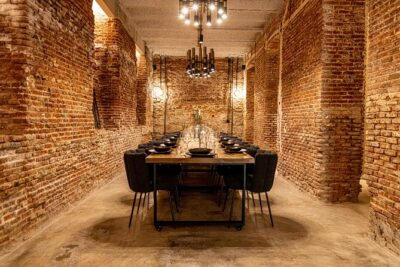
From the British Embassy you head to Robuchon Madrid. The tour frames it as the old embassy and calls it a British clandestine operations center—also described as a secret embassy.
This is where the walking tour format pays off. A restaurant name alone doesn’t explain its former role. With Carlos guiding, you get to practice a useful Madrid skill: noticing how layers of history survive under everyday life. Even if you never step inside, you’ll look at the building differently because you know why it mattered.
This stop is short—around 10 minutes—so treat it like a checkpoint. Listen closely, then get ready for the next switch in geography and power centers.
Stop 3: Friedenskirche, the preserved German-embassy peace church
Next up is Comunidad Evangélica de Habla Alemana – Friedenskirche. The tour describes it as a Peace Church and notes it as the only preserved building of the former German embassy.
That line matters. If you want a tangible link to the past, preserved structures do the heavy lifting. This is the kind of stop where you can feel the tour’s logic: spies and intelligence networks used many settings, but embassies and their remnants often become the physical breadcrumbs.
At about 10 minutes, you won’t get a long sit-down. But the point is to connect the dots: how a place associated with a former embassy can survive as a church, while the rest of the diplomatic machinery moved on.


Stop 4: Calle Alcalá 57 and Old Cafe Lion, where stories begin
At C. Alcalá, 57, the tour shifts to a more social kind of espionage. It points to Old Cafe Lion as a German spy meeting point, described as the place where the adventure of the most important Spanish spy in history begins.
This stop is especially good if you like spy stories that feel gritty and everyday. Meeting in a cafe sounds ordinary, which is exactly why it worked. Intelligence work often hides in plain sight—people going about their routine while information moves under the surface.
Expect another 10-minute segment. That means you should keep your attention tight here. Carlos usually makes stops like this click by explaining why cafes and salons can be useful for contact, observation, and rumor-control.
Stop 5: Horcher, German elite meetings, and a spy hunter’s trail
Next is Horcher, described as a meeting point for the German elite. This stop is also tied to the history of the most prolific spy hunter mentioned in the tour storyline.
Horcher is a name you might recognize, but the tour gives it a different job. Instead of thinking of it as just a place to eat, you learn to see it as a node—where power groups gathered and where intelligence could be noticed, tracked, or intercepted.
Again, the timing is about 10 minutes, so this is more about story momentum than lingering. If you like rapid-fire context, you’ll enjoy this stretch. If you prefer slower pacing, you’ll want to ask Carlos a question here so the stop doesn’t pass too fast.
Stop 6: Mandarin Oriental Ritz, Madrid and secret negotiations in style
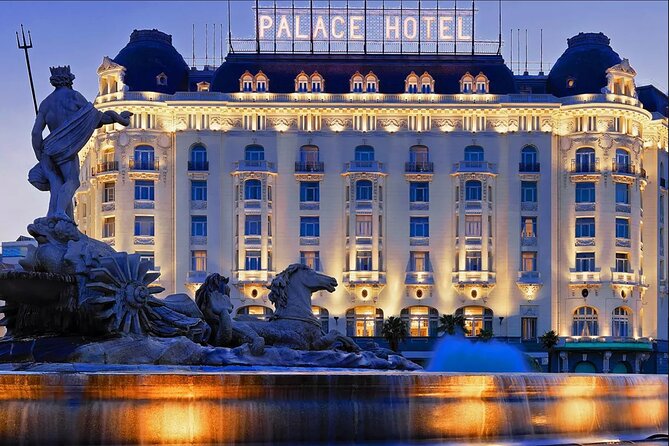
The final major stop is Mandarin Oriental Ritz, Madrid. The tour presents it as a place of secret negotiations and even as a residence connected to the greatest spies.
This is your “spy glamour” moment, and it helps balance the walk. Earlier stops focus on embassies and meeting points. This one reminds you that intelligence doesn’t only live in dim corners; it also travels through high-status rooms where people can talk and disappear into a normal-looking routine.
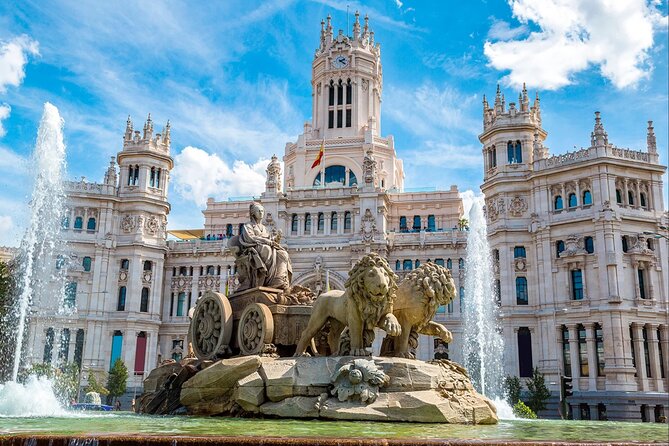
You’ll have about 10 minutes here, and the point is to land the theme: espionage is a system, and it reaches every social layer. After that, the tour ends at Neptune Fountain at Pl. Canovas del Castillo, s/n in Centro.
How to make the most of the 2-hour pacing
The whole thing runs about 2 hours. With six stops (each mostly around 10 minutes, plus a longer first stop), you’re dealing with a steady rhythm. That’s ideal if you like walking tours that keep energy high.
Two practical tips from how this tour is structured:
- Use the longer first stop as your setup. If you ask your main questions at the start, later stops will feel easier to understand.
- Bring a phone with your notes. A mobile ticket is part of the experience, and it also helps you keep a quick list of the sites so the story doesn’t blur when you hit your next Madrid plan.
The description asks for moderate physical fitness. That doesn’t mean anything extreme, but it does mean you should expect frequent walking and standing at street-side landmarks.
Also, the tour is near public transportation, so if you’re combining it with other stops, you can switch plans without stress.
The spy-story thread: why these names and places belong together
What I like about this route is the way it treats famous names as entry points, not ends in themselves. The experience frames Madrid as a capital of espionage during the two world wars, and it uses that big idea to connect to personal stories tied to the Golden Age of espionage.
When you hear about figures like Mata Hari, Garbo, the Countess of Romanones, and Philby, the value isn’t in celebrity alone. It’s in seeing how entertainment-era mystique and real intelligence work can share the same meeting rooms, intermediaries, and rumors. Carlos also supports the story with practical answers to questions, which is how you turn names into mental pictures.
One more detail: the tour description includes a playful line that everything you hear and see is strictly confidential. That’s mostly a storytelling device, but it gives the walk a theatrical tone. In practice, it encourages you to treat the information as part of the experience instead of immediately Googling it mid-walk.
If you’re the type who likes to connect themes across Europe—WWII history, Cold War whispers, and how cities hide their past—you’ll find the pacing keeps you oriented.
Should you book the Madrid of Spies tour?
Book it if you want:
- A small-group, guide-led walking tour with strong Q&A potential
- A clear 2-hour structure with specific spy-related sites rather than generic history
- A chance to learn how espionage connected to real locations, from embassies to elite meeting places
- The comfort of an English or Spanish schedule that matches multiple days (Mon/Tue/Sat in English; Wed/Fri/Sun in Spanish)
Skip it if you mainly want museums, long interior visits, or slow-stroll sightseeing. This is a story-on-the-move tour. The payoff comes from listening and noticing how buildings change meaning when you know their past.
If you’re deciding for your Madrid itinerary, I’d place it early in a day when you can stay curious afterward. Once you’ve got the spy-map in your head, Madrid’s landmarks start feeling like plot points.
FAQ
FAQ
What is the duration of the Madrid of spies guided tour?
The tour lasts about 2 hours.
What languages are offered, and which days?
English runs on Mon, Tue, and Sat. Spanish runs on Wed, Fri, and Sun.
How much does it cost?
The price is listed as $3.44 per person.
Is the tour a group experience?
Yes. The maximum group size is 20 travelers.
Do I need a printed ticket?
No. The tour uses a mobile ticket.
Where do I start and where does it end?
You start at Antigua Embajada Británica on C. de Fernando el Santo, 16 in Chamberí, and you end at Neptune Fountain on Pl. Canovas del Castillo.
Are there any admission fees at the stops?
The stops listed in the itinerary show admission ticket free.
Is the tour accessible for people with limited mobility?
The experience is described as requiring moderate physical fitness, so you should be comfortable walking and standing for short periods.
Is the tour near public transportation?
Yes, it is listed as near public transportation.
Are service animals allowed?
Yes, service animals are allowed.
What if my plans change and I need to cancel?
Cancellation is free, and you can cancel up to 24 hours in advance for a full refund.