REVIEW · MADRID
Madrid City Guided Bike/E-Bike Tour for Small Groups
Book on GetYourGuide →Operated by BRAVO BIKE SL · Bookable on GetYourGuide
Three hours on two wheels gives Madrid bearings. This small-group tour strings together big landmarks and lived-in neighborhoods, with stops at Debod Temple and Retiro Park plus a guide who explains what you’re seeing as you ride.
I like that you get bilingual guidance (English and Spanish, with other languages possible for private tours) while cruising through royal-era Madrid, markets, and classic squares. I also like the practical setup: multigear bikes, optional E-bike for the gentler climbs, and a photo habit that turns the ride into an instant souvenir.
One heads-up: this isn’t a flat, leisurely stroll. You need to be a regular cyclist, handle city bike traffic calmly, and expect some gentle uphill work along the way.
In This Review
- Key Points Worth Noting Before You Pedal
- Why This Bike Tour Works So Well in Madrid’s City Center
- Meeting at Plaza de España: Fast Start, Central Finish
- The Bikes, Helmets, and E-Bike Upgrade That Actually Matter
- Stop by Stop: Debod Temple, Royal Palace Area, and Almudena
- Plaza Mayor and Puerta del Sol: Getting Your Madrid Coordinates
- Plaza de Santa Ana and Las Letras Quarter: Old Streets With a Local Pulse
- Las Cortes and the Spanish Parliament Area: Power, Public Space, and Style
- Retiro Park and the Crystal Palace Area: When the Ride Gets Greener
- Alcalá Gate, Serrano, and San Antón: Leaving the Park for Real Life Streets
- Pricing and Value: Is $41 Fair for a 3-Hour Guided Ride?
- The Photo Album Bonus (Yes, It’s Worth It)
- Who This Tour Fits Best (And Who Should Skip It)
- What to Bring So You Don’t Waste the Day
- A Quick Reality Check: What You’ll Walk Away With
- Should You Book This 3-Hour Madrid Bike Tour?
- FAQ
- How long is the Madrid city guided bike/e-bike tour?
- How much does the tour cost?
- Where do I meet the tour?
- What landmarks will I see during the 3-hour ride?
- Can I choose a regular bike or an e-bike?
- What’s included in the price?
- Are entrance fees included?
- What should I bring and wear?
- Does the guide take photos?
Key Points Worth Noting Before You Pedal
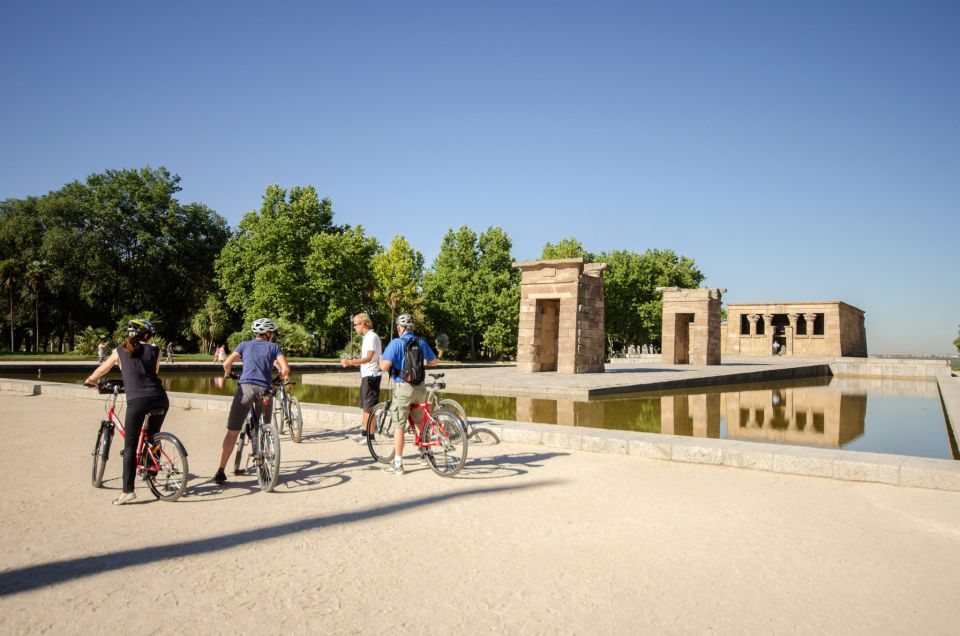
- Debod Temple at the start sets a strong tone before the tour shifts into palace and cathedral territory.
- A true mix of sights and neighborhoods: Royal Palace area, La Latina, Malasaña, and Chueca, not just a list of monuments.
- E-bike upgrade helps with hills for an extra €10, which many people find worth it.
- Stops are frequent enough to absorb details without turning the ride into an exhausting sprint.
- Your guide takes photos during the tour and sends them as a digital album by email.
- Meet near Plaza de España (close to metro lines 10 and 3), so you’re already in central Madrid when you start.
Why This Bike Tour Works So Well in Madrid’s City Center
Madrid is perfect for bike exploring because distances in the center are close, and the city gives you that mix of grand architecture and everyday street life. The trick is getting around without losing your bearings. This tour’s format solves that: in three hours, you cover a stack of central highlights, then weave through districts that feel more like where Madrid actually happens—markets, café streets, and local squares.
What makes it especially good value isn’t only the headline landmarks. It’s the way the route is paced and explained. You’re not just passing by stone and statues. A professional bilingual guide (you might have names like Kaspar, Casper, Alex, Albero, or Javier depending on the day) ties each stop to context you can actually remember later when you’re walking on your own.
And yes, you still ride. This is the best kind of active sightseeing: you move, you pause, you move again. If you’re comfortable cycling in an urban environment, you’ll likely find you cover more ground than you would on foot—without the disconnect of a bus route.
You can also read our reviews of more cycling tours in Madrid

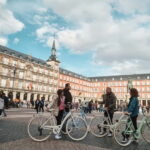
Meeting at Plaza de España: Fast Start, Central Finish
You start at the Plaza de España area, about a 3-minute walk from the northwestern side of the square, and it’s easy to reach via metro lines 10 and 3. This matters because it cuts down the “getting there” time. You’re already in the heart of the action before the tour even begins.
The route also loops back to the central shop area by the end. That means you can roll straight into your next plan—food, museums, or a relaxed wander—without having to figure out how to get across town at the end when you’re tired.
If you’re carrying anything you don’t want to haul around, there’s luggage storage on site, plus lockers available. That’s a quiet perk that makes the whole experience feel smoother.
The Bikes, Helmets, and E-Bike Upgrade That Actually Matter
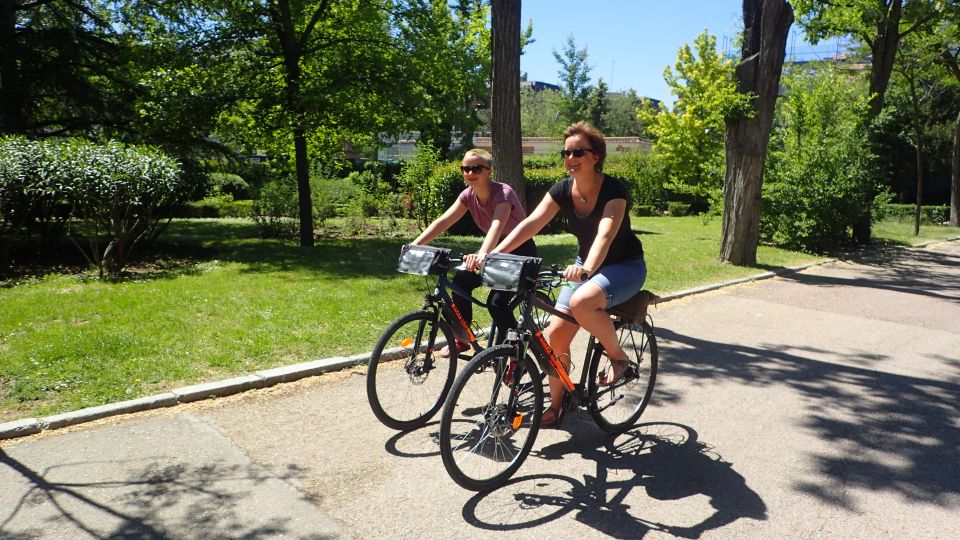
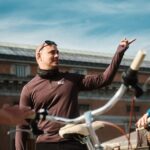
Your rental is a multigear bike, plus you get a handlebar bag for items like a water bottle or small personal essentials. Helmets are optional for adults, but required for children up to 16. That’s one of those details that sounds minor until you’re out on the road and realize everyone’s on the same page.
The tour also offers an E-bike option for an extra €10. I’d treat that as your “smart comfort decision,” not a luxury splurge. Even though the itinerary includes only gentle uphill sections, there’s still enough climbing that an E-bike can keep the ride feeling relaxed. One reviewer specifically noted that an E-bike was the way to go when hills showed up.
If you’re a strong rider already, a standard bike might be totally fine. If you’re planning to do a lot of walking later that same day, the E-bike helps you save energy for what matters after the ride.
Stop by Stop: Debod Temple, Royal Palace Area, and Almudena
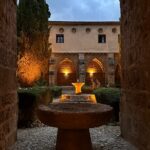
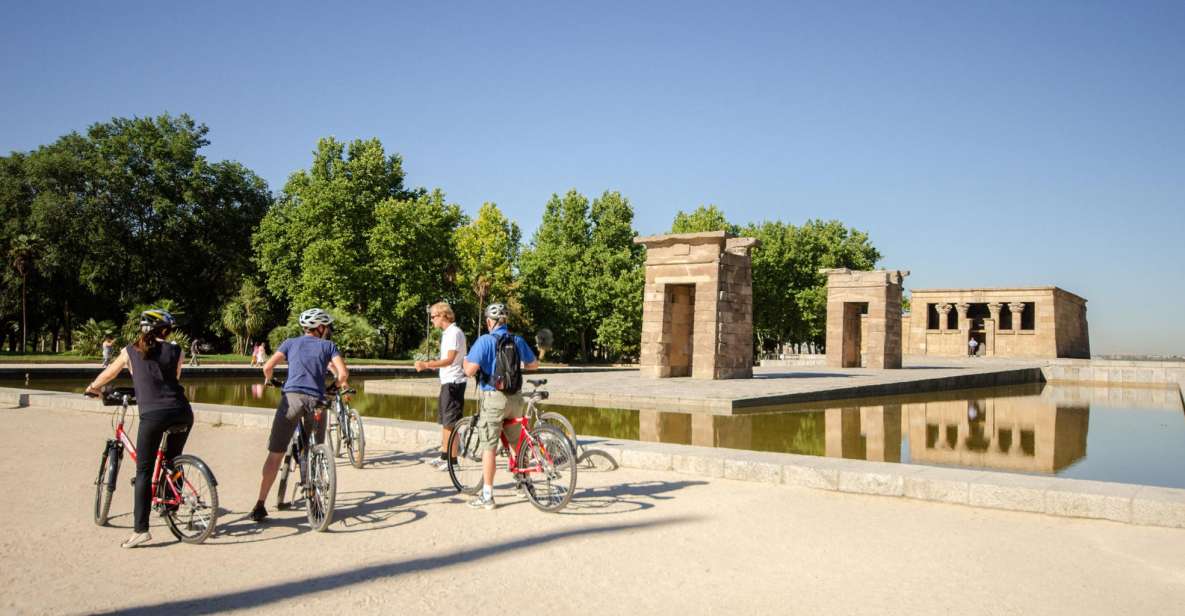
The tour kicks off with Egyptian Temple of Debod. This is a memorable choice because it’s not what most people expect to see in Madrid. Even if you’ve never researched it, the temple feels like a culture-story that makes the first phase of your sightseeing feel special, not just standard “big building” sightseeing.
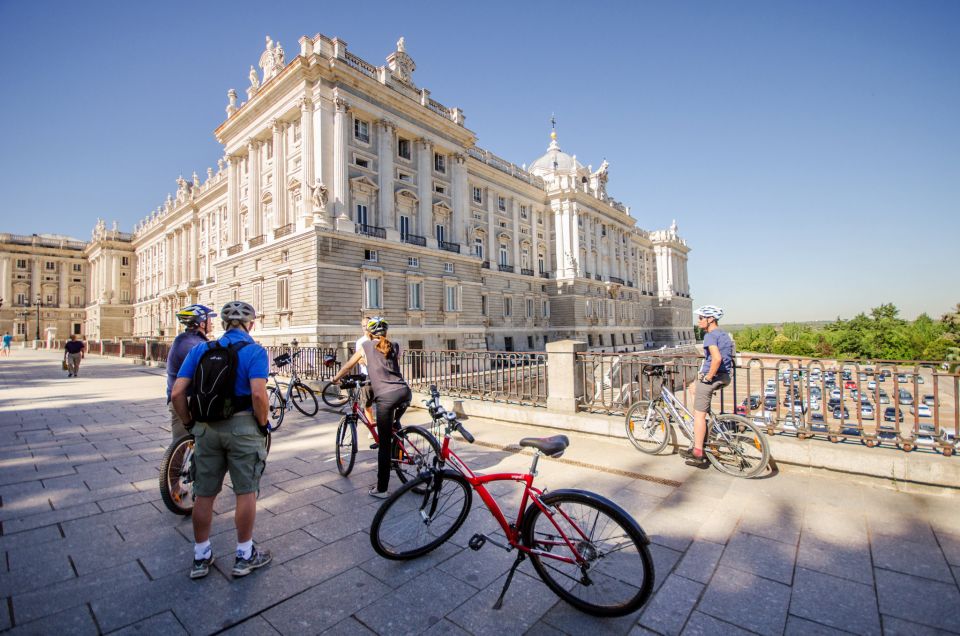
From there you ride past the Royal Palace and continue toward the Almudena Cathedral area. The point here is orientation. You’ll start to see how the royal-civic core of Madrid connects to the older streets nearby. The cathedral stop also helps you understand why people talk about Madrid’s mix of architectural styles—you’re seeing the city as a layered timeline, not one frozen postcard.
You’ll also get a quick rhythm: ride a short segment, stop and learn, then move on. This keeps you from turning the day into a series of long “standing around reading plaques” moments.
Plaza Mayor and Puerta del Sol: Getting Your Madrid Coordinates
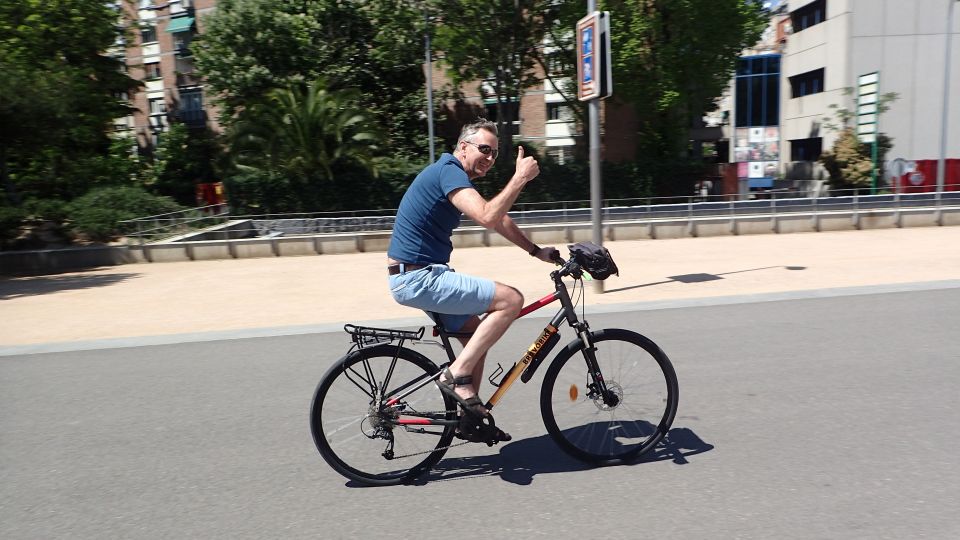
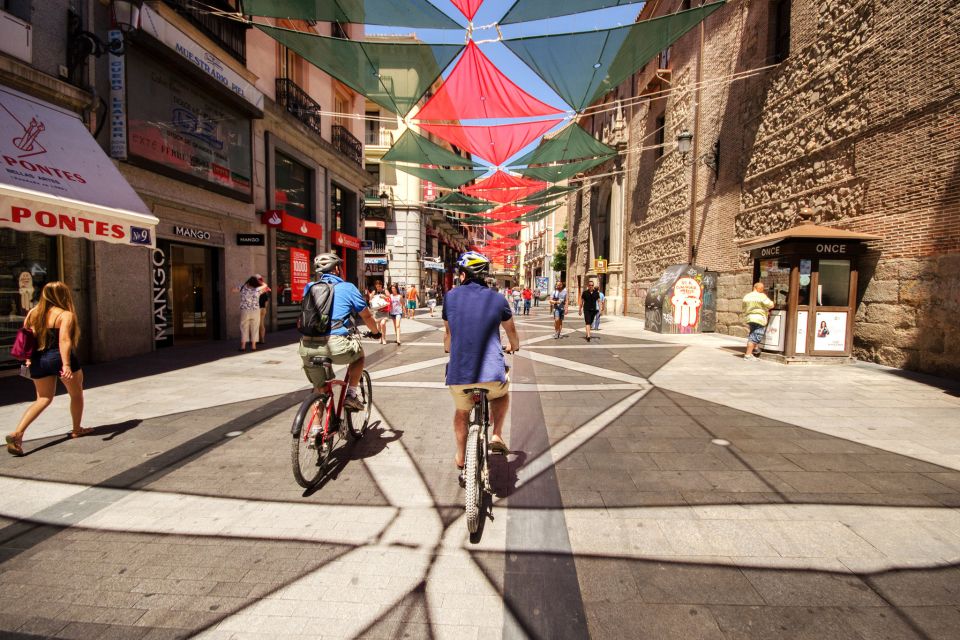
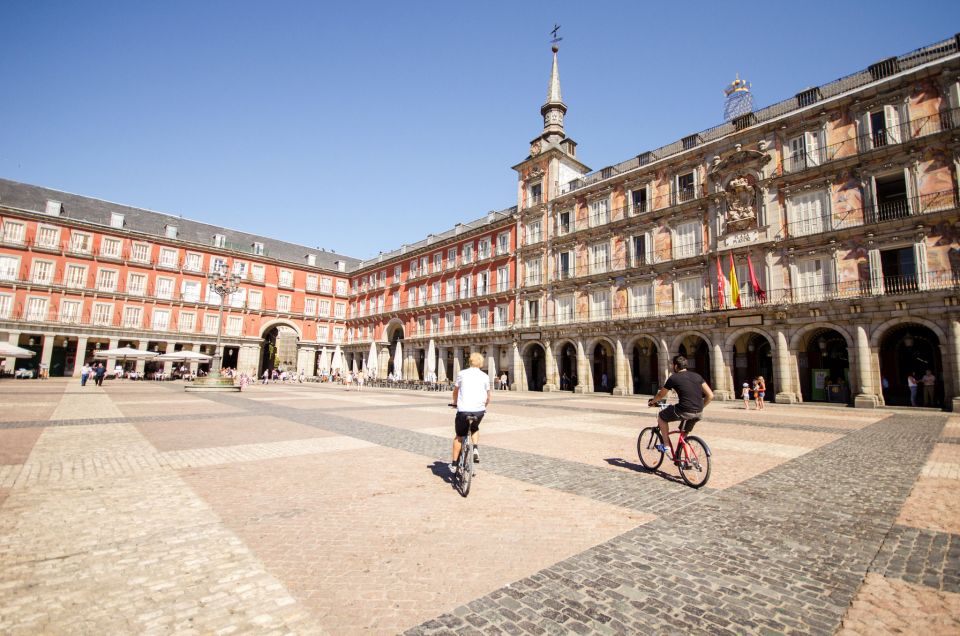
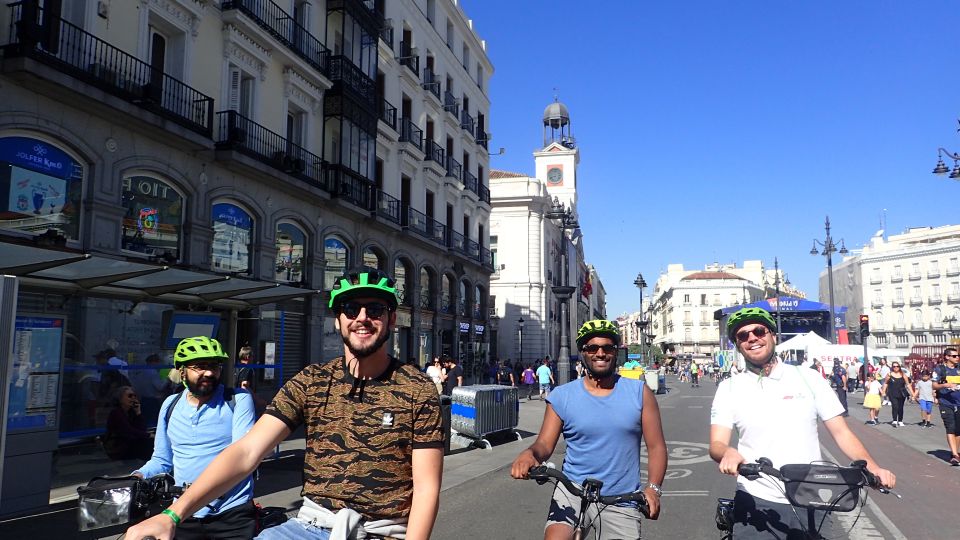
After the cathedral area, the tour flows to Plaza Mayor and then toward Puerta del Sol. These are the kinds of squares that are crowded for a reason: they’re the emotional centers of the city. Seeing them from a bike is different than arriving on foot. You get a better sense of how streets funnel into these spaces.
The guide’s explanation is what turns those stops into more than photo ops. You’re learning what to notice—how the city’s “center” functions historically and how the squares relate to each other. Even if you don’t memorize every date, you’ll remember the geography.
Then the route shifts again toward a more lived-in feel, heading toward Plaza de Santa Ana in the literary district. This is a good pivot because it changes the mood from monumental to human-scale.
You can also read our reviews of more guided tours in Madrid

Plaza de Santa Ana and Las Letras Quarter: Old Streets With a Local Pulse
At Plaza de Santa Ana, you’re in the heart of Madrid’s literary and nightlife energy (even if you just experience it in daylight). The tour uses this stop to show you the other side of Madrid: the streets where people linger, not just the roads built for royal processions.
From there you continue through the Las Letras area, with time on the bike that keeps the day moving while still allowing a proper look. I like this segment because it gives you a contrast. You’re not stuck in grand architecture the entire time, and you get to see how the city’s texture changes district by district.
Las Cortes and the Spanish Parliament Area: Power, Public Space, and Style
Another key moment is Las Cortes, where the tour passes by and stops near Spain’s parliament lower house. This is a smart inclusion because it adds a political civic layer to your sightseeing map.
Even if you’re not planning to visit inside (entrance fees aren’t included), the outside stop helps you place what you’ll see later in other contexts—government buildings, ceremonial squares, and the way civic space is designed to be readable from far away.
Think of this stop as the tour’s “Madrid governance” chapter. It’s short, but it adds meaning to the city’s center.
Retiro Park and the Crystal Palace Area: When the Ride Gets Greener
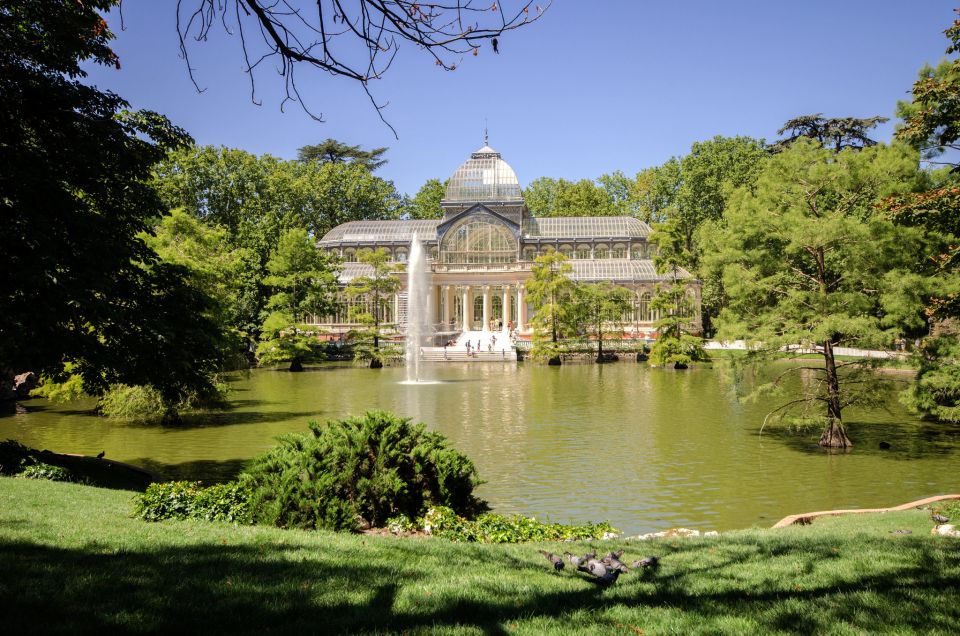
The itinerary includes a gentle climb toward Retiro Park, and once you arrive you get a proper park break instead of just riding past greenery. Retiro is one of those places where your brain needs a pause. It’s also where the tour feels most like a full-day Madrid moment compressed into three hours.
You can expect stops around major park highlights such as:
- the boating lake
- the Crystal Palace area
- and the Rose Garden in springtime
That springtime mention matters because the park’s seasonal beauty shifts the feel of the gardens. If you’re visiting during bloom season, this part of the tour can become your most “wow” segment.
This is also a good spot for your legs. You’re not only sitting still—there’s a walk-and-look rhythm—but it’s more forgiving than pure city cycling.
Alcalá Gate, Serrano, and San Antón: Leaving the Park for Real Life Streets
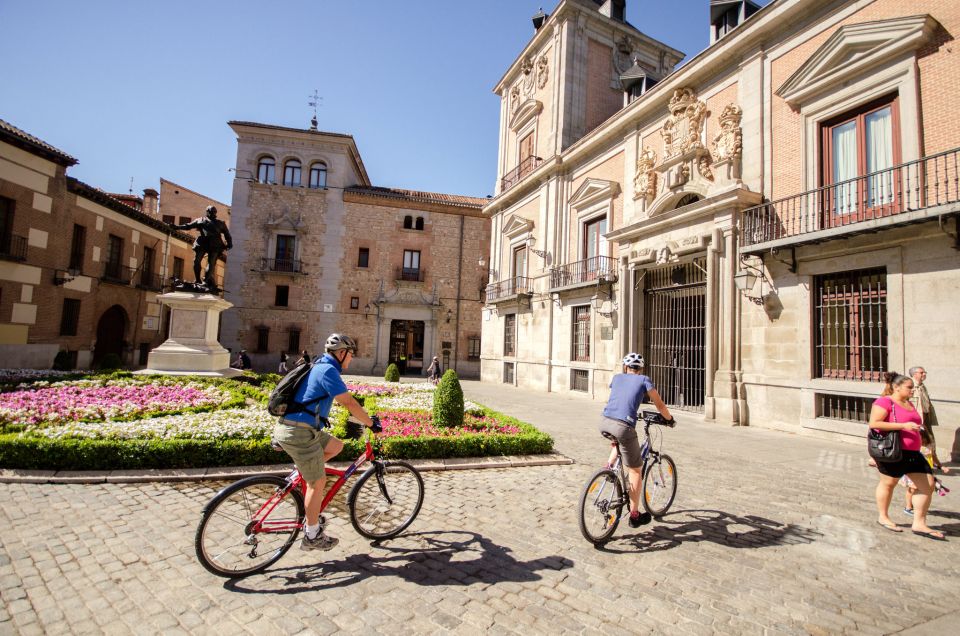
After the park, you roll out past the imposing Alcalá gate, then continue along Calle Serrano and cross over Recoletos avenue. That’s a different Madrid look: you move from park calm back into the urban pulse.
Then comes San Antón market in the Chueca district. The tour’s logic here is excellent. Markets are where cities reveal their daily routine—what people actually buy, eat, and pass by without thinking. Even if you don’t go inside, the stop puts you in the neighborhood mindset.
From Chueca you wind through lively streets and then head into Malasaña, with a bike-friendly route through the café-and-boutique lanes. If you want to feel Madrid as a place people live, not just visit, these districts help you do that.
Pricing and Value: Is $41 Fair for a 3-Hour Guided Ride?
At about $41 per person for a 3-hour guided experience, the value equation mostly comes down to three things: guide time, bike quality, and coverage.
You get:
- guided commentary in multiple languages (standard is English; other languages are available for private tours)
- bike rental with multigear setup
- an included handlebar bag
- lockers and luggage storage options
Then there’s coverage. The tour is designed to hit major monuments and key central neighborhoods within one loop. That’s the part that feels like value, because getting this much “city orientation” on your own usually takes several separate outings.
If you choose the E-bike upgrade, add €10. For many riders, it’s the difference between “I did it” and “I enjoyed it.” If hills are a concern for you (or you’re juggling energy for a museum day later), I’d budget for the E-bike and treat it as part of making the tour enjoyable.
The Photo Album Bonus (Yes, It’s Worth It)
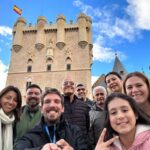
One of the nicest practical touches: the guide takes photos during the ride and forwards them as a digital album by email. That means you don’t need to stop every five minutes to fuss with your phone while you’re cycling.
It’s also a sneaky way to keep the tour fun. When you’re not constantly filming or snapping, you actually pay attention to what you’re seeing. The album becomes a memory you can share without turning the day into a solo production.
Who This Tour Fits Best (And Who Should Skip It)
This tour is recommended for cyclists who are at ease riding in a city environment. The route isn’t flat, with some gentle uphills. If you’re comfortable with that—and with traffic around you—you’ll likely love the balance of stops and motion.
It’s also a good “first Madrid orientation” activity. If it’s your first day or first time in the center, you’ll return with a working mental map and neighborhood sense.
It’s not a fit for:
- true beginners or people without regular cycling experience
- anyone who doesn’t want city biking exposure
- people with high blood pressure (not suitable)
- people with mobility impairments (not suitable)
- people over 275 lbs / 125 kg
For younger riders, a minimum age of 13 is suggested, assuming good command of the bicycle.
What to Bring So You Don’t Waste the Day
The tour is built for easy touring, but you still need to show up prepared.
Bring:
- sunglasses
- sunscreen
- sports shoes / closed-toe shoes
- weather-appropriate clothing and outdoor layers
Wear sportswear you can pedal in. Avoid high-heeels. Pets aren’t allowed, and intoxication isn’t permitted. Rain isn’t treated as a deal-breaker—ponchos cost €2, and the tour bicycles in rain or shine.
And if you need a quick hydration moment, water is available for €1 (but you’re also expected to bring personal water needs into the handlebar bag plan).
A Quick Reality Check: What You’ll Walk Away With
By the end, you’ll have a mental wiring diagram of central Madrid: palace-to-cathedral lines, old-square connections, and how neighborhoods like Malasaña and Chueca feel once you’re moving through them rather than stuck at the edge.
Most importantly, you’ll have a guided story for what you’re looking at. When you return later on foot, the architecture won’t feel like random landmarks. It’ll feel like a connected city.
Should You Book This 3-Hour Madrid Bike Tour?
Book it if you want a fast, active way to get your bearings and see major highlights in one go. It’s a solid pick for first-timers, for couples and friends who enjoy cycling, and for anyone who likes learning city context while still having fun.
Skip it if you’re a beginner cyclist, you dislike any uphill effort, or you prefer pure “sit and look” sightseeing. Also skip if mobility limitations or health concerns apply, since it isn’t set up for that.
If you’re on the fence about energy and hills, I’d lean toward the E-bike option. It’s only €10, and it keeps the experience in the zone of relaxed sightseeing instead of “survival pedaling.”
FAQ
How long is the Madrid city guided bike/e-bike tour?
The tour lasts 3 hours.
How much does the tour cost?
The price is listed as $41 per person.
Where do I meet the tour?
The meeting point is about a 3-minute walk off Plaza de España, on the northwestern side. You can reach it via Plaza de España metro lines 10 and 3.
What landmarks will I see during the 3-hour ride?
You’ll pass or stop at major sights including Debod Temple, the Royal Palace area, Almudena Cathedral, Plaza Mayor, Puerta del Sol, Plaza de Santa Ana (literary district), Las Cortes, and Retiro Park, plus areas like Chueca and Malasaña.
Can I choose a regular bike or an e-bike?
Yes. You can choose a regular bike or add an e-bike option for an extra €10.
What’s included in the price?
Included items are guide services in the selected language, multigear bike rental, and the 8-speed electric bike pedal assist if you select the e-bike option. You also get optional adult helmets (helmets are obligatory for children up to 16), a front handlebar bag, plus options for storing luggage, lockers, and child equipment like a baby seat or baby carrier (or followme tandem for children 5–7).
Are entrance fees included?
No. Entrance fees to attractions are not included.
What should I bring and wear?
Bring sunglasses, sunscreen, and sports shoes or other closed-toe shoes. Wear weather-appropriate clothing and outdoor layers. High-heeled shoes aren’t allowed.
Does the guide take photos?
Yes. The guide takes photos during the tour and sends them as a digital album by email.