REVIEW · MADRID
Madrid Downtown Segway Tour
Book on GetYourGuide →Operated by Madrid Segway. · Bookable on GetYourGuide
Madrid on a Segway beats walking fast. You’ll get a 90-minute spin through key old-town sights, plus a real training session before you move on to real streets. I like that the route is built around major landmarks like Plaza Mayor and the Royal Palace area, and you still end with a dramatic payoff at Temple of Debod. One thing to consider: you’ll need decent comfort with your balance and you’ll want to arrive on time, since the tour starts at a set meeting window.
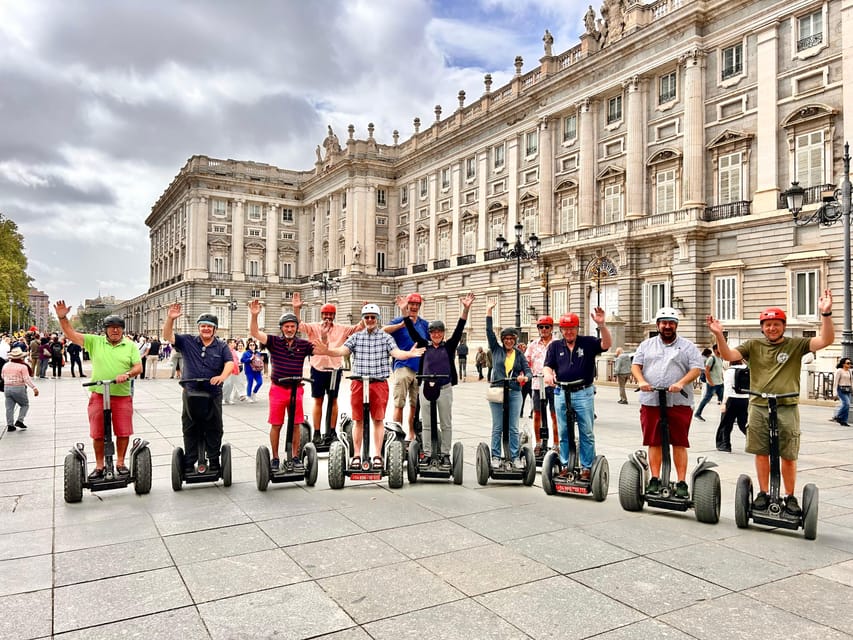
This is a small-group outing (up to 10 people) with a live guide in Spanish, English, or French. Guides tend to be upbeat instructors—names you may hear for teaching-first sessions include Allen, Christelle, Miguel, Guillermo, Ivan, and Alen—so first-timers usually aren’t thrown in cold. Still, if your legs tire easily or you dislike quick stop-and-go riding, this may feel a bit “active” for an hour and a half.
You’ll park yourself on a Segway, learn the basics in the shop area, and then glide through Madrid’s classic highlights in a way that’s hard to match with standard sightseeing. It’s also a nice “first bearings” option if you want to see the map in real life instead of just reading it.
In This Review
- Key things I’d watch for on this Segway tour
- Getting started at Calle Escalinata (and why timing matters)
- Training on the Segway: quick confidence before the landmarks
- Plaza de la Villa: medieval corners before the big postcard stops
- Plaza Mayor: history you can feel while you roll
- Calle del Factor: traditional streets between the landmarks
- Plaza de la Armería and the Royal Palace area: the big view moment
- Teatro Real: catching prestige from the sidewalk
- Plaza de España: Cervantes, Don Quixote, and big-city architecture
- Temple of Debod: the ending view (and why it’s a strong finish)
- What’s included (and how the extras affect value)
- Who this tour is best for (and who should think twice)
- Language and guide style: your comfort level matters
- Practical tips to make the ride smoother
- Should you book Madrid Downtown Segway Tour?
Key things I’d watch for on this Segway tour
- Training first, sightseeing second: you’ll get a short instruction session before the route.
- Small group size: limited to 10 participants, which helps the pace feel controlled.
- Top monuments on one loop: Plaza de la Villa, Plaza Mayor, the Royal Palace area, Teatro Real, and Temple of Debod.
- Pictures are included: you don’t have to play photographer the whole time.
- Sunset-style ending option: Temple of Debod is timed for spectacular city views, especially near sunset.
- Multi-language guides: Spanish, English, and (for French) Wednesday to Sunday.
Getting started at Calle Escalinata (and why timing matters)
The experience begins at the shop at Calle Escalinata, 10 (meeting point: Madrid Segway Opera). You’ll get a brief training session there, plus a helmet, before you roll out.
The tour plan is simple: practice basics, then ride. That matters because Segways feel different from bikes or scooters. The learning curve is usually quick, but you do need a few minutes of focus. You’ll also want to wear comfortable clothes you can move in and bring comfortable shoes and water.
One practical note that’s easy to underestimate: plan to arrive 15 minutes early. There’s a 10-minute grace period if you’re delayed; after that, you may be moved to another tour if possible. So if you’re pairing this with another timed plan (museum ticket, a long lunch, etc.), give yourself buffer time.
You can also read our reviews of more tours and experiences in Madrid.



Training on the Segway: quick confidence before the landmarks
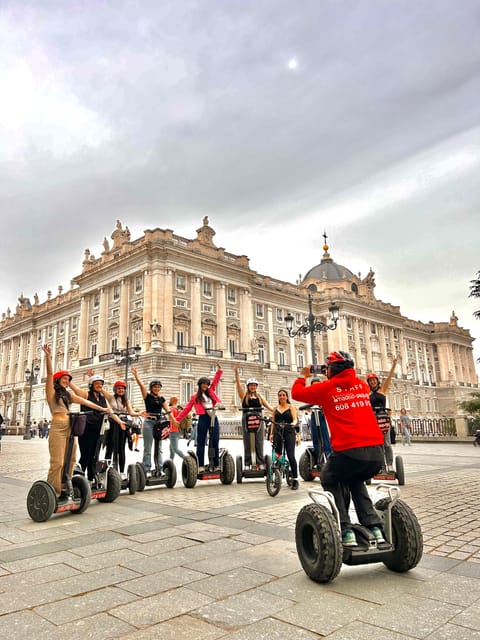
You’re not just handed a device and pointed downtown. The included training is part of the value here: it turns the Segway from a nervous novelty into a comfortable way to travel.
Your guide will walk you through the basics before you leave the shop. Once you’re comfortable, you’ll cover more ground with less walking—useful in Madrid, where the old center includes plenty of stones, ramps, and uneven corners. The result is that you spend more time looking at buildings and less time stopping every two minutes to reposition.
If you’re a first-timer, this tour tends to work well because the pacing is controlled. People in the past have praised guides for being confident teachers—names like Allen and Christelle pop up in the teaching vibe. If that’s your situation, you can relax a little: the point is to help you get moving safely and smoothly.
Plaza de la Villa: medieval corners before the big postcard stops
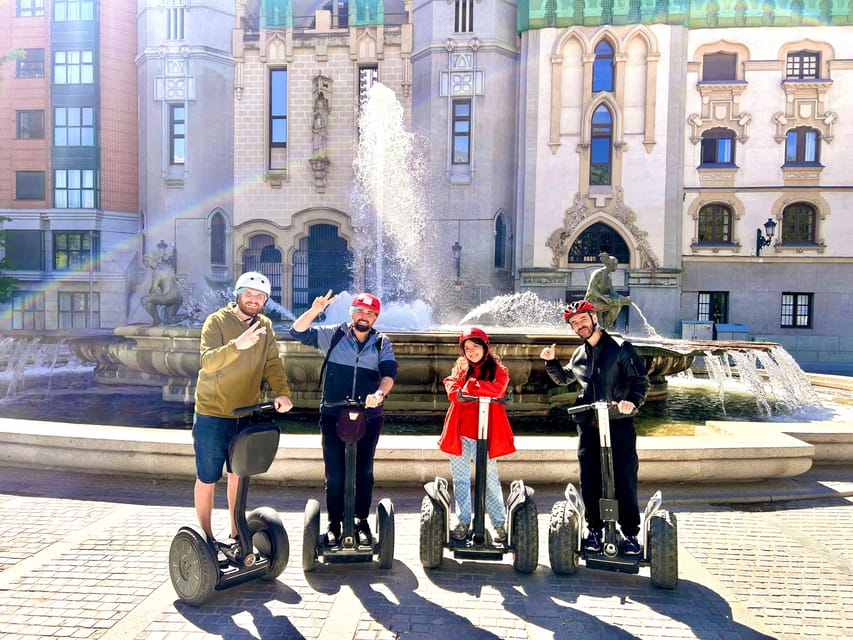
After training, you’ll head toward Plaza de la Villa, a historic pocket of Madrid that feels older than the surrounding grand boulevards. This is where the tour starts to show you the city’s layers: medieval architecture, tight street geometry, and government-era landmarks nearby.
The route includes notable buildings around the square, including the Palacio de Ciriaco and the Casa de la Villa. These places helped shape local administration for centuries, so even if you only catch a few angles from your Segway, you’ll get a sense of how Madrid functioned long before modern Madrid looked like what you see on maps.
What I like about this start is pacing. You’re warming up in a place that rewards slow noticing. The risk? If you’re expecting major monuments immediately, you may find this early stretch a little quieter than the later showpieces. Still, it’s the right move, because it gets your body comfortable before you hit busier sight lines.
Plaza Mayor: history you can feel while you roll
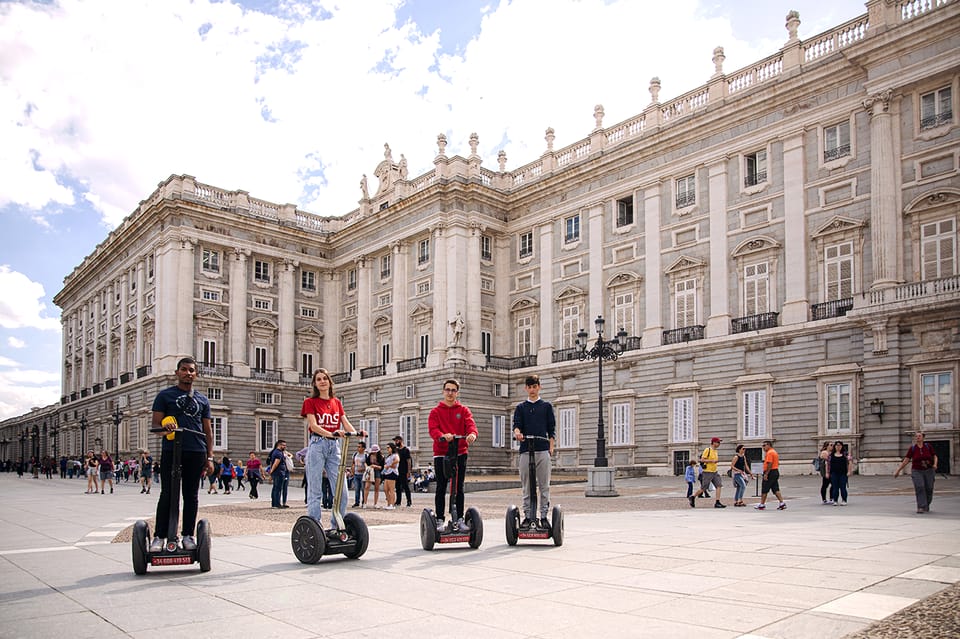
Next up is Plaza Mayor, one of the city’s most famous public squares. The tour includes its story back to the 17th century, which is more than trivia: it explains why the square feels like Madrid’s stage.
Plaza Mayor is also a visual magnet. Look for the way the surrounding buildings frame the square and how the space works as a gathering point. From a Segway, you can glide along viewpoints without the constant stop-and-start that walking often forces in crowded central plazas.
A fun detail on this stretch: you’ll pass by Restaurante Botín, a legendary stop that’s described as one of the oldest restaurants in the world. You don’t need to eat here to appreciate the significance—you’re basically riding past an institution. It’s the kind of moment that turns sightseeing into storytelling.
Calle del Factor: traditional streets between the landmarks
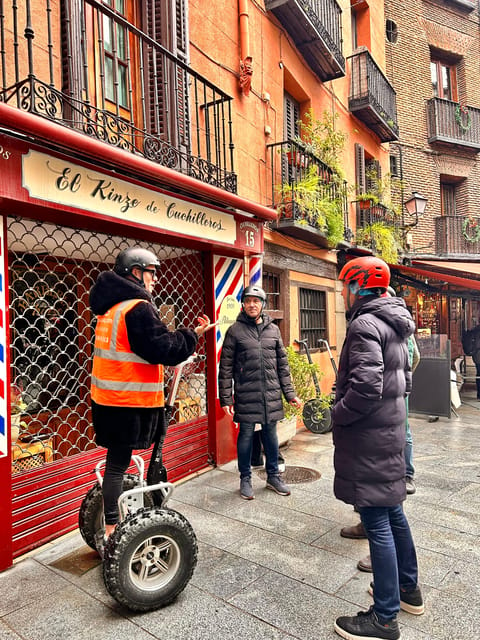
You’ll then ascend to Calle del Factor, described as one of Madrid’s traditional streets. This part of the route is valuable because it shifts you from the big open spaces to the city’s everyday street character.
Why this matters: landmarks can feel staged when you approach them only by walking from one giant plaza to the next. Traditional streets like this help you connect the dots between monuments. They also offer different angles of architecture and street life—less “look at the headline” and more “see how Madrid is put together.”
The only consideration is effort level. Since you’re on a Segway, you’re not doing the walking, but you are still moving through a street that includes rises. If you’re sensitive to motion or start-and-stop coordination, take it slow during these changes in road feel.



Plaza de la Armería and the Royal Palace area: the big view moment
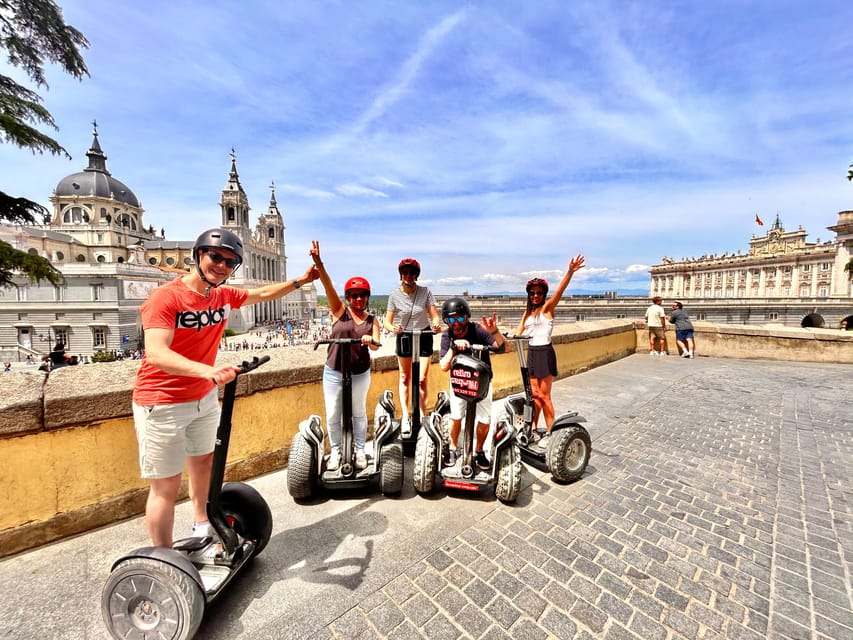
The tour continues toward Plaza de la Armería, positioned between the Royal Palace of Madrid and the Almudena Cathedral. This is your “main event” zone—grand buildings, strong sight lines, and a sense of formality that contrasts nicely with the earlier old-town feel.
If you’re visiting Madrid for the first time, this is a smart target because it pulls together palace scale and cathedral presence in one working area. From the Segway, you can reposition for angles without turning this into a long walking chore.
One practical drawback to keep in mind: this is popular territory. Even though the group is small, you’ll still share space with pedestrians and other street traffic. The Segway helps you stay moving, but your guide will handle timing and safe passing.
Teatro Real: catching prestige from the sidewalk
You’ll also head to Teatro Real, one of Europe’s prominent opera houses. You may not step inside on this kind of tour, but the value is that you get the exterior context—how this major arts building sits inside the city’s core.
Think of it like this: you’re seeing Madrid not just as monuments and photos, but as a living cultural machine. Opera houses are built where they can command attention, and Teatro Real does exactly that. It adds a modern cultural layer to the day, even as you’re still surrounded by historic streets.
Plaza de España: Cervantes, Don Quixote, and big-city architecture
Then you reach Plaza de España, where you can see the imposing monument to Cervantes, plus statues of Don Quixote and Sancho Panza. This is a classic Madrid moment, because Spanish literature becomes visible in bronze and stone.
What I like about this stop is the way it’s both intellectual and theatrical. Cervantes is an anchor figure, while Don Quixote and Sancho Panza add personality and humor to the square’s scale. It’s the kind of scene where you’ll naturally pause for photos, even if you’re trying to keep moving.
You’ll also admire surrounding architecture, including Edificio España and Torre de Madrid. That mix—literature monument with skyscraper-scale buildings—helps you understand Madrid as a city that grows and changes without fully losing its identity.
Temple of Debod: the ending view (and why it’s a strong finish)
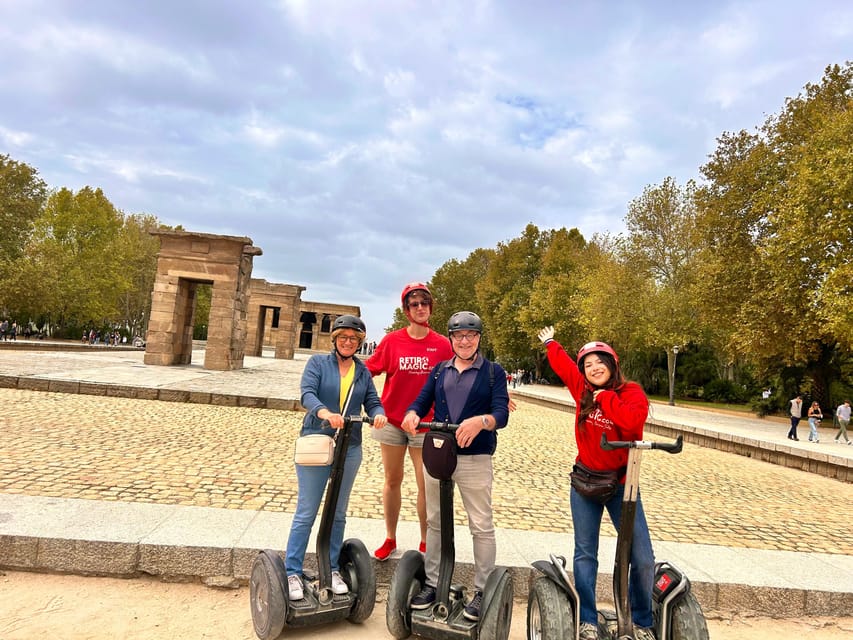
The tour culminates at the Temple of Debod, an ancient Egyptian temple gifted to Spain in 1968. This is the part that often feels like a surprise in the best way: you’re riding through Spain’s core, then you end with a slice of ancient history that belongs to another world.
More importantly, the timing is built for views. The temple offers spectacular sight lines over the city, making it a great spot to finish—especially as light starts to soften. If you time your day around golden hour, this end stop can become the most memorable moment.
After exploring Temple of Debod, you’ll return to the shop to wrap up. That simple “start where you learn, end where you linger” structure keeps the experience feeling complete.
What’s included (and how the extras affect value)
At $46 per person for 1.5 hours, the price makes sense because you’re paying for more than just transportation. Included items that improve the experience:
- A local guide who connects buildings to context
- A Segway, plus a helmet
- A training session (this is key for first-timers)
- Accident insurance
- Pictures (so you’re not stuck taking turns photographing)
The value here is speed plus clarity. A 90-minute walking tour can feel like a blur of stops. A Segway loop can help you see more while still learning what you’re looking at, since you’re not exhausted from constant foot travel.
The small-group limit (10 participants) also supports value. You’re less likely to feel like you’re being rushed through each square, and it’s easier for the guide to manage spacing.
Who this tour is best for (and who should think twice)
I’d recommend this tour if you:
- Want to cover major central Madrid landmarks without turning the day into a leg workout
- Like the idea of a first introduction to the city core
- Prefer learning landmarks by getting a moving overview—then deciding what to return to later
It’s also a good match for teens and adults, and past experiences mention that it can work well for younger riders when they’re responsible.
You might want to think twice if:
- You’re extremely nervous about balance or coordination (even with training)
- You have limited comfort with motion and frequent stopping
- You hate the idea of arriving early to catch the start
Language and guide style: your comfort level matters
Guides operate in Spanish, English, and French, with French tours running Wednesday to Sunday. That’s a helpful detail if you’re traveling as a mixed-language group or if you want more comfortable explanations.
One thing that stands out from the way these tours get praised is teaching style. People have highlighted confident instructors who can calm first-time riders. If you’re coming into the experience unsure, choose a time that gives you confidence and show up early—then the training can do its job.
Practical tips to make the ride smoother
- Bring comfortable shoes and clothes you can move in.
- Pack water. Central Madrid can feel warm fast, and you’ll be active even if you’re not walking.
- Bring a camera since the route includes squares, monuments, and Temple of Debod views.
- Bring your passport or ID (a copy is accepted).
- Arrive 15 minutes early. The tour uses a tight start window.
Also, if you’re pairing this with other activities, plan your day so you’re not sprinting across town. You’ll enjoy it more if you treat this as the main timed anchor, not a side task.
Should you book Madrid Downtown Segway Tour?
If your goal is to see a concentrated slice of Madrid—Plaza Mayor, the Royal Palace area, Teatro Real, and Temple of Debod—in about 90 minutes, this is a strong booking. The training and included safety elements lower the risk of a bad first Segway moment, and the small group limit keeps it from feeling like cattle herding.
I’d book it if you want an efficient, fun way to get oriented and you’re comfortable arriving on time. I’d skip it if you want only slow, deep walking sightseeing or if balance anxiety is a big issue for you.
If you do book, aim for a finish near later-day light for the best Temple of Debod view payoff.