REVIEW · MADRID
Madrid on foot: From Debod to Retiro
Book on GetYourGuide →Operated by RandallST · Bookable on GetYourGuide
Madrid’s skyline changes fast.
This walk from the Cervantes monument at Plaza de España to Retiro Park turns big landmarks into human stories, starting with the surprising question: why is an Egyptian temple in central Spain? I also love how the route connects places and characters across centuries, so you don’t just see buildings—you understand what they meant. The one drawback is simple: it’s a steady 3-hour walk, so it’s not a fit if your fitness or mobility is limited.
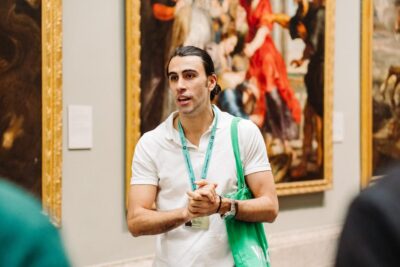
You’ll go with a live Spanish or English guide and a small group of up to 7 people, which helps you get clearer explanations without feeling rushed. Expect lots of street-level moments—corners, facades, viewpoints—plus key stops that give you a mental map you can reuse later. And yes, you’ll be back near where you started.
In This Review
- Key highlights worth showing up for
- From Plaza de España to Retiro Park: the payoff of walking end to end
- Stop by stop: Debod and the Egyptian temple in the middle of Madrid
- The Royal Palace area: biggest in Western Europe, plus the Almudena zone
- Madrid de los Austrias and Calle del Codo: the old neighborhood’s personality
- Plaza Mayor: four-plus centuries in one square
- Puerta del Sol and Gran Vía: Madrid’s heart, repeated entrances included
- Calle Alcalá to Cibeles and Puerta de Alcalá: grand boulevards with real details
- Ending in Retiro Park: ponds, Palacio de Cristal, and Ángel Caído
- Price, pace, and small-group value at around $28 per person
- Who this walking tour suits best
- Should you book this tour?
- FAQ
- How long is the Madrid on foot tour?
- Where do I meet the guide?
- Where does the tour end?
- What languages is the guide available in?
- What group size is this tour?
- Is this tour suitable for kids or older adults?
Key highlights worth showing up for
- Debod’s Egyptian temple explained as Madrid’s own city-story, not a random detour
- Royal Palace area with standout context about the monarchy, nearby landmarks, and a Galileo-linked statue
- Madrid de los Austrias + Calle del Codo where writers and older Madrid’s layout come into focus
- Plaza Mayor’s timeline: a former market, fires and war memories, and the oldest restaurant in the world
- Puerta del Sol to Gran Vía with repeated entries/exits through connecting streets so it all clicks
- Retiro Park finish with ponds, Palacio de Cristal, and the Ángel Caído
From Plaza de España to Retiro Park: the payoff of walking end to end
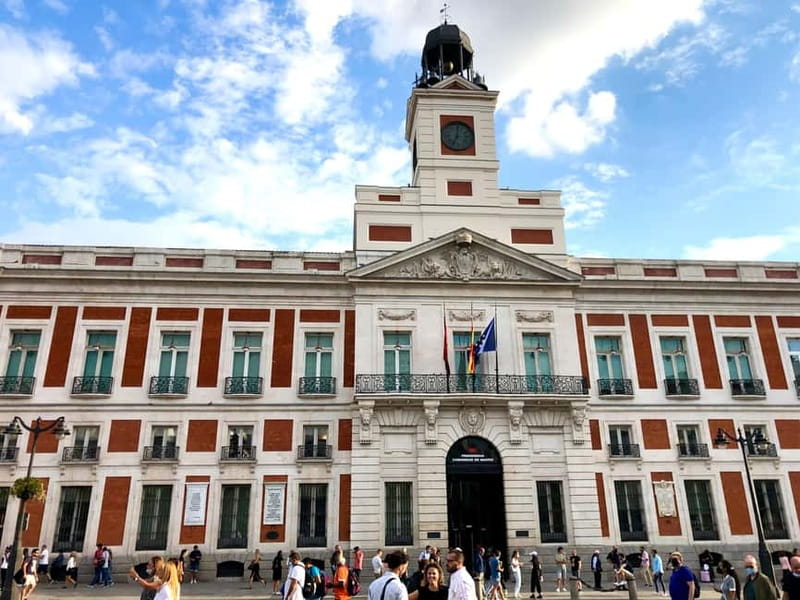
This tour is built like a guided “spine” through Madrid. You start at the monument to Cervantes in Plaza de España, then you move scene by scene toward Retiro Park. The genius is that the walking route isn’t just a list of sights. It’s a way to learn the city’s logic: power and religion near the center, markets and politics closer to the old core, and then a release into green at the end.
I like that the pace feels designed for learning on the move. You’re not stuck listening for hours in one spot. Instead, you get short chunks of context right where it matters—right in front of the Royal Palace zone, right around Plaza Mayor, and then later among the pond paths of Retiro. That makes the information stick.
If you’re the type who hates feeling lost, you’ll love this. By the time you reach Retiro, you’ll know how to “retrace” Madrid on your own: where Sol sits, how Gran Vía connects, and why Calle Alcalá matters as a formal boulevard.
You can also read our reviews of more tours and experiences in Madrid.


Stop by stop: Debod and the Egyptian temple in the middle of Madrid
The first major spark happens early: you’ll explore why an Egyptian temple exists in the heart of Spain. That’s the sort of question that instantly makes a city feel more interesting, because it forces you to look past your usual expectations. Madrid can look purely Spanish at first glance, but then you notice how global the story can be.
The guide’s job here is to give you the storyline behind the temple so it doesn’t read like a museum object dropped into a neighborhood. You get enough context to appreciate it as part of Madrid’s broader cultural atmosphere—curiosity, ambition, and a city that loves its surprises.
Practical note: you’ll want comfortable shoes from the start. This tour isn’t about sprinting between entrances. It’s about walking enough to feel Madrid’s layout and taking in the surrounding blocks as you go.
The Royal Palace area: biggest in Western Europe, plus the Almudena zone
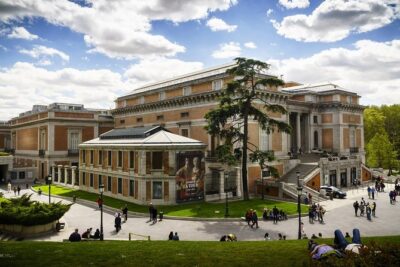
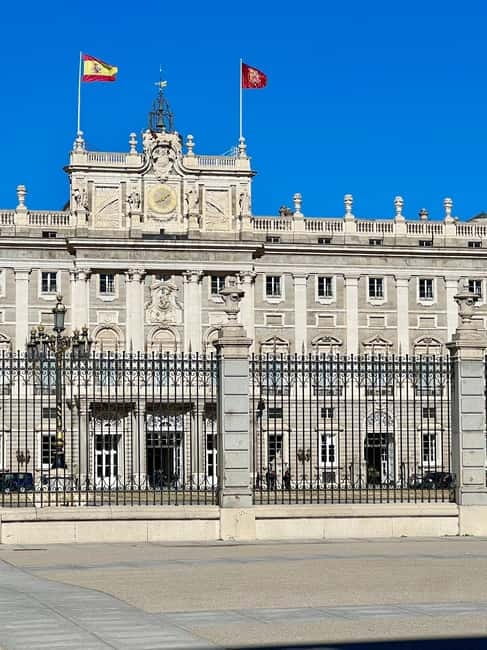
As you move deeper into central Madrid, the tour lands at one of the heavyweight sights: the Royal Palace of Madrid, described here as the largest palace in Western Europe. Even if you’ve seen palace photos before, the experience of learning the place in context is different. The guide doesn’t only point at the structure. You also hear what the palace represents as an official residence of the monarchy.
The palace zone then expands in a smart way. You’ll talk about nearby landmarks including Almudena Cathedral and the Royal Theater. And yes, you’ll hear about that famous theater luck phrase, Mucha m!—the kind of detail that feels silly at first, then oddly useful. It reminds you that buildings aren’t only stone; they’re connected to public rituals, performance culture, and the way people show respect for the arts.
One of my favorite kinds of tour moments is when the guide connects an unexpected person to a specific sight. Here, you’ll visit a statue whose construction is linked to Galileo Galilei. That detail gives you a human handle on the area—you start seeing Madrid as a crossroads, not a closed loop.
Madrid de los Austrias and Calle del Codo: the old neighborhood’s personality
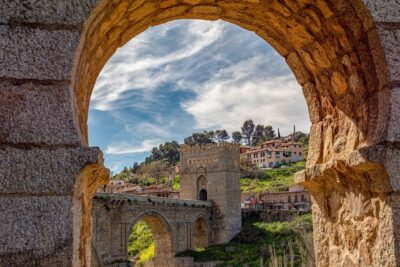
After the grand palace atmosphere, the tour shifts into older Madrid. You’ll spend time in Madrid de los Austrias, where the guide brings you to a calmer type of sightseeing: foundations, historic corners, and the sense of layered time.
A key stop in this stretch is around the older Almudena area and the surrounding fabric of the neighborhood. You’re not just looking at what’s standing. You’re learning what came before, and that changes how you see streets. Instead of thinking in modern blocks, you start thinking in inherited patterns—where people built, where power sat, where the city expanded.
Then comes Calle del Codo, a narrow lane tied to the writer Quevedo. It’s the kind of street detail that’s easy to miss on your own, but once someone frames it, you get it instantly. A street like this becomes a character: a place that shaped how people walked, how they met, and how writers lived their daily rhythms.
The atmosphere here is more intimate than the big vistas. If you enjoy the feel of old Madrid—small streets, old textures, and stories that explain why a block looks the way it does—you’ll be in your element.
Plaza Mayor: four-plus centuries in one square
Then you reach Plaza Mayor, and the square does what it always does in Madrid: it makes the city feel like a stage. The guide explains how it was once a market, and why that matters. Markets aren’t only about buying and selling. They’re where news travels, where power becomes visible, where people gather when they need something or someone.
You’ll also hear about the square’s long timeline: fires, memories of war, and more than four centuries of change. That’s a lot of time for one place, and the value of the tour is that the guide gives you a way to hold it all in your head without getting lost in dates.
One especially memorable detail is that Plaza Mayor is associated with the oldest restaurant in the world. Even if you don’t eat there on this walk (you can decide later), knowing it’s part of the story makes your next stop in the area feel different. You start noticing how food, commerce, and social life are all tied together in the same walls.
Small drawback to keep in mind: this is a central square. It can get busy. Your best move is simple—stay close to your guide when crossing open areas, and use the guide’s timing to move before the densest crowd moments.


Puerta del Sol and Gran Vía: Madrid’s heart, repeated entrances included
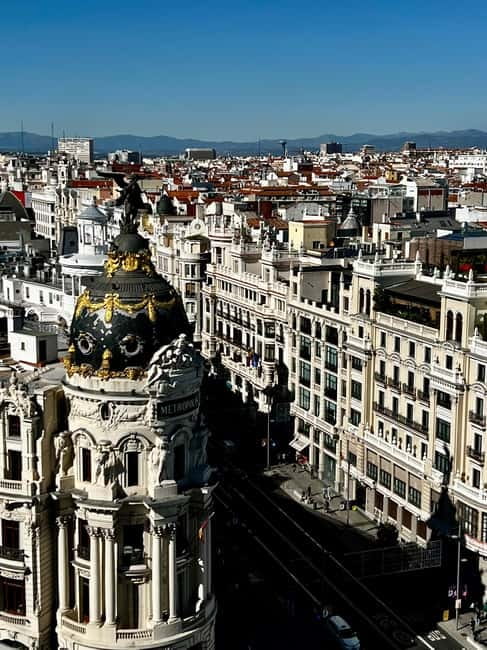
Next up is the beating heart: Puerta del Sol. This part works well because the route doesn’t treat Sol like a photo spot and a stop. The tour has you enter and exit several times through connecting streets that lead toward Gran Vía, Madrid’s main artery.
That repeated movement matters. If you only stop at Sol once, it’s easy to think of it as a single plaza. But when you keep weaving through the streets around it, you begin to understand Sol as a hub—a web that distributes people and energy across the city.
Then you’re pulled toward Gran Vía, and the tour gives you a sense of how the city’s modern glamour sits on top of older patterns. You see how neighborhoods connect, how the streets funnel movement, and why Madrid feels efficient once you know the shortcuts.
If you like urban navigation, this is one of the best sections. You’ll leave with a mental map that makes future self-guided walks much easier.
Calle Alcalá to Cibeles and Puerta de Alcalá: grand boulevards with real details
From Sol, the tour heads along Calle Alcalá, passing landmarks that mix culture, institutions, and classic Madrid architecture.
You’ll pass by the Círculo de Bellas Artes, which helps anchor the cultural side of the route. Then you’ll see the (real) Banco de España—with a helpful warning not to confuse it with the one people might recognize from La Casa de Papel*. That kind of correction is surprisingly valuable. It keeps your brain from “loading” the wrong building and wasting time afterward wondering why it looks different.
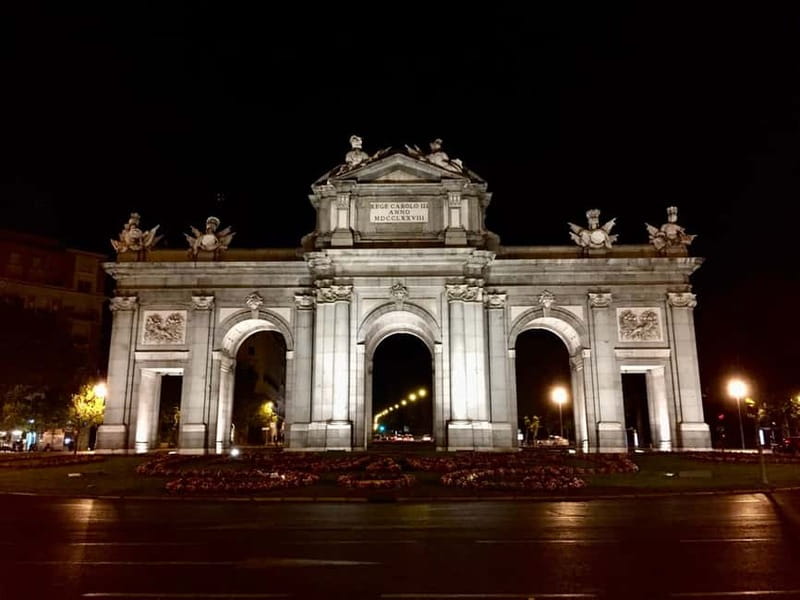
Next comes Cibeles, including its fountain and palace area. The guide’s approach here is practical: you understand what you’re looking at and why it matters in the city’s visual system. And then you reach Puerta de Alcalá, a classic Madrid landmark that brings a formal, ceremonial vibe to the end of the walk.
This section is also where the route starts to feel like a graduation from streets full of stories into streets that feel like Madrid’s public stage. You get energy from the width of boulevards and the way landmarks create visual order.
Ending in Retiro Park: ponds, Palacio de Cristal, and Ángel Caído
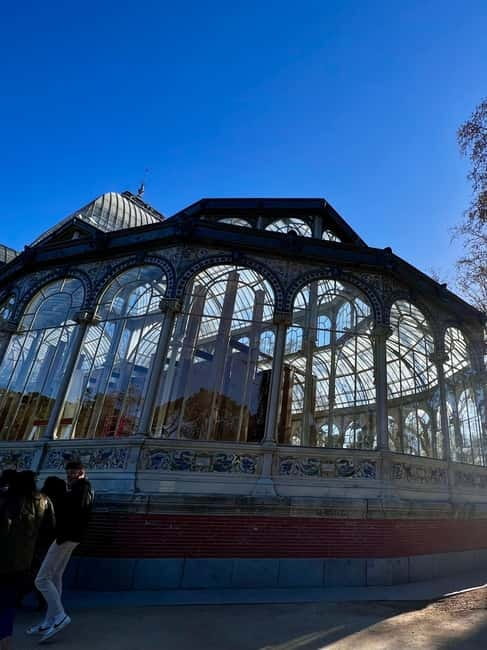
The finish line is Retiro Park, and it’s a great choice. After palace stone and city center crowds, you get a release into greenery. The guide helps you land the ending with three specific sights: the ponds, Palacio de Cristal, and Ángel Caído.
The ponds and open park spaces give you a calmer rhythm. Instead of constant crosswalk decisions, you can slow down and actually look. Palacio de Cristal adds a lighter, more delicate architectural contrast to the heavyweight grandeur earlier in the day.
Then you get Ángel Caído, which closes the loop nicely. It’s the kind of sculptural detail that makes a park feel more than just a place to stroll. It gives the ending a story texture, so you don’t just think of Retiro as a break. You think of it as part of the same Madrid narrative.
If you want a final “memory image” from the day, this section is where it comes from. It’s a strong end note—quiet enough to feel restful, interesting enough to keep your brain engaged.
Price, pace, and small-group value at around $28 per person
Let’s talk about value. At about $28 per person for a 3-hour tour, you’re paying for a guide who connects dots across major areas of Madrid—Debod, the Royal Palace zone, old neighborhoods, Plaza Mayor, Sol/Gran Vía, and Retiro. You’re not being sold a ticket-hopping day. You’re buying context while you walk.
I think this pricing makes sense if you’re in Madrid for a short stay. You don’t have to guess what’s important or why a place is famous. You get a ready-made narrative you can use the rest of your trip.
The small group helps too. With a limit of 7 participants, it stays personal. You can ask questions and get answers in a way that feels less like a lecture and more like a conversation with a guide who knows how to keep momentum.
About pace: it’s a tour that expects you to walk comfortably. If you’re prone to tiring early, plan for that before you book. And if you’re dealing with mobility limitations, this one is not designed for you. The tour also isn’t suited for children under 8, and it’s listed as not suitable for people over 70 or with low fitness.
On the bright side, that fitness clarity is useful. It means you can decide without wondering whether you’re signing up for a marathon.
One more value note: the tour is led in Spanish and English, and it’s described as very well explained and well documented. You’ll feel like you got real information, not just a route.
Who this walking tour suits best
This tour fits best if you:
- Want a clear way to understand central Madrid without reading a book afterward
- Like big landmarks, but also like the smaller street details that explain how cities work
- Prefer a small group over a large, noisy group experience
- Plan to do a lot of walking and want a guided start point for your self-guided days
It’s less ideal if you:
- Need minimal walking time or have mobility constraints
- Are traveling with younger kids under the listed age guidance
- Know you’ll struggle with sustained walking for about three hours
Should you book this tour?
If your goal is to get oriented fast and then explore Madrid with confidence, I’d book it. The route is strong: it starts with the surprise of Debod, builds through the Royal Palace/Almudena area, checks the old Madrid soul at Madrid de los Austrias and Calle del Codo, and then sends you into the emotional city core at Plaza Mayor and Puerta del Sol before relaxing in Retiro Park.
At around $28 for a small-group, guided walk that stitches together major sights, it feels like smart spend—especially when you want stories you can actually remember, not just photos you’ll scroll past.
FAQ
How long is the Madrid on foot tour?
It lasts about 3 hours.
Where do I meet the guide?
You meet in front of the monument to Cervantes in Plaza de España.
Where does the tour end?
The activity ends back at the meeting point.
What languages is the guide available in?
The live guide operates in Spanish and English.
What group size is this tour?
It’s a small group limited to 7 participants.
Is this tour suitable for kids or older adults?
It’s not suitable for children under 8, and it’s also not suitable for people over 70.