REVIEW · MADRID
Madrid Tuk Tuk Welcoming Tour
Book on GetYourGuide →Operated by Tuktuk Limo Tours · Bookable on GetYourGuide
Hop in and get your Madrid legs fast. This is a 2-hour electric tuk tuk orientation that mixes iconic landmarks with quick photo-and-sight moments, and it’s powered by a guide who makes the city’s details click. I like the way the route hits both famous places and street-level backstories, and I like the photo stops built into nearly every segment. One thing to weigh: the experience depends on guide language and on whether you can hear the narration clearly.
You’ll start in central Madrid near the Almudena area, then roll past royal sights, parks, markets, sports landmarks, and major avenues. It’s the kind of tour that helps you understand how Madrid fits together on your first or second day—without turning your legs into toast. Still, because the stops are timed and the format is fast, you may want longer time at the places you love most afterward.
In This Review
- Key things I’d pin on your map before you go
- Entering Madrid by electric tuk tuk: fast orientation that still feels personal
- Two hours, lots of stops: how the schedule really works
- Calle Mayor and the Pedro Calderón de la Barca connection
- Market of San Miguel and Puerta del Sol: where food and movement meet
- Sobrino de Botín: traditional Madrid dining with serious age
- Cava Baja: the alleyway story from old hiding places to today’s nightlife
- Royal Basilica of Saint Francis the Great: a church stop you’ll remember
- Glorieta de Toledo and the Puerta de Toledo gateway
- Atocha Station: seeing Madrid as a living transport hub
- Buen Retiro Park and the Crystal Palace era connection
- Alcalá Gate: the 1778 entrance that still tells a story
- Las Ventas bullring and Santiago Bernabéu: sports landmarks with different meanings
- Las Ventas
- Santiago Bernabéu
- Paseo de la Castellana and Gran Vía: modern Madrid in motion
- Plaza de Callao and Plaza España: cinema energy and Cervantes at the crossroads
- Temple of Debod: an Egyptian piece of Madrid you can actually picture
- Royal Palace and Plaza de Oriente: royal Madrid from the street edge
- Ópera station and Almudena Cathedral: two religious/arts access points
- Price and value: $187 per group up to 4 (and what that buys you)
- Who this tuk tuk tour is best for (and who should pick something else)
- Language, sound, and getting in/out: the practical “check before you commit” list
- Should you book this Madrid Tuk Tuk Welcoming Tour?
- FAQ
- How long is the Madrid Tuk Tuk Welcoming Tour?
- How much does the tour cost?
- Where is the meeting point?
- Is this tour private?
- What’s included in the tour?
- What languages are available?
- Do I need tickets or will lines be an issue?
- Is the tour wheelchair accessible?
- What major sights are included during the ride?
- What’s the cancellation policy?
Key things I’d pin on your map before you go
- Short stops, big variety: A tight loop that covers markets, churches, parks, gates, and stadiums in about two hours.
- Photo-friendly pacing: Nearly every stop is designed for quick walking looks and pictures.
- Story stops with names and dates: Calderón de la Barca, a 1725 restaurant, an Egyptian temple relocation—stuff you’ll remember.
- Comfort value for a private group: Up to 4 people split the cost, with an insured, guided electric tuk tuk ride.
- Language and audio can matter: A few bookings hint at mismatches or sound issues, so pick a spot where you can hear.
- You’ll see how Madrid functions: From Atocha’s massive passenger volume to bullring and Real Madrid landmarks.
Entering Madrid by electric tuk tuk: fast orientation that still feels personal
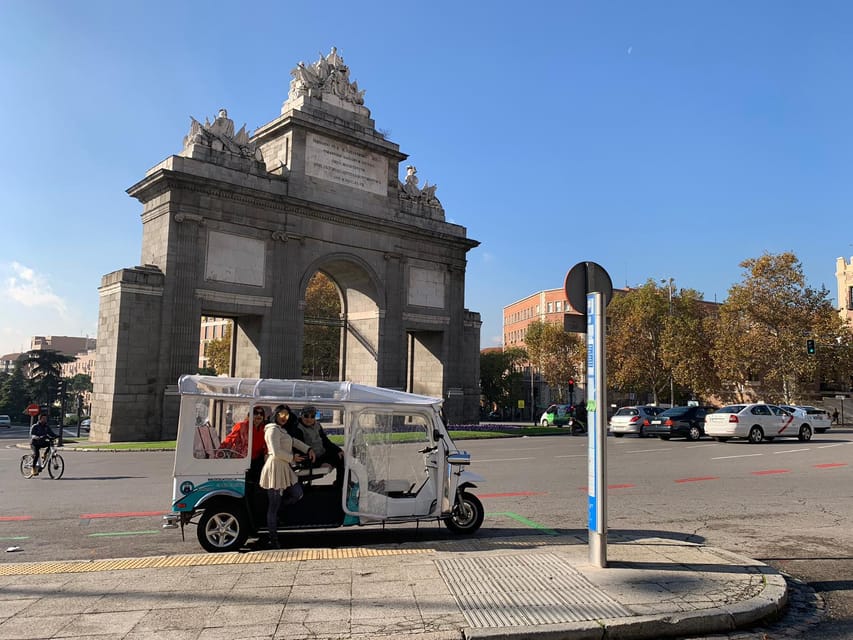
The big win here is the pacing. Madrid is huge, but your time rarely is. This tour gives you a guided sweep that helps you place landmarks in relation to neighborhoods, not just as random postcard backdrops.
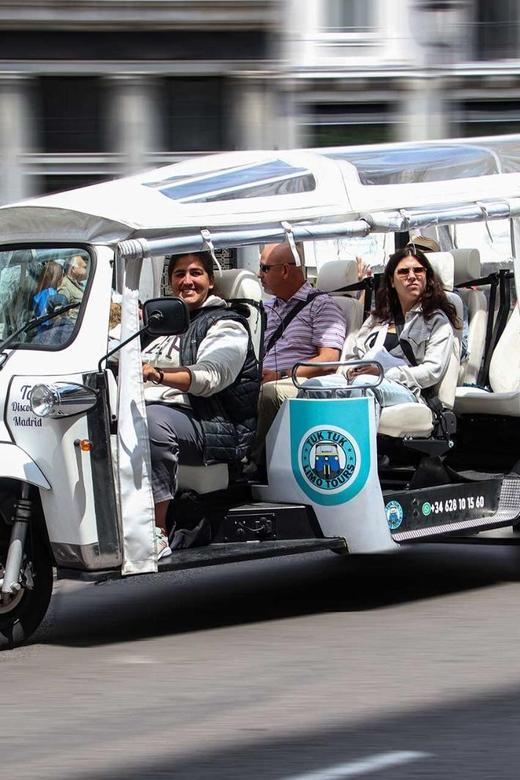
You’re in an electric tuk tuk, which means you cover ground without spending the day stuck in long transfer walks. And because it’s a private group (up to 4), the experience can feel less like a cattle-drive and more like a short conversation that keeps moving.
The meeting point is C. Mayor 90, near the Cripta de Almudena, where you look for the Tuk Tuk Limo Tour-branded tuktuks. That’s central enough that most visitors can pair it with a morning of sightseeing or a first-day arrival plan.
You can also read our reviews of more tours and experiences in Madrid.

Two hours, lots of stops: how the schedule really works
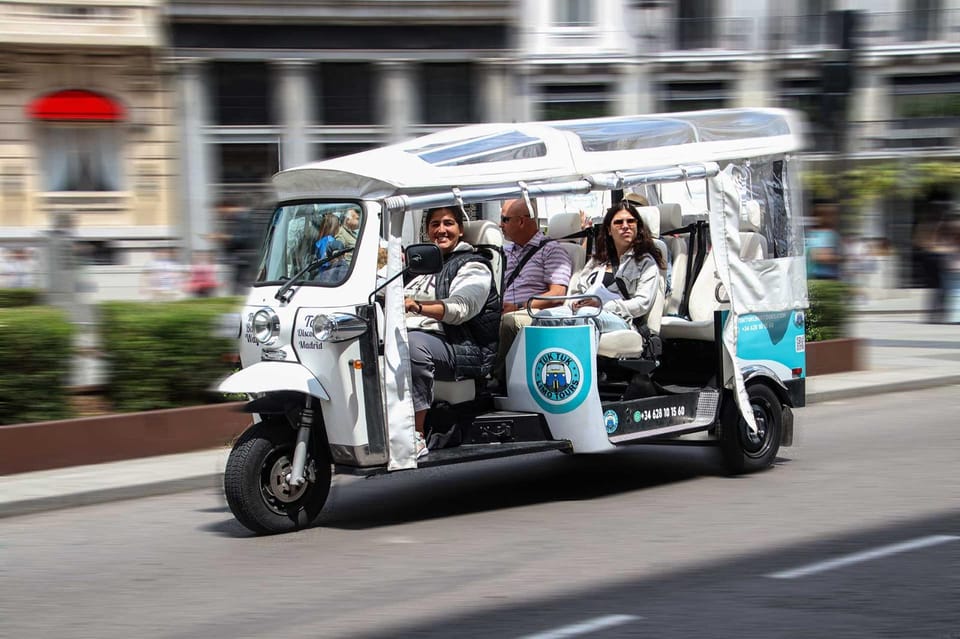
This is a 2-hour tour with a long list of highlights. That means the stops are short—think quick “get out, look, take photos, listen, and go.” You won’t have time to lounge in places, and you won’t be doing deep museum-level exploration.
So here’s how I’d use it: treat it like a map made of real streets. You’re learning where to return later. If you go in expecting a slow, sit-down style tour, you’ll feel rushed. If you go in planning to come back, it’s a smart start.
Also, the narration is a key part of the value. One review experience complained about not hearing the guide even when volume was max, so it’s worth being proactive: sit where you can hear best, and if anything feels off, address it immediately rather than waiting.
Calle Mayor and the Pedro Calderón de la Barca connection
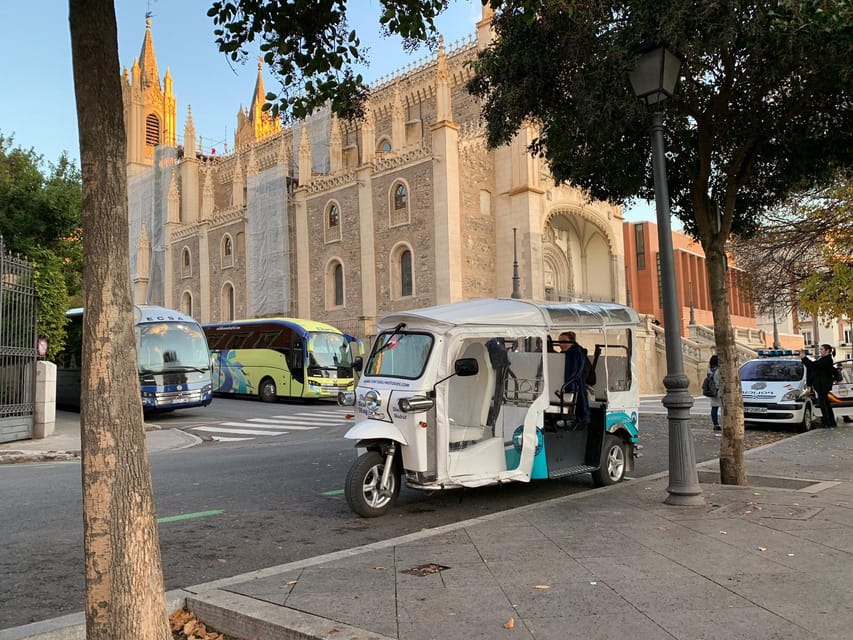
You start on Calle Mayor, and the first photo stop is a fitting choice. Calle Mayor isn’t just a pretty street—it’s a historical corridor, and the guide points out that playwright Pedro Calderón de la Barca lived here. That’s the kind of detail that helps your brain switch from sightseeing to understanding.
A short stop here works because it sets the tone: you’re going to keep getting names, eras, and small stories, not just “look left” moments. Take a couple of photos, then notice the street rhythm. Later, when you walk the same area, it’ll feel familiar.
Market of San Miguel and Puerta del Sol: where food and movement meet
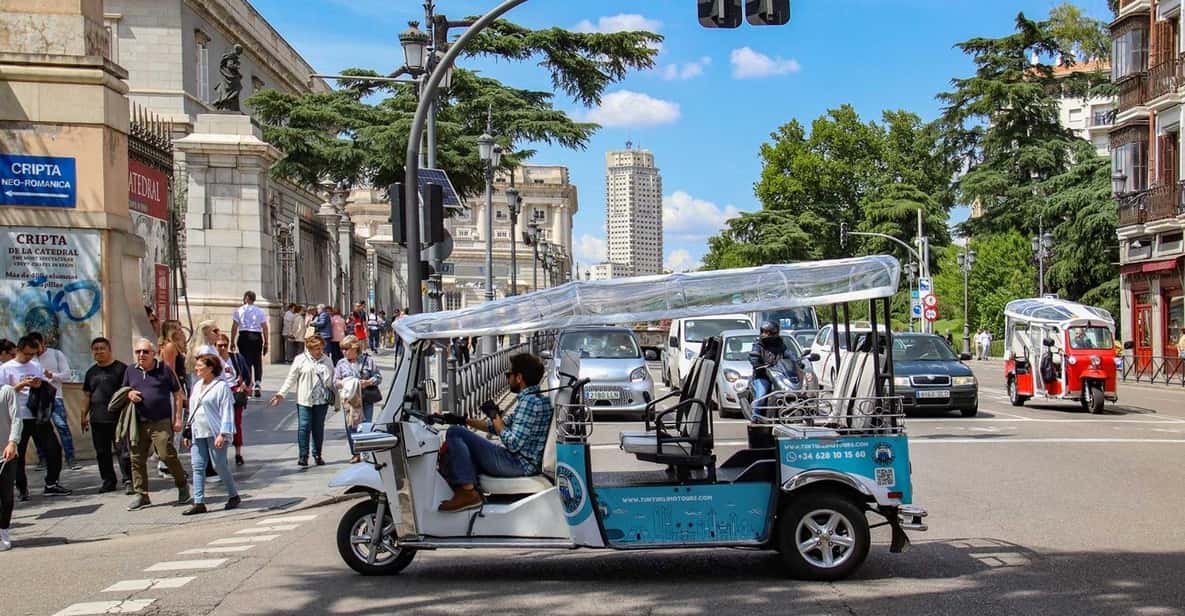
Next up is Mercado de San Miguel, with a quick photo-and-visit stop. Even if you don’t plan to snack, it’s a strong orientation point because it sits near Puerta del Sol, the central hub of Madrid’s road network.
Your guide will also connect Puerta del Sol to the famous New Year clock moment. That’s a great example of how the tour helps you understand why certain squares matter. They’re not random big plazas; they’re places where crowds gather because Madrid’s city life literally funnels there.
Sobrino de Botín: traditional Madrid dining with serious age
At Sobrino de Botín, you’re in front of a restaurant founded in 1725, often cited as one of the oldest in the world. The point of the stop isn’t to turn you into a food critic—it’s to show that Madrid’s identity shows up in dining culture, not just palaces.
If you love classic meals and historic settings, this is one of the best “return later” cues. Even a quick stop helps you connect what you’re seeing to a lived tradition, not just a building.


Cava Baja: the alleyway story from old hiding places to today’s nightlife
Then you roll through Cava Baja, a neighborhood known today for bars, traditional restaurants, hostels, and flamenco spots. What makes it more than a night-out address is the story: it was once a hideout for Arabs, according to the tour framing.
That kind of historical layering is why I think a tuk tuk tour works well early in your trip. It’s easy to label Cava Baja as “fun streets.” But with the backstory, you notice the street texture and the way the neighborhood evolved.
One practical tip: if you’re the kind of traveler who likes to actually walk into places, Cava Baja is a good candidate for a second visit—because the tuk tuk stop itself is brief.
Royal Basilica of Saint Francis the Great: a church stop you’ll remember
Next comes Royal Basilica of Saint Francis the Great in La Latina. The tour highlights it as a Roman Catholic church with history dating back to the 13th century, and that helps you appreciate why this isn’t just a pretty facade.
The “visit” time is short, so you’re not touring the church like a full-on religious history day. Still, a quick look here can be powerful—especially if you’re the type who likes architecture and wants one big church moment without committing to a long schedule.
Glorieta de Toledo and the Puerta de Toledo gateway
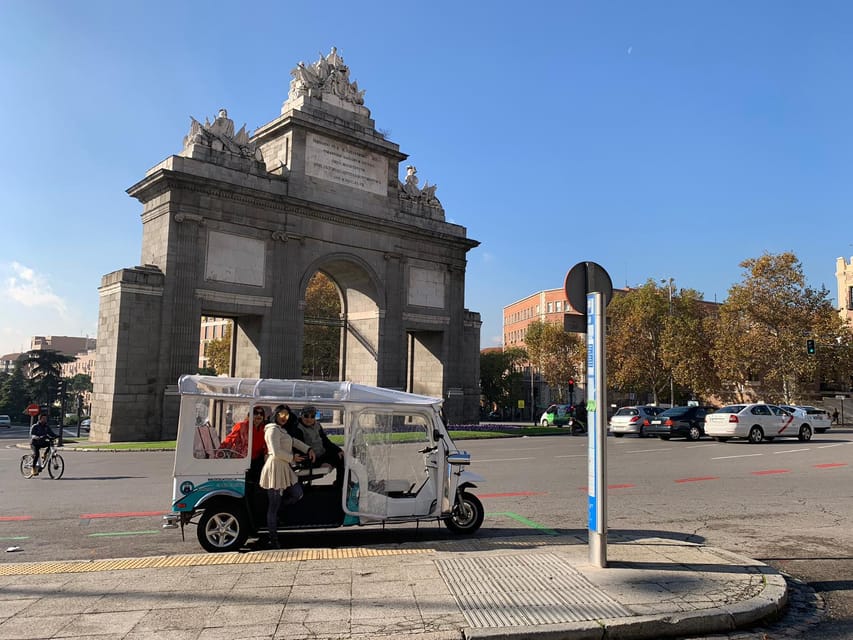
From there, you get visual context around Glorieta de Toledo, including the Puerta de Toledo, described as a monumental 19th-century gateway.
Gates are underrated in cities like Madrid. They explain expansion and movement. A fast stop works here because you’re basically learning where the city’s edges and corridors used to be—and now you can see how things grew beyond them.
Atocha Station: seeing Madrid as a living transport hub
Then it’s Atocha Station, called one of Spain’s busiest transport hubs, serving about 90 million passengers annually.
This is a smart stop for first-timers because it reminds you that Madrid isn’t only museums and monuments. It’s also trains, daily commuting, and motion—real city infrastructure.
You’ll do a photo-and-look moment rather than a deep dive. But just understanding Atocha’s scale can make your later logistics easier, especially if you’re planning day trips.
Buen Retiro Park and the Crystal Palace era connection
Next is Buen Retiro Park, with a focus on the pond area, monuments, and the Crystal Palace, described as dating back to the reigns of Philip IV and Charles III.
Retiro is one of those places where your eyes need a guide to understand what you’re seeing. Even with limited time, you can spot why it’s a favorite. It’s a “break from the city” moment without needing a long walk.
If you love gardens and public space, this stop gives you a target for a return visit later. If you’re not a park person, you may still appreciate it as a reset.
Alcalá Gate: the 1778 entrance that still tells a story
At Alcalá Gate, the guide points out it was erected in 1778 and once served as Madrid’s main entrance, located near Retiro Park.
Gates like this work best when you connect them to the idea of entry and expansion. This tour does that by placing it near other “city structure” cues like Toledo and the big avenues that come later.
Las Ventas bullring and Santiago Bernabéu: sports landmarks with different meanings
Then you get two huge sports icons, and they’re different in tone.
Las Ventas
At Las Ventas, the tour frames it as the world’s most important bullring and a monumental venue. Even if bullfighting isn’t your thing, it’s still an important cultural landmark that helps you understand how Madrid draws on older traditions.
Santiago Bernabéu
At Santiago Bernabéu Stadium, you’ll see Real Madrid’s home since 1947. It’s another “big identity” stop. The tour’s value here is letting you look at sports as part of Madrid’s story, not just as a weekend plan.
Paseo de la Castellana and Gran Vía: modern Madrid in motion
Now you shift into wide avenues and city power lines.
Paseo de la Castellana is described as a major thoroughfare with historic mansions, now housing embassies and cultural centers, plus the Museum of Public Art. That matters because it explains why Madrid has both grand history and modern institutions right next to each other.
Then comes Gran Vía, Madrid’s iconic avenue marking modernization with early skyscrapers and modern architecture. If you like urban design, this is a great “see the growth” moment.
Plaza de Callao and Plaza España: cinema energy and Cervantes at the crossroads
You also pass Plaza de Callao, described as the heart of Madrid’s cinematic and theatrical scene, with art deco architecture and a lively atmosphere.
Then there’s Plaza España, centered on the Cervantes Monument at the intersection of Gran Vía and Princesa streets. If you like symbolic city points—statues, crossroads, the kind of places where people meet—this stop clicks fast.
Even with short time windows, you’ll get strong photo angles here because plazas are designed for open space. Use them.
Temple of Debod: an Egyptian piece of Madrid you can actually picture
One of the most memorable stops is Temple of Debod, described as an ancient Egyptian temple from the 2nd century BC, relocated to Cuartel de la Montaña Park.
This is where Madrid surprises people. A tour that includes this kind of detour earns its place, because it breaks the “only Spanish landmarks” expectation. Short stop or not, you’ll get the wow factor—and you’ll likely remember it long after the more ordinary street scenes blur.
Royal Palace and Plaza de Oriente: royal Madrid from the street edge
You finish with monumental royal settings.
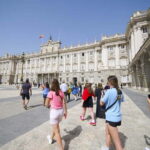
The Royal Palace of Madrid is presented as the former home of Spain’s kings and the official royal residence. The tour frames it as a history walk-through, even if your time on the ground is brief.
Next to it is Plaza de Oriente, described as pedestrian-friendly with gardens and statues bordering the palace. This is a practical stop because it helps you understand how the palace sits within the city, not isolated in a vacuum.
Ópera station and Almudena Cathedral: two religious/arts access points
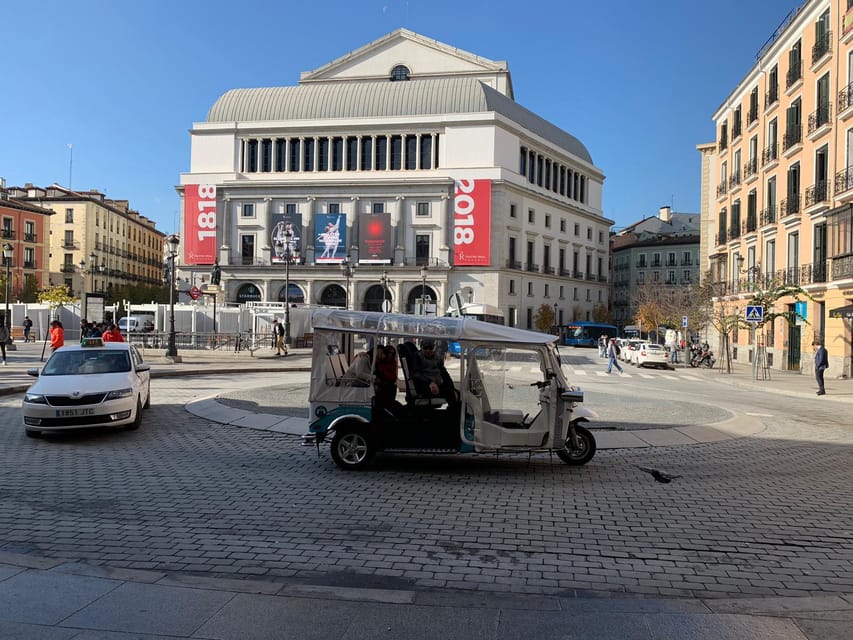
The route also touches Ópera Station, noted as a gateway to Teatro Real, Plaza de Oriente, and the Royal Palace. That’s useful context if you plan theater nights later.
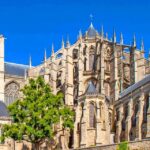
Then you reach Catedral de Almudena, described as Madrid’s cathedral, completed in 1993, with a history spanning over a century. You’ll get the architectural view points during the stop, and it’s an excellent pairing with the Royal Palace because you see the difference in style and purpose.
Price and value: $187 per group up to 4 (and what that buys you)
The price is $187 per group (up to 4) for a 2-hour ride. That means the per-person cost depends on how you book.
If you’re booking as a couple, it’s roughly $93–$95 per person. If you have a full group of four, it drops to about $47 each. For that, you’re getting an electric tuk tuk, a live guide, insurance, and a guided route that covers a lot of major Madrid markers.
Where value shows up most: when you want orientation fast and you don’t want to spend your first hours studying maps. Where value drops: if you’re hoping for long stops inside buildings or you’re hard-wired to prefer slow, detailed commentary everywhere.
Who this tuk tuk tour is best for (and who should pick something else)
This tour is a good fit if you:
- Want a first-day Madrid welcome and a mental layout of the city.
- Like photo stops but don’t want a full-day walking plan.
- Travel with up to three friends or family members and want a private format.
It might be less ideal if you:
- Need deep time inside specific sites.
- Have a strong requirement that the narration be in a specific language.
- Rely on clear sound systems and find it hard to hear in shared vehicles.
Language, sound, and getting in/out: the practical “check before you commit” list
A couple of bookings raised concerns that are worth taking seriously:
- Language matching: One person said they booked German but heard English, with the suggestion that German guides weren’t available. If your language matters, confirm expectations before you arrive and be ready to ask.
- Audio clarity: One booking described not being able to hear the guide even at maximum volume. Pick your seat wisely, keep attention on the guide, and ask for adjustments right away.
- Tuk tuk access: Another note said it was difficult for some guests to get in and out. Even though the tour is described as wheelchair accessible, you should still plan for vehicle steps/entry and communicate early if anyone in your group needs extra care.
If you take those points seriously, you’ll get the fun part: fast city learning with memorable story highlights.
Should you book this Madrid Tuk Tuk Welcoming Tour?
If you want an easy, guided “Madrid in two hours” introduction, I’d say yes—especially if you’re traveling with up to four people and you’ll use it to pick where to return later. The route covers royal landmarks, parks, major avenues, and big cultural icons, and the guide storytelling is a big part of the payoff.
On the other hand, if you’re booking for a very specific language need, or if you strongly depend on audio clarity for understanding, do a little extra checking before you go.
Either way, go in with the right mindset: treat it like a guided map of Madrid streets, then spend the rest of your trip going back to the places that hook you.
FAQ
How long is the Madrid Tuk Tuk Welcoming Tour?
It runs for 120 minutes (about 2 hours).
How much does the tour cost?
The price is $187 per group, up to 4 people.
Where is the meeting point?
Meet at C. Mayor 90 (Cripta de Almudena area), Madrid. Look for Tuk Tuk Limo Tour branded tuktuks.
Is this tour private?
Yes. It’s listed as a private group experience.
What’s included in the tour?
Included items are an electric tuk tuk, a driver/guide, insurance, and the guided tour experience.
What languages are available?
The live guide is offered in English, French, German, Italian, Portuguese, Slovenian, and Spanish.
Do I need tickets or will lines be an issue?
The tour description says it includes skip the ticket line.
Is the tour wheelchair accessible?
Yes, it’s described as wheelchair accessible.
What major sights are included during the ride?
The tour includes stops connected to Calle Mayor, Market of San Miguel, Sobrino de Botín, Cava Baja, San Francisco el Grande, Atocha Station, Buen Retiro Park, Alcala Gate, Las Ventas, Santiago Bernabéu Stadium, Paseo de la Castellana, Gran Vía, Plaza de España, Temple of Debod, Royal Palace, Plaza de Oriente, Ópera Station, and Almudena Cathedral.
What’s the cancellation policy?
You can cancel up to 24 hours in advance for a full refund.