Segovia feels like time travel, without the long jet lag. This guided day trip gets you out of Madrid fast to see the Roman aqueduct (still standing) and the Alcázar perched like a ship-bow above the rivers. You’ll get a structured walking route through town, then breathing room at the end to eat, shop, and aim your camera at whatever catches your eye.
I like the way this is organized for real-life sightseeing. The tour includes transportation to and from Madrid in an air-conditioned vehicle and a bilingual English-Spanish official guide, so you’re not guessing what you’re looking at. And at the end, you’re not locked into a clock—there’s free time to follow your own pace and hunt down something tasty.
One consideration: timing can be tight. On the way back, there’s at least one reported issue with a late pick-up that cut the day a bit short, so build in a calm mindset and don’t treat this like a strict appointment window.
In This Review
- Key highlights worth waking up for
- Madrid to Segovia: the ride, the pace, and what 11 hours means
- The Roman aqueduct: why it still feels miraculous
- Segovia Cathedral: Gothic focus in the main square
- Church of St Stephen: a small stop with a strong bell-tower story
- Alcázar of Segovia: the ship-bow silhouette and what to do there
- Walking route + time to roam: how to use your free time well
- Price and logistics: what you’re really paying for at $51.20
- Who this tour fits best (and who should plan differently)
- Should you book the Segovia day trip from Madrid?
- FAQ
- FAQ
- How long is the Segovia tour?
- What’s included in the price?
- Is the ticket mobile or paper?
- Where do I meet in Madrid?
- What time does the tour start?
- What sites are visited during the day?
- What’s the cancellation window for a refund?
Key highlights worth waking up for
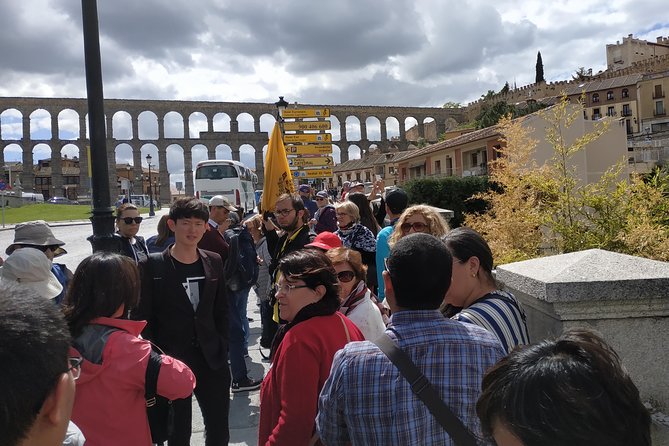
- Roman aqueduct that’s genuinely intact rather than a “trust me, it was there once” kind of ruin
- Alcázar views from the outside plus interior museum and archives space once you’re there
- Gothic cathedral stop centered on the Virgin Mary and mid-1500s building work
- St Stephen’s 12th-century Romanesque bell tower for a different architectural flavor than the big sights
- Free time at the end so you can eat and roam at your own speed
- Small-ish group size capped at 55 people with a guided walking route
Madrid to Segovia: the ride, the pace, and what 11 hours means
Even though this is marketed as a half-day style visit, the day stretches to about 11 hours because you’re traveling from Madrid and returning. The start time is 9:00 am, and the day ends back at the same meeting point in central Madrid.
That long span matters for planning. You’re not just “popping over.” You’re doing a full outing: bus time, guided walking time, then free time. The good news is the transportation is air-conditioned, and that can be a lifesaver when weather swings or if the morning is cool and you want to warm up before you start walking.
The walking portion is a key part of the value. A half-day day trip that includes actual city orientation beats a drive-by. You’ll get the main sights positioned so you understand why Segovia’s layout feels the way it does: the aqueduct as infrastructure, the cathedral and medieval churches as spiritual anchors, and the Alcázar as the crown on the hill.
You can also read our reviews of more tours and experiences in Madrid.



The Roman aqueduct: why it still feels miraculous
Segovia’s most famous photo is also the one you’ll get to see up close: one of the best-preserved elevated Roman aqueducts and the city’s standout symbol. The fact that it’s still standing changes how you look at it. You’re not seeing a scale model. You’re seeing stone engineering that survived long enough to become a backbone of the city’s identity.
What I like about this stop is how it sets context for everything that follows. Roman power in Spain wasn’t only about roads and forts—it was about water. When you stand near this structure, you can quickly connect the dots between control, urban life, and the way major cities grow around infrastructure.
Practical tip: plan a little time for photos from different angles. Because it’s elevated, your best shot often depends on your position and height. Don’t rush it just because you’re excited to get to the castle.
Segovia Cathedral: Gothic focus in the main square
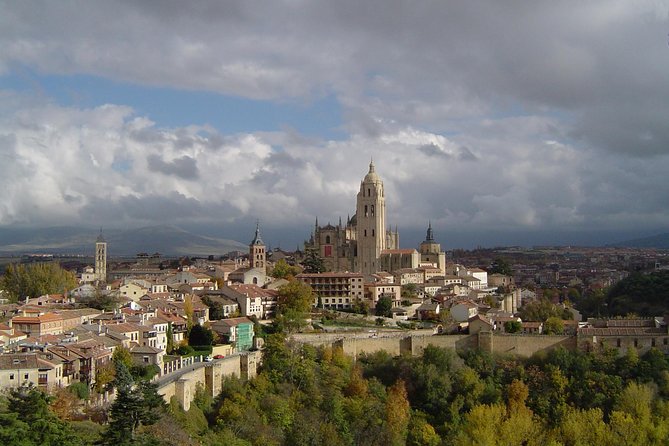
Next up is Segovia Cathedral, a Gothic-style Roman Catholic cathedral in the main square. The church is dedicated to the Virgin Mary, and construction is described as mid-16th century. That combination—Gothic form, Marian dedication, and a specific time window—gives you a clearer mental picture than “a big church” ever will.
If you’re the type who enjoys details, this is a stop that rewards looking slowly. Cathedral exteriors can feel similar across Spain until you notice the proportions and the way they relate to the square around them. In Segovia, the cathedral sits in the center of the city’s everyday rhythm, which makes it feel less like a monument and more like a living civic landmark.
One drawback: since it’s in the main square, it can feel busy. That’s normal for a central stop. If you want calmer viewing, linger near the edges of the square and keep an eye out for quieter sightlines to the façade.
Church of St Stephen: a small stop with a strong bell-tower story
The Church of St Stephen is one of several medieval churches in Segovia, dating to the 12th century, and it’s noted for its Romanesque bell tower. This is the kind of stop that’s easy to skip when you’re chasing the big-ticket sights, but it’s exactly where you get variety.
Romanesque style tends to read as sturdier and more grounded than the sharper, later Gothic look. Even if you don’t know the vocabulary, you’ll feel the difference in the visual rhythm. It’s a chance to see how medieval Segovia wasn’t just one era. It’s layered—Roman, medieval, Gothic—sometimes within sight of each other.
Practical tip: if you’re short on energy, don’t try to do everything inside. Use St Stephen’s as your reset stop—breathe, watch, take a few close-up shots of the tower, then get moving again.
Alcázar of Segovia: the ship-bow silhouette and what to do there
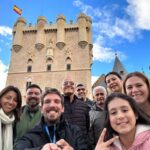
Then comes the star: the Alcázar of Segovia. It rises on a rocky crag above the confluence of two rivers near the Guadarrama mountains. The description says the shape resembles the bow of a ship, and once you see it, that comparison clicks fast.
This isn’t a castle that only played one role. It started as a fortress, then served as a royal palace, a state prison, and later a Royal Artillery College and military academy. Today, it’s used as a museum and a military archives building. That multi-life history matters because it explains why the building feels both theatrical and practical—palace symbolism on one level, institutional function on another.
From a visitor perspective, here’s what makes the Alcázar stop valuable:
- You’re getting the dramatic exterior view (the “bow of a ship” look).
- You’re also visiting the museum/archives use, so it doesn’t feel like a look-only photo stop.
One bonus detail I’d keep in mind: the palace cafeteria is called out as serving standout hot chocolate and Irish coffee. On a cold day, that kind of simple comfort turns a sightseeing stop into a real memory.
Practical tip: dress for changing conditions. Even if Madrid is comfortable, hilltop sites can feel colder and windier. A warm layer can make you stay longer without rushing.


Walking route + time to roam: how to use your free time well
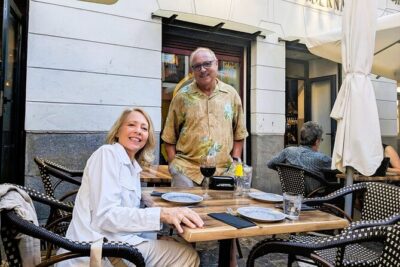
The tour includes free time at the end—described as ample—so you can eat, explore, and sightsee on your own. This is one of the best parts of the experience because it respects how people actually travel. Some want more photos. Some want a slow meal. Some want to wander streets until something catches their eye.
Here’s how I’d plan that free time so it doesn’t evaporate:
- Start with food first if you’re hungry. Let the meal set the pace for the rest of your roam.
- Take a quick lap around the areas you already saw on the guided portion. You’ll spot new angles because your brain now has a map.
- If you’re photo-focused, pick one “must capture” shot and only then branch out. Otherwise, you’ll end up running from one viewpoint to another at the worst possible moment.
Also, because the day ends back at the meeting point, build in a buffer. Segovia rewards lingering. Your schedule doesn’t have to suffer because you wanted one more angle of the aqueduct.
Price and logistics: what you’re really paying for at $51.20
At $51.20 per person, this can be strong value if you care about structure. You’re paying for:
- a bilingual English-Spanish official guide
- a guided walking tour around key parts of Segovia
- air-conditioned transportation to and from Madrid
- a mobile ticket
- access to the scheduled stops (Roman aqueduct, cathedral, St Stephen’s church, Alcázar)
What you aren’t paying for is also clear: anything not specified isn’t included. That means meals and personal extras are on you.
Is it “cheap”? Compared to private guides, yes. Compared to DIY with public transport, it depends on how much you value interpretation and time saved. The guided portion helps you understand what you’re looking at—especially at the aqueduct and the Alcázar, where context matters.
Group size is capped at 55 travelers, which is large enough to keep costs down but small enough that you’re likely to stay oriented. Still, if you dislike crowds, treat the main-square and popular viewpoints as your “slow down or step aside” moments.
Finally, planning tip: it’s commonly booked about 61 days in advance on average. If your dates are fixed, booking sooner usually gives you more choices.
Who this tour fits best (and who should plan differently)
This works best for you if:
- you want a guided introduction to Segovia with major sights handled
- you like history that’s visible in stone and street layout, not only in captions
- you want the comfort of round-trip transport from Madrid
- you value time at the end to eat and roam
You might want a different approach if:
- you hate any schedule rigidity and treat travel like a strict checklist
- you’re very sensitive to delays, since at least one account mentions a late bus pick-up that shortened the outing
- you only want one monument and nothing else—then you may prefer a simpler plan
Should you book the Segovia day trip from Madrid?
If you want the highlights without doing research all week, I’d lean yes. This tour covers the core triangle of Segovia—aqueduct, major church stops, and the Alcázar—then gives you a chance to turn sightseeing into a meal and a personal wandering rhythm. The bus and guide setup also sounds like it’s designed to reduce stress: air-conditioned transport, bilingual support, and a structured walking route.
My recommendation depends on one thing: your tolerance for time pressure. If your day is flexible and you can roll with minor timing hiccups, this is a solid value way to see Segovia properly.
FAQ
FAQ
How long is the Segovia tour?
The experience lasts about 11 hours.
What’s included in the price?
It includes a bilingual English-Spanish official guide, an air-conditioned vehicle, and a bilingual guided walking tour around the city, plus transportation to and from Madrid.
Is the ticket mobile or paper?
You’ll receive a mobile ticket.
Where do I meet in Madrid?
The meeting point is C. de San Bernardo, 5, Centro, 28013 Madrid, Spain.
What time does the tour start?
The tour starts at 9:00 am.
What sites are visited during the day?
You’ll visit the Roman aqueduct, Segovia Cathedral, the Church of St Stephen, and the Alcázar of Segovia, with free time at the end for sightseeing and eating.
What’s the cancellation window for a refund?
You can cancel for a full refund up to 24 hours before the experience’s start time.
If you tell me your travel dates and whether you’re more photo-focused or food-focused, I can suggest a smart way to plan your free time in Segovia so you don’t feel rushed on the return.