REVIEW · MADRID
Architour through Lavapiés and Rastro with an architect
Book on Viator →Operated by architoursmad · Bookable on Viator
Lavapiés can feel like a living architecture class. This 3-hour, English walking tour is led by architect Emilio, mixing history, politics, and design in the streets between Lavapiés and the Rastro market area. You’ll see how styles stack over time and how everyday life shapes the neighborhood.
I love how much context you get from an architect who actually lives the area. Two standouts for me: the way Emilio connects politics to buildings (not just facts on a plaque), and the variety of architecture in tight walking distance, from older Madrid layers to 1930s rationalist design and Art Deco details.
One thing to consider: this is a walking-first experience with multiple short stops. Bring comfortable walking shoes, and if your dates overlap late July, note that La Tabacalera may be closed for works.
In This Review
- Key things I’d highlight before you go
- Why Lavapiés and Rastro is such a smart walking choice
- Price, time, and what you truly get for $210.12
- Logistics that help: meet-up, pacing, and how to prepare
- Stop 1: Plaza de Tirso de Molina and getting your bearings fast
- Stop 2: The Inquisition Jail under a corrala
- Stop 3: El Rastro street market and why Sunday changes the vibe
- Stop 4: El Pavón Teatro Kamikaze and an Art Deco clock moment
- Stop 5: Imprenta Municipal and rationalist Madrid (1930)
- Stop 6: Plaza Lavapiés and the neighborhood’s present tense
- Stop 7: Reina Sofía’s extension by Jean Nouvel
- Stop 8: Mercado San Fernando for tapas and Madrid advice
- Stop 9: La Tabacalera de Lavapiés and the power of reuse
- Stop 10: Teatro Figaro and modern-movement design in Spain
- The finish: Mercado de San Fernando, tapas, and time to ask questions
- Who should book this architour (and who might not)
- Should you book this architect-led walk?
- FAQ
- How long is the architect tour through Lavapiés and Rastro?
- How much does the tour cost?
- Is this tour private?
- Where does the tour start and end?
- Are building entry tickets included?
- Are tapas and drinks included?
- Do you visit El Rastro on Sundays?
- What should I know about weather and La Tabacalera?
Key things I’d highlight before you go
- Architect-led storytelling in English: Emilio explains the why behind the design, not just the what.
- Architecture styles you can spot on foot: you’ll move through medieval-adjacent layers, Baroque-era influence, rationalism (1930), and Art Deco details.
- Rastro timing matters: on Sunday, you’ll actually visit the El Rastro street market; other days it’s a different shopping vibe.
- Jean Nouvel’s Reina Sofía expansion: you’ll hit the extension designed by the famous French architect and talk through what shaped it.
- Markets at the end: you finish at Mercado San Fernando with tapas and a chance to plan your Madrid days.
Why Lavapiés and Rastro is such a smart walking choice
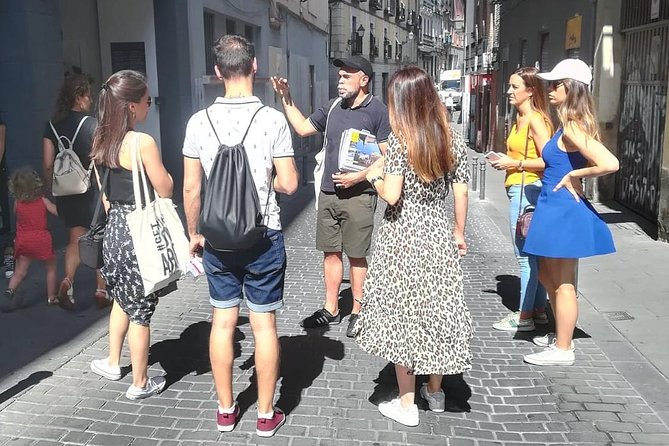
Lavapiés is the kind of neighborhood where you can’t separate people from buildings. Streets, courtyards, and reused spaces tell the story: who arrived, what they built, and how the city kept changing its mind.
What makes this tour work is that it doesn’t treat architecture like museum glass. You’ll be walking through a real working district where the past is still physically present, and you’ll also notice how new residents and projects are actively reshaping the area. Expect to look up at facades and then quickly back down at the street level where daily life happens.
And because it’s guided by Emilio—an architect living in Lavapiés—the route feels less like a checklist and more like a guided way to read Madrid. The explanations tend to connect big shifts (power, policy, design trends) to small visible details you can actually point at.
You can also read our reviews of more tours and experiences in Madrid.



Price, time, and what you truly get for $210.12
At about $210.12 per person for roughly 3 hours, this isn’t a bargain-price group tour. But it’s also not trying to be one-size-fits-all. You’re paying for two things that matter on an architect-led walk:
First, you get access. The experience includes access to all buildings on the route, and at least one stop—Imprenta Municipal—includes admission in the price. That can save you time and hassle compared with piecing together entrances on your own.
Second, you’re paying for expert interpretation. This tour is about architecture and urbanism explained in context: how styles evolved, how institutions shaped neighborhoods, and how public spaces work. That kind of guide-led meaning is hard to replicate just by reading signs.
One more practical note: it’s private. The experience is described as a private tour/activity, meaning it’s just your group, not a big mixed crowd. That matters for pacing and questions—especially if you’re the type who likes to ask why a building looks the way it does.
Logistics that help: meet-up, pacing, and how to prepare
You start at Plaza de Tirso de Molina (Pl. de Tirso de Molina, Centro, 28012 Madrid) and end at Mercado de San Fernando (C. de Embajadores, 41, Centro, 28012 Madrid). Along the way, expect a rhythm of short stops followed by walking segments that connect the dots.
Even though several stops are brief (some are only 5–15 minutes), the route is designed to stack meaning fast. That’s great if you have limited time in Madrid, but it does mean you should plan your day around steady walking.
Pack like it’s a neighborhood day, not a sit-and-stare museum day:
- Wear comfortable walking shoes (you’ll be on foot for the whole experience).
- Keep water handy; the tour includes market moments, but drinks are not included.
- If you’re a planner type, bring a short list of questions. Emilio’s explanations are broad—history, politics, design—so you’ll get more out of it if you steer the conversation too.
Stop 1: Plaza de Tirso de Molina and getting your bearings fast
You begin at Plaza de Tirso de Molina, where Emilio gives an introduction to the neighborhood and Madrid itself. This early context matters because Lavapiés can look “busy” at first glance. A short set-up helps you spot what to pay attention to: streetscapes, courtyards, and building faces that carry older layers forward.
You’ll spend about 15 minutes here, and admission is free for this segment. Think of it as your warm-up: a way to understand what you’re seeing before you start hunting details in the alleys.
Stop 2: The Inquisition Jail under a corrala
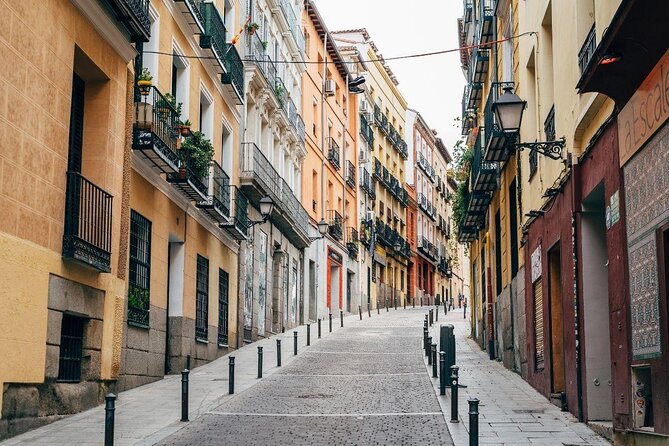
Next you visit the Inquisition Jail (Carcel de la Inquisición), described as an Inquisition prison under a corrala. The word corrala is a key concept in Madrid’s urban past: it refers to shared courtyard buildings where multiple households lived around a communal interior.
This stop is short—around 10 minutes—but it’s the kind of moment that changes how you see everything after. Once you grasp that prisons and power systems once sat within everyday housing structures, you start noticing how cities distribute control, privacy, and movement.
Admission here is free, which makes this one easy to fit into even a tighter trip schedule.


Stop 3: El Rastro street market and why Sunday changes the vibe
Then you head toward El Rastro, the famous street market area. The tour explicitly notes that if you do the route on Sunday, you’ll visit the street market; on the rest of the week, the vintage furniture stores may open differently.
This stop is about 15 minutes and it’s free. What’s valuable isn’t just shopping—it’s urban life in action. El Rastro is a window into how commerce and street culture reshape public space day to day. If you love architecture, you’ll also start noticing storefronts and how temporary market setups interact with permanent buildings.
Practical tip: even if you aren’t buying anything, treat it like an architectural walk-through. Look at how people move, how stalls fill edges, and how the street becomes a room.
Stop 4: El Pavón Teatro Kamikaze and an Art Deco clock moment
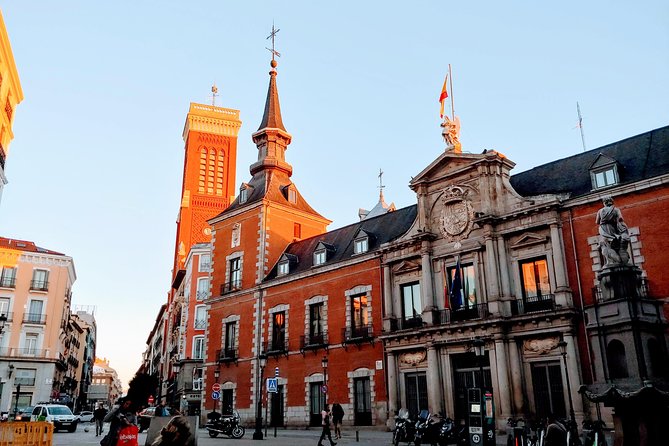
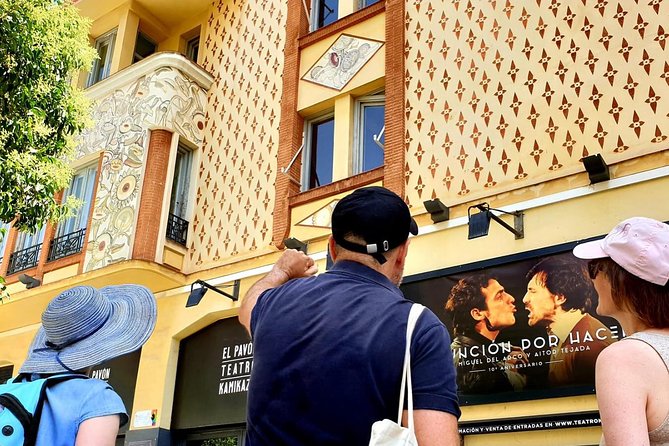
You get a short facade stop at El Pavón Teatro Kamikaze, focusing on the theater exterior and its art-deco clock. This one is only about 5 minutes, but the payoff is big if you enjoy visible style shifts.
Art Deco tends to feel confident and graphic—clean lines, clear shapes, and a sense of planned design. When you spot it in a neighborhood like this, it signals a different time and attitude, and that’s exactly what an architect-guide route should teach you: style isn’t random. It reflects the era’s goals.
If you want, Emilio may also suggest a coffee at the cafe in the middle of the architour. Just remember: any drinks you order are not included.
Stop 5: Imprenta Municipal and rationalist Madrid (1930)
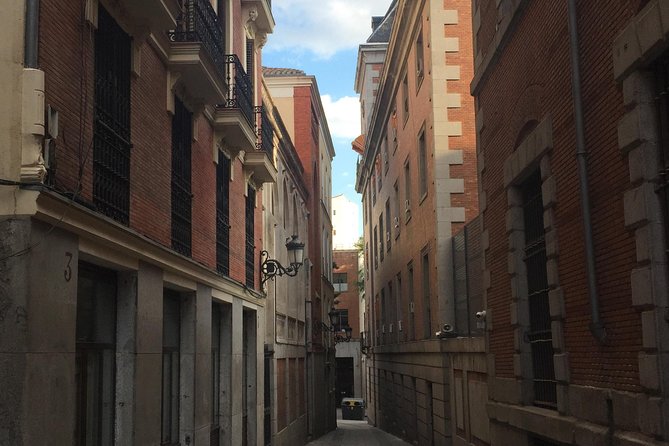
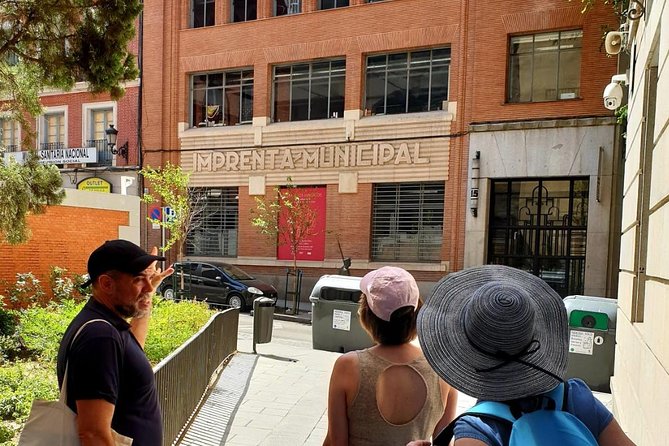
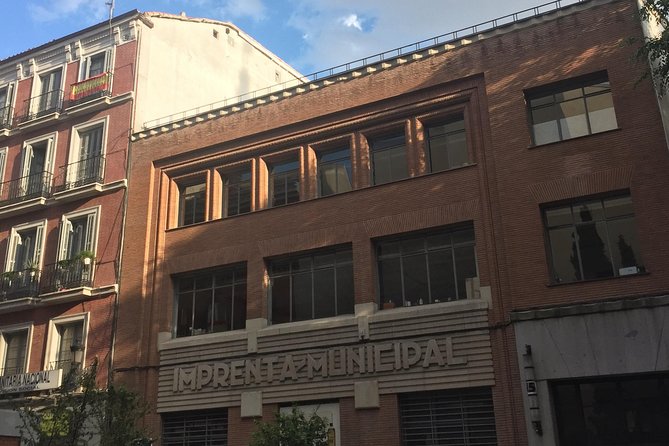
Now you reach Imprenta Municipal, described as a hidden jewel of Madrid’s rationalist architecture from the 1930 period. This is one of the stronger “design explanation” stops on the route.
You’ll spend about 15 minutes, and admission is included. That included entry is a real value point because it removes uncertainty. You’re not scrambling to find opening hours or pay separately while the guide is still in explanation mode.
Rationalism is worth paying attention to because it’s about clarity: function, structure, and an honest relationship between the building’s purpose and its form. When you see it in a neighborhood setting—rather than a standalone landmark—it helps you understand how modern ideas entered everyday Madrid life.
Stop 6: Plaza Lavapiés and the neighborhood’s present tense
You next arrive at Plaza Lavapiés, the square that gives its name to the neighborhood. This stop is only about 5 minutes, but it’s designed to anchor the human side of the architecture.
You’ll talk about how the square sits at the center of a place where people of different cultures and backgrounds coexist. The tour frames it as a mixing point: longtime neighbors and newer residents who are changing the neighborhood in recent years.
Even in a brief stop, this is important because it keeps the tour from becoming purely aesthetic. Buildings matter, but so does who uses them and how the city tolerates change.
Stop 7: Reina Sofía’s extension by Jean Nouvel
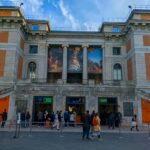
Then you visit the Museo Nacional Centro de Arte Reina Sofía extension designed by Jean Nouvel. This stop is about 10 minutes and stays focused on the parts that help you understand the architecture: you’ll stop at the restaurant area, the library, and a covered patio.
The guide also shares what shaped proposals from a contest held in 1999. That contest detail adds real meaning. You’re not just looking at a famous name; you’re hearing that the building came from ideas tested against each other, with design decisions driven by specific goals.
This stop works well if you like architecture that has a social purpose—spaces that pull people into circulation and create useful “in-between” zones like covered patios.
Stop 8: Mercado San Fernando for tapas and Madrid advice
At Mercado San Fernando, you switch from architecture to neighborhood food energy. The experience description says you’ll take some tapas and drink something while Emilio gives suggestions for your stay in Madrid and discusses what you’ve seen.
The stop is about 15 minutes, and admission is free for this segment. But here’s the key practical detail: drinks are not included. You’re tasting, not being fully comped.
This is a great moment to ask follow-up questions because the tour’s story arc is clearer now. You can connect the building ideas to practical life questions: where to walk next, what neighborhood you might enjoy, and what design ideas you should keep spotting on your own.
Stop 9: La Tabacalera de Lavapiés and the power of reuse
Next up is La Tabacalera de Lavapiés, described as an abandoned industrial building that now houses exhibitions and an area self-managed by neighbors. On its walls, you’ll see works by urban artists.
This stop is about 15 minutes and is free for the segment, but timing matters. The description notes it is closed for works from July 25. If your trip lands near that window, you should expect that access may not match what the tour normally includes.
Even with that caveat, the concept is a strong one to experience firsthand: a place designed for industry becoming a shared cultural and community space. In a tour about architecture and politics, it’s the kind of stop that makes the lesson feel real.
Stop 10: Teatro Figaro and modern-movement design in Spain
You finish with a look at Teatro Figaro, noted as the first theater built in Spain using the criteria of the modern movement. This is another short stop—about 5 minutes—but it’s a sharp closing note.
Modern movement theaters aren’t just about the hall. They signal how a society wanted performance, public space, and design to feel. After seeing older prison structures, theaters with Art Deco flair, and rationalist industrial design, this final stop gives you a cleaner view of how architectural priorities shifted as the 20th century approached and settled.
The finish: Mercado de San Fernando, tapas, and time to ask questions
The tour ends at Mercado de San Fernando, and it’s designed as a natural wrap: you’ll be finishing with tapas and a drink together. The market setting is a fitting way to close an architect-led walk, because it brings you right back to the neighborhood’s everyday rhythms.
This final portion is also your chance to translate what you’ve learned into what you’ll do next. Ask what to notice while you’re wandering on your own. Ask what areas connect back to what you saw earlier. Emilio’s explanations tend to create a “mental filter” that makes Madrid easier to read afterward.
Who should book this architour (and who might not)
This tour is a great fit if you:
- like architecture, urbanism, and the story behind facades
- want context on how neighborhoods evolve under social and political pressure
- enjoy guided walks even when you only get a quick look at each stop
It may not be the best match if you:
- prefer a long museum-style visit with minimal walking
- want only famous landmarks, not smaller neighborhood architecture
- dislike tours that mix design talk with market life and practical streets
That said, the route doesn’t require you to be an architecture student. The guide’s style is meant to be understandable and practical, and the stops are chosen so you can actually see the points being made.
Should you book this architect-led walk?
Yes, if you want Madrid that feels personal and legible—where buildings connect to policy, community, and daily life. The price is higher than basic sightseeing, but the included access, the private format, and Emilio’s architect-driven explanation are the kind of value you feel while you’re walking, not just at the end of the tour.
Book it especially if:
- you have about half a day to see Lavapiés beyond the obvious corners
- you enjoy learning by looking (not by reading)
- you’re staying in central Madrid and want a guided route you can keep building on afterward
If your dates land after July 25, double-check that La Tabacalera is actually open for your specific visit window.
FAQ
How long is the architect tour through Lavapiés and Rastro?
It lasts about 3 hours.
How much does the tour cost?
The price is listed as $210.12 per person.
Is this tour private?
Yes. It’s described as a private tour/activity, with only your group participating.
Where does the tour start and end?
It starts at Plaza de Tirso de Molina and ends at Mercado de San Fernando (C. de Embajadores, 41).
Are building entry tickets included?
Access to all buildings is included in the price, and the Imprenta Municipal stop specifically has admission included.
Are tapas and drinks included?
You’ll take some tapas and drink something at Mercado San Fernando, but drinks are not included in the price.
Do you visit El Rastro on Sundays?
Yes. If you do the tour on Sunday, you’ll visit El Rastro as a street market. On other days, it notes the vintage furniture stores have different opening patterns.
What should I know about weather and La Tabacalera?
The experience requires good weather. It also notes that La Tabacalera de Lavapiés is closed for works from July 25.