A quest that turns Madrid into a puzzle board. This is a private game-meets-tour that lets you wander with structure, using app prompts to spot stories in places you might otherwise miss. I like that it runs as an offline city game, so you are not hunting for signal while you solve clues.
You’ll move through central spots tied to Madrid’s big names, including Cervantes and the Golden Age writers. One catch: some steps can be harder if you hit construction or streets that look different than the last time someone tested the route, so stay flexible and follow the on-screen instructions.
In This Review
- Key highlights at a glance
- Don Quixote Quest in Madrid: a game that walks you through the old city
- Private game-meets-tour: what you gain by going as a group
- Offline app gameplay: how you actually spend the 2 hours
- Plaza Mayor checkpoint: where the quest starts in the center of Old Madrid
- Puerta Cerrada: the medieval wall detail many people walk past
- A central square created in 1926: customs, markets, and the Bank of Spain link
- Iglesia de San Sebastián on Atocha street: a church tied to a devotional route
- Lope de Vega house museum: Golden Age life at street level
- Cervantes childhood home museum: the Don Quixote author you can actually stand near
- Cervantes burial at the convent: the remains story adds real drama
- Plaza de Santa Ana finale: writer monuments, terraces, and a relaxed ending
- Price and value: $8.40 for a structured Madrid walk
- Booking ahead and planning your day around the game
- Tips to make the quest easier in real Madrid streets
- Who this Don Quixote Quest fits best
- Should you book this Don Quixote Quest in Madrid?
- FAQ
- Do I need internet to play the Don Quixote Quest game?
- How long does the quest take?
- Is this a guided tour with a physical guide?
- Can I start at any time during the day?
- Where do I start and where does it end?
- Is the ticket mobile-based?
- Is it private, or do I join strangers?
- Is it free for kids?
- Are service animals allowed?
- What is the cancellation policy?
Key highlights at a glance
- Offline play: you do not need internet once you start.
- Private for your group: no crowding with strangers.
- Literature trail: Cervantes, Lope de Vega, and Golden Age references show up around you.
- Flexible pacing: start any hour and stop when you want to rest.
- Built for friends and families: game format keeps everyone engaged.
- Central start/finish: it threads through places like Plaza Mayor and the area around Plaza de Santa Ana.
Don Quixote Quest in Madrid: a game that walks you through the old city
Madrid can feel big when you arrive with only a list of must-sees. This experience gives you a clear route and a reason to look around, but it still leaves you in control of your pace. Instead of listening to a nonstop lecture, you follow prompts, answer challenges, and keep moving.
What makes it work so well is the mix of serious cultural locations with a light game structure. You’re in the middle of the city, yet the gameplay pushes you into quieter corners and overlooked details.
Price-wise, it’s hard to complain: it’s $8.40 per person for roughly two hours. That is not a museum ticket price, so think of it as low-cost navigation plus entertainment, built around Madrid’s famous literary associations.
You can also read our reviews of more tours and experiences in Madrid.



Private game-meets-tour: what you gain by going as a group
The experience is described as a private activity for just your group. That matters more than it sounds. You’re not trying to keep up with a stranger’s pace or deal with the “who’s lost?” moment that can happen on group tours.
It also helps families and friend groups. If one person wants a photo stop, you can slow down without leaving the rest behind. And when the game prompts you to look closely, your group can share the spotting and figuring instead of working alone.
If you like touring but hate rigid schedules, this is one of those “you’re still sightseeing, just with a prompt system” formats.
Offline app gameplay: how you actually spend the 2 hours
The heart of the experience is a mobile game. You download the apps, then follow the prompts at each location to complete challenges and advance to the next spot. You can play without internet, which is a big deal in a city where data can be unreliable or expensive.
You also have flexibility. The tour format allows you to start at any hour and take breaks, then resume later. The game itself is about two hours, but you can stretch it if you want to slow down for photos, a coffee, or just to re-read the story behind a checkpoint.
You’ll use a mobile ticket, so plan to have your phone charged. And keep an eye on street-level details. Many answers are not “around the corner somewhere,” but in what you can see while standing in the right place.
Plaza Mayor checkpoint: where the quest starts in the center of Old Madrid
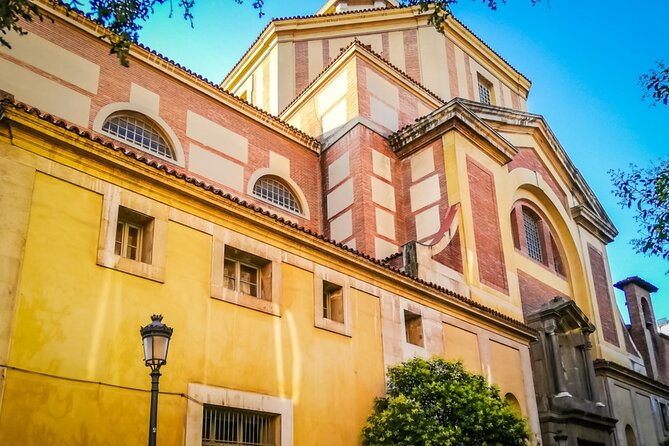
Your first stop is Plaza Mayor, a major public square in central Madrid. It’s the kind of place you think you already know because it’s famous, but the quest approach makes you treat it like a living stage rather than a quick photo backdrop.
This checkpoint is labeled as ticket-free and takes about 10 minutes. The prompt asks you to look around to find the answer to the challenge—then you learn the story of this part of the city as you move on.
Plaza Mayor also does a practical job for the quest: it’s a clear meeting point in the heart of things. Once you start here, the route feels anchored, not random.
Puerta Cerrada: the medieval wall detail many people walk past
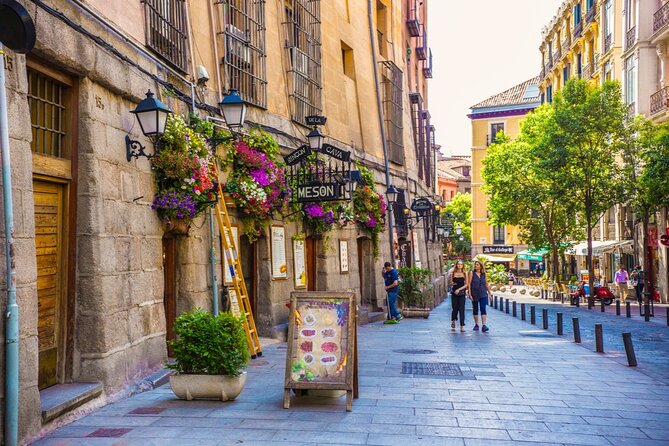
One of the more interesting stops centers on a preserved name linked to Puerta Cerrada, a gate connected to the Christian wall of Madrid. During the Middle Ages and the Renaissance, this was a way through the wall—then it was demolished in 1569.
The quest prompts you to scan your surroundings and find the answer to advance, while you pick up the story of why this area matters. Even if you don’t consider yourself a history person, this is the type of clue-based storytelling that makes you look at the built environment like evidence, not just scenery.
This is also where the game idea shines: you get a reason to slow down and notice architectural remnants that most people would ignore during normal sightseeing.



A central square created in 1926: customs, markets, and the Bank of Spain link
Another checkpoint takes you to a square created in 1926 after demolition of older buildings around the Old Customs square and the area called La Leña (later Calle de la Bolsa). The description ties this place to past uses like convent grounds and even a fish market.
Then it shifts to the 17th-century palace of the Five Major Guilds, later connected to the Bank of Isabel II, and then the first headquarters of the Bank of Spain after a merger. In the early 21st century, it houses the General Directorate of the Treasury.
That is a lot of civic history packed into a walkable area. The quest challenge keeps it from turning into a timeline recital. You are scanning and answering, while the location explains how Madrid’s financial and administrative power is rooted in older layers of the city.
Iglesia de San Sebastián on Atocha street: a church tied to a devotional route
Next up is Iglesia de San Sebastián, a 16th-century church located on Atocha street at number 39. The name connects to a devotional chapel found along the route to the Basilica of Nuestra Señora de Atocha, founded in 1541.
The game format is simple here: you look around, solve the challenge, and learn the story that ties the church name to movement and pilgrimage in older Madrid.
Atocha street is also a good reminder that Madrid’s important cultural sites aren’t always hidden in museums. Sometimes the key stories are in plain sight, at a corner that you’d pass by if you were just walking between destinations.
Lope de Vega house museum: Golden Age life at street level
The quest then points you toward the House-Museum of Lope de Vega, the writer’s former home. It’s described as a sixteenth-century house that Lope de Vega bought in 1610.
Golden Age writers can feel distant if you only read their works. This kind of place tends to bring you closer, because it’s not only about the literature—it’s about where it fit into daily life.
The quest again uses a look-around task. You’re not there to sit in a lecture. You’re there to connect the physical setting to the stories you hear along the way, using the game clues to make you pay attention.
Cervantes childhood home museum: the Don Quixote author you can actually stand near
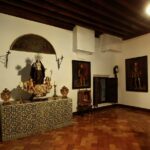
One of the biggest cultural anchors is the childhood home of Miguel de Cervantes Saavedra, now a museum devoted to him. The description emphasizes recreated customs, traditions, and everyday life from the 16th and 17th centuries.
The museum also holds an important bibliographic collection, with editions of Cervantes’ work across different periods and languages. There’s even mention of workshops for children and teenagers, plus conferences, plays, and musical shows.
That is a lot of content, so here’s how I’d use the quest logic: treat this stop as both a cultural pause and a momentum point. Let the story sink in, then keep going without trying to see everything like a timed-ticket museum visit. The quest itself is about motion and discovery, not checking every box inside a building.
As you look around for the answer to the challenge, you’re basically training your eyes to notice how museums present a person’s world, not just their fame.
Cervantes burial at the convent: the remains story adds real drama
Another checkpoint takes you to the convent where Cervantes was buried in 1616. The description notes that his remains were temporarily transferred elsewhere in 1673 during rebuilding, and then were lost until forensic scientists discovered them in 2015.
That twist matters because it turns a writer’s biography into a real-world mystery. It’s also the kind of detail that sticks because it’s not just “he lived here” or “he wrote that.” It’s a story with uncertainty and a later reveal.
The quest prompt asks you to look around to find the answer and learn that background. The result is a faster, more memorable way to absorb one of Madrid’s most human stories from the Golden Age.
Plaza de Santa Ana finale: writer monuments, terraces, and a relaxed ending
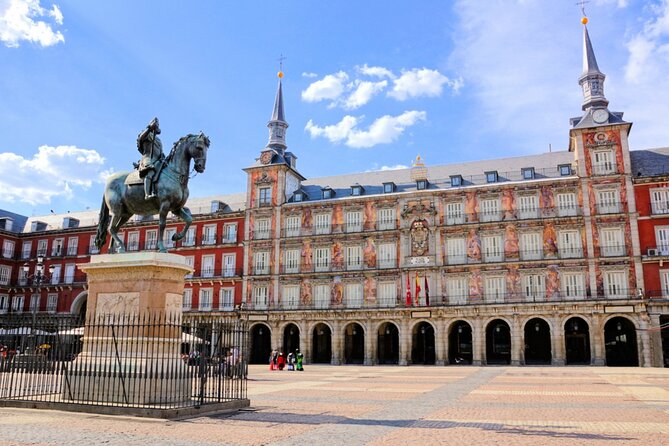
The quest finishes around Plaza de Santa Ana. This area is described as having monuments to Pedro Calderón de la Barca and to Federico García Lorca, with restaurants, cafes, and tapas bars lining the edges and terraces covering much of the surrounding surfaces.
So the last part of the game doesn’t feel like a hard landing. It’s a natural place to linger and decompress after two hours of looking and solving.
Practically, it’s also a smart ending. If you need to grab tapas, find a bathroom, or just reset your energy, you’re in a lively zone where those things are easy to do without breaking your schedule.
If you’re thinking logistics: the city game ends in the middle of Plaza de Sta. Ana, and the experience lists an end point at C. del Príncipe, 2. In real life, you’ll follow the in-app directions to get there.
Price and value: $8.40 for a structured Madrid walk
At $8.40 per person, this is priced like a budget-friendly activity. It isn’t trying to compete with a premium museum day or an all-day private guide. Instead, it gives you a built-in structure—prompts, challenges, and a route—that turns your own walking into a guided-feeling experience.
Two hours also helps the value equation. You get a compact plan you can fit into a day that already has heavier ticket items. And since the experience is flexible on start times, you can book it for a slower afternoon if mornings feel packed.
It’s also “always available” for booking with 24/7 operation, which is useful when your Madrid day gets reshuffled. Just remember that the actual game still takes time to complete at a comfortable pace.
Booking ahead and planning your day around the game
The experience is listed as commonly booked about 41 days in advance. I take that as a hint to lock it in early, especially if you’re traveling in peak seasons or with a group that needs coordinated plans.
If you want the smoothest experience, pick a start time that matches your energy. Even though you can start anytime, starting too late can make the walking and clue-checking feel rushed.
Also, plan a small buffer before and after. Two hours passes faster when you’re reading prompts, comparing answers with friends, and snapping photos. The game format encourages looking closely, and that naturally stretches time.
Tips to make the quest easier in real Madrid streets
Here are a few practical moves that make this type of app-based hunt feel effortless.
- Keep your phone brightness up. You’ll be outdoors and reading prompts at the exact moment you need them.
- Wear comfortable shoes. You’re covering central Madrid stops that are close enough to work in a short window, but still enough to require real walking.
- Take photos of anything you think might matter. If you miss a clue once, a screenshot can help you go back without wasting time.
- Expect that construction can change small details. One earlier experience noted instructions not fully matching due to work, so if something feels off, trust the prompt you see in the app, not your memory.
- Use the flexible nature. If a stop makes you want coffee, do it. Resume when you’re ready.
The goal is to keep the game playful. If you treat it like a rigid checklist, it loses its charm.
Who this Don Quixote Quest fits best
This experience is ideal for families and friends. The game format gives everyone a role, which reduces the classic family problem of differing interests.
It also suits visitors and residents of Madrid who want a different angle on famous landmarks. If you already know Plaza Mayor and want to connect it to Cervantes and the Golden Age, the quest approach is a fun way to build that mental map.
If you’re a solo traveler, it can still work, but you’ll want to be comfortable figuring things out from prompts while walking. This is not a traditional guided lecture. It’s a game with sightseeing baked in.
And if you hate waiting around for group tours to assemble, the flexible start times and private group setup are strong positives.
Should you book this Don Quixote Quest in Madrid?
Book it if you want a low-cost, structured way to see central Madrid while playing a city game. I especially recommend it if you like literature or you want a reason to look closely at the city’s layers: medieval gates, church names tied to devotional routes, and the real biography details around Cervantes.
Skip it if you want a classic guided tour with a person speaking to you the whole time. Also, if you get stressed when directions don’t perfectly match what you see, go in with a calm mindset and be ready to adjust based on the prompts on your screen.
If you want a fun, practical blend of walking, stories, and puzzles, this one fits nicely—and you finish in a place where it’s easy to keep the day going.
FAQ
Do I need internet to play the Don Quixote Quest game?
No. You can play offline, and the experience specifically notes that you do not need an internet connection to play.
How long does the quest take?
The duration is listed as about 2 hours.
Is this a guided tour with a physical guide?
No physical tour guide is included. This is a private game-meets-tour that you play using the mobile apps and prompts.
Can I start at any time during the day?
Yes. It’s open 24/7 every day of the week, and you can start at any hour. The opening hours run from 12:00 AM to 11:59 PM.
Where do I start and where does it end?
The start point is C. del Marqués Viudo de Pontejos, 17, Centro, 28012 Madrid, Spain. The game ends in the middle of Plaza de Sta. Ana, and the end point listed is C. del Príncipe, 2, Centro, 28012 Madrid, Spain.
Is the ticket mobile-based?
Yes, it includes a mobile ticket.
Is it private, or do I join strangers?
It’s private. Only your group participates.
Is it free for kids?
Yes, it is free for kids.
Are service animals allowed?
Yes, service animals are allowed.
What is the cancellation policy?
Free cancellation is available. You can cancel up to 24 hours in advance for a full refund, and cancellations within 24 hours are not refundable.