REVIEW · MADRID
From Madrid: Ribera del Duero Tour of 3 Wineries w/ Tastings
Book on GetYourGuide →Operated by Gourmet Madrid · Bookable on GetYourGuide
Wine caves make the day move fast. This Ribera del Duero day trip from Madrid pairs serious wineries with an easy flow: 2 hours by bus, then 8+ tastings across three very different cellar styles, all with food to keep up with the wine. You’ll also get a clear history lesson on why this region matters, not just a toast-and-go session.
I especially like the contrast in the winery lineup: one stop is boutique and architecture-forward, another blends modern buildings with vineyard rows, and the last one leans into centuries-old tradition with a medieval underground cellar. I also really enjoy that the tour is built around meeting the people behind the labels, so you’re listening to the winemaking story from families who’ve passed techniques down for generations.
The main drawback to plan for is the time: it’s a 10–11 hour day, and lunch is on you. If you’re sensitive to long drives or want lots of free time to roam, this might feel like too much day for too little wandering.
3 winery styles in one day: modern design, vineyard-integrated spaces, and medieval caves
8+ Ribera del Duero wines with snacks: you’ll eat your way through tastings
Family-run focus: you meet the people and the method, not just the marketing
Underground history: a long, rock-cut cellar still used for winemaking
Small group energy: typically around 8 guests, max 20, guided in Spanish-English
In This Review
- Ribera del Duero from Madrid: what that 9:15 start really feels like
- Three family wineries: modern design, vineyard-integrated production, and medieval caves
- Stop one: boutique winery with avant-garde architecture
- Stop two: modern structures connected directly to the vineyards
- Stop three: a 16th-century underground cellar with 400 years of continuity
- What the tastings are really doing for you (beyond trying lots of wine)
- Aranda de Duero winery time: why the morning feels like the training ground
- Lunch break planning: how to budget without losing the day
- The underground cellar visit: what makes a 13-meter-deep cellar worth your time
- Guides and group size: the difference between a tasting and a lesson
- Price and value check: is $218 a fair deal for 3 tastings days?
- Who this tour fits best (and who should reconsider)
- Should you book the Ribera del Duero 3-Winery tour from Madrid?
- FAQ
- How long is the Ribera del Duero day trip?
- How many wineries will I visit?
- Are wine tastings included?
- Is lunch included?
- What’s the lunch budget range suggested?
- What’s the meeting point in Madrid?
- What language is the tour offered in?
- Is the tour suitable for children?
- Is the tour wheelchair accessible?
- What’s the group size like?
- Can I get a refund if I cancel?
Ribera del Duero from Madrid: what that 9:15 start really feels like
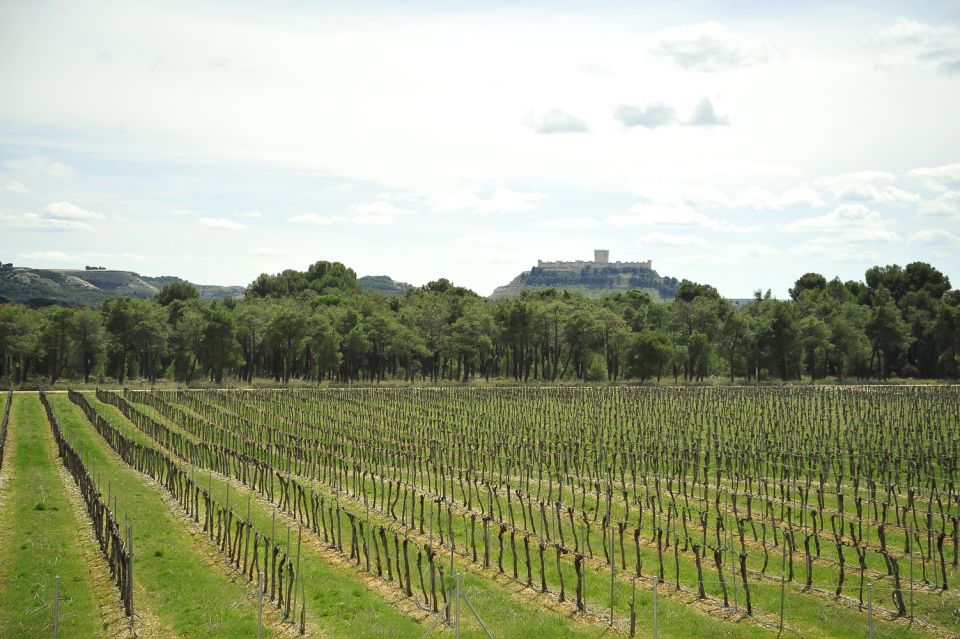
This tour kicks off early, leaving Madrid at 9:15 AM from Plaza del Conde de Casal (near the Hotel Claridge meeting area). From there, you’re looking at about 2 hours each way of driving, plus winery time that fills most of the day. If you’re the type who loves day trips, you’ll enjoy the rhythm: travel first, then a structured tasting day where your guide keeps everything moving.
Once you’re out of the city, the guide uses the drive time well—sharing context about the region and the Duero River corridor, which connects Spain’s Ribera del Duero to Portugal’s wine story downstream. That matters because Ribera del Duero isn’t just “good red wine.” The region has a specific identity built on geography, climate, and the way producers balance old tradition with newer tech.
One practical tip: treat this as a full-day food event. Even though lunch is not included, the tastings at each stop come with local appetizers, so you’ll be eating throughout the morning and early afternoon. You’ll enjoy the experience more if you don’t arrive hungry.
Three family wineries: modern design, vineyard-integrated production, and medieval caves
The best part of this tour is that it doesn’t send you to three copies of the same winery. You’re getting a real snapshot of how Ribera del Duero can feel both cutting-edge and deeply rooted.
You can also read our reviews of more tours and experiences in Madrid.


Stop one: boutique winery with avant-garde architecture
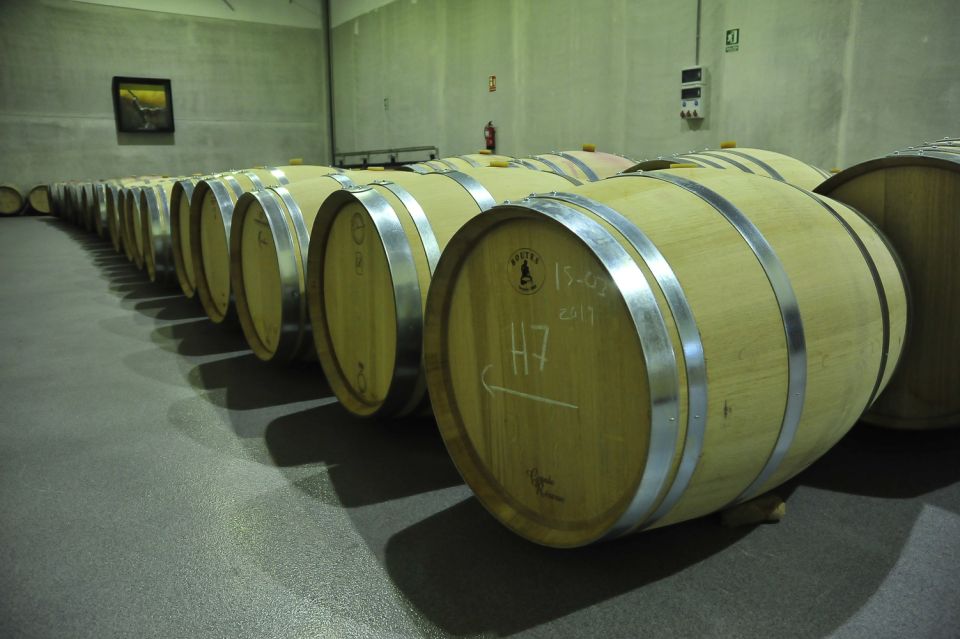
The first winery is described as boutique and architecture-forward, where details are dialed in for production conditions. Expect a tasting experience that feels polished and design-conscious, and you’ll likely hear why modern facilities can help with consistency—from temperature control to careful workflow.
What makes this stop especially interesting is the reputation angle shared with you on the day. The information provided includes a note that in 2025, several wines earned +95 points on the Tim Atkin scale, and a founder received Winemaker of the Year. Even if you don’t chase ratings normally, that kind of track record helps you understand why this winery sits near the top of the region’s current conversation.
Stop two: modern structures connected directly to the vineyards
The second stop focuses on spaces that connect with vineyards, blending contemporary architecture into the natural surroundings. This winery is framed as a different approach—more of a functional bridge between vineyard work and production.
This is where you start noticing how a region-wide style forms. You can taste the same general Ribera del Duero identity in your glass, but you’ll feel differences in how producers build their process—where they emphasize technology, where they keep it traditional, and how the setting influences the visitor experience.
Stop three: a 16th-century underground cellar with 400 years of continuity
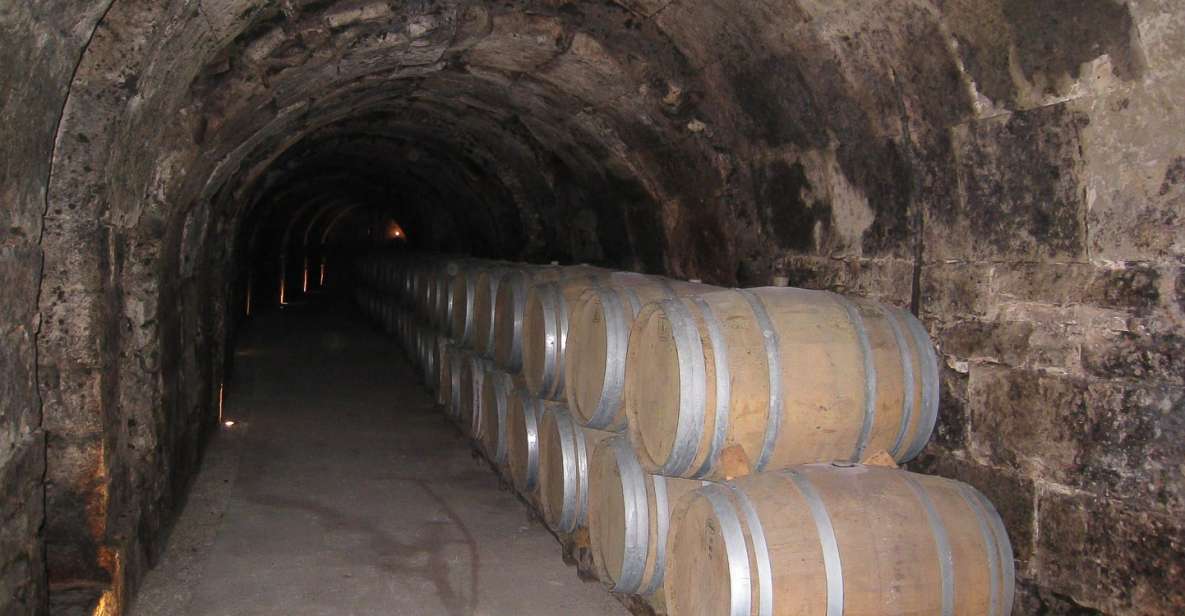
The final winery is the history magnet. The winemaking tradition here is said to run 400 years, and the winery is described as a forerunner—founded before the denomination of origin existed. That long timeline adds weight to the visit because you’re not just seeing a cellar. You’re seeing a working system with heritage baked in.
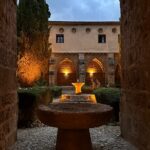
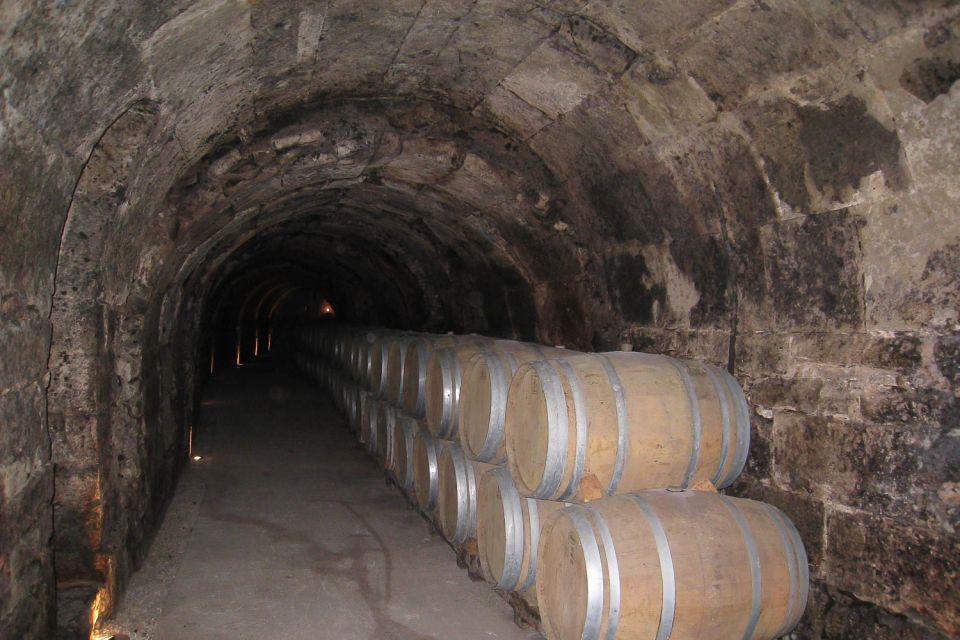
You’ll visit a medieval underground cellar with rock-cut tunnels, described as about 7 kilometers long and excavated to a depth around 13 meters. The fact that these historic tunnels are still used is the kind of detail that makes the tour memorable. It turns a tasting into a “how did they do this for so long?” moment.
If you like stories that connect place, people, and practice, this third stop is the payoff.
What the tastings are really doing for you (beyond trying lots of wine)
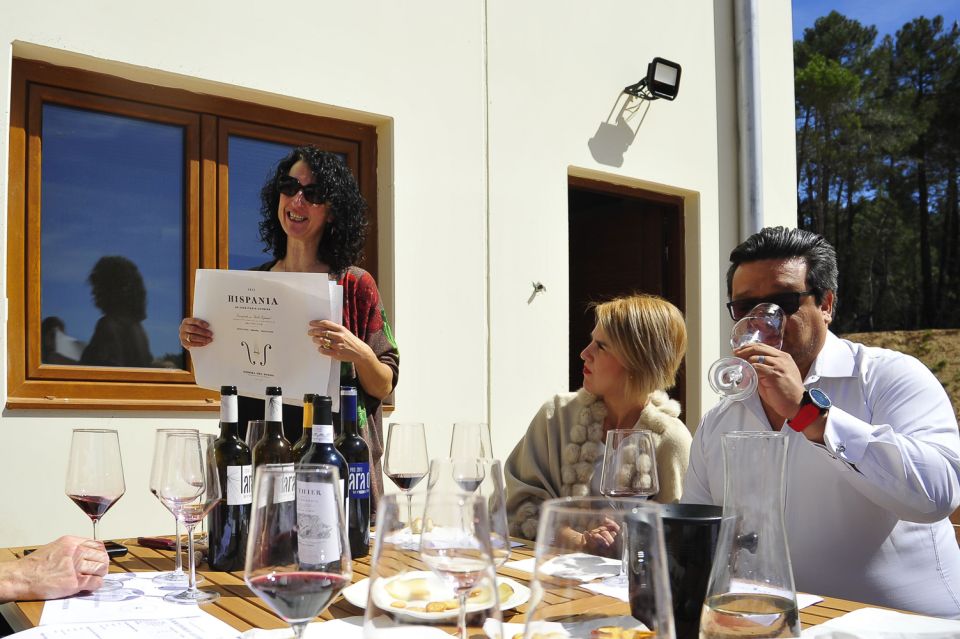
You’ll taste at least 8 wines across the day, and they’re Denomination of Origin Ribera del Duero wines. That “at least” matters because it signals something practical: you’re not paying for a couple of casual pours. This is built as a guided tasting session with structure and food.
Local appetizers are included at each winery, which makes a difference. Wine tasting without food often turns into a blur—your palate gets tired, flavors flatten, and you start guessing instead of noticing. Snacks keep the tasting clearer and more educational, especially when you’re tasting multiple wines back-to-back.
Also, Ribera del Duero has a reputation for full-bodied character (most visitors associate it with powerful Spanish reds). A good guide will help you separate what you’re tasting—fruit, spice, oak influence, and how the wine feels on the palate—from what you’re assuming. The tour’s emphasis on both old and new winemaking techniques supports that: you learn why certain choices show up in the glass.


Aranda de Duero winery time: why the morning feels like the training ground
Aranda de Duero is part of the experience flow, and the schedule gives you two winery visits before lunch break. This sequencing is smart. Your first tastings help you build a mental baseline. Then, after lunch time later, your final winery tasting lands with more contrast and less confusion.
At each winery, you get a guided tour of the facilities, not just the tasting room. That means you’re seeing production spaces and learning how the process connects to the flavor.
You’ll also get time at the wineries for guided explanation, with a bilingual guide (Spanish-English). In practice, this reduces one of the common problems on day tours: you miss half the story if you don’t speak the local language. The tour’s format is designed for bilingual comprehension, which helps everyone follow what’s happening.
Lunch break planning: how to budget without losing the day
After the first two winery stops, you get free time for at least 1 hour to grab a bite or have lunch nearby. Lunch is not included, but you’re given realistic budget ranges: about €12–15 for tapas-style lunch, or around €30 for a full 3-course meal.
Here’s how I’d plan it so you don’t waste time:
- If you want variety and a quick reset, go tapas and keep it light.
- If you’re hungry from the morning tastings, choose a fuller meal and slow down your tasting pacing.
- Since your guide will provide recommendations, use them. On wine days, speed and timing matter because your next stop is timed.
This break is also your chance to step away from wine for a bit—water, a stroll, and a short sit-down can make the last winery experience more enjoyable rather than just “more of the same.”
The underground cellar visit: what makes a 13-meter-deep cellar worth your time
The final stop’s medieval underground cellar is the highlight that changes the mood of the day. A lot of wineries have caves. This one is described with specific scale: about 7 km of tunnels and excavation to around 13 meters.
That scale matters because it hints at a production system designed for stability and storage. Even without being a technical expert, you can feel how rock-cut spaces create consistent conditions. When you compare that to the modern architecture you saw earlier, you get an instant “then vs now” lesson.
This is the stop where the tour’s theme of contrast becomes more than marketing. You’re holding wine that comes from a tradition that survived centuries, then you’re walking through the kind of space that made it possible. If you’re the type who likes to understand how things work—how storage, temperature, and workflow affect outcomes—this cellar visit is worth lingering over.
Guides and group size: the difference between a tasting and a lesson
This is a small group tour with a minimum of 4 participants and a maximum of 20 (with an average group size around 8). That matters because it affects attention and pace. In smaller groups, guides can correct misunderstandings, answer specific questions, and keep the tasting from turning into a noisy crowd event.
You’ll also be with a bilingual expert guide, Spanish-English. In feedback shared for this tour, names like Ismael/Ismail, Muna, Antonio, Kike, Raul, and Jorge come up with praise for how clearly they explain the region and the wines. Guides in this style tend to do two things well: they teach you how to taste (not just what to drink), and they help you connect each winery’s approach to what you’re noticing in your glass.
One practical note: the group may be international. That’s usually a plus on a wine day—you’ll meet people who notice different things about flavor and learn from each other’s questions. It also makes good bilingual guidance even more important, and this tour is built for it.
Price and value check: is $218 a fair deal for 3 tastings days?
At $218 per person for an 11-hour day trip, this isn’t the cheapest wine outing from Madrid. The value comes from three places:
1) You get more than tastings—tours and comparisons.
Wine tastings are the obvious part, but this tour pairs tastings with guided facility visits, so you’re learning how production choices shape the wine.
2) Three different winery models in one day.
A boutique architecture-led winery, a modern-vineyard integration space, and a medieval underground cellar is an unusually wide range for one day. That variety is what prevents the experience from feeling repetitive.
3) You get structured food with the wine.
Local appetizers included at each winery reduce palate fatigue and make the tastings more enjoyable. You’re not relying on lunch alone to keep you steady.
Where the price might feel steep is if you’re expecting lots of free wandering time or you’re very sensitive to long days. One review also hinted that two wineries might feel like enough for some people, and I get that. Still, if you want value through variety and a full tasting education, this format makes sense.
Who this tour fits best (and who should reconsider)
This is a strong match for you if:
- You love wine but also like the why behind it—how technique and setting affect the glass.
- You want a guided day without worrying about transport and timing.
- You’re comfortable with a long day trip.
It may be less ideal if:
- You hate full schedules. The day runs until around 8:00 PM back in Madrid.
- You want lunch included. You’ll budget for it.
- You’re traveling with someone under 12 or needing wheelchair access. The tour specifically notes it’s not for children under 12 and not suitable for wheelchair users.
There’s also a clear wine limit: tastings are for adults only (minimum age 18), so plan accordingly if your group includes teenagers or families.
On the safety side, the tour is described as safe for solo female travelers. If that’s a concern for you, it’s a reassuring detail when you’re booking from outside the region.
Should you book the Ribera del Duero 3-Winery tour from Madrid?
I’d book this if you want a guided day that feels like a real education, not just a bus ride with wine. The biggest reason is the structure: three family wineries with included tastings and food, plus a finale underground cellar that gives you a physical sense of Ribera’s past.
Before you commit, check how you feel about a long day and paying for lunch. If you’re the type who can do 10–11 hours and enjoy a packed schedule, this tour looks like good value for what you’re getting. If you’d rather stretch it out, you might find that the timing leaves less room for wandering.
If you do book it, go in hungry for learning, not just drinking. The tour’s power is in the comparisons—modern architecture versus centuries-old caves—right there in the same day, in the same region.
FAQ
How long is the Ribera del Duero day trip?
The tour runs about 10 to 11 hours depending on traffic, leaving Madrid at 9:15 AM and returning around 8:00 PM.
How many wineries will I visit?
You’ll visit 3 wineries in the Ribera del Duero region, each with a guided tour and wine tasting.
Are wine tastings included?
Yes. You’ll do wine tastings at each winery, and the experience includes at least 8 Ribera del Duero wines with appetizers.
Is lunch included?
No. There is a break with free time for lunch, and you pay at your own expense.
What’s the lunch budget range suggested?
The guide provides options, roughly €12–15 for a tapas-style lunch and about €30 for a full 3-course meal.
What’s the meeting point in Madrid?
Meet at the front door of the cafeteria of hotel Claridge, next to the main entrance of the hotel: Plaza del Conde de Casal, 6, 28007 Madrid.
What language is the tour offered in?
The tour is offered in Spanish and English, with bilingual expert guidance.
Is the tour suitable for children?
Children under 12 can’t take part, and the minimum age allowed for wine tastings is 18.
Is the tour wheelchair accessible?
No. The tour notes it is not suitable for wheelchair users.
What’s the group size like?
It’s a small group tour with a minimum of 4 and a maximum of 20, with an average group size around 8.
Can I get a refund if I cancel?
Cancellation is free up to 24 hours before the tour start for a full refund, based on the tour’s policy.