REVIEW · MADRID
La Latina to Madrid Guided Tour with Breakfast
Book on Viator →Operated by Central Experiences Madrid · Bookable on Viator
Madrid wakes up with coffee and cake. This guided walk pairs a light breakfast at Mesón de Paredes with a focused route through La Latina, Lavapiés, Las Letras, and Hapsburg-era Madrid’s Austrias quarter. It’s a great way to understand how everyday life, old stone streets, and big city landmarks connect in one morning.
I like the practical pacing for a 2 hours 30 minutes tour, and I also like how the guide steers you beyond postcard highlights toward markets, squares, alleyways, and churches. One heads-up: the route covers a lot of territory in a limited time, so some stops are brief—plan to enjoy the look-see now, and return later if a place really grabs you.
In This Review
- Key Things You’ll Appreciate Most
- Coffee-and-Cake Launch in La Latina
- La Latina’s Medieval Streets and the Tirso de Molina Area
- Iglesia Parroquial de San Millán y San Cayetano (A Church with Layers)
- Lavapiés: Corralas, Courtyards, and Everyday Madrid
- Mercado de Antón Martín: A Gourmet Market That Still Feels Like a Market
- Las Letras: Where Golden Age Authors Lived
- Galería Canalejas: Luxury Inside a Former Palace
- Puerta del Sol and the Center-Point Reality Check
- Austrias and Plaza Mayor: Hapsburg-Era Madrid in One Place
- Catedral de Santa María la Real de la Almudena
- Sabatini Gardens and the Royal Palace Quarter
- Mercado San Miguel to Finish: The Cast-Iron Farewell
- Price and Value for a 2 Hours 30 Minutes Morning
- Who This Tour Fits Best (and Who Might Prefer Something Else)
- Should You Book This Tour?
- FAQ
- Do I get breakfast on this tour?
- Where does the tour start and what time?
- How long is the guided walk?
- How many people are in the group?
- Is the tour ticket digital?
- Are any stops free to enter?
- Where does the tour end?
- Can I cancel for a full refund?
Key Things You’ll Appreciate Most
- Breakfast first, at Mesón de Paredes with coffee and homemade carrot cake to set the tone
- Three personality-filled neighborhoods: La Latina, Lavapiés, and Las Letras, plus Austrias
- Landmarks with real local context like Iglesia de San Millán y San Cayetano and Plaza Mayor
- Market stops that feel like Madrid, not a performance: Antón Martín and Mercado de San Miguel
- Small group size capped at 25 and, in at least one run, it can be very small
- Mobile ticket and an easy city-center start near public transport
Coffee-and-Cake Launch in La Latina
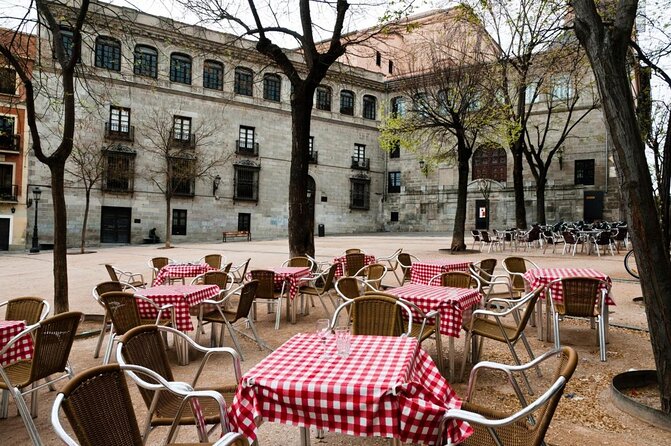
The tour starts at C. del Mesón de Paredes, 11 (Centro), and it’s not just a meet-and-greet. You begin with coffee and homemade cake—specifically carrot cake—served as a simple way to settle in and get to know your guide and group before the walking starts.
This matters more than you might think. When you have that shared first stop, the guide can move faster later because everyone is oriented. You’re also starting in the right mood for La Latina, a neighborhood where daily life spills onto the street and you can feel the city’s rhythm early in the day.
I also like that the breakfast is light. It gives you energy without turning the morning into a heavy meal, which is handy when you’re about to weave through narrow streets and busy squares.
You can also read our reviews of more guided tours in Madrid
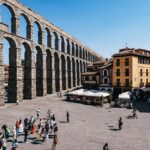
La Latina’s Medieval Streets and the Tirso de Molina Area
Once the coffee is done, the tour leans into what La Latina does best: irregular medieval street patterns. Expect narrow, winding lanes that usually lead into a square. That “turn, open up, and suddenly you’re in a plaza” feeling is one of Madrid’s greatest pleasures, and La Latina is where it’s easiest to notice.
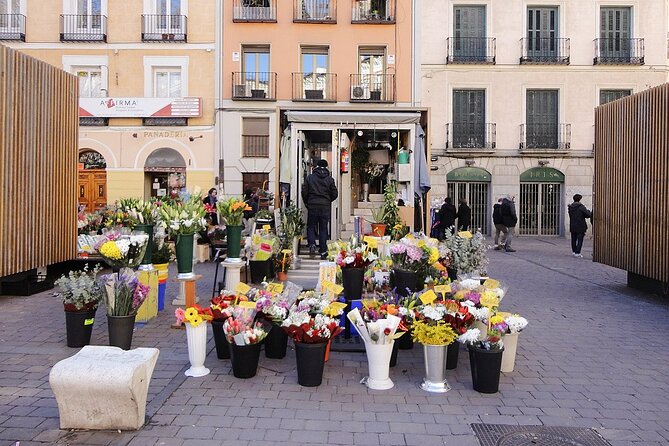
You’ll also hear about the kind of street-level details that help you read the neighborhood. For example, the route passes through higher parts of the area near Tirso de Molina Square, where flower stalls are part of the scene, and where you can find clothing and accessory wholesalers alongside some retail.
A small caution: if you’re the sort of traveler who likes to linger at every corner, La Latina’s charm can make you want to slow down. This is still a good tour for that, as long as you keep expectations realistic about time.
Iglesia Parroquial de San Millán y San Cayetano (A Church with Layers)
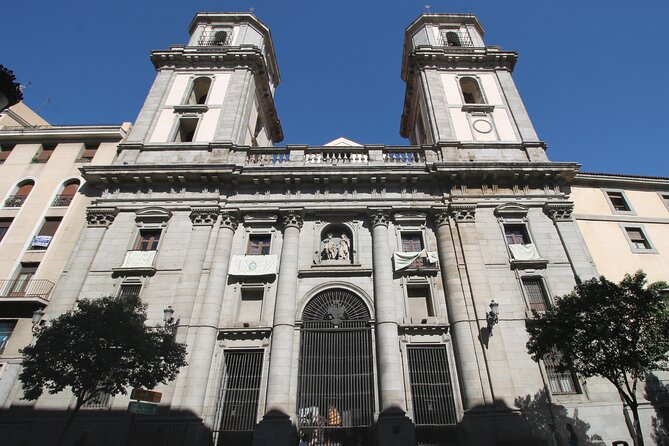
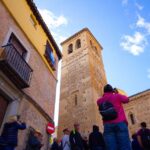
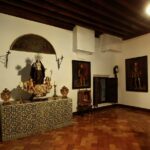
In La Latina, the tour pauses at Iglesia Parroquial de San Millán y San Cayetano, free to enter. The church was built by Marcos López in 1669 and finished by Francisco de Moradillo in 1761.
What makes this stop valuable is not just the dates. It’s how it anchors the neighborhood’s long timeline. Places like this help you see Madrid as more than a list of monuments. You start to connect the architecture to the city’s shifting eras and the local families who funded and shaped those changes.
You’ll also hear associations tied to major Baroque-era creators—people believed to have been involved include José de Churriguera and Pedro de Ribera. Even when details are debated, the point is the same: Madrid’s old districts aren’t just old—they’re shaped by artists and builders who left a visible stamp.
Lavapiés: Corralas, Courtyards, and Everyday Madrid
Next comes Lavapiés, a neighborhood with strong history tied to everyday housing. The tour frames it from the angle that Lavapiés has been home—since the 16th century—to lower classes, with residents living in corralas. These were apartment blocks arranged around an interior courtyard, a setup that created shared outdoor space even in dense city living.
This is a smart teaching moment. It gives you context for why certain streets feel like community spaces rather than only “routes.” Courtyards and shared areas help explain why neighborhood energy is so visible here.
Mercado de Antón Martín: A Gourmet Market That Still Feels Like a Market
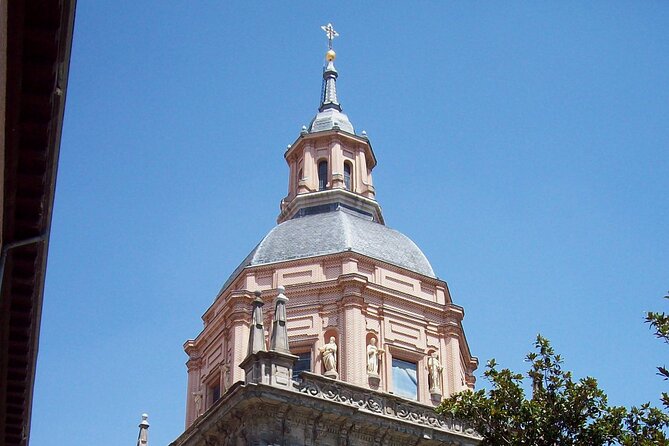
Lavapiés leads you to Mercado de Antón Martín (near the Plaza de Antón Martín). This is a modern market concept—traditional food stalls alongside restaurants—built for variety. The key idea is street-food energy with a global menu.
You can expect flavors from Spain, Italy, Asia, and Latin America alongside Spanish staples. The tour doesn’t push you into a single kind of meal; it’s more about showing you the market style and helping you decide what to try later, before or after the walk.
One practical note: markets can get lively, and since the tour groups move through them on schedule, you may have limited time to linger at specific stalls. Use that time to pick one item you’ll enjoy and keep walking—then come back on your own if you discover a craving.


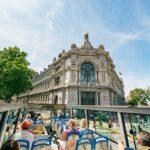


Las Letras: Where Golden Age Authors Lived
The walk then shifts to Las Letras, known as Madrid’s literary quarter. The tour connects the neighborhood to the Golden Age of Spanish Literature, including major names such as Cervantes, Lope de Vega, Quevedo, Tirso de Molina, and Góngora.
Even if you’re not a literature superfan, this framing helps you notice things you’d otherwise gloss over: street names, cultural references, and a neighborhood vibe that feels like ideas live here as much as people do.
It’s also a nice tonal change. After Lavapiés’ market energy, Las Letras feels more grounded and story-driven, like you’re walking through a living classroom.
Galería Canalejas: Luxury Inside a Former Palace
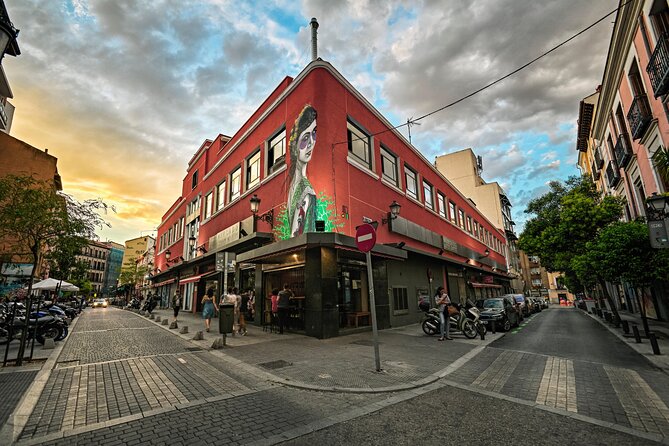
In Las Letras, the tour makes an interesting detour to Galería Canalejas. This shopping center sits in the former Palacio de la Equitativa, between Calle Alcalá and Calle Sevilla, and it’s positioned as a major luxury stop in the center of Madrid.
What you’ll see described is the scale: over 40 boutiques spread across three floors, plus restaurants and gastronomic concepts created by Michelin-star chefs. The guide’s explanation helps you treat it as more than shopping. You’re also seeing how Madrid repurposes historic spaces for modern city life.
If you’re not shopping, this still works as a visual break—an air-conditioned pause, a change of pace, and a glimpse into the part of Madrid that runs on fashion, jewelry, and upscale dining.
Then you move on, which brings you to one of the most important city intersections in Spain.
Puerta del Sol and the Center-Point Reality Check
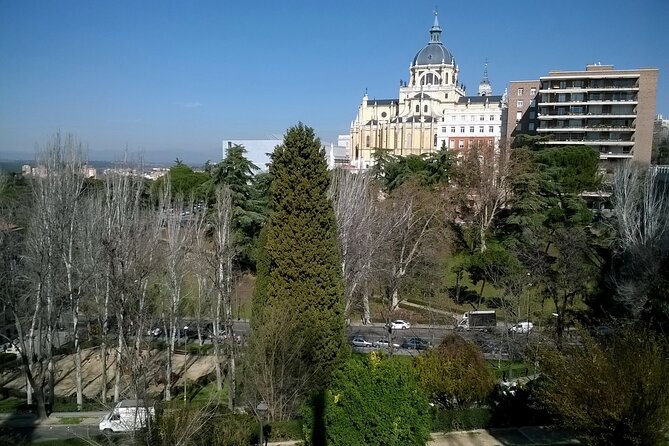
Near the luxury stops, you’ll reach Puerta del Sol, described as a junction for many of Madrid’s busiest streets: Mayor, Arenal, Alcalá, and Preciados. It’s also the starting point for several major radial roads in Spain.
This stop is useful even if you’ve been here before. It’s where the city’s logic becomes obvious: Madrid is laid out like a set of spokes, and Puerta del Sol is the hub. When you understand that, you can navigate the city faster later without feeling like you’re constantly guessing.
Also, because Sol sits at the center of so many lines, it helps you orient yourself for the remainder of the walk and for where to go after the tour ends.
Austrias and Plaza Mayor: Hapsburg-Era Madrid in One Place
The route continues into Austrias, and the tone shifts again. This is the oldest part of the city, tied to Hapsburg Madrid, and the tour uses it to help you connect the “grand square” mood with the earlier lanes you’ve already walked.
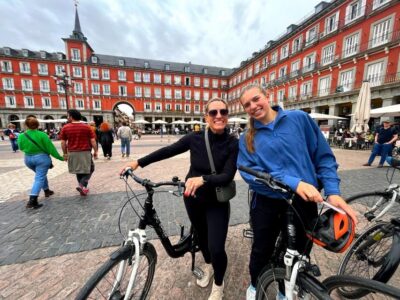
A central focus here is Plaza Mayor, described as one of Madrid’s best-preserved historical monuments, located in the historical zone next to the Puerta del Sol Gate. The tour notes that, until not long ago, this was the site of the capital city council.
This is a valuable stop because Plaza Mayor is where Madrid’s civic identity becomes visible. You can stand there and feel how squares functioned as meeting points—markets, ceremonies, public life—long before tourists made them iconic.
If you’re visiting during seasonal events, the tour’s explanation includes examples like the drum parade at Easter and a Christmas market in December. Even if your dates don’t match, knowing these calendar anchors helps you look at the square with more meaning.
Catedral de Santa María la Real de la Almudena
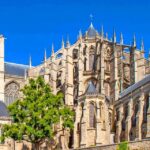
From Plaza Mayor area, the tour reaches Catedral de Santa María la Real de la Almudena, free to visit during the scheduled stop. The cathedral’s story is described as complicated and shaped by changing plans.
Plans were drawn up in 1879 by Francisco de Cubas with a goal of creating a pantheon connected to Queen Maria de la Mercedes. Then things shifted after Pope Leo XIII granted a bull in 1885 for the creation of the Madrid–Alcalá bishopric, changing the project from pantheon plans into cathedral plans.
This kind of “history of the building” explanation is often the difference between seeing a cathedral and understanding it. It gives you a reason to look at details beyond the façade—because the form is tied to decisions, politics, and timelines.
Sabatini Gardens and the Royal Palace Quarter
The tour then heads to a 1.6-hectare garden near major royal sites. You’re told the gardens were planned by José Bonaparte to highlight the nearby Palacio and the Teatro Real, and that important restoration work was directed by Miguel de Oriol in 1997.
Even if you don’t spend long here, the stop is a useful reset. A garden is a breather between heavy architecture and the final market focus.
Then you’re taken to the Royal Palace area. The tour frames it as the home for Spanish kings from Charles III to Alfonso XIII. Today it isn’t the royal family’s daily home, but it remains their official residence, which helps explain why it still feels “in use,” even when it’s not functioning like a private household.
Mercado San Miguel to Finish: The Cast-Iron Farewell
The tour ends at Mercado de San Miguel on Pl. de San Miguel, s/n, with the walk finishing in the center of the food-spot scene.
Here’s what makes it standout in this particular route: Mercado San Miguel is not introduced as a generic market. It’s described as a landmark of Madrid’s food culture with a long timeline—opened in May 1916 as a local food market, and later relaunched as Madrid’s first gourmet market in 2009. In 2018, it was relaunched again with internationally renowned chefs joining the concept.
Architecturally, it’s known for cast-iron design, and it’s located near Plaza Mayor, which ties the whole day together: civic square to royal quarter to market finale.
Practical tip: if you want a proper bite after the tour, this is a great place to do it because you’ll already be oriented in the historic core. Just plan to manage time if you’re choosing between multiple stalls.
Price and Value for a 2 Hours 30 Minutes Morning
At $63.62 per person, this tour sits in the mid-range category for a guided Madrid experience. The value comes from a combination of things that are harder to get all together on your own:
- Breakfast included (coffee plus homemade carrot cake)
- A guide who connects neighborhood layout with major landmarks
- Stops that are free-entry during the tour at key points such as the church and cathedral, plus market entry as part of the experience
- A tight route that covers four major zones without requiring you to plan transfers
Also consider the group size. With a maximum of 25 travelers, you won’t be stuck in an enormous pack. And in at least one reported run, the group ended up being just the two people plus the guide, which makes the whole experience feel more personal and easier to ask questions.
If you enjoy walking but want context—especially on how Madrid neighborhoods got their identity—this price can make sense fast.
Who This Tour Fits Best (and Who Might Prefer Something Else)
This guided breakfast walk is a strong match if you:
- Want an efficient way to learn Madrid’s center without building your own route
- Like markets and neighborhoods as much as monuments
- Prefer a guide who explains how daily life and architecture connect
It may be less ideal if you:
- Hate being on a schedule and want long, unstructured time at each stop
- Need lots of museum-level detail in one sitting (this tour is built for street-level orientation and key sights, not deep-ticket interiors)
Should You Book This Tour?
Yes, I’d book it if you want a morning that gives you a smart first map of Madrid—especially if you care about real neighborhood personality, not just famous spots.
The biggest selling points are the breakfast start in La Latina, the three-neighborhood mix (La Latina, Lavapiés, Las Letras), and finishing with a market that’s easy to turn into a meal. If you’re coming for the first time, this tour helps you build confidence for the rest of your days. If you’ve been to Madrid before, the neighborhood context and market choices are still a nice way to see the city with better framing.
FAQ
Do I get breakfast on this tour?
Yes. The experience begins with coffee and homemade cake at the starting point in La Latina.
Where does the tour start and what time?
It starts at C. del Mesón de Paredes, 11, Centro, 28012 Madrid and begins at 11:00 am.
How long is the guided walk?
It lasts about 2 hours 30 minutes.
How many people are in the group?
The tour has a maximum group size of 25 travelers.
Is the tour ticket digital?
Yes, it uses a mobile ticket.
Are any stops free to enter?
The information provided lists free admission for stops including Iglesia Parroquial de San Millán y San Cayetano and Mercado de Anton Martín, and it also shows free admission for Catedral de Santa María la Real de la Almudena.
Where does the tour end?
It ends at Mercado de San Miguel (Pl. de San Miguel, s/n, Centro).
Can I cancel for a full refund?
You can cancel up to 24 hours in advance for a full refund. After that window, the refund isn’t available based on the local cut-off time.