REVIEW · MADRID
Learn to Make an Authentic Paella!
Book on Viator →Operated by Buzziler · Bookable on Viator
Paella gets easier with a real kitchen coach. This learn-to-make paella class turns a scary Spanish staple into something you can actually cook, right in a local Madrid home with a small group. You’ll work together, chat, and sip Rioja or sangria while you pick up the classic Valencian approach.
I especially like the small group size (10 or fewer). You get real interaction, not a passive show. I also like that the hosts are genuinely food-focused, with guides like Paloma and Pilar described as friendly, kind, and passionate about hospitality and dish history.
One possible drawback: the whole experience is only about 2 hours 30 minutes, so it’s not a full home-cook mastery course. If you want to obsess over every technique at length, you may feel the time is tight.
In This Review
- Key things to know before you go
- Why Valencian paella feels like a rite of passage
- Arriving in Madrid: meeting point and timing that makes sense
- A local home kitchen and a small group of 10 or fewer
- The cooking lesson: hands-on paella skills you can use again
- Drinks, conversation, and the moment you eat your own paella
- Price and value: is $86 worth it for paella in Madrid?
- Who should book this paella class (and who might skip it)
- Quick travel tips to make the most of it
- Should you book the Authentic Paella experience?
- FAQ
- How long is the Authentic Paella cooking class?
- What time does the tour start, and where is the meeting point?
- How big is the group?
- Is the class hosted in a home?
- What’s included with the meal?
- Do I need a printed ticket?
- What is the cancellation policy?
Key things to know before you go
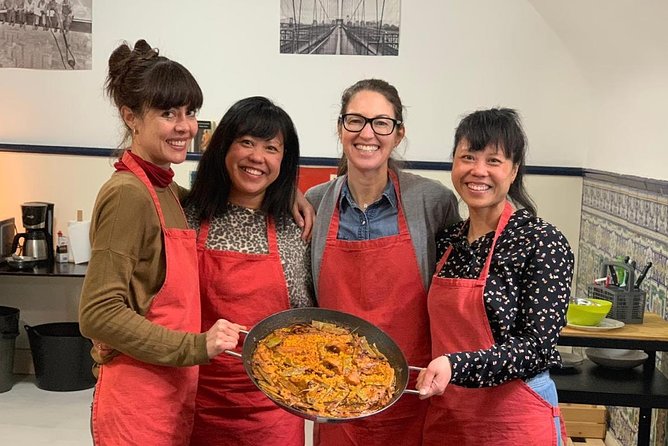
- Valencian paella secrets, not generic paella: you’re taught the classic Valencian method.
- In a local Madrid home: expect a home-kitchen vibe rather than a big studio.
- Small group, up to 10 people: more chatting and hands-on time.
- Drinks included with your meal: beer, wine, and soft drinks, plus you can sip Rioja or sangria during the class.
- You cook, then you eat: you sit down as a group after making the dish.
Why Valencian paella feels like a rite of passage
Paella has a reputation for being hard, and honestly, it’s not just hype. The dish has a few key ideas that matter more than people expect—timing, technique, and getting the flavor right without turning it into something else entirely. That’s exactly why a class like this is so useful.
This experience focuses on the authentic Valencian paella recipe, the one people associate with the classic style. You’re not just learning an ingredient list. You’re learning the logic behind the method—how paella is supposed to come together, and what you should pay attention to as it cooks.
The other big reason it works: you learn by doing. Paella is the kind of food where reading about it won’t save you. Cooking alongside someone who knows the traditional approach gives you the “oh, that’s what they mean” moments that are hard to get any other way.
You can also read our reviews of more tours and experiences in Madrid.


Arriving in Madrid: meeting point and timing that makes sense
The class starts at 12:00 pm and ends back at the meeting point. The meeting address is C/ de Hortaleza, 90, Centro, 28004 Madrid. It’s in central Madrid, and it’s near public transportation, so you can keep your morning flexible instead of sprinting across town.
You’ll also use a mobile ticket, which is convenient if you’re already juggling maps, transit cards, and snack stops. Aim to arrive a few minutes early. In a home-based class, you’ll want time to get settled and meet the group before cooking starts.
Since this is a midday start, it can fit neatly between sightseeing blocks. I like that it doubles as both an activity and lunch/dinner. If you’re doing a packed day in Madrid, this is one of those experiences that actually stops you from wasting time hunting for the right meal.
A local home kitchen and a small group of 10 or fewer
One of the best parts here is the setting: the cooking happens in a local Madrid home. That matters more than it sounds. In a home environment, the pace tends to be more relaxed, and the host interaction feels natural. You’re more likely to ask questions without feeling like you’re in a rushed classroom.
The class is small-group by design, with a maximum of 10 travelers. That size is ideal for two reasons. First, it gives you real hands-on time. Second, it makes it easier to talk with the people around you, not just stand near the edge and wait.
The social tone is built in. You’ll chat during the experience, and the menu isn’t just water and bread. You can sip Rioja or sangria, and your meal comes with beer, wine, and soft drinks included. In other words, this isn’t only about technique. It’s also about having a good time with food at the center.
And yes, the human factor shows up in the way the hosts are described. Guides like Paloma and Pilar are noted for being friendly, kind, and passionate about both food and making sure everyone has a great experience. That kind of hosting style is a big part of why cooking classes can feel either stiff or genuinely fun.
The cooking lesson: hands-on paella skills you can use again
You should expect a group cooking format, not a lecture. The experience is structured around cooking together so that everyone participates—not just the one person closest to the pan.
Here’s what you can reasonably plan for during the lesson:
- You’ll follow the classic Valencian approach step by step.
- You’ll learn what to focus on during cooking, so the end result matches the style you came for.
- You’ll work with your group, which helps the process move smoothly in a short time window.
Paella also has a timing component, and in a class setting, timing becomes teachable. Even if you’ve never made it before, you can start to recognize what “right” looks like as the cooking progresses. That makes it easier to repeat the process later, because you’re not guessing everything from scratch.
Another underrated benefit: you get context about the food and culture. Hosts are described as explaining the history of the food and culture of the dishes, and that kind of background turns paella from just a meal into a story you understand. That’s the difference between cooking something and actually learning something.
Because the class is only about 2 hours 30 minutes, you won’t spend all day perfecting every tiny detail. But you will leave with a clear, usable framework. That’s exactly what most travelers want from a cooking class: enough technique to matter, without turning lunch into a second job.
Drinks, conversation, and the moment you eat your own paella
After you cook, you sit down as a group to eat the masterpiece you helped make. That part is surprisingly satisfying. A lot of cooking classes end with a meal that tastes good but feels unrelated to your work. Here, the meal is the payoff for your effort.
The drink side helps set a relaxed mood. You get beer, wine, and soft drinks included with your meal. Plus, you can sip Rioja or sangria during the experience. It’s the kind of setup that makes the time pass quickly, but it also keeps the meal social, which pairs well with a small group of up to 10.
You should also expect a genuine conversation vibe. The experience encourages chatting and sharing, partly because cooking together naturally forces people to work in the same space. If you’re solo, it’s a friendly way to meet others without doing a formal “tour group” routine.
If you’re particular about flavors, keep in mind the class is teaching an authentic Valencian paella style. That means the goal is classic technique and tradition, not endless personalization. If you’re hoping for a customizable paella experiment, you might find it more traditional than flexible.



Price and value: is $86 worth it for paella in Madrid?
$86 for about 2.5 hours may sound steep until you add up what’s included. This isn’t just a tasting. It’s a hands-on cooking experience in a local home, for a maximum of 10 people, plus your meal and drinks.
Here’s what you’re really paying for:
- Instruction focused on authentic Valencian paella, not just general cooking.
- A real cooking space, equipment, and ingredient handling through a host-led format.
- A meal that you made together, which is a big part of the satisfaction.
- Beer, wine, and soft drinks included, plus Rioja or sangria mentioned as part of the experience.
When you compare it to the cost of eating well in Madrid plus paying for a standalone food workshop, the value starts to look better. The drinks included are a bonus that many classes don’t bundle as clearly.
I’d think of it as paying for an experience that turns lunch into an activity with a strong payoff: you learn the method, you share the meal, and you get the social part without extra planning.
The only reason you might pause is if you’re watching your budget tightly. At $86, this is not an ultra-cheap “snack and stroll” type of activity. But if you want something memorable and hands-on, it’s priced in line with that goal.
Who should book this paella class (and who might skip it)
This experience is a great match if you:
- Want an authentic Spanish food experience that goes beyond ordering paella in a restaurant.
- Enjoy interactive activities where you can ask questions and work with a small group.
- Like guided cultural context, not only recipes.
- Prefer a home-based setting with a more personal feel.
It’s also a smart pick if you’ve had trouble with learning recipes from videos. You’ll get a real-world framework, and you’ll see the cooking process unfold with a teacher beside you.
You might skip it if:
- You’re looking for a passive food tour where you mostly watch.
- You want a long, slow course. This one is short by design.
- You’re hoping for lots of customization. The focus is classic Valencian paella.
Quick travel tips to make the most of it
A few practical things can help you enjoy the class more:
- Come hungry. This is a cooking-and-eating experience, not a light sample.
- Be ready to participate. The format is hands-on group cooking.
- Plan your timing around a 12:00 pm start so you’re not rushing.
- If you drink, pace yourself. Rioja or sangria and wine are part of the experience, so it’s easy to get carried away.
And if you’re the kind of person who likes to understand why food tastes the way it does, you’ll probably love the fact that the hosts bring in the history and culture side along with the recipe.
Should you book the Authentic Paella experience?
If you want a true Madrid food moment that’s interactive and not overly complicated, I’d book it. The biggest strengths are the authentic Valencian focus, the small group size, and the combination of cooking plus drinks plus a shared meal. When a cooking class is taught well, it feels like you’re taking home a skill, not just a memory.
I’d consider skipping only if you strongly prefer to watch rather than cook, or if you’re looking for something longer and more detailed than a 2.5-hour session. Otherwise, this is a solid value choice for travelers who want hands-on Spanish cooking with real hospitality.
FAQ
How long is the Authentic Paella cooking class?
It runs for approximately 2 hours 30 minutes.
What time does the tour start, and where is the meeting point?
It starts at 12:00 pm at C/ de Hortaleza, 90, Centro, 28004 Madrid, Spain.
How big is the group?
The class has a maximum of 10 travelers.
Is the class hosted in a home?
Yes, it is hosted in a local Madrid home.
What’s included with the meal?
Beer, wine, and soft drinks are included with your meal. Rioja or sangria are also mentioned as part of the experience.
Do I need a printed ticket?
No. The tour uses a mobile ticket.
What is the cancellation policy?
You can cancel for a full refund if you cancel at least 24 hours before the experience’s start time. If you cancel within 24 hours, you won’t receive a refund. If the experience is canceled because the minimum number of travelers isn’t met, you’ll be offered a different date or a full refund.