Madrid rewards people who slow down. This small-group walking tour does just that, guiding you through layers of Madrid’s past—from Muslim influence to Habsburg and Bourbon rule—using the historical center as your classroom.
I love how the route ties architecture to real political moments, not just stone-on-a-map facts. I also like that you get stops that feel different from the usual checklist: Monasterio del Corpus Christi for the famous nuns’ cookies and a food moment at Mercado de San Miguel for tapas vibes.
The main thing to watch is timing. The walk is listed at 2.5 hours, but it can run longer, so if you’ve got a hard appointment right after, give yourself extra cushion.
In This Review
- Key highlights to look for
- Where the tour starts: Plaza Puerta Cerrada and the medieval entry mindset
- Following Madrid’s layers: from Muslim walls to royal power
- La Latina and Plaza de la Villa: where styles change in front of your eyes
- Royal Palace, empire stories, and the “capital of an empire” angle
- Monasterio del Corpus Christi cookies: the best kind of break
- Mercado San Miguel and tapas energy without overcommitting
- Inquisition square to Almudena Cathedral: power changes, symbols stay
- The Napoleon-era clues: squares, streets, and a designer story
- Calle de Cava Baja and the restaurant street effect
- Oldest corners near Plaza de la Paja and San Nicolás de los Servitas
- Closing strong at Puerta Cerrada: finishing where you started
- Timing and pacing: what 2.5 hours feels like on your schedule
- Price and value: why $31 can be a smart use of your Madrid time
- Who should book this walking tour
- Should you book? A clear yes if you want context, a maybe if you’re rushed
- FAQ
- How long is the Madrid walking tour?
- Where do I meet the guide?
- How large is the group?
- What language is the tour guide?
- What kinds of places will we see?
- What should I bring?
- Is the tour wheelchair accessible?
Key highlights to look for
- Plaza de Puerta Cerrada as your anchor point, right by the medieval entryway story
- La Latina and Plaza de la Villa for architecture from Mudejar to Plateresco and Habsburg-era changes
- Royal Palace viewpoints and the broader “capital-of-an-empire” story behind Madrid
- Monasterio del Corpus Christi and its nuns’ cookies stop
- Mercado San Miguel as a quick tapas-style break in the center
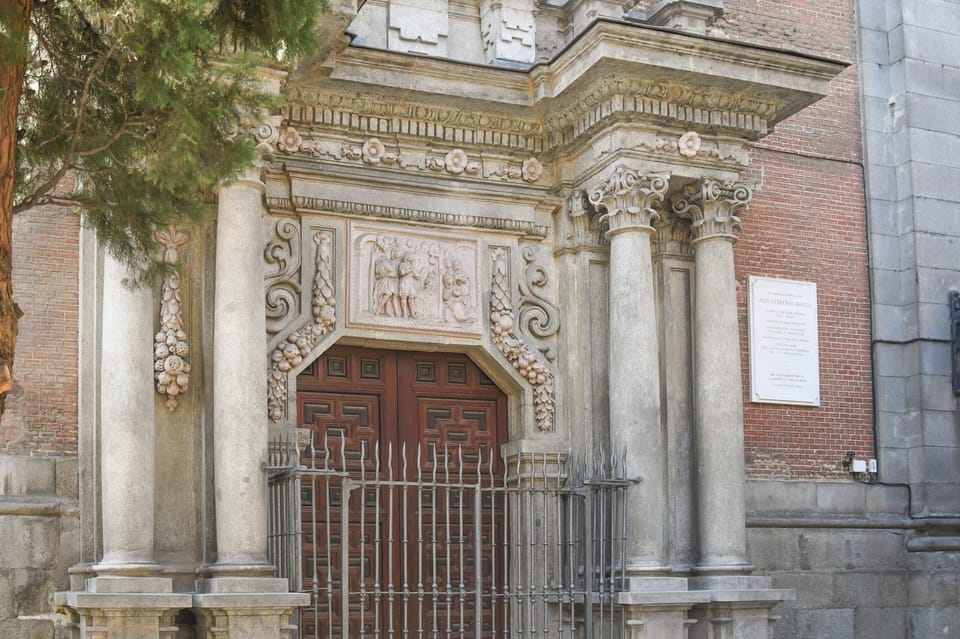
- Iglesia de San Pedro El Viejo and its 14th-century Mudejar tower finish
Where the tour starts: Plaza Puerta Cerrada and the medieval entry mindset
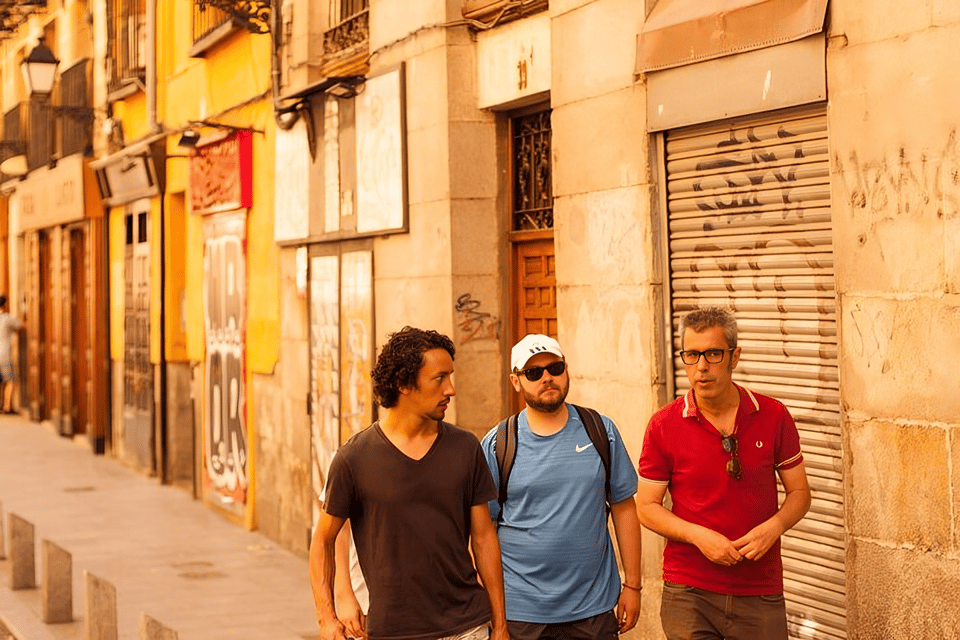
You start in Plaza Puerta Cerrada, around two minutes from Plaza Mayor, and the meeting point is described clearly: there’s a big cross in the center, and you’ll be in front of Cafestic. It’s a small square, tucked at the end of Cuchilleros, between Lartoneros and Tintoreros. If you’ve ever gotten turned around in Madrid’s old streets, this helps: you’re not hunting for a landmark the size of the Royal Palace.
You also get a neat mental trick right away. This area is tied to the old medieval entrance story, so instead of starting with a “check this off” mindset, you start with a boundary: where Madrid once began, and how the city pushed outward over time.
And yes, you’ll also see La Vacuna Bar used as a reference point for the start. Use both clues—cross in the plaza and La Vacuna Bar—so you don’t waste energy standing in the wrong street.
You can also read our reviews of more walking tours in Madrid
Following Madrid’s layers: from Muslim walls to royal power
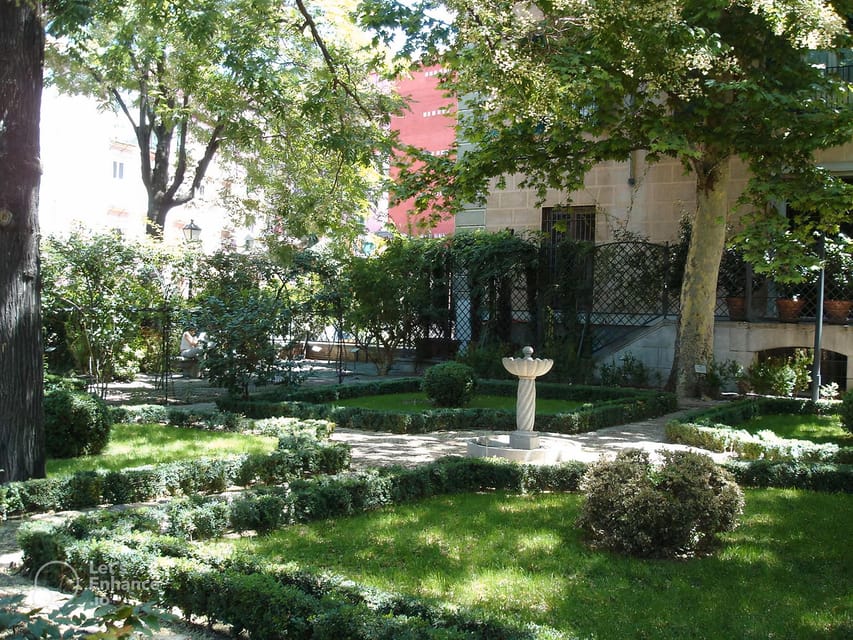
One of the best parts of this tour is that Madrid isn’t treated like one single era. It’s presented as a stack of eras that still show up in your walk.
The route connects big-picture history to street-level details. The tour frames Madrid’s past as a mix of cultures and rulers: Muslim influence early on, then later the Habsburg period with a more severe North European tone, and then the glamour-and-image focus of the Bourbons. You’ll keep seeing those different “styles of rule” show up in what you’re walking past.
A good example is the stop at Parque Emir Mohamed I, where you can see an old Muslim wall. It’s not presented like a random ruin. It’s treated as proof that the city’s identity didn’t switch overnight—it changed in visible steps.
If you like walking tours that explain why a building looks the way it does, this is your kind of route. You’re not just passing monuments; you’re building a timeline in your head.
La Latina and Plaza de la Villa: where styles change in front of your eyes
After you get your bearings, the tour moves you toward La Latina, the old heart of the medieval city. This is the part where the streets feel like they were designed for pedestrians—tight turns, quick views, and constant “oh, that’s different” moments.
Then you hit Plaza de la Villa, which is especially valuable because it’s essentially a mini showcase of Madrid’s architectural evolution. You’ll hear about:
- Mudejar Casa Lujanes
- the Plateresco look of Palacio Cisneros
- and the Habsburg-era Casa de la Villa
What I like about this approach is that you get language for what you’re seeing. Instead of generic, everything-looking-old, you start noticing transitions in ornament, layout, and style.
Even if you’re not an architecture nerd, this helps you look smarter without pretending you’re from a museum team. You start seeing that Spain’s old layers aren’t only about religion or royalty—they’re also about craft traditions and political taste.
Royal Palace, empire stories, and the “capital of an empire” angle
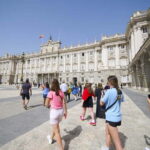
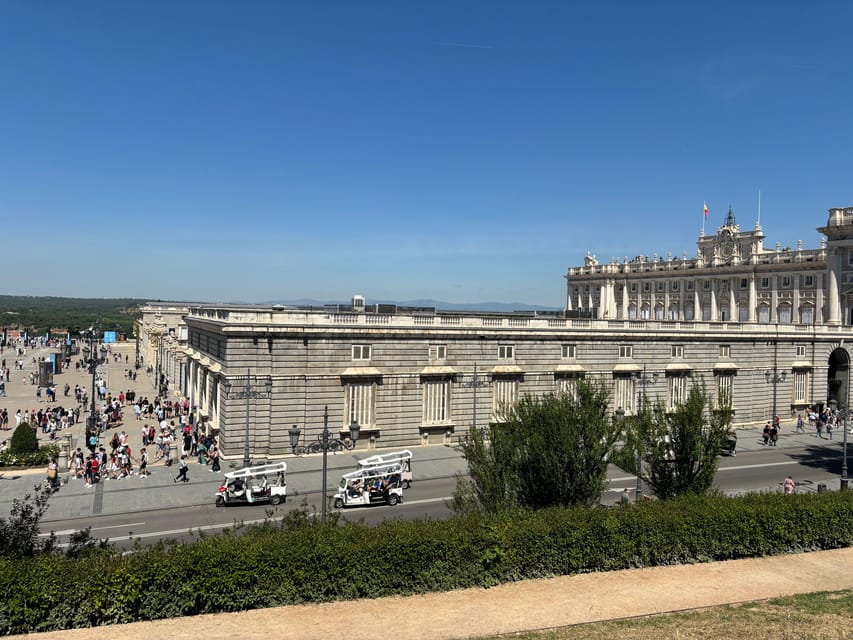
You’ll also work your way toward the Royal Palace of Madrid, described as the biggest royal palace in Europe with 3418 rooms. That number sounds like trivia—until the guide uses it to frame the idea of Madrid as a seat of power.
You’ll hear the broader story: Madrid becoming a capital after its early beginnings as a fort, then ruling over huge parts of the world, producing major artists and writers, and also dealing with darker chapters like crime, invasions, and civil conflict. The guide keeps connecting those events back to the city you’re standing in.
One practical tip: the Royal Palace area can be busy. The benefit of a small-group walking tour is that you’re not stuck behind a wall of tourists with no context. Your guide gives you the “what to notice” points, so you spend less time staring at stone and more time understanding what you’re looking at.
Monasterio del Corpus Christi cookies: the best kind of break
This tour wisely includes a food-and-culture moment at Monasterio del Corpus Christi. The stop is specifically to try the great cookies of the nuns.
Now, two quick reality checks so you don’t get surprised:
- The tour description highlights the cookie stop, but it doesn’t say what’s included in the price for tasting.
- Still, it’s one of those experiences that feels genuinely local: you’re connecting a historic place with a specific tradition you can actually taste.
If you’re the type who likes travel that hits the senses as well as the facts, this is a high payoff stop. It also gives your legs a short reset, which matters on a 2.5-hour walk.

Mercado San Miguel and tapas energy without overcommitting
Right after that, you’ll pass Mercado San Miguel, one of the most popular places in central Madrid for tapas.
Here’s the useful part: even if you don’t plan to eat a full meal, the market works as a “tone setter.” You get a quick sense of how Madrid’s food culture moves—small bites, quick decisions, and people treating tapas like social fuel.
If you want value, this is a good moment to look, pick something small, and keep your energy for the later architectural stops. Just know you’ll likely be paying for anything you eat there.
Inquisition square to Almudena Cathedral: power changes, symbols stay
This route also includes Plaza de la Cruz Verde, described as an old square where Inquisition trials took place. That’s heavy subject matter, but it’s also the kind of context that makes Madrid feel honest. You’re not skipping the hard parts of European history.
Then the tour shifts toward Catedral de Santa María la Real de la Almudena, framed as a more recent but meaningful cathedral within Madrid’s story.
This pairing matters. It helps you see that Madrid’s central spaces aren’t only about beauty or landmark status. They’re also about belief systems, public authority, and the way power leaves marks on city planning.
If you tend to prefer tours that treat monuments like context (not just sightseeing), you’ll appreciate this section.
The Napoleon-era clues: squares, streets, and a designer story
If you’ve ever wondered why some parts of central Madrid feel planned or strangely symmetrical, the tour gives you a lead: it points to Napoleon’s influence on urban design.
You’ll see references to this in places like Plaza de Ramales, where the guide explains why Napoleon was the designer of the urban center layout. You’ll also come across Plaza de Oriente, described as a Napoleon square with statues of old Spanish kings.
Even if you don’t fall in love with Napoleon history, the practical benefit is that you start reading the city layout differently. You stop thinking, “This street is just here,” and start asking, “Who decided this shape, and why?”
That same theme shows up in Calle de Bailen, which the tour describes as a beautiful viaduct with a tragic background. It’s exactly the kind of detail that turns a photo stop into a story stop.
Calle de Cava Baja and the restaurant street effect
Later in the walk, you’ll get a very Madrid moment at Calle de la Cava Baja, described as the street with the best traditional restaurants in Madrid.
This part is less about big monuments and more about atmosphere. You’re walking through an area that still functions as a social hub for food and conversation. Even if you don’t eat on the spot, you can feel why locals and visitors head here.
It’s also a good spot to do the practical travel thing: glance at menus, look at how the street works, and decide if you want a return visit after the tour.
Oldest corners near Plaza de la Paja and San Nicolás de los Servitas
One of the tour’s coolest “small landmark” moments is Plaza de la Paja and the Church of St. Nicholas of the Servitas. The description calls it the oldest building in Madrid.
That’s an attention-grabber claim, and the real value here is not arguing over the exact wording. It’s that the stop pushes you toward the earliest layers of the city—so you get a sense of how long these streets have been meaningful.
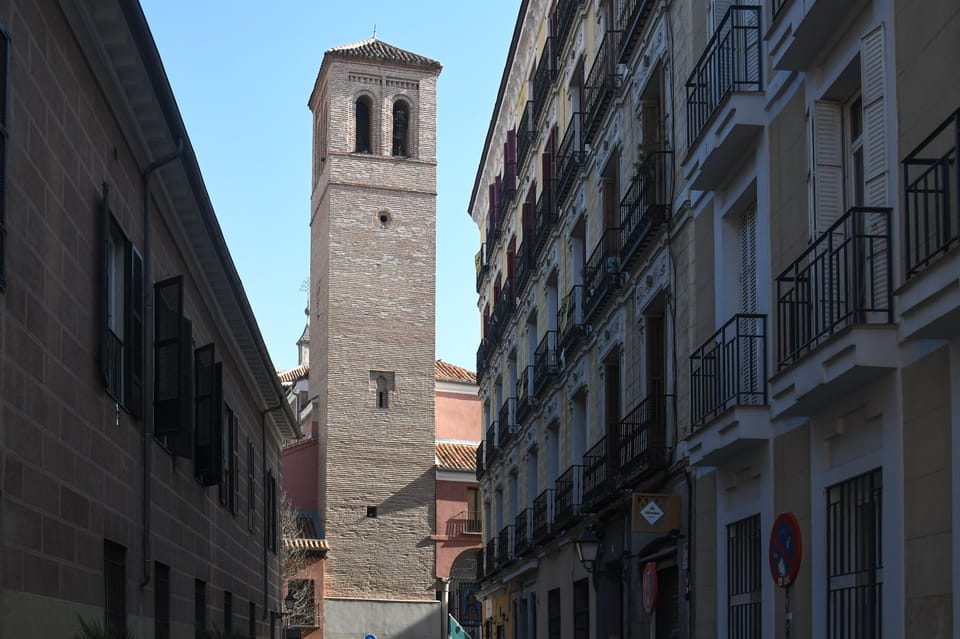
From there, the tour keeps moving toward another deep-history payoff: Iglesia de San Pedro El Viejo, including its Mudejar tower from the 14th century. This is a great final bow because Mudejar architecture is one of those Madrid signatures that’s easy to overlook when you’re only chasing the Royal Palace.
Closing strong at Puerta Cerrada: finishing where you started
You’ll end back at Plaza de Puerta Cerrada, returning to the same meeting point area near the cross and Cafestic.
This matters more than it seems. When a walking tour ends where it starts, you leave with a clean mental map. You’re not stranded miles away wondering how you’ll navigate back to your hotel. You can also use the rest of your day to retrace streets you liked.
And because you finish at Iglesia de San Pedro El Viejo and the Puerta Cerrada area, you end with a strong sense of Madrid’s older identity, not just modern center landmarks.
Timing and pacing: what 2.5 hours feels like on your schedule
The tour is listed as 2.5 hours in duration and limited to a small group of up to 10 participants with a live English guide. That small-group size is a real quality factor: you can hear the guide and you can move without constantly stopping to regroup.
But here’s the practical caution: one review noted the tour took about an extra hour compared to the expected timing. I’d treat that as a heads-up, not a prediction—walking tours can run long when groups have questions, or when you hit crowds at major stops.
My advice: if you have dinner reservations or an attraction ticket right after, build a buffer. If you don’t, you’ll enjoy the pace more, because you won’t feel stressed watching the clock.
Price and value: why $31 can be a smart use of your Madrid time
At $31 per person, this tour is priced like a “good foundation” experience. You’re paying for a guide, and you’re getting a long list of high-context stops in the historic center, including:
- major landmarks like the Royal Palace area
- neighborhood history at La Latina and Plaza de la Villa
- culture stops tied to places like Monasterio del Corpus Christi
- central Madrid food energy at Mercado San Miguel
- and older architectural markers like Church of St. Nicholas and Iglesia de San Pedro El Viejo
If you were trying to do the same route on your own, you’d likely spend more time searching, and you’d miss the connective tissue between eras. That’s where the price earns its keep: not the number of stops, but the explanations that make them click.
So I’d call it good value if you want to spend your first hours in Madrid learning the city’s logic, then come back later for deeper exploration.
Who should book this walking tour
This tour fits best if you:
- want a history-to-street walking experience without needing to study before you arrive
- like architecture and enjoy seeing how styles match political eras
- prefer small groups and a guide who helps you notice what you’d otherwise skip
- enjoy a food touchpoint like nuns’ cookies and a market stop
It’s less ideal if you need tight timing for the rest of your day, since it can run longer than the listed duration. Also, mobility needs should be checked carefully. The info says both wheelchair accessible and not suitable for wheelchair users, so confirm directly with the operator before you rely on that.
Should you book? A clear yes if you want context, a maybe if you’re rushed
Book this tour if you want Madrid with explanations—Islamic-era clues, Habsburg and Bourbon style shifts, and a route that mixes major sights with the older corners of the city center. The small-group size and the combination of architecture + specific stops (like Monasterio del Corpus Christi cookies) make it feel worth the time.
Skip or rethink it if you’re on a strict schedule right after the tour, or if you need a fully predictable end time down to the minute.
FAQ
How long is the Madrid walking tour?
It’s listed as 2.5 hours.
Where do I meet the guide?
Meet in Plaza Puerta Cerrada, about two minutes from Plaza Mayor, by the big cross in the center, in front of Cafestic.
How large is the group?
The tour is a small group limited to 10 participants.
What language is the tour guide?
The tour is in English.
What kinds of places will we see?
Expect stops around Madrid’s historic center, including places tied to the Royal Palace, La Latina, Plaza de la Villa, Monasterio del Corpus Christi (cookies), Mercado San Miguel, Catedral de Santa María la Real de la Almudena, and older sites like Iglesia de San Pedro El Viejo.
What should I bring?
Bring comfortable shoes, water, and a camera.
Is the tour wheelchair accessible?
The details include both wheelchair accessible and not suitable for wheelchair users. If mobility is a factor for you, it’s best to confirm directly with the provider before booking.