REVIEW · MADRID
Madrid Old City Guided Walking Tour Semi-Private 12ppl Max
Book on Viator →Operated by Babylon Tours Madrid · Bookable on Viator
Madrid can feel like a maze at first. This tour turns that maze into a clean route through the old-city highlights without you having to study maps all morning. You’ll cover palaces, churches, medieval streets, and iconic squares, with just enough stops to learn the story behind what you’re seeing.
I especially love the semi-private size. With a maximum of 12 (and a note that some tours cap at 8), the guide can actually answer questions and steer the pace. I also like how the walk builds context—one minute you’re looking at the Royal Palace area, then the route shifts to Madrid’s Moorish past with the Arab Wall, and suddenly you understand why the city grew the way it did.
One possible drawback: the itinerary is mostly outdoors and involves steady walking. If you have limited mobility, or you’re using a wheelchair, this isn’t recommended, and some sites may only be viewed from outside due to security rules.
In This Review
- Key things that make this tour worth your time
- Starting in Plaza de la Armería: the easiest way to begin Old Madrid
- Royal Palace of Madrid: state power, not everyday life
- Almudena Cathedral and its museum: Catholic Madrid with a papal stamp
- Arab Wall and the origin of Madrid: the city’s old spine
- Calle Mayor: a medieval street that became the main stage
- Plaza de la Villa: medieval Madrid’s best-preserved pocket
- La Latina and the tiny streets: Madrid at human scale
- Plaza de la Paja and Plaza de los Carros: market energy, smaller pauses
- Plaza de Puerta Cerrada and the medieval Islamic fort clue
- Arco de Cuchilleros: a historic archway that leads your eyes
- Mercado San Miguel: the market stop that pairs well with history
- Plaza Mayor: the Habsburg-era centerpiece
- Real Casa de Postas: telegraph-era police offices and neoclassical style
- Puerta del Sol: where Madrid’s road network and New Year tradition meet
- What you get from this tour (beyond the sights)
- Price and timing: is $56.55 worth it?
- Quick planning tips so the walk feels easy
- Should you book this Old City guided walking tour?
- FAQ
- How long is the Madrid Old City guided walking tour?
- What is included in the tour price?
- Where does the tour start and end?
- What language is the tour offered in?
- Is the tour recommended if I have mobility issues?
- What is the cancellation policy?
Key things that make this tour worth your time
- Small group experience: up to 12 people, with some departures limited to 8 for a tighter feel
- Guides who give practical Madrid tips: restaurant and local recommendations come with the history
- A smart route through layers of Madrid: royal power, Catholic Madrid, Moorish-era clues, then the main squares
- No navigation stress: you follow your guide from Plaza de la Armería to Puerta del Sol
- All-weather operation: it runs in rain, so plan for wet streets and bring proper gear
Starting in Plaza de la Armería: the easiest way to begin Old Madrid
The tour starts at Plaza de la Armería near Centro, right in the center of Madrid’s old core. It’s a good spot because you’re already close to transit and you’re not burning time getting “to the start.” From there, you walk a route that slowly pulls you deeper into the city’s story—this is not a hit-and-run list of famous landmarks.
The pace is built for a comfortable 2 hours 30 minutes. Each stop is short, around 10 minutes, which keeps energy up and helps the guide move you between neighborhoods at the right rhythm. You’ll get plenty of photos, but the real value is the “why this place matters” talk that connects the dots across centuries.
If you’re the type who likes to understand what you’re seeing (not just see it), this format works well. The group stays small enough that questions don’t disappear into the crowd.
You can also read our reviews of more walking tours in Madrid
Royal Palace of Madrid: state power, not everyday life
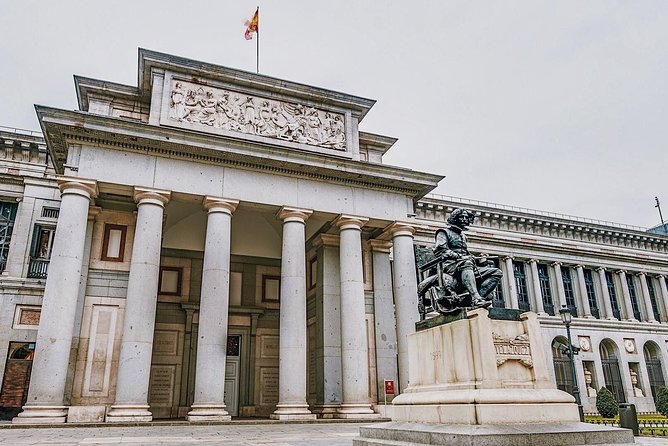
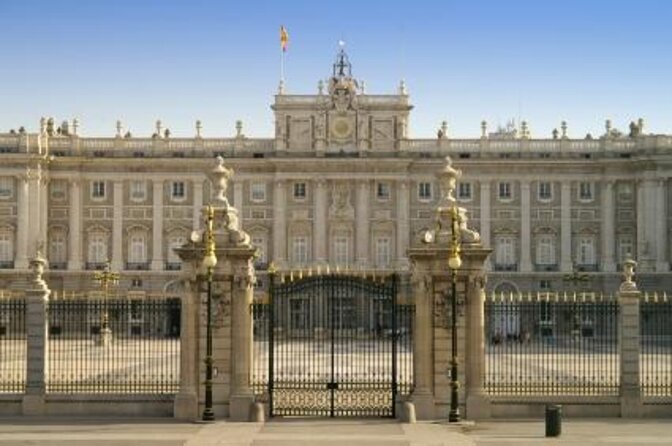
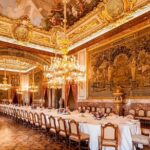
Your first major landmark is the Royal Palace of Madrid. This is the official residence of the Spanish royal family, but today it’s used mainly for state ceremonies rather than daily living. You’ll spend about 10 minutes here, which is perfect for getting the scale and atmosphere without turning it into a half-day mission.
Important detail for your planning: Royal Palace admission is not included. Also, some attractions may not be accessible from the inside because of security measures. So think of this stop as a guided introduction—great for orientation and context—rather than an entry-and-tour of the palace rooms.
What I like about starting here: it sets up the rest of the day. When you later walk through older medieval spaces and Moorish-era remnants, you’ll feel the contrast between royal power and the city’s earlier layers.
Almudena Cathedral and its museum: Catholic Madrid with a papal stamp
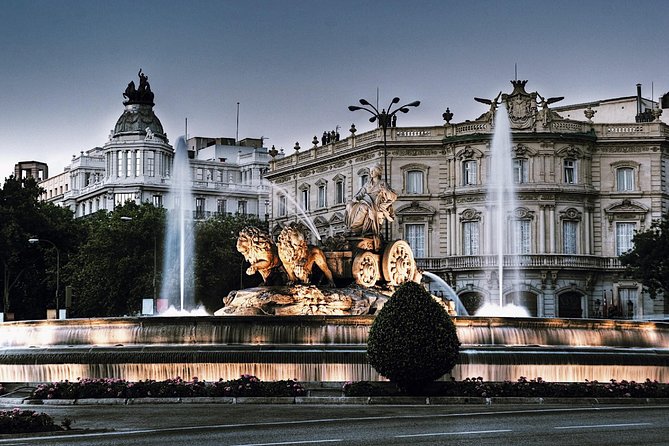
Next comes the Museo de la Catedral de la Almudena, tied to Almudena Cathedral. The cathedral is a Catholic church consecrated by Pope John Paul II in 1993. You’ll also see the museum connected to the cathedral, which is part of the broader site experience.
This stop is shorter than full museum time, so don’t plan on a deep, slow gallery visit. Instead, plan to use it as a “story stop.” Your guide helps you connect how Madrid’s religious and civic identity shows up in the architecture and the way the neighborhood developed.
If you like architecture and you enjoy hearing one or two key facts that make a building click, this is a good match. It’s also a nice breather before the walk transitions into more “street-level history” later.
Arab Wall and the origin of Madrid: the city’s old spine
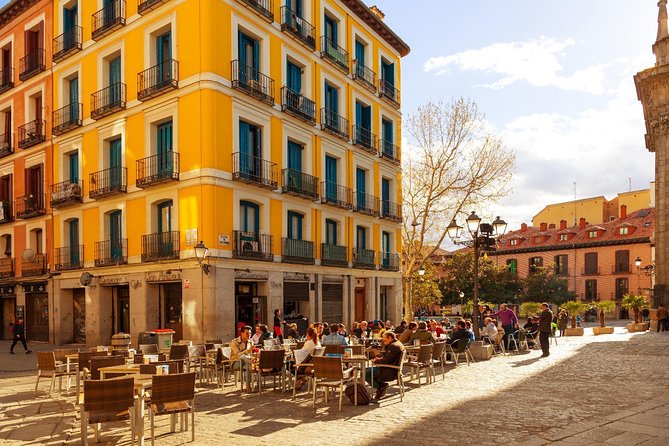
Then you reach the Arab Wall (also called the Muslim Walls of Madrid), located on Cuesta de la Vega. This is one of those stops where a little context changes everything. The walls are described as among the oldest surviving constructions in Madrid, and the guide ties their construction to the city’s origins.
Even with only about 10 minutes, this is a memorable moment because it’s physical. You’re not just hearing names of dynasties—you’re looking at the remains of the kind of fortification that shaped where people built, traded, and lived.
Practical note: this is a walk-by view. If you want deep access to the wall areas, you’d need separate time. But as part of a historical route, it does a strong job of giving Madrid a real timeline.
Calle Mayor: a medieval street that became the main stage
After the wall, you move onto Calle Mayor, Madrid’s central street that runs from Puerta de Sol to Cuesta de la Vega. The street’s story starts in the Middle Ages and later becomes the main thoroughfare of the city in the Early Modern Period.
This is one of those routes where the “tour” isn’t a building—it’s the street itself. You’ll get a sense of how movement shaped the city. When you walk it with your guide, you’re not just passing shops; you’re tracing how Madrid funneled people and commerce through its most important paths.
You can also read our reviews of more guided tours in Madrid

Plaza de la Villa: medieval Madrid’s best-preserved pocket
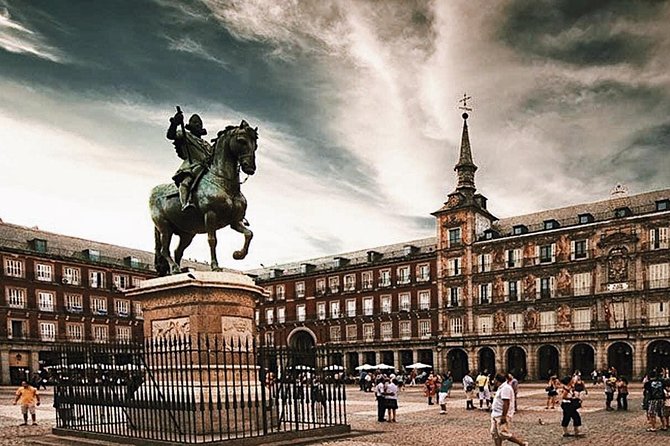
You’ll then stop at Plaza de la Villa, one of Madrid’s best-preserved monuments and a key medieval center near Puerta del Sol Gate. It’s small enough to feel like a pocket, but historically significant enough to make sense of what came before the big postcard squares.
This stop works well if you enjoy contrasts. You go from major streets and remnants of earlier fortification to a plaza that still feels like it belongs to medieval planning. The guide’s job here is to help you see details you’d normally skip—where the old center sat and why it mattered.
La Latina and the tiny streets: Madrid at human scale
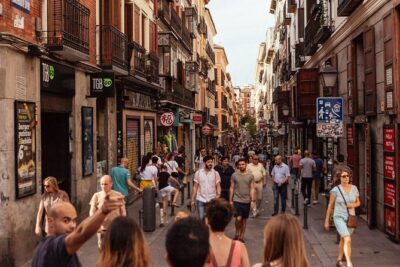
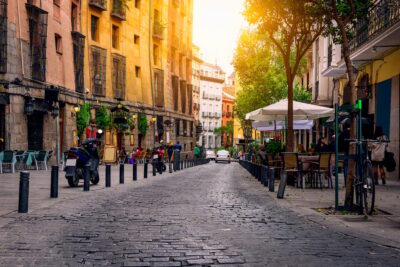
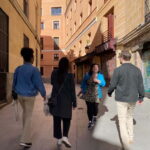
Next is La Latina, a historic neighborhood in central downtown Madrid. The area covers much of the oldest part of the city and is known for its small narrow streets—the kind of streets where the city feels lived in, not staged.
Your guide’s commentary makes La Latina easier to read. Instead of treating it like a maze of bars and side streets, you’ll learn what the neighborhood represents in Madrid’s bigger timeline.
If you want to wander afterward (on your own time), this is the ideal neighborhood to start from. You’ll leave with a mental map that helps you choose which lanes to follow.
Plaza de la Paja and Plaza de los Carros: market energy, smaller pauses
Two short stops follow that focus on everyday history and local space:
- Plaza de la Paja: known as a major marketplace in the 13th and 14th centuries. Expect crowded, life-centered streets in the general area, with the option to notice quiet pockets too.
- Plaza de los Carros Madrid: a small square with a lovely fountain. It’s a good place to slow down, grab a drink, and soak in the flow.
These aren’t “big monument” stops. They’re the kind of places you appreciate more once you understand what they used to be—market nodes, gathering spots, and transition spaces between major attractions.
This is also where your guide’s local recommendations can matter. The best tours don’t just list famous sights; they help you enjoy what comes next. If your guide points you toward a practical place to eat nearby, you’ll feel that value immediately.
Plaza de Puerta Cerrada and the medieval Islamic fort clue
Then you’ll see Plaza de Puerta Cerrada in La Latina. The site is described as built on a medieval Islamic fort. That detail may sound small until you remember what you saw earlier with the Arab Wall. Suddenly the city’s “layers” stop being abstract.
This stop is valuable because it gives you a reason to look up, sideways, and around. Even if you’re only there briefly, the guide helps you connect how fortification and settlement influenced street patterns and neighborhood development.
Arco de Cuchilleros: a historic archway that leads your eyes
Next up is the Arco de Cuchilleros, described as a well-known historical archway. Stairs lead from the arch to the 16th-century Plaza Mayor (which you’ll visit shortly).
This is a nice sequencing trick in the itinerary. The archway acts like a visual ramp: you stand at one historic threshold and can feel where the next iconic destination sits. It’s one of the better “walking tour” transitions because it keeps your attention moving forward instead of stopping dead at one spot.
Mercado San Miguel: the market stop that pairs well with history
Afterward, you’ll reach Mercado San Miguel, located near Plaza Mayor in the city center. It’s described as a historic market known for its beautiful setting and for food options from around Spain.
You don’t get long museum-style time here, but that makes it perfect as a palate cleanser. Market time is social, sensory, and easy. Even if you don’t buy much, it helps your brain shift from “lecture mode” to “live-in-the-city mode.”
This stop can be one of the best values if your guide tells you what to try and where to look. Some guides also share tips for timing, so you can avoid peak crowd crush later if you plan to return on your own.
Plaza Mayor: the Habsburg-era centerpiece
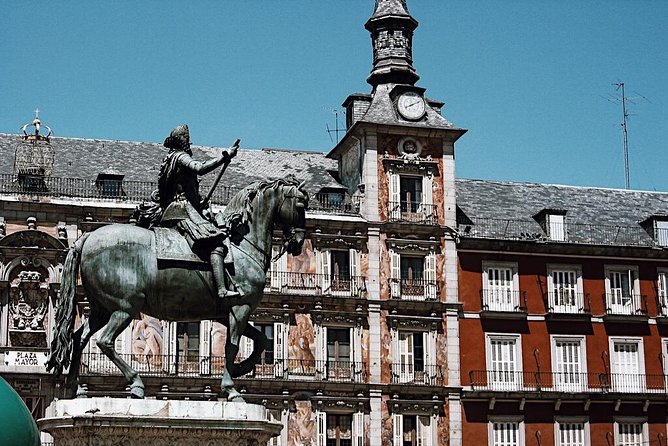
Now you arrive at Plaza Mayor, one of Madrid’s most famous squares. It’s a grand arcaded square in the center of Madrid. First built during the Habsburg period during Philip III’s reign, it once functioned as the center of old Madrid and remains a major draw for locals and tourists alike.
This stop is where the tour earns the “classic” label without feeling generic. Your guide’s job is to give you something to notice: how plazas functioned, why arcades matter, and what it meant for Madrid’s civic life.
If you tend to get overwhelmed by big tourist squares, this tour can still help because you’re not just staring at Plaza Mayor—you’re learning how it fits into the timeline that started with earlier walls and streets.
Real Casa de Postas: telegraph-era police offices and neoclassical style
Then you’ll pass by Real Casa de Postas, described as an administrative building in neoclassical style. It served as home to the telegraph service offices of the National Police force until it was bought by Madrid’s Regional Government in 1985.
This is a smart stop for history lovers because it shows Madrid isn’t only monarchs and churches. Communication systems and administration are part of the city’s story too. And neoclassical architecture often looks “simple” until someone points out the details that reflect the building’s function.
Even if the stop is brief, it helps you see the city as practical and organized, not just decorative.
Puerta del Sol: where Madrid’s road network and New Year tradition meet
Finally, you end at Puerta del Sol, Madrid’s famous central square. It’s described as the center of the city’s radial network of Spanish roads, and it’s also home to the famous clock bells that mark the traditional eating of the Twelve Grapes at the start of the new year.
This ending point is great for real travel life. Once you finish there, you’re positioned to go anywhere—literally. It’s a strong place to transition from guided walking into independent exploring.
What you get from this tour (beyond the sights)
The biggest reason this tour works is the guide presence. Across multiple guides, the common thread is clear: you’re not left with a pile of facts. You get stories, a bit of humor, and practical advice.
In the experience details, you’ll see that guides like Mich, Sergio, David, Michele, Alphonso, Jaime, Isabella, and Ana M are repeatedly praised for being lively, organized, and easy to understand in English. Some guides also share follow-up restaurant recommendations after the tour, which can be a real shortcut when you’re still learning the city.
Another value point is the format itself. The stops cover palaces, churches, ancient walls, markets, and plazas, so you get a well-rounded “Old Madrid” picture in one connected route. Instead of spending your first day trying to build an itinerary from scratch, you get one that already makes sense.
Price and timing: is $56.55 worth it?
At $56.55 per person for about 2 hours 30 minutes, you’re paying for two things: expert guidance and time saved. Because admission to the Royal Palace is not included, you’re not paying for a full attraction ticket package. But you are paying to understand what you’re looking at and to cover a lot of ground without planning.
For many people, that’s the sweet spot. If you’d otherwise spend hours mapping out where to start, which streets to prioritize, and how to connect neighborhoods, the guide is the money-saving part. And because the group is kept small, you’re not stuck listening from the back of a huge crowd.
One more practical timing point: the tour is described as booked about 40 days in advance on average. If your travel window is specific (holidays, weekends, or peak weeks), you’ll likely want to reserve early so you don’t end up piecing together a less efficient plan.
Quick planning tips so the walk feels easy
A few details can make or break a walking tour day, and this one has some clear guidance:
- Wear comfortable shoes. This is a walking route through central neighborhoods.
- Bring water. You’ll appreciate it between stops.
- In rainy weather, use an umbrella—the tour runs in all weather, and wet streets are real.
- During summer, a hat helps.
- Avoid large bags or suitcases.
- You’ll need to provide a mobile phone number (including country code), which helps with day-of coordination.
These aren’t just formalities. They’re what keep you comfortable and let you focus on the city.
Should you book this Old City guided walking tour?
Book it if you want a fast start in Madrid’s historic center, and you like learning what you’re seeing while you walk. The small-group format, the connected route (walls → streets → plazas → markets), and the guide’s emphasis on local tips make it a smart first-day choice.
Skip it if you have significant walking limitations or you use a wheelchair. Also, if you want to spend long hours inside major attractions, remember that Royal Palace admission isn’t included, and some sites may only be viewed from outside.
If you’re trying to make your first hours in Madrid count, this is a solid way to do it—one guided route, many time periods, and a finished day that leaves you in the best place to keep exploring.
FAQ
How long is the Madrid Old City guided walking tour?
It runs for about 2 hours 30 minutes.
What is included in the tour price?
The tour includes a professional guide and a small group tour up to 12 people. You also get a mobile ticket. Royal Palace admission is not included.
Where does the tour start and end?
It starts at Plaza de la Armería and ends at Puerta del Sol.
What language is the tour offered in?
The tour is offered in English.
Is the tour recommended if I have mobility issues?
The tour is not recommended for those with walking disabilities or those using a wheelchair.
What is the cancellation policy?
You can cancel for a full refund up to 24 hours before the experience starts. If you cancel less than 24 hours before, the amount paid is not refunded.