REVIEW · MADRID
Madrid: Panoramic Open-Top Bus Day or Night Tour with Guide
Book on GetYourGuide →Operated by Big Bus Tours - Madrid · Bookable on GetYourGuide
Madrid glows best from the upper deck. This open-top double-decker tour gives you a fast panorama of Madrid’s top sights, either in the daytime or lit up at night, with a live guide narrating as you roll past the highlights. It’s a breezy, low-effort way to get your bearings when your legs are tired or your schedule is tight.
I especially like the bilingual live guide format (English and Spanish). You get a steady stream of context right as landmarks come into view—think Royal Palace, Puerta de Alcalá (Alcalá Gate), and major museum areas around the central streets. I also like that the route mixes huge “I recognize that!” monuments with the big city-energy streets like Gran Vía, so your mental map of Madrid gets built quickly.
One drawback to plan for: the bus experience isn’t built for frequent stops or ultra-still photo ops, and the open-top ride can make audio harder at times. If you’re picky about hearing every word or you want lots of long photo pauses, you may find it a bit imperfect.
In This Review
- Quick hits before you go
- 1) What you really get: a 90-minute Madrid orientation from the open-top
- 2) Day vs night: the illuminated route is the smart move
- 3) Where you meet by Neptune Fountain (Big Bus Stop #1) and how to show up ready
- 4) The route from Monument to Goya to the Prado: museums and classic architecture roll past
- 5) Plaza Colón, Plaza de Cibeles, Metropolis, and Gran Vía: the big-city power belt
- 6) Plaza de España to Temple of Debod: quick skyline hits without the long walk
- 7) Royal Palace area and Plaza Mayor: where the old city vibe clicks
- 8) Reina Sofía and Atocha: culture and transportation, side by side
- 9) Guides make it (and names you might hear): bilingual narration that can be great
- 10) Seats, photos, and the top-deck reality check
- 11) Price and value: is $28 worth it for a 1.5-hour bus loop?
- 12) Who should book this night bus tour (and who might skip it)
- Should you book this Madrid open-top bus tour?
- FAQ
- FAQ
- How long is the Madrid open-top bus tour?
- How much does the tour cost?
- Where do I meet for the Night Tour?
- What languages are available for the live guide?
- What landmarks can I expect to see?
- Is the tour wheelchair accessible?
- Is there free cancellation or a pay-later option?
Quick hits before you go
- 1.5-hour full circuit that works as your Madrid orientation in one go
- Live bilingual commentary (English/Spanish) instead of prerecorded-only narration
- Big landmark lineup including Royal Palace, Alcalá Gate, Plaza de Cibeles, and Plaza Mayor
- Open-top views with fewer visual barriers than a closed bus
- Photo reality check: limited stopping and occasional window/roof setup issues
- Meeting point is fixed at Big Bus Stop #1 by Neptune Fountain near Monument to Goya
1) What you really get: a 90-minute Madrid orientation from the open-top
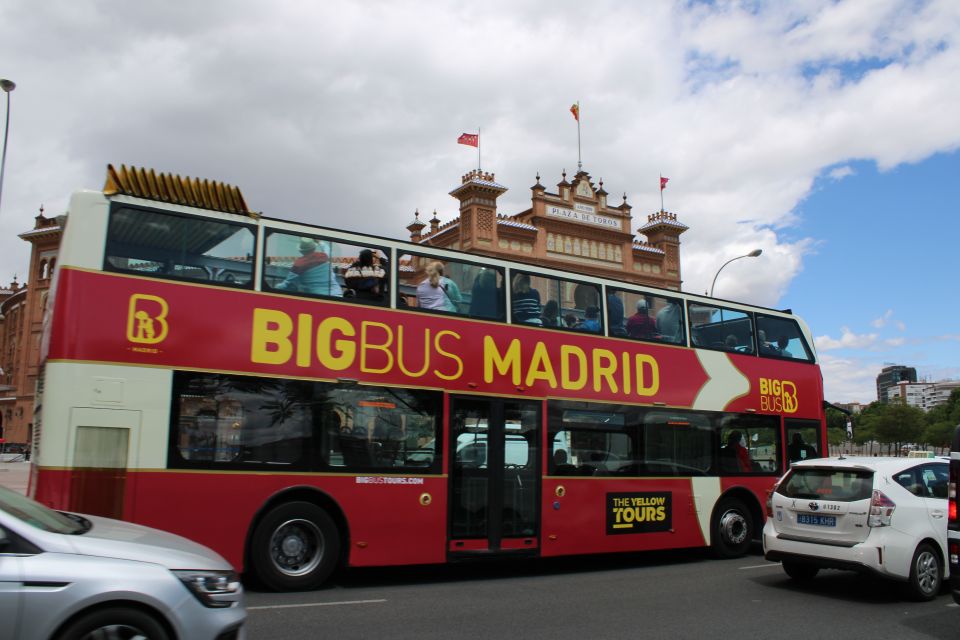
This tour is basically a guided windshield tour—just done in a nicer vehicle. You board the open-top, double-decker bus, sit up high, and let the route line up a sequence of Madrid’s signature places.
The big value is how quickly it turns “I’m new in Madrid” into “I know where I am.” In a short 1.5 hours, you’re shown a string of anchor sights: the major museum district, the big central avenues, and the classic plazas.
And because it’s guided, you’re not stuck guessing what you’re looking at. Even if you only catch part of the commentary, you’ll leave with a clearer sense of what to target for walking later.
You can also read our reviews of more guided tours in Madrid
2) Day vs night: the illuminated route is the smart move
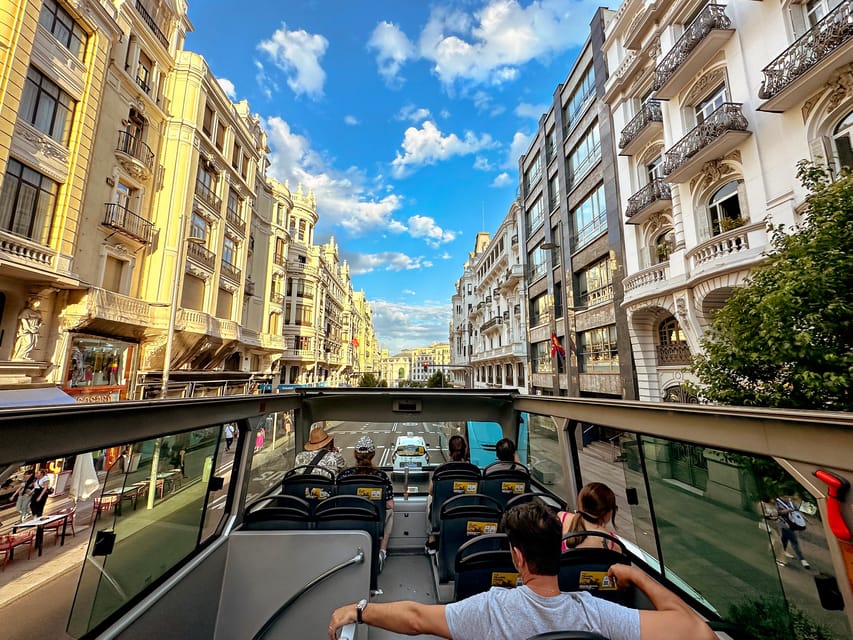
The night version is the easiest sell. Madrid’s landmarks look extra dramatic when lit up, and the bus lets you see that glow without committing to a long evening hike.
If you’re doing this on arrival night or right before dinner plans, it’s a strong primer. You get the “wow” factor fast, and then you can decide what deserves a return trip on foot.
If you choose daytime instead, you’ll trade some of the magic light show for clearer visibility. Either way, you’re paying for the same core benefit: a guided panorama with minimal effort.
3) Where you meet by Neptune Fountain (Big Bus Stop #1) and how to show up ready
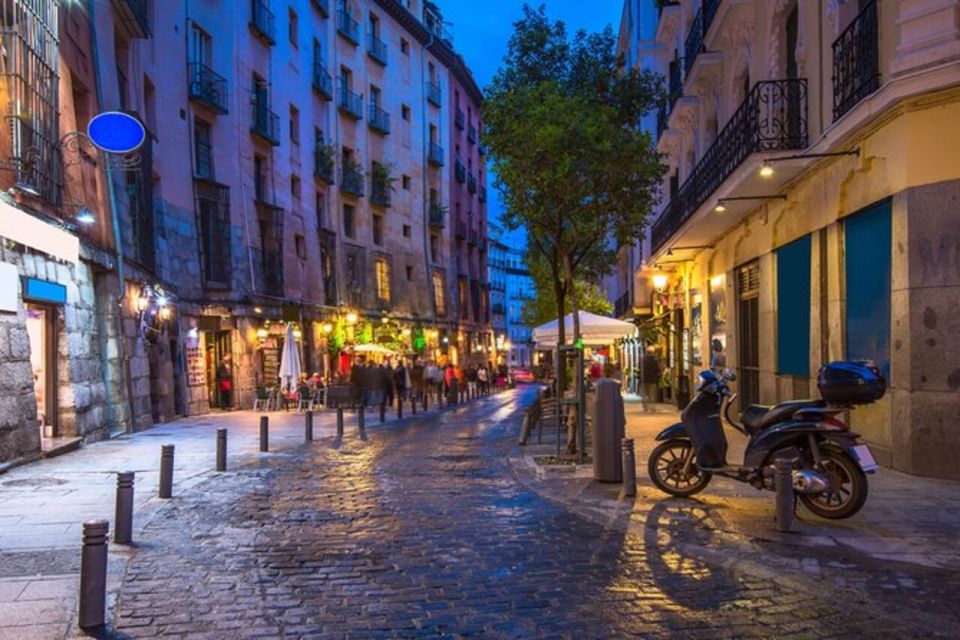
For the night tour, the meeting time is 20:00 at Big Bus Stop #1: Neptune Fountain. The stop is at Calle Felipe IV and Paseo del Prado, in front of the Monument to Goya.
I’d treat this like a “show up early and be calm” moment. One practical tip: the starting area is busy, and if you’re not looking at the exact stop name/number, it’s easy to drift toward the wrong bus.
What to bring is simple: comfortable shoes for later walking, a light layer if you get chilled up top, and your phone ready for quick snaps between passing sights. The bus ride is short, so you’ll get the most if you’re ready when the good views appear.
4) The route from Monument to Goya to the Prado: museums and classic architecture roll past
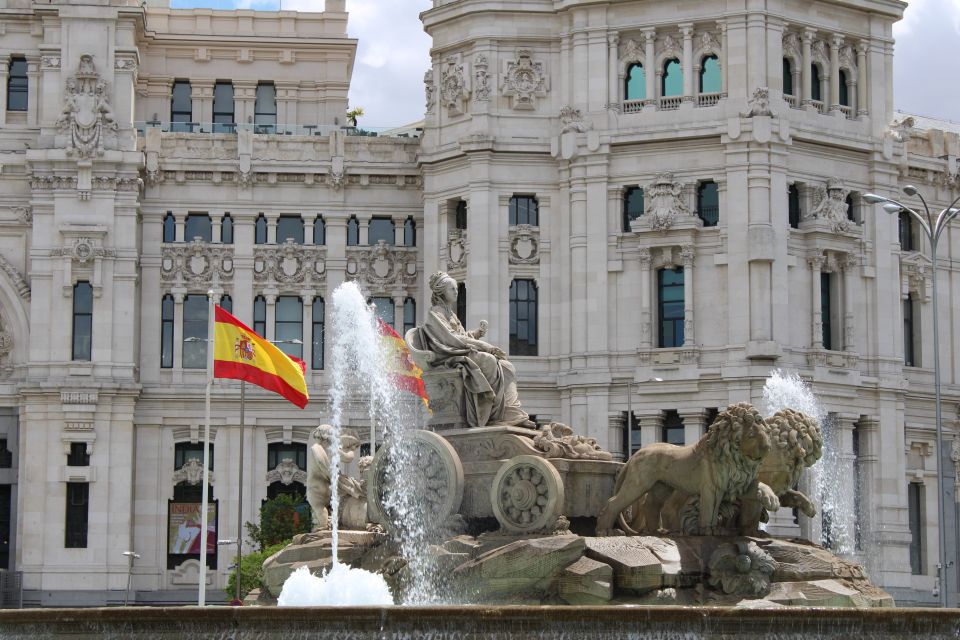
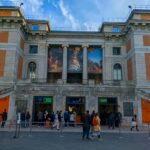
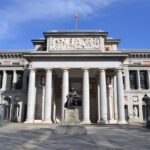
Your circuit begins at Monument to Goya, and then the bus immediately starts stacking up major landmarks. The first stretch includes a pass by the Museo del Prado, a place people tend to recognize even if they haven’t entered it yet.
Then you head toward Alcalá Gate (Puerta de Alcalá). This is one of those Madrid landmarks that instantly signals you’re in a “big monument” part of town. Seeing it from a moving bus isn’t the same as standing close, but it’s a great way to place it on your mental map.
Next comes Retiro Park. From the bus, it reads as open green space inside the city, and that contrast helps you understand Madrid’s layout. It also gives you a break from stone-and-street density.
If you’re wondering whether this early segment is worth it: yes. It’s where your tour goes from “a few impressive buildings” to a real overview of how Madrid connects culture, boulevards, and major civic spaces.
5) Plaza Colón, Plaza de Cibeles, Metropolis, and Gran Vía: the big-city power belt
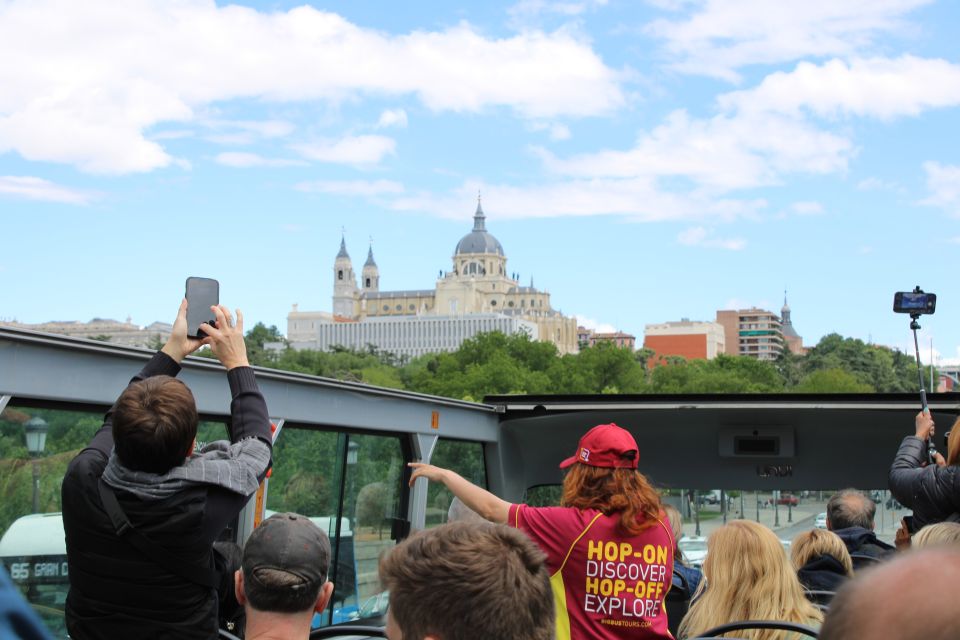
After Retiro, you reach Plaza Colón and then continue to Plaza de Cibeles. Plaza de Cibeles is a key stop because it’s visually “center-stage”—a natural place for your trip photos, even if you’re snapping quickly while the bus rolls.
You’ll also pass the Metropolis Building, a strong Madrid landmark that stands out along the central axis. It’s the kind of building you’ll remember later when you’re walking nearby and trying to orient yourself.
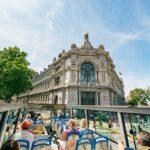
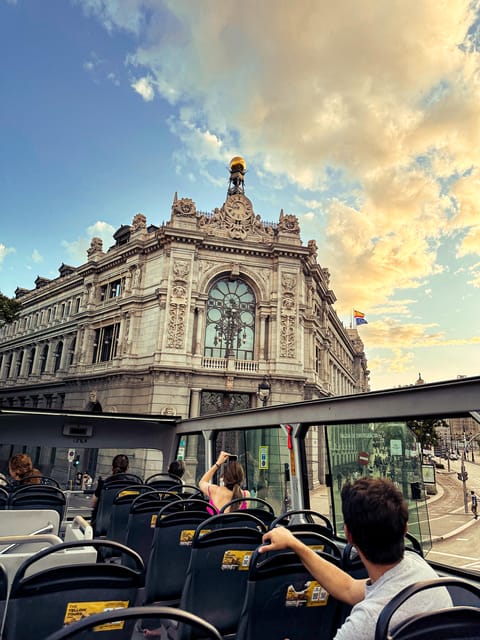
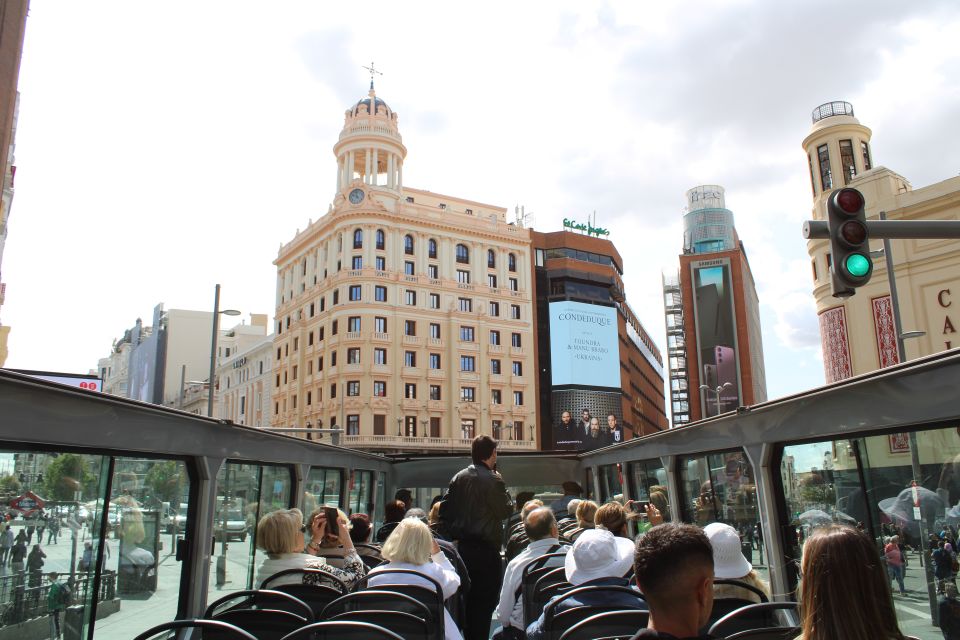
Then comes Gran Vía, Madrid’s signature “walk me or drive me” boulevard. From the open-top vantage point, you get that sense of a city moving—shops, traffic flow, and tall façades sliding by in one continuous view.
Two practical notes from the real-world experience:
- Sit where you can get the clearest sightlines. Some riders find that the left/driver side can catch more of the sights, so if you have a choice, consider that.
- Don’t expect a quiet ride. The upper deck can feel lively, and the sound system may compete with wind and bus noise.
You can also read our reviews of more evening experiences in Madrid

6) Plaza de España to Temple of Debod: quick skyline hits without the long walk
Your next cluster includes Plaza de España and the Temple of Debod area. These stops are valuable because they shift the scenery from the classic “grand avenue” look into something that feels more varied and visually surprising.
From a bus, you’re not getting the slow, up-close details you’d get on foot. But you are getting the big picture: how different corners of Madrid fit together in a single evening.
If you’re planning your next-day priorities, this is where you start mentally circling places. Even if you don’t know what each location is yet, the bus shows you where the must-see zones are relative to each other.
7) Royal Palace area and Plaza Mayor: where the old city vibe clicks
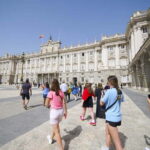
One of the highlights promised for this tour is the Royal Palace, and it fits perfectly into the “anchor” role of the route. When you see this kind of landmark in the nighttime light, it helps you understand why Madrid is so often described as a city of spectacle.
Then you reach Plaza Mayor. This plaza is famous for a reason: it’s an unmistakable “Madrid postcard” kind of space. Even while passing, the layout and scale come through, and you’ll feel the urge to stand there later with time to slow down.
This is the part of the circuit that works best for your first or second day. If you’re later on the trip, you can use the ride to connect places you’ve already seen to the broader city plan.
8) Reina Sofía and Atocha: culture and transportation, side by side
The bus passes the Museo Nacional Centro de Arte Reina Sofía. Pairing this with the surrounding streets on the same route is smart, because it places major museums within the real-life flow of the city—not as isolated stops on a map.
Finally, you end back toward Atocha Railway Station and then return to Monument to Goya to complete the circuit. Atocha matters for practical reasons: it’s a major transportation hub, so it’s helpful to see its area from the “you are here” perspective.
If you’re arriving or leaving Madrid soon, this is a bonus. You’re not just sightseeing—you’re also building a sense of where the rail and central districts sit.
9) Guides make it (and names you might hear): bilingual narration that can be great
The tour includes a bilingual live guide (English and Spanish). That format is a big part of why this tour earns its strong overall score.
In the praise you’ll often see, guides like Javi, Michelle, Olga, Dami, Juan, Leon, Carlos, Andrea, and Daniel get singled out for being engaging, informative, and good at explaining what you’re seeing quickly.
One detail that really helps: some guides use the sound system instead of forcing you into headsets. When the setup works, the audio can be clear and loud enough to follow without straining.
That said, there are also moments when hearing isn’t perfect. Some riders note the bus can be noisy or that English can be harder to catch when the guide switches languages rapidly. If you care most about the commentary, try to sit where you’re closest to the guide’s voice direction and be ready for occasional muffling.
10) Seats, photos, and the top-deck reality check
You’re choosing an open-top experience for views, so treat the photo expectations accordingly. Multiple riders point out that the bus doesn’t stop like a classic sightseeing tour with lots of pause time. In other words: you’ll get quick snapshots, not long “set up the tripod” moments.
Another photo factor: some open-top configurations can include bars across the top, which can interfere with clean shots from certain angles. If photography is a major goal, you’ll want to test your angle as soon as you board.
Windows matter too. If you end up sitting near a fixed window area (some buses have different setups), clarity can vary. A dustier window can ruin a shot faster than you’d expect.
Best tactic: pick your side with intention. If you’re aiming at more landmarks on one side of the bus, follow the simple advice that has helped others: sit on the left/driver side when possible.
11) Price and value: is $28 worth it for a 1.5-hour bus loop?
At $28 per person for a 1.5-hour guided tour, the value is about efficiency. You’re not paying for a deep-dive museum lesson or multiple stops with time to enter buildings.
You’re paying for:
- a guided overview of the main sights,
- minimal walking,
- and the night-light atmosphere that can be hard to assemble on your own the first evening.
If you’re short on time—or you want a map-making “first pass” before choosing walking routes later—this price can make sense quickly. If you’re someone who hates bus tours and wants to control every moment, you may prefer doing neighborhoods on foot instead.
The smart way to decide is to ask yourself one question: do I need an orientation, or do I need time in one specific place? This tour is built for the first answer.
12) Who should book this night bus tour (and who might skip it)
Book this if you:
- want a fast Madrid overview with bilingual live guide narration,
- are visiting for the first time and want a solid sense of the city’s layout,
- prefer open-air sightseeing without committing to a long evening walk.
Consider skipping if you:
- need frequent photo stops or plan around long building visits,
- get frustrated when audio is hard to hear in a moving vehicle,
- expect a hop-on hop-off style experience. (This route is designed as a full circuit rather than a flexible hop-and-go loop.)
Should you book this Madrid open-top bus tour?
Yes—if your goal is getting your bearings quickly and enjoying Madrid’s night lighting with the least effort. The combination of open-top views and a live bilingual guide is a practical way to make your first evening useful, not just pretty.
If you’re sensitive to noise or you’re a “photos only” traveler, adjust your expectations: think quick angles, not perfect still life. I’d also aim to sit where you can best see the sights on your preferred side, since that can change your experience more than you’d think.
Book it and then use what you learn from the route to pick your next walking missions. That’s where the day after gets way more fun.
FAQ
FAQ
How long is the Madrid open-top bus tour?
The full circuit lasts about 1.5 hours.
How much does the tour cost?
The price is $28 per person.
Where do I meet for the Night Tour?
Meet at Big Bus Stop #1: Neptune Fountain at 20:00, located at Calle Felipe IV and Paseo del Prado, in front of the Monument to Goya.
What languages are available for the live guide?
The tour has a bilingual live guide with commentary in English and Spanish.
What landmarks can I expect to see?
You’ll pass by major sights such as the Royal Palace, Puerta de Alcalá (Alcalá Gate), Biblioteca Nacional, Palacio de Cibeles, Metropolis Building, Gran Vía, Plaza Mayor, Reina Sofía, and Atocha Railway Station, plus stops including Retiro Park and Temple of Debod.
Is the tour wheelchair accessible?
Yes, the tour is wheelchair accessible.
Is there free cancellation or a pay-later option?
There is free cancellation up to 24 hours in advance for a full refund, and you can reserve now & pay later.