REVIEW · MADRID
Paseo del Arte: Prado, Reina Sofía and Thyssen Museum
Book on Viator →Operated by De Paseo · Bookable on Viator
One day. Three museums. A serious art education. This route is interesting because it links Spain’s biggest masterpieces with the stories behind them, from royal portraiture to Picasso’s wartime symbols. You also get a semi-private feel with a small group, plus walking help between museums.
I love the way the day is built for understanding, not just wandering—think perspective, technique, and why the art looks the way it does. I also like that you’re not left alone inside huge buildings, thanks to an expert guide and high-quality radio guides.
One possible drawback: it’s a full, concentrated day (about 8 hours). If you prefer slow museum time with long breaks every hour, you may find the pace intense even with a considerate guide.
In This Review
- Key Things to Know Before You Go
- Three Museums, One Smart Madrid Day
- Entering the Prado: Las Meninas, Goya, and Technique You Can Actually See
- Reina Sofía and Guernica: Symbols, the 1937 Bombing, and What to Notice
- Thyssen-Bornemisza: A 13th-to-20th Century Shortcut Through Styles
- The Semi-Private Format: Why Small Groups Matter Here
- Timing, Lunch, and Getting Your Bearings
- Price and Value: When This Beats DIY Museum Chaos
- Who Should Book This Tour (and Who Might Not)
- Should You Book Paseo del Arte: Prado, Reina Sofía and Thyssen?
- FAQ
- Is the tour offered in English?
- What time does the tour start, and where does it meet?
- How long is the experience?
- How many people are in the group?
- Are museum tickets included?
- Is there time for lunch during the day?
- What if the weather is bad?
Key Things to Know Before You Go
- Small group size (max 7) keeps questions possible and helps the guide manage museum crowds.
- Radio guides make it easier to hear the commentary without hovering close to the guide.
- Tickets are included for the Prado, Reina Sofía, and Thyssen-Bornemisza.
- Guernica gets real context—its symbols and the Spanish Civil War story behind the 1937 bombing.
- You cover multiple art eras fast, from the 13th century through the 20th century in one day.
- Lunch time is built in, so you can eat without constantly recalculating logistics.
Three Museums, One Smart Madrid Day
Madrid’s three major art museums can feel like separate worlds. This tour is useful because it stitches them into a single timeline: the Prado leans classic and Spanish power, Reina Sofía anchors modern art with Picasso, and the Thyssen adds a sweeping mix across centuries and styles.
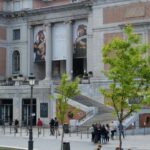
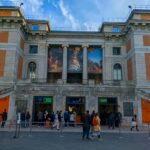
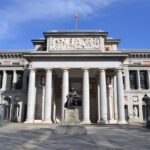
You’ll start at the Prado at 10:00 am (meeting at Museo Nacional del Prado, Retiro, 28014 Madrid). The tour ends at the Thyssen-Bornemisza National Museum (P.º del Prado, 8, Centro, 28014 Madrid). Each museum stop is about 1 hour 30 minutes, with extra time in Madrid for lunch.
The format is built for clarity. You get guided time inside each museum, plus walking support to get from one to the next. That matters because these sites are big, and without a plan you can spend a lot of energy just figuring out where to stand.
If you love art history, you’ll likely feel satisfied. If you’re more of a casual observer, you can still have fun because the guide’s job is to point out what to notice—and how to connect it to what came before.
You can also read our reviews of more museum experiences in Madrid
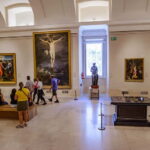
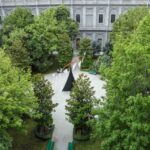
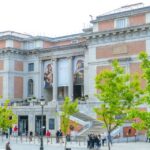
Entering the Prado: Las Meninas, Goya, and Technique You Can Actually See
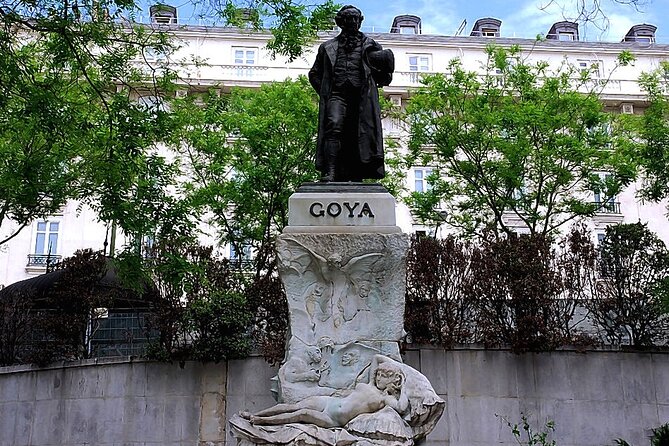
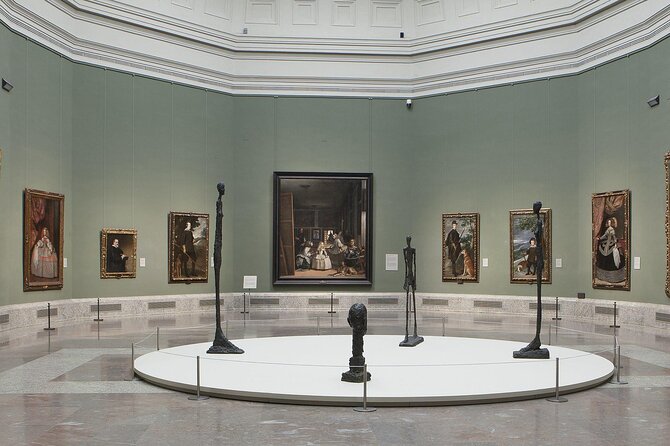
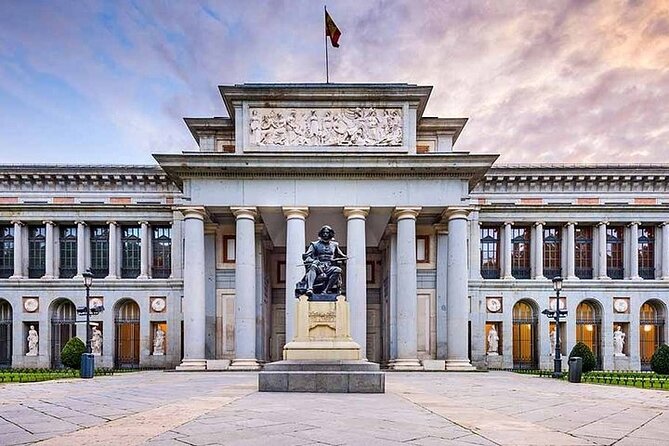
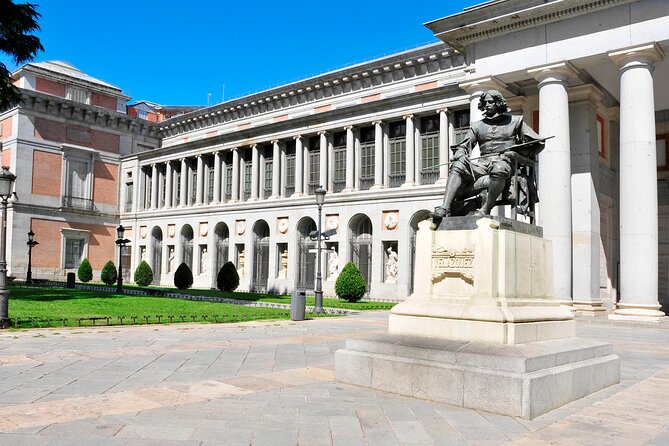
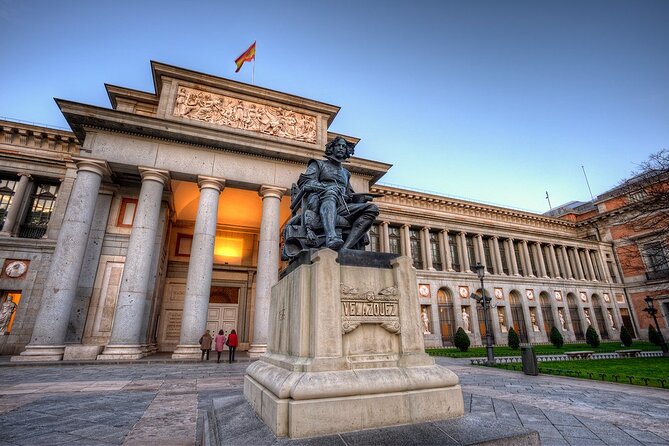
The Prado is the kind of museum you can get lost in if you let it. It holds more than 7,000 paintings, so a guided approach helps you focus on what changes your understanding. In this tour, the Prado stop is designed to teach you how to look.
You’ll spend time with major Spanish masters like Goya and Velázquez, and the guide focuses on pictorial technique—how artists build an image so it feels lifelike, convincing, or symbolic. That’s a key point: you’re not just memorizing names. You’re learning how the painting works.
One highlight is Las Meninas. Expect discussion around perspective and the way the scene is constructed so the room feels deeper than a flat canvas. You’ll also hear about the characters and details that people often miss when they treat the painting like a single famous photo-op.
The Prado also gives you international variety. You can look at Northern European painting traditions, including Flemish Primitives, as well as finely detailed works associated with artists such as Van Dyck. There’s room for the strange and learned side of art too, with El Bosco (the guide frames it as a reflection of the beliefs and society of his era).
If you’re into Italian art, you’ll see it through artists like Fra Angelico, Raphael, and Titian. The tour points you toward how religious painting and equestrian portraiture became important influences for later artists.
A practical benefit here: you only have 1.5 hours in the Prado. That sounds short until you realize the guide is steering you to the works that teach you the biggest patterns—Spanish power, European influence, and how technique carries meaning.
Reina Sofía and Guernica: Symbols, the 1937 Bombing, and What to Notice
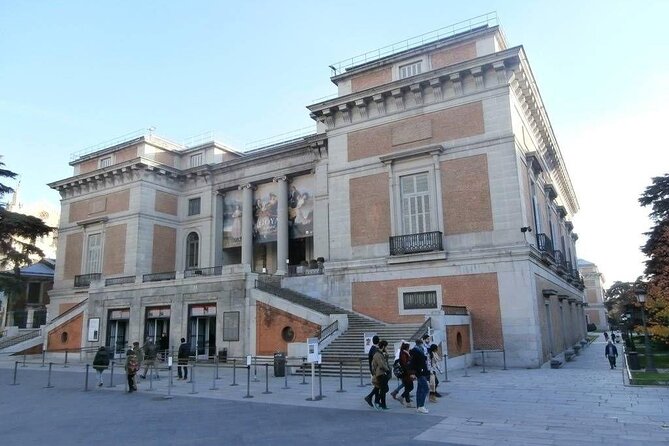
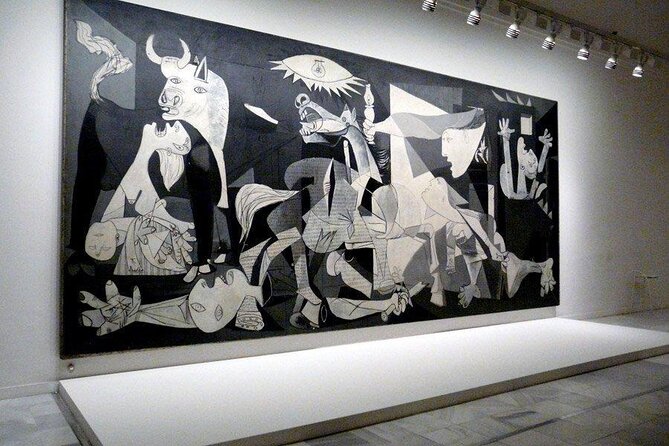
Reina Sofía is where the day turns from classic mastery to modern shock. The museum stop centers on Pablo Picasso and his long-lasting impact, and it’s specifically framed around the significance of Guernica.
You’ll learn what Guernica represents and why it became such a worldwide icon. The painting was made in Paris between May and June 1937, and its title points directly to the bombing of Guernica on April 26, 1937, during the Spanish Civil War.
The tour also gives you the timeline of the painting’s path back to Spain. In 1981 it reached Spain, first shown at the Casón del Buen Retiro, and since 1992 it has been on permanent display at Reina Sofía in Madrid.
What I like about this approach is that the guide doesn’t treat Guernica like a puzzle you have to solve alone. You get help identifying symbols and reading the overall structure, including the process behind how the work came together. In practical terms, this is one of those situations where a good explanation changes the whole experience.
This stop tends to be emotional, but it can also be very analytical. The tour connects the artwork to historical events so you can understand why the images feel urgent and fractured. If you want a museum experience that makes you leave with a clearer sense of cause-and-effect in art, this is the payoff section of the day.
Thyssen-Bornemisza: A 13th-to-20th Century Shortcut Through Styles
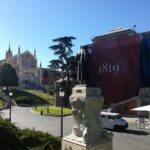
The Thyssen-Bornemisza Museum is less about one single star work and more about momentum. The collection includes close to a thousand works, spanning the 13th through the 20th centuries, and it’s packed with recognizable names across Europe.
You’ll move through a range of styles the guide helps you sort out. The museum includes masters such as Titian, Rubens, Rembrandt, Caravaggio, Manet, Renoir, Van Gogh, Gauguin, Kandinsky, Hopper, and Picasso—so even if you only know a few titles, you’ll likely recognize the visual language.
A big advantage of this stop is how it fills gaps between the Prado and Reina Sofía. The Thyssen gives you foreign painters who may not show up in your mental map of Madrid’s must-sees. You’ll see Italian and Flemish Primitives, key Renaissance works, and then major Impressionist-era names like Monet and Degas, with Van Gogh and Gauguin also in the mix.
Then the tour moves forward into the 20th century’s experimental currents. Expect Fauvism, Expressionism, Surrealism, Abstraction, and Pop Art. You’ll also encounter works linked to Spanish modern masters, including Picasso and Dalí.
In 1.5 hours, the goal isn’t to study every room like a graduate course. The goal is to come out with better pattern recognition. You’ll start to notice how each era treats color, form, and meaning differently—and why the modern movement didn’t appear out of nowhere.
The Semi-Private Format: Why Small Groups Matter Here
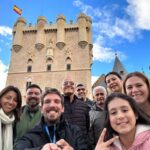
The tour caps at 7 travelers, which is more than a “nice-to-have.” In museums, group size affects your ability to hear details and ask questions. With a small group, the guide can slow down when something important is happening in the painting—or speed up when you’ve already gotten the point.
It also helps with navigation. Between museums, you’ll follow a walking tour with a guide so you don’t spend your best energy on streets and detours. That’s especially helpful in central Madrid, where you may be close to several sights but still need to move efficiently.
Radio guides are another practical win. They let you hear the expert guide throughout the tour without crowding in. That means you can stand at a comfortable distance and still catch the key explanations.
A personal note on how this format tends to feel: guides like Ana Cristina and Laura are praised for their passion and for keeping the pace relaxed. You should expect a tone that’s both educational and approachable, including interactive moments like art-guessing games that make Cubism and modern art feel less intimidating.




Timing, Lunch, and Getting Your Bearings
The whole day is about 8 hours (approx.), starting at 10:00 am. Each museum stop is 1 hour 30 minutes, and there’s additional time in Madrid for lunch.
There’s a 1 hour 30 minutes window specifically for lunch. The tour notes that you can include lunch so you don’t have to worry about where to eat. Even if you skip that option, having time reserved for food is a big deal. Museum days often collapse when people start hunting for lunch at the wrong moment.
Because you’ll be walking between three museums, wear shoes you can stand in. Also plan for museum lighting: many of these galleries have strong, even illumination that shows paint surface details well, but they can also feel cool and dim compared to outdoor Madrid.
If you’re the type who likes to know where everything is in advance, this route gives you that structure. You’re not making a day plan from scratch while hungry or stuck in line.
Price and Value: When This Beats DIY Museum Chaos
The value here comes from what’s bundled. You get:
- Expert guide throughout the tour
- Tickets included for Prado, Reina Sofía, and Thyssen-Bornemisza
- Walking tour between museums
- Semi-private group up to 7
- High-quality radio guides
- Offered in English
Going DIY can be cheaper on paper, but it often costs you time. Without a guide, you might pick the “famous rooms” and still miss the connections—like how perspective in Las Meninas works, or how Guernica reads as political symbolism tied to 1937 bombing.
For art lovers, the guide’s role is the multiplier. In a review style sense, think of it like this: tickets get you in, but the guide tells you what to notice and why it matters. The tour is priced as a time-and-understanding package, not just entry to three museums.
Group discounts are mentioned too, which helps if you’re traveling with friends or want to reduce the cost of the guided portion. Since the day includes tickets for all three sites, you’re also less likely to forget an admission step and lose half a morning sorting it out.
Who Should Book This Tour (and Who Might Not)
Book it if you want an art history education you can actually process in one day. This is a strong fit for you if you like structure, explanations, and a guided focus on major works such as Las Meninas, Guernica, and the Thyssen’s style-spanning collection.
It also works well if you’re traveling with a partner and you both want something that feels shared and meaningful. The tour’s design supports different starting points: you don’t need to already know Spanish art to enjoy it, because the guide helps you build the connections as you go.
Consider skipping it if you’re chasing maximum time in a single museum or you dislike group pacing. With 1.5-hour museum blocks, you won’t get a slow, room-by-room experience at one site. You’re getting breadth and clarity across three museums instead.
If the day feels like a lot, it is. But if you like “learn a lot, see the key works, move on,” this tour is built for that exact mood.
Should You Book Paseo del Arte: Prado, Reina Sofía and Thyssen?
Yes, I’d book it if your goal is a guided, high-impact introduction to Madrid’s top art institutions. The combination of small group size, radio support, and included tickets makes the day efficient, and the focus on explanation helps you leave with understanding—not just photos.
I’d hesitate only if you prefer long solo museum time and you get overwhelmed by a packed schedule. If that’s you, choose a single museum day instead.
For most art lovers, this is a practical sweet spot: a full day that turns three major buildings into one coherent story—from Spanish masters, to wartime modernism, to a wide jump across centuries and styles.
FAQ
Is the tour offered in English?
Yes. The tour is offered in English.
What time does the tour start, and where does it meet?
It starts at 10:00 am. The meeting point is the Museo Nacional del Prado, Retiro, 28014 Madrid, Spain.
How long is the experience?
The duration is approximately 8 hours.
How many people are in the group?
It’s a small, semi-private tour with a maximum of 7 travelers.
Are museum tickets included?
Yes. Tickets are included for the Prado Museum, Reina Sofía Museum, and Thyssen-Bornemisza.
Is there time for lunch during the day?
Yes. There’s a lunch window in Madrid with free time, and the tour notes that you can include lunch so you don’t have to worry about where to eat.
What if the weather is bad?
The experience requires good weather. If it’s canceled due to poor weather, you’ll be offered a different date or a full refund.