REVIEW · MADRID
Skip the Line Royal Palace Madrid Exclusive Guided Tour
Book on Viator →Operated by Babylon Tours Madrid · Bookable on Viator
Madrid’s palace is a line-eater.
This skip-the-line Royal Palace tour keeps you moving while you get the big-picture context for what you’re seeing. You’ll spend about 2.5 hours with an English-speaking guide focused just on your group, covering the palace highlights without turning it into a rushed checklist.
What I love most is how you’re led to the key showpieces fast, like the main staircase designed by Sabatini, and then you’re pointed at the details that make the rooms feel alive. I also like the stop that surprises people: a complete set of stringed instruments by Antonio Stradivari, which is not the kind of thing you usually expect inside a royal residence.
One possible drawback: even with skip-the-line access, security checks can still create some waiting, and the Palacio Real can have occasional closures or delayed openings for state business or events.
In This Review
- Key things that make this tour worth it
- Skip-the-line at Palacio Real: what you’re really buying
- Meeting point and first move: Plaza de la Armería
- Walking into royalty: the palace’s real-world context
- The main staircase by Sabatini: where the tour starts to click
- Throne Room ceiling by Tiepolo: look up, not ahead
- Hall of Alabarderos: power through uniforms and place
- Artists you’ll be pointed to: Goya, Mengs, and Giaquinto
- Monarchy symbols: the crown and the scepter
- Stradivari inside a palace: the surprise stop people remember
- Touring pace: how to get through the palace without feeling rushed
- Price and value: is $127.92 worth it?
- Who this tour is best for (and who should skip it)
- Handling rain, crowds, and the reality of big attractions
- Special closings and schedule shifts: plan a little slack
- Should you book this Royal Palace exclusive skip-the-line tour?
Key things that make this tour worth it

- Separate-group entry: you typically bypass the main crush and go in via a group route.
- Sabatini’s staircase: you’ll see the main staircase that has 70+ steps and a star-shaped impact.
- Tiepolo’s ceiling in the Throne Room: expect ceiling art that’s built for standing still and looking up.
- Hall of Alabarderos: the palace guards get their own dramatic space.
- Symbols of the Spanish monarchy: you’ll be shown crown and scepter details instead of just walking past them.
- Stradivari string instruments: a standout art-and-music moment in a palace setting.
Skip-the-line at Palacio Real: what you’re really buying
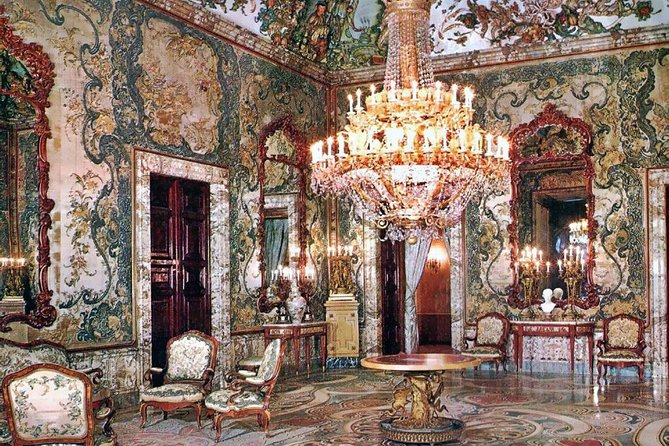
The Royal Palace of Madrid looks like one of those places where you either spend your visit queueing—or you plan smart. This tour is designed around the smart plan: you get skip-the-line access so your time goes toward rooms and details, not hours of shuffling.
The other part you’re paying for is the guide focus. This is a private tour/activity, meaning only your group will participate, and in the exclusive option you get a guide devoted to your tour. In plain terms: you’re not just buying entry. You’re buying interpretation, pacing, and the ability to ask questions when you actually care about something.
One more practical note: the tour time is about 2 hours 30 minutes, and the palace is huge. That duration is short enough to keep things tight, but long enough for a real visit if your guide is good at steering you. The best value here is when your guide can connect the architecture, art, and monarchy story in the rooms you’re actually allowed to see.
You can also read our reviews of more guided tours in Madrid



Meeting point and first move: Plaza de la Armería
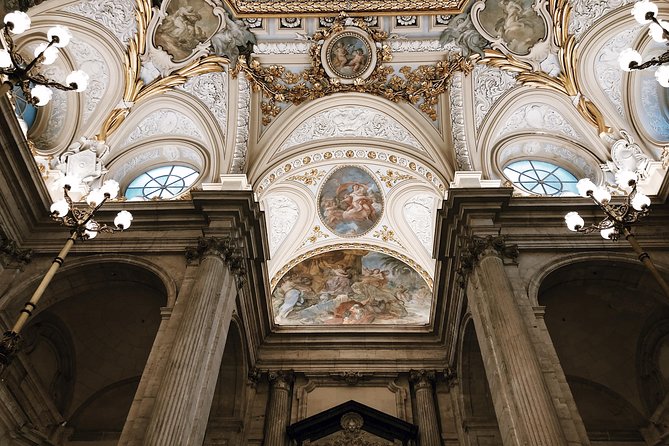
You’ll meet at Plaza de la Armería (Pl. de la Armería, Centro, 28013 Madrid). The tour starts at 2:30 pm and ends back at the meeting point.
Why this matters: meeting at a central plaza keeps your day simple. You’re also near public transportation, so you can show up without turning your afternoon into a logistics project. And because the tour is about getting you through the palace efficiently, arriving on time isn’t just courtesy—it helps the schedule work.
Bring a mobile phone number with your country code. This is required, and it also helps the day of the visit if the operator needs to contact you. Lastly, if you’re going from the hotel, a taxi or rideshare is often the easiest bet, since the tour doesn’t include hotel pickup or drop-off.
Walking into royalty: the palace’s real-world context
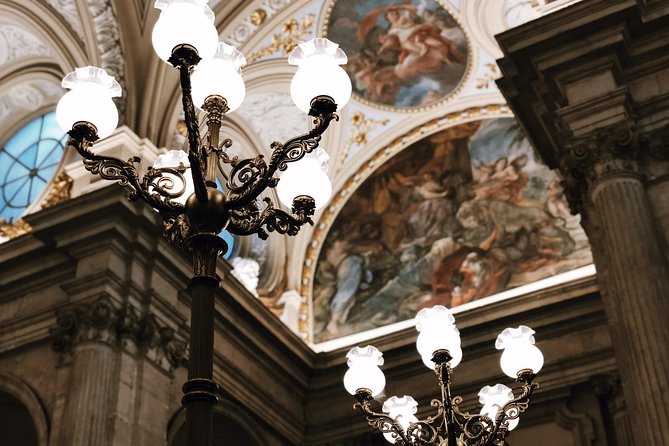
The Royal Palace can feel like it’s all about fantasy crowns and movie lighting. But it’s also a real working part of Spanish ceremonial life. The royal family only uses it for official receptions, which is why the palace—despite being a royal residence—opens many of its rooms to the public.
That context is exactly why the guide time matters. When you understand that the building is both a symbol and a functioning ceremonial space, the art and design stop feeling random. You start seeing the message behind the staircase, the throne area, and the guard halls.
And because the palace has over 3,000 rooms, the key is access to the preserved halls and rooms available during your visit. This tour focuses on the rooms you can actually experience well, rather than treating the palace like a museum where every single room deserves the same attention.
The main staircase by Sabatini: where the tour starts to click
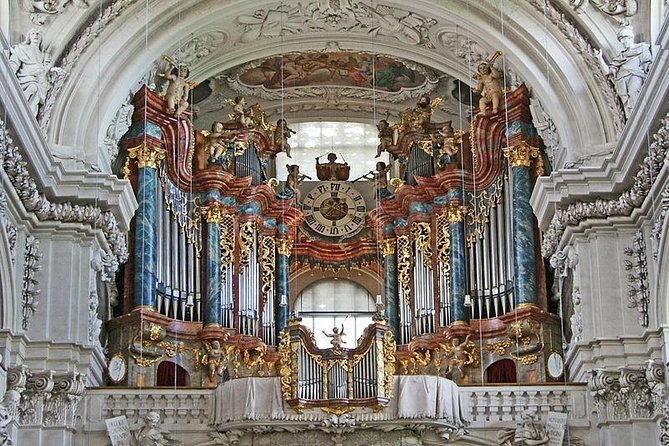
The highlight early on is the main staircase designed by Sabatini, with over 70 steps. Yes, it’s stair-heavy. This is one reason the tour asks for moderate physical fitness. If you’re okay with stairs and standing, you’ll likely be fine. If you need frequent breaks, you’ll want to tell your guide right away so they can manage pacing.
What makes this part special isn’t just the steps. It’s the way the staircase frames the experience: you get a dramatic transition from outside the royal story into the palace’s power center. Guides who can explain what you’re looking at make it feel like you’re learning the palace’s grammar—where the “important sentences” are and why they’re arranged the way they are.
Also, this is where a guide’s style shows. On a rainy or crowded day, your guide can keep the flow moving so you don’t get stuck in bottlenecks with no context.
Throne Room ceiling by Tiepolo: look up, not ahead
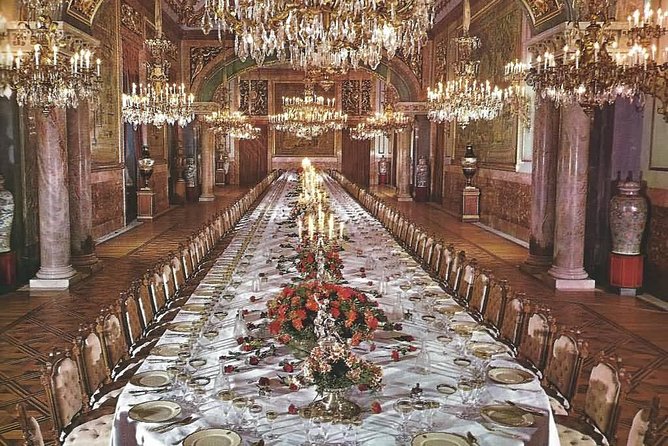
Next you’ll move into iconic rooms like the Throne Room, where you can admire the ceiling painted by Tiepolo. If you take one piece of advice from this tour, it’s to actually slow down for the ceiling art. People rush, stand, and then move on. Your guide’s job here is to keep you from doing that.
The Throne Room is all about visual control. The art, the composition, and the sense of ceremony are meant to land on you. With a guide, you’re not guessing what it means. You’re pointed at key visual cues so the space reads like intention, not decoration.
If you’re interested in how art supports authority—religious, political, or royal—this is a strong stop. It’s also a good place for quick questions, because you can tie your curiosity directly to what you’re seeing overhead.
You can also read our reviews of more tours and experiences in Madrid





Hall of Alabarderos: power through uniforms and place
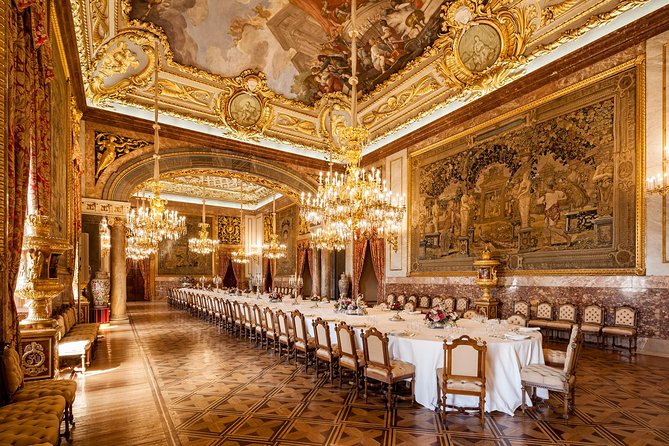
Another key stop is the Hall of Alabarderos, dedicated to the palace guards. This hall isn’t just a pretty room. It reinforces the idea that the palace was built for ceremonial presence: the guards aren’t an accessory; they’re part of how the monarchy presented itself.
In a standard self-guided visit, it’s easy to treat the guards’ hall as a theme room. With a guide, you’re more likely to understand how the monarchy’s image worked—what roles were highlighted, what symbolism was emphasized, and why the palace design made those statements visible.
If your group likes historical detail, this is one of those moments where the tour can feel extra satisfying, because you’re connecting architecture to function.
Artists you’ll be pointed to: Goya, Mengs, and Giaquinto
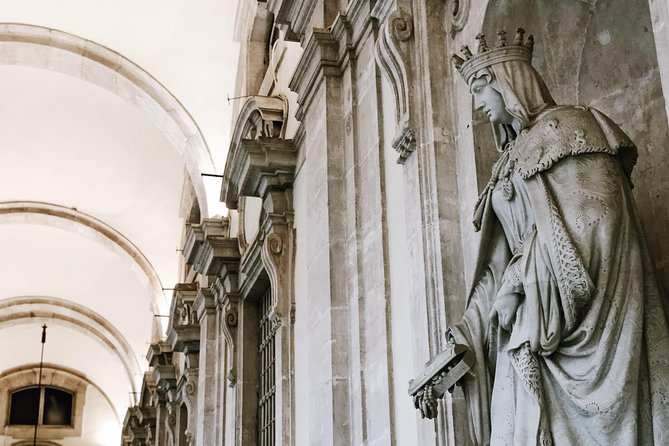
The tour also guides you past major works and references to artists such as Goya, Mengs, and Giaquinto. The point isn’t to name-drop painters. It’s to help you notice how the palace collects art to support its ceremonial identity.
With these artists called out, you can focus your attention. Instead of moving from room to room without a thread, you start connecting what you see to broader Spanish art culture and the monarchy’s tastes. Even if you don’t consider yourself an art person, this kind of directional looking helps you get more from each room.
And because the palace is crowded at peak times, being shown what to look for can save your brain from turning into mush.
Monarchy symbols: the crown and the scepter
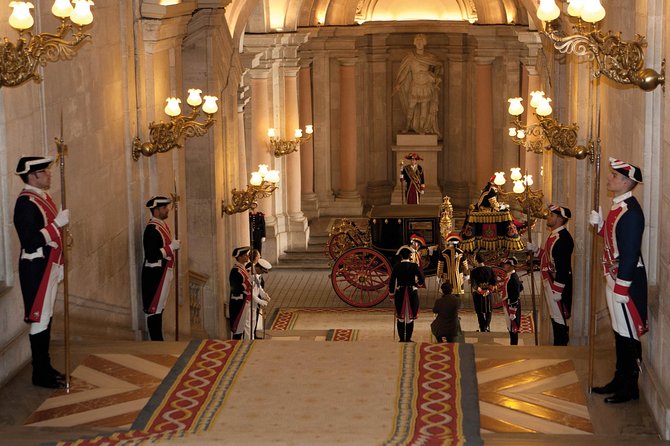
One of the simplest but most effective moments comes when your guide points out the symbols of the Spanish monarchy, including the crown and the scepter.
This matters because symbols are often the first thing people miss when they’re just scanning big rooms. Your guide turns those details into a story: what the symbols represent and how they reinforce the palace’s role as a stage for ceremony.
If you like history explained through objects instead of long speeches, this is your kind of stop. It also makes great photo moments—because you know what you’re photographing beyond “looks royal.”
Stradivari inside a palace: the surprise stop people remember
Then comes a standout: you’ll discover a complete set of stringed instruments made by Antonio Stradivari. For many first-time visitors, this is the moment that breaks the usual palace expectations.
Why it works: it adds a different flavor to the visit. You’re not only seeing power and decoration; you’re seeing craftsmanship at a level that feels almost too precise for a palace setting. It’s the kind of detail that makes the tour feel tailored to real curiosity.
Also, if you have music lovers in your group, this is an easy win. It gives them a concrete hook. You can talk about instruments, craftsmanship, and prestige—and then bounce back to the rooms around them with a better emotional connection to the space.
Touring pace: how to get through the palace without feeling rushed
A palace with thousands of rooms can tempt you into the trap of “seeing everything.” This tour takes the healthier approach: it shows you the rooms that deliver the strongest experience in a limited window.
That’s why the 2.5 hours is a sweet spot. You get time for key rooms—staircase, throne area, guard hall, and instrument viewing—without turning it into a sprint. And since it’s private for your group, your guide can adjust tempo based on attention and questions.
One thing to watch for: even with skip-the-line access, the palace’s security process can still create waiting. The operator also notes that some lines may form on skip-the-line tours due to security measures. So don’t show up assuming zero delays. The goal is to reduce the biggest queue pain, not eliminate all checks.
Price and value: is $127.92 worth it?
At $127.92 per person for about 2 hours 30 minutes, this tour isn’t cheap—but it can be smart value if you care about getting the most out of limited time in Madrid.
Here’s the value math that matters:
- Skip-the-line access means more of your visit time is spent inside the palace.
- All entrance fees are included, so you’re not piecing together ticket costs at the last minute.
- The guide time is the real difference. A palace visit without context often becomes a blur of rooms. With an exclusive guide, you’re guided through specific highlights like Sabatini’s staircase, Tiepolo’s ceiling, and the Stradivari instruments.
- The rating is extremely high: 4.9 with 77 reviews, with many comments praising specific guides like Beatrice, Enrique, Isabella, Sean, Javier, Marta, Jose, and Ana for enthusiasm and keeping kids engaged when relevant.
If you’re traveling with limited time, paying for interpretation is usually worth it. If you’re the type who loves slow, independent wandering and already knows the palace well, you might prefer a self-guided approach. But if you want the palace story tied together in a short visit, the guide-driven format justifies the price more than a basic ticket does.
Who this tour is best for (and who should skip it)
This tour fits best if you want:
- A high-impact highlights route through major rooms
- A guide who points out details like ceilings, symbols, and instrument craftsmanship
- A more controlled visit experience than you’d get in a free-for-all crowd
It can also be a strong choice for families, as guides on this experience have been praised for keeping younger visitors interested. If your group includes kids, do ask your guide to connect the visuals to simple stories—palaces are great for that.
I’d think twice if:
- You hate stairs or need lots of accessibility accommodations. Wheelchair friendliness is listed, but the notes say it does not apply if you choose the semi-private option. Make sure you pick the option that matches your needs.
- You’re expecting to see every single palace room. This is about selected access to preserved halls, not a full-room marathon.
- You plan to arrive late or change your schedule at the last minute. Because this is a timed experience, the whole point is keeping your visit flowing.
Handling rain, crowds, and the reality of big attractions
Madrid in a hurry still has lines. The palace is no exception. When crowds are heavy, the value of a guide increases fast, because the “hard part” becomes not the art itself, but the movement between rooms and the ability to understand what you’re seeing once you arrive.
Also, if it’s raining, it can feel like everyone wants indoor shelter in the same places. A strong guide keeps the group moving, finds smart viewing angles, and prevents the visit from turning into shoulder-to-shoulder stagnation. That’s also why the separate group entry is such a big deal: it reduces the time you’re forced to wait in the worst spots.
Special closings and schedule shifts: plan a little slack
The palace can have occasional closures or delayed openings due to state business or special events. If that happens, you should expect a reschedule option or an alternative provided by the operator. The notes also say that in those cases, refunds or discounts aren’t offered.
So how should you handle it? Build a little breathing room into your palace plans—especially if you only have one afternoon window. If your itinerary is tight, at least schedule this activity on a day where you can adjust if needed.
Should you book this Royal Palace exclusive skip-the-line tour?
Yes—if you want the Royal Palace to feel understandable and worth your time.
Book it if:
- You value skip-the-line access and want to trade waiting for seeing.
- You like history told through what you’re looking at: the staircase by Sabatini, Tiepolo’s Throne Room ceiling, and monarchy symbols.
- You’re excited about unusual details like Stradivari instruments.
Skip it if:
- You’d rather wander slowly on your own and don’t care about guided context.
- You have strict mobility needs and haven’t confirmed which option best matches wheelchair support requirements.
My bottom line: for most visitors, paying for a focused guide at the palace is the difference between seeing rooms and understanding them. The price lands in a reasonable zone when you factor in entrance fees, time saved, and the chance to look properly at the ceiling, the symbols, and even the instruments.