REVIEW · MADRID
Tour en tuk-tuk electrico por MADRID MODERNO
Book on Viator →Operated by TUK TUK MADRID · Bookable on Viator
Electric tuk-tuks make Madrid feel effortless. This 90-minute private ride is a smart way to see big landmarks fast while your guide ties them together into a modern-looking Madrid route, in English, with a mobile ticket and bottled water included. I also like the easy pace: you can hop out mainly for quick photo stops and a short explanation, then get back on the tuk-tuk for the next jump.
I like that the experience is built around a top-to-bottom tour of the city’s most iconic architecture and institutions, from the Royal Palace area to the Prado side of town. Guides and drivers like Juan, Jimena, Javier, José, and George have been praised for clear English and friendly, patient service, which matters when traffic noise is loud. One drawback to watch for: a small number of past bookings reported a late start or a missing guide/driver, so it’s worth confirming your pickup point and being ready for a quick follow-up call.
In This Review
- Key highlights before you ride
- Electric tuk-tuk Madrid Modern: the point of this 90-minute route
- Meeting at C. de Vergara and how the ride actually starts
- Royal Palace and Almudena Cathedral: where Madrid’s power is on display
- San Francisco el Grande, Puerta de Toledo, Neptune Fountain: street-level drama
- Atocha station and Reina Sofía: modern transport meets modern art
- Jerónimos, the Buen Retiro survivors, and the Prado side
- Royal Spanish Academy, Prado Museum, and Puerta de Alcalá
- Las Ventas, Barrio de Salamanca, and Gran Vía: Madrid gets louder
- Cibeles, Plaza de Colón, and the Bank of Spain: the monuments that frame the day
- Is it worth $131.54 for up to 4, and who should book?
- Should you book this Madrid Modern electric tuk-tuk tour?
- FAQ
- How long is the Madrid Modern electric tuk-tuk tour?
- What is the price and group size?
- What language is the tour offered in?
- Does the tour use a mobile ticket?
- Is the tour private?
- What’s included in the price?
- Are tips included?
- Where does the tour start and end?
- Is good weather required?
- What if I need flexibility with cancellation?
Key highlights before you ride
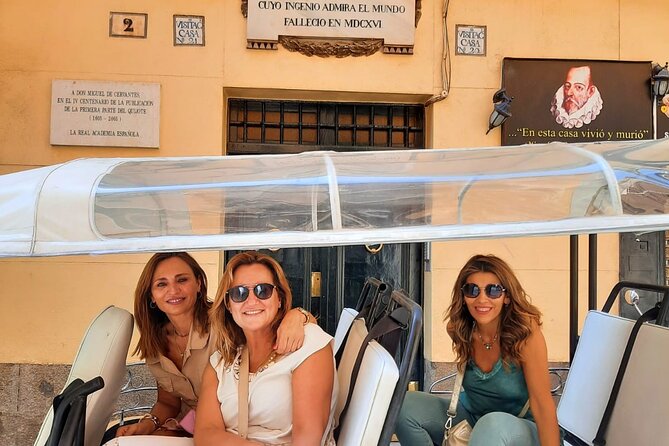
- Electric tuk-tuk transport that keeps you moving without the stop-and-start of walking
- A guide-led overview at each stop, with brief history and time for photos
- Madrid’s top “modern” mix: palaces + cathedrals + stations + major museums
- Art-focused stops near Reina Sofía and the Prado area
- Practical structure for limited time, ending back at the start point
Electric tuk-tuk Madrid Modern: the point of this 90-minute route
This tour is designed for people who want a first-pass Madrid that feels organized. In about 1 hour 30 minutes, you get a sequence of stops that covers both ceremonial Madrid and the city’s modern institutions—art museums, rail, libraries, and big-city streets.
The “Modern” label isn’t just marketing language. It comes through in the mix: 19th-century monuments like Puerta de Alcalá, the huge cultural pull of the Prado and Reina Sofía, and the urban scale of places like Gran Vía and the Cibeles/Bank of Spain area.
And because it’s private (just your group), you can match the pace to your style—fast photo stops if you’re eager, or slightly longer looks if you’re soaking it in for a minute or two.
You can also read our reviews of more tours and experiences in Madrid.


Meeting at C. de Vergara and how the ride actually starts
You start at C. de Vergara, 1 in Centro (near the historic core), with the tour starting at 9:00 am and ending back at the meeting point. That matters because you’re not hunting down a different address later—easy to plan around if you’ve got reservations after.
One small planning note: some booking setups don’t let you pick the exact time directly. A practical approach is to add your preferred timing in the booking notes and then message the operator through the app’s Contact Tour Operator feature once you’re confirmed.
You’ll also want to treat the meeting and departure time as “time to be ready,” not “time to arrive late.” With a few reports of guides or drivers not showing up on schedule in the past, the best defense is quick confirmation. If something feels off, contact the team promptly instead of waiting it out.
Royal Palace and Almudena Cathedral: where Madrid’s power is on display
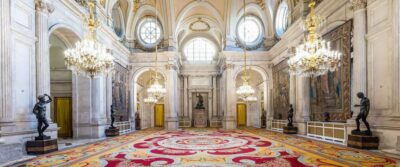
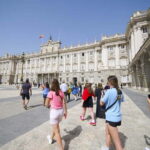
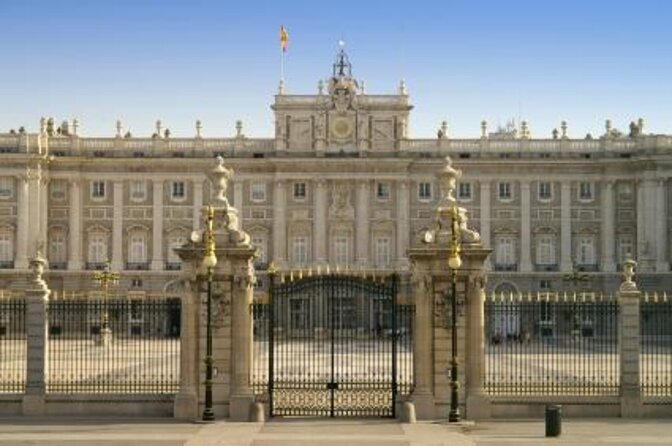
You begin with the Royal Palace area, described as the official residence of the King of Spain—often called the Royal Palace of the East. It’s enormous (135,000 m²) and famously sprawling with 3,418 rooms, making it the largest royal palace in Western Europe. Even if you’re not going inside, seeing it as a scale monument sets the tone for the rest of the day.
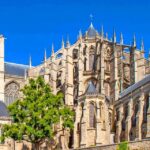
Next comes Almudena Cathedral, a cathedral built on the site of an older mosque. That layering is a big part of Madrid’s appeal: you’re not just looking at a building, you’re looking at how the city has replaced and reused meaning over centuries. The details are striking—102 meters long, 73 meters high, Neoclassical outside, Neo-Gothic inside, and a Neo-Romanesque crypt.
If you enjoy architecture more than art crowds, this is one of the best early segments. It’s also a good moment to pause and get your bearings in the historic center before the route starts moving through rail, museums, and major streets.
San Francisco el Grande, Puerta de Toledo, Neptune Fountain: street-level drama
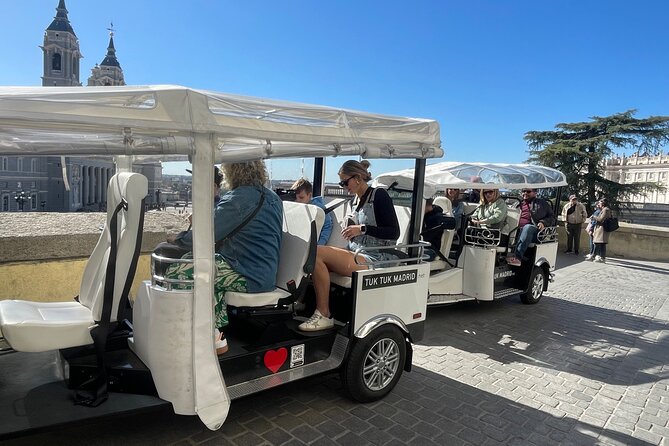
After the palaces and cathedral stop, the tour moves into a more cinematic Madrid: viewpoints, gates, and roundabout landmarks where you can take quick photos from street level.
San Francisco el Grande sits by Plaza de San Francisco in the Palacio neighborhood and presides over the western face of the square. It’s tied to the Franciscan convent of Jesus and Mary, founded in the early 1200s. Even a brief exterior look gives you a sense of how important churches were as neighborhood anchors.
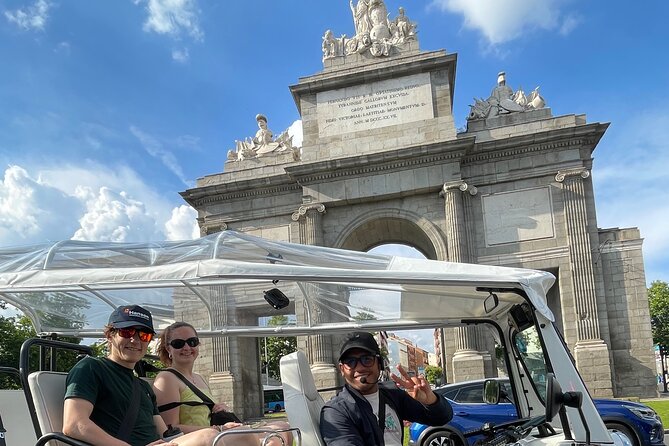
Then you’ll hit Puerta de Toledo, a city access gate originally part of the old entrance system. The current gate dates from the first third of the 19th century and was designed by architect Antonio Aguado. It’s a triumphal arch honoring Ferdinand VII, tied to Spain’s commemoration after the French occupation.
The Neptune Fountain in Plaza de Cánovas del Castillo gives you the classic Madrid roundabout monument moment. Proposed in 1777, construction ran from 1782 to 1786, and the fountain was moved in 1898 from its earlier location. That’s one of those “Madrid is alive in real time” facts—monuments weren’t just built and forgotten; they were repositioned as the city grew.
Atocha station and Reina Sofía: modern transport meets modern art
If Madrid has a “modern spine,” Atocha station is a strong candidate. The rail complex acts as a major junction and is described as the station with the highest passenger traffic in Spain. It started as a simple halt in 1851 and expanded into a larger station by 1892—so you’re basically seeing the city’s growth in layers.
From there, you shift to Reina Sofía (MNCARS), Madrid’s big 20th-century and contemporary art museum. It’s housed in the old General Hospital of Madrid, with the neoclassical buildings associated with José de Hermosilla and later work by Francesco Sabatini (the Sabatini building). The museum opened in 1992, and it expanded further with the Nouvel building in 2005.
This stop is one of the best “modern Madrid” value points because it explains the city’s shift from royal and religious dominance to culture as a civic identity. Even without deep time inside a museum, getting the context helps you decide what to see later on your own.

Jerónimos, the Buen Retiro survivors, and the Prado side
You’ll see San Jerónimo el Real—Los Jerónimos—called one of the most important monasteries in Madrid. A key detail is that next to it was a Royal Room that later became part of Buen Retiro Palace during the reign of Felipe IV. So you’re not just looking at old stone; you’re tracing how royal power moved and transformed.
Then the tour focuses on remnants connected to Buen Retiro Palace, including the Casón del Buen Retiro. Built in 1637 as a court ballroom space for Felipe IV, it later became part of the Prado Museum in 1971. It also played a role in Picasso’s Guernica location history: Guernica moved to Reina Sofía in 1992, and after renovation the Casón reopened as a Museum Study Center in 2009.
Nearby is the Salón de Reinos, once the representative axis of the Buen Retiro Palace. It was built between 1630 and 1635, and it earned its name from the coats of arms painted for the twenty-four kingdoms of the Hispanic Monarchy under Philip IV. For a long period, it became the Army Museum (1841–2005), and it’s now another structure that helps you understand how the city repurposes its grand rooms.
This is the segment where “Madrid Modern” clicks for me. Even the oldest-looking sites here have modern afterlives—art collections, museum functions, and institutional use. You leave with a mental map of where to spend extra time on another day.
Royal Spanish Academy, Prado Museum, and Puerta de Alcalá
A quick stop at the Royal Spanish Academy (RAE) adds a different kind of pride: language. Founded in 1713 on the initiative of Juan Manuel Fernández Pacheco, VIII Marquis of Villena, and protected by King Felipe V, the academy shaped the rules and standards behind Spanish in the centuries since.
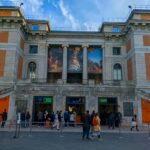
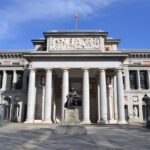
Then the route heads toward the Prado Museum area, and this is where Madrid becomes a serious art destination. The Museo Nacional del Prado is one of the world’s major museums, especially for Spanish and European painting from the 15th to the 18th centuries, and it’s heavily represented by names like Velázquez, El Greco, and Goya (Goya is described as the most represented artist). If you’re a first-time Prado person, even a short stop helps you decide whether you want to return for a focused theme—paintings, Spanish masters, or a specific artist trail.
You’ll also see Puerta de Alcalá, one of Madrid’s five old royal gates. It stands in the Plaza de la Independencia roundabout, at a major street crossroads near the Retiro-area entrances. For photo value alone, it’s a classic “Madrid looks like Madrid” stop—big scale, clean lines, and an easy vantage point from the street.
Las Ventas, Barrio de Salamanca, and Gran Vía: Madrid gets louder
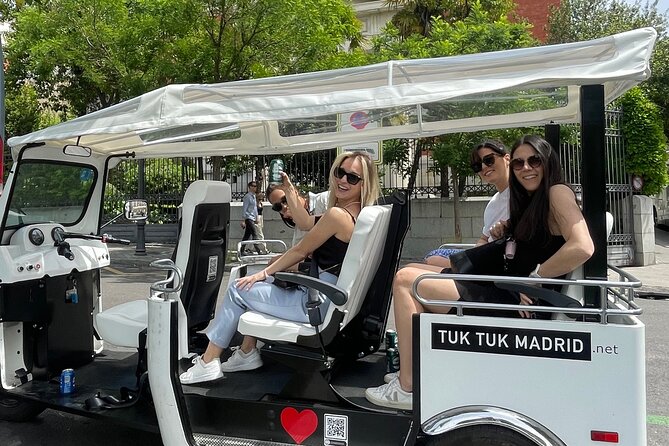
Not every highlight has to be sacred or museum-based. Las Ventas bullring delivers the city’s big public stage energy. It’s the largest bullring in Spain, with a listed capacity of 23,798 spectators, and it’s described as the third largest bullring in the world. The ring diameter is noted as 61.5 meters, which helps you understand just how built-up this sporting tradition is.
Then you shift into Barrio de Salamanca, one of Madrid’s most commercial and high-standard-of-living districts. The tour frames it as a major luxury shopping zone around streets like Serrano, Claudio Coello, and Ortega y Gasset. Even if shopping isn’t your plan, this is a useful look at how Madrid’s wealth and design sensibilities show up at street level.
Gran Vía is the final “big city” feeling stop in this chunk. It runs from Calle de Alcalá to Plaza de España and became a defining landmark in the early 1900s. The middle sections are described as Madrid’s Broadway in a nod to theatre and cinemas, and the stretch near Callao to Plaza de España is where that entertainment vibe shows up. If you like city rhythm—neon energy, crowds forming around storefronts—Gran Vía is the place.
Cibeles, Plaza de Colón, and the Bank of Spain: the monuments that frame the day
The tour also includes the Plaza de Colón area, a public space where streets like Goya, Génova, Paseo de la Castellana, and Recoletos converge. It takes its name from the Columbus monument, noted as neo-Gothic and erected between 1881 and 1885.
You’ll also get a pass by the National Library of Spain (BNE), which is presented as the body responsible for depositing and preserving Spain’s bibliographic and documentary heritage. It holds around thirty million publications since the beginning of the 18th century—books, magazines, maps, engravings, drawings, scores, and brochures. Even if you don’t go inside, it’s a strong reminder that Madrid’s modern identity includes scholarship and preservation, not just museums.
Finally, the day ends in the Cibeles/Bank of Spain area. Cibeles Fountain is one of the city’s most recognizable neoclassical monuments. It was conceived under an 18th-century remodeling plan initiated by King Carlos III, meant to beautify the capital with neoclassical aesthetics. People also refer to it as Salón del Prado, which tells you it’s more than a tourist photo spot—it’s a public gathering point.
Across the square, the Bank of Spain’s main headquarters (built between 1884 and 1891) anchors the scene at the confluence of Calle Alcalá and Paseo del Prado. Watching these monuments together gives you a clear picture of how Madrid likes to stage authority: royal power earlier, cultural power in museums, and then financial power in monumental buildings.
Is it worth $131.54 for up to 4, and who should book?
At $131.54 per group (up to 4) for about 1 hour 30 minutes, the math is actually pretty friendly—especially for families or small groups who don’t want to split up. The value is less about “tuk-tuk=magic” and more about time. You’re compressing major sights across multiple neighborhoods without needing transit tickets, route planning, or constant walking.
You also get practical inclusions: bottled water and a guide/driver, plus a mobile ticket. It’s private, so you’re not squeezed into a large group schedule. For first-time Madrid visitors, this is a strong orientation tool—you’ll know where you want to return once you’ve got the map in your head.
Where it fits best:
- You have limited time and want a high hit-rate of landmark exteriors plus quick context
- Your group wants an easy-paced overview without walking every distance
- You’re aiming for a modern-feeling Madrid mix: museums, institutions, and major streets
If you want a slow museum day or deep interior access, you’ll probably want to add museum tickets separately later. This tour is designed for street-level understanding and quick photo moments, not long gallery marathons.
Should you book this Madrid Modern electric tuk-tuk tour?
If you want a compact, fun orientation to Madrid with a guide who can explain what you’re seeing, I’d book it. The best reason is efficiency: in 90 minutes you can get a meaningful cross-section of Madrid, from royal architecture and religious landmarks to Reina Sofía/Prado culture, plus modern-feeling city hubs like Gran Vía and Cibeles.
Just go in with a little smart caution. Start time is 9:00 am and there are a few documented cases of late starts or missed pickup, so confirm quickly after booking and be ready to contact the operator. If you’re visiting on a weather-stable day, you’ll likely get exactly what this tour is built for: a smooth, memorable Madrid overview with just enough history to make your next stops make sense.
FAQ
How long is the Madrid Modern electric tuk-tuk tour?
The tour is about 1 hour 30 minutes.
What is the price and group size?
It costs $131.54 per group, for up to 4 people.
What language is the tour offered in?
The tour is offered in English.
Does the tour use a mobile ticket?
Yes, it includes a mobile ticket.
Is the tour private?
Yes. It’s a private tour/activity, and only your group participates.
What’s included in the price?
Bottled water and a guide/driver are included.
Are tips included?
No, tips are not included.
Where does the tour start and end?
It starts at C. de Vergara, 1, Centro, 28013 Madrid, Spain, and ends back at the same meeting point.
Is good weather required?
Yes. The experience requires good weather, and if it’s canceled due to poor weather you’ll be offered a different date or a full refund.
What if I need flexibility with cancellation?
You can cancel for free up to 24 hours in advance for a full refund.