REVIEW · MADRID
Architecture tour Gran Vía from its best rooftops 20thC
Book on Viator →Operated by architoursmad · Bookable on Viator
Gran Vía looks different from above. This tour strings together rooftop panoramas and serious building context, guided by local architect Emilio with plans and historical photos. You get the feel of how Madrid grew and then how 20th-century designers tried to put the city on the world map.
I especially like the rooftop-to-street rhythm: start high at the Círculo de Bellas Artes, then walk Gran Vía while seeing buildings from multiple angles, and finish on another rooftop at Plaza de España. The other big win is the focus on interiors you might otherwise miss, including the Telefónica building and the Antonio Palacios connection at the Círculo. One possible drawback: this experience is weather-dependent, and some parts are outdoors and windy-cold on exposed rooftops.
In This Review
- Key things to know before you go
- Rooftops change how Gran Vía makes sense
- Price and what you’re really paying for
- Stop 1: Círculo de Bellas Artes rooftop and Antonio Palacios interior stairs
- Stop 2: Museo Chicote for a fast art-deco stop
- Stop 3: Edificio Telefónica (1929) and the 2012 reform story
- Stop 4: Edificio Carrión and the Schweppes neon era
- Stop 5: Plaza de España rooftop finish with palace-and-forest views
- The guide matters more than you think
- What makes this a good architecture tour (and what might not)
- Practical logistics you can plan around
- Should you book this architecture tour?
- FAQ
- FAQ
- How long is the Gran Vía architecture tour from the best rooftops?
- How much does the tour cost?
- Is this tour in English?
- What’s included in the price?
- Are drinks or alcohol included on the rooftops?
- Is the Círculo de Bellas Artes ticket included?
Key things to know before you go
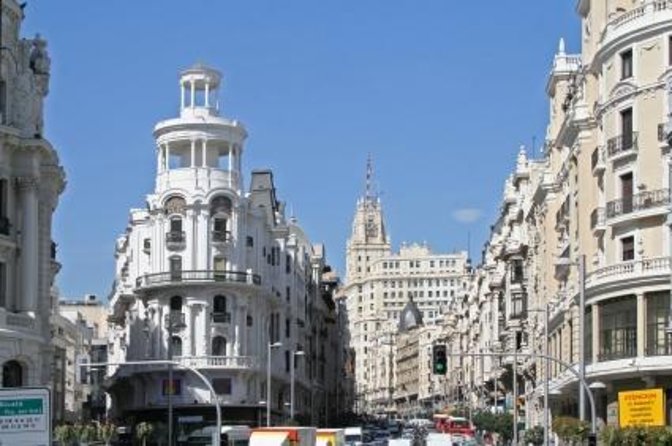
- Local architect guide (Emilio) with plans and historical photos to connect buildings to city growth
- Two rooftop viewpoints for serious skyline context, plus a finish rooftop at Plaza de España
- Real interior access at the Fundación Telefónica/Edificio Telefónica and inside the Círculo de Bellas Artes area
- Focused Gran Vía architecture through 20th-century highlights, not random photo stops
- Stairs and rooftop time mean you should plan for some walking and uneven comfort (especially in bad weather)
Rooftops change how Gran Vía makes sense
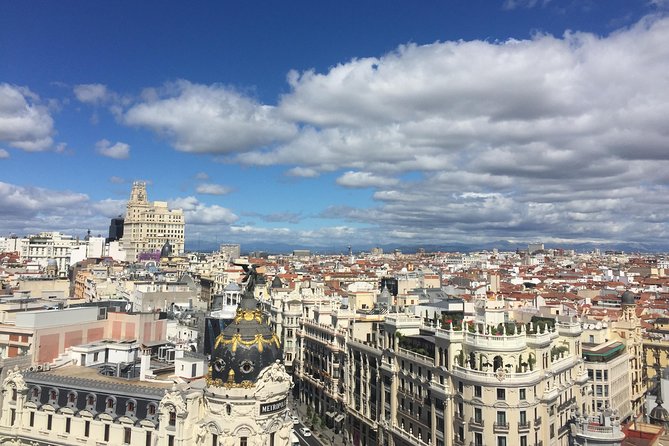
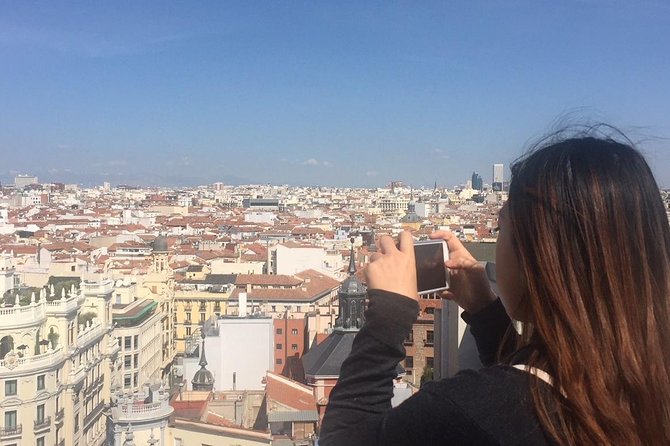
Gran Vía is often treated like a street you pass through. On this tour, it becomes a timeline you can read. The views aren’t just for photos—they help you understand scale and placement: where a “modern” skyscraper sits next to earlier civic buildings, and how Plaza de España frames the Royal Palace, the cathedral area, the Royal Theater, and the nearby Casa de Campo forest.
That rooftop framing matters because the tour is built around architecture in motion. You’re not just looking at façades. You’re getting a sense of why these buildings appeared where they did, and how different periods of Madrid left visible fingerprints in stone, glass, signage, and style.
You can also read our reviews of more tours and experiences in Madrid.


Price and what you’re really paying for
At $216.62 per person for about 3 hours 35 minutes to 4 hours, this is not a budget walk. The value comes from three things that add up:
- A local architect-led explanation (Emilio is a big part of the appeal)
- Entrance included for Fundación Telefónica
- Multiple notable buildings, including interior time in places most people only see from the sidewalk
You also need to budget one extra item: Círculo de Bellas Artes interior ticket is not included and is listed at €6.00 per booking. So if you add up the included interior at Telefónica plus the guided architect context across Gran Vía, the price starts to feel less like “just a walk” and more like an organized, interpreted architectural lesson.
If you’re the type who likes details—materials, design choices, street planning, and why a building got reworked—this price makes more sense. If you’re after a quick highlights tour with minimal walking, you may find the focus more specific than you expected.
Stop 1: Círculo de Bellas Artes rooftop and Antonio Palacios interior stairs
You begin at Azotea del Círculo de Bellas Artes de Madrid and go straight to the rooftop viewpoint. This is where the tour earns its name: you get a wide look over the city and then receive the big-picture explanation of Madrid’s urban and architectural development.
Then comes the pivot. You go down the impressive staircase and visit the interior connected to Antonio Palacios. This part is valuable because it isn’t just “look up.” It’s where you’re shown how the city’s growth and design thinking shows up in built form. And it sets the tone for the rest of the Gran Vía sequence: modern and historical layers aren’t separate worlds here—they overlap.
The one catch is the outdoor portion. If you’re doing this on a cold, windy day, the rooftop time can feel longer than the clock says.
Stop 2: Museo Chicote for a fast art-deco stop
Next up is Museo Chicote – Coctelería desde 1931. The time here is short—about 5 minutes—but the point isn’t depth in one location. It’s style recognition and historical placement.
You’ll step into an art-deco atmosphere tied to Luis Gutiérrez Soto’s projected design in 1931. The vibe is also connected to Madrid’s cultural life—this is where Hollywood-era premieres and film celebrations have been associated over the years. For architecture lovers, quick stops like this work well because they sharpen your eye: you start noticing design cues you’d otherwise walk past without thinking about what they’re doing.
If you prefer long interior stays, you might wish this stop lasted longer. But for this particular itinerary, it works as a bridge from the civic rooftops into Gran Vía’s commercial and institutional power.
Stop 3: Edificio Telefónica (1929) and the 2012 reform story
The tour then turns to vertical ambition with Edificio Telefónica. You visit the interior of what’s described as the first skyscraper in Madrid, built in 1929, and then reformed in 2012.
This interior access is one of the strongest reasons to book. Skyscrapers can be hard to experience as more than exterior silhouettes. Here, you get a chance to understand how a building was conceived at the time and how later work changed it. Even if you don’t identify every architectural term, the guide’s plans and historical photos make the transformation easier to grasp.
It’s also a practical stop length: roughly 20 minutes, which keeps the pace from turning into a lecture marathon.


Stop 4: Edificio Carrión and the Schweppes neon era
After Telefónica, you make a brief stop at Edificio Carrion, tied to the famous Schweppes neons and its setting in Plaza del Callao. This segment is again about 5 minutes, but it’s the kind of stop that rewards curiosity.
Neon signage can feel like “just branding” until you see it through an architectural lens. This stop helps you connect commercial design to place-making: a building’s personality isn’t only in its massing and façades, but also in how it talks to the street.
For the architecture nerds, this is where you start seeing the city like a set of systems—lighting, advertising, and style working together to define an era.
Stop 5: Plaza de España rooftop finish with palace-and-forest views
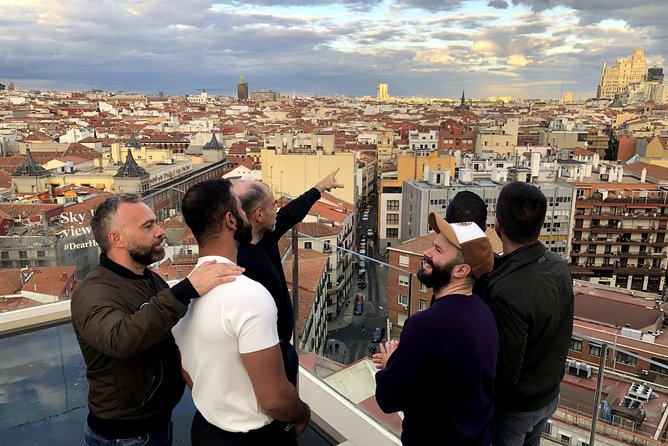
You end at Plaza de España on a rooftop with views described as including the Royal Palace, the cathedral, the Royal Theater, and the Casa de Campo forest. You can stay for a drink if you want, but drinks are not included.
This finish is smart. Gran Vía can feel like a line, but Plaza de España gives you a sense of Madrid as a whole. The palace and cathedral anchors keep the tour from becoming only 20th-century style study. You see the contrast: monumental older Madrid sitting alongside the street that pushed modern city energy forward.
Timing here is short—around 15 minutes—so plan to enjoy it in a focused way: grab photos, take in the alignment, and listen to the wrap-up context while you’re up there.
The guide matters more than you think
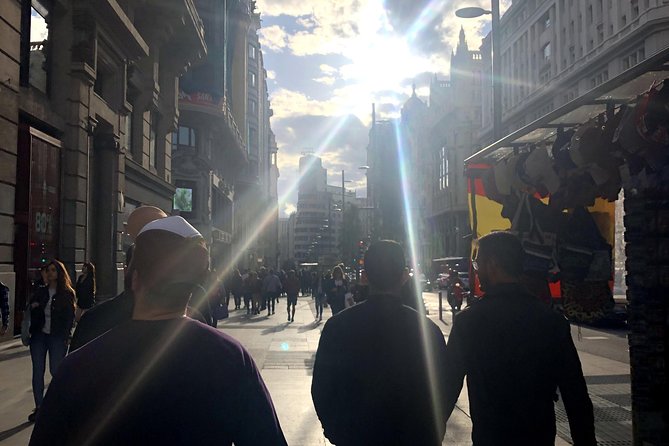
A theme across the feedback is that Emilio, the architect guide, turns the tour into more than sightseeing. He links buildings to Spanish history and the urban logic of where things were built and why. The plans and historical photos also help you understand changes over time—something you can’t get from reading a plaque or scanning a brochure.
What you should do to get the most value:
- Treat this as a detail tour, not a casual stroll.
- Bring questions about style and street placement. The group format supports back-and-forth.
- Wear comfortable shoes because there are stairs and walking involved.
One review note to take seriously: the early overview can feel long, especially in bad weather. If you’re someone who struggles with outdoor waiting, you’ll want warm layers and a backup mindset for wind and cold.
What makes this a good architecture tour (and what might not)
This isn’t an all-day museum-style experience. It’s a tight route with specific design stops and a couple of rooftop viewpoint moments that help you see the city as a built puzzle.
You’ll likely love it if:
- You like architectural context (style, time periods, city growth)
- You enjoy seeing buildings from different angles and getting interpretation, not just facts
- You want interior access to places like the Telefónica building
You might reconsider if:
- You’re after minimal walking and maximum comfort
- You don’t enjoy exposed rooftop time in cold or windy conditions
- You expect lots of long interior visits; several stops are intentionally brief
Also note the comfort factor. The tour involves stairs, and that can be a limitation for strollers. It’s also not positioned as a kid-free tour, but the pacing and footwear needs matter.
Practical logistics you can plan around
This is offered in English and uses a mobile ticket. The meeting point is the rooftop at Círculo de Bellas Artes, and the tour ends at Plaza de España, on a rooftop terrace.
It also runs as a private tour for your group only. That’s a big deal when the guide is explaining details—smaller, contained groups tend to make it easier to ask questions and keep the pace comfortable.
Duration is listed at about 3 hours 35 minutes to 4 hours, so schedule a flexible block before dinner plans. You’ll also want to build in enough time after you finish at Plaza de España if you plan to linger for a drink at the rooftop.
One more thing: the tour requires good weather. If it’s canceled for poor conditions, you’ll be offered a different date or a full refund.
Should you book this architecture tour?
Book it if you want a focused, architect-led walk that helps you read Madrid’s architecture instead of just scanning it. The rooftop-to-interior mix, plus Emilio’s explanations and the Telefónica entrance included, make it feel like value for people who care about design details.
Don’t book it if you’re looking for an easy, mostly indoor highlights tour. Between rooftop exposure, stairs, and a couple of shorter stops, it’s built for people who like structure and specifics—even when the weather isn’t perfect.
FAQ
FAQ
How long is the Gran Vía architecture tour from the best rooftops?
It runs about 3 hours 35 minutes to 4 hours.
How much does the tour cost?
The price is $216.62 per person.
Is this tour in English?
Yes, it’s offered in English.
What’s included in the price?
Included items are Fundación Telefónica entrance and the visit led by a local architect with plans and historical photos for context.
Are drinks or alcohol included on the rooftops?
No. Alcoholic beverages/drinks are not included on the rooftops.
Is the Círculo de Bellas Artes ticket included?
No. The Circle of Fine Arts entrance (€6.00 per booking) is not included.