REVIEW · MADRID
Essential Madrid: Walking Tour
Book on Viator →Operated by Naturanda Turismo Ambiental · Bookable on Viator
Madrid’s best sights, on foot.
This Essential Madrid walk strings together classic landmarks you’d otherwise scatter across different days, with a guide and headsets so you can actually hear the story. It’s a tight 1 hour 30 minutes loop that ends in the Royal Palace area, putting you right where you want to be for the next thing on your list.
I like two parts in particular: the route is built around major, recognizable stops (think Neptune’s fountain and Puerta del Sol) and the guide helps you connect what you see with why it mattered locally. I also like the small-batch feel—up to 30 people—which usually makes it easier to stay together while you’re moving through crowded streets.
One big consideration: this tour’s day-to-day logistics can be messy. Start locations and start times can shift, and if the guide doesn’t find everyone quickly, you can end up with less time for photos or even a canceled experience. If you book, build in patience and double-check details close to departure.
In This Review
- Key things to know before you go
- A 90-minute Madrid loop: what you’ll realistically see
- Goya to Neptune: getting oriented fast in the center
- Paseo del Prado and the Prado connection: a walk that sets up a bigger plan
- Congress and Cervantes: politics and literature, side by side
- Santa Ana and Sol: legends, schedules, and the Madrid rhythm
- Plaza Mayor and Plaza de la Villa: old Madrid texture in short bursts
- Almudena and the Royal Palace finale: the big wow moment
- Price and value at $17.87: decent deal, if logistics behave
- How to make the tour work for you (not against you)
- Who this walk suits best
- Should you book Essential Madrid: Walking Tour?
- FAQ
- How long is the walking tour?
- What language is the tour offered in?
- Where does the tour start and where does it end?
- Are tickets included for the stops?
- Is there a mobile ticket?
- How big is the group?
- Is there free cancellation, and until when?
Key things to know before you go
- Headsets provided so you can follow the guide without yelling over traffic noise
- A major-sights route that ties together royal, religious, and political Madrid
- Free stops along the way, so you’re not constantly paying entry fees mid-walk
- Max 30 travelers, which helps the pacing stay manageable
- English tour, useful if you want context without translation apps
A 90-minute Madrid loop: what you’ll realistically see
This walk is designed for speed with context. You’ll cover a set of “hit list” monuments without doing the heavy lift of full-length museum days. The pace is brisk enough that you’ll spend more time moving between stops than hanging out inside viewpoints.
A typical flow looks like this: you start near a Goya monument, then you walk through the grand squares and boulevards that frame central Madrid. As you move along, the themes shift—art and artists, then civic power, then literature, then the commercial center, then old Madrid lanes, and finally the Royal Palace zone.
What makes this approach useful is that Madrid’s center can feel like one long blur if you’re not sure what you’re seeing. Here, the guide gives you names and meaning at each stop, so the city landmarks start to snap into place.
You can also read our reviews of more walking tours in Madrid

Goya to Neptune: getting oriented fast in the center
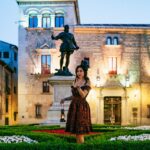
You begin at the Monumento a San Pedro Palacio area, right by the Goya statue meeting point. Expect a quick group setup: the guide organizes people and hands out (or helps you use) the devices so you can hear better from the start.
Stop one is the Estatua de Francisco de Goya. Even if you don’t know Spanish art history, the point is orientation. You’re anchored to a famous figure and Madrid’s artistic legacy before you’re swept into the civic core.
Then you head to the Fuente de Neptuno in Cánovas del Castillo square. This is one of those Madrid “you’ve seen it in photos” moments. The fountain sits among major buildings, so the explanation tends to connect the square’s role with the city’s planning and public life. If you want a fast feel for Madrid’s layout, Neptune is a great anchor.
Paseo del Prado and the Prado connection: a walk that sets up a bigger plan
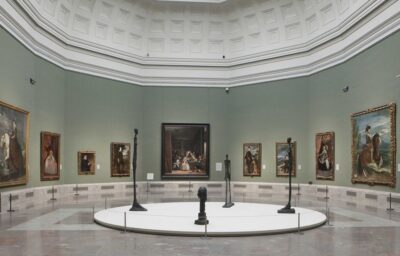
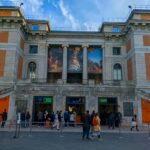
Next you go onto the Paseo del Prado, a classic promenade lined with vegetation, monuments, and notable buildings. The Prado National Museum sits along this corridor, so even though the walk is outside, you’re getting the visual setup for a museum day later.
This portion is the “easy breathing” stretch of the tour. It’s not just a transfer between stops. The promenade is wide enough to enjoy the urban scale, and you get that sense of Madrid as a city with big formal avenues—not just small lanes.
If you’re deciding whether to add a museum visit, this segment helps you pick your angle. When you see the museum frontage in context, you’ll have an easier time deciding what day/time fits your energy.
Congress and Cervantes: politics and literature, side by side
After the Prado corridor, you reach the building that houses Spain’s Congress of Deputies. This is where you shift from “beautiful scenery” to “Madrid as a working capital.” The guide’s job here is to translate what the building represents—Spain’s government in a very public, very central location.
Then you move to Casa de Cervantes, tied to Miguel de Cervantes—the writer who lived and died there. This stop is less about grand skyline views and more about biography and place. You’ll likely come away with a clearer sense of why famous writers were rooted in specific neighborhoods, not floating in time like statues.
If you like stories that connect people to streets, these two stops tend to satisfy. If you only want architecture and don’t care about cultural references, the value is still there, but your enjoyment will depend on how clearly the guide explains it.
Santa Ana and Sol: legends, schedules, and the Madrid rhythm
The route then brings you to Plaza de Santa Ana, with attention on the romantic period of Madrid and its legends. This is where the tour leans a little more into atmosphere. You’re standing in a square that has long served as a social and cultural meeting point, and the storytelling gives you a reason to look beyond the buildings.
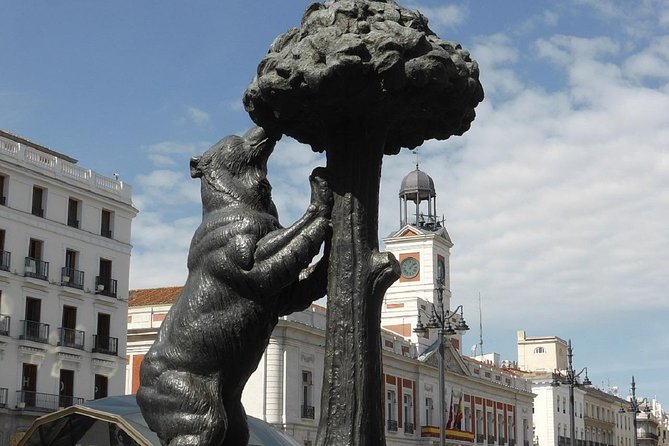
Then you arrive at Puerta del Sol, one of the city’s best-known plazas. You’ll get the key landmarks: the statue of the Bear and the Arbutus, plus the famous clock used for the New Year’s chimes. Even if you’ve already seen pictures, it helps to stand there and understand why those details matter locally.
One practical note: Sol is busy. The guide headset audio helps, but you’ll still want to manage your expectations for photos. This is a “quick snapshot” kind of stop, not a stay-for-an-hour stop.




Plaza Mayor and Plaza de la Villa: old Madrid texture in short bursts
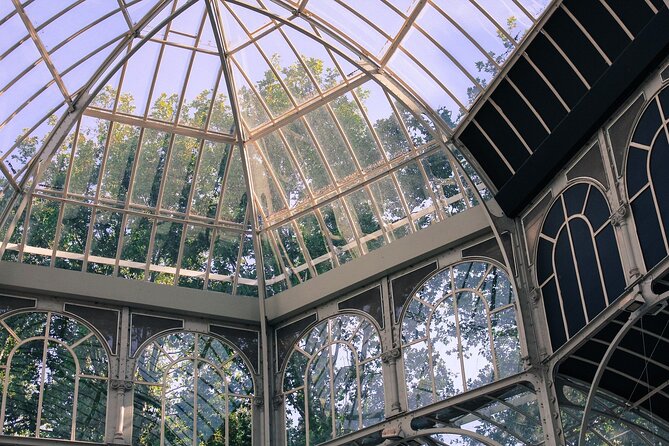
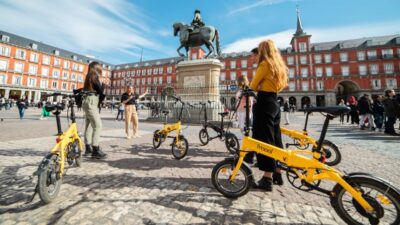
Next is Plaza Mayor, often described as the heart of Madrid’s Austrias neighborhood. It’s a showpiece square, and it’s ideal for a walking tour because it’s visually coherent: you can take in the scale without hunting for scattered highlights.
After that, you move toward Plaza de la Villa, a stop that frames Madrid’s oldest corners. The point here is medieval-era context—this is where the guide can help you picture Madrid earlier than the grand avenues and state buildings you’ve already seen.
These squares are also where you feel how the tour balances “look and learn.” The guide will probably give you enough to remember, but you won’t get a long sit-down. If your style is slow travel, treat this as your orientation visit, then return later on your own time.
Almudena and the Royal Palace finale: the big wow moment
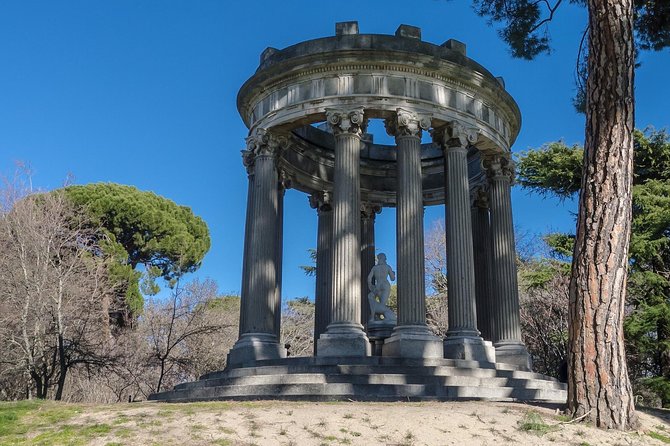
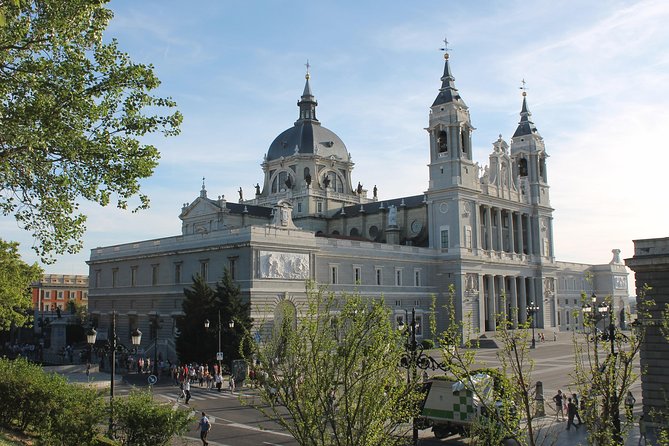
The last stretch is Catedral de Sta Maria la Real de la Almudena, described here as Madrid’s most important religious building. This stop gives the tour a strong ending note: sacred architecture and city identity in one frame.
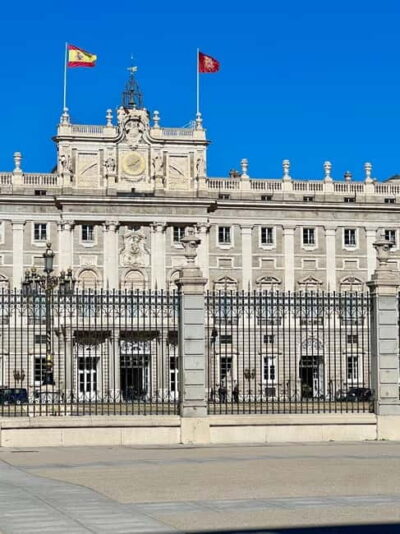
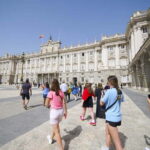
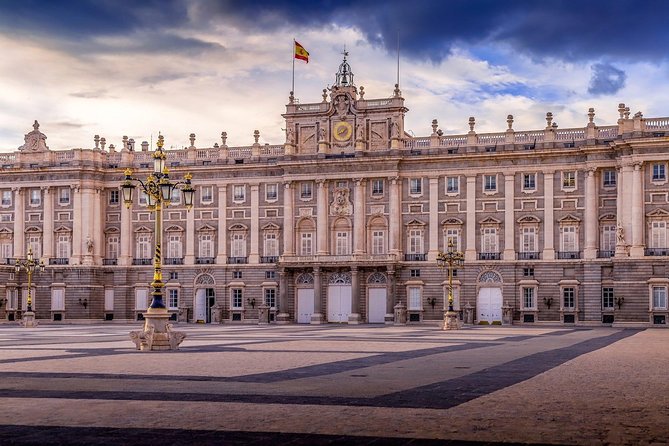
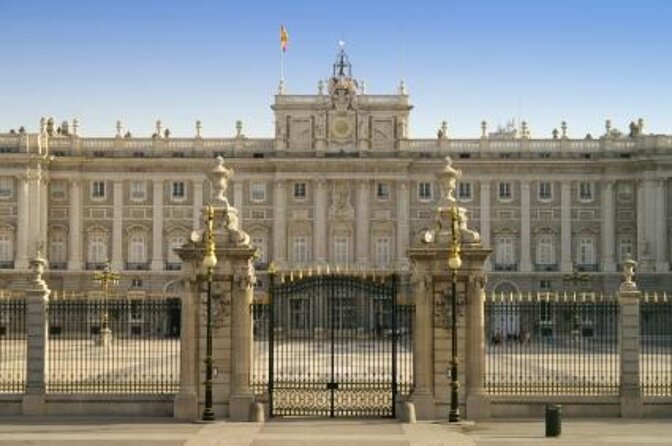
Then you finish at the Royal Palace of Madrid, noted as the largest in western Europe. This is a powerful landing spot because the palace isn’t subtle. Even from outside, it changes the feel of the street.
Two things to expect at the end:
- The tour focuses on getting you there, not lingering for a full palace visit.
- If the tour runs behind schedule, you may feel rushed right at the finish.
So if the Royal Palace is the reason you booked, consider planning your day so you’re not dependent on the tour being perfectly on time.
Price and value at $17.87: decent deal, if logistics behave
At $17.87 per person for about 1.5 hours with a professional guide and headsets, the value can be solid—especially if you’re new to Madrid and want a fast “what matters most” tour.
The free or low-cost nature of several stops helps too. Some segments don’t require extra entry payments, which keeps the budget predictable during a walking day.
Here’s the catch: when schedules shift or a guide has trouble with meeting the group, value drops fast. You lose not just time, but also the chance to stitch together plans around that 90-minute window. If you’re traveling on a tight itinerary, that risk matters.
My advice: if you’re paying for this kind of tour, treat it like a helpful orientation tool, not your only plan. Keep a backup activity nearby for the same morning/afternoon.
How to make the tour work for you (not against you)
If you want this tour to feel smooth, do three things:
First, arrive a bit early and be ready to confirm your meeting point details. The start location is listed, but real-world timing can shift. If you notice changes after booking, adjust quickly.
Second, take the headset seriously. If you can hear the guide clearly, the entire walk makes more sense. If audio is weak or you’re having trouble understanding the guide, let them know promptly rather than waiting until you’re frustrated.
Third, decide what kind of learner you are. If you enjoy names and connections—artists, authors, political institutions—this tour can feel rewarding even in short doses. If you want deep, specific historical detail at each location, plan to add your own reading or a longer guided visit on a separate day.
Who this walk suits best
This is a good match for:
- First-timers who want a fast overview of central Madrid
- Travelers who like guided context more than museum time
- People who want a manageable walking day with headsets and up to 30 participants
It may be less ideal if:
- You’re on a schedule where delays would wreck your day
- You need lots of time at each photo stop
- You have serious medical limitations, since it’s a walking tour (and not positioned as a low-mobility option)
Should you book Essential Madrid: Walking Tour?
If you want a smart, short introduction to Madrid’s most recognizable center landmarks, this tour can be a good use of $17.87 and a single morning block. The headsets and the “major sights in sequence” format are strong reasons to consider it.
But book with eyes open. Because meeting details and timing can be unstable, I’d only schedule it if you can handle a little chaos. If your day has tight reservations, keep one flexible window and plan a nearby fallback.
FAQ
How long is the walking tour?
It runs for about 1 hour 30 minutes.
What language is the tour offered in?
The tour is offered in English.
Where does the tour start and where does it end?
It starts at Monumento a San Pedro Palacio, Centro, 28013 Madrid and ends at Museo Nacional del Prado, Retiro, 28014 Madrid.
Are tickets included for the stops?
Admission tickets are not included for some stops, while others are listed as free (like Paseo del Prado, Puerta del Sol, Plaza Mayor, and Plaza de la Villa).
Is there a mobile ticket?
Yes, the tour uses a mobile ticket.
How big is the group?
The tour has a maximum of 30 travelers.
Is there free cancellation, and until when?
You can cancel up to 24 hours in advance for a full refund.