REVIEW · MADRID
Guided visit to Madrid May 2
Book on Viator →Operated by el primer Edecán · Bookable on Viator
Madrid’s 2 de Mayo story hits hard, and this guided walk turns it into a military-history lesson with a real academic historian. I love the way Raúl, an official guide specialized in Napoleonic-era military history, connects the streets to what happened. I also like the 20-person max group size, which keeps the pace human and the questions coming. One drawback to consider: it’s an outdoor walk tied to good weather, so plan for the possibility of a weather-based reschedule.
You start at Plaza de Oriente and finish at Plaza de Dos de Mayo, with stops built around the uprising and the moment when Daoíz and Velarde gave their lives for independence. It’s short—about 2 hours total—so it’s ideal if you want a focused history experience without carving out half your day.
In This Review
- Key Highlights at a Glance
- Madrid’s 2 de Mayo Battlefield Begins at Plaza de Oriente
- Raúl’s Military-History Lens: Why This Guide Style Works
- Stop 1: Plaza de Oriente and the Start of the Uprising
- From One Plaza to the Next: How the Walk Builds Momentum
- Stop 2: Plaza del Dos de Mayo and the Story of Daoíz and Velarde
- The 2-Hour Timing: Perfect for a History Bite Without Overload
- Price and Value: What $114.49 Buys You in Madrid
- Who Should Book This Tour (and Who Might Skip It)
- Practical Tips Before You Go
- Should You Book This Madrid 2 de Mayo Guided Battlefield Walk?
- FAQ
- How long is the guided visit?
- Where does the tour start and end?
- How much does the tour cost?
- How big is the group?
- Do I need to buy admission tickets for the stops?
- What if the weather is bad?
- What’s the cancellation window?
Key Highlights at a Glance
- UCM-trained military historian focus on the Napoleonic-era War of Independence
- Small group (max 20) for better flow and clearer explanations
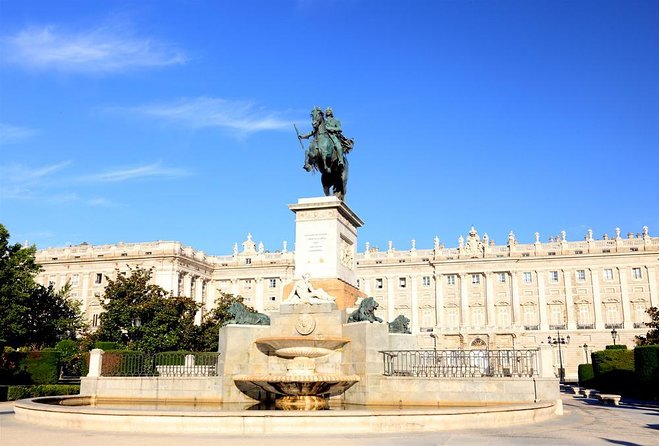
- Start at Plaza de Oriente where the uprising is said to begin
- Plaza del Dos de Mayo stop centered on Daoíz and Velarde
- 2 hours approx. with two main time blocks around the plazas
Madrid’s 2 de Mayo Battlefield Begins at Plaza de Oriente
If you’ve ever walked through central Madrid and thought, I wonder what this street saw, this tour is made for you. It frames Madrid during the Napoleonic period as a battlefield in the War of Independence, not just as a pretty backdrop. That changes your whole way of looking at the city.
The walk starts at Plaza de Oriente (Centro), and that matters. Your guide treats it as the launching point of the uprising, which gives the story a clear direction: beginning first, then momentum, then payoff at the end. You’re not stuck in a museum lecture. You’re moving through the urban stage where the events unfolded.
For me, the best part is that the narration feels built like a story you can track. When someone tells history from a battlefield angle, it stops being abstract. You start noticing what would have mattered then—position, movement, timing. Even without getting technical, you end up with a stronger mental picture of how a conflict plays out in a real city.
You can also read our reviews of more guided tours in Madrid
Raúl’s Military-History Lens: Why This Guide Style Works
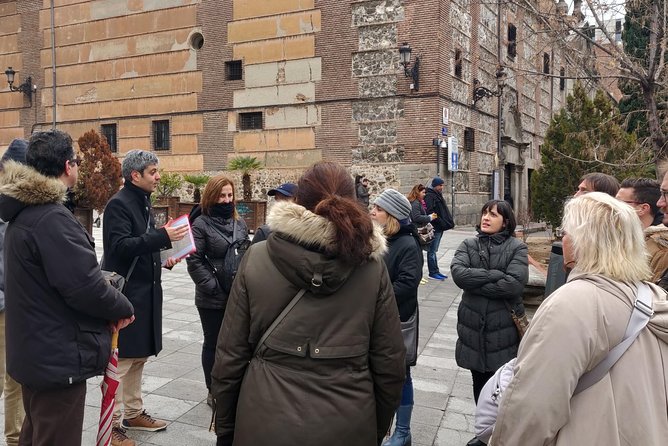
This isn’t a generic “here’s what happened in 1808” tour. The guide is an official tourist guide specialized in military history by the UCM, which is an important difference in how the explanation lands. The point isn’t just to recite events—it’s to interpret them.
Raúl’s approach (you’ll hear it in how he structures the story) focuses on the Napoleonic period as a set of battlefield realities. That means context comes first, then the key moments, then how the sites connect. It’s why the two main stops feel like they belong to one continuous narrative instead of two separate landmarks.
In the reviews, people highlight his enthusiasm and how he makes the details easy to follow. That tracks with what you should look for when you book a historical walk: a guide who can translate complexity into plain, street-level understanding. If you like history that has shape and cause-and-effect, this is the right style.
You’ll also benefit from the small group limit. With up to 20 travelers, it’s easier for the guide to manage pacing and answer questions without turning the walk into a noisy shuffle.
Stop 1: Plaza de Oriente and the Start of the Uprising
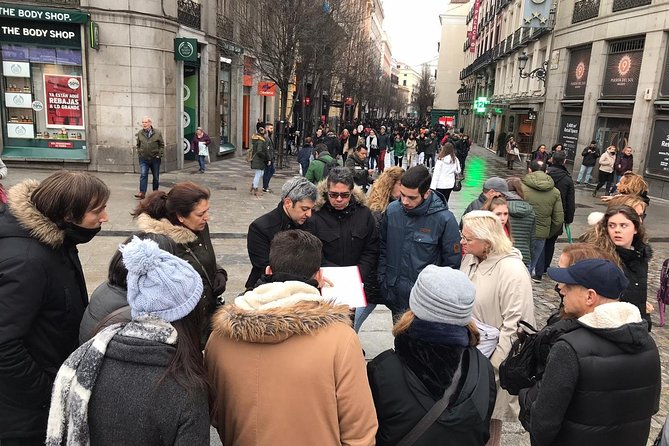
Your first stop is Plaza de Oriente, and the tour treats the location as where the uprising began. That 20-minute block is short, but it’s designed to do the heavy lifting: set the scene, establish what’s at stake, and give you a storyline you can carry with you as you walk.
The “free admission ticket” note here is also useful. You’re not paying extra at the stop. Instead, you’re paying for the guide’s interpretation—someone to connect the dots while you’re standing where the action is referenced.
What to expect during this segment:
- You’ll get the “why now” context around the Napoleonic-era conflict and the War of Independence framework.
- The guide will point you toward what you should remember when you reach the next plaza.
- You’ll likely hear small episode-level details that make the uprising feel less like a date on a page and more like a chain of decisions.
One practical thought: Plaza de Oriente is a high-visibility, central area. That’s good for orientation, but it can also mean crowds depending on the time of day. Since the tour is about 2 hours total, you’re best off arriving with a calm pace and letting the guide do the organizing.
From One Plaza to the Next: How the Walk Builds Momentum
Between Plaza de Oriente and Plaza del Dos de Mayo, the tour covers several places as the route progresses. You’re not just jumping from point A to point B. The structure is meant to create continuity, which is exactly what you want for “battlefield on city streets” storytelling.
This part is where the tour earns its keep. Madrid’s center is full of monuments and views, but history sticks best when a guide threads the story through the geography. As you move, you can picture the route as a sequence rather than isolated scenes.
If you’re the type who tends to take photos first and read later, consider flipping that habit for this experience. Listen first, then take photos when the guide gives you something specific to look for. You’ll end up with fewer “random city shots” and more pictures that actually match the story you heard.
Also, remember the guide ends in Plaza de Dos de Mayo. So treat the walk as a lead-up: you’re working toward the moment that anchors the tour.
Stop 2: Plaza del Dos de Mayo and the Story of Daoíz and Velarde
The second main stop is Plaza del Dos de Mayo, another 20-minute segment. This is the emotional anchor. The tour frames it as the mythical place where Daoíz and Velarde gave their lives for independence.
This is where battlefield-focused history really matters. Names like Daoíz and Velarde aren’t just facts; they’re signals that the story has human consequences. When your guide returns the discussion to the people behind the event, the uprising stops being an abstract political moment.
What you’ll likely get here:
- A focused explanation around the meaning of this location in the broader War of Independence narrative
- A reminder of the events that lead up to this point, so you don’t feel like you missed steps
- Context designed to help you understand why this plaza became such a powerful marker in Madrid’s memory
It also helps that the tour ends here. Ending at the place where the story culminates means you finish with the clearest emotional and historical “headline.” For a short tour, that matters more than you’d think—you walk away with a tidy mental package.




The 2-Hour Timing: Perfect for a History Bite Without Overload
At about 2 hours approx., this is a manageable commitment. It’s long enough to build context and still short enough that you won’t feel drained by the time you reach the end. That’s a sweet spot for guided walking tours.
Why the timing works:
- You get a coherent storyline instead of a rushed list of stops.
- The itinerary is concentrated around two core plaza areas, which makes it easier to remember.
- You can pair it with something else later—like museums, tapas, or even just a long walk with new eyes.
One practical consideration: the experience requires good weather. That doesn’t mean it’s a fragile event, but it does mean you should check the forecast close to the start time and dress for walking. If the weather turns, you’ll be offered a different date or a full refund, so you won’t get stuck.
Price and Value: What $114.49 Buys You in Madrid
The price is $114.49 per person, and it’s fair to ask if that’s “worth it.” Here’s how I see the value.
You’re paying for:
- A highly specialized guide profile focused on Napoleonic military history and battlefield interpretation
- A short, structured tour built around meaningful sites tied to the 2 de Mayo story
- A small group format (max 20), which usually improves the quality of the experience
For Madrid, history tours range from quick explanations to long, ticket-heavy museum days. This one sits in the middle: you’re buying expertise and clarity, not admission. The tour’s stops note admission ticket free, which tells you that the main cost is the guide’s knowledge and the guided route—not entrance fees.
If you enjoy learning history through places—especially places tied to conflict—this price starts to make sense. You’re not paying for “just walking.” You’re paying for someone who can interpret what you’re seeing while you’re standing there.
If you’re hoping for a casual stroll with minimal talking, this may feel more structured than you want. But if you like context and storytelling, this is the kind of guide-driven experience that turns a couple of plazas into a timeline.
Who Should Book This Tour (and Who Might Skip It)
This tour is a strong fit if you:
- Care about the War of Independence / Napoleonic period and want it explained with a military-history lens
- Like guided walking tours where you can ask questions and actually hear the answers
- Want a compact experience that still feels substantial
It’s also a good choice for mixed-age groups, since the reviews explicitly note it works not only for adults, but also for younger people who should be learning about the past. If you’re traveling with teens or older kids who get bored by pure lectures, the “battlefields in the city” angle might keep them engaged.
You might skip it if:
- You dislike outdoor walking during uncertain weather
- You prefer history told purely through art, architecture, or museum artifacts rather than battlefield context
- You’re looking for a very light, quick overview and not a guide-led explanation
Practical Tips Before You Go
A few small choices will make this feel smooth instead of rushed:
- Wear comfortable shoes. It’s a guided walk between plazas.
- Arrive on time at Plaza de Oriente (Centro). Central Madrid is busy, and you want to start with the full attention of the group.
- Bring water and a light layer. Even in a short tour, walking plus open plazas can add up.
- If you rely on transit, good news: it’s near public transportation, so you’re not forced into a car-or-taxi day.
You’ll receive confirmation within 48 hours of booking, subject to availability. The tour also uses a mobile ticket, which helps reduce paper hassle.
And if you travel with a service animal, service animals are allowed.
Should You Book This Madrid 2 de Mayo Guided Battlefield Walk?
Yes, if you want history with shape. This is not the kind of tour where you leave with five names and zero connection. With a guide like Raúl—specialized in military history by the UCM—you get an interpretation that turns Madrid into a battlefield map for the War of Independence.
It’s also good value for a two-hour plan: small group size, mobile ticket convenience, no extra admission hassle at the stops, and a clear story arc from Plaza de Oriente to Plaza del Dos de Mayo.
I’d book it especially if you’re visiting Madrid for the first time or if your other plans are more general sightseeing. This tour gives you a sharper lens on one of the city’s most important 2 de Mayo moments, anchored by Daoíz and Velarde.
If the weather looks questionable, check closer to the start time. Since it needs good weather, you’ll be better positioned to catch it on the day it runs.
FAQ
How long is the guided visit?
It lasts about 2 hours.
Where does the tour start and end?
It starts at Plaza de Oriente (Centro, 28013 Madrid) and ends at Plaza del Dos de Mayo (Pl. del Dos de Mayo, Centro, 28004 Madrid).
How much does the tour cost?
The price is $114.49 per person.
How big is the group?
The experience has a maximum of 20 travelers.
Do I need to buy admission tickets for the stops?
The stops listed include admission ticket free.
What if the weather is bad?
The tour requires good weather. If it’s canceled due to poor weather, you’ll be offered a different date or a full refund.
What’s the cancellation window?
You can cancel for a full refund up to 24 hours before the experience’s start time.