REVIEW · MADRID
Madrid 3-Hour Sightseeing Tour
Book on GetYourGuide →Operated by Julia Travel Gray Line Spain · Bookable on GetYourGuide
Madrid moves fast, and this tour helps. This 3-hour loop mixes a quick historic walk with an air-conditioned bus so you can cover real ground without getting lost. I love the photo-friendly stops and the radio system that keeps you in sync. One possible drawback: it’s not a slow stroll, so if you want long sits at every landmark, you’ll feel rushed.
The commentary is a big deal here, and it shows up in the feedback—one guest highlighted George for history-focused storytelling and genuine enthusiasm. You’ll rack up major sights like Puerta de Alcalá, Plaza de Cibeles, and Puerta del Sol without doing route math. Just note the route can shift due to city events, which can change exact timing around the center.
In This Review
- Key highlights at a glance
- Meeting Point: Julia Travel by Plaza de Ramales
- Historic Core on Foot: Calle Mayor, Plaza Mayor, and Puerta del Sol
- Royal Palace Views to Puerta de Toledo: The bus ride that strings it all together
- Puerta de Alcalá and Las Ventas: Big landmark energy without the long waits
- Modern Madrid finish: Gran Vía, Paseo de la Castellana, and Bernabéu
- Price and value: Is $39 worth it for 3 hours?
- Who this tour fits best (and who should think twice)
- Should you book this Madrid 3-hour sightseeing tour?
- FAQ
- How long is the Madrid sightseeing tour?
- Where does the tour start and where does it finish?
- Does the tour include walking?
- What’s included in the price?
- Are food and drinks included?
- Is this tour wheelchair accessible?
Key highlights at a glance
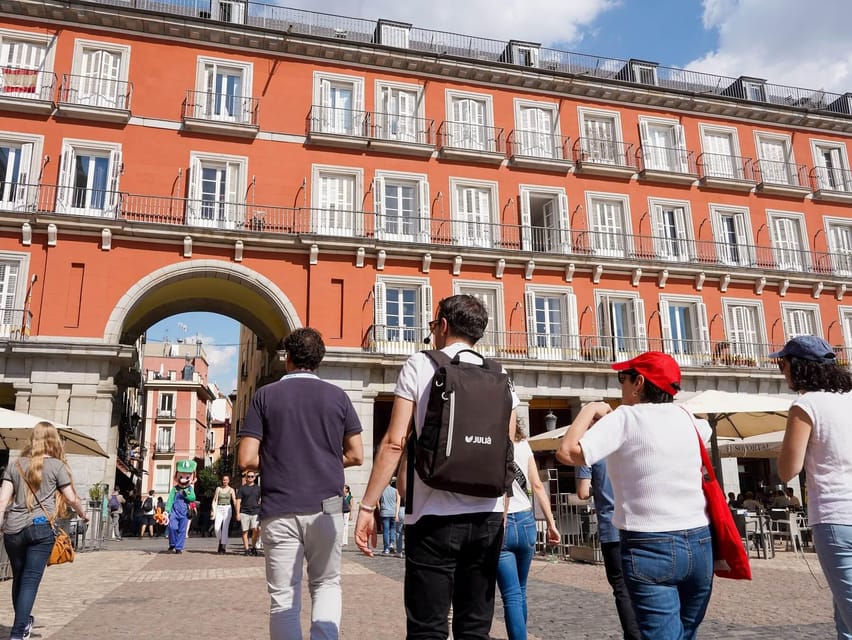
- Radio guide system helps you follow along even when you’re moving between spots
- Puerta del Sol and Plaza Mayor give you instant orientation for Madrid’s old core
- Manzanares River viewpoints set up great sightlines toward the Royal Palace and Almudena Cathedral
- Las Ventas bullring photo stop comes with on-the-ground context from your guide
- Gran Vía and Bernabéu area finish adds a modern Madrid contrast before you’re done
- Meeting point near Plaza de Ramales makes the start easy for most arrivals
Meeting Point: Julia Travel by Plaza de Ramales
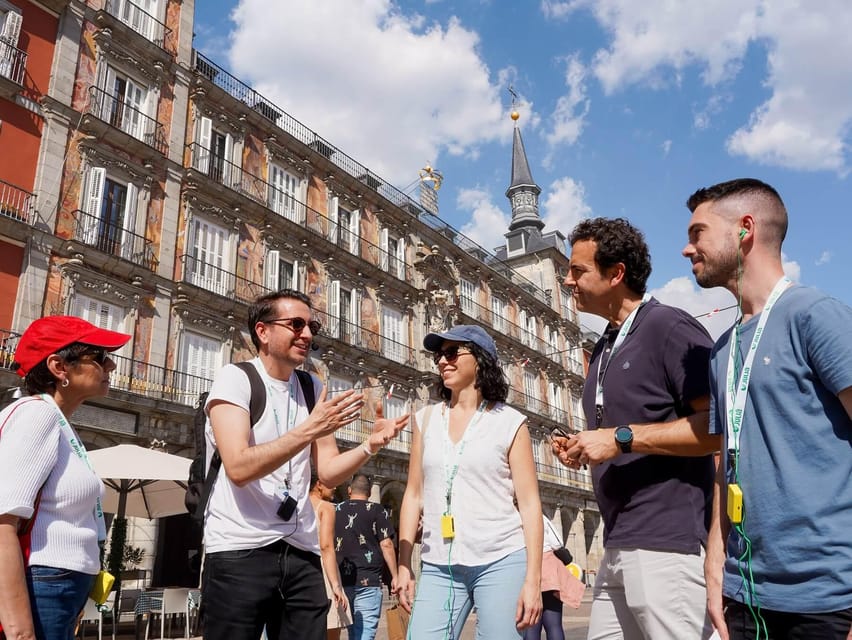
You’ll start at Julia Travel, C/ San Nicolás 15, right by Plaza de Ramales. I like this kind of meeting setup because it’s central enough that you’re not fighting transit just to begin.
Plan on being early. This tour includes both a walking section and then a bus ride, so the group will want to get moving quickly after the check-in. Bring comfortable shoes—the walk goes through the compact historic core, and you’ll feel every cobblestone after a while.
One more practical note: the tour is guided in English and Spanish, and there’s a radio guide system. That matters in Madrid, where streets can get noisy and gaps in attention can mean you miss a key detail. With the radio, you’re not constantly trying to hear someone over the city.
You can also read our reviews of more tours and experiences in Madrid

Historic Core on Foot: Calle Mayor, Plaza Mayor, and Puerta del Sol
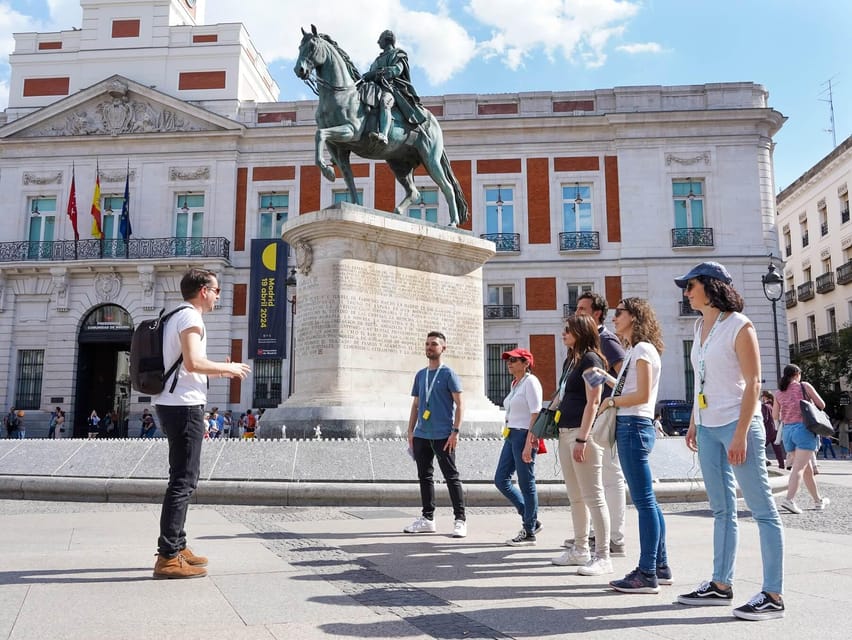
The experience begins with a 1-hour guided walking tour through the old city center. Your route threads together the places that help you understand how Madrid became Madrid—medieval street patterns, classic plazas, and the ceremonial-feeling spots that locals still use every day.
You’ll pass along Calle Mayor and then move toward Plaza de la Villa. These early stops matter because they set your bearings. Instead of jumping straight to the most famous gate, you first learn how the city’s center was shaped—where foot traffic naturally flows, and why some plazas ended up as gathering points.
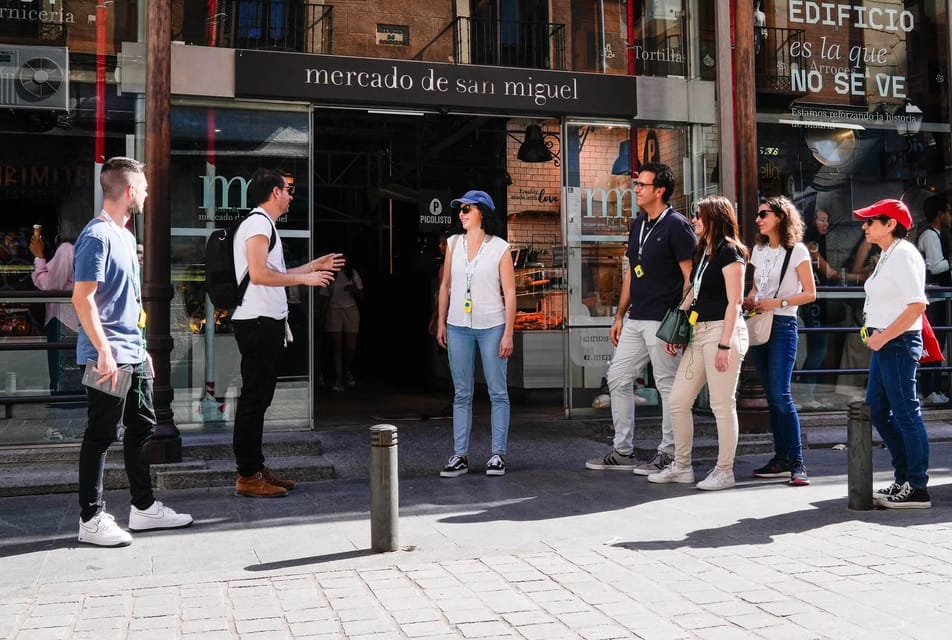
Next comes San Miguel Market. Even if you don’t buy anything, it’s a useful stop. It’s the kind of place where you can see how Madrid mixes tourism with local routines. It also gives you a small reset before you head into the bigger, more iconic squares.
From there, you hit Plaza Mayor and then Puerta del Sol. This is where the tour starts to feel like real orientation: Plaza Mayor helps you see how a city-square became a social and political center, while Puerta del Sol gives you the everyday pulse of Madrid. You’ll get why it’s always busy and why it’s used as a landmark point of reference.
You also walk past Teatro Real and up toward Plaza de Oriente. Teatro Real is one of those classic buildings you notice most when you’re standing near it, not just seeing it from a bus window. Plaza de Oriente is important too because it sits at the base of the ceremonial axis leading toward the Royal Palace.
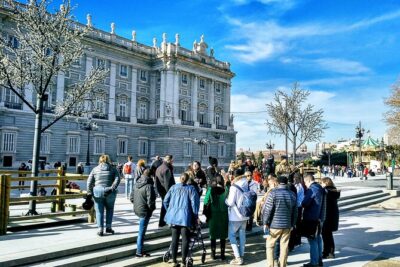
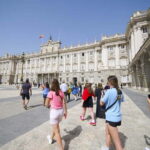
Finally in the walking portion, you cover the area near the Royal Palace of Madrid. Even without going inside, the stop helps you connect the buildings you’ve seen on postcards with the street-level reality. It’s a strong moment to pause and take photos from the right angles—especially if you’re building a visual map for later exploration.
Royal Palace Views to Puerta de Toledo: The bus ride that strings it all together
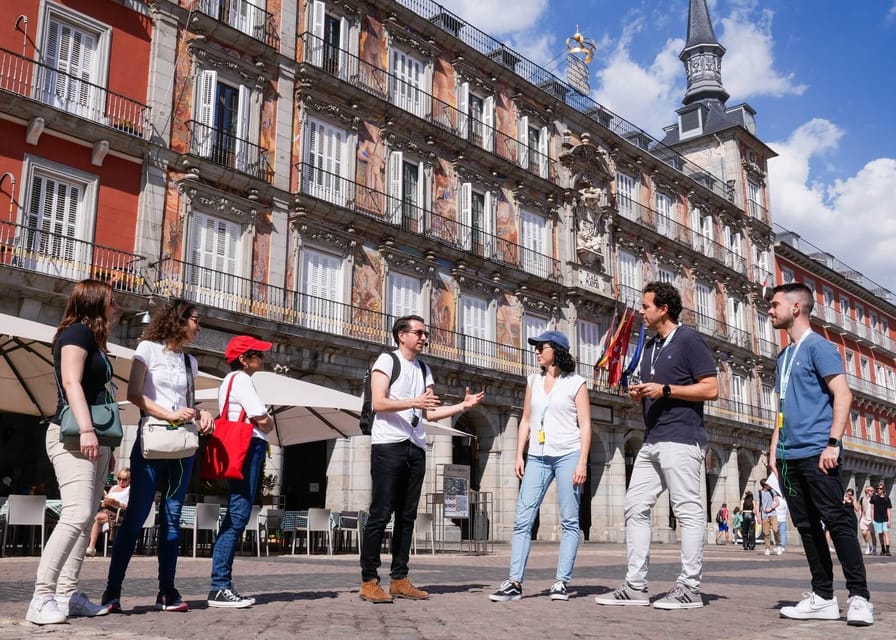
After the walking start, you board an air-conditioned bus for the main loop. This is one of those choices that pays off in Madrid. You get distance and comfort, but you also keep enough sight stops to make the whole thing feel like a guided route—not just a long drive.
You leave Plaza de Oriente and head toward Puerta de Toledo, a gate dating back to the Napoleonic era. That historical tag gives the stop more punch. You’re not just seeing a pretty structure; your guide helps you connect it to the city’s changing political eras.
Then you get views toward the Manzanares River and the surrounding area. This is where Madrid often wins people over: the city looks surprisingly open from river-adjacent viewpoints, and the Royal Palace and Almudena Cathedral become part of the same visual scene. If you like photography, this portion is useful because it offers perspective you can’t easily recreate just by wandering.
You also pass Plaza Mayor again by bus and then continue toward Paseo del Prado. On this stretch, you’ll see Puerta del Sol along the drive and roll through more of the historic grid you saw earlier—just from a moving vantage point.
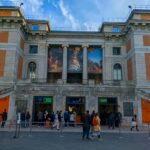
Then there’s the Prado Museum. The tour doesn’t turn into a museum visit, but the bus stop and the explanation help you understand why this corridor is so important. Even a quick look helps you place the Prado within the wider cultural geography of the city.
Next you cruise by Plaza de Cibeles and the Cibeles Fountain area. This stop is great for fans and photo-takers because the fountain is tied to Real Madrid celebrations. It’s one of those spots where sport culture spills right into public space.
Puerta de Alcalá and Las Ventas: Big landmark energy without the long waits
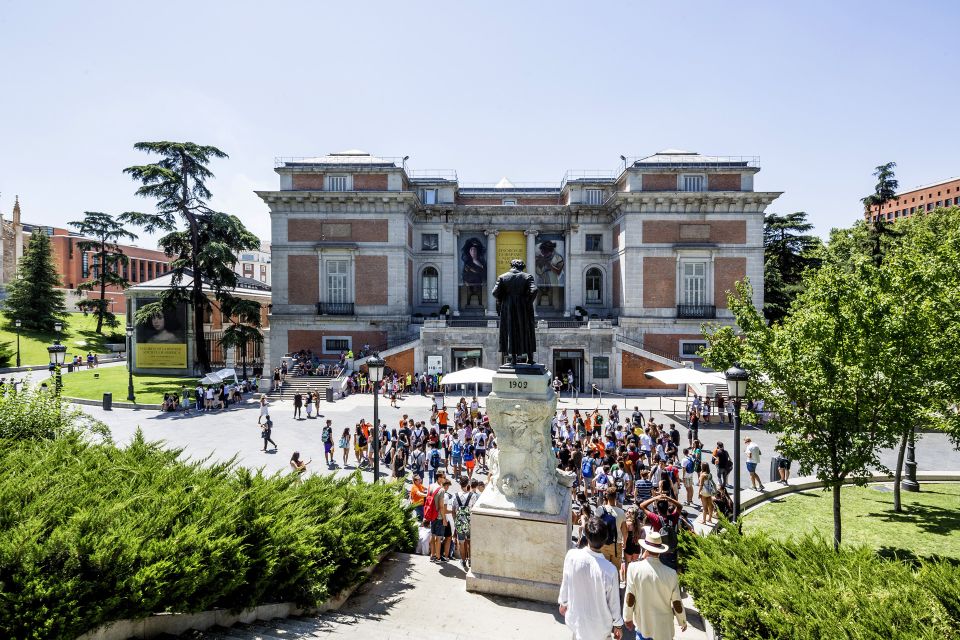
The loop includes Puerta de Alcalá, one of the most famous ancient gates into the city. This is a top sight for a reason. It has that classic Madrid-meets-European-empire feeling, and it’s the kind of landmark that anchors your mental map. When you later walk around the area on your own, you’ll understand where everything fits.
Another key moment is the Las Ventas bullring stop. This is where the tour adds value beyond what you could do with a smartphone and a general guidebook. Your guide shares context about the monument, so when you step out for photos, you know what you’re looking at—why it matters, and why it’s such a recognizable part of Madrid.
If you care about bullfighting history or architecture, this is one of the most meaningful stops on the route. If you’re not into that subject, don’t stress—you’ll still leave with a better sense of how Madrid treats tradition in a modern city.
After Las Ventas, the bus keeps rolling along major corridors, and that’s important. Madrid rewards people who understand the city’s “grid of movement.” You’re getting that sense without needing to plan multiple transit lines.
Modern Madrid finish: Gran Vía, Paseo de la Castellana, and Bernabéu
The tour ends with a modern Madrid mix that gives contrast to the old streets you walked earlier. After the bullring, you move along Paseo de la Castellana and the Gran Vía area—often called the Broadway of Madrid. You’ll see the scale change right away: the architecture gets taller, the streets feel more like a city-with-a-capital-C.
You’ll also get to the Santiago Bernabéu stadium area. Even if you’re not a football superfan, the stop helps you understand Madrid’s modern identity. It’s a landmark that locals treat like civic space, not just sports infrastructure.
From there, you loop back near the Atocha Railway Station area. This matters because Atocha is one of Madrid’s key transit hubs. Getting a quick look helps you connect the old-and-new story: Madrid’s historic core is full of walkable charm, while the station zone shows how the city functions today.
The tour concludes back toward the Plaza de Oriente finishing point, leaving you in a strong area for onward plans.



Price and value: Is $39 worth it for 3 hours?
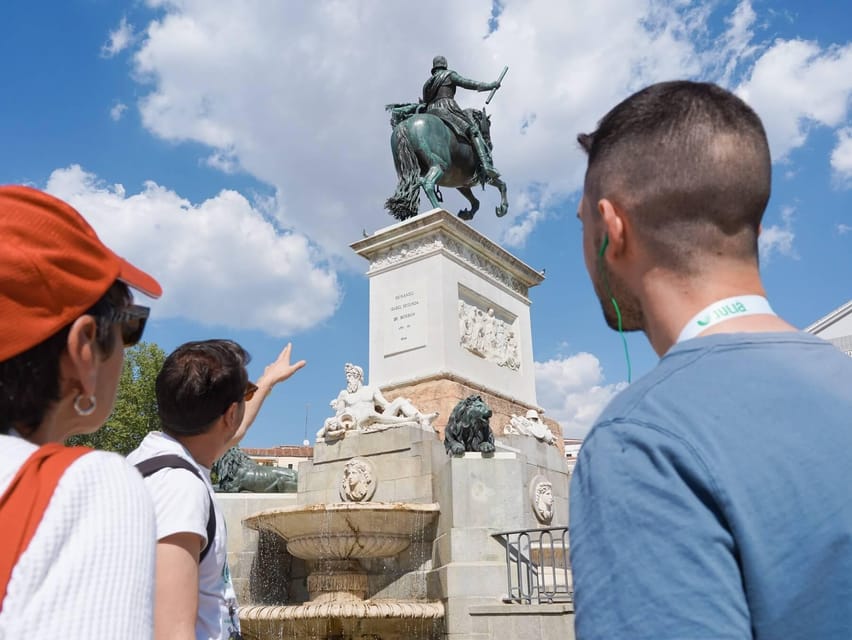
At $39 per person for a 3-hour guided experience, this tour aims at a very practical goal: see a concentrated set of Madrid icons with less hassle than DIY planning. You’re paying for three things: the guide’s route knowledge, the logistics of transport, and the radio system that keeps the group moving as one.
Included value you’ll notice right away:
- Air-conditioned bus for the big segments
- Professional local guide fluent in English and Spanish
- Walking tour in the city center so you start with context, not just sights from a distance
- Radio guide system, so commentary stays audible while you’re on the move
What you should mentally budget for:
- Food and drinks are not included, so you’ll likely want to eat before or after.
- There’s no hotel pickup, so plan to reach the meeting point yourself.
Also, the price tends to work best if you’re short on time or if you want a guided route to reduce decision fatigue. If you’re the type who enjoys slow independent wandering, you might skip this and cobble together your own stops. But if you want maximum “I’ve seen the key stuff” per hour, $39 is a reasonable trade.
One more balanced caution: a negative experience was reported where a guide left a guest mid-tour after stopping for a photo. That’s not the norm you should expect, but it highlights a simple habit I recommend—if you step away for any reason, stay close enough to be found fast and keep an eye on where your group is headed.
Who this tour fits best (and who should think twice)
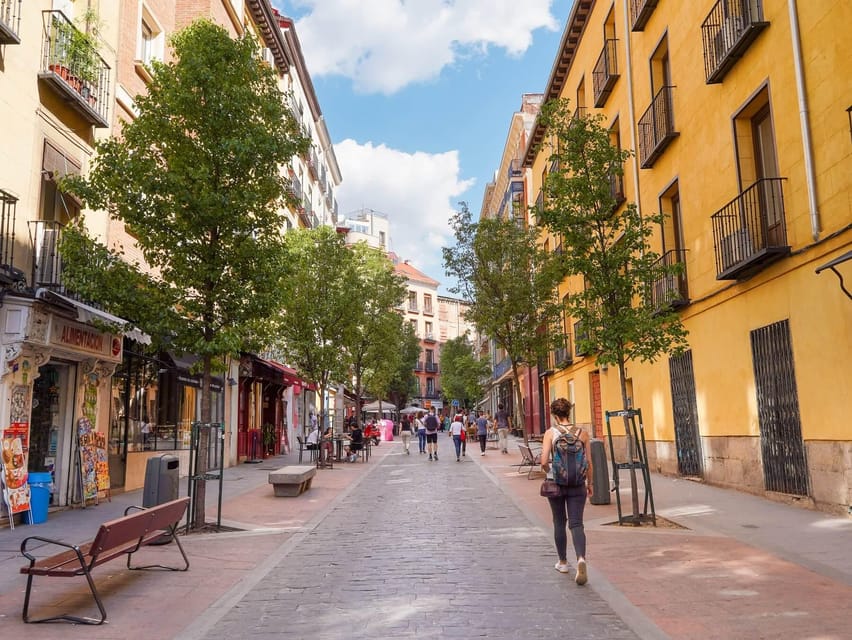
This is a strong fit if you:
- Have limited time and want a structured overview
- Like a mix of old squares and modern streets
- Want an easy entry point into Madrid with a guide explaining what you’re seeing
- Appreciate photo stops with context, not random snapshot wandering
It’s also a decent choice for families with older kids, but keep in mind unaccompanied minors aren’t allowed. If you’re traveling with younger children, you’ll want to make sure everyone can keep up with the pace.
If you use a wheelchair, the tour is described as accessible with a folding chair and an accompanying person who can assist thoroughly. That’s helpful info—just make sure you bring the folding chair you’ll need, and plan for the walking portions.
If you hate being rushed, or you want deep museum time, this isn’t designed for that. You’ll see the Prado area from the outside, not as a long interior visit.
Should you book this Madrid 3-hour sightseeing tour?
I’d book it if you want a fast, guided “greatest hits” route that covers Puerta del Sol, Plaza de Cibeles, Puerta de Alcalá, Las Ventas, and the Bernabéu/Gran Vía modern sweep—without requiring you to piece together buses and walking directions.
I’d skip it if you prefer slow, independent wandering with lots of stops staying open-ended, or if you plan to spend serious time inside museums and historic buildings. This tour is about movement and orientation, not lingering.
If you do book, show up early, wear comfortable shoes, and keep track of your group whenever there’s a photo moment. Do that, and you’ll come away with a solid sense of where Madrid’s past and present intersect.
FAQ
How long is the Madrid sightseeing tour?
The tour runs for 3 hours total, with a guided walking start in the historic center and then time on an air-conditioned bus for the main sights.
Where does the tour start and where does it finish?
It departs from Julia Travel at C/ San Nicolás 15 (next to Plaza de Ramales) and finishes at Plaza de Oriente, 28013 Madrid.
Does the tour include walking?
Yes. It starts with a guided walking tour through central Madrid and includes short walking segments at multiple stops, so comfortable shoes are important.
What’s included in the price?
The tour includes air-conditioned bus transportation, a professional local guide fluent in English and Spanish, a walking tour, and a radio guide system.
Are food and drinks included?
No. Food and drinks are not included, so plan to grab meals before or after your tour.
Is this tour wheelchair accessible?
It is described as accessible for wheelchair users who have a folding chair and who must be accompanied by someone who can assist them thoroughly.