REVIEW · MADRID
Madrid: Tour of the Historic City Center
Book on GetYourGuide →Operated by Madrid auf Deutsch · Bookable on GetYourGuide
Madrid’s historic center is the perfect “first bearings” walk. This 3.5-hour tour threads together royal landmarks, Golden Age street life, and the architectural fingerprints of Madrid’s older eras, built during the Habsburg Dynasty. You start at Puerta del Sol, then keep moving past major sights and smaller side streets where the city’s real personality shows up.
I particularly like how much local context you get along the route—history, architecture, and the little anecdotes that make the buildings feel less like postcards. I also like the practical restaurant suggestions and tourist-trap warnings, because Madrid is full of places that look great until you check the bill.
One thing to think about: it runs rain or shine, so wear something you’ll tolerate for a good long stroll through old streets and plazas.
In This Review
- Key highlights to look for
- First steps: Puerta del Sol and the Habsburg Old Center
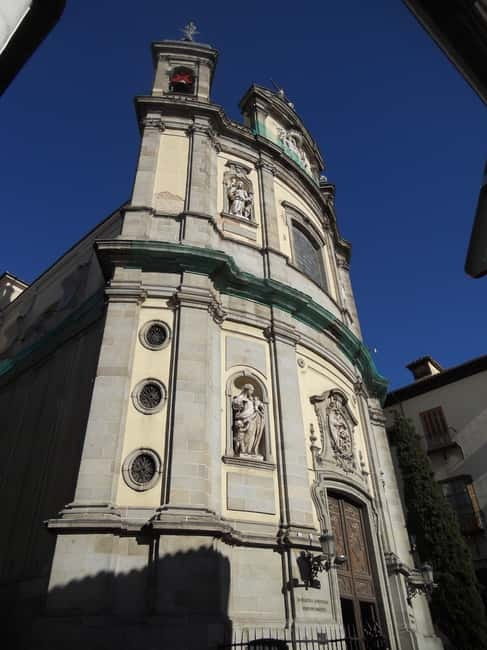
- The Church of San Ginés and the Convent of Las Descalzas Reales
- Royal Palace area: Plaza de la Villa and the Palace of Councils
- Torre de los Lujanes: a small landmark with a long shadow
- Royal views without the rush: Royal Palace and Almudena Cathedral
- Monastery of Corpus Christi las Carboneras and Plaza de la Paja
- Cava Baja: tapas street time with a local lens
- Market of San Miguel: covered food culture and people-watching
- Plaza Mayor and the Golden Age mood
- Literary Quarter: stories that make streets feel like chapters
- Optional terrace view at the end
- Pricing and value: what you really get for $46
- Who should book this Madrid historic center tour
- Should you book it?
- FAQ
- How long is the Madrid historic city center tour?
- Where does the tour start and end?
- What language is the tour guide?
- Is the tour guided?
- What’s included in the price?
- Does the tour run in bad weather?
- Is there an option to see something from a terrace?
- Is the tour wheelchair accessible?
- What are the cancellation and payment options?
Key highlights to look for
- Puerta del Sol start point at the bear statue, so you’ll get your bearings fast
- Habsburg-era old center focus, not just a checklist of famous stops
- Golden Age stories tied to the Literary Quarter and the way Madrid lived in its heyday
- Cava Baja tapas street time, with the local vibe and a smart focus on where to eat
- Market of San Miguel + Plaza Mayor pairing, so you go from heritage to people-watching
- Optional viewing terrace at the end, if you want a final photo moment
First steps: Puerta del Sol and the Habsburg Old Center
Most Madrid trips start with a question: where do I even begin? This tour makes that question easy. You meet at Puerta del Sol at the bear statue, a central landmark that helps you orient immediately. From there, you’re not stuck “wandering and hoping.” You’re guided along a route designed to show the historic center as one connected story.
A key theme here is the city’s old core, shaped in the Habsburg Dynasty period. That matters because Madrid’s architecture isn’t random. The streets, squares, and major buildings line up with how Madrid grew into power and administration—especially around court life and major civic spaces. By the time you reach the big monuments, you’ll understand what you’re looking at and why it’s there.
This is also a walking tour with an information-heavy pace. You’ll be asked to keep your eyes up: doors, facades, and street corners often matter as much as the main “big names.” If you like architecture and context, you’ll feel in sync the whole way.
You can also read our reviews of more city tours in Madrid


The Church of San Ginés and the Convent of Las Descalzas Reales
Early on, you pass through neighborhoods where the “main street” feeling fades and Madrid turns quiet and tight. The Church of San Ginés is one of those classic stops that gives you an instant sense of old-city rhythm. Even when you’re not going inside (entrance fees aren’t included), the surrounding setting is part of the experience. It’s the kind of place where the street layout and the building’s presence tell you Madrid has been layered for centuries.
Then you move to the Convent of Las Descalzas Reales. This stop is valuable for the way it shows Madrid’s history beyond kings and palaces. A convent in a royal-era city isn’t just a religious landmark. It connects to how the court and elite lived, sponsored institutions, and helped shape what survived through time.
Practical tip: bring patience for crowd spots around major landmarks. You’ll be close to the action, and old centers tend to get busy. The guide’s pacing helps you stay oriented without feeling rushed.
Royal Palace area: Plaza de la Villa and the Palace of Councils
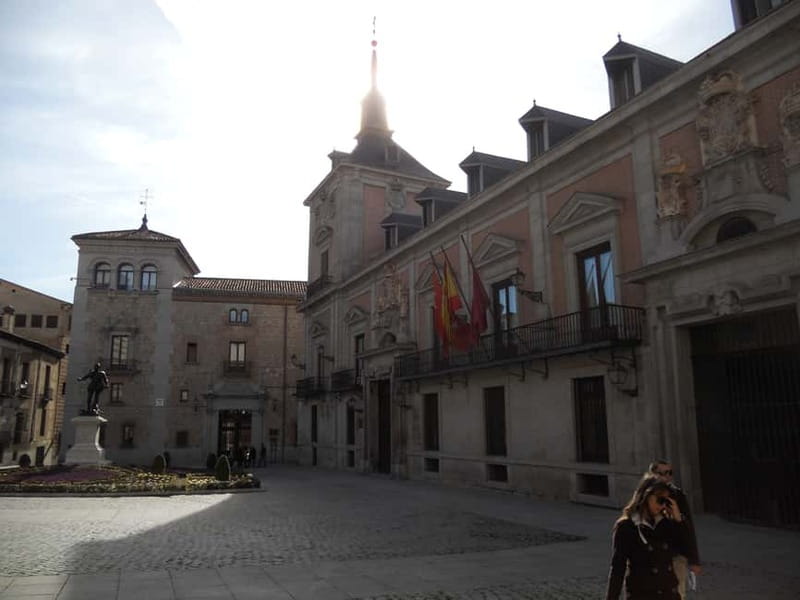
After you’ve warmed up your eye, the tour starts leaning into “big civic power.” You’ll see the Palace of the Councils and the Plaza de la Villa, both part of Madrid’s older administrative world. This is where I like the tour’s approach: it doesn’t treat sights like isolated monuments. It connects them to Madrid’s governance and public life.
You’ll also hear anecdotes and get explanations while you walk. That storytelling piece is a standout. When you know what a building did—who used it, what it signaled, how it fit into the city—photos become less about empty angles and more about meaning.
This part of the walk also helps you understand Madrid’s layout. You start to notice that squares aren’t just pretty. They’re stage-like spaces where people gathered, decisions happened, and the city’s “center” shifted over time.
Torre de los Lujanes: a small landmark with a long shadow
Not every highlight is a massive complex. The Torre de los Lujanes is the kind of stop I love because it keeps you from reducing Madrid to only the obvious names.
Towers in old European cities usually had a purpose beyond decoration—status, prominence, and visibility. Here, you get that sense through the way the guide frames the stop. It’s a reminder that Madrid’s historic center includes details that most people miss when they only chase famous landmarks.
If you’re the type who likes architectural “spotting,” this is one of the moments where you feel rewarded for paying attention to what’s around you.
Royal views without the rush: Royal Palace and Almudena Cathedral
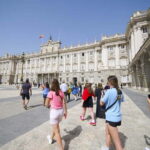
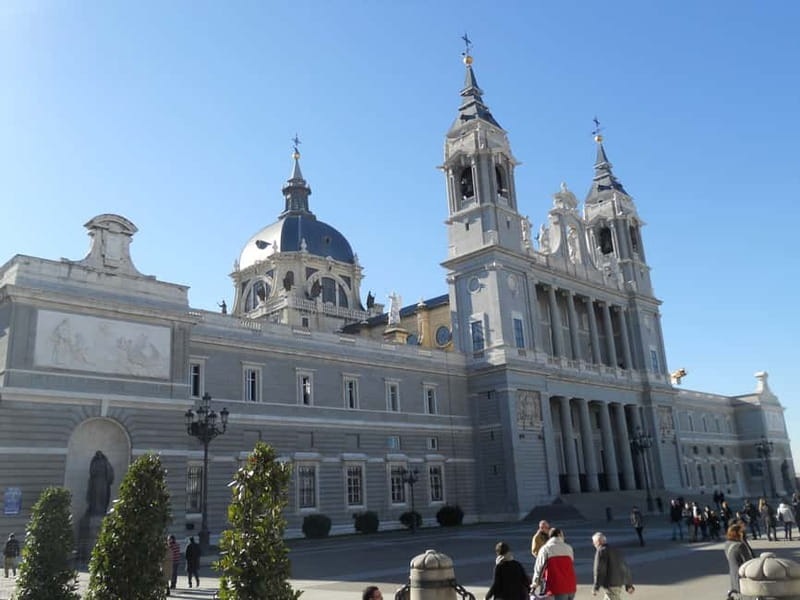
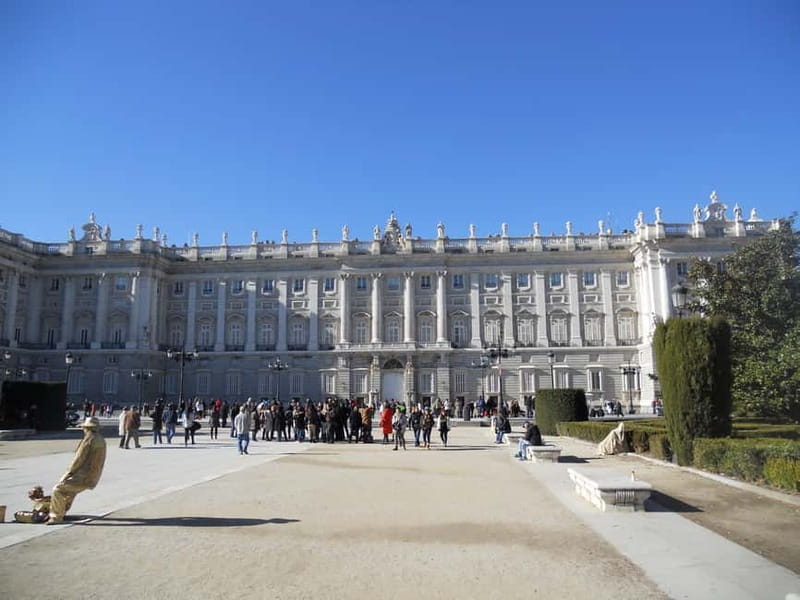
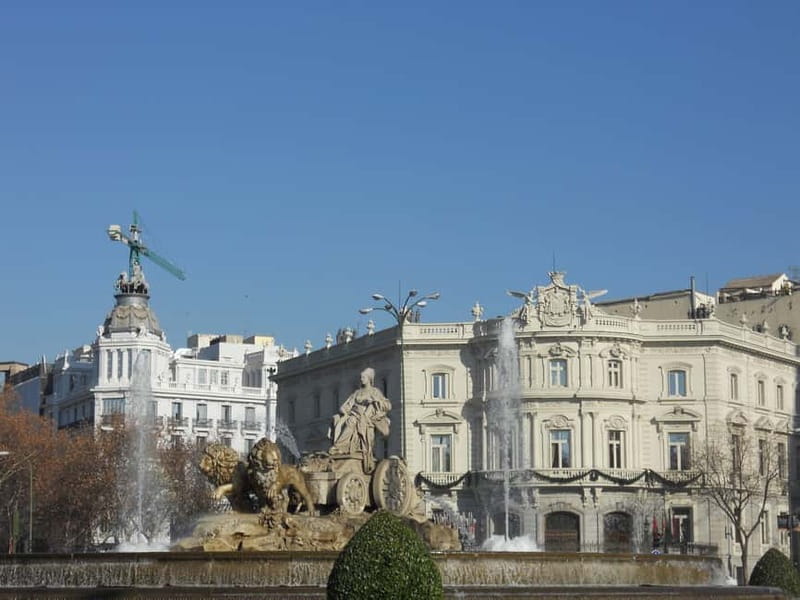
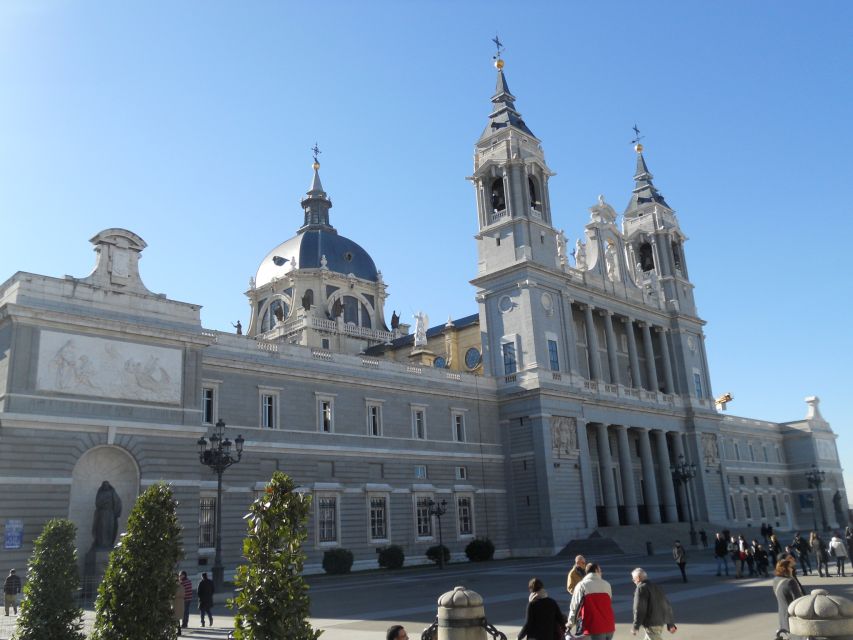
Next up: the Royal Palace of Madrid area and Almudena Cathedral. These are among the tour’s headline moments, and for good reason. They’re visually impressive, yes—but the value is how the tour places them in the city’s larger story.
The Royal Palace connects you to Spain’s royal presence in Madrid, while Almudena Cathedral adds a different kind of power: spiritual and symbolic. Together, they give you contrast. You see how the city expressed authority through multiple channels—court and church—then you keep walking rather than stopping just for one quick photo.
One thing to consider: these areas can feel like magnets for tourists. Going with a guided route helps because you’re not just arriving at “the palace photo spot.” You’re moving through the area with context, which makes even short pauses feel productive.
You can also read our reviews of more historical tours in Madrid



Monastery of Corpus Christi las Carboneras and Plaza de la Paja
Madrid’s historic center changes character street by street. After the bigger royal and cathedral areas, you’ll reach the Monastery of Corpus Christi las Carboneras and then Plaza de la Paja.
This is where the tour slows into something more atmospheric. Plazas like Plaza de la Paja aren’t just backdrops. They’re small-stage public spaces where everyday life can still feel close to the architecture. The monastery stop adds another layer: the city’s older devotional landscape and the role religious institutions played in daily rhythm and patronage.
If you’ve only seen Madrid as a tapas-and-museum city, this part nudges you to see it as a place built for generations, with corners that still hold onto their original function even when the city around them keeps evolving.
Cava Baja: tapas street time with a local lens
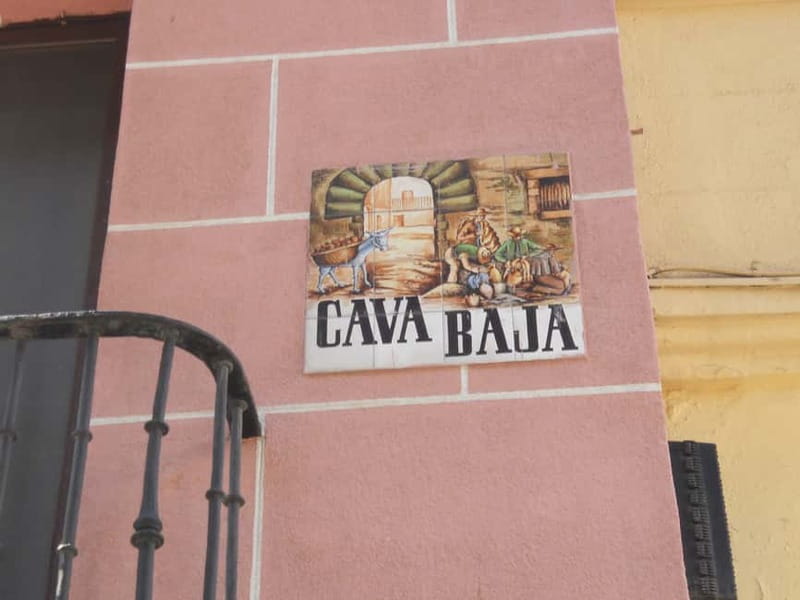
Then comes Cava Baja, famous for taverns and tapas bars. This is one of the smartest parts of the tour because it turns history into present-day Madrid. You get a guided walk through a street known for eating—then the guide’s restaurant suggestions help you aim your appetite.
What I like most here is the connection to the guide’s warnings about tourist traps. Old-town streets can be a minefield if you’re hungry and tired. When someone points out what tends to be overpriced or aimed at outsiders, you don’t just save money—you also protect your trip from ending on a mediocre meal.
Important note: entrance fees aren’t included, but your meal options are about what you choose afterward. The tour doesn’t promise a sit-down lunch. It sets you up to pick well on your own time.
Market of San Miguel: covered food culture and people-watching
Next stop: the covered Market of San Miguel. Even if you’re not planning to eat there, this is a valuable experience. Markets show you the city in high resolution: how people move, what they choose, and the atmosphere of food culture in a concentrated area.
The covered setting matters too. Madrid weather can swing. A covered market gives you a break from sun or rain while keeping you in the heart of the action. It’s also a great place to shift gears: you go from monumental architecture to daily consumption and the modern side of Madrid’s historic core.
If you do want to snack, I’d treat this as a sampling stop. The guide’s restaurant suggestions earlier help you decide whether San Miguel is where you want to spend your next meal budget or just where you want a quick taste.
Plaza Mayor and the Golden Age mood
Plaza Mayor is the kind of place that can feel surreal in person—big enough for an epic photo, yet surrounded by tightly framed energy. You’ll visit it during this tour, and it’s positioned as more than a landmark.
The tour ties Plaza Mayor into the Golden Age storytelling of Madrid, which helps you read the square the way locals might. You start seeing it as a public room for the city: where life gathered, where culture echoed, and where Madrid’s old prominence felt visible.
Also, this is where you’ll likely feel the “walkability payoff.” If you’ve been doing the tour properly—stopping when you’re prompted, listening when the guide explains—Plaza Mayor stops being a stop and becomes a culmination.
Literary Quarter: stories that make streets feel like chapters
The Literary Quarter appears as another highlight. This matters for a specific reason: it takes you away from a royal-only version of Madrid. The city’s identity isn’t only palace and cathedral. It’s also ideas, writing, and the kinds of people who shaped the Golden Age.
When you’re walking through these streets with context, you start noticing patterns in how the city “frames” its cultural life. You’ll understand why certain areas feel tied to intellectual Madrid rather than just commercial or residential life.
The best part is that you leave with a mental map of themes. Instead of remembering “I saw X,” you remember “this neighborhood is where stories and ideas felt at home.”
Optional terrace view at the end
At the end, there’s an optional viewing terrace upon request. I like add-ons like this when they’re genuinely useful. A terrace view helps you reset your perspective after hours of close-up walking. You get the sense of how the historic center sits in the wider city, and you’ll spot landmarks you may have missed at street level.
Since it’s optional, you can choose based on energy. If you’re still sharp after the walk, take the view. If not, you can skip it and head out already knowing the route you followed.
Pricing and value: what you really get for $46
$46 per person for a 211-minute guided tour is a solid value when you compare it to the alternative: trying to stitch together a historic Madrid route on your own.
Here’s why the price makes sense in practice:
- You’re getting a live German-speaking guide who connects sights into an understandable path.
- You get stops at key monuments, including Royal Palace and Almudena Cathedral areas, plus multiple historic squares.
- You receive additional tourist information, including restaurant suggestions and a warning about tourist traps—that alone can save you money and time.
- Entrance fees aren’t included, so you’re paying for guidance and routing, not for indoor tickets.
The only caution is that the tour is built for walking and listening. If you hate group pacing or need long seating breaks, you might find the experience less comfortable. But if you like guided context and want smart help navigating the center, this price is in the “good deal” zone.
Who should book this Madrid historic center tour
This tour fits best if you:
- Want a first-time Madrid foundation built around real context, not just photos
- Like history told through architecture and street layout
- Plan to eat in old-town areas and want useful guidance for where to go
- Prefer a structured walking route that starts at a central landmark (Puerta del Sol) and brings you back
It’s also a strong fit for travelers who want to come away with a working map. After the tour, you can mark further attractions and taverns on your map to explore later—useful if you want to keep the momentum going independently.
Should you book it?
Yes, I’d book this if your goal is to understand Madrid’s historic center quickly and confidently. The standout strengths are the local information style and the mix of major sights (Plaza Mayor, Royal Palace area, Almudena Cathedral) with the everyday Madrid stops (Cava Baja and San Miguel Market). You finish the walk with both perspective and practical next steps.
Skip it only if you’re not into guided walking or you’d rather choose sights at your own pace with no “tour route logic.” For everyone else, this is a well-priced way to turn Madrid’s center from a collection of monuments into a place that actually makes sense.
FAQ
How long is the Madrid historic city center tour?
It lasts 211 minutes, about 3.5 hours. Starting times vary, so you’ll want to check availability for the schedule.
Where does the tour start and end?
The tour starts at the bear statue in Puerta del Sol, Madrid. It ends back at the same meeting point.
What language is the tour guide?
The live tour guide is German.
Is the tour guided?
Yes. It includes a guided tour with stops at the sights and additional tourist information.
What’s included in the price?
The tour includes the guided experience, stops at the sights, additional tourist information, a warning about tourist traps, and restaurant suggestions. Entrance fees are not included.
Does the tour run in bad weather?
Yes, it takes place rain or shine.
Is there an option to see something from a terrace?
A viewing terrace is available at the end of the tour upon request.
Is the tour wheelchair accessible?
Yes, it is wheelchair accessible.
What are the cancellation and payment options?
You can cancel up to 24 hours in advance for a full refund. There’s also a reserve now & pay later option to keep plans flexible.