REVIEW · MADRID
Madrid Best Walking Tour: Old city and Royal sites
Book on Viator →Operated by BEST MADRID TOURS · Bookable on Viator
Egypt meets royal Madrid on foot. That contrast is the charm of this 2.5-hour walk: you’ll move from an Egyptian temple turned Madrid landmark to the plazas that frame the Spanish monarchy. I love how the tour gives you a fast overview of the city’s key neighborhoods without needing a map brain.
I also like that the guide leans into day-to-day local life, not just monuments—expect practical suggestions for where to eat, drink, and keep exploring after the tour. One thing to consider: this is an outdoor-heavy stroll with a lot of walking and some stairs, so wear shoes you trust and don’t plan on long indoor museum time.
In This Review
- Key highlights to look for
- Getting your bearings fast around Madrid’s old core
- Templo de Debod: an Egyptian temple dropped into Madrid history
- Parque del Oeste views: the hilltop perspective that explains Madrid
- Plaza de España and Plaza de Oriente: Cervantes meets royal power
- Plaza de España: Don Quixote at the center
- Plaza de Oriente: the “royal stage” feel
- Almudena Cathedral and the Royal Palace area (outside): big history, no museum ticket needed
- Calle Mayor to Plaza de la Villa: old Madrid on stone pavement
- Calle Mayor: a historical main street
- Plaza de la Villa: the ancient town square heartbeat
- Mercado San Miguel and Plaza Mayor: tapas culture meets the city’s big stage
- Plaza Mayor: the main square with drama in its past
- Guide style, pacing, and what to wear
- Price and value: why $36.30 can make sense
- Should you book this Madrid Old City and Royal Sites walk?
- FAQ
- How long is the walking tour?
- Where does the tour start and end?
- What time does it start?
- What language is the tour in?
- How big is the group?
- Are inside visits or museum entries included?
- Are admission tickets included?
- What should I do about getting to the meeting point?
- Is cancellation refundable?
- Is the tour suitable for someone with mobility needs?
Key highlights to look for
- Small group (max 18): more back-and-forth, and your questions don’t get lost in the shuffle.
- Debod Temple + sunset-style hill views: you get ancient context and the kind of sightlines you’d miss if you only stick to central streets.
- Royal framing in plaza form: you see the Royal Opera House and Royal Palace area from the outside, explained clearly.
- Calle Mayor and old squares: history you can actually walk through, with stops placed for how the city feels.
- San Miguel Market stop: a straightforward chance to taste the tapas culture near the old core.
- Guides with strong storytelling: names like Maria, Ignacio, and Ana show up in past group experiences, often with strong English and art/history perspective.
Getting your bearings fast around Madrid’s old core
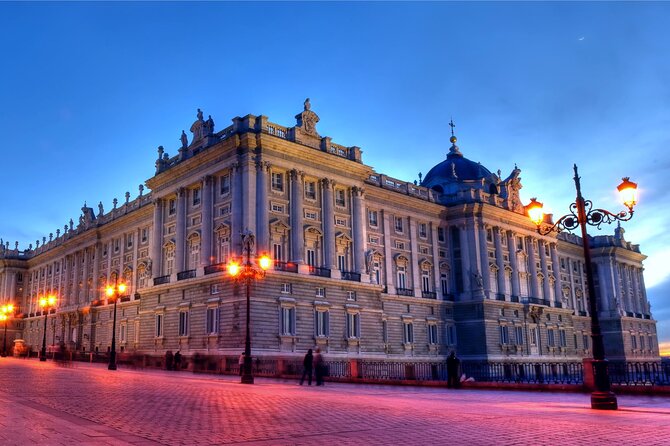
If this is your first time in Madrid, you’ll appreciate how this tour is set up like a route, not a checklist. You start in the Moncloa-Aravaca area and finish near Plaza Mayor, so you end in a place that’s easy to reconnect with the metro, buses, or a quick cab back to your hotel.
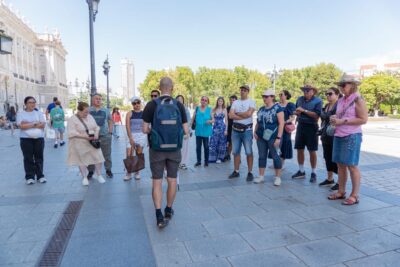
With a duration of about 2 hours 30 minutes, the pace is enough to cover major sites while still letting you stop for photos and listen closely. The group size stays small (up to 18), and multiple past guests called out that the guide manages the walk well—so you’re not stuck sprinting to catch up with a big crowd.
Bring good walking shoes. The sites include plaza-hopping and some elevation, and at least one guest specifically noted stairs. It’s not a marathon, but it’s not a sit-on-a-terrace tour either.
You can also read our reviews of more walking tours in Madrid



Templo de Debod: an Egyptian temple dropped into Madrid history
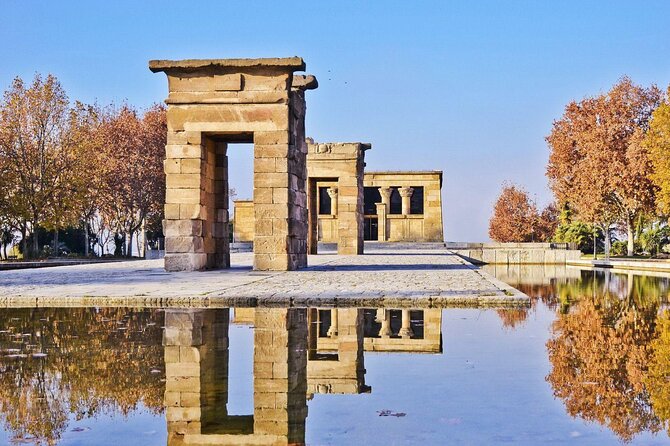
Stop one is the Templo de Debod, and it’s exactly the kind of start that makes Madrid feel surprising. This temple is an Egyptian monument that was dismantled and rebuilt in Madrid stone-by-stone. It’s over 2,200 years old and was consecrated to the god Amon.
Why this matters for you: you’re not just seeing an object. The guide frames it as a story of rescue, relocation, and the way Madrid layers cultures. You’ll get context for what you’re looking at, which makes the photos more than just snapshots.
What you’ll likely feel here is a “wait, I’m in Spain” moment. That mental jolt is useful later, too, because you’ll recognize how Madrid borrows from the world while still acting like a proud local city.
Practical note: this stop includes an admission ticket, and the time on-site is short, so be ready to look closely right away. If you want extra linger-time, treat the tour timing as your first pass—then come back on your own.
Parque del Oeste views: the hilltop perspective that explains Madrid
From Debod, you head toward Parque del Oeste for one of the best panoramic angles in town. The key idea here is the viewpoint: this is the kind of spot where the city’s layout starts making sense. You’ll also hear about the idea that the city’s origins tie back to the area around the IX century from this hilltop perspective.
This is a great stop for two reasons:
- It anchors the tour visually. After a few plazas, you can look back and remember how the city “sits.”
- It gives you a breath. Even when you’re on a tight schedule, a view stop resets the energy.
The tour gives you about 10 minutes here, so again: don’t wait for perfect light. Look first, then decide if it’s worth stretching your own schedule later.
Plaza de España and Plaza de Oriente: Cervantes meets royal power
Next you roll into the plaza world—Madrid’s outdoor rooms where art, literature, and politics overlap.
Plaza de España: Don Quixote at the center
At Plaza de España, you’ll spot the statue tribute to Don Quixote and his writer, Miguel de Cervantes. It’s a quick stop, but it’s a smart one. Cervantes is one of the cultural anchors of Spain, and seeing him here helps you connect the literary Madrid to the modern city around it.
If you’ve read Don Quixote, you’ll notice the statue isn’t just decoration. The guide’s framing usually turns it into a symbol of how Spanish identity likes to play with storytelling and character.
You can also read our reviews of more city tours in Madrid





Plaza de Oriente: the “royal stage” feel
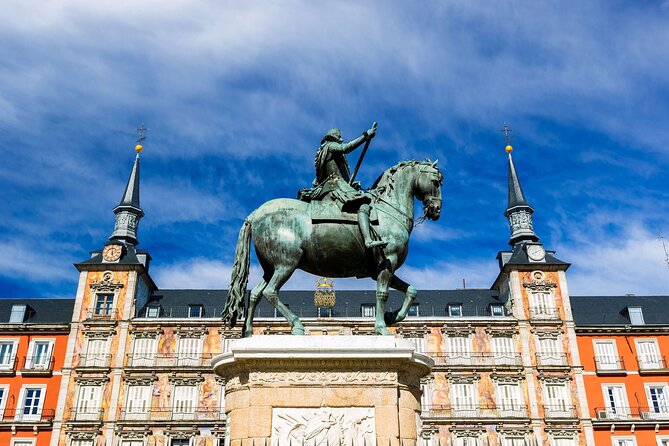
Then comes Plaza de Oriente, and this is where the tour leans into the royal look of Madrid. You’ll hear about the monumental square and its collection of 20 stone sculptures of ancient Visigoth kings of Spain. It’s also flanked by the Royal Opera House and the Royal Palace.
At the center, there’s an equestrian bronze sculpture of King Philip IV, and the tour credits the artwork to Galileo Galilei and Velázquez. Even if you’re not an art history person, this detail pays off—you start to see why these plazas are treated like outdoor museums.
One drawback, just in case: because it’s a quick stop, you won’t have time to read everything on every plaque. I’d treat this as the orientation you need, then use your favorites for a longer self-guided detour later.
Almudena Cathedral and the Royal Palace area (outside): big history, no museum ticket needed
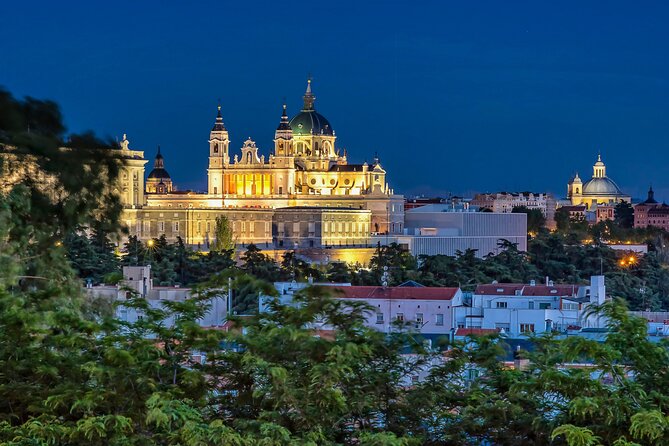
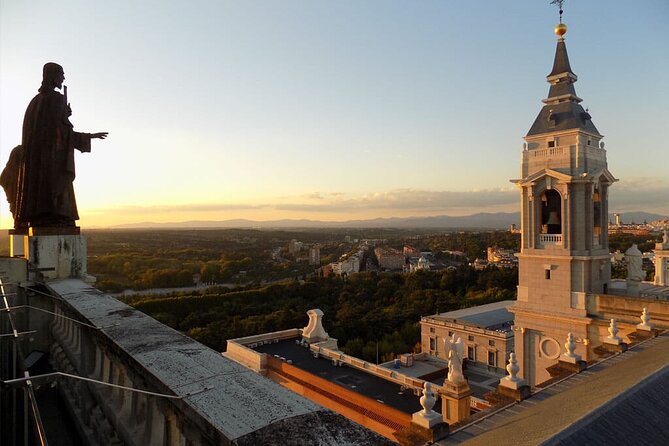
You then shift to the Catedral de Sta Maria la Real de la Almudena. The tour focuses on what you can see from the outside and explains the cathedral and its setting. This matters because Almudena’s surroundings are part of the story—Madrid didn’t grow in isolation, and the way religious architecture sits within the civic fabric is a lesson in itself.
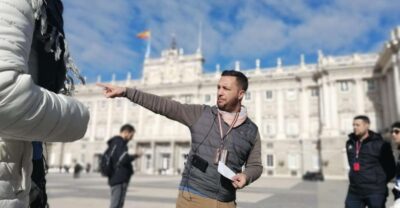
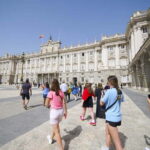
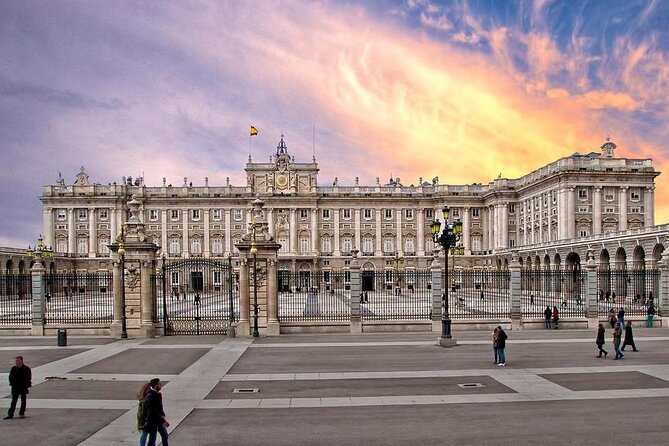
After that, you visit the Royal Palace of Madrid—again, outside. The palace is the official residence of Spanish kings, and the guide explains the historical and artistic heritage connected to the building.
Why you’ll probably like this approach: you avoid the time sink of inside visits, but you still get the meaning behind the structure. For many first-timers, outside palace stops are the perfect middle ground—you get the “wow” factor without turning your day into line-waiting.
Also, the tour notes that inside visits to buildings or museums aren’t included. If you want interior time, plan a separate ticketed visit later. This tour is built to get you oriented and impressed, not to replace major museum days.
Calle Mayor to Plaza de la Villa: old Madrid on stone pavement
Now the walk starts to feel more like old-city wandering.
Calle Mayor: a historical main street
Calle Mayor is presented as Madrid’s old main street, lined with stone pavement and narrow streets and alleys. The focus here is the Hasburgs quarter and the sense of walking through a XV-century urban rhythm.
This is the part of the tour that helps you understand why Madrid feels different block-to-block. Even if you only remember one street name, Calle Mayor gives you a spine to explore later.
Plaza de la Villa: the ancient town square heartbeat
Then comes Plaza de la Villa, described as the heart of ancient Madrid. You’ll see the city hall, Plaza de la Villa, and learn about the historical buildings around it. The tour also points out the statue of Álvaro de Bazán, associated with the Spanish Armada.
This stop works well because it’s a “pause” in the walk. Squares are where you can look up, catch your breath, and start noticing details you’d otherwise miss while moving fast.
If you’re the type who likes context—religion, government, politics, and the way ordinary life used to function—this section tends to land well. And if you’re more casual, it still works because you’ll get that classic Madrid-square atmosphere.
Mercado San Miguel and Plaza Mayor: tapas culture meets the city’s big stage
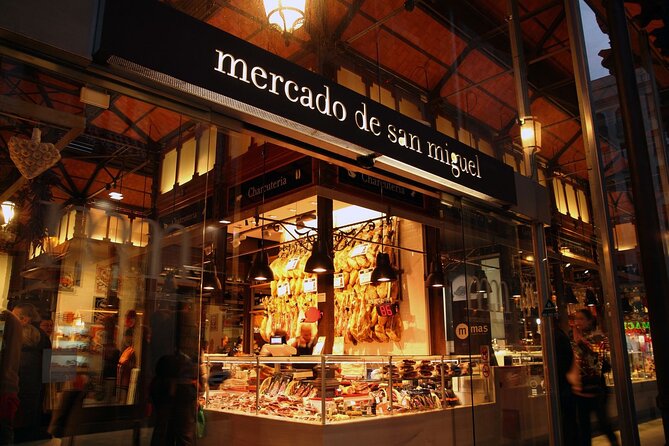
You get the market stop next: Mercado San Miguel. It’s known worldwide for tapas and delicatessen shops, and the tour uses it to tie the historic route to modern Madrid food culture. Even if you don’t eat a full meal here, it’s a great taste of how lively the area is.
A practical tip: keep the market visit flexible. The goal on a short tour is to see, taste a little if you want, and keep your energy for the last stop.
Plaza Mayor: the main square with drama in its past
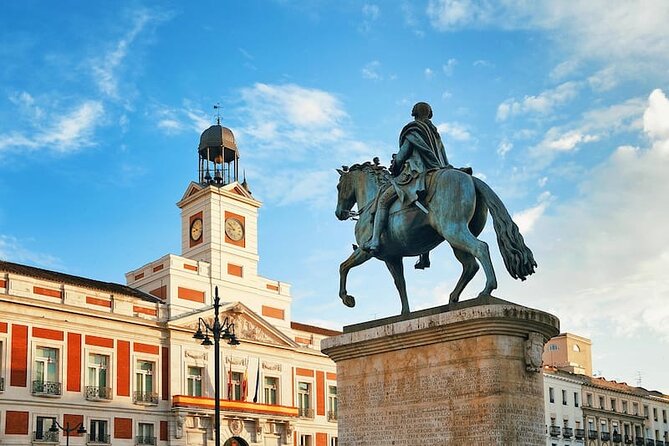
Finally, you reach Plaza Mayor, the old city’s main square. Here’s what makes it more than just pretty architecture:
- It hosted medieval tournaments
- It was the setting for inquisition trials
- It even held bullfights
- The center includes an equestrian statue of Philip III
The square is ringed with restaurants and tapas bars, including some of the oldest taverns of the world (as described in the tour framing). This is the kind of ending that’s useful because it gives you immediate “what now?” options once the tour ends.
You’ll finish at Plaza Mayor (2–22, Centro), which is ideal if you want to keep going on foot or hop on transit quickly.
Guide style, pacing, and what to wear
This experience shines when your guide tells a good story. Past guests specifically praised guides named Maria, Ignacio, and Ana for clear English and history/art perspective. More than one person also said the pacing felt just right, and that ear pieces were helpful when traffic noise got loud.
Here’s how you can set yourself up for an easy day:
- Wear comfortable shoes (the terrain and stairs can surprise you).
- Bring water. The walk is short, but Madrid heat and sun can add up.
- Have your camera ready early, especially for Debod and the hill views.
If you care about accessibility: one guest mentioned the guide made things easy for a wheelchair. The tour also notes that most travelers can participate. Still, you should expect stairs and uneven pavement since these are historic streets and plazas—so it’s smart to plan accordingly.
Price and value: why $36.30 can make sense
At $36.30 per person for about 2.5 hours, the value comes from the mix of:
- A guided route that hits major royal/old-town landmarks
- A small group size (up to 18)
- Built-in admission tickets for the key included stops
- An English-speaking local guide with practical recommendations
Where value can get lost: if you’re the kind of traveler who wants long indoor time in museums and cathedrals. This tour is intentionally outside-focused. You’ll get context, but not full interior visits.
So think of the price as paying for orientation + stories + tickets for the featured stops, not for a deep dive into interiors. If you’re using it as a first-day or second-day Madrid move, it usually pays off fast.
Booking demand is moderate-high: this tour is commonly booked about 33 days in advance on average. If you’re traveling in peak season or have fixed dates, lock it in early so you don’t get pushed into later start slots.
Should you book this Madrid Old City and Royal Sites walk?
Book it if:
- You want a structured first look at Madrid’s old core and royal area without overplanning.
- You like walking tours that include stories and practical guidance on food and exploring.
- You want to see major sights like Debod, Plaza Mayor, and the Royal Palace area in one efficient route.
Skip it (or add a different day) if:
- You mainly want inside museum visits. This one is mostly outside.
- You need lots of time to linger at each site. The stops are time-boxed, so bring curiosity, not patience-by-default.
My bottom line: this is a strong “set your bearings and start enjoying Madrid” tour. It ends where you’ll want to spend more time anyway—Plaza Mayor—and it does it with a mix of culture that feels distinctly Madrid: Egyptian temple magic, Cervantes and royalty in stone, and the everyday energy of tapas culture.
FAQ
How long is the walking tour?
It runs for about 2 hours 30 minutes (approx.).
Where does the tour start and end?
It starts at C. de Ferraz, 22, Moncloa – Aravaca, 28008 Madrid and ends at Pl. Mayor, 2-22, Centro, 28012 Madrid.
What time does it start?
The start time is 10:30 am.
What language is the tour in?
The tour is offered in English.
How big is the group?
The maximum group size is 18 travelers.
Are inside visits or museum entries included?
Inside visits to buildings or museums are not included. You’ll focus on what you can see and learn from the outside.
Are admission tickets included?
The tour includes admission tickets for the listed stops in the route.
What should I do about getting to the meeting point?
Transfers to the starting location are not included, so you’ll need to get there on your own. The meeting point is near public transportation.
Is cancellation refundable?
The experience offers a free cancellation option up to 24 hours in advance for a full refund, and the tour also advertises a refund if you are not 100% satisfied.
Is the tour suitable for someone with mobility needs?
Most travelers can participate, and one review noted the guide accommodated a wheelchair. Expect stairs and historic pavement, so come prepared and consider your route comfort level.