REVIEW · MADRID
Madrid Highlights: Tuk-Tuk Tour w/pick up (2 hours)
Book on GetYourGuide →Operated by GiraMad · Bookable on GetYourGuide
A 2-hour tuk-tuk hits Madrid highlights fast. You’ll glide by iconic monuments and into lively neighborhoods on an electric tuk-tuk, with pickup near Plaza de España so the day starts smoothly. It’s a smart way to get your bearings fast and see a lot without tiring out too early.
I really like the mix of big-name sights and local-area atmosphere—Puerta de Alcalá and Cibeles Fountain share the route with places like Las Letras and La Latina. The tour also feels genuinely personalized, and the multilingual guide experience is a standout; one guide named Francisco impressed me with excellent Portuguese, which made the stories easier to follow. One thing to consider: in a tight 2-hour schedule, some stops are quick scenic passes or short photo moments, and entrance fees are not included.
In This Review
- Key things I’d plan around
- Electric Tuk-Tuk Comfort and Smart Routing
- The Multilingual Guide Factor (Francisco’s Portuguese Standout)
- Start at Plaza de España: The Tour’s Best Opening Move
- Stop notes in this first stretch
- Almudena Cathedral and the Royal-Theater Corridor
- What these stops give you
- Old Madrid Edges: Plaza de la Villa, San Miguel Market, and Arco de Cuchilleros
- Stop-by-stop clarity
- Basilica of San Francisco El Grande and Puerta de Toledo: Big-Cupola Madrid
- How to handle these quick stops
- Literature and Government Area: Lope de Vega, Cervantes, Congress, and Atocha
- What I like about this stretch
- Art and Gardens Axis: Royal Botanical Garden, Museo del Prado, Jerónimos, Retiro
- Practical note
- Retiro to Alcala Gate: A Classic Transition Into the Wider City
- Las Ventas, Salamanca, and Santiago Bernabéu: Madrid with Sports Energy
- What to expect here
- Cibeles and Las Letras: The Endgame of Iconic Madrid
- Price and Value for a Private Group Up to 4
- What to Pack and How to Stay Comfortable
- Who This Tour Is Best For
- Should You Book This Madrid Highlights Tuk-Tuk Tour?
- FAQ
- How long is the Madrid Highlights Tuk-Tuk Tour?
- What’s included in the tour price?
- Are entrance fees to monuments included?
- Where do we meet for the tour?
- What languages is the guide available in?
- Is this tour wheelchair accessible, and is it suitable for young children?
Key things I’d plan around
- Electric tuk-tuk route: You cover more ground than on foot, while still getting views from close by.
- Multilingual guidance: English, Spanish, Portuguese, and Italian, with real storytelling between sights.
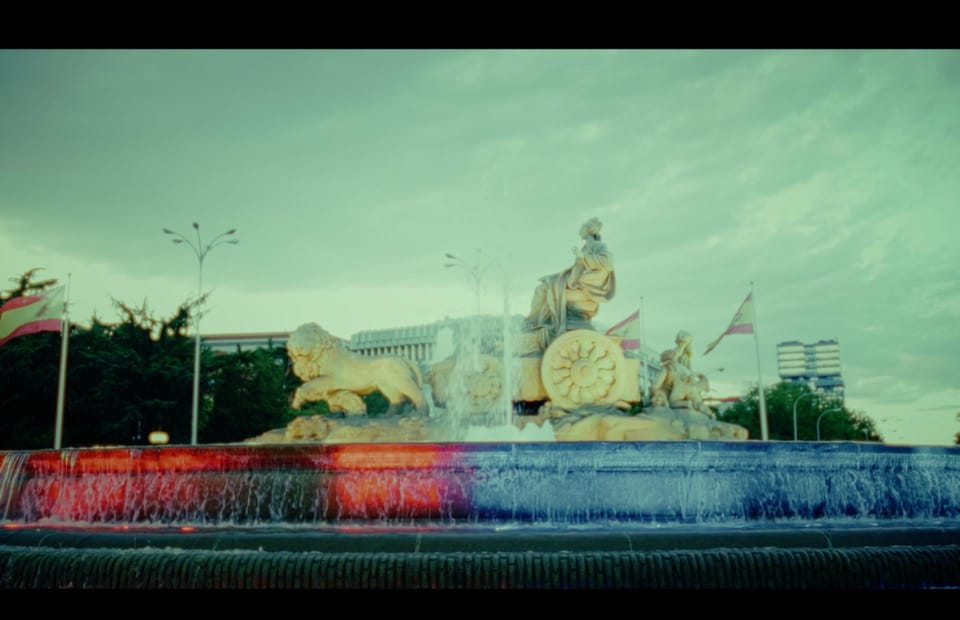
- Iconic photo hits: Puerta de Alcalá, Cibeles Fountain, Las Ventas, and Santiago Bernabéu Stadium show up.
- Old + royal + local neighborhoods: You move between classic landmarks and lived-in areas like La Latina.
- Time to enter select places: You may get enough time to go inside a few standout stops (entrance fees aren’t included).
- Comfort details: Blankets for cold days, plus practical pacing for a 2-hour overview.
Electric Tuk-Tuk Comfort and Smart Routing
This is a classic first-day Madrid move: short duration, lots of variety, and a vehicle that keeps you comfortable. The tuk-tuk is electric, which matters because Madrid streets can feel intense on a long walk, and this lets you cruise while still seeing details along the way.
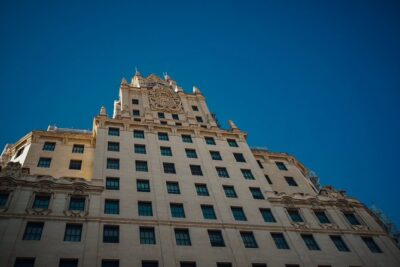
Your start is easy to find: the meeting point is at the Hotel Barceló Torre de Madrid, right in front of Plaza de España and near the metro station of the same name. The tour also ends at Plaza de Santa Ana (Pl. de Sta. Ana, 14), which is great because it drops you in a lively central area without forcing you to backtrack.
Since it’s a private group, you get a more controlled pace and fewer “hold up the whole line” moments. The tradeoff is simple: you’re fitting a lot into two hours. Some stops are photo stops, and others are primarily viewpoints, so keep your expectations calibrated.
Practical note: wear comfortable shoes anyway. You’ll be stepping in and out for photos and brief stops, and you’ll want flexibility for the neighborhoods.
You can also read our reviews of more tours and experiences in Madrid
The Multilingual Guide Factor (Francisco’s Portuguese Standout)
The biggest difference between a generic sightseeing loop and a tour that feels worth paying for is what happens between monuments. Here, that “in-between” is the guide. You’ll get an introduction to Madrid’s history and monuments, plus anecdotes and helpful context designed to make each area click.
The tour operates with live multilingual guides in English, Spanish, Portuguese, and Italian. One experience really stuck in my mind: Francisco, who speaks excellent Portuguese. That kind of clarity changes the whole tone. Instead of just pointing at buildings, you can actually connect what you’re seeing with why it matters.
A good guide also helps with timing. In two hours, the order of sights matters, and the guide can adjust how long you spend at viewpoints so you don’t feel rushed at the wrong moment.
Start at Plaza de España: The Tour’s Best Opening Move
Plaza de España is one of those Madrid squares that quickly sets the rhythm of the city. Even if you’ve only just arrived, it gives you a central reference point and an easy place to launch from. You’ll begin right at Pl. de España 18 and then pick up the broader Plaza de España area for sightseeing and scenic views.
From there, the route aims for “first wow” views early. Temple of Debod is next, and it’s a clever choice for a start: it feels special and photogenic, and it gives you a different angle of Madrid right away. You’ll likely see the city unfold around you rather than staring at a single famous façade.
Stop notes in this first stretch
- Plaza de España: Great orientation. You get a big-sky sense of the city.
- Temple of Debod: A memorable visual stop early on; good for photos and a quick reset.
Almudena Cathedral and the Royal-Theater Corridor
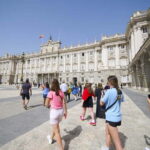
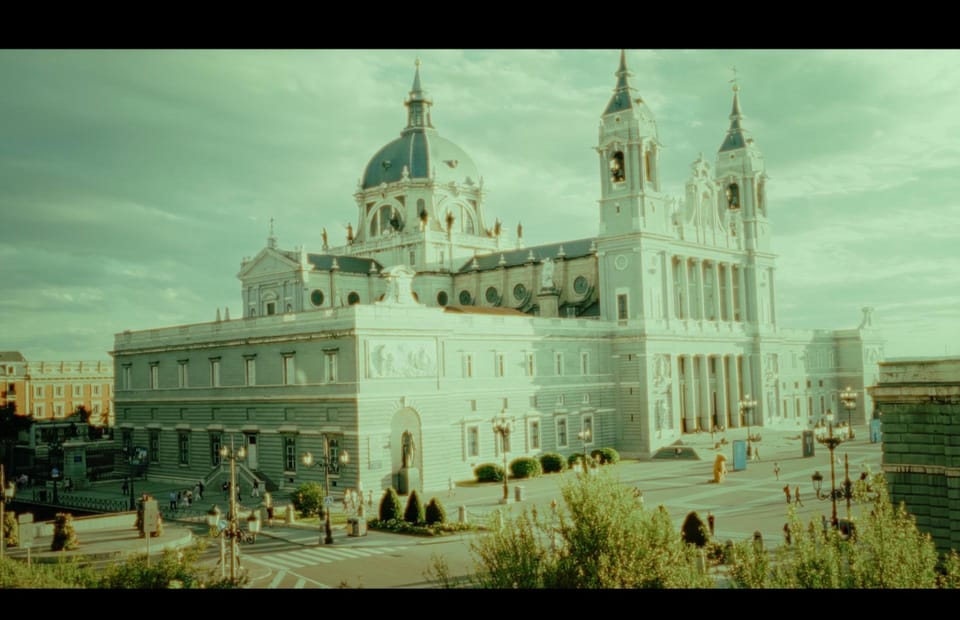
After Temple of Debod, you’ll cruise through areas like Argüelles and other scenic stretches where the goal is the viewpoint. Then you reach Almudena Cathedral, which tends to land well on a short tour because it’s both prominent and easy to recognize from multiple angles.
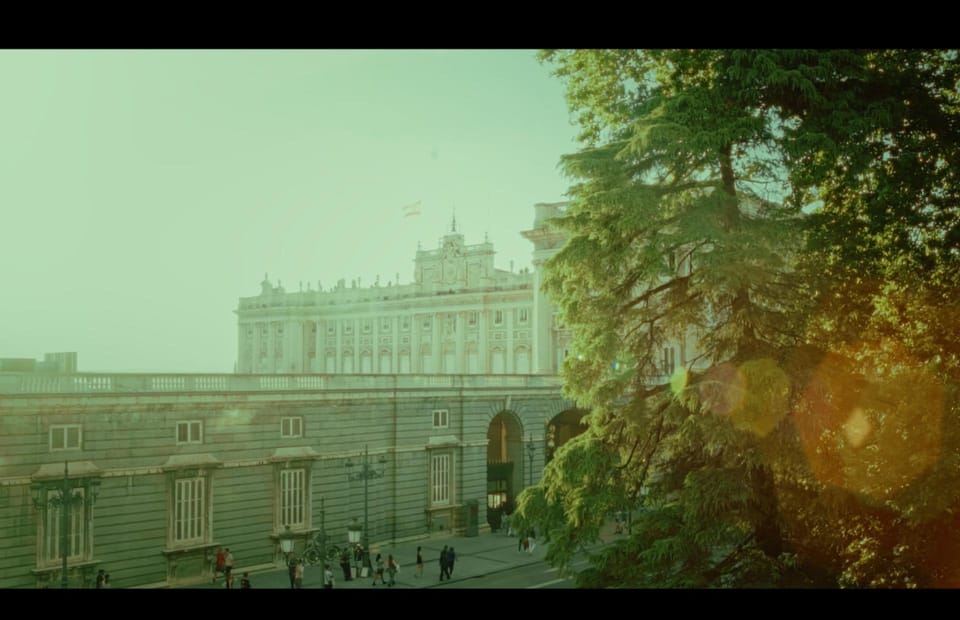
Next comes a photo stop at Palacio Madrid (presented as a stop on the route), followed by Teatro Real (Royal Opera House). This corridor is a nice pivot: you’re moving from monumental Madrid into the cultural-and-institutional side of the city, where buildings feel tightly connected to Madrid’s “official” identity.


What these stops give you
- Almudena Cathedral: A central landmark that makes Madrid feel like a royal capital.
- Teatro Real: A quick hit of culture. Even from outside, it signals the city’s creative side.
If you’re the type who likes to understand how neighborhoods connect, this section is helpful. It’s not just “see it, move on.” The guide is there to connect the dots while you’re traveling between them.
Old Madrid Edges: Plaza de la Villa, San Miguel Market, and Arco de Cuchilleros
Then the route shifts into older, character-rich Madrid. Plaza de la Villa is next, which is exactly the kind of stop that makes you feel the city’s layers. It’s not just one building—it’s the idea of an older Madrid core.
From there you reach the Market of San Miguel. Even if you don’t plan to eat, it’s a meaningful stop. Market culture is a huge part of how Madrid breathes day-to-day, and this is one of the most recognizable places to understand that rhythm.
Next is Arco de Cuchilleros, a small but smart viewpoint stop because arches like this are reminders that old Madrid didn’t grow in straight lines. After that, you roll into La Latina, a neighborhood that’s all about lively streets and authentic feel.
Stop-by-stop clarity
- Plaza de la Villa: Old-city anchor with strong atmosphere.
- Market of San Miguel: A recognizable food-and-market landmark; good for a quick look.
- Arco de Cuchilleros: A brief photo stop that adds texture to the route.
- La Latina: The neighborhood vibe starts to show up in your photos.
One drawback to keep in mind: markets and tight old streets can slow things down, so on a 2-hour plan you’ll want to prioritize short stops and quick photos unless the guide schedules extra time.
Basilica of San Francisco El Grande and Puerta de Toledo: Big-Cupola Madrid
This is one of the tour’s standout “major wow” moments. The Royal Basilica of Saint Francis the Great (San Francisco El Grande) is on the route, with a photo stop that’s listed as about two minutes.
It’s worth focusing here because the basilica’s dome is famous, described as the third biggest dome of a Catholic church in the world. Even if you only get a quick look, it’s the kind of sight that makes you want to learn more—and it’s a strong reason to photograph rather than just pass by.
Then comes Puerta de Toledo, also a brief photo moment (listed as essentially 0 minutes). Translation: you’ll get a look, not a lingering visit.
How to handle these quick stops
For shorter stops, your best move is to treat them like photo checkpoints. If you want interior time, the tour description hints that you’ll have enough time to enter some beautiful places, but it won’t be every stop. When you see the guide making time for entries, prioritize the place that matters most to you.
Literature and Government Area: Lope de Vega, Cervantes, Congress, and Atocha
A really interesting mid-tour stretch is the move from historic literature connections into government and transportation landmarks. You’ll pass Casa de Cervantes and Casa Museo Lope de Vega, which gives Madrid a literary spine. Even without long stops, it helps explain why names like Cervantes and Lope de Vega feel woven into the city’s identity.
Then you reach the Congress of Deputies, followed by Atocha Railway Station. These are not “pretty-photo” stops in the way some monuments are, but they matter because they show Madrid’s modern heartbeat: politics and travel.
Atocha is especially useful because it often acts as a visual reminder of how Madrid functions as a hub, not just a museum.
What I like about this stretch
- You get contrast: literature heritage and modern institutions.
- The guide can help you understand how the city’s story moves forward, not just back in time.
Art and Gardens Axis: Royal Botanical Garden, Museo del Prado, Jerónimos, Retiro
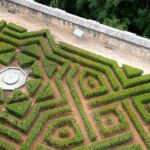
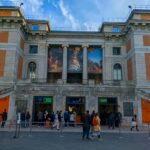
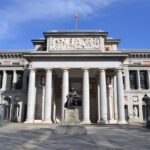
Next, the route flows into one of Madrid’s most important cultural corridors. You’ll visit the Royal Botanical Garden, then Museo del Prado, and then Jerónimos, before cruising through the Retiro neighborhood area.
This part works well on a short tour because it’s not random. It’s Madrid as a capital that prizes art and formal landscapes. Even if you don’t go inside museums (entrance fees aren’t included), the way the route passes these landmarks helps you understand the city’s “centers of gravity.”
If your time in Madrid is limited, this section is a great preview. The Prado especially is the kind of place where people often come back later for a full museum day. A quick scenic preview helps you decide if you should do that.
Practical note
Bring your camera, and expect that some views will be taken from the road or from brief stop points. If you want interior access, the tour description suggests you’ll get enough time to enter select places, but it won’t cover everything.
Retiro to Alcala Gate: A Classic Transition Into the Wider City
As you move onward, you’ll head through areas that feel more expansive. Alcala Gate (Puerta de Alcalá) is one of the headline moments, listed as a sighting stop.
Puerta de Alcalá is a big deal in any Madrid route because it’s a clean, instantly recognizable monument that anchors the idea of Madrid as an imperial capital. Seeing it in the middle of your “two-hours max” tour is useful: it gives your trip a clear highlight moment you can mark in your photos.
Las Ventas, Salamanca, and Santiago Bernabéu: Madrid with Sports Energy
Then the route shifts into the Madrid that many people associate with a different kind of pride and spectacle. Las Ventas appears as a photo stop. It’s known for bullfighting culture, and even if you’re not into that tradition, the building’s scale makes it unforgettable on a quick glance.
Next, you’ll see Salamanca, a neighborhood area that adds a sense of polish and modern Madrid energy. Then comes Santiago Bernabéu Stadium, which is a major “bucket list” stop for sports fans.
On a 2-hour plan, this stretch is one of the most “feel the city” segments because it mixes architectural interest (Las Ventas) with contemporary identity (Bernabéu).
What to expect here
- Las Ventas: Photo-focused. Get your angle early.
- Salamanca: Scenic cruising gives you the neighborhood feel.
- Santiago Bernabéu Stadium: Another photo hit, often the moment people remember later.
Cibeles and Las Letras: The Endgame of Iconic Madrid
Now you roll into another headline pairing: Cibeles Fountain and Las Letras. Cibeles Fountain is listed as a sightseeing stop—another instant Madrid classic with big energy in photos.
Then comes Las Letras Quarter, which is a great “lived-in Madrid” contrast after all the monumental building types. Even if your tour time is ending, this neighborhood is where the city feels social and human-scaled. You’ll also pass Plaza de Santa Ana for scenic views.
Finally, you finish at Pl. de Sta. Ana, 14. This ending is practical. You can walk into nearby cafes and bars, or head onward to other attractions.
Price and Value for a Private Group Up to 4
The price is listed at $234 per group (up to 4 people) for a 2-hour electric tuk-tuk tour. That sounds steep on paper if you compare it to solo walking, but you’re not just buying transport. You’re paying for a guide in your language, a vehicle that covers distance, and a curated route that hits Madrid’s major highlights with minimal stress.
Here’s the value logic I’d use: if you’re traveling as a small group, splitting the cost makes the per-person price reasonable for a guided overview. And because it’s private, you’re not squeezed into a big crowd experience.
Also, since entrance fees and meals are not included, you’re not paying for things you might not want. The tour is essentially your “high-impact orientation pass,” so you can decide later what to pay for separately.
What to Pack and How to Stay Comfortable
This tour is designed for comfort, but you still need to plan like you’re walking a bit. Wear comfortable shoes. Bring a camera. Bring water and consider sunscreen for sunny days.
If it’s cold, good news: blankets are provided. Also, the tour is not suspended due to rain, so you’ll want to be ready for a weather-changed view rather than a cancellation.
And yes, there are limits: it’s not suitable for wheelchair users, and children under 2 years aren’t listed as suitable.
Who This Tour Is Best For
This is a strong choice if you:
- Want a fast, high-coverage introduction to central Madrid
- Prefer guided context over wandering with an app
- Are short on time and want the highlights without full-day planning
- Travel in a small group that can split the cost
It may be less ideal if you want deep museum time or long stops at every major attraction. In two hours, some sights are necessarily quick photo and scenic moments, so you’ll want to treat this as a sampler that tells you where to return.
Should You Book This Madrid Highlights Tuk-Tuk Tour?
If you want the easiest route to Madrid’s “greatest hits” with real explanations in your language, I’d book it. The private group format, the electric tuk-tuk comfort, and the mix of classic monuments (Puerta de Alcalá, Cibeles) with neighborhood feel (Las Letras, La Latina) make the two hours feel efficient rather than rushed.
I’d only skip it if you’re planning a very museum-focused trip and don’t care about photo stops or broad neighborhood orientation. Otherwise, it’s a smart way to start your trip, then build your next days around what you liked most.
If you want, tell me your travel month and your group size, and I’ll suggest which two or three stops are most worth prioritizing for photos versus possible quick interior time.
FAQ
How long is the Madrid Highlights Tuk-Tuk Tour?
It lasts 2 hours.
What’s included in the tour price?
You get a multilingual live guide, a personalized tour, and an introduction to Madrid’s history and monuments.
Are entrance fees to monuments included?
No. Entrance fees are not included.
Where do we meet for the tour?
The meeting point is at the Hotel Barceló Torre de Madrid, in front of Plaza de España and across from the metro station at Pl. de España.
What languages is the guide available in?
The live guide is available in English, Spanish, Portuguese, and Italian.
Is this tour wheelchair accessible, and is it suitable for young children?
It is not suitable for wheelchair users, and it is not suitable for children under 2 years old.