REVIEW · MADRID
Escape the Inquisition in Madrid Exploration Game
Book on Viator →Operated by Questo · Bookable on Viator
Mad riddles beat the usual Madrid sightseeing. This self-guided Escape the Inquisition game turns a walk through central Madrid into a puzzle hunt, with clue stops at places like Plaza Mayor and the Tribunal del Santo Oficio de la Inquisición. It is a nice break from another “stand and listen” tour, because the story unfolds through your phone as you move.
I like the offline flexibility most. You can start at any hour during the daily window, take a pause, then resume later without dragging a group behind you.
One thing to consider: the difficulty seems to be a mixed bag. Some people say the puzzles are too easy and obvious, while others found the clues hard enough that they could not finish.
In This Review
- Key takeaways before you play
- A Self-Guided Escape Game Instead of Another Bus Tour
- How the Offline Phone Game Works (and What You’ll Need)
- Start on Calle de San Bernardo and Finish Near Calle de la Ventosa
- The Puzzle Route Through Madrid: What Each Stop Feels Like
- Stop 1: Calle de San Bernardo (your first clue checkpoint)
- Stop 2: Calle de Isabel la Católica (another puzzle handoff)
- Stop 3: Tribunal del Santo Oficio de la Inquisición (the story anchor)
- Stop 4: Plaza Mayor (puzzle meets Madrid’s showpiece square)
- Stop 5: Mercado San Miguel (food market vibes, mission energy)
- Stop 6: Plaza de la Cruz Verde (short stop, quick next step)
- Stop 7: Restaurante La Muralla (a clue-based detour)
- Stop 8: Placa de la Cebada (more city texture, same rules)
- Stop 9: Real Basilica de San Francisco el Grande (finish with a landmark)
- One extra puzzle checkpoint in the middle
- What You Learn Between Clues (and Why It Can Be Hit or Miss)
- Who This Fits Best: Families, Groups, and Puzzle Types
- Value at $7.14: When This City Game Beats a Traditional Tour
- Common Friction Points to Know Before You Go
- Should You Book This Madrid Escape Game?
- FAQ
- Do I need an internet connection to play?
- Is there a physical tour guide or pickup?
- How long does the game take?
- What are the meeting point and the endpoint?
- Can I start at any time?
- Is it offered in English?
- Is it private for my group?
Key takeaways before you play
- Start anytime within the opening window, so you can fit this around museums and meals.
- Offline play means you are not stuck hunting for signal while solving clues.
- No physical guide: the game runs through instructions sent to your smartphone.
- A city walk route links central landmarks and neighborhoods in a compact loop.
- Flexible pacing: each stop is short, and you control when to speed up or slow down.
- Private by default: only your group plays, so you avoid crowd herding.
A Self-Guided Escape Game Instead of Another Bus Tour

Escape the Inquisition is built for people who like cities at walking speed. Instead of following a guide’s script, you follow a chain of clues. The premise is historical-flavored, and the experience is designed to keep you moving from one checkpoint to the next.
This works well in Madrid because the center is walkable and packed with recognizable landmarks. You are not just collecting photos. You are also learning the setting while you solve the next step. The game format makes even a short stop feel like a mission, not a pause.
It is also refreshingly low-pressure. The route is planned, but the timing is yours. The game runs about 1 hour 10 minutes total (approx.), yet you can take breaks and resume later. That is a big deal if you are traveling with kids, if someone in your group moves slower, or if you want to stop for a pastry without breaking the whole plan.
You can also read our reviews of more tours and experiences in Madrid



How the Offline Phone Game Works (and What You’ll Need)

You play on a mobile ticket using your smartphone. The key promise here is offline play, which matters in real life. Madrid has plenty of coverage, but phone battery and signal can still be annoying—especially when you are between streets or near thicker walls.
Also, this is not a guided tour in the traditional sense. There is no physical guide meeting you on-site. The instructions are sent over email, and you are expected to use your phone to start and follow the game.
That design is both a plus and a potential frustration:
- It is simpler logistically—no group to gather, no “where is the guide?”
- It can go wrong if you arrive at the start point without the instructions ready.
So before you set off, I recommend you do the practical basics: charge your phone, have the email instructions accessible, and keep your screen brightness readable outdoors. If you rely on one battery percentage and one slow unlock screen, puzzles become a stress test instead of fun.
Start on Calle de San Bernardo and Finish Near Calle de la Ventosa
The start is C. de San Bernardo, 1, Centro, 28013 Madrid, Spain. The game ends at Calle de la Ventosa, 21, Centro, 28005 Madrid, Spain.
You can play any day, and the opening window is listed as 5:00 AM to 9:30 PM. That means you can choose a time that matches your energy. Early is often good if you want cooler walking and fewer interruptions. Later can be great if you want street life and evening atmosphere—but keep an eye on your phone battery.
Because this is near public transportation, you have options if your group wants to jump on and off metro lines. The route also stays in central areas, so you are not crossing the whole city.
One more detail that can matter for groups: this is listed as a private tour/activity. Only your group participates, which usually keeps the experience from turning into a loud, crowded scramble.
The Puzzle Route Through Madrid: What Each Stop Feels Like
The route is built around short clue-based segments. Most checkpoints are about 5 minutes, with one longer stretch at Tribunal del Santo Oficio de la Inquisición listed at around 10 minutes. You should think of each stop as: arrive, read clue, solve a puzzle, get the next instruction, then move on.
Here’s what the stops are like in the real city, and what you can expect to get out of each.
Stop 1: Calle de San Bernardo (your first clue checkpoint)
You begin at Calle de San Bernardo, 1. You will reach the spot by following a clue and solving a puzzle, then you get instructions to continue while learning about the place you found.
This first step matters because it sets your rhythm. If your group is new to city games, start here with patience. Get everyone used to the phone flow, then the rest of the route feels smoother.






Stop 2: Calle de Isabel la Católica (another puzzle handoff)
Next comes Calle de Isabel la Católica. Same pattern: you arrive via clue and puzzle, then you get directions plus a bit of place-based learning.
This is the kind of street stop that works even if you are not a “stand still and stare” person. You get a reason to look up and notice street layout, signage, and building textures as you move.
Stop 3: Tribunal del Santo Oficio de la Inquisición (the story anchor)
This is the big named historical stop: Tribunal del Santo Oficio de la Inquisición. It is listed for about 10 minutes, which signals it is meant to slow down a bit compared to the quick 5-minute checkpoints.
If you like games that turn a setting into context, this one is your payoff stop. You’ll likely feel the theme more strongly here than at the purely street-level locations.
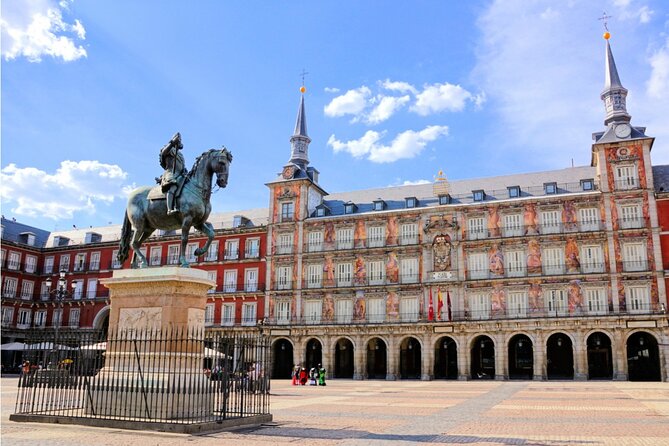
Stop 4: Plaza Mayor (puzzle meets Madrid’s showpiece square)
Plaza Mayor is one of Madrid’s most recognizable plazas. You arrive via clue solving and then get instructions for the next move, with some learning folded in.
This is a great stop to grab a quick look at the square’s scale. Even if you have been here before, the game gives you a reason to pay attention beyond “it looks nice.”
Stop 5: Mercado San Miguel (food market vibes, mission energy)
Then you hit Mercado San Miguel. Again, clue to arrive, puzzle to progress, instructions to continue.
This stop can be fun for groups because market areas bring natural energy. Even if you do not stop to eat, it is an easy place for a short break. Just keep your group coordinated so you do not lose the thread of where you left off.
Stop 6: Plaza de la Cruz Verde (short stop, quick next step)
Plaza de la Cruz Verde is another quick checkpoint, listed at about 5 minutes. The game format is the same: solve, read the next indication, and move.
Short stops are good when your group is tired or the kids need a quick win. They also keep the total walking time close to that 1 hour 10 minutes estimate.
Stop 7: Restaurante La Muralla (a clue-based detour)
You also pass by Restaurante La Muralla as a stop. That tells you something about the design: not every checkpoint is a famous public monument. Some are planted at everyday, walk-past locations that still help shape the route.
This can be either delightful or annoying depending on your group. If you like scavenger-hunt style wandering, it adds flavor. If you hate searching around a business frontage, give your group clear roles for reading the phone and checking where you are standing.
Stop 8: Placa de la Cebada (more city texture, same rules)
Placa de la Cebada is another short 5-minute checkpoint. You solve your way in, learn something about the location you reached, then get instructions for the next segment.
This stop keeps the game moving through everyday Madrid rather than just a museum circuit. That balance is often what makes these city games feel more real.
Stop 9: Real Basilica de San Francisco el Grande (finish with a landmark)
Finally, you end at Real Basilica de San Francisco el Grande. It is listed as a 5-minute stop, but the finish can feel longer because people tend to double-check final instructions, take photos, and confirm they completed the sequence.
The basilica name gives you a clear mental marker for the end of the route. If you want a last photo moment, this is the place to do it.
One extra puzzle checkpoint in the middle
The itinerary data includes an additional stop labeled only as Stop, without a place name. In practice, you should assume the phone instructions include all checkpoint names as you progress, and you will follow what the app shows on your screen.
What You Learn Between Clues (and Why It Can Be Hit or Miss)

The game includes learning at each stop while you solve. You get indications on how to continue and also learn about what you discovered.
The tradeoff is pacing. Some players felt the historical information between puzzles stretched too long, especially for kids. Others found the puzzle difficulty too hard to finish.
So here is how I’d plan for it:
- If you travel with children, treat the informational parts as optional speed bumps. Let them focus on the puzzle and ask you to read the rest if they get curious.
- If your group loves puzzles, be ready for some clue steps that may require teamwork and calm reading. Do not rush your first puzzle; rushing often creates mistakes later.
The theme is Inquisition-era Madrid, so you may expect the story to be darker in tone than a typical lighthearted scavenger hunt. That can make it feel more memorable, as long as your group is in the mood for it.
Who This Fits Best: Families, Groups, and Puzzle Types
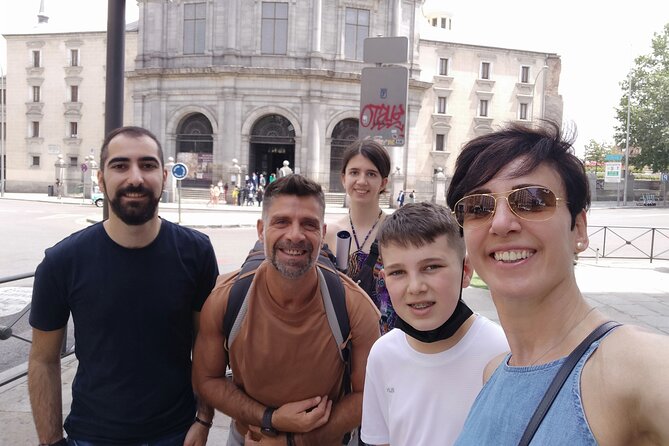
This experience is pitched as family-friendly in a very broad way (the idea that it can suit a wide range of ages is part of the positioning). In real terms, you should match it to your group’s puzzle tolerance.
I think this is best for:
- Families with older kids who can read clues and handle short puzzles on a phone
- Groups of friends who like solving things together
- Adventurous travelers who want a route through central Madrid without a guide talking the whole time
It may be less satisfying for:
- Very young kids who need constant adult guidance for reading and solving
- Groups that want a strict “learn first, play second” guided structure
- Anyone who expects a guide at the start point
If you are going as a group with mixed ages, split into pairs: one person focuses on the phone instructions, the other watches the surroundings. That simple method reduces arguing and speeds you up.
Value at $7.14: When This City Game Beats a Traditional Tour
At $7.14 per person, you are paying for structure, route planning, and entertainment—not for a live performer or a heavy lecture.
What makes the value strong is the flexibility:
- You can start at almost any hour within the day
- You can pause and resume
- You can play offline
- You can do it as a private group without crowd pressure
For a budget day in Madrid, this can be a smart swap. If you would otherwise buy an entry ticket to something small plus pay for a basic tour, this gives you a whole walking mission. You also get to cover multiple recognizable stops in one loop rather than doing them one by one with no plan.
If you do enjoy puzzles, the low cost becomes even more attractive because the game is the main product. If you hate puzzles and only want sights, you may find it feels like a phone distraction. Match the experience to your interests first.
Common Friction Points to Know Before You Go
The biggest complaint pattern is about expectations. This is a self-guided city game, but some people show up at the start looking for a person to meet them.
If you want to avoid that problem:
- Do not wait for a guide at the start. The guidance is provided through your smartphone instructions.
- Make sure the email with start instructions is reachable on your device.
- If you are traveling with a group, agree that nobody starts walking until everyone has the instructions open.
Another issue is difficulty mismatch. Some people say puzzles are too easy and obvious, even for kids. Others say the clues are complicated enough that adults struggled to finish.
That means your best strategy is group-based problem solving. Read clues out loud. Try the obvious first. If you stall, do not drag it out for 20 minutes—move to the next step and come back if the game allows it. The route is time-based by design, and your enjoyment is tied to keeping momentum.
Should You Book This Madrid Escape Game?
I’d book Escape the Inquisition if you want a structured walk through central Madrid without crowds, and you enjoy solving puzzles on your phone. The combination of offline play, private group format, and flexible timing is exactly what makes city games useful when you are juggling the rest of your day.
Skip it or rethink it if you hate puzzles, expect a physical guide, or your group needs long stretches of straightforward sightseeing with minimal phone use. Also, if you have a mixed-age group, bring realistic expectations about the difficulty and be ready to help with the phone reading.
If you want a fun way to see Plaza Mayor, Mercado San Miguel, and major historic landmarks while keeping your day flexible, this is a strong low-cost option—just go in knowing it is truly self-guided.
FAQ
Do I need an internet connection to play?
No. The game is designed to be playable offline, so you do not need internet connection to solve and continue.
Is there a physical tour guide or pickup?
No. This is self-guided with instructions provided through your smartphone. You should not expect a person to meet you at the start point.
How long does the game take?
It’s listed at about 1 hour 10 minutes (approx.) to complete.
What are the meeting point and the endpoint?
Start is C. de San Bernardo, 1, Centro, 28013 Madrid, Spain. The end is Calle de la Ventosa, 21, Centro, 28005 Madrid, Spain.
Can I start at any time?
You can start at any hour within the daily opening window of 5:00 AM to 9:30 PM (Monday through Sunday).
Is it offered in English?
Yes. The experience is offered in English.
Is it private for my group?
Yes. It is listed as a private tour/activity, so only your group will participate.