REVIEW · MADRID
2-Hour Madrid – Prado Museum Private Tour
Book on GetYourGuide →Operated by Madrid Museum Tours · Bookable on GetYourGuide
Prado can feel like a maze. This 2-hour private tour gives you a clear path through the Prado with a licensed guide and art historian telling you what to notice and why it matters.
I especially like the way the guide’s explanations connect the paintings to the world around them, not just what’s painted on the canvas. You also get an audio setup that keeps the narration understandable even when the museum is busy.
The second thing I really like is choice. You can pick one of four themed private tours and tailor the focus to your interests, including deeper attention to 19th-century Spanish painters. The main drawback to consider is mental load: you’ll want to actually pay attention for the full 2 hours, so going when you’re wiped out may make the experience feel harder than it should.
In This Review
- Key takeaways before you go
- Prado in 120 minutes: what this private format does well
- Meeting at the Goya Statue: your timing advantage
- Price and value: $306 per group up to 7 people
- The licensed guide + art historian approach (and why the audio matters)
- Four themed private tours: pick the route that matches your taste
- Tour 1: The Great Evolution (masterpieces across a bigger sweep)
- Tour 2: Velázquez and Goya (mystery, power, and emotion)
- Tour 3: Golden Century Masters and Goya (court drama meets public tragedy)
- Tour 4: Great 19th-Century Spanish Artists (the Prado beyond the usual)
- What you’ll learn: composition, context, and story you can repeat later
- How the guides can make or break your experience (and what you can do)
- Who should book this private Prado tour
- Should you book the 2-Hour Prado Private Tour?
- FAQ
- How long is the Prado private tour?
- What does the $306 price include?
- Where do we meet for the tour?
- Are there different tour options?
- What languages are available?
- Is it a private group?
Key takeaways before you go
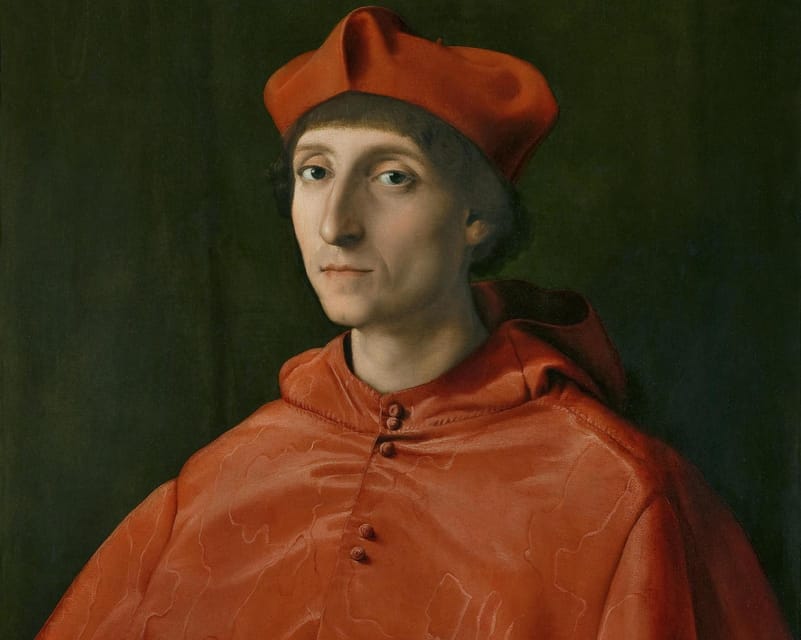
- Licensed, art-historian style guiding: the Prado is interpreted by professionals licensed by the Madrid government.
- Audio equipment that works: clearer communication helps when crowds make normal talking a pain.
- Four theme routes: choose the arc you care about most, from earlier evolution to 19th-century Spanish masters.
- Goya and Velázquez are major targets: expect focused attention on signature works tied to drama and emotion.
- More than the usual suspects: the tour format includes neglected 19th-century names.
- Easy to find meeting point: meet at the Goya Statue by the main ticket counter.
Prado in 120 minutes: what this private format does well
A public Prado visit often turns into a blur of rooms, captions, and quick glances. This tour solves the biggest problem: you’re not trying to figure out what to prioritize on the fly. In 2 hours, you get a guided route with interpretation that helps you see rather than simply look.
I also like that it’s designed as a private group experience. That matters at the Prado because you’ll move with intention instead of blending into a crowd. You’ll spend your time on paintings where the guide can slow you down and point out how composition and context create the effect.
Finally, the tour is built for conversation. Even with a short duration, you’re not stuck with a lecture that stops at the doorway of each room. You can steer the focus toward what you care about most, which is rare in a museum where everyone else is rushing.
You can also read our reviews of more private tours in Madrid



Meeting at the Goya Statue: your timing advantage
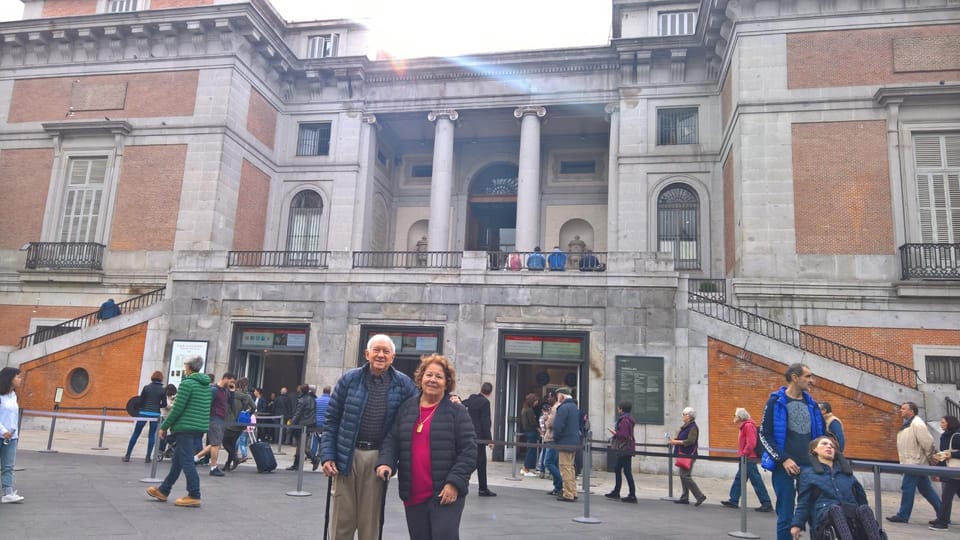
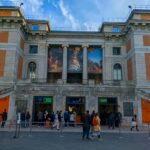
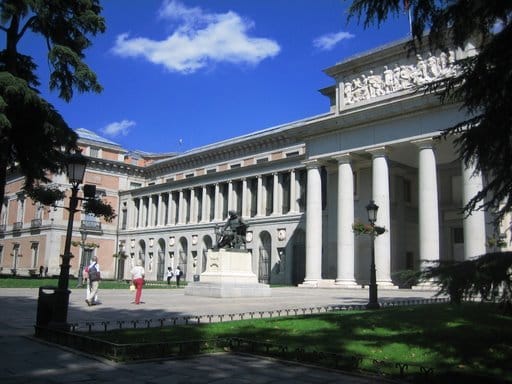
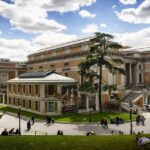
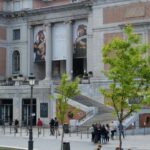
You meet by the Goya Statue, overlooking the main ticket counter of the Prado Museum. The badge on the guide confirms they’re connected to Madrid Museum Tours, so you’re not left guessing who you’re waiting for.
Timing matters here. The Prado is popular, and the tour runs during midday hours (10:00–15:00). If you want to avoid queue stress, plan to purchase your Prado tickets online ahead of time, since the tour itself does not include museum admission.
If you’re trying to make this fit with other sights in central Madrid, treat it as your “museum anchor.” A good strategy is to schedule it when you’re alert—art museums reward attention, and this one asks for it.
Price and value: $306 per group up to 7 people
At $306 per group (up to 7) for a 2-hour private tour, the math becomes surprisingly reasonable if you’re traveling as a small group or family. Even though Prado admissions are not included, you’re still paying primarily for guide expertise and focused time.
Think of it like this: admission gets you inside. The guide gets you oriented and informed fast. If you’ve ever spent 20 minutes looking for one painting, you already understand why a guided route can save both time and energy.
This format is especially good value when you have 3–7 people who want the same themes. Everyone hears the same narrative, but you can still tailor the emphasis so it doesn’t feel like a generic “greatest hits” scramble.
The licensed guide + art historian approach (and why the audio matters)
One of the strongest selling points is that the guiding team isn’t just a generic tour guide. You get art-historian-level interpretation combined with a licensed guide. That combination is what turns museum captions into something you can actually remember.
You’ll also benefit from the audio equipment included with the tour. Prado rooms can be noisy: groups shuffle, phones ring, and kids change volume instantly. Clear communication keeps the guide’s pacing steady, which is what you want in a short, concentrated tour.
In practice, this means you spend less time straining to hear and more time following the train of thought—how the guide links style, subject matter, and historical context.
Four themed private tours: pick the route that matches your taste
You can also read our reviews of more museum experiences in Madrid

Tour 1: The Great Evolution (masterpieces across a bigger sweep)
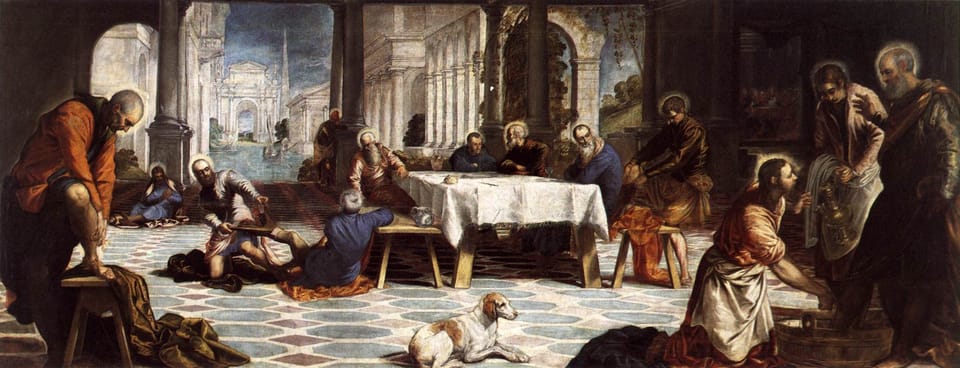
Tour 1 is the best choice if you want breadth and a sense of how painting changes over time. The guide covers a wide range of artists—Yáñez, Van der Weyden, Bosch, Dürer, Titian, Tintoretto, Veronese, El Greco, Caravaggio, Rubens, Ribera, Velázquez, Murillo, Goya, Rosales, and Sorolla.
What makes this one special is the rhythm. Instead of treating the Prado like a random collection of icons, you get a guided evolution—styles shifting, themes changing, and technique becoming a kind of language. You’ll also get a focus on composition techniques and cultural context, which helps you understand why a work looks the way it does beyond simple aesthetics.
A practical tip: choose this tour if you’re visiting for an overview and you might not return to the Prado soon. It’s also a great option for mixed groups where people have different favorite eras or artists.
The main consideration is that the tour covers a lot. If you’re the kind of person who wants fewer paintings studied longer, you may prefer one of the Goya/Velázquez-focused options.
Tour 2: Velázquez and Goya (mystery, power, and emotion)
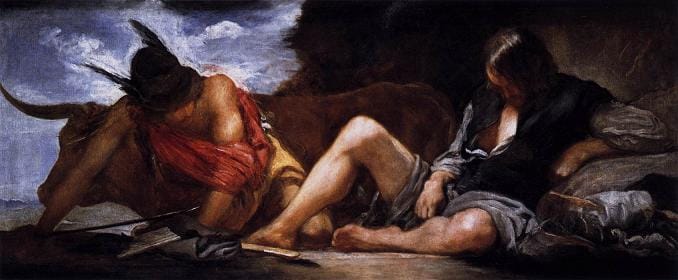
Tour 2 centers on two giants, and it leans into their different kinds of intensity. Velázquez is framed as a master whose work balances perfection with mystery, and then the tour shifts into Goya’s raw power.
You’ll see focus on works associated with Goya such as The Attack of the Mamelukes, The Shootings of May 3, and the Black Paintings. The framing is about emotion as much as craft—how an image can hit you differently once you understand the cultural stakes behind it.
This is the tour I’d steer you toward if you want a feeling-driven experience. You’re not only learning how paintings are made. You’re also learning how they functioned as statements in their time—and why Goya’s vision still lands so hard.
If you tend to get overwhelmed in museums, though, notice that this theme has heavy material. The payoff is strong, but it’s not a “lighter” tour.
Tour 3: Golden Century Masters and Goya (court drama meets public tragedy)
Tour 3 combines Golden Age storytelling with Goya’s most dramatic scenes. It starts with Golden Age legends like Ribera, Murillo, and Velázquez, then moves into Goya’s intimate royal portraits and powerful set pieces.
You’ll get attention on paintings associated with The Royal Family of Carlos IV and on major works like The Shootings of May 3. The feel here is more layered: you see how portraiture, power, and public events overlap inside the same museum world.
Choose this tour if you’re interested in how art participates in society. It’s not just about famous names; it’s about what elites wanted viewers to see, and how the meaning of images could shift depending on the viewer’s position.
A potential drawback: the pacing may feel denser if you’re looking for only a few paintings you can linger on without thinking. This tour is designed for strong interpretation, so come ready to listen.
Tour 4: Great 19th-Century Spanish Artists (the Prado beyond the usual)
If you think the Prado is only about the giants in earlier centuries, Tour 4 is the corrective. This theme highlights 19th-century Spanish painting, including names that many people miss even after visiting Madrid.
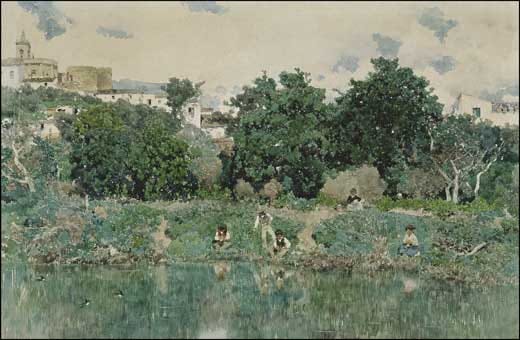
The focus includes the Madrazo brothers, Rosales, Fortuny, Pradilla, and Sorolla. The tour is specifically positioned to explore neglected 19th-century masters of Spanish art, and it does so by emphasizing the details and atmosphere that made these artists important.
This is the route I’d recommend if you’re tired of only hearing about the same handful of paintings. You’ll also get a contrast with earlier works: different subject matter, different lighting, and different ways artists handled emotion and storytelling.
The only caution is that if your must-see list is mostly earlier masterpieces, Tour 4 may feel less aligned with your interests. But if you want to leave the Prado with a broader idea of Spanish painting, this one is a smart bet.
What you’ll learn: composition, context, and story you can repeat later
Across all four themes, you’re not getting a basic run-through. The guide’s goal is to help you understand how the paintings work—composition techniques, cultural context, and the story behind the image.
That approach is what makes a short tour feel satisfying. You’re not collecting random facts. You’re building a mental model: how artists used placement, light, gesture, and subject matter to produce meaning.
One small but important point: the tour is described as accessible storytelling. That doesn’t mean it’s dumbed down. It means the guide aims to keep the material understandable, whether you’re a first-time museum visitor or someone who likes art history facts.
How the guides can make or break your experience (and what you can do)
The guides are a big part of the success here. One guide named Tatyana is described as captivating, with a sense of flow that made time feel like it disappeared. Another guide named Luis is praised for combining lots of interesting information with entertainment, and for managing the Prado’s size well in a short time window.
I also want to flag a practical caution from a guide-experience note: the tour material demands attention. If you’re exhausted from travel, plan to schedule it after you’ve had time to reset. Otherwise, you might feel like you’re working harder than the art deserves.
If your goal is to get the most out of your 2 hours, keep your phone use minimal. Your best results will come when you’re listening closely to the guide’s explanation, then looking with purpose for the details they point out.
Who should book this private Prado tour

This experience fits best if you want:
- A focused Prado overview in a short time
- An art historian guide who connects paintings to context and composition
- A private group where you can adapt the emphasis to your preferences
- A thematic route, especially if you want to spend time on Velázquez and Goya or on 19th-century Spanish painters
It’s less ideal if you want a quiet museum stroll where you can wander at your own pace without structured interpretation. Also, if you’re arriving at the Prado totally wiped out, give yourself rest time first so the explanations land.
If you’re visiting with family, this format can work well because it’s designed for engagement rather than passive reading.
Should you book the 2-Hour Prado Private Tour?
Yes, you should book it if you want a smart shortcut to understanding the Prado. Paying for a licensed art historian guide is a value move when you’re short on time, traveling with people who need structure, or you want to avoid wasting time guessing which paintings matter most.
Skip it only if you prefer self-guided wandering, or if you’re planning to visit when you’re too tired to concentrate. In that case, you’ll likely get more enjoyment from a slower visit and reading at your own pace.
For most people, though, the biggest advantage is simple: you leave with a story. Not just a list of paintings.
FAQ
How long is the Prado private tour?
The tour duration is 2 hours.
What does the $306 price include?
The price covers the private tour with a licensed guide and art historian, plus audio equipment. Prado museum admissions are not included.
Where do we meet for the tour?
Meet by the Goya Statue, overlooking the main ticket counter of the Prado Museum.
Are there different tour options?
Yes. There are 4 private tour themes you can choose from.
What languages are available?
The tour guide is available in English, German, Russian, and Spanish.
Is it a private group?
Yes, it’s a private group, up to 7 people, and the tour is wheelchair accessible.