REVIEW · MADRID
Madrid (Historical Centre) Scavenger Hunt and Self-Guided Tour
Book on Viator →Operated by Explorial · Bookable on Viator
Madrid rewards slow wandering, but this scavenger-hunt route gives you a reason to look up, read signs, and pause in the right spots. It’s a self-guided walking game through the Historical Centre, with tasks that turn famous landmarks into mini puzzles you can solve at your own pace.
What I like most is how the challenges keep your brain switched on without making the walk feel like homework. You’ll also enjoy the mix of sightseeing stops and playful photo tasks, which is a nice change from the usual checklist tours.
One thing to keep in mind: you’ll need a working smartphone with enough battery for the app and map prompts. If your phone is always on low power, plan ahead.
In This Review
- Key takeaways before you go
- A scavenger hunt that turns walking into discovery
- Starting at Sol and using your Explorial access code
- Plaza Mayor: the first stop sets your clue-hunting rhythm
- El Oso y el Madroño: facts you find by looking closely
- Plaza de Oriente: finish with a view-and-puzzle combo
- Photo tasks and points: why the creativity piece matters
- Time, pace, and the reality of a 2-hour route
- Price and value: $10.63 for a game-built city walk
- Who this Madrid scavenger hunt suits best
- Practical tips so the app doesn’t ruin the fun
- Keep your battery happy
- Wear normal walking shoes
- Plan for photo pauses
- Let the questions slow you down
- Should you book it: a straight yes or no
- FAQ
- How long does the Madrid Historical Centre scavenger hunt take?
- Is this a guided tour with a person?
- What is the price per person?
- What language is it offered in?
- Where does the tour start?
- Does it end at the same place?
- Do I need an app or access code?
- Is there a time limit during the experience?
- What is the cancellation policy?
Key takeaways before you go

- Self-guided, game-led format: explore when you want, with tasks that guide your attention
- Plaza Mayor to Plaza de Oriente route: a tight loop through major sights
- Photo challenges: points for creativity, not just reading facts
- Designed for easy participation: most travelers can join, and it’s private for your group
- Works without time pressure: the experience isn’t limited, so you can take breaks
A scavenger hunt that turns walking into discovery
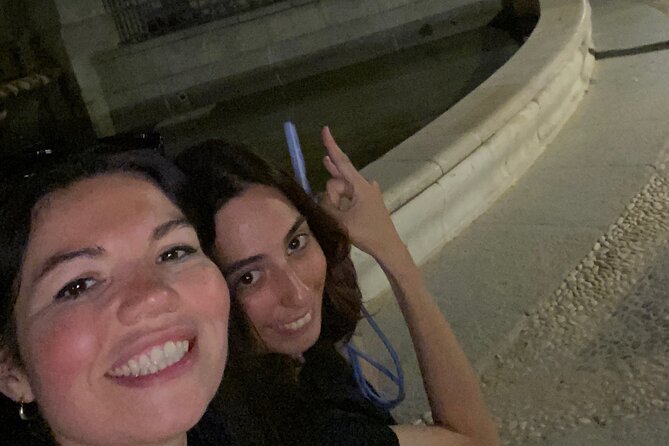
This Madrid experience is built for people who want to see the center on foot, but also want a little structure. Instead of following a guide with a headset, you follow clues inside the Explorial app. You’ll walk between three main stops and answer questions once you reach each place.
The good part is that the tasks don’t just test what you already know. They push you to notice details you would otherwise glide past: wording on signs, images around a landmark, or specific features at street level. That’s how the walk quietly becomes learning.
The pacing also feels friendly. It’s set up as a game, not a timed race. In practice, the tour averages about 1–2 hours, but you’re not locked into a strict finish time. If you want extra photos, a coffee break, or time to circle a plaza again, you can.
You can also read our reviews of more guided tours in Madrid



Starting at Sol and using your Explorial access code
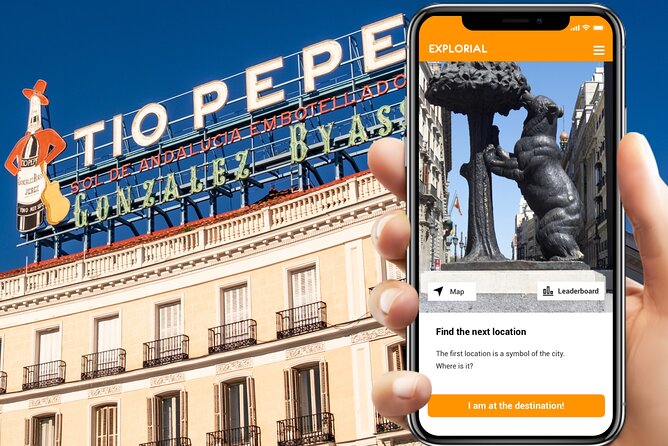
The meeting point is Centro de Turismo SolPrta del Sol, 5, Centro, 28013 Madrid, Spain. Your tour ends back at the same place, so you don’t have to worry about getting back across town at the end.
After you book, you’ll get an access code. You’ll plug that into the Explorial app (the experience uses the app for the map function and the tasks). Once you download the app, go to the starting point, and enter your code, you’re ready to play.
This is also the kind of experience that fits different travel styles:
- If you like to wander but get restless without a plan, the clues keep you moving.
- If you prefer quiet sightseeing, you can slow down and take breaks without feeling guilty.
- If you’re traveling as a group, it stays private for only your group.
Practical note: the app is the core. If you’re the person in your group who usually forgets to charge your phone, make sure you’re not the one holding the battery cable.
Plaza Mayor: the first stop sets your clue-hunting rhythm

Your first official checkpoint is Plaza Mayor. This is a smart starting choice because it’s a big visual anchor in Madrid’s center. You’ll get a feel for the game format right away: use hints to locate the right area, then answer questions once you’re there.
What makes Plaza Mayor work for a scavenger hunt is that it’s packed with things to look at, even if you’ve seen photos before. The tasks push you to slow down and read the environment instead of only taking classic postcard shots.
What to do here:
- Arrive ready to stand still for a minute. The questions are tied to what you can see around the stop.
- Give yourself time to reposition. If you miss a detail on your first look, you’ll usually be able to step around and try again.
- Use the app’s map prompts if you drift. Madrid streets can feel similar, and the app helps you keep momentum.
Potential drawback at this stage: if you’re hoping for long, lecture-style history at each landmark, the format is still task-based. You’ll learn, but in short bursts that fit the game.
El Oso y el Madroño: facts you find by looking closely

Next up is El Oso y el Madroño. This is where the experience starts to feel more like street-level exploration. Compared to sweeping squares, this kind of stop rewards attention to small cues: signage, images, and specific elements you can spot once you know what to look for.
You’ll use hints to get to the right spot, then answer questions connected to what’s displayed nearby. That means you’re not just passing by a familiar icon; you’re reading the context around it.
Why this works well:
- The landmark is visually recognizable, so you’re not constantly searching blindly.
- The puzzle questions encourage you to connect the landmark to what’s actually written or shown on/near it.
- It’s a good moment to regroup and reset your pace before the next walk.
One consideration: this type of stop can be quick if you already spot everything instantly. If you want to linger, treat it like a mini photo session too. The game rewards creativity later, so you’ll want to keep some energy for that.
Plaza de Oriente: finish with a view-and-puzzle combo

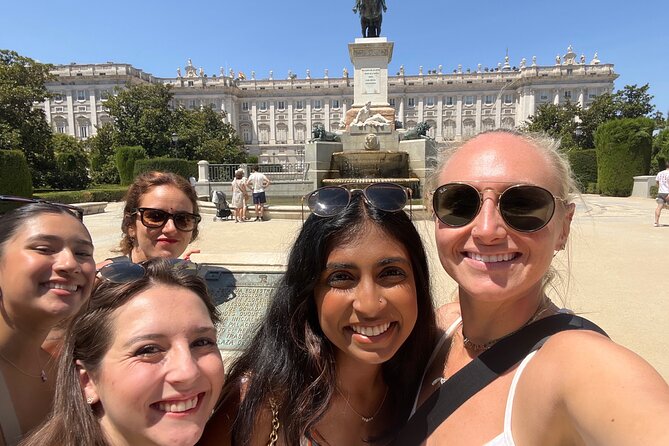
Your final stop is Plaza de Oriente. This area is excellent for a game because it sits at the intersection of iconic architecture and open space. The clues here push you to keep scanning rather than only walking through.
As with the earlier checkpoints, you’ll go through the pattern:
- find the correct spot using hints,
- answer questions based on what you see,
- rack up points along the way.
This is a satisfying ending for a walking scavenger hunt because it often feels like a natural “wrap” to a classic central route. You get a last chance to take in the area and connect the dots you picked up from the other stops.
If you’re someone who likes to end on a high visual note, Plaza de Oriente delivers. And if you’re traveling with kids or a group that gets bored of pure sightseeing, this is a good place to finish strong with both photos and problem-solving.
You can also read our reviews of more historical tours in Madrid






Photo tasks and points: why the creativity piece matters

A big part of the fun is that the experience includes photo tasks. These aren’t just random scavenger gimmicks. They change how you look at the city.
Instead of only photographing what you already planned to photograph, you’ll be prompted to shoot things you might overlook—angles, small scenes, or playful interpretations tied to the prompts. If you get the snapshot right, you earn points.
This is also why the experience can feel relaxing. You’re not hustling to keep up with a group. You’re simply playing along and creating. And if your group enjoys silly photo moments, it can turn a normal walking afternoon into a shared activity.
Tip: check your phone settings before you start.
- Make sure the camera works smoothly.
- Keep your brightness reasonable if you’re using the screen for hints.
- If you’re using a power-hungry map mode, consider lowering background battery drain.
Time, pace, and the reality of a 2-hour route
On paper, it’s about 2 hours (approx.), and the average experience length is about 1–2 hours. That’s a helpful range because the game naturally creates pauses: you’ll stop to read, answer questions, and occasionally reposition to spot details.
But the best part is that it’s not limited in time. You can explore at your own pace and take breaks. This matters in Madrid, where weather can change fast and your energy might dip after a couple of main squares.
A good strategy is to plan your route time around the center’s rhythm:
- Start at a time you’re comfortable walking without stress.
- Build in at least one short break for water or a snack.
- Leave yourself a little buffer so you’re not rushing the final stop.
Also, since the opening hours listed run Monday through Sunday from 12:00 AM to 11:30 PM, you can generally slot it into your day rather than forcing a narrow window. (Still, check your exact booking window in the app confirmation.)
Price and value: $10.63 for a game-built city walk

At $10.63 per person, this is priced like an “activity add-on,” not a full guided tour. That’s the key to the value.
You’re paying for three things:
- a self-guided route that takes you through central landmarks,
- question prompts that encourage you to learn without a lecturer,
- photo challenges that make the walk feel like play.
If you’ve ever done a standard walking tour and thought, I saw the sights but didn’t absorb much, this type of format can fix that by forcing you to read and notice.
Is it expensive? Not really. Is it a replacement for a long history-focused tour? Probably not. If your goal is deep, structured historical context delivered by a guide, you may wish there were more stops or more detailed explanations. The experience is designed for engagement first.
Who this Madrid scavenger hunt suits best
This works especially well if you fit one (or more) of these profiles:
Families with kids
The tasks are designed to keep people involved, including younger travelers. Photo prompts and puzzle steps make it easier to avoid the usual situation where kids want to move on before the adults finish listening.
Couples and birthday gift people
It’s a fun, low-pressure way to spend time together. One of the clearest use cases from real-life gifting logic is that it feels like an experience, not just another item.
History-minded walkers who don’t want a lecture
You’re still learning. The difference is how you learn: by answering questions tied to what you can see right there in front of you.
Small groups of friends
If your group likes to compete a little, the points system and photo tasks create natural moments to laugh and compare results.
Practical tips so the app doesn’t ruin the fun
A walking game in Madrid sounds simple until you’re standing outside a landmark and your phone is at 3%. So here’s how to keep things smooth.
Keep your battery happy
This is the most important real-world consideration. The app uses your phone for the map and for tasks, so bring:
- a fully charged phone,
- and if possible, a portable charger.
Wear normal walking shoes
You’re on foot between major areas in the center. That means uneven sidewalks, stone, and lots of small turns. Comfortable shoes matter more than you think.
Plan for photo pauses
Photo tasks add stops. Don’t treat them like an afterthought. If you’re rushing, you’ll miss points and you’ll feel like you’re forcing it.
Let the questions slow you down
The best learning happens when you stop and actually look. If you skim, the puzzles will feel harder than they should.
Should you book it: a straight yes or no
Book this if you want a self-guided, game-style way to see Madrid’s core landmarks on foot. You’ll get a fun structure for your walking day, with photo challenges and question prompts that make you notice details you’d otherwise miss.
Skip it if you’re mainly looking for deep historical storytelling with lots of extra stops. The route is focused, and the learning is delivered in shorter, puzzle-sized bites. Also, if you know you struggle with smartphone battery life, solve that before you start or it can turn stressful.
If your ideal day in Madrid is part sightseeing, part play, and part wandering at your own pace, this scavenger hunt is a strong match.
FAQ
How long does the Madrid Historical Centre scavenger hunt take?
The experience runs about 2 hours on average, with an average duration of roughly 1–2 hours. It’s also not limited in time, so you can take breaks and move at your own pace.
Is this a guided tour with a person?
No. This is a self-guided scavenger hunt you play using the Explorial app. It’s also private, meaning only your group participates.
What is the price per person?
The price is $10.63 per person.
What language is it offered in?
It’s offered in English.
Where does the tour start?
The starting point is Centro de Turismo SolPrta del Sol, 5, Centro, 28013 Madrid, Spain.
Does it end at the same place?
Yes. The activity ends back at the meeting point.
Do I need an app or access code?
Yes. After booking, you’ll receive an access code to use in the Explorial app. The app includes the map function to help you navigate.
Is there a time limit during the experience?
No. The experience is not limited in time. You can explore at your own pace and take breaks.
What is the cancellation policy?
You can cancel for a full refund if you cancel up to 24 hours in advance. If you cancel less than 24 hours before the start time, no refund is provided.