REVIEW · MADRID
Madrid Historical Tour with Local Guide in Eco Tuk Tuk Private
Book on Viator →Operated by Eco Tuk Tuk - Spain · Bookable on Viator
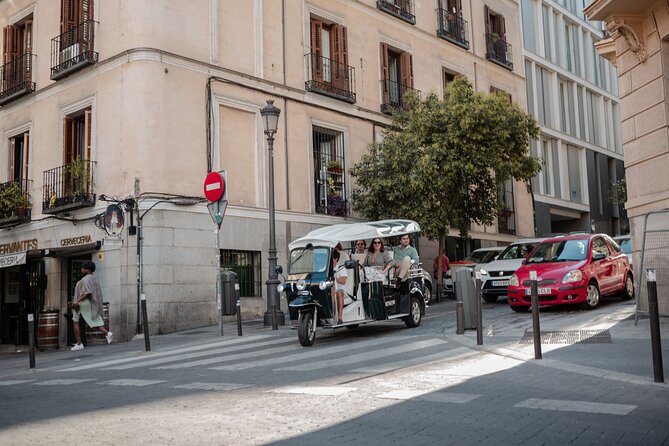
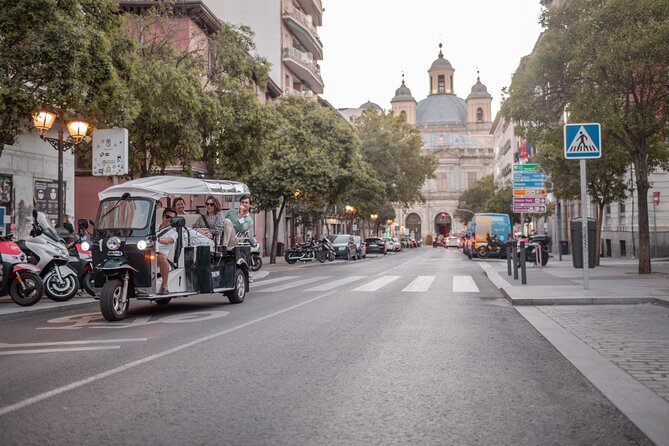
Madrid by electric tuk-tuk feels like a cheat code. You’ll glide past Madrid’s best-known landmarks on a 100% electric ride, with a local guide steering you to the places that actually make sense for first-time visitors. It’s also private for your party, so you’re not stuck in a crowded van doing the same forced photo every few minutes.
I like how the tour is built for “short time, big impact.” You start close to the Royal Palace area and you get a mix of grand monuments, major museums-adjacent streets, and classic neighborhood stops, without spending your whole day parked in one line.
The one drawback to plan around is how structured the route is. Photo stops and stop locations are pre-set, and if you’re late by more than 15 minutes the tour can be shortened with no refund—plus route tweaks can happen if streets close.
In This Review
- Key Highlights You’ll Feel Right Away
- Why This Private Eco Tuk-Tuk Tour Works So Well in Madrid
- Price and Group Math for a Private Ride (What $28.66 Really Buys)
- Starting Point at Plaza de Oriente: The One Detail You Must Nail
- How the 1-to-4-Hour Route Fits Madrid’s Big Stories
- The Covered Market Stop: Old-Madrid Food Energy
- Royal Basilica of San Francisco el Grande: Dome-Scale and Local Pride
- Atocha Station: The Busiest Hub Makes the City Feel Real
- Palacio de las Cortes: Neoclassical Drama and the Lions’ Metal
- Cibeles and Plaza del Dios del Mar: When Sports Becomes City Myth
- Prado Area: Why This Part of Madrid Draws Art Lovers From Everywhere
- San Jerónimo el Real (Los Jerónimos): Gothic Lines Next to the Prado
- Puerta de Alcalá and the Banks-and-Palaces Stretch
- Plaza de Santa Ana and Almudena Cathedral Museum
- Royal Palace Area: Palacio de Oriente, Campo del Moro, and Sabatini Gardens
- Temple of Debod: Free Ticket, Big Contrast With Egypt
- Comfort Details That Matter: Blankets, Weather, and Getting On/Off
- Guide Styles: What I’d Look For When You Meet Yours
- Who This Tour Suits Best (And Who Might Want Something Else)
- Should You Book This Eco Tuk-Tuk Historical Tour?
- FAQ
- How long is the Madrid Historical Tour?
- Is this tour private?
- What language is offered?
- Do I have to buy entry tickets for Temple of Debod?
- Where does the tour start and end?
- What vehicle is used?
- Is the tour comfortable in bad weather?
- What if I’m late to the meeting point?
- Are children and babies allowed?
- Are pets allowed?
Key Highlights You’ll Feel Right Away
- 100% electric and sustainable tuk-tuk for an easy, low-effort way to cover Madrid
- Private tour for just your group, with tuk-tuks reserved based on group size (up to 4 passengers per tuk-tuk)
- Starts without queues or waiting, so you begin sightseeing immediately
- Pre-selected photo stops so you don’t guess where the best angles are
- Blankets and protective layers for rain, wind, and chilly seasons
- Major Madrid anchors from Atocha Station to the Royal Palace area, plus quick contrast stops
Why This Private Eco Tuk-Tuk Tour Works So Well in Madrid
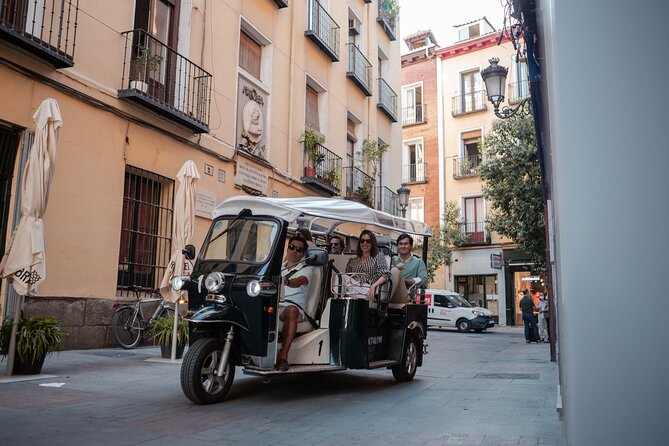
Madrid is one of those cities where “just walking” is amazing—until you realize you’re crossing the same hills twice and still haven’t hit the key sights you planned for. This tour fixes that with a simple formula: get you oriented fast, then layer in stories at each stop.
You’ll move through multiple neighborhoods in an efficient line, but the ride doesn’t feel like you’re being rushed past everything. The guide includes pre-selected photographing points, so you can stop when it matters rather than playing spot-the-view yourself.
And yes, the tuk-tuk factor is real. The electric design makes it feel modern and light, and it’s just plain fun to watch Madrid roll by from a seat that’s higher than you’d get on foot. It’s also practical: fewer long walks, less time waiting, and a route that’s designed for a wide range of visitors.
You can also read our reviews of more guided tours in Madrid
Price and Group Math for a Private Ride (What $28.66 Really Buys)
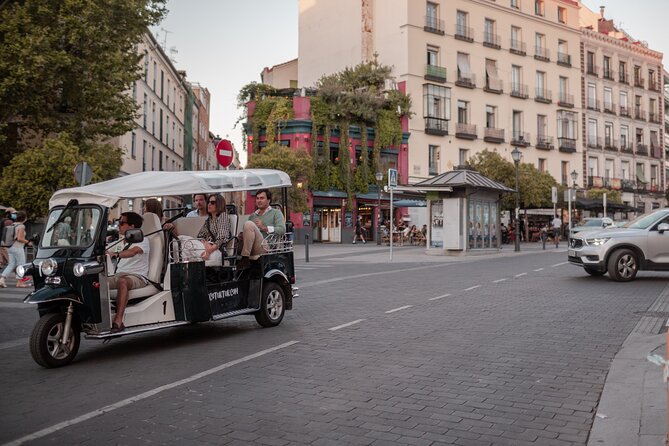
The listed price is $28.66 per person, and what makes it feel like value is what’s included: a local companion, a private vehicle for your group only, and a tour that starts without the usual delays of group sightseeing.
The private part matters. If you’re traveling as a couple or small group, the cost often feels fair because you’re not paying per seat on a crowded coach. If your group is larger, the operator sets the price based on how many tuk-tuks you need—within the legal maximum of 4 passengers per tuk-tuk. That’s important because it keeps the experience from turning into a squeeze.
For solo travelers, it can still be worthwhile because you get a first-day orientation and concrete ideas for where you’ll want to spend time later—without guessing how long it takes to get from one landmark to the next.
Starting Point at Plaza de Oriente: The One Detail You Must Nail
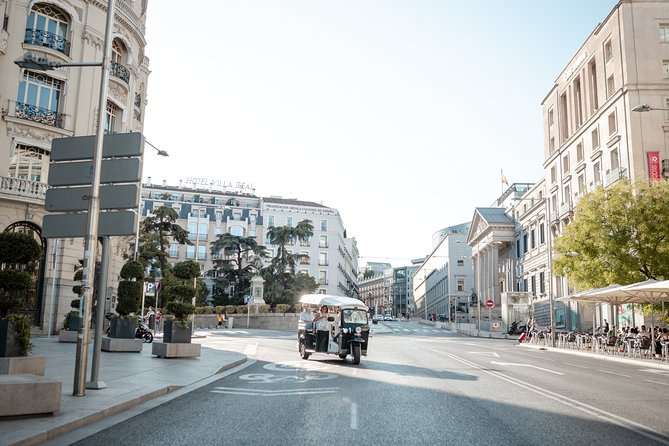
Meet-up sounds simple until you’re standing in the wrong parking level. Your pickup point is at C. de Bailén, 4, but the instructions point out there may not be a visible number. The easier landmark is Puerta del Príncipe near the Royal Palace.
From there, you’re looking for the stairs that lead down into the bus station (underground) right next to the Royal Palace. Once you reach the station area, you should see the Eco Tuk Tuk signage to guide you to the exact spot. If you’re confused, the operator gives you a direct WhatsApp number, which is exactly what you want on a first day in Madrid.
One more thing: if you arrive late, the tour can be reduced and the activity can be canceled if the delay is longer than 15 minutes, with no refund. So aim to be early enough to handle stairs, crowds, and phone signal drama.
How the 1-to-4-Hour Route Fits Madrid’s Big Stories
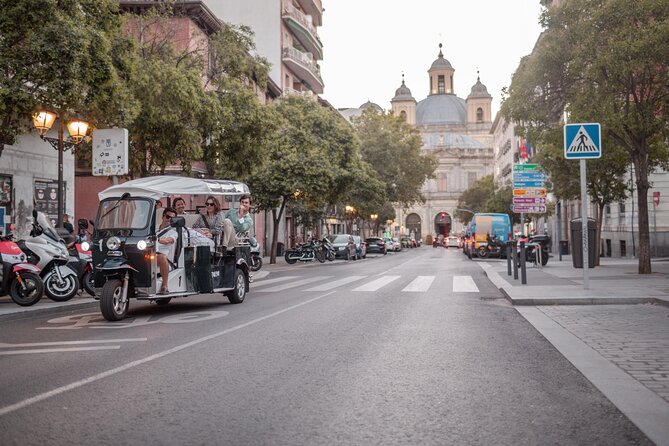
Madrid’s best landmarks are spread out, and this tour is designed to connect them in a way that helps you “read” the city. Expect a mix of:
- quick stops for views and photos
- guided context tied to architecture, neighborhoods, and landmarks
- a pace that favors seeing more rather than going deep inside every building
Because the itinerary can vary due to closed streets or demonstrations, you should treat the route as a plan that adapts, not a rigid checklist. The stops are pre-selected for photos, and the guide will follow the adjusted route.
In other words: you’ll get the map of Madrid in your head, not just a list of monuments.
The Covered Market Stop: Old-Madrid Food Energy
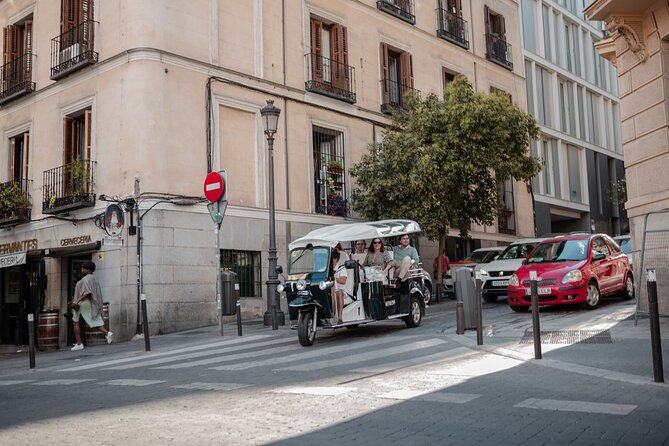
You begin with a covered market from around 1916, known for local food, delis, and community events in a more elegant indoor setting than the usual street market.
What I like about this kind of stop on a historical tour is that it anchors “history” in everyday life. Instead of only chasing statues and domes, you get a taste of how Madrid fed itself and how shopping became part of the social scene.
If you’re hungry, use it as inspiration. Even if you don’t eat there, you’ll leave with names and vibes that help you choose your next meal later.
You can also read our reviews of more private tours in Madrid





Royal Basilica of San Francisco el Grande: Dome-Scale and Local Pride
Next up is the Royal Basilica of San Francisco el Grande, officially known as the Basilica of Our Lady of the Angels, located in the Palacio neighborhood.
A dome like this doesn’t just look impressive from the outside—it changes your sense of scale for the area. This is one of those stops where the guide’s explanations help you notice details you’d otherwise overlook, like how the church sits in the neighborhood fabric and why it’s notable in Madrid’s religious architecture.
It’s a good pairing with the market stop because it shows a different kind of “Madrid center”: not commerce now, but ceremony and long-standing tradition.
Atocha Station: The Busiest Hub Makes the City Feel Real
Then you’ll pass through Atocha station, a major railway complex near Plaza del Emperador Carlos V. It’s described as the busiest station in Spain and one of the main hubs in Europe.
This isn’t just train infrastructure—it’s the kind of place that helps you understand how Madrid moves. If you plan day trips or want to travel smoothly, seeing Atocha early is useful. Even when you’re not thinking about trains, it gives the city a heartbeat.
The stop is short, so think of it as orientation, not a deep “station museum” visit.
Palacio de las Cortes: Neoclassical Drama and the Lions’ Metal
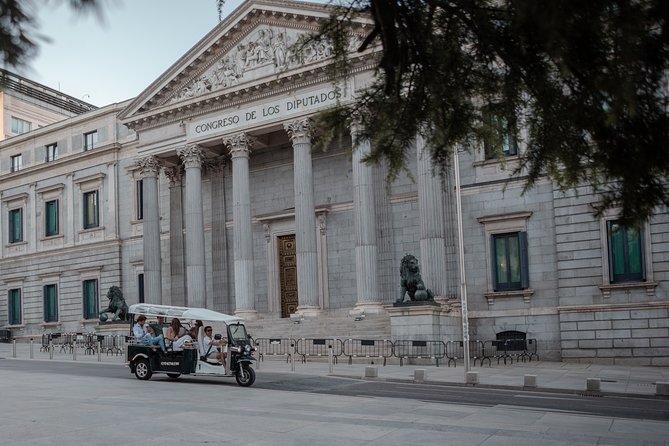
The Palacio de las Cortes gives you a sharp look at Spain’s political story in architecture form. Built on the site of a former convent of the Holy Spirit, it later served as the Congress seat between 1834 and 1841.
From the outside, the main facade is neoclassical with a staircase leading to a portico and imposing columns. Look closely at the lions flanking the entrance—they’re linked to a dramatic backstory, cast using iron from cannons captured during the war in Africa.
If you’re the kind of person who enjoys how buildings carry messages, this stop is a good one. The tour also references the famous Session room, plus a conference/library space nicknamed the lost steps room—details that help you understand why the building feels more than ceremonial.
Cibeles and Plaza del Dios del Mar: When Sports Becomes City Myth
A memorable part of the route is the contrast in how Madrid celebrates football victories. Atlético de Madrid fans celebrate at Plaza del Dios del Mar, while Real Madrid fans gather at Cibeles.
You’re not just seeing plazas—you’re seeing how locals use landmarks like living symbols. Even if you’re not a hardcore soccer fan, this helps you understand Madrid as a place where people attach meaning to public space.
It’s also a fun photo moment because you’ll likely recognize the spots from movies, broadcasts, or stories about Madrid.
Prado Area: Why This Part of Madrid Draws Art Lovers From Everywhere
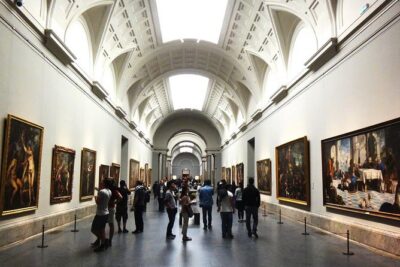
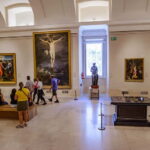
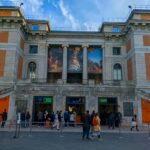
The tour includes the Prado museum area, introduced with the claim that it’s one of the world’s most important museums for European painting. Even if you never plan to buy a museum ticket, the Prado area is worth understanding.
On a tour like this, you’re usually seeing the surrounding streets and landmarks rather than touring every gallery. But that’s still valuable. It helps you connect the art reputation to a physical neighborhood, so your later visit—if you add one—feels less like a leap of faith.
San Jerónimo el Real (Los Jerónimos): Gothic Lines Next to the Prado
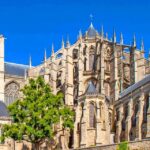
Right beside the Prado area is San Jerónimo el Real, popularly known as Los Jerónimos. It’s a late Gothic parish church with Renaissance influences from the early 1500s.
What stands out here is not only style, but the fact that little of the original building remains because it’s been remodeled and restored over the centuries. That’s a useful reminder: Madrid’s monuments aren’t frozen. They evolve with time, and restorations become part of their story.
If you care about architecture details—or you like to see the “supporting cast” around the headline museum—this is a satisfying stop.
Puerta de Alcalá and the Banks-and-Palaces Stretch
Next comes Puerta de Alcalá, the monumental gate built on order of Carlos III to replace an earlier 16th-century gate. It was inaugurated in 1778.
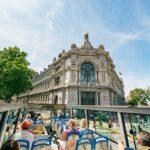
It’s one of the best places to teach yourself how to read a skyline. The gate isn’t standing alone; it’s surrounded by important buildings, including the Buenavista Palace (Army Headquarters), Linares Palace (America House), the Communications Palace (now Madrid City Council), and the Bank of Spain.
The tour also mentions the major Bank headquarters building design, built with the goal of matching the importance of the institution. Whether you’re into grand stonework or just want a great viewpoint for photos, this area has enough architectural variety that you won’t get bored.
Plaza de Santa Ana and Almudena Cathedral Museum
In the Centro district, you’ll pass Plaza de Santa Ana, an open space in the Cortes neighborhood dating from 1810. The tour description notes the square has gone through multiple urbanization phases over time, which explains why its look isn’t a single uniform era.
Then you’ll reach Almudena Cathedral, described as Madrid’s most important religious building. It was consecrated on June 15, 1993 by Pope John Paul II, becoming the first consecrated cathedral outside Rome.
If you want a bit more than exterior sightseeing, the Almudena Cathedral Museum is mentioned as having dozens of objects telling the diocese story, including mosaics and episcopal shields across its rooms. Even if you don’t spend long inside, the stop helps you see why the cathedral matters beyond its location.
Royal Palace Area: Palacio de Oriente, Campo del Moro, and Sabatini Gardens
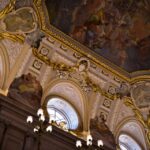
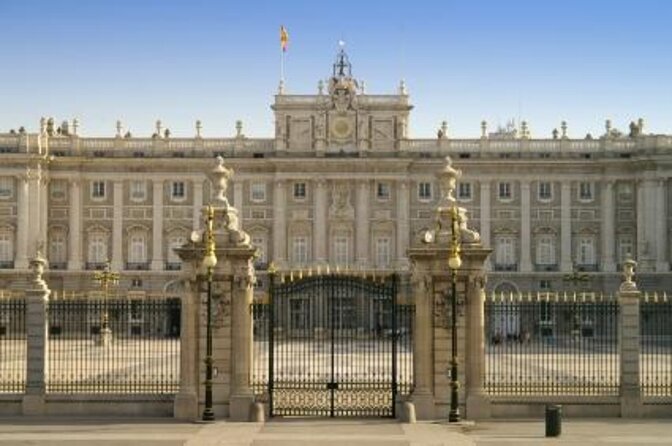
This is where Madrid goes full postcard. The tour includes the Royal Palace—also called Palacio de Oriente—and explains it’s used for receptions, ceremonies, and official events because the kings reside in the Palacio de la Zarzuela.
Construction began in 1738 and lasted about 17 years. It also notes that in 1764, Carlos III made it his habitual residence. Another detail I found especially interesting: the palace sits on the same site as the older Palace of the Austrias, destroyed by a fire on Christmas Eve in 1734.
For the gardens, you’ll hear about:
- Campo del Moro, west of the palace, with origins tied to the Middle Ages, and visitable during the day
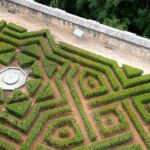
- Sabatini Gardens, in front of the north facade, covering about 2.66 hectares
Even if you don’t walk the paths today, this stop gives you a clear target for later. You’ll know where to go for calm, greenery, and the kind of views that are hard to replicate from a street corner.
Temple of Debod: Free Ticket, Big Contrast With Egypt
The route also includes a quick stop at Templo de Debod, an ancient Egyptian building located in Madrid. It’s west of Plaza de España near Paseo del Pintor Rosales, on a hill where the Cuartel de la Montaña used to be.
This is one of those “only in Madrid” surprises. The tour notes 10 minutes and that the admission ticket is free.
If timing works, I’d treat this as your contrast stop: after palaces and churches, you get Egypt-in-the-middle-of-Madrid, which makes the city feel wider than its borders.
Comfort Details That Matter: Blankets, Weather, and Getting On/Off
This tour doesn’t pretend weather doesn’t exist. It runs in rain or heat, and it can only be canceled under extreme conditions.
For comfort, you get blankets and protective layers against rain and wind. That’s not a throwaway detail. Madrid can swing fast, and when you’re seated and outdoors, a wind gust feels like a personal attack. This helps you stay out longer without the day turning into a cold test.
It also mentions the vehicles are suitable for older people, and drivers will help them get on if needed. That’s a real advantage if your group includes anyone who finds long walking tough.
Guide Styles: What I’d Look For When You Meet Yours
You might be guided by people like Carlos, Laura, Christian, Fernando, Gloria, Alejandro, Juan, and Clara—names that show up in the guide stories people share.
What those guide notes have in common is a mix of city facts and practical pointers: how neighborhoods work, what to see next, and where the best angles are for photos. Since photo stops are pre-arranged, the guide’s job becomes steering you to the right moment and keeping you oriented while you move.
If you’re the type who likes asking questions, a private format makes it easier to get clear answers without listening over other languages or other groups.
Who This Tour Suits Best (And Who Might Want Something Else)
I’d book this if you:
- are on a tight schedule and want a fast orientation
- want to see major landmarks without a long walking day
- prefer a private pace where you can ask questions
- travel with kids or anyone who prefers comfort over endurance
I’d also consider it if you’re curious about Madrid beyond the postcard highlights. The route includes both big monuments and local-feeling stops like the early-1900s covered market and the cathedral area.
You might want a different kind of tour if you’re hoping for a slow, sit-down experience inside multiple museums and churches. This one is structured around movement, photos, and guided context rather than long ticketed interior time.
Should You Book This Eco Tuk-Tuk Historical Tour?
If you’re asking whether this is worth it, my answer is yes—with the right expectations. This is a smart first-day tour. You get orientation, big sights, and local flavor in a format that reduces stress. The electric tuk-tuk is fun, the private setup keeps the experience personal, and the included weather protection helps you last through Madrid’s real-world conditions.
Book it early in your trip if you can, so the landmarks you see become your roadmap for what you’ll revisit on foot later. If you do nothing else, this tour should help you stop guessing and start choosing.
FAQ
How long is the Madrid Historical Tour?
The duration is listed as approximately 1 to 4 hours.
Is this tour private?
Yes. It’s a private tour/activity for your group only.
What language is offered?
It’s offered in English.
Do I have to buy entry tickets for Temple of Debod?
The tour notes that Temple of Debod has free admission and includes about 10 minutes there.
Where does the tour start and end?
It starts at C. de Bailén, 4, Centro, 28013 Madrid and ends back at the same meeting point.
What vehicle is used?
The tour uses a private 100% electric and sustainable tuk-tuk.
Is the tour comfortable in bad weather?
Yes. Blankets and protective layers against rain and wind are included, and tours take place in rain or heat unless extreme conditions occur.
What if I’m late to the meeting point?
If you’re delayed, the activity can be reduced according to lost time. If the delay is longer than 15 minutes and there’s no refund, the activity may be canceled.
Are children and babies allowed?
Minimum age is 2 years. Babies are not allowed. There is also a minimum weight requirement of 9 kg.
Are pets allowed?
No, pets are not allowed for security reasons.