REVIEW · MADRID
Madrid: Prison Island Giant Indoor Escape Game Entry Ticket
Book on GetYourGuide →Operated by Spark Island · Bookable on GetYourGuide
A prison game you can beat with teamwork.
Prison Island is a futuristic indoor escape adventure in Madrid built around 32 themed cells, inspired by the famous Fort Boyard TV format.
I love that there is no single way out. I also like the way the challenges mix physical, mental, and tactical thinking so it does not become one person carrying the whole team.
One heads-up: if your group gets stuck in a long puzzle stretch, the planned 1–2 hour window can start to feel tight.
In This Review
- Key things you should know before you go
- Prison Island in Madrid: 32 challenge cells in a futuristic arena
- Before You Play: check-in at Spark Island and what to expect
- How the game moves: no single exit and scores that keep rising
- The puzzle mix: physical, mental, and tactical tasks in themed cells
- Leaderboards and team strategy: how to play for rank
- Timing reality: fitting 32 rooms into 1–2 hours
- Best group fit: ages, movement, and who will enjoy this most
- Price and value: is $26 per person worth it?
- Comfort, food, and small tips that help you win time
- Should you book Prison Island entry in Madrid?
- FAQ
- How long is Prison Island in Madrid?
- How many rooms are included?
- Is food and drinks included?
- Where do I meet for the activity?
- What languages are available for the host or greeter?
- What should I bring?
- Is this suitable for children?
- Is it suitable for older adults?
- Can I cancel for a refund?
- Does it include a way to avoid the ticket line?
Key things you should know before you go
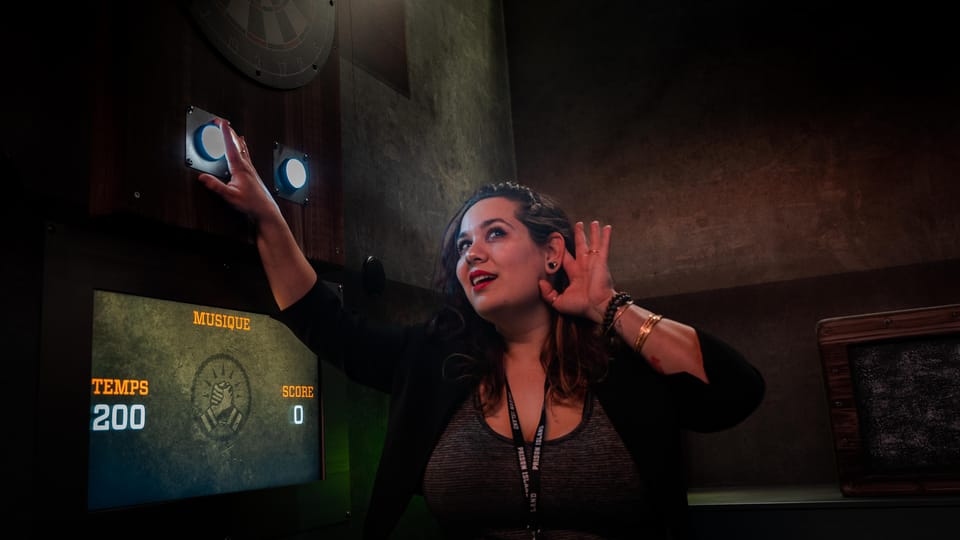
- 32 challenge rooms in one continuous indoor prison arena
- Team scoring and a leaderboard so you can compare your run afterward
- You can move freely between cells instead of following one strict sequence
- A mix of physical, mental, and tactical tasks that rewards communication
- Built for groups and all ages with limits (not for kids under 10, not for people over 70)
- Fort Boyard inspired concept with a globally recognized adventure game format
Prison Island in Madrid: 32 challenge cells in a futuristic arena
Prison Island is not your typical locked-room puzzle. You are inside a high-tech, indoor prison themed arena with themed “cells,” and the day plays more like a controlled chaos action game than a quiet brain teaser. The setting is futuristic and game-like, which helps you jump in fast instead of spending the first chunk of time figuring out the theme.
The big promise here is strategy with teamwork. You are working against time, but also against uncertainty, because you do not have one clear route where you can just sprint through “the story.” Instead, you build momentum by solving challenges and moving on—then you do it again, over and over, across 32 rooms.
At $26 per person (based on the ticket), you are buying a full indoor session with a lot of variety. That matters in Madrid, where weather can change your plans quickly. This is the kind of activity that works on a rainy day and still feels like a real event because there is scoring, competition, and movement.
You can also read our reviews of more tours and experiences in Madrid



Before You Play: check-in at Spark Island and what to expect
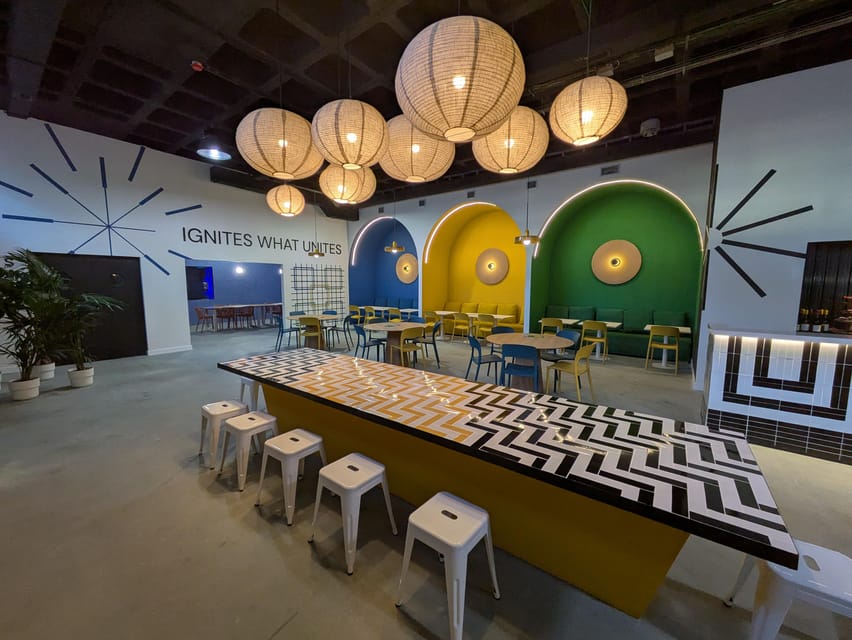
You meet at the building entrance with the Spark Island logo outside. Show your GetYourGuide voucher at the entrance and get going. The experience runs with an English, French, or Spanish host/greeter, so you should be able to understand instructions even if your Spanish is rusty.
From there, plan for a short setup and game start, then the real work begins: entering the arena and tackling the themed cells. The ticket is set for up to 2 hours, and your timing will depend on how quickly your team coordinates and how often you get help or reset after a hard puzzle.
What to bring is simple: comfortable clothes. That is not just a polite suggestion. Prison Island is described as a game that uses technical, physical, and tactical skills, so you will feel better if you can move, crouch, twist, and sprint a little without thinking about your outfit.
If you want a smooth start, arrive with your team thinking in roles. Even a small plan like who spots puzzle clues vs. who runs between areas can shave minutes off your first couple of cells.
How the game moves: no single exit and scores that keep rising
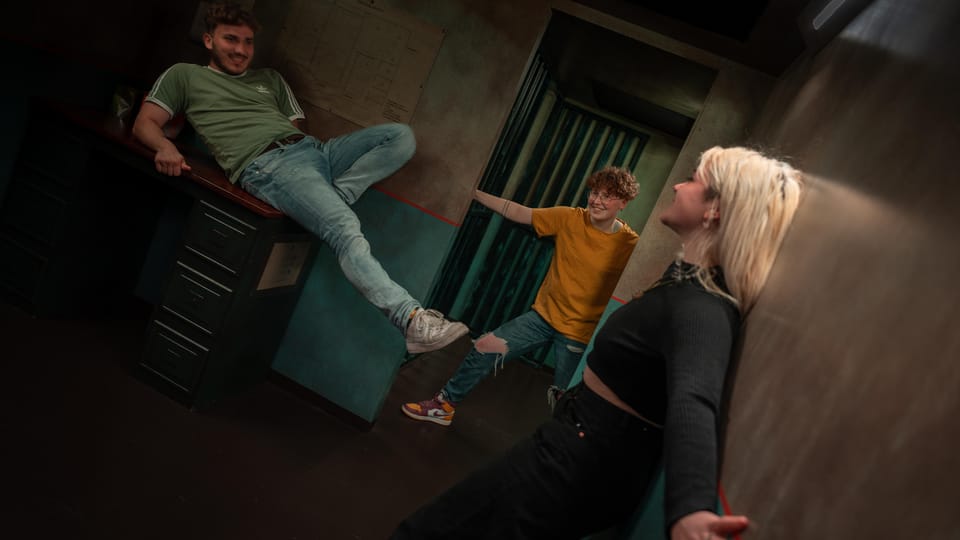
The smartest design choice in Prison Island is that there is no single way out. Many escape games push you down one corridor of puzzles. This one lets teams move between challenges freely, so your run becomes more about decisions than obedience.
You collect points as you progress, and the leaderboard is part of the fun after the session. That structure changes how you play. Instead of treating every task like a must-solve first, you can treat some cells like opportunities: solve what you can quickly, shift focus, and build your best overall run through the arena.
For a group, that flexibility is huge. It lets you adapt to what your team is good at. If one cell is a tough mental wall, you can pivot. If you have someone who is great at noticing patterns or angles, you can route toward tasks that reward that skill set. The game keeps moving, and your team’s strategy becomes the real engine.
One practical mindset: communicate early. If you wait until you are frustrated to share ideas, you lose time in multiple cells. Prison Island rewards the teams that talk constantly and assign next steps quickly.
The puzzle mix: physical, mental, and tactical tasks in themed cells
Prison Island is built around a blend of challenge types. The physical side is there, the mental side is there, and the tactical side is there—so the game does not let one narrow skill take over.
In practice, that usually means your team will face tasks where:
- you need to coordinate bodies and movement (not just think)
- you need to interpret clues or solve problems (not just race)
- you need to choose when to act and when to analyze (not just brute force)
The cell themes also matter. One review from an EVJF group said they loved that every room had different themes, and that kept the energy up for a first-time group. That matches the basic idea: variety prevents the session from feeling repetitive, even when you are doing 32 rooms.
There is also a competition layer that turns puzzle-solving into a game of momentum. If you feel your team slipping, you can reset your approach: regroup, swap roles, and go back to problem-solving instead of guessing.
The main thing you should plan for is balance. If you bring only your most logical person, you might still hit a challenge that requires physical coordination. If you bring only your most energetic person, you might stall out on mental tasks. A mixed team is the easiest win.
Leaderboards and team strategy: how to play for rank
Prison Island has a leaderboard, and after you finish you can see where your team ranks. That makes the experience feel more like an event and less like a casual pass-through. It is also a great motivator for groups that want a fair competitive edge.
Strategy-wise, think of it like triage:
- Prioritize the cells your team can solve fastest.
- When a cell looks like it needs multiple brains, pause and assign a clear solver group rather than spreading confusion.
- Keep moving once you hit diminishing returns on one challenge.
A useful detail from feedback: one game experience highlighted that teams wanted more pointers, so they could understand the tasks faster. That is a good signal for you. If your group is the type that hates being stuck, you should set expectations before the first room—agree that you will ask for help or adjust quickly instead of spending 20 minutes spinning in place.
Also, remember this is a team game. The best “tactic” is usually the simplest one: clear communication, quick role swaps, and a shared plan for how you will handle mistakes.



Timing reality: fitting 32 rooms into 1–2 hours

The ticket says 1–2 hours, with “2 hours in Prison Island (32 challenge rooms)” included. That range exists because teams play at different speeds and solve puzzles differently.
One review noted a team spent about three hours, which tells you some groups treat it as a deeper play session rather than a sprint. Another review said a group with 14-year-olds got through all the cells in about an hour and a half, which suggests speed is absolutely possible if your team coordinates well.
So what should you do with your timing?
- Expect to move steadily, not leisurely.
- Be ready to change cells if one challenge blocks you.
- Keep a mental checklist of how your team is doing: if you are behind early, you may need to skip one puzzle approach and come back later.
If you only have a tight schedule in Madrid, give yourself buffer time afterward. It is not a long travel-style excursion, but it is not a 30-minute activity either. Build in extra minutes so you do not feel rushed during the final push.
Best group fit: ages, movement, and who will enjoy this most

Prison Island is aimed at groups and is described as ideal for all ages from 10 to 99, with specific limits: it is not suitable for children under 10 and not suitable for people over 70. If you are bringing a mixed group, the key question is mobility and patience, not age on paper.
This is also a strong pick for:
- friends looking for a competitive game night
- families with teens who enjoy action and problem-solving together
- corporate team-building when you want something active and interactive indoors
You can see that reflected in the types of groups mentioned: an EVJF group loved the concept and the flow across rooms; a family with teenagers managed all cells in time and seemed genuinely happy with the experience. In other words, it lands when people show up ready to play, not just watch.
If your group prefers quiet sightseeing, Prison Island will feel too energetic. If your group prefers active challenges that require teamwork, this is a great match.
Price and value: is $26 per person worth it?
At about $26 per person, you are paying for:
- 32 rooms of themed challenges in one continuous indoor arena
- a structured play session designed around teamwork and strategy
- scoring plus a leaderboard for competitive satisfaction
- staff support in English, French, or Spanish
Escape-style games can vary wildly in value depending on how long they last and how much you actually do. Here, the value angle is the room count and the time structure. Even though you do not have to solve everything in one linear chain, you are still expected to work through a large set of challenges inside a fixed time window.
There is also a practical value point: you do not need tickets to multiple attractions. This is one price for a full indoor adventure, which is ideal if you want to keep your Madrid schedule simple and avoid decision fatigue.
Food and drinks are not included, so budget for a snack stop afterward. But that is often a plus: you can choose where to refuel based on your plans in the city.
For best value, go with a team size that can actually divide tasks. If your group is too small, it can feel slower. If it is too big, coordination can get noisy. Mid-size teams usually make the game feel crisp.
Comfort, food, and small tips that help you win time
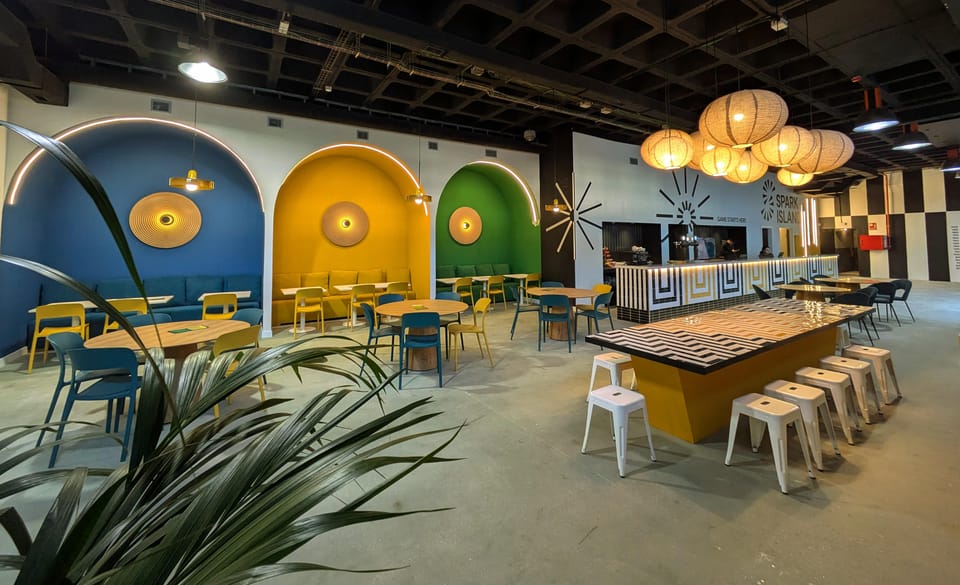
Prison Island includes activity time but not food or drinks. Plan a quick meal or snack before you arrive, and bring water if you think you will need it (the ticket details only say food and drinks are not included, so it is smart to be ready).
The biggest practical tip is clothes. “Comfortable” here means movement-friendly. Pick shoes that you can sprint in a bit and avoid anything that will restrict you when you crouch or scramble.
Next, set expectations as a team before you start:
- Decide how you will communicate in the moment.
- Pick a runner vs. a puzzle reader role.
- Agree that you will not waste time stuck on one cell.
Finally, keep an eye on momentum. The game design allows you to move between challenges, so treat each cell as a step in a bigger run. When you do that, the leaderboard at the end feels like a reward, not an afterthought.
Should you book Prison Island entry in Madrid?
Book it if you want an indoor Madrid activity that feels like an event: 32 themed cells, a score trail, and a leaderboard make it competitive and fun. It also fits different group styles—kids who like action, adults who like puzzles, and teams that want to do something together without needing travel time between sites.
Think twice if your group hates physical movement or struggles with teamwork under time pressure. The game is designed for action plus problem-solving, and the clock matters.
If you are planning a family day, a friends’ outing, or a team-building break from sightseeing, Prison Island is a strong choice. Just plan on comfy clothes, a quick pre-game snack, and a team attitude that says we’ll try, regroup, and keep moving.
FAQ
How long is Prison Island in Madrid?
The ticket duration is listed as 1 to 2 hours, and the included time covers up to 2 hours for the 32 challenge rooms. Starting times depend on availability.
How many rooms are included?
You get time in Prison Island with 32 challenge rooms during your session.
Is food and drinks included?
No. Food and drinks are not included with the entry ticket.
Where do I meet for the activity?
There is a sign with the Spark Island logo outside the building. Show your GetYourGuide voucher at the entrance.
What languages are available for the host or greeter?
The host or greeter is listed as available in English, French, and Spanish.
What should I bring?
Wear comfortable clothes since the game includes physical movement and activity.
Is this suitable for children?
It is not suitable for children under 10. It is also described as fitting an all-ages range of 10 to 99, with the note that it is not suitable for people over 70.
Is it suitable for older adults?
It is not suitable for people over 70.
Can I cancel for a refund?
Yes. Free cancellation is offered up to 24 hours in advance for a full refund.
Does it include a way to avoid the ticket line?
Yes, it includes skip-the-ticket-line entry.