REVIEW · MADRID
Madrid: Avila and Segovia Day Trip with Tickets to Monuments
Book on GetYourGuide →Operated by Fun and Tickets · Bookable on GetYourGuide
Two UNESCO towns in one smooth bus day. This guided outing strings together Ávila’s fortress walls and Segovia’s Roman aqueduct with monument tickets included, so you spend more time looking and less time queuing.
I love how the guide story stays with you as you walk, and how headsets help you hear everything without stopping. In particular, I noticed guides like Laura in Segovia and Elizabeth in Ávila are called out for making the history feel clear and fun.
The trade-off is a long, active day on cobblestones, so it is not a fit for wheelchair users or anyone with mobility limits. Also, lunch isn’t included, so you’ll want to plan your own bite during the free time.
In This Review
- Key highlights you’ll actually feel during the day
- Why Ávila and Segovia feels different in the same 9 hours
- Getting there from Madrid: comfortable bus, real time on the ground
- Ávila’s walls: the medieval skyline you can walk right into
- Basilica de San Vicente: Romanesque details that reward close looking
- Ávila Cathedral: a stop that explains the city’s layers
- The Saint Teresa church-convent: history with a location story
- Ávila free time: fuel your afternoon the way you want
- Segovia: the Roman aqueduct first, because it changes how you see everything
- Segovia Cathedral: Gothic height with Renaissance influence
- Alcázar of Segovia: the fortress-palace that looks like a fairytale ship
- How the timing works (and where you might feel the pace)
- Price and value: what $74 buys you (and why it’s not just cheap)
- Who should book this trip
- Should you book Madrid: Ávila and Segovia Day Trip with Tickets to Monuments?
- FAQ
- How long is the Madrid to Ávila and Segovia day trip?
- What’s included in the price?
- Is lunch included?
- Do I need to buy tickets for the monuments?
- What languages does the guide speak?
- Is this tour suitable for wheelchair users or limited mobility?
- Can I cancel, and is payment flexible?
Key highlights you’ll actually feel during the day
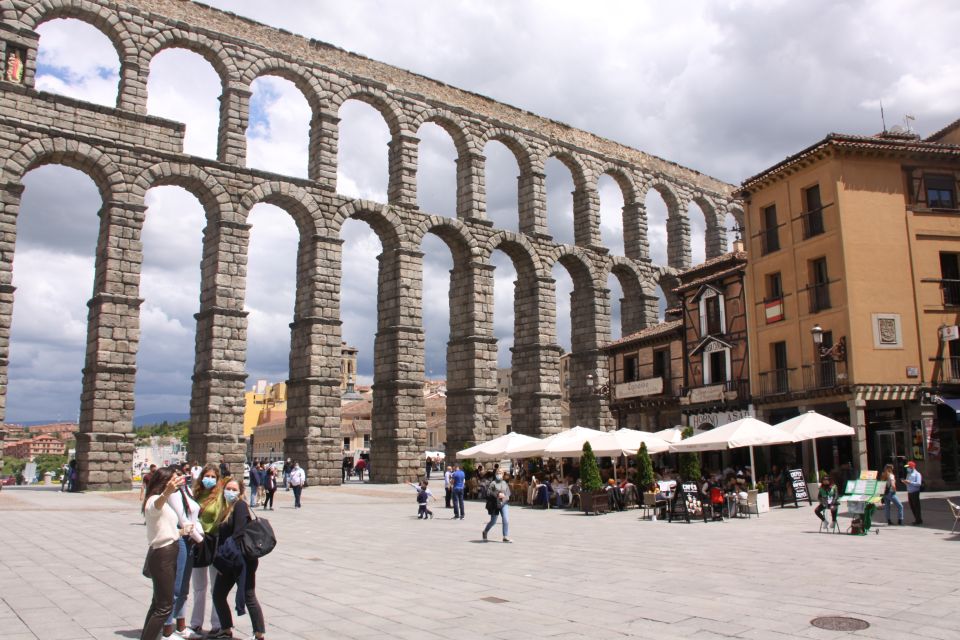
- UNESCO towns with real monuments: Ávila’s defensive walls and Segovia’s biggest Roman and medieval sights
- Skip-the-line entry for major churches and the Alcázar (so your time goes to sightseeing)
- Radio guide with headphones that keeps the group moving and the narration easy to follow
- Ávila’s 11th-century walls: among the best-preserved fortifications in Spain
- St. Teresa of Jesus church-convent: the Discalced Carmelites site tied to her birth story
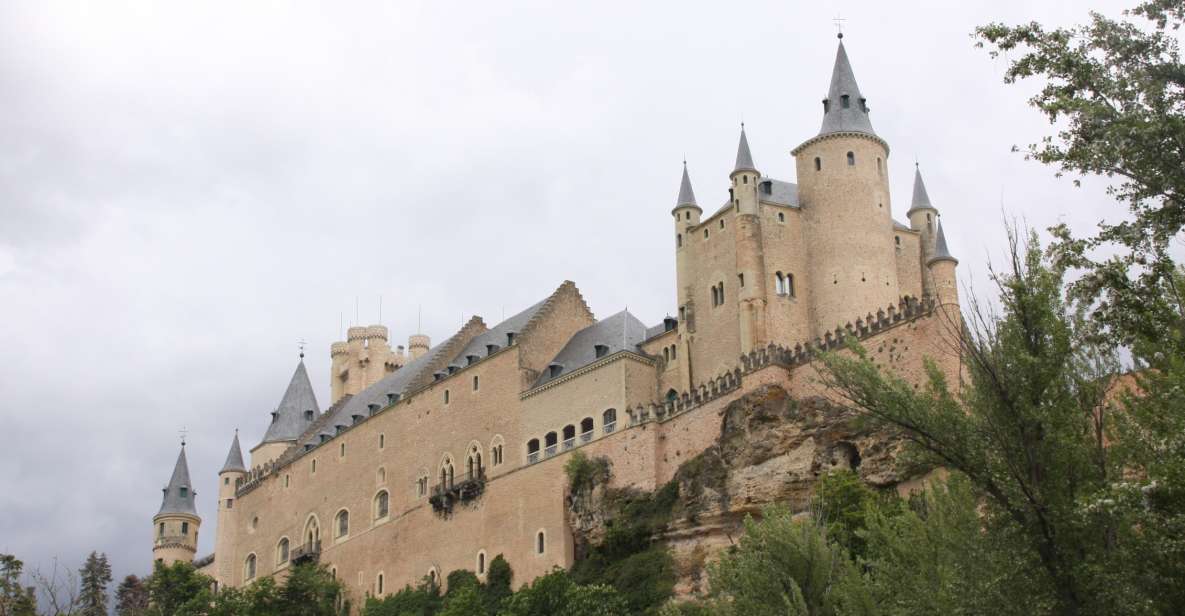
- Segovia’s Alcázar fortress-palace: famous for its ship-bow-like shape on a rocky crag
Why Ávila and Segovia feels different in the same 9 hours
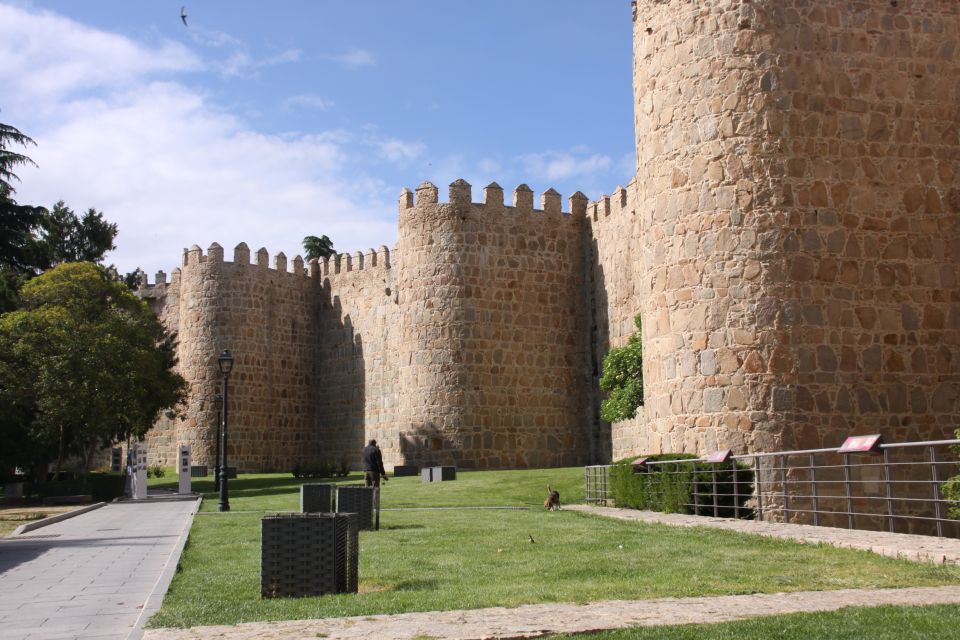
Ávila and Segovia are close enough for a day trip, but they don’t feel the same. Ávila hits you first with height and protection: stone walls around a compact old town, the whole place built to defend. Segovia flips the vibe to grandeur—big-scale Roman engineering, then a soaring cathedral and a fortress that looks almost unreal for a working city.
What makes this tour work for most people is that it doesn’t just point at famous spots. The pacing is structured so you see the icons in the right order, and your guide explains what you’re looking at as you go. That’s why the headsets matter: you get context while keeping your momentum on narrow streets.
You’ll also leave with a clear mental map. By the time you reach Segovia’s main symbols—the aqueduct, cathedral, and Alcázar—you understand how the city projects power across different centuries.
You can also read our reviews of more tours and experiences in Madrid



Getting there from Madrid: comfortable bus, real time on the ground
The day starts with a coach departing from Fun and Tickets by San Bernardo, 7. The drive to Ávila is about an hour, which is long enough to settle in but not so long that you waste the morning.
One big practical win: the bus is air-conditioned and comes with onboard Wi‑Fi. A few people noted the Wi‑Fi can be spotty at times, but at least you’re not paying for it or relying on your own roaming data. Either way, the bus is your reset button—water, bathroom stop timing, and enough room to relax before walking begins.
The return trip to Madrid is listed as about 70 minutes, so you’re not stuck on the highway for ages after a full day.
Ávila’s walls: the medieval skyline you can walk right into
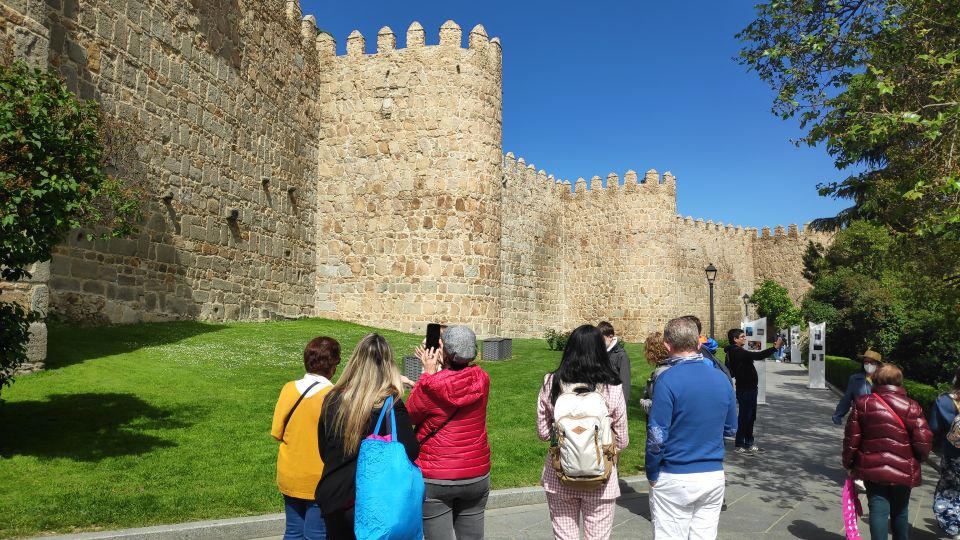
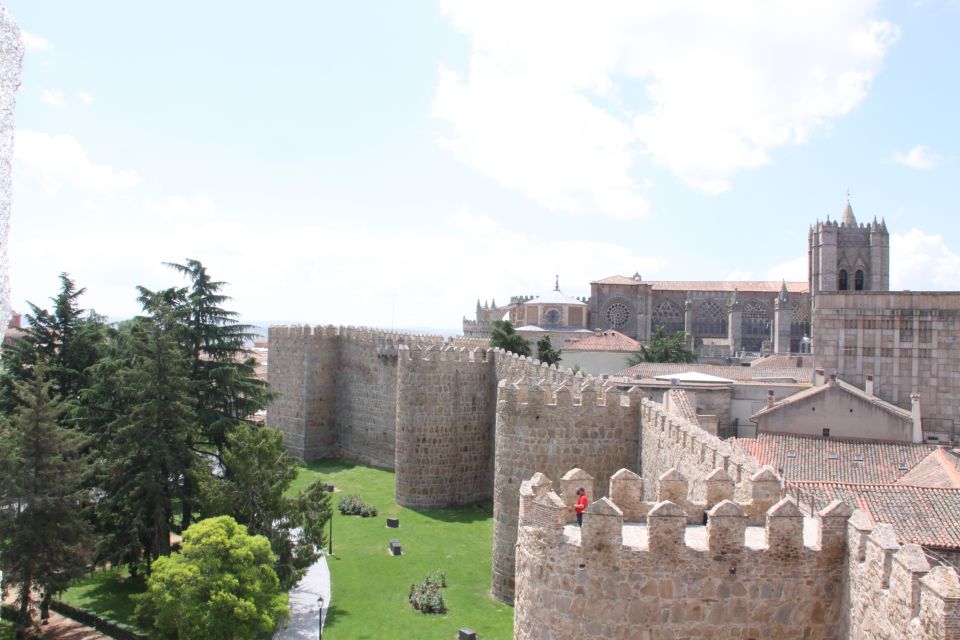
Ávila’s walls are the first moment where the whole day clicks. These are 11th-century fortifications and they’re described as among the most complete in Spain—meaning you don’t get fragments. You get a continuous sense of scale, with towers and ramparts forming a real defensive ring.
Your guided time here helps you read the city like a puzzle. You’re not just taking photos of stone. Your guide points out why walls mattered, how the town was organized around defense, and what you can still trace in the architecture. If you like big, visible history—this is it.
Practical note: the walk in and around the walls can be brisk. Bring comfortable shoes and expect uneven surfaces. In old towns, a pair of sneakers that feels great in a shop can suddenly feel wrong after two hours.
Basilica de San Vicente: Romanesque details that reward close looking
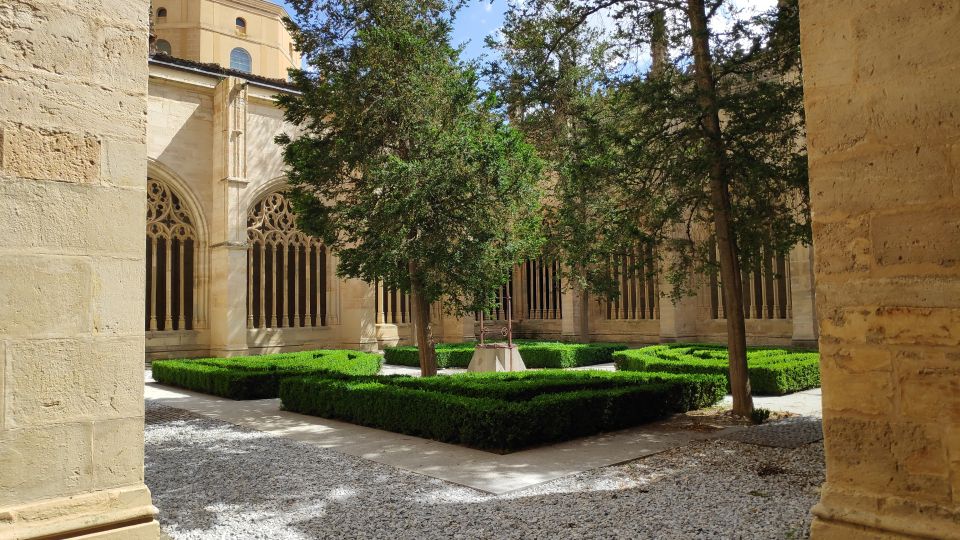
Next up is the Basilica of San Vicente de Ávila, including your entry ticket. This is where your day shifts from broad views to craftsmanship.
What I like about including this specific basilica is that Romanesque architecture tends to be easier to overlook than Gothic cathedrals—until you’re inside. Your guide sets it up so you know what to notice: shapes, proportions, and the kind of stonework that feels sturdy and intentional rather than decorative.
You’ll also appreciate the tour structure here: the visit includes skip-the-line style access (a separate entrance is mentioned). That matters because basilicas can become slow bottlenecks in peak times. Here, you keep your focus on the interior instead of standing around.
Ávila Cathedral: a stop that explains the city’s layers
After the basilica, you pass by key landmarks and then continue to the Ávila Cathedral. Even if you only take a short look inside, it’s worth it because it adds another layer to the city’s story: not just defense and religion, but evolving styles over time.
Your guide’s job is to help you connect what you’re seeing to why it happened. That’s the difference between a checklist stop and a meaningful visit.
You can also read our reviews of more tours and experiences in Madrid


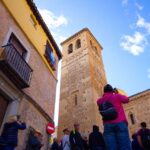

The Saint Teresa church-convent: history with a location story
Then comes the church-convent of St. Teresa of Jesus. The itinerary includes it as a covered stop, and it’s tied to a major religious figure: Teresa of Ávila.
You’ll visit the Discalced Carmelites-built church-convent from the 17th century, described as being supposedly in the same place connected to her birth. Whether you think of it as a pilgrimage site or a history stop, the point is the location story. It turns a name you might recognize into a place you can stand in and see with your own eyes.
This is one of the places where your guide’s tone really matters. Several guides were praised for storytelling that made religious and medieval details understandable without turning it into a lecture. If your group guide is strong, this stop becomes a highlight rather than a checkbox.
Ávila free time: fuel your afternoon the way you want
After the main guided blocks, you get free time in Ávila. The tour also includes an aperitif plus a drink, with options described as wine, beer, soft drinks, and an aperitif style break.
This is a nice compromise. You get a small included snack/drink, but you still control what happens next: you can stroll, grab something for lunch on your own, or just enjoy the street rhythm of a walled town.
One heads-up from real-world expectations: lunch isn’t included, and the free time is limited compared to what you’d get if you stayed overnight. If you care about a relaxed sit-down meal, plan to keep it simple and efficient.
Segovia: the Roman aqueduct first, because it changes how you see everything
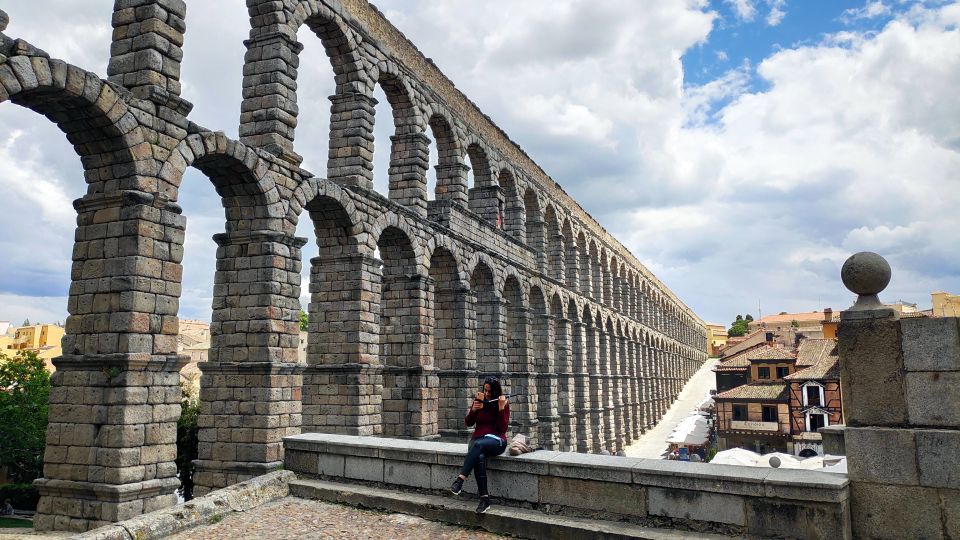
Once you regroup (the schedule notes a regrouping at 2 PM to go on to Segovia), the city starts with its biggest visual clue. You begin Segovia with the Roman Aqueduct, one of the most recognizable engineering achievements of the Roman Empire.
Starting here is smart. The aqueduct isn’t just a photo stop. It explains why Segovia mattered and how the city could function at scale. When you understand the infrastructure, the rest of the city’s monuments feel less random.
Your guide also helps you connect the aqueduct to the way the city represents itself—its presence on the coat of arms is mentioned—so you’re seeing not only history but the way history gets reused in identity.
Segovia Cathedral: Gothic height with Renaissance influence
From the aqueduct you move through the city’s center, passing major squares like Plaza Mayor. Then you go into the cathedral dedicated to Our Lady of the Assumption and of San Frutos.
This cathedral stop is often where people realize that Segovia’s architecture isn’t just one style. You’ll notice the blend described as late Gothic with Renaissance features. That is why it’s sometimes nicknamed the Lady of the Cathedrals—you’re not just hearing a nickname. You’re getting the reason through the scale, elegance, and proportions inside.
Go in expecting height and detail. If you’re the kind of person who likes to pause and look up, this is your moment.
Alcázar of Segovia: the fortress-palace that looks like a fairytale ship
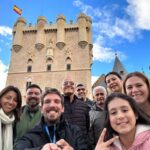
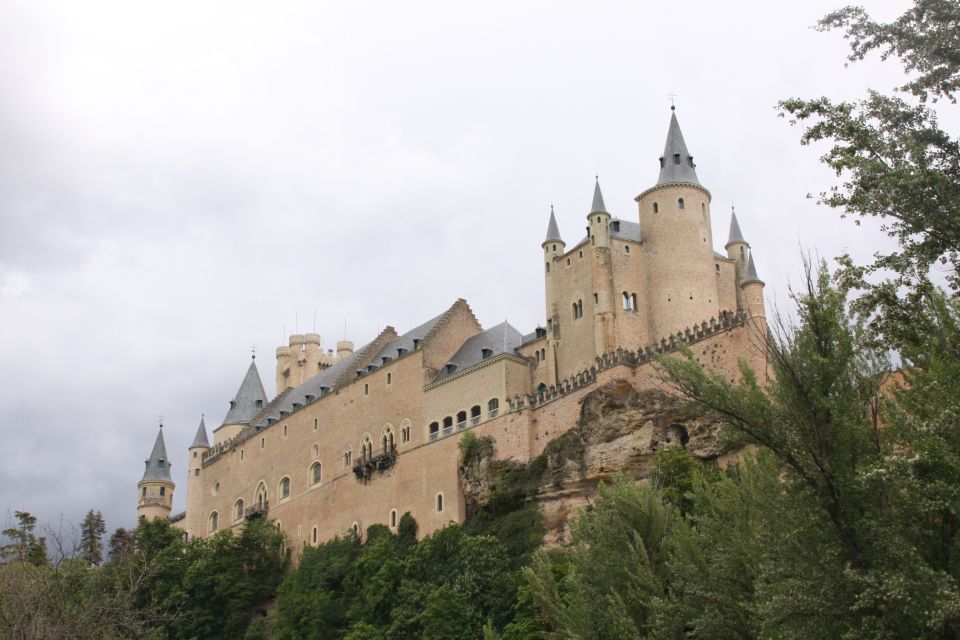
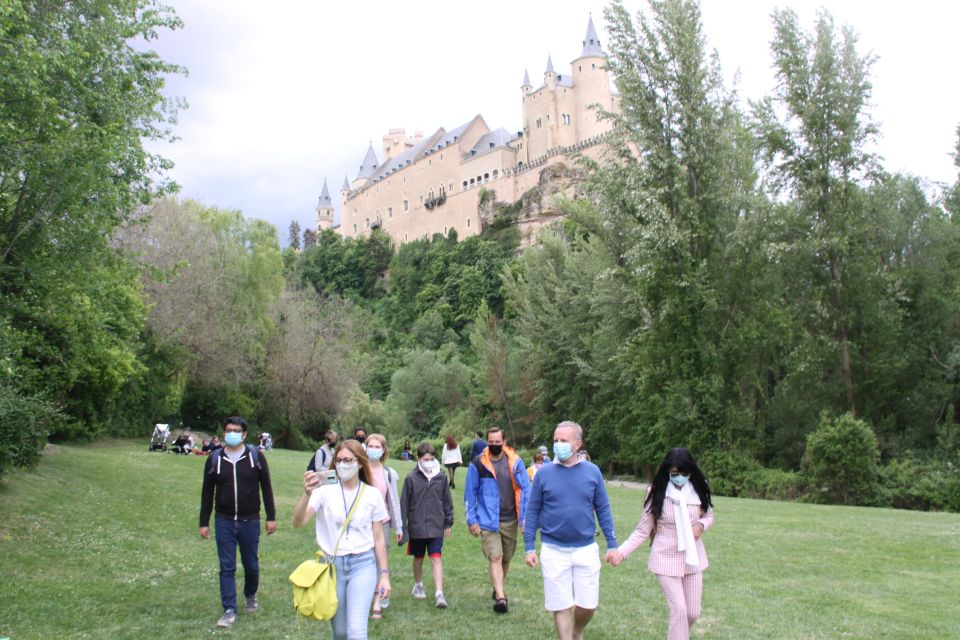
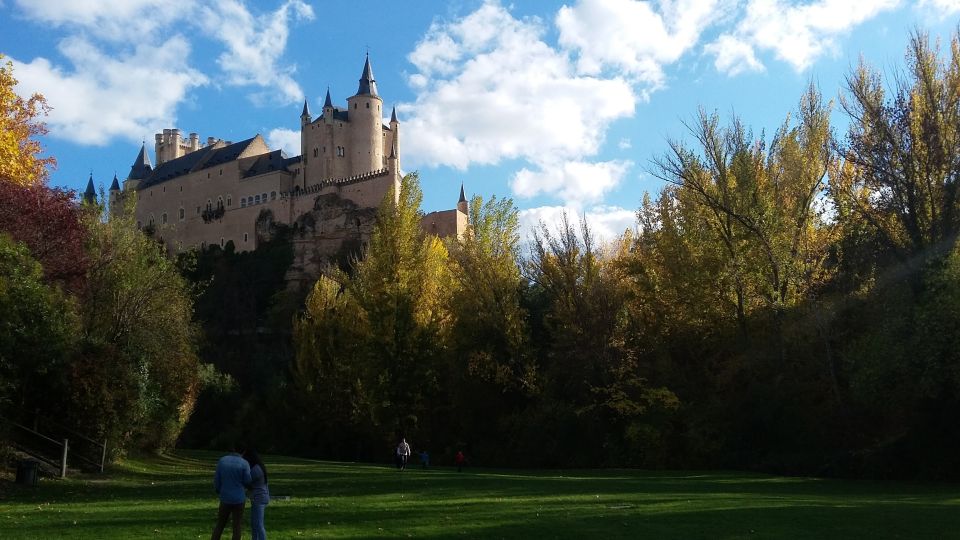
Finally: the Alcázar of Segovia. This is a medieval castle-palace sitting on a rocky crag at the confluence of rivers near the Sierra de Guadarrama. The setting alone helps explain its power—your eyes naturally follow the walls upward and the rivers below.
The tour includes admission, and you’ll go inside. This is where the famous silhouette pays off. Your guide points out the distinctive shapes—especially the description that it resembles the bow of a ship—which is one reason it gets compared to that instantly recognizable storybook castle look.
Practical reality: you’ll be walking and navigating stairs and uneven areas inside. Plan your pace. Take the photos when you have them framed, then spend your time listening to the guide’s explanations so the visit sticks.
How the timing works (and where you might feel the pace)
This is a full day: roughly 9 hours total, starting in Madrid and returning after the Segovia portion finishes. Even with a comfortable coach, the day is built around guided walking blocks in historic cores.
From the way it’s described, your day flows like this:
- morning focus in Ávila (walls, Romanesque basilica, cathedral, then St. Teresa)
- mid-afternoon regrouping at 2 PM
- Segovia sights stacked in a clear order: aqueduct → squares → cathedral → Alcázar
- return by bus after the final monument
So yes, it’s packed. But the experience is designed to keep you from feeling lost: headsets help, and the guide approach keeps narration going without constant stops.
If you’re traveling in colder months, dress for it. One person noted waiting in the cold at the start, and another mentioned rainy weather didn’t ruin the day. Layers beat one big jacket. You’ll thank yourself when the weather shifts and you’re walking.
Price and value: what $74 buys you (and why it’s not just cheap)
At $74 per person, this day trip is priced like a guided day with admissions, not a bare transport-only outing. The included tickets cover the Basilica de San Vicente, the Segovia Cathedral, the Alcázar, and the church-convent of St. Teresa.
That matters because in Spain, entry fees for major monuments add up fast. You also get a structured guide experience with official guiding, plus radio support and headphones. Add in an included aperitif and drink, and you’re getting both the guided narrative and parts of the food break handled for you.
Is it pricey compared to a DIY bus? Sure. But it’s good value compared to paying separately for monuments plus trying to coordinate timing in two medieval towns that don’t run on your schedule.
Who should book this trip
This is a strong match if you:
- want major monuments in one day without planning every ticket and route
- like guided context while you walk
- prefer a structured day over wandering until you find the next entrance sign
It’s not ideal if you:
- need wheelchair-friendly routes or have mobility limitations (the trip is listed as not suitable)
- want a slow, linger-and-lunch-style itinerary
- hate walking on historic streets
If you’re traveling as a family, you’ll likely do fine with smart shoe choice and a positive attitude—one family specifically called out enjoying the day as a group while staying engaged.
Should you book Madrid: Ávila and Segovia Day Trip with Tickets to Monuments?
If your goal is two UNESCO towns’ worth of iconic sights in a single day, I think this is a smart book. The combination of headsets, included monument tickets, and guides who are praised by name (like Laura and Elizabeth, plus Rafa and Carlos in other groups) is exactly what turns a “sightseeing day” into a coherent story you can remember.
Book it if you’re okay with a long walking schedule and you’re fine eating lunch on your own. Skip it if you need a more flexible pace, a guaranteed sit-down lunch, or wheelchair-friendly access.
If you’re the type who wants one great day outside Madrid that covers the essentials—this delivers.
FAQ
How long is the Madrid to Ávila and Segovia day trip?
It runs for about 9 hours.
What’s included in the price?
Transportation by air-conditioned bus, onboard Wi‑Fi, an official live guide with radio and headphones, entry tickets for the Basilica de San Vicente, Segovia Cathedral, and Alcázar of Segovia, the church of St. Teresa of Jesus, plus 1 aperitif and 1 drink.
Is lunch included?
No. Lunch is not included.
Do I need to buy tickets for the monuments?
You don’t need to purchase the included monument tickets in advance for the stops listed: Basilica de San Vicente, Segovia Cathedral, and Alcázar of Segovia, plus the St. Teresa of Jesus site.
What languages does the guide speak?
The tour is offered in Spanish and English.
Is this tour suitable for wheelchair users or limited mobility?
No. It is listed as not suitable for people with mobility impairments or wheelchair users.
Can I cancel, and is payment flexible?
Free cancellation is available up to 24 hours in advance for a full refund, and you can reserve now and pay later.