REVIEW · MADRID
Madrid: Royal Palace Guided Tour with Entry Ticket
Book on GetYourGuide →Operated by madzguía freelance · Bookable on GetYourGuide
First, a palace that feels like theater. This guided Royal Palace visit gives you the story behind the gilding: you’ll move room to room with a local guide and see why Carlos III’s apartments and the throne-area sets matter. I especially love the porcelain-covered room moment and how the guide ties art, furniture, and decoration to the people who lived here.
One thing to plan for: it’s not a private tour, and crowds can still happen even with group access—especially on heavier days.
In This Review
- Key highlights you’ll actually feel during the tour
- Why the Royal Palace feels different with a guide
- Meeting point and starting smart at Punto de Información Turística
- The main route: 2 hours through the palace’s most readable rooms
- Stop by Stop: what you see and why each area matters
- Entering the palace with context, not just decoration
- The Royal Palace’s scale: 25 large rooms you won’t binge
- The room covered in porcelain
- Carlos III apartments: stucco, style, and the logic of the main floor
- Throne Room and the Gasparini Chamber: Rococo taste with a clear explanation
- Carlos IV and Ferdinand VII rooms: French furniture, chandeliers, and the 1879 renovation
- Royal Armory stop at Plaza de la Armería: what’s included and what isn’t
- Guide quality matters: Rubén’s pace, patience, and history-to-life answers
- Timing tips: how to avoid feeling trapped in the crowd
- Practical tips before you go (small details that save time)
- Price and value: what $33 buys you in real terms
- Who this Royal Palace tour fits best
- Should you book Madrid’s Royal Palace guided tour?
- FAQ
- How long is the guided tour?
- Where do we meet the guide?
- Is the ticket line skipped?
- What’s included in the price?
- What languages are offered?
- Are photos allowed inside the palace?
- What do I need to bring?
- Is hotel pickup available?
- What about the Royal Armory?
- Is the tour canceled if I’m late?
Key highlights you’ll actually feel during the tour
- Skip-the-ticket-line group access helps you get inside faster, though busier days may still mean waiting
- Carlos III apartments bring you to the main decorative focus of the palace’s most memorable suites
- Room covered in porcelain is a standout visual payoff you can’t replicate with a quick photo stop
- Throne Room and the Gasparini Chamber connect Rococo taste to real political and artistic choices
- Royal Armory is not part of the guided explanation and can be closed for works on some days
- Small-group guidance often makes it easier to ask questions (especially with guides like Rubén)
Why the Royal Palace feels different with a guide

Madrid’s Royal Palace is huge, but the challenge is that “huge” can turn into “overwhelming.” A self-guided visit can turn into wandering: you see beautiful rooms, but the meaning gets lost fast.
With this tour, you get a clear thread. You’re not just looking at decoration—you’re learning how the monarchy shaped what you’re seeing. That includes the “why” behind rooms associated with Carlos III, along with the decorative style changes that happened across reigns.
Two details make the experience land. First, you get to the porcelain-covered room, which is the kind of sight that’s hard to fully understand from outside descriptions. Second, your guide points out how the palace’s art and objects connect to Spanish royal life, not just to Spanish craftsmanship.
You can also read our reviews of more tours and experiences in Madrid


Meeting point and starting smart at Punto de Información Turística

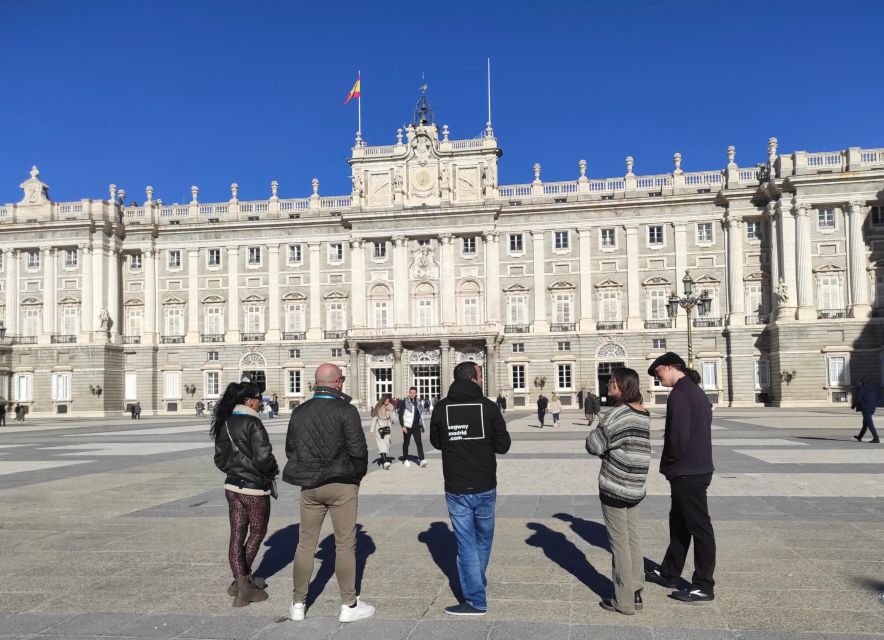
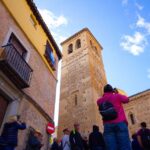
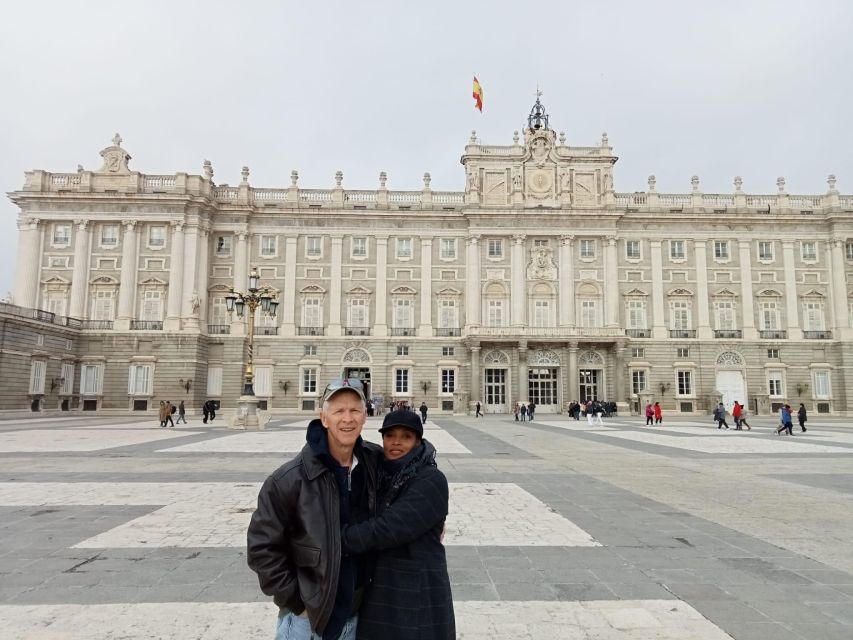
You meet your guide next to the Tourist Information Office at the Royal Palace—look for the light blue umbrella. This is practical because it puts you right at the action without a complicated transit step.
The tour starts with your group entering through group access. That’s the main advantage here: you avoid the main queue that forms when large numbers of people show up at once. Still, on Saturdays, Sundays, and holidays, you may hit some waiting due to force majeure. It’s not something you can fully control, so I’d plan a little buffer time if your day is tight.
Also note the guide language setup. The tour is offered in Spanish or English, not both at the same time. If you’re trying to keep everyone together in one language, check that the time slot matches what you need.
The main route: 2 hours through the palace’s most readable rooms

This visit runs about 2 hours, which is the sweet spot for the Royal Palace. Long enough to see major highlights, but short enough that you’re not stuck in every corridor and side room.
Inside, you’ll follow a path that focuses on rooms tied to key reigns and signature decorative choices. Your guide leads you past notable works and settings, including:
- pictorial works and tapestry-style decoration
- jewelry and decorative elements
- stuccoed walls that show the palace as an intentional design project, not just a collection of rooms
One key thing: no photography is allowed inside. That sounds obvious, but it matters for your expectations. If you’re the type who needs images for later memory, go heavy on note-taking and pay attention to what you’re looking at right then.
Stop by Stop: what you see and why each area matters
Entering the palace with context, not just decoration
Right away, your guide sets the stage. You learn how the palace fits into the monarchy and into Madrid’s story. This matters because the Royal Palace isn’t only about beauty; it’s about power displayed through design.
As you walk, you’ll hear about decorative choices and how they tie to different kings and time periods. That makes the rooms feel connected, instead of like separate museum boxes.
You can also read our reviews of more guided tours in Madrid



The Royal Palace’s scale: 25 large rooms you won’t binge
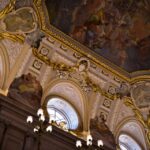
One of the facts that gives perspective is that the Royal Palace is described as the largest palace in Western Europe, with 25 large spectacular rooms. In 2 hours, you can’t see everything—and that’s actually fine.
Your tour is curated toward the most memorable sets so you don’t spend your time in rooms that don’t add much value to the story. This is a good approach if your goal is understanding, not ticking boxes.
The room covered in porcelain
This is one of the most “wow” stops. The tour includes time to stand in a room where you’re surrounded by porcelain coverage. It’s visually striking and it also signals the kind of luxury the Spanish court wanted visitors to notice.
If you like design details, you’ll appreciate how the guide helps you read what you’re seeing. Instead of just admiring textures, you’ll understand what the porcelain look represents in the broader decorative language of the palace.
Carlos III apartments: stucco, style, and the logic of the main floor
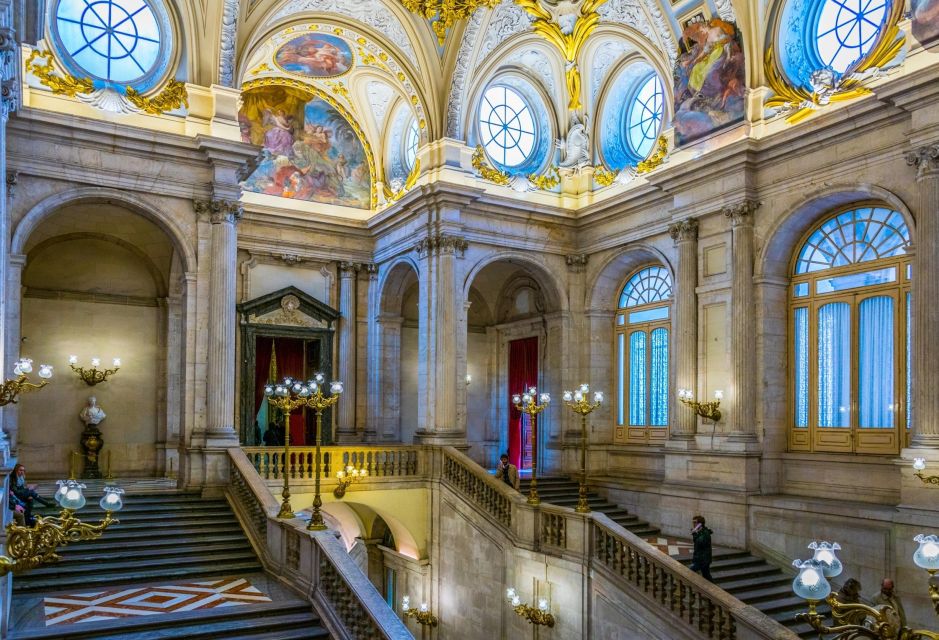
The heart of the palace experience in this tour is the apartments of Carlos III—including the best-known decorative work on the main floor. You’ll hear how these spaces connect to the uniform decoration directed by Sabatini, with a focus on consistency across the main areas.
You’ll also see the beautiful stuccoed walls that define the feel of these rooms. Stucco isn’t always the “headline” detail for visitors, but in person it creates depth and rhythm. With a guide, it becomes a design tool rather than background.
A big reason this section is worth your time: Carlos III isn’t just a name. The tour connects the choices of style and decoration to what the monarchy wanted to communicate at that moment. That connection turns the apartments into a story you can follow.
Throne Room and the Gasparini Chamber: Rococo taste with a clear explanation
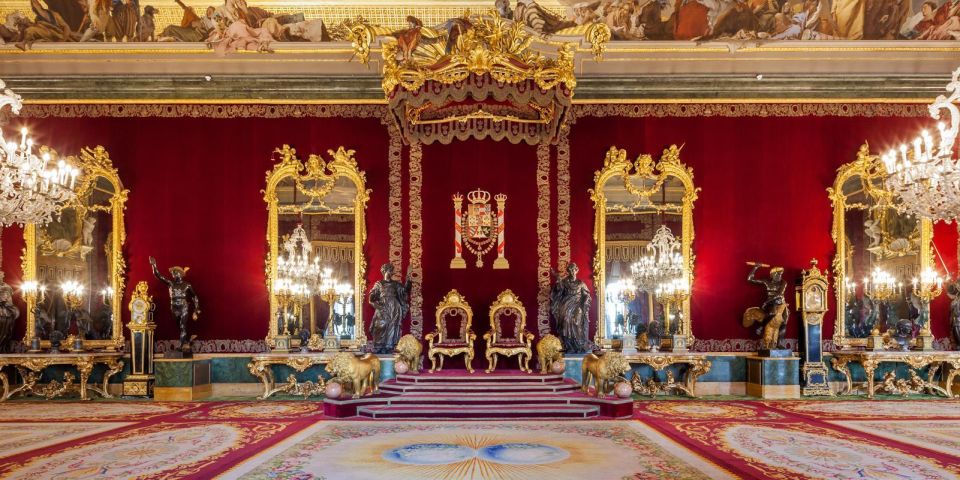
Next comes one of the palace’s most representative settings: the Throne Room and the Chamber called Gasparini. These are tied to Charles III’s taste and connected to the Rococo style—specifically described as an Italian version in its most exuberant form.
If you’ve ever looked at Rococo rooms and thought, Nice, but what am I supposed to notice, this is where a guide helps. You’ll get cues on how to look at the shapes, the feel of the style, and what makes it feel so different from more severe classicism.
This stop also helps you see how art and design choices become a political statement. The monarchy’s image wasn’t accidental; it was planned.
Carlos IV and Ferdinand VII rooms: French furniture, chandeliers, and the 1879 renovation
You’ll also learn about how decorative ensembles shift across different reigns. The tour highlights pieces linked to Carlos IV and Ferdinand VII, including important neoclassical ensembles and French furniture.
One standout detail is the description of an overwhelming collection of French chandeliers made of bronze and crystal. Even if chandeliers aren’t your thing, it’s hard not to notice when a room is built around that kind of light and material display.
Then there’s the final decorative renovation tied to Alfonso XII in 1879. This is useful context because it explains why what you see today isn’t only the work of one reign. The palace keeps evolving, and the guide helps you understand those layers.
Royal Armory stop at Plaza de la Armería: what’s included and what isn’t

The tour finishes in the courtyard near the Royal Armory area, near Plaza de la Armería. Here’s the practical part: the Royal Armory itself is not included in the guided explanation. If you want to explore it, you can do that on your own.
There’s also a note to keep in mind: the Royal Armory is sometimes closed for improvement works. So don’t build your whole plan around definitely seeing it.
Still, the ending point is a win. You’re released in a logical location, and if you want to stretch your legs or grab a bite afterward, you’ll have a better chance to do it without backtracking.
Guide quality matters: Rubén’s pace, patience, and history-to-life answers
This is one of the experiences where the guide can make or break your enjoyment. The tour is led by a live guide, and you’ll hear detailed commentary on the palace, Madrid, and how the monarchy shaped what you’re seeing.
I like that some of the local guides on this route—like Rubén—are described as both knowledgeable and patient, including with kids who need extra attention. That matters because the Royal Palace can be long and visually dense. A patient guide keeps it moving and readable.
There’s another practical point from the way guides run the start of the tour. If you’re running late, you should message right away. On at least one occasion, the guide responded quickly and even waited for late arrivals—so long as communication is happening and time rules are respected.
Timing tips: how to avoid feeling trapped in the crowd
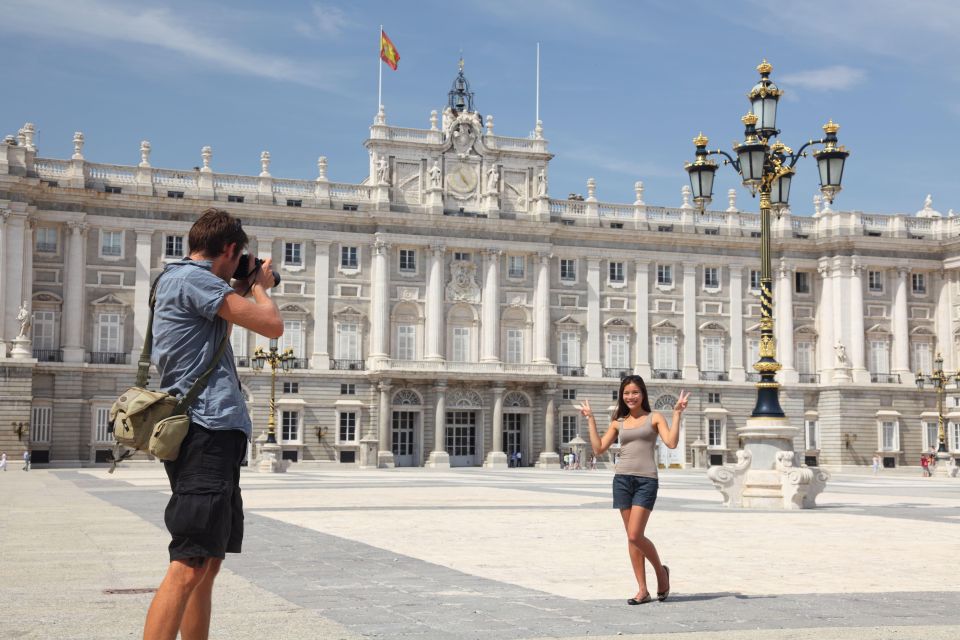
Even with skip-the-line access, the palace can be crowded. If you can choose your start time, try to avoid the earliest rush.
One helpful clue: a mid-day start around 13:00 is described as feeling less crowded than mornings. If you’re flexible, that can help you enjoy the rooms rather than just get through them.
Also, build in a little calm. This is a 2-hour guided circuit, and the Palace itself has its own rhythms. If you keep your expectations realistic, the tour stays enjoyable instead of stressful.
Practical tips before you go (small details that save time)
Bring a passport or ID card. You’ll need it to get in.
Plan for the no-photo rule inside. If you want reminders later, take notes instead of trying to capture everything on your phone.
A small-group structure helps the flow, but it does come with group behavior expectations. If someone in the group is disrespectful or tries to boycott the guide, the tour may be canceled immediately for that group. That’s rare, but it’s worth knowing because it affects everyone’s time.
Finally, keep an eye on the start time. If you’re not there about 15 minutes after the tour begins, the tour may be canceled if there are no signs of life or it may continue with the rest of attendees without waiting. Set a reminder and leave extra time for walking up to the meeting point.
Price and value: what $33 buys you in real terms
At about $33 per person, you’re paying for two things: entry to the Royal Palace and a live guide to make the visit make sense in 2 hours.
If you go without a guide, you’ll still see gorgeous rooms—but you’ll likely miss connections: which decoration belongs to which reign, why certain rooms matter, and what to focus on when you’re standing inside something like the porcelain-covered space.
This tour’s value is strongest if you want a guided narrative and you’re short on time. If you have a full day and you like slow museum wandering, you might prefer a longer self-guided plan. But for a focused hit of highlights, $33 plus a guide is a fair trade.
Who this Royal Palace tour fits best
This experience is a great match if:
- you want the highlights fast and organized
- you enjoy learning how art and decoration connect to Spanish monarchy
- you’re traveling with kids who need help staying engaged (the guide’s patience is a noted strength)
- you prefer a guided route over sorting out palace rooms on your own
It’s less ideal if you want total freedom to roam every corridor, or if you’re hoping to take lots of photos inside. The structure and photo rule steer you toward attention and learning rather than content collecting.
Should you book Madrid’s Royal Palace guided tour?
I’d book this tour if you want a high-impact, 2-hour introduction to the Royal Palace that actually explains what you’re seeing. The guides—especially when they’re like Rubén—are a big part of the appeal because they turn ornate rooms into something you can follow.
Skip it if you’re planning to spend most of the day inside or if photography is a must. Also check whether Royal Armory hours are likely to fit you, since it can be closed for works and it isn’t part of the guided explanation.
If your goal is to leave the palace understanding why Carlos III’s rooms and the throne-area settings are such a big deal, this is a smart way to do it.
FAQ
How long is the guided tour?
The tour runs for about 2 hours.
Where do we meet the guide?
Meet next to the Tourist Information Office at the Royal Palace, in front of the palace. The guide has a light blue umbrella.
Is the ticket line skipped?
Yes. You avoid the main ticket line by using group access.
What’s included in the price?
You get entry tickets to the Royal Palace and a live guide.
What languages are offered?
The guide speaks Spanish or English. The tour is not offered in two languages at the same time.
Are photos allowed inside the palace?
No. Photography inside the Royal Palace is not allowed.
What do I need to bring?
Bring a passport or an ID card.
Is hotel pickup available?
No. This is not a hotel pickup tour.
What about the Royal Armory?
The tour ends near the Royal Armory courtyard area, but the Armory itself is not included in the guided explanation. It can also be closed sometimes for repairs.
Is the tour canceled if I’m late?
If you don’t arrive within about 15 minutes and there are no signs of you, the tour may be canceled or it may continue with the remaining attendees without waiting.