REVIEW · MADRID
Madrid’s History, Bites & Sips – An Intimate Tour Since 2018
Book on Viator →Bookable on Viator
Old Madrid tastes better on foot. This intimate 3.5-hour walk in central Madrid pairs big-name landmarks with real bites and sips, guided by lively storytellers like Abel and Sonia. You get the kind of history that sticks because it’s tied to places you can point at, from Plaza Mayor to the restaurant founded in 1725, Sobrino de Botín.
I especially like the way you’re fed as you learn. The tour includes food and drink in two places, so the walking doesn’t feel like homework. I also love the pacing for a first Madrid day: you cover a lot of ground without sprinting, and the group stays small (max 10), which makes questions easy.
One drawback to plan around: you see the Royal Palace from the outside and you don’t enter. Royal Palace admission isn’t included, so if you want full interior time, you’ll need a separate plan.
In This Review
- Key Highlights You’ll Actually Feel
- Why This Madrid History + Food Walk Works So Well for First Timers
- Plaza Mayor and the Old-Center Backbone of Madrid
- From Arco de Cuchilleros to Sobrino de Botín: History You Can Step Into
- Mercado San Miguel: Where Your Tastings Meet Madrid’s Market Reality
- Plaza de la Villa and the Spanish Armada Thread
- Plaza de la Cruz Verde and the Spanish Inquisition Explained in Plain Terms
- Segovia Viaduct and La Latina: When Madrid’s Crossroads Show Up in Concrete
- Parque Emir Mohamed I: Madrid’s Roots in a Place With Purpose
- Almudena Cathedral and the Hapsburg Chapter of Madrid
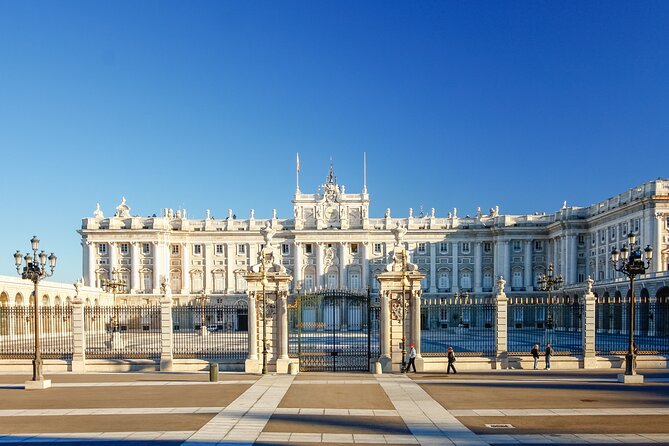
- Royal Palace From the Outside: Big-Time Power Without the Ticket
- Food, Drinks, and the Pace: What Makes This Tour Feel Worth It
- Who Should Book This Madrid History and Food Tour (and Who Might Skip)
- Should You Book Madrid’s History, Bites & Sips?
- FAQ
- What is the price of Madrid’s History, Bites & Sips?
- How long is the tour?
- Where does the tour start and end?
- Is the tour offered in English?
- How many people are in the group?
- What food and drink is included?
- Do I need tickets for the Royal Palace?
- Will I get a mobile ticket?
- What is the cancellation policy?
- Is the tour near public transportation?
Key Highlights You’ll Actually Feel
- A maximum of 10 people keeps the tour personal and question-friendly.
- Two included tastings at Sobrino de Botín and Mercado San Miguel turn history into something you can taste.
- Plaza Mayor plus the older lanes nearby gives you a clear “how Madrid grew” story in one morning.
- Spanish Inquisition context at Plaza de la Cruz Verde helps you understand what you’re seeing, not just where it is.
- La Latina stops like the Segovia Viaduct and Parque Emir Mohamed I add layers beyond the usual postcard route.
- Royal Palace exterior only keeps the timing smooth, but you’ll want another visit if you care about interiors.
Why This Madrid History + Food Walk Works So Well for First Timers
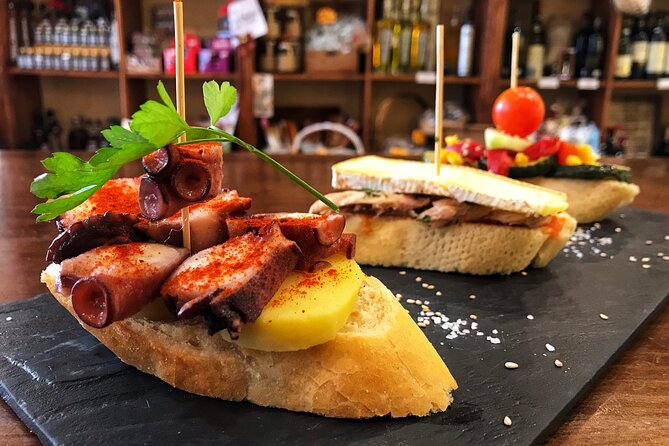
Madrid has plenty of food tours that mostly focus on eating. This one does the opposite trick: it uses major historic waypoints to explain why the city looks the way it does, then rewards you right along the route. The result is a morning that feels like orientation, not just sightseeing.
With a 3 hours 30 minutes duration and a 10:30 am start, it’s a smart fit early in your trip. You’ll leave with names, dates, and neighborhoods in your head, plus a practical sense of where to return later. And because it’s capped at 10 people, you’re not stuck listening from the back while everyone else gets face time.
You also get a quick confidence boost from the meeting setup: it starts at Plaza Mayor and uses a mobile ticket. In a city where you can lose your way fast, that matters. Add in the fact it’s offered in English and confirmed at booking, and the whole thing feels low-stress.
At $89.87 per person, the price isn’t “budget,” but the value is clear once you factor in what’s included: a professional guide plus food and drink at two separate places. If you normally spend a chunk of your day on a tasting elsewhere, this combo saves you time and keeps your history learning from turning into an awkward, hungry walk.
You can also read our reviews of more historical tours in Madrid


Plaza Mayor and the Old-Center Backbone of Madrid
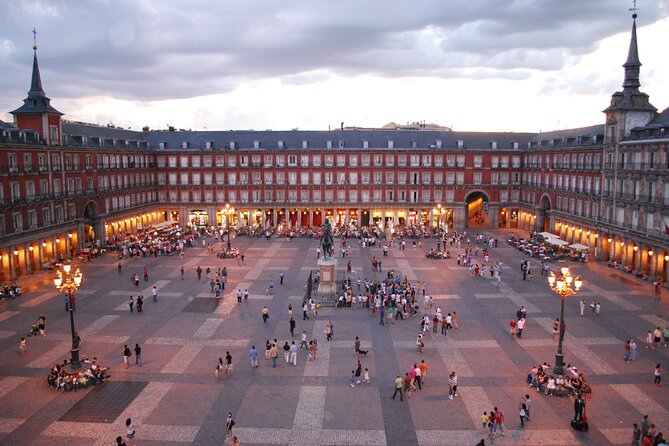
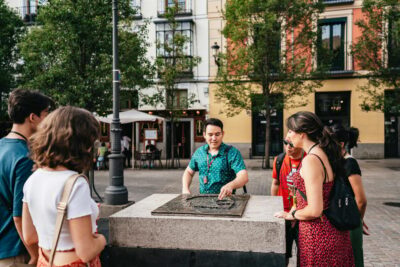
Your tour begins at Plaza Mayor, the city’s signature square and one of the easiest places to anchor your Madrid first day. Construction started in the 17th century, and that long timeline is exactly what your guide brings to life. You’re not just looking at walls and arches; you’re learning how a central civic space changed as Madrid changed.
Here’s what I like about starting here: Plaza Mayor is visual proof of how power and everyday life overlap. You can take in the scale immediately, then your guide helps you put that scale into context—who used spaces like this, what changed over centuries, and why Madrid became Madrid.
Practical tip: wear shoes you can handle for a few hours of walking. This isn’t a sit-down food crawl. It’s more like a historical walk that uses taste breaks to keep your energy up.
This stop lasts about 20 minutes, which is just enough time to understand what you’re seeing without making you feel like you’re waiting for the tour to move on.
From Arco de Cuchilleros to Sobrino de Botín: History You Can Step Into
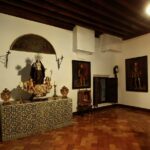
From Plaza Mayor you pass through the Arco de Cuchilleros area, then you head to Sobrino de Botín, a Spanish restaurant in Madrid founded in 1725. The tour includes time to go inside and explore the restaurant top to bottom.
This is one of the most satisfying stops because it turns a name into a place. Instead of treating history like a museum label, you see how an establishment survived through changing centuries. And the restaurant connection is especially strong for food lovers: Botín isn’t just “nearby,” it’s part of the story of Madrid’s dining culture.
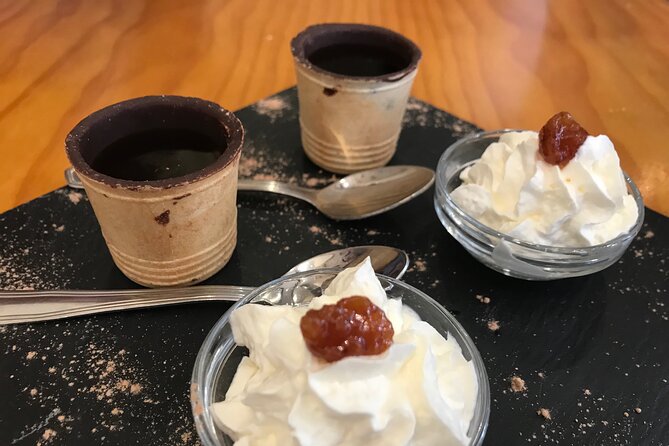
Food and drink happen here too (it’s one of your two included food stops). Based on guide choices and what the tour includes, you can expect a plate-style sharing moment and local flavors—think charcuterie-style sharing at the market later, and classic Spanish comfort at the restaurant stop. Some non-drinkers also have options like juice or water, so you aren’t stuck feeling left out.
What to watch for: details in the room. If you’re the type who likes to spot old textures, kitchen-influenced layout, and how older restaurants evolved, you’ll enjoy this portion.
Stop time is about 20 minutes, so it’s enough for a quick tour of the restaurant feel, plus eating.
Mercado San Miguel: Where Your Tastings Meet Madrid’s Market Reality
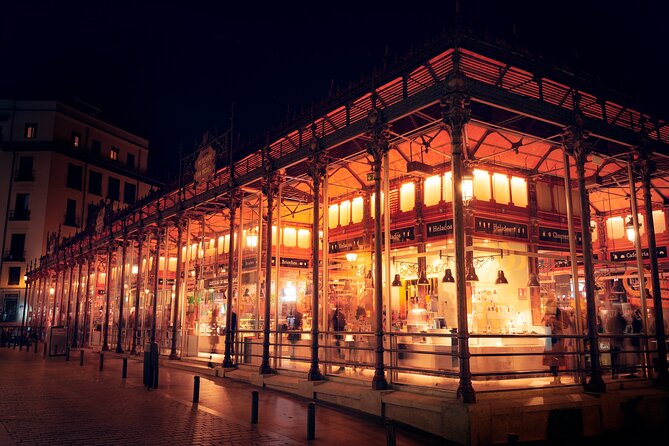
Next up is Mercado San Miguel, one of the most recognizable food markets in central Madrid. The tour frames it as a meeting point for food lovers and a showcase for Spanish products, and you’ll feel that instantly once you’re inside.
This stop is your other included food-and-drink block (about 30 minutes). If you like variety, markets are where Madrid wins. You get multiple flavors, easy sharing, and the kind of snacking that doesn’t require a full meal commitment.
From the experience, expect substantial, shareable bites. Many people leave this stop talking about the huge platters—often cheeses, meats, olives, bread, and the kind of mix-and-match that works for groups and solo diners alike. It’s a practical way to try more than one thing without ordering a dozen items.
Small strategy: use the guide’s suggestions. Markets can be overwhelming when you’re hungry and the stalls look tempting in every direction. Your guide helps you pick what matches the story they’ve been telling.
And yes, it’s also a good place to “calibrate” your tastes for the rest of your trip. After a stop like this, you’ll know whether you gravitate toward charcuterie, sausage-style bites, or bread-and-dip rhythms—then you can repeat what you liked later on your own.
Plaza de la Villa and the Spanish Armada Thread
After the market, you shift into quieter, more story-heavy historic territory at Plaza de la Villa. This is described as one of Madrid’s best-preserved historical monuments, and your guide uses that preservation as a teaching tool: you’re meant to notice how spaces survive and why that matters.
What makes this stop interesting is the link to an important figure tied to the Spanish Armada. You’ll learn how Madrid’s history connects to major European events and the kind of fearsome reputation that era carried. Even if your mental image of the Armada is vague, the guide fills in the gaps so the references don’t float by like trivia.
This stop is shorter—about 15 minutes—which works. It keeps momentum while still delivering a meaningful theme: Madrid wasn’t isolated. It was plugged into big stories happening across oceans.
If you like connections: this is a good moment. The tour helps you connect architecture to politics to everyday place.




Plaza de la Cruz Verde and the Spanish Inquisition Explained in Plain Terms
At Plaza de la Cruz Verde, the focus shifts to the Spanish Inquisition—what it was, where it operated, and why it mattered. The tour also points out why this site stands out compared to other Inquisition-related places.
This is the stop where the tour earns its “history” credit in a practical way. It’s one thing to read about the Inquisition and another thing to stand at a real location and understand what you’re looking at. If you’ve ever been confused by how to connect the dots between terms, institutions, and locations, this section is built to help.
Again, time is about 15 minutes, so the goal isn’t to overload you. It’s to give you enough structure that you can later recognize patterns in other Spanish historic sites.
Tip for your brain: ask your guide what detail visitors usually miss at this stop. A good guide can point you to a clue you’ll remember long after you walk away.
Segovia Viaduct and La Latina: When Madrid’s Crossroads Show Up in Concrete
The tour then heads through the La Latina neighborhood area, including the Segovia Viaduct. This is a neat architectural breather from the plazas: the viaduct tells a different kind of Madrid story—crossroads, transit, and the way neighborhoods evolve.
What I like here is the timeline. You’ll learn there was an earlier iron version erected in 1874, and a later version built in 1934 to replace it. That kind of “old replaced by newer” story is a reminder that cities are always in the middle of changing.
La Latina as a theme also helps you get out of the mindset that Madrid is only Royal Palace and grand squares. The neighborhood streets and infrastructure show how people moved, lived, and built their day-to-day.
Practical note: if you’re someone who likes photos, this is one of the spots where Madrid architecture looks especially strong in morning light.
Parque Emir Mohamed I: Madrid’s Roots in a Place With Purpose
Next comes Parque Emir Mohamed I. Here, the tour is aimed at helping you understand Madrid’s roots—how the city was born and what its purpose was back then.
Because the exact historical details can vary depending on the guide’s storytelling, you should expect this stop to be explanatory rather than just scenic. The value is the way it ties earlier stops together: you go from older civic and religious landmarks to a broader “how it started” framework.
This is a 15-minute stop, and it works best if you keep your attention during the explanation. Think of it as your bridge stop between early Madrid and the later “Habsburg” and royal era storytelling that comes next.
Almudena Cathedral and the Hapsburg Chapter of Madrid
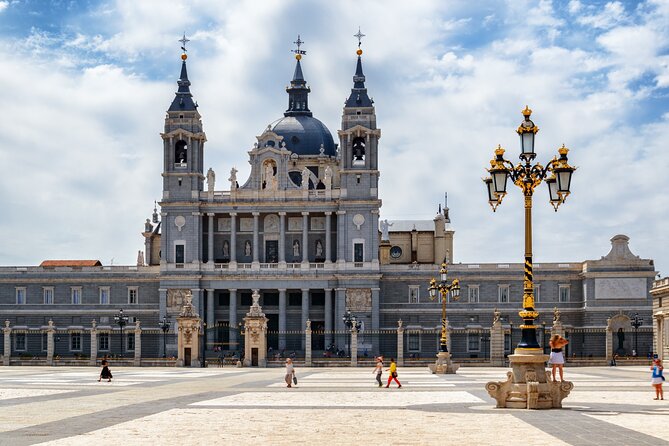
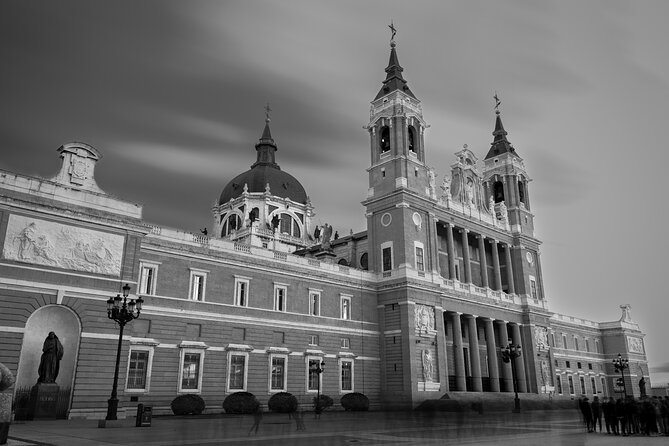
At Catedral de Sta Maria la Real de la Almudena, you get a lesson on a cathedral with a short but complicated history, specifically tied to Hapsburg Madrid. You’ll learn why its story isn’t as straightforward as some people expect, and why that matters when you’re trying to date and understand monuments.
This stop is about 15 minutes, which means the goal is clarity, not overload. You’ll come away with a better sense of how the city’s religious architecture fits into political eras.
If you like coherent timelines: this is a good one to pay attention. The tour uses a chain effect—each stop is meant to make the next one easier to place in your mental map.
Royal Palace From the Outside: Big-Time Power Without the Ticket
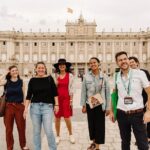
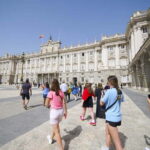
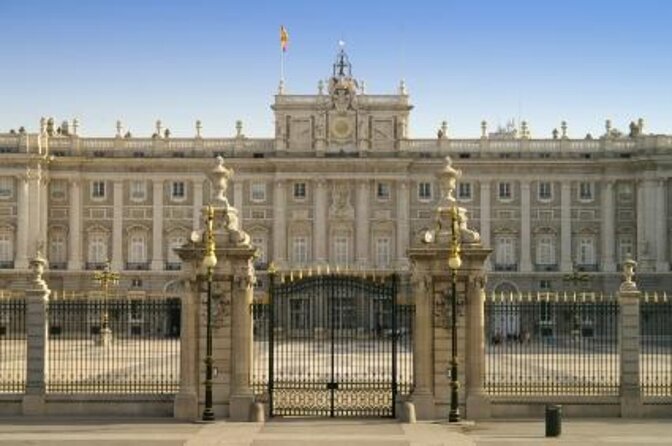
The tour closes at the Royal Palace of Madrid, one of the official royal residences used now for state ceremonies. Even without going inside, you’ll talk through its history and how it reached today.
Important: the tour specifically does not include interior entry. The admission fee isn’t included, and the guide keeps it at the exterior level, about 15 minutes. The trade-off is time. You get the context and the setting without losing your morning in queues.
This matters for value. If you’re paying for a guided history-and-food walk, you want the palace stop to enhance the story instead of turning into a separate ticketed event. If you do want the inside, you’ll need to plan that on your own (or through another timed visit).
What you’ll enjoy most from the exterior: the way your guide connects royal power to the urban layout you’ve been walking through all morning.
Food, Drinks, and the Pace: What Makes This Tour Feel Worth It
This is not a long crawl. It’s a structured walking tour with breaks built in—one reason it tends to work well even for people who don’t love standing around.
Two places handle the food-and-drink portion, and the guide helps keep it friendly and manageable. Based on the tour experience details, you can expect a mix of local flavors and shareable items, plus cocktail-style drinks at each food stop, with juice or water available for non-drinkers.
The pacing is also a standout theme. The route is spread across central Madrid with a steady rhythm, and it’s set up for a small group size, so you don’t feel like you’re chasing the front of a crowd. If you’ve done bigger group tours that turn into line-standing marathons, this one feels easier to enjoy.
Who Should Book This Madrid History and Food Tour (and Who Might Skip)
You’ll probably love this tour if:
- You’re in Madrid for the first time and want orientation fast
- You want a food experience that’s tied to real sites, not just random tastings
- You prefer a small group where your guide can answer questions
- You’d rather combine history + food in one morning than plan two separate outings
You might skip it if:
- You only care about palace interiors and want full access time
- You’re looking for a purely food-heavy tour with long meals
- You don’t enjoy walking at all, since the route is built around moving between multiple plazas and landmarks
It can also be a solid family pick. Some people have brought kids and found the guide’s storytelling kept them engaged, especially when food breaks arrived on schedule.
Should You Book Madrid’s History, Bites & Sips?
Yes, if you want the smartest kind of first-day Madrid plan. This tour gives you a tight mix of major landmarks, neighborhood texture, and two meaningful tastings, all under one roof—meaning one guide, one route, one flow.
Book it sooner rather than later. The experience is commonly reserved about 36 days in advance, and with a max group size of 10, it’s better to lock in your preferred date early.
I’d especially recommend it if you like learning as you go and you want your guide to point out why places matter. If you’re the type who ends up eating in the same areas repeatedly, this tour helps you widen your map fast. And if you’re worried you might not find great tapas spots on your own, the included meals take that guesswork away.
FAQ
What is the price of Madrid’s History, Bites & Sips?
The tour costs $89.87 per person.
How long is the tour?
It lasts about 3 hours 30 minutes.
Where does the tour start and end?
It starts at Plaza Mayor in Centro, Madrid, Spain. The end point is C. Mayor, 88, 28801 Madrid, Spain.
Is the tour offered in English?
Yes, it’s offered in English.
How many people are in the group?
The tour has a maximum of 10 travelers.
What food and drink is included?
Food and drink are included in two different places during the tour.
Do I need tickets for the Royal Palace?
Royal Palace of Madrid admission is not included, and you won’t go inside as part of this experience.
Will I get a mobile ticket?
Yes, the tour includes a mobile ticket.
What is the cancellation policy?
You can cancel for a full refund if you cancel at least 24 hours before the experience’s start time. If you cancel less than 24 hours before start time, the amount paid is not refunded.
Is the tour near public transportation?
Yes, it’s listed as being near public transportation.