REVIEW · MADRID
Paisaje de la Luz: Prado Museum and Reina Sofia Museum
Book on Viator →Operated by De Paseo · Bookable on Viator
Madrid’s art highlights come with real guidance. This small-group tour pairs a walk through Paisaje de la Luz with built-in context for two heavyweight museums: the Prado and Reina Sofía. You get history from the 16th century to today, so the buildings and the art feel connected instead of random.
I love how the Prado turns Las Meninas into something you can actually see, not just a painting name. I also love the way the Reina Sofía focuses on Guernica’s symbols and the story behind it, even when the interpretations get heated. The only catch is time: 1.5 hours per museum can feel tight if you like to linger room after room.
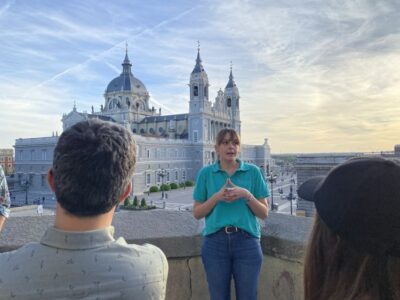
Between the two museums, you stroll and listen while your guide links architecture and culture across Madrid. With a maximum of seven people and audio guides inside the museums, the experience stays focused without feeling like a cattle-penned rush.
In This Review
- Key things to know before you go
- Walking Paisaje de la Luz: architecture lessons before the art
- Prado Museum entry: what 1.5 hours is really for
- Goya, Velázquez, and Las Meninas: learning to see perspective
- Northern European rooms: Flemish Primitives and Van Dyck
- Reina Sofía: Picasso and the Guernica story you can’t ignore
- Group size, audio guides, and pacing (the part that makes or breaks it)
- Value for money: why the included tickets matter
- Who this tour suits best (and who might want something else)
- Should you book this Prado and Reina Sofía tour?
- FAQ
- What is the meeting point?
- Where does the tour end?
- What time does it start?
- How long is the tour?
- How big is the group?
- What museums are included?
- Are museum tickets included in the price?
- Do you get audio guides inside the museums?
- Is the tour offered in one language or multiple?
- Can I bring a service animal?
- Is there a cancellation option?
Key things to know before you go
- Small group up to 7 means you’re not just following a line of strangers.
- Admission included for both the Prado and Reina Sofía saves time and budget.
- Audio guides help you hear the guide clearly inside the museums.
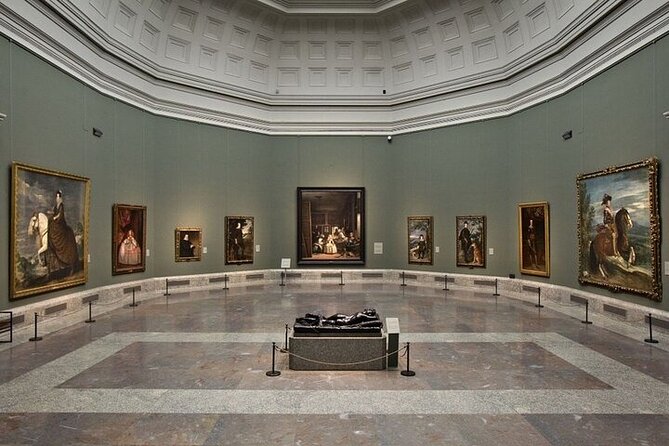
- Las Meninas gets explained with attention to perspective and details.
- Guernica gets symbol-first context, including controversy around its figures.
- Paisaje de la Luz warm-up walk gives you a Madrid framework before you hit the galleries.
Walking Paisaje de la Luz: architecture lessons before the art
I like starting with the streets. You see how the city is put together, then the museums stop feeling like separate worlds you visit and forget.
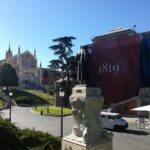
Paisaje de la Luz is the tour’s “connect-the-dots” moment. You walk through a beautiful area while your guide frames Madrid’s cultural history from the 16th century onward. That matters, because both the Prado and Reina Sofía are not just collections of masterpieces. They’re also mirrors of how Madrid’s identity changed: what people valued, what they collected, and how art became a way to argue with the world.
Even if you only catch a slice of the story, it helps. When you later hear explanations about techniques, society, and symbolism, you’ll have a mental map of where the ideas came from.
Practical tip: wear comfortable shoes. You’ll be moving for the tour’s full span (about 4 hours 30 minutes), and museums are only part of the time.
You can also read our reviews of more museum experiences in Madrid
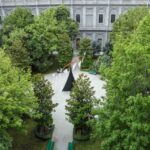
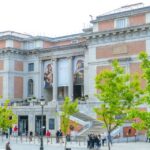
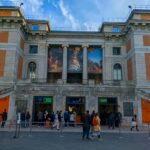
Prado Museum entry: what 1.5 hours is really for
The Prado is huge in both size and reputation. It houses more than 7,000 paintings, and that can be overwhelming if you show up cold.
This tour’s smart move is focus. You get a guided visit designed to point you toward the works that unlock the museum’s bigger themes. You’re not trying to “see everything.” You’re learning how to look: pictorial techniques, period customs, and how the social world of past eras shows up on the canvas.
The Prado stop is about 1 hour 30 minutes, and that length is the whole deal. It’s long enough to cover major highlights, but short enough that you won’t feel stuck in one gallery. If you’re the type who likes to read every label and sit down often, you might want to plan extra time on your own after the tour.
Goya, Velázquez, and Las Meninas: learning to see perspective
Here’s what I’d call the tour’s “wow moment” in the Prado: Las Meninas. The explanations aren’t generic. They focus on what makes the painting famous—especially perspective—and then zoom in on the characters, details, anecdotes, and even hidden secrets you might otherwise miss.
That kind of guidance changes your whole museum experience. Instead of walking past a masterpiece like it’s a postcard, you start spotting why it’s constructed the way it is. You notice the relationships between figures. You catch how the composition draws you in. And you start understanding how the artist used technique to build meaning.
You also get guided context for major names tied to Spanish art history—Goya and Velázquez—plus discussion of how different pictorial techniques work. That’s useful even if you’re not an art-history nerd, because it gives you a lens. Once you have the lens, other paintings make more sense too.
Practical tip: if you take photos, do it with patience. In a guided group, people will naturally pause where the guide is pointing. I’d rather you capture fewer details and actually see what you’re meant to notice.
Northern European rooms: Flemish Primitives and Van Dyck
The Prado isn’t only Spanish. One of the best surprises is how the collection stretches across Europe.
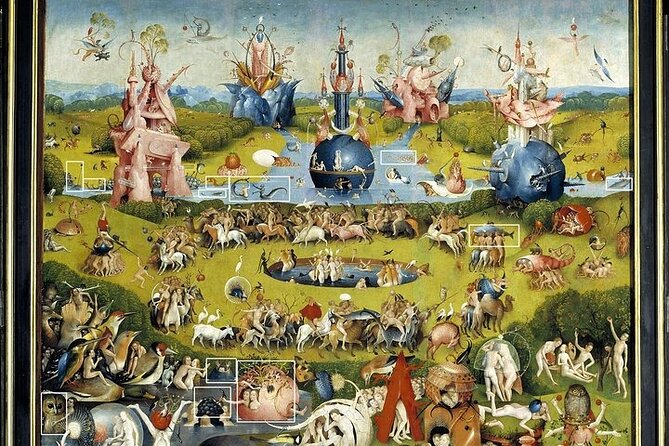
You’ll spend time on Northern European paintings—specifically including the Flemish Primitives—and you’ll hear about the kind of precision and detail that makes these works feel almost painstaking. The tour also mentions exquisitely detailed paintings by geniuses such as Van Dyck. That’s a strong choice, because it lets you compare styles and approaches, not just names.
What I like about this segment is that it broadens your understanding of what the Prado “is.” It’s not a single national story. It’s a European art conversation that happened through collecting, influence, and prestige.
If you tend to gravitate toward one school or one country, this part can nudge you outside your comfort zone—in a good way.
Reina Sofía: Picasso and the Guernica story you can’t ignore
Then you move to Reina Sofía, where the mood changes. The emphasis shifts from older painting traditions to modern art’s intensity.
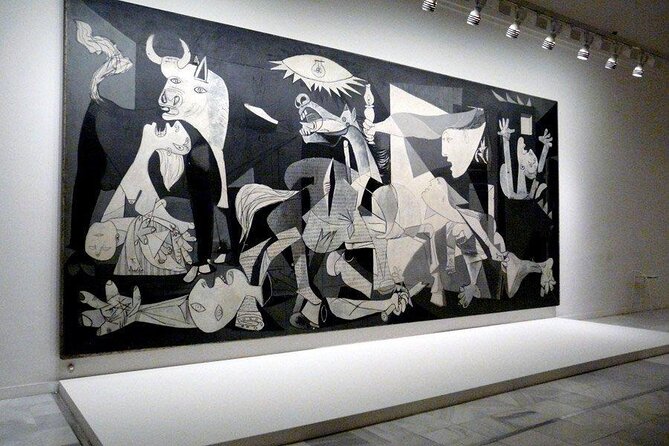
This stop centers on Pablo Picasso and the legacy of his revolutionary work. A major focus is Guernica, introduced with attention to its most famous feature: how the image works as a dense web of symbols. You’ll also hear about the process of making it and the historical story behind the work.
One detail that makes this stop especially worth it is that the tour talks about interpretation as a living thing. The tour notes that interpretations create controversy and debate because the symbols include multiple figures with different readings. That’s important because it prepares you for the main lesson of modern art: you won’t always get one tidy answer, and that’s part of the point.
Instead of trying to win the argument, you learn how to understand the painting’s language—its symbols, its emotional force, and how history shapes the message.
Practical tip: don’t rush your moment in front of Guernica. Even with a guide, this is the kind of work you want to look at from a few angles and distances.


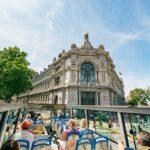


Group size, audio guides, and pacing (the part that makes or breaks it)
This is a semi-private style tour capped at maximum seven people. That matters more than it sounds. In museums, the ability to ask a question and not get swept along can change the quality of your visit.
You also have audio guides in the museums. That’s a big plus because it means the explanation isn’t just coming from the guide’s voice trying to compete with crowds. It helps you stay oriented, especially in rooms with a lot of visual noise.
The tour runs about 4 hours 30 minutes, with two major museum visits of 1 hour 30 minutes each. So the pacing is structured. You’ll cover the essentials with guidance, but you won’t have unlimited time in front of every painting. That’s why I think this tour is best as the foundation visit—then, if you love it, you can return on your own for the pieces you want to study longer.
Language note: the visit is conducted in a single language. Make sure it matches your comfort level when you book, because you’ll lose some of the nuance if you can only catch parts of the narration.
Value for money: why the included tickets matter
At $143.30 per person for about 4.5 hours, the headline price looks steep until you break down what you’re actually getting.
Two major museums with admission included are doing the heavy lifting here. The Prado and Reina Sofía aren’t small stops. When the tour includes entry tickets, you’re not paying twice or spending your time juggling separate plans.
Add to that:
- guided walking along Paisaje de la Luz
- museum guidance designed around specific highlights (not a random walk)
- audio guides inside the museums
- a small-group cap of seven, which usually means more attention per person
For me, this is the sweet spot for value: you’re paying to save time and reduce decision fatigue. You’re also buying expertise—someone else already knows which rooms and works are most worth your limited time.
If you’re the kind of traveler who enjoys a self-guided museum day, you might spend less. But if you want to learn how to look and you don’t want to guess where to start, this format is a strong bargain.
Who this tour suits best (and who might want something else)
This experience fits best if you:
- want a guided “greatest hits” approach to both major museums
- like hearing how art techniques and symbols connect to society and history
- prefer a small group over large tour crowds
- appreciate audio support inside museums
You might choose a different option if you:
- want to spend long hours in one museum room at a time
- are an ultra-completist who needs to see a massive fraction of the collection
- aren’t comfortable with a structured schedule and fixed time in each museum
Also, because it’s a walking-and-museum combo, you’ll enjoy it more if you’re comfortable standing for stretches and moving between indoor spaces.
Should you book this Prado and Reina Sofía tour?
Yes, I think you should book it if you want a guided, well-paced introduction that helps you understand what you’re seeing. The biggest strength is the way it turns famous works—especially Las Meninas and Guernica—into something you can decode through perspective, details, and symbolism.
Book it especially if you’re visiting Madrid for a limited number of days and you want your museum time to feel purposeful. Just don’t mistake the tour for a substitute for a full museum day. Treat it like your best starting point. Then, if something grabs you, go back on your own and give that painting the attention it deserves.
FAQ
What is the meeting point?
The tour starts at Museo Nacional del Prado Retiro, 28014 Madrid, Spain.
Where does the tour end?
The tour ends at Museo Nacional Centro de Arte Reina Sofía, C. de Sta. Isabel, 52, Centro, 28012 Madrid, Spain.
What time does it start?
The start time is 10:00 am.
How long is the tour?
The duration is approximately 4 hours 30 minutes.
How big is the group?
The tour has a maximum of seven travelers.
What museums are included?
You visit the Museo Nacional del Prado and the Museo Nacional Centro de Arte Reina Sofía.
Are museum tickets included in the price?
Yes. Tickets for both the Prado and Reina Sofía are included.
Do you get audio guides inside the museums?
Yes. Audio guides are included to help you clearly hear the guide’s explanations inside the museums.
Is the tour offered in one language or multiple?
The visit is done in a single language.
Can I bring a service animal?
Service animals are allowed.
Is there a cancellation option?
Free cancellation is available if you cancel up to 24 hours in advance for a full refund.