REVIEW · MADRID
Private walking Tour: The oldest taverns of Madrid
Book on Viator →Operated by Ventana a la Cultura · Bookable on Viator
Old Madrid taverns have their own pulse. This private walk threads royal-era Lhardy, 1860 Casa Labra, and legendary eating rooms through centuries of Madrid life, guided in English with a private guide. You’ll learn how these places fed real people, not just legends.
I love the practical setup: you get one drink and one tapa at the first stop and another at the last stop, so the tour turns history into something you can taste. And because it’s paced as a walking tour, you’re not stuck inside one museum-style room for hours.
One thing to consider: it’s still a walking plan, roughly 1 hour 50 minutes to 2 hours 30 minutes, and Madrid’s central streets can feel packed on busy days. If crowds stress you out, plan your timing with care.
In This Review
- Key highlights (what makes it worth your time)
- Why Madrid’s oldest tavern walk is such a smart start
- Price and what $152.59 really buys you
- Meeting near Puerta del Sol (and keeping it painless)
- Stop 1: Lhardy Restaurante (founded 1839) and the “palace inside” feeling
- Stop 2: Casa Labra (1860) where tapas meet Madrid politics
- Stop 3: Petit Palace Posada del Peine (1610) and the inns vs. taverns lesson
- Stop 4: Madrid Restaurant Booty, the oldest restaurant in the world (Guinness-recognized)
- Stop 5: Malacatín (1895) and the tavern-world of bullfighting
- Stop 6: Taberna Antonio Sánchez (1787) and the story behind the French wine
- What you learn that actually helps you eat better in Madrid
- Who this tour fits best
- Should you book this oldest tavern tour of Madrid?
- FAQ
- How long is the Private Walking Tour of the Oldest Taverns of Madrid?
- What’s included in the price for the tavern tour?
- Is transportation included?
- Where do I meet the guide?
- What language is the tour offered in?
- Can I cancel for a refund?
Key highlights (what makes it worth your time)
- Six oldest-in-their-class stops, from 1610 to the late 1700s
- Tastings included: one drink + one tapa at the first and last taverns
- You get local context, not just dates—how taverns, inns, and politics connect
- English private guiding, with praised guides such as Diana and Guido in the feedback
- Easy start at Puerta del Sol, with pickup offered and a mobile ticket
Why Madrid’s oldest tavern walk is such a smart start
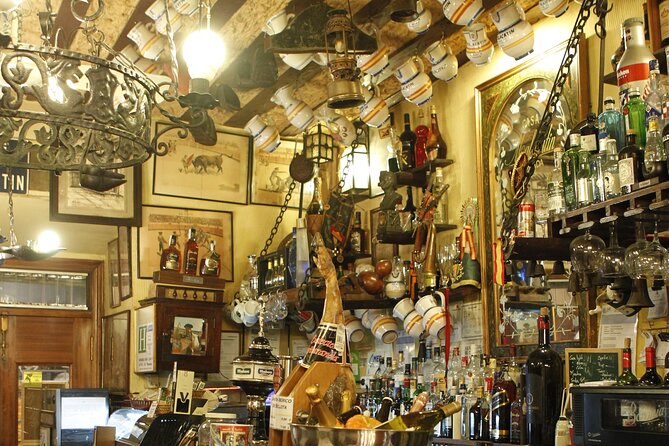
Madrid can feel big and layered, especially if it’s your first day. This tour helps you get your bearings fast—not by rushing through landmarks, but by showing how the city’s food culture developed over time.
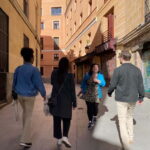
The vibe is old-school Madrid. You’ll move from place to place with a guide who ties each stop to real social life: who went there, what people ordered, and why these rooms mattered. It’s also a private tour, so you can ask questions without feeling like you’re elbowing through a group.
And since it’s offered in English, you’re not stuck playing translator every time someone mentions a tradition, a political rumor, or why a tavern became famous.
You can also read our reviews of more walking tours in Madrid


Price and what $152.59 really buys you
At $152.59 per person, this isn’t a cheap “just walk around” activity. The value comes from three things you’re actually paying for:
- A private guide focused on food + history. You’re not reading plaques on your own; you’re getting the story behind why these places exist and how they evolved.
- Included tastings. You get one drink and one tapa at the first tavern stop and one drink and one tapa at the last stop (two total drinks and two total tapas per person).
- Time efficiency. You cover six meaningful spots in about two hours (give or take), which is hard to match if you try to DIY.
Two practical notes:
- Private transportation isn’t included, so think of this as a walking experience in central Madrid.
- Because it’s popular—you’ll often see bookings placed around 46 days in advance—you’ll get the best choice of times by booking earlier rather than later.
Meeting near Puerta del Sol (and keeping it painless)
The meeting point is at Rodilla, Puerta del Sol 13, Centro (28013 Madrid). It’s a good spot because it’s central and easy to reach.
You should also know:
- The tour runs about 1 hour 50 minutes to 2 hours 30 minutes.
- A mobile ticket is included, which keeps things simple.
- Pickup is offered, if you want to reduce pre-walk hassle.
- The tour ends in a different location, so plan to continue exploring from there (rather than expecting to be back at the exact starting point).
If you’re the type who likes a plan that’s flexible but not complicated, this fits that style: short stops, guided pacing, and frequent chances to ask questions.
Stop 1: Lhardy Restaurante (founded 1839) and the “palace inside” feeling
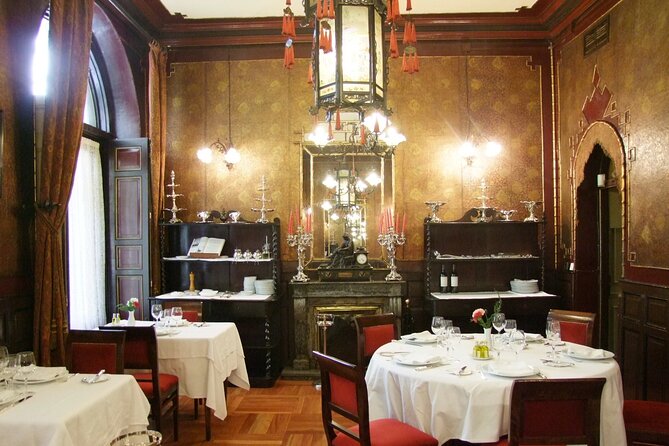
Your first stop is Lhardy Restaurante, founded in 1839. This isn’t just an old restaurant—it’s the kind of place Madrid’s upper class used to treat like a social stage. The guide frames it as a destination where high Madrileña aristocracy (including kings) mixed with artists, writers, and intellectuals.
What I like about starting here is the perspective it gives you. When you see how an old Madrid institution operated, it becomes easier to understand what later taverns were reacting to: who could access what, and how “regular life” food moved into public spaces.
How to enjoy this stop:
- Pay attention to the difference between a place designed for prestige versus one designed for frequent, everyday visits.
- Watch how the setting supports conversation—these old rooms were built for people to stay and talk, not just eat and leave.
Possible drawback: because it has that famous “big institution” feel, you might spend a bit more time soaking in atmosphere than tasting (since the actual included tapa/drink is specifically tied to the first and last stops).
Stop 2: Casa Labra (1860) where tapas meet Madrid politics
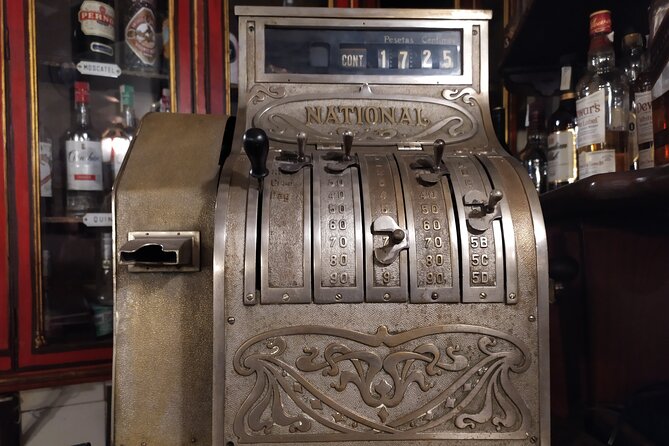
Next you’ll head to Casa Labra, a tavern dating to 1860. This one is known for a popular character and for being a long-time go-to for enjoying tapas and beer at good prices—classic Madrid tavern energy.
The interesting twist is that it has a curious connection with Spanish politics. Even if you don’t know the political backstory yet, your guide’s job is to connect the dots so the story lands in a human way: why a tavern becomes part of bigger conversations, not just a place to grab food.
What to expect:
- A short stop designed to show how taverns act like informal meeting points.
- A chance to notice how tavern culture overlaps with public life.
If you like history you can see in everyday routines, this stop is a strong bridge between centuries and modern habits.
You can also read our reviews of more private tours in Madrid






Stop 3: Petit Palace Posada del Peine (1610) and the inns vs. taverns lesson
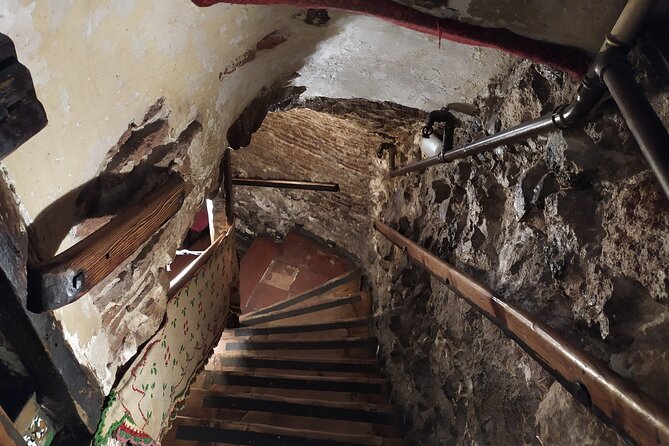
This stop isn’t technically described as a tavern, but it’s one of the oldest businesses in Madrid—dating to 1610. Petit Palace Posada del Peine helps you understand the difference between inns and taverns and how popular history shaped both.
This matters because it prevents the common mistake of treating Madrid food history like a single category. In reality, inns and taverns served different needs: travelers, locals, and different rhythms of eating and socializing.
What you’ll take away:
- A better sense of how spaces adapted over centuries.
- A clearer mental map for how Madrid’s “public eating” culture developed.
Possible drawback: if you’re only interested in places that are directly taverns, this one may feel slightly more informational than sensory. Still, it makes the later stops click.
Stop 4: Madrid Restaurant Booty, the oldest restaurant in the world (Guinness-recognized)
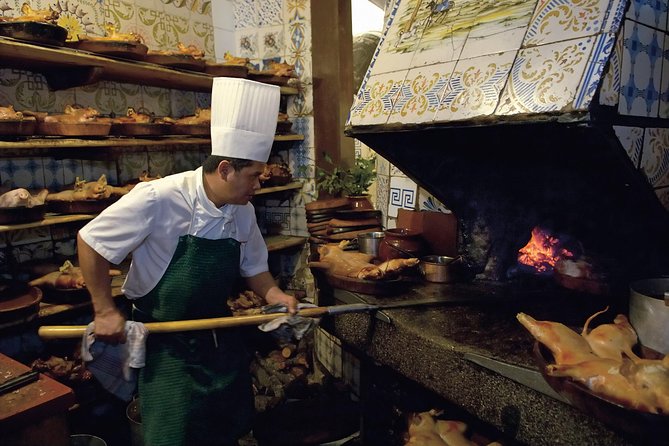
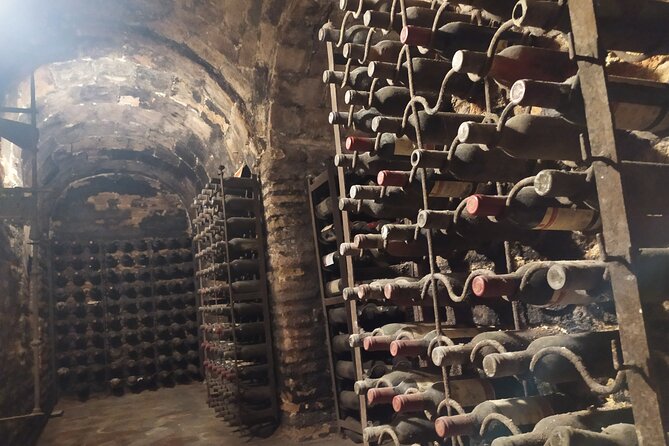
Then comes Madrid Restaurant Booty, described as the oldest restaurant in the world and recognized by Guinness World Record.
Even if you’ve heard the name before, what helps on a guided tour like this is the context around why it’s an institution. Your guide connects the restaurant’s age to Madrid’s changing dining culture—what “going out” used to mean, and how old establishments keep relevance through constant reinvention.
What to look for during the stop:
- How the restaurant’s identity feels like a Madrid landmark, not just a place to eat.
- How a long-running business influences the street around it—people organize their days around it.
Even though the included tasting is only specified for the first and last tavern stops, this is still a key moment. It sets the tone for the final half: these are places people return to again and again.
Stop 5: Malacatín (1895) and the tavern-world of bullfighting
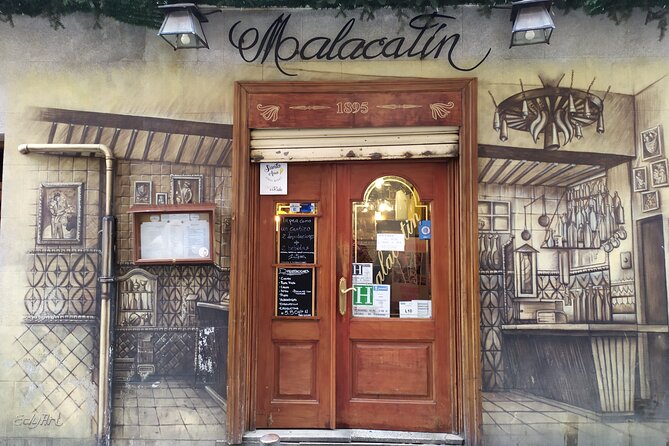
Now it gets more personality. Malacatín, founded in 1895, is described as one of the most traditional taverns in the capital, with strong ties to the world of bullfighting.
If you’ve never looked at bullfighting culture from the angle of food and meeting rooms, this stop is useful. It shows how local sports and spectacle shaped taverns as social spaces, where identity and community played out over beers and tapas.
What you’ll likely enjoy here:
- A stronger sense of tradition and character compared with the more institutional feel of earlier stops.
- A feeling that you’re seeing Madrid’s culture as a network, not a list of monuments.
Tip for your own experience afterward: when you return to this area for lunch or dinner, you’ll know how to read the room—what kind of tavern atmosphere fits what kind of mood.
Stop 6: Taberna Antonio Sánchez (1787) and the story behind the French wine
The last stop is Taberna Antonio Sánchez – 1787, described as La Taberna más antigua de Madrid. This is framed as a tavern of three centuries, with a layered origin story: it was founded by a bullfighter in 1884, but traces back to an earlier tavern dating from 1787.
There’s also a note about the tavern’s French wine. The tour hints it’s probably not what you expect, and that’s exactly the kind of detail that makes the final stop memorable. It turns the tasting into a story rather than just a drink.
Because the last stop includes your second included drink and tapa, treat this as your payoff. This is where you’ll likely feel the tour’s whole logic most clearly: how all those centuries of Madrid life connect through food, names, and local rituals.
Quick way to make the most of the finale:
- Be ready to ask what to order if you want something traditional.
- If you’re the type who collects phrases, jot down any local terms your guide uses for tapas styles—your next meal will be easier.
What you learn that actually helps you eat better in Madrid
This is where the tour earns its keep. Once you understand how old taverns operate—who they served, how they became social anchors, and how tavern culture ties into politics or spectacle—you stop treating tapas like random small plates.
Based on the praised experience from past participants, the guides help you see more than menus. There’s often a sense of access and know-how, with guides building rapport so you may get a view of places and corners you wouldn’t notice on your own. That kind of guidance helps you avoid the common mistake of choosing a touristy spot that looks right but doesn’t feel like Madrid.
And once you leave, you’re armed with instincts:
- how to pick a tavern style for the mood you want,
- how to think about history without turning it into homework,
- and how to return to the places you liked for a full meal later.
Who this tour fits best
This private walking tour is a great match if:
- You enjoy food culture and want it tied to real people and real events.
- You’re in Madrid for a short time and want a fast, focused orientation.
- You like guided context more than reading on your own.
- You want an English tour with a group that’s only your party.
It’s also a solid option for first-time visitors because it uses tastings plus stories to build a mental map of where Madrid’s old social life played out.
If you’re traveling with someone who only cares about modern sights, you might still find it fun, but set expectations: this is about old Madrid tavern culture, not a checklist of landmarks.
Should you book this oldest tavern tour of Madrid?
I’d book it if you want a guided introduction that turns into practical eating confidence. The included two drink-and-tapa tastings help keep it grounded, and the six stops give you a real timeline—1610 to the 1780s—without turning the day into a lecture.
Pass or think twice if:
- You’re sensitive to walking time (roughly 2 to 2.5 hours) in central areas.
- You’re looking for transport included. It’s a walk-focused tour, and private transportation isn’t part of the price.
- You want lots of food during the tour. You’ll get tastings at the first and last stops, but it’s not described as an all-you-can-eat experience.
FAQ
How long is the Private Walking Tour of the Oldest Taverns of Madrid?
It runs about 1 hour 50 minutes to 2 hours 30 minutes.
What’s included in the price for the tavern tour?
The tour includes snacks plus one drink and one tapa at the first tavern and one drink and one tapa at the last tavern, for two drinks and two tapas total per person.
Is transportation included?
No. Private transportation is not included.
Where do I meet the guide?
You meet at Rodilla, Puerta del Sol 13, Centro, 28013 Madrid. The tour ends in a different location.
What language is the tour offered in?
The tour is offered in English.
Can I cancel for a refund?
Yes. Cancellation is free, and you can cancel up to 24 hours in advance for a full refund. If you cancel less than 24 hours before the start time, the amount paid isn’t refunded.