REVIEW · MADRID
Three Cities in One Day: Segovia, Avila and Toledo from Madrid
Book on Viator →Operated by World Experience · Bookable on Viator
Three UNESCO cities in one long day. This is a fast, focused way to see Toledo, Ávila, and Segovia with timed stops and an air-conditioned bus that keeps you moving without timetable stress. I especially like that several sights are built into the day so you’re not stuck hunting tickets on your own.
My main caution: it’s a long day and the pace is brisk. If you want hours and hours to wander slowly, you may feel the squeeze.
In This Review
- Key things to know before you go
- The value of a one-day UNESCO slam from Madrid
- Toledo: Cathedral views and a hilltop old town rhythm
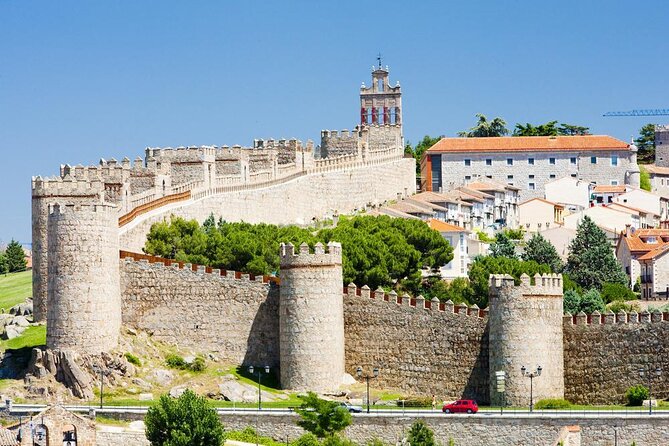
- Avila’s walls walk: the Town of Stones and Saints
- Lunch in Ávila: worth it if you want one less decision
- Segovia: Roman aqueduct first, Alcázar second
- Pace, bus comfort, and how the timing feels on the ground
- Guides and bilingual talk: what to expect from the English plan
- Who this tour fits best (and who should go slower)
- Should you book this tour?
- FAQ
- Is Toledo Cathedral entry included?
- Is lunch included?
- Do I need tickets for the Alcázar of Segovia?
- What language is the tour offered in?
- How long is the tour?
- Where does the tour start and end?
- Are there any age limits for children?
Key things to know before you go
- UNESCO highlights in one circuit: medieval Toledo, walled Ávila, and Roman Segovia
- Toledo Cathedral inside visit is optional: it depends on the upgrade you choose
- Ávila lunch option exists: an included Iberian traditional meal after the walls
- Segovia Alcázar isn’t included: you’ll see it outside, and museum time may cost extra
- Group size stays manageable: up to 30 max, then split into smaller guided groups
- English is part of the plan: the format is bilingual, so pay attention to how your guide works with your group
The value of a one-day UNESCO slam from Madrid
At $126.96 per person for about 12 hours, this trip makes sense if you’re short on time and you like structure. You’re paying for two big things: guided time in three major cities and comfortable transport that covers the distance for you.
The value depends on what you select. Several key stops run with entrance fees included (which saves time and the hassle of buying on the spot), but not everything is bundled. In particular, the Alcázar of Segovia is marked as not included, and Toledo Cathedral entry inside is tied to the upgrade option.
To me, the best “math” is simple: if you’re already planning to hit Toledo + Ávila + Segovia, a guided one-day route can be less tiring than stitching it together yourself with multiple tickets, transfers, and guesswork. If you’re the type who wants slow cafés and long museum stays, you may feel you’re paying for speed.
You can also read our reviews of more tours and experiences in Madrid

Toledo: Cathedral views and a hilltop old town rhythm
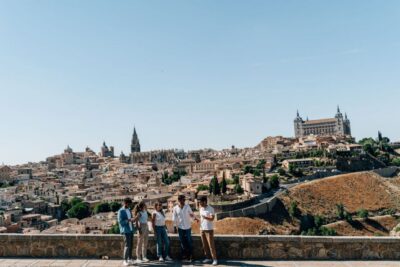
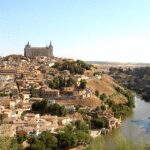
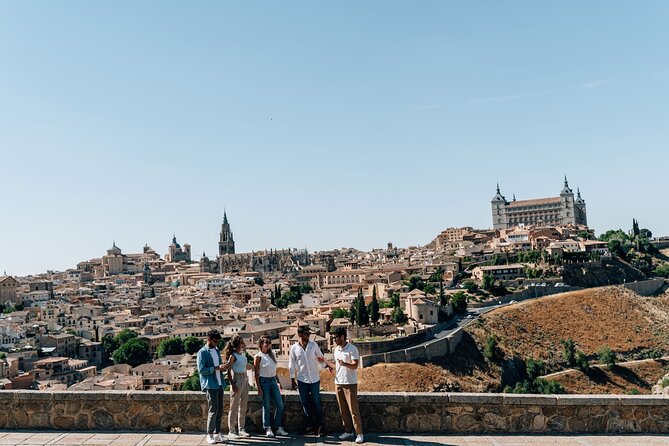
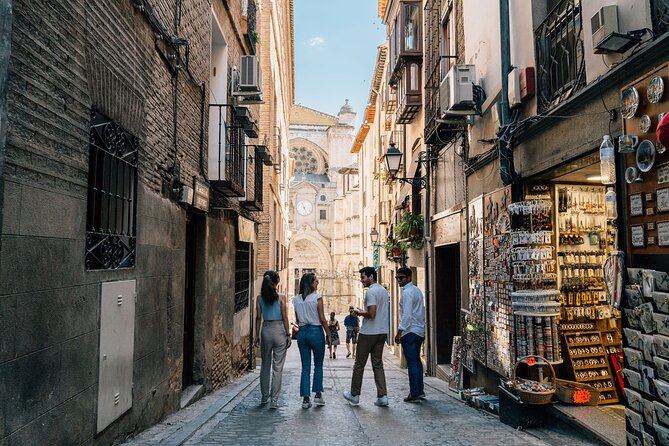
You start downtown Madrid and head out early, first landing in Toledo, a medieval hill city with layers of history. The day’s Toledo time is built around a walking route through the old neighborhoods, plus a cathedral visit that’s either a highlight in the base plan or an upgraded inside experience.
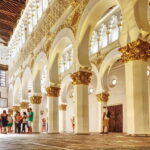
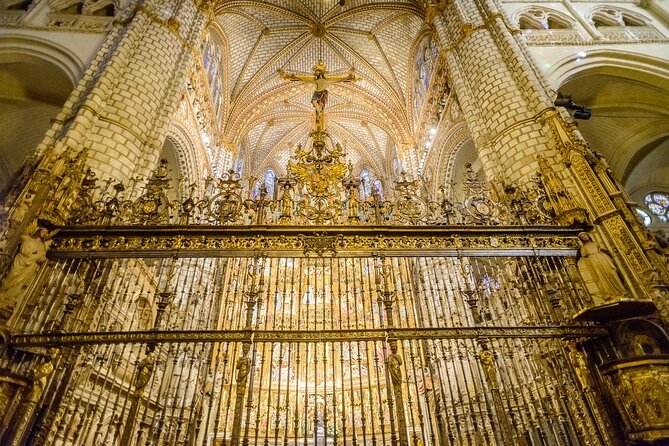
Toledo Cathedral is the star. From what’s included, you can either enjoy the guided visit with the cathedral included in the experience (with the upgrade) or keep your focus on the outside views and walking tour route. Either way, you’ll get the right setting: stone streets, religious architecture, and that unmistakable “you’re standing inside history” feeling that comes from Toledo’s preserved center.
What I like about this Toledo portion is the pacing logic. You don’t just get dumped in the city center with a map. You get a guide-led circuit plus time to absorb what you see, including panoramas from viewpoints overlooking the river valley.
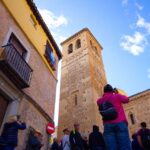
One practical note: Toledo can attract crowds, and the cathedral area is no exception. If you’re sensitive to crowds, treat the guided portion like your “must-see block,” then use your free minutes to step aside for photos and quieter corners.
Avila’s walls walk: the Town of Stones and Saints
Next comes Ávila, famous for its complete medieval walls and its unusually packed concentration of churches in different styles. The core experience here is walking through the fortress city, where the walls shape the whole feel of town. It’s not just a background photo; you actually get to move along the edges of the city’s defense.
This is where the tour becomes very “Spain in stone.” Ávila’s walls are described as built in the Romanesque style, and the city’s reputation as the Town of Stones and Saints isn’t just marketing. You’ll notice how the architecture repeats—arches, churches, stone textures—so the city reads like one coherent story.
The guide time matters here because the walls are huge. Without context, you might walk and think, nice view, but move on fast. With a guide, you can connect what you’re seeing to why it mattered historically, and where specific churches or viewpoints fit into the bigger medieval picture.
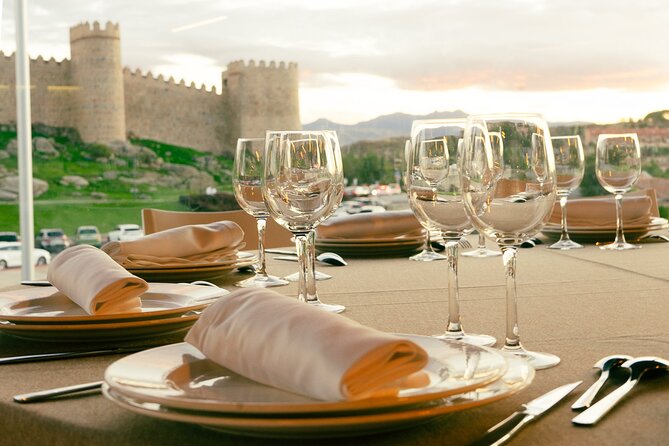
Then there’s the fork in the road: lunch is either included (if you picked that option) or you get free time to eat on your own. If you go with lunch, you’ll sit down after the wall walk and have a typical Iberian traditional meal in an old town restaurant setting.
Lunch in Ávila: worth it if you want one less decision
The lunch option is a key part of the appeal for people traveling on a one-day schedule. Instead of spending your limited time asking where to eat, you get an organized break after the walls, plus a meal that’s described as Iberian traditional.
If you pick the lunch upgrade, you’re getting two forms of value:
- Time value: fewer choices and fewer logistics during a tight day
- Culture value: a set “touristic menu” approach, so you know you’re eating something local
If you skip lunch, you’re not stuck. You get free time—about two hours in the Ávila segment—so you can explore at your own pace and decide where you want to stop.
My advice is to choose based on your travel style. If you like your day planned and you don’t want to hunt, go with the lunch option. If you want full flexibility and like to wander until you find a place you love, take the free time.
Segovia: Roman aqueduct first, Alcázar second
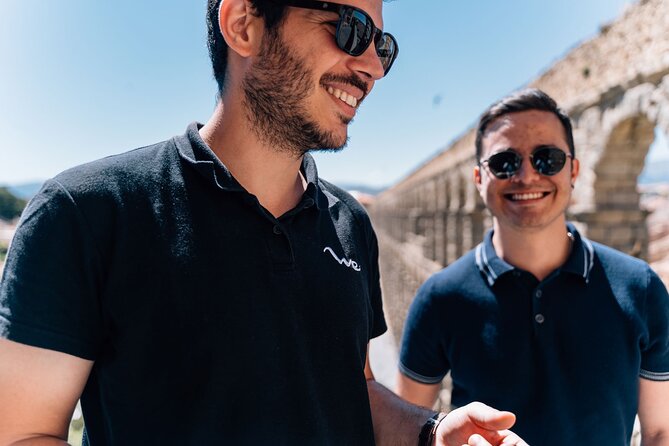
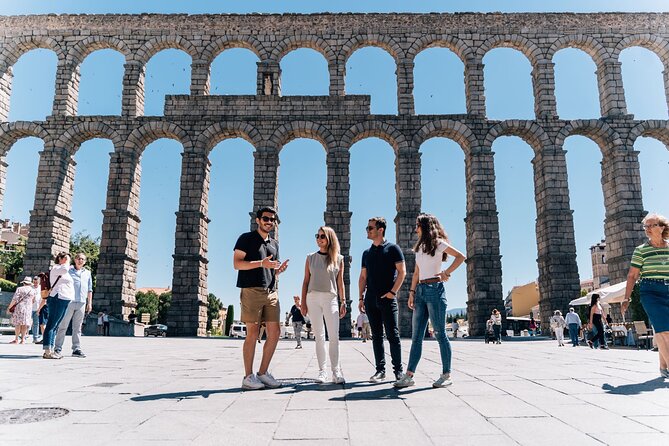
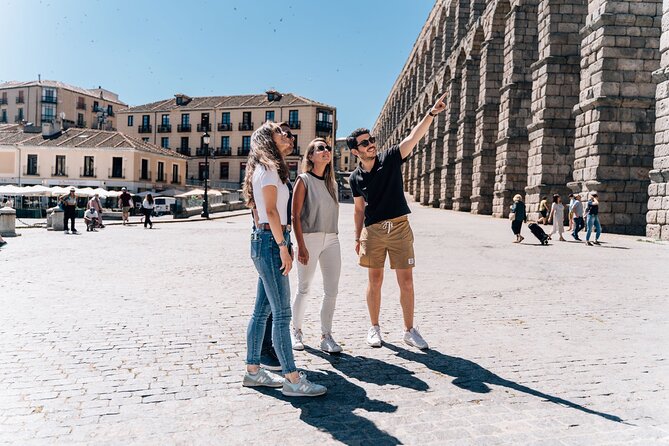
Segovia is your third UNESCO hit, and the day’s Segovia time is designed to give you the big icons quickly. You start with the Roman Aqueduct, one of the best-preserved elevated Roman aqueducts and Segovia’s most recognizable symbol.
Here’s a neat detail you’ll hear along the way: the aqueduct appears on Segovia’s coat of arms. That’s a great “why it matters” fact, because it explains why locals still treat this structure like a living landmark, not just a distant ruin.
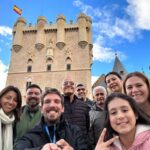
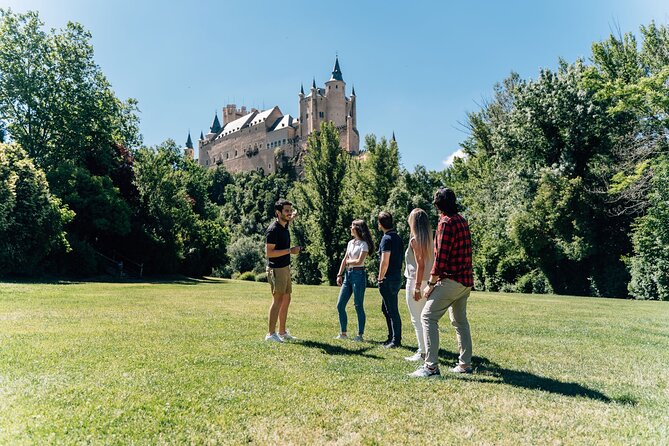
After the aqueduct, you’ll shift toward royal-story landmarks. The tour includes a cathedral overview and a look at the Alcázar of Segovia from outside. Even when you don’t go inside, you get a strong sense of why people obsess over this place.
The Alcázar is described as rising on a rocky crag above the confluence of two rivers, shaped like the bow of a ship. It’s a fortress-turned-palace type of building, and it has served different roles over time: royal palace, state prison, and later a royal artillery college and military academy. That mix of functions helps you see the building as more than a “pretty castle.”
Important: Alcázar admission is not included. If seeing the interior is a priority for you, plan on paying extra, or be ready to enjoy the exterior views and photo stops as the main payoff.





Pace, bus comfort, and how the timing feels on the ground
This trip is built around bus rides between cities and guided walking blocks inside them. The transport is explicitly air-conditioned, and the schedule is designed so you don’t have to manage train connections or bus timing on your own.
The group setup also matters. The tour caps at 30 travelers, and once you arrive, participants are split into smaller groups of up to 25 per guide. That usually keeps the guiding from turning into a one-person microphone show.
Still, you should expect a “tight highlights” day. The walking time is real, and you’ll be moving from meeting point to viewpoint to streets to cathedral areas. If you’re the sort who likes to stop for every coffee and every side street, you may feel rushed, especially once traffic or crowding slows things down.
Bring practical stuff: good walking shoes, a layer for cooler temperatures (these cities are higher than Madrid), and a bit of patience for transit. One nice perk people have pointed out is that the bus can feel comfortable for the long stretches, and you may even find small onboard conveniences like charging options. Since that isn’t guaranteed in the core description, treat it as a bonus rather than a promise.
If you want to make the day smoother, be early at the meeting point. The instructions ask you to arrive about 15 minutes before departure, and it’s the difference between a calm start and the stress spiral.
Guides and bilingual talk: what to expect from the English plan
The tour is described as bilingual (English and Spanish), with the option offered in English. In practice, that means your guide can switch languages as needed, and you should feel supported if you’re not fluent in Spanish.
That said, I’d plan with one caution: a small number of people reported that English-focused bookings didn’t always feel balanced in the language during their group experience. The simplest way to handle that is to go in with realistic expectations. You’ll get explanations in English, but the guide may also respond to the mix in the group.
The best part is the storytelling. In the comments, guides such as Antonio, Laura, Diego, Maria, Juan Carlos, and David show up repeatedly, and the praise is consistent: clear historical context plus practical pointers for how to spend your free time. Even if you’re not a “history person,” good guiding helps you read what you’re seeing instead of just scanning for photos.
Also, keep an eye on group dynamics. Some people care about shopping stops; others don’t. If you prefer a straight route with minimal detours, you’ll want to stay close to your guide during transitions and use your free time intentionally.
Who this tour fits best (and who should go slower)
I think this tour fits best when you meet at least one of these conditions:
- You have one day (or almost one) and want the big UNESCO hits in a logical order
- You like guided walking tours and want a structure that keeps you from missing key sights
- You’re comfortable with a full schedule and brisk movement between stops
You might want a slower approach if:
- You’re traveling with someone who needs lots of breaks and long seating time
- You want museums at depth rather than cathedral-and-castle highlights
- You dislike long bus rides and prefer to travel independently between cities
For first-time visitors to Madrid, this is a smart “starter combo” because it gives you three very different Spanish moods in one day: Toledo’s hilltop religious architecture, Ávila’s wall-and-church feel, and Segovia’s Roman-and-royal mix.
And for medieval and architecture fans, this is especially efficient. You get Roman engineering, medieval defense walls, and fortress-palace architecture without the work of planning.
Should you book this tour?
If you want a high-impact day with guided UNESCO stops, this is a solid choice. The itinerary is built around recognizable icons—Toledo Cathedral area, Ávila’s walls, Segovia’s aqueduct and Alcázar views—and the bus logistics remove the biggest stress of doing all three yourself.
Book it if you:
- Want included entrances where offered
- Like the idea of lunch being handled for you (if you choose that option)
- Are okay with a fast pace and some walking
Skip or modify if you:
- Need lots of downtime and slow wandering
- Care deeply about Alcázar interior time (since it’s not included)
- Are very language-sensitive and expect a perfectly English-only delivery all day
FAQ
Is Toledo Cathedral entry included?
Toledo Cathedral entry inside is included only if you select the upgrade option. Without the upgrade, the cathedral visit is not listed as included inside.
Is lunch included?
Lunch in a local restaurant in Ávila is included only if you select the lunch upgrade option. If you don’t choose it, you’ll have free time instead.
Do I need tickets for the Alcázar of Segovia?
Alcázar of Segovia admission is not included. The tour includes viewing it from outside as part of the visit.
What language is the tour offered in?
The tour is bilingual (English and Spanish) and is offered in English. The guide may switch between the two languages during the day.
How long is the tour?
The duration is approximately 12 hours.
Where does the tour start and end?
It starts at Pl. de San Miguel, 7 in Madrid, and it ends near Calle de Bailén, at Palacio de los Consejos (C. de Bailén, 25).
Are there any age limits for children?
Children under 3 years old are free of charge. The tour notes that most travelers can participate.