REVIEW · MADRID
Tour Madrid in 2 hours! Electric Tuk – Fast, Fun, and Exclusive
Book on Viator →Operated by Green Tours · Bookable on Viator
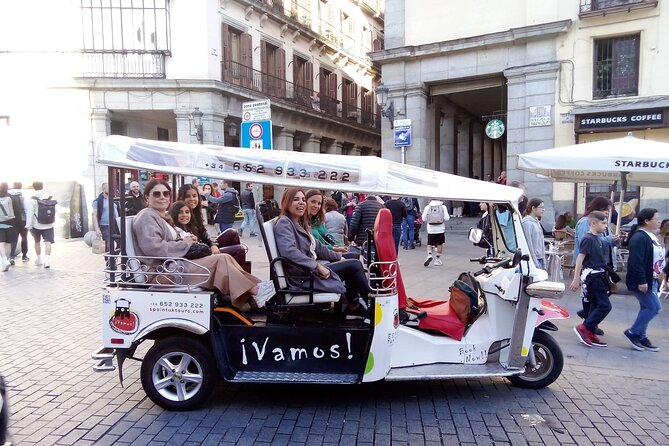
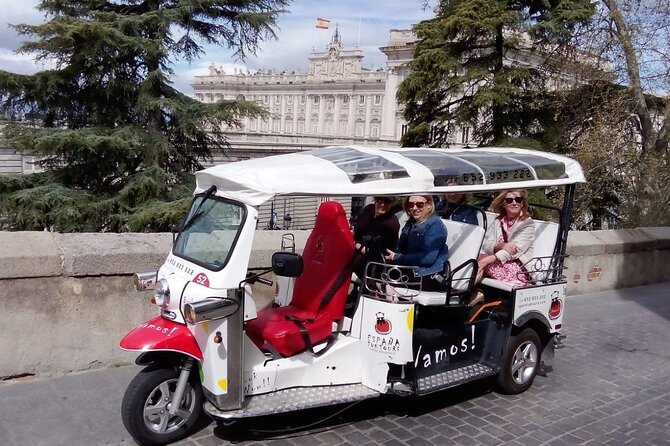
Madrid in 2 hours without the stress. This fast, private electric tuk-tuk loop is built for seeing the city—plazas, palaces, temples, and big modern landmarks—without wasting your day in long transit lines.
I like that the tour keeps you moving, with short photo-and-walk moments that help you understand where things are (and what to come back for later). I also like the human touch: guides and drivers have been praised for history context, extra local tips (including food), and helping with pictures—one report even calls out driver Tadeo and an Angel guide.
One thing to watch: timing can depend on how smoothly pickup goes. A couple reviews mention a late arrival, GPS confusion at the start, and one language mismatch, so I’d plan with a little buffer and confirm your guide language ahead of time.
In This Review
- Key points to know before you go
- Electric Tuk + Private Group: Why 2 Hours Works
- Plaza de Santa Ana to Jardines de Sabatini: The Royal-Old Madrid Stretch
- Debod Temple and Plaza Mayor: Classic Squares Meet Egypt-in-the-City
- Writers’ Madrid: Cervantes and Lope de Vega on a Tight Schedule
- Almudena to Jerónimos: Cathedral Culture and Big European Art
- Neoclassical Madrid: Neptune, Puerta de Alcalá, and Cibeles Power Spots
- Las Ventas, Barrio de Salamanca, and Bernabéu: When Madrid Goes Big
- Plaza Colón, Gran Vía, National Library, and the Bank Buildings: City Infrastructure as Sight
- Price and What $215.07 Per Group Actually Buys
- Making This Tour Feel Effortless (Even If Madrid Tries to Confuse GPS)
- Should You Book This Electric Tuk-Tuk Madrid Tour?
- FAQ
- Is this tour private?
- How long is the electric tuk-tuk tour?
- Where does the tour start?
- What language is the tour offered in?
- Are any entrances included?
- What’s included in the price?
Key points to know before you go
- Private group of up to 4 means less waiting and more control over photos and questions.
- Electric tuk-tuk speed makes major Madrid sights feel close together in a short window.
- Many stops are free (so you’re not paying extra at each turn), with Palacio Real specifically not included.
- Photo-friendly pacing keeps the tour fun, not just a lecture marathon.
- Guide quality matters: people mention both strong history storytelling and very helpful picture-taking.
- Pickup can be the weak link, so show up early at the meeting point and double-check language.
Electric Tuk + Private Group: Why 2 Hours Works
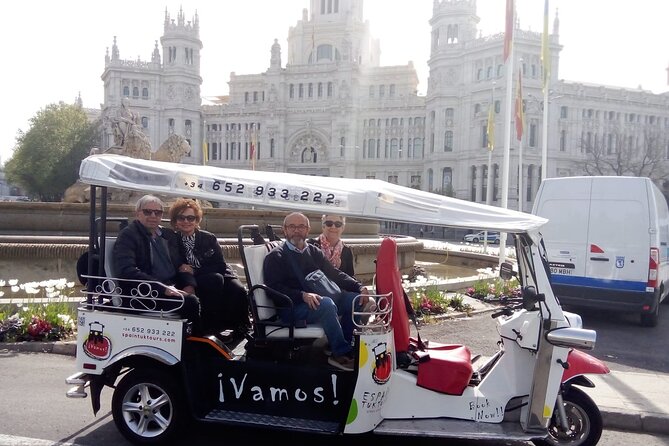
A 2-hour tour in Madrid can go two ways: either you cram in too much, or you leave feeling like you got your bearings. This one aims for the second goal.
Because it’s private (just your group, up to 4), you’re not stuck behind strangers or dragged along at someone else’s pace. The electric tuk-tuk format also changes the feel of the day. You’re not just walking between “must-sees.” You’re getting moving perspective—how neighborhoods shift from grand royal spaces to old-town streets to the city’s modern power points.
The “fast, fun, and exclusive” part isn’t marketing fluff when you look at the real schedule. You’ll hit a mix of iconic exteriors and short interior-adjacent moments: royal architecture, cathedral culture, and big-city landmarks like Las Ventas and Santiago Bernabéu. That makes this a great first-day plan, when you want orientation and energy for the rest of your trip.
You can also read our reviews of more tours and experiences in Madrid

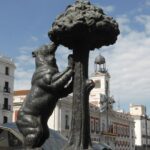
Plaza de Santa Ana to Jardines de Sabatini: The Royal-Old Madrid Stretch
The route starts in Plaza de Santa Ana in the Cortes neighborhood of Centro. This is an easy win for a first stop: it’s an open square space that gives you an immediate sense of Madrid’s central rhythm. It also dates back to the early 1800s, so even if you only do a quick look, you’re already inside the city’s long timeline.
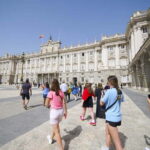
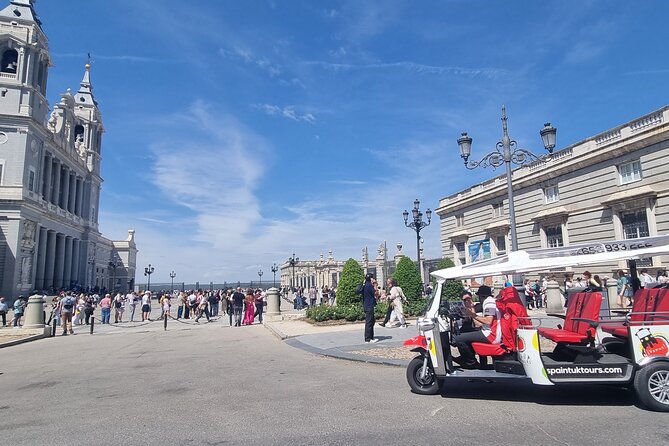
From there, you move into the royal orbit with the Royal Palace of Madrid (also known as Palacio de Oriente). The tour notes that the palace is used today for receptions, ceremonies, and official events, and it’s tied to the move of royal residence under Carlos III. Even if you don’t go inside here (Palacio Real admission isn’t included), you’ll get a feel for the scale and the planning behind the complex—exactly what helps later when you decide whether you want a full palace visit.
Next comes the Museo de la Catedral de la Almudena. This museum is tied to the Almudena Cathedral, consecrated by Pope John Paul II in 1993, and the museum is described as a set of rooms with objects that tell the diocese story. If you like religious art, ceremonial pieces, and the “how faith shaped a city” angle, this stop works well even with limited time.
Then you step into the gardens: Jardines de Sabatini sit directly in front of the north façade of the Royal Palace. The tour frames them by location and size (about 2.66 hectares), which matters because it explains the garden’s role as a visual buffer between palace grandeur and the surrounding streets. It’s the kind of pause that helps you switch gears from monuments to atmosphere.
Debod Temple and Plaza Mayor: Classic Squares Meet Egypt-in-the-City
After the royal core, the tour heads toward Debod Temple, an ancient Egyptian structure now located in Madrid. It sits west of Plaza de España, on a hill where the Mountain Barracks once stood. That combination—old-world temple in a modern Spanish city—makes this stop feel like a story you can actually see with your own eyes.
From there you shift into old-town energy at Plaza Mayor, the heart of Madrid de los Austrias. The square has deep roots: it was founded on the site of a market plaza from the late 1400s and later redesigned for uniformity. The tour’s framing is useful because it explains why Plaza Mayor has always been a stage for big public moments—celebrations, ceremonies, and civic life. It’s not just a pretty square; it’s a key to understanding Madrid’s social center.
A short add-on follows at Mercado San Miguel, a covered market with local food and delicatessen in an elegant setting. Even if you don’t snack, it’s worth using this stop to learn how Madrid markets feel: enclosed, lively, and designed for browsing.
A practical note for your expectations: in a 2-hour route, these stops are quick. You’re collecting impressions and photo angles. If you want longer time, you’ll want to build a second visit later.
Writers’ Madrid: Cervantes and Lope de Vega on a Tight Schedule
Two of the most rewarding “short time” stops are the ones that connect Madrid to literature.
The tour includes the former residence of Miguel de Cervantes, tied to Don Quijote. It also includes the House of Lope de Vega, built in the 16th century, where Lope acquired the property in 1610 and lived there until his death in 1635.
Here’s why I think these matter on a short tuk-tuk day: they add texture beyond monuments. Madrid isn’t only palaces and plazas. It’s also a city that shaped, and was shaped by, the Spanish Golden Age. Even a brief exterior view or guided context can turn a later visit to museums and theaters into something you understand better.
The trade-off is time. In two hours, you won’t get a full literary walkthrough. Use these moments to spark curiosity, then plan a longer independent visit if either writer truly interests you.
Almudena to Jerónimos: Cathedral Culture and Big European Art
The tour weaves through Madrid’s religious and art-world gravity.
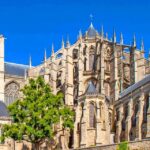
After the Almudena Cathedral museum stop, it later includes the Parish Church of San Jerónimo el Real—popularly called Los Jerónimos. The tour notes its connection to Spanish monarchy and that it became a royal spiritual retreat over time. It also mentions that it has been remodeled and restored multiple times, with late Gothic elements and Renaissance influences.
One practical advantage of this stop is location. The tour places Los Jerónimos next to the Prado Museum. So if you’re art-driven, this is a smart way to line up your next moves: you see the church and instantly understand where the big painting experience fits into your day.
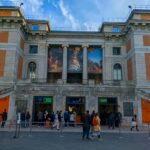
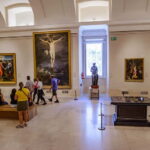
The route also includes a major European painting museum stop, described as exceptionally strong from the 16th to the 19th centuries, with special mention of artists like Velázquez, El Greco, and Goya. The description even references art historian Jonathan Brown in its framing of the collection’s importance. If you’re a painting fan, this is one of the moments where the tour gives you a taste of what you could spend hours on.
In a short itinerary, you won’t master the museum. But you can leave with a clear sense of whether the museum’s style matches your tastes. Then you return with a plan.




Neoclassical Madrid: Neptune, Puerta de Alcalá, and Cibeles Power Spots

Next up is the kind of Madrid you notice even from the road: decorative fountains and monumental architecture.
You’ll visit the Neptune Fountain in the roundabout area known for it. The tour gives the dates: proposed in 1777, construction started in 1782, completed in 1786. That’s a nice detail because it signals the planned nature of Madrid’s civic art, not random decoration.
Then you arrive at Puerta de Alcalá, a neoclassical triumphal arch commissioned by Carlos III and inaugurated in 1778. The tour explains the design by Francesco Sabatini, including the five openings (instead of the usual three) and the two sides with different decorative emphasis. This is one of those stops where a quick look still pays off, because you’ll understand the “Roman-style gate” logic and why Madrid uses it as a city marker.
Later the route brings you to Cibeles Fountain, surrounded by several major buildings, including Palacio de Comunicaciones (City Hall). The fountain’s symbolism is part of the fun: it represents the Roman goddess Cibeles with lions and mythological detail. And yes, it’s also tied to Real Madrid celebrations, which gives you a modern lens on a classical monument.
Las Ventas, Barrio de Salamanca, and Bernabéu: When Madrid Goes Big
Not everyone expects a tuk-tuk tour to include Madrid’s loudest, modern icons. That’s exactly why it can feel so satisfying.
The tour stops at Las Ventas Bullring, described as the biggest bullfighting venue in Spain, with a listed spectator capacity (23,798). It’s also framed by global size and ring diameter. Even if you’re not here for bullfighting culture, this is a landmark that shows how Madrid’s traditions sit alongside its modern identity.
Next is Barrio de Salamanca, with street names like Velázquez, Ortega y Gasset, and Serrano mentioned in the route. This gives you a feel for the city’s upscale, clean-lined side—and it helps you understand why Madrid has such a strong shopping and business vibe.
You’ll also reach Santiago Bernabéu Stadium and pass through the financial district along Paseo de la Castellana. Bernabéu is described with its inauguration date (December 14, 1947) and current capacity (81,044). Again, you may just be seeing it from a distance, but that’s enough to anchor Madrid’s football gravity in your mental map.
Plaza Colón, Gran Vía, National Library, and the Bank Buildings: City Infrastructure as Sight
The later part of the route balances monuments with “how Madrid runs.”
You’ll stop near Plaza Colón, anchored by the Christopher Columbus monument and the fountain around it. The tour also mentions the Gardens of Discovery and sculptures, plus a Cultural Center in the basement.
Then it includes the National Library of Spain (BNE), which the tour describes as responsible for collecting, cataloging, and conserving Spain’s bibliographic and documentary heritage, with about 30 million publications produced since the early 18th century. Even without going deep inside, it’s a strong stop because it reframes a library as national infrastructure, not just a quiet room.
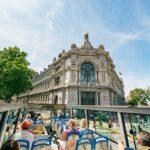
From there, you’ll also pass major civic/financial architecture, including a mention of the Banco de España building, designed to give the National Bank a seat aligned with the importance of its roles. The tour notes interior access is limited to certain groups and occasionally to non-profit cultural entities, which tells you this is mostly an exterior and architectural context stop.
Finally, the route references Gran Vía, a major boulevard connecting Alcalá to Plaza de España and important for commercial, tourist, and leisure life since early 20th-century construction. If you want a single street to point to when someone asks where “big city Madrid” happens, this is it.
Price and What $215.07 Per Group Actually Buys
At $215.07 per group (up to 4) for about 2 hours, the headline cost can look high—until you think about what a private tuk-tuk day means in Madrid.
You’re not paying per person for a long walking slog, and you’re not paying for separate tickets for each stop. Most listed stops are marked as free for admission in the tour description, with Palacio Real singled out as not included. That means your money goes mainly to transportation plus guide time and coordination across a tight set of locations.
Also, it’s English and private. With a group cap of 4, it can be good value if you’re traveling with friends or family and you want the guide to tailor questions and photo help. One review specifically calls out the guide’s added information about local cuisine, which is the kind of payoff that can easily outlast the 2-hour ride.
My biggest caution on price value: this is a short blitz. If you want full museum time or long palace interior time, this tour is the opener, not the whole show.
Making This Tour Feel Effortless (Even If Madrid Tries to Confuse GPS)
Because the route moves fast, your prep matters.
I recommend you:
- Arrive a bit early at Pl. de la Lealtad, 1, Retiro so pickup pressure doesn’t steal your first minutes.
- Bring a charged phone and offline maps anyway. One reported issue was GPS confusion that turned the start into a wait, though the team reportedly helped by giving a coffee and a correct location once you connected.
- Confirm your language at booking. The tour is listed as English, but one group reported a guide language mismatch (Italian group with a Spanish-only guide). Quick confirmation helps prevent disappointment.
On the day, treat each stop like a “chapter title.” Look, take photos, ask one or two key questions, then keep moving. That pace is where the tuk-tuk earns its keep.
Should You Book This Electric Tuk-Tuk Madrid Tour?
Book it if you want a first-day overview that stitches together royal Madrid, old-town squares, major art-landmark context, and big modern icons—without turning your legs into pasta.
I’d skip it or adjust expectations if your main goal is deep museum time or palace interiors. This route is built for quick orientation, not long visits. Also, if you’re extremely time-sensitive, plan a buffer at the start since a couple issues were reported around tuk arrival timing.
If you’re traveling with up to three others and want a fun way to see a lot in a short window, this is a strong value play. You’ll come away with a mental map you can build on the rest of your trip.
FAQ
Is this tour private?
Yes. It’s listed as a private tour/activity, and only your group participates.
How long is the electric tuk-tuk tour?
The duration is approximately 2 hours.
Where does the tour start?
The meeting point is Pl. de la Lealtad, 1, Retiro, 28014 Madrid, Spain. The tour ends back at the meeting point.
What language is the tour offered in?
The tour is offered in English.
Are any entrances included?
The tour description notes that tickets for some stops are free, but Palacio Real (Royal Palace of Madrid) admission is not included.
What’s included in the price?
GST (Goods and Services Tax) is included. Dinner and lunch are not included.