REVIEW · MADRID
Visit to the Prado Museum
Book on GetYourGuide →Operated by Madrid con guía · Bookable on GetYourGuide
The Prado Museum can overwhelm fast. This tour gives you a focused, small-group start with an official guide so you know what you’re looking at right away, and you can keep going after.
What I really like is the small group size (up to 7) and the official tour guide, which keeps the pace comfortable and the explanations human instead of rushed.
Another big win is practical value. You get entrance fees included and skip the ticket line, so your time inside isn’t eaten by queues or last-minute ticket searching.
One possible drawback: the live tour is in Spanish, so you’ll get the most if you’re comfortable following art talk in that language.
In This Review
- Key highlights to know before you go
- The Prado Museum works best when you have a human guide
- Starting at Monumento a Goya: get your bearings fast
- What you’ll learn inside: masterpieces from Bosch to Goya
- How the guided time fits your Prado visit
- Tickets, line-skipping, and the real value of the $45 price
- After the guide: how to use the rest of your time wisely
- Spanish-language tours: who should book and who should double-check
- Practical notes that keep your visit smooth
- Should you book this Prado guided tour?
- FAQ
- How long is the Prado Museum guided tour?
- What is the price per person?
- Is the entrance fee included?
- What group size is it?
- What language is the live tour guide?
- Where do you meet the guide?
Key highlights to know before you go

- Official guide in a small group: Limited to 7 participants for a more personal experience
- Tickets and entrance fees included: Less hassle before you even start looking at art
- Spanish live narration: The guide shares context in Spanish throughout
- A 16th- to 19th-century masterworks focus: You’ll get a guided sweep across major eras
- Continue on your own after the tour: Your guided start doesn’t trap you in a schedule
- Meeting at the Goya statue: Easy to find and you begin by grounding yourself in Madrid’s art energy
The Prado Museum works best when you have a human guide
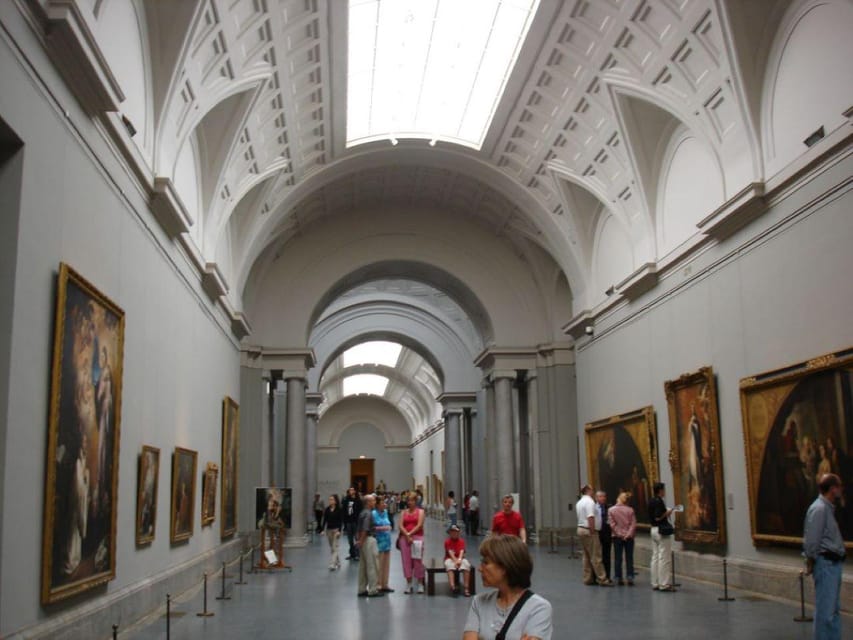
The Prado is famous for a reason. It’s a lot of art, in a lot of rooms, with a lot of detail fighting for your attention. If you walk in cold, you might enjoy it, but you may also end up wandering without a clear thread.
This tour is designed to give you that thread. You meet up, join a guided session with an official tour guide, and then you keep the momentum to explore on your own afterward. For me, the sweet spot here is that the guide doesn’t try to show you everything in the museum. Instead, they give you enough context on major works and artists that your self-guided time actually feels intentional.
The small group size matters too. Limited to 7 people, the experience stays conversational. The guide can pace the group, answer questions, and adjust based on what people want to see. That kind of attention is a big reason the tour earns such strong praise, including mentions of guides like Borja, Marta, and Christian for being clear, friendly, and careful with group energy in a museum that can feel crowded.
You can also read our reviews of more museum experiences in Madrid

Starting at Monumento a Goya: get your bearings fast
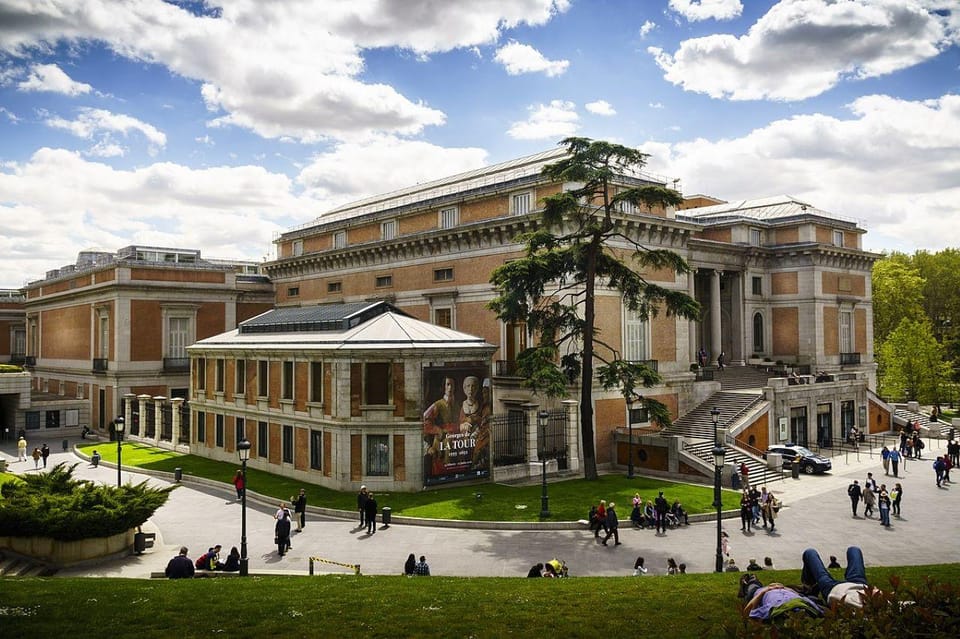
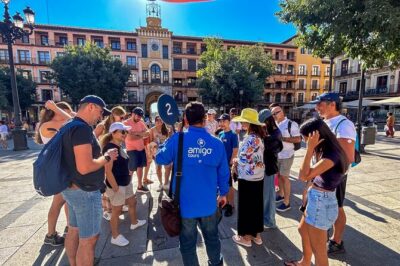
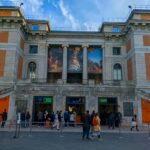
You begin at the Monumento a Goya, with the guide standing next to the statue. The meeting point is easy to recognize because the guide has official tour accreditation on their chest and the Madrid con guía logo visible.
Why this matters: the Prado is in central Madrid, and art museums can feel like mazes when you first enter. Starting at a landmark tied to Goya gives you an immediate sense of theme. It also helps you avoid the stress of meeting somewhere vague and late, especially when you’re aiming for a smooth ticket-and-entry moment.
If you’re the type who likes to arrive calm, not frantic, this meeting setup is a win. You know exactly where to look. And once you’re with the guide, you’re not spending your first minutes guessing your way into the museum flow.
What you’ll learn inside: masterpieces from Bosch to Goya
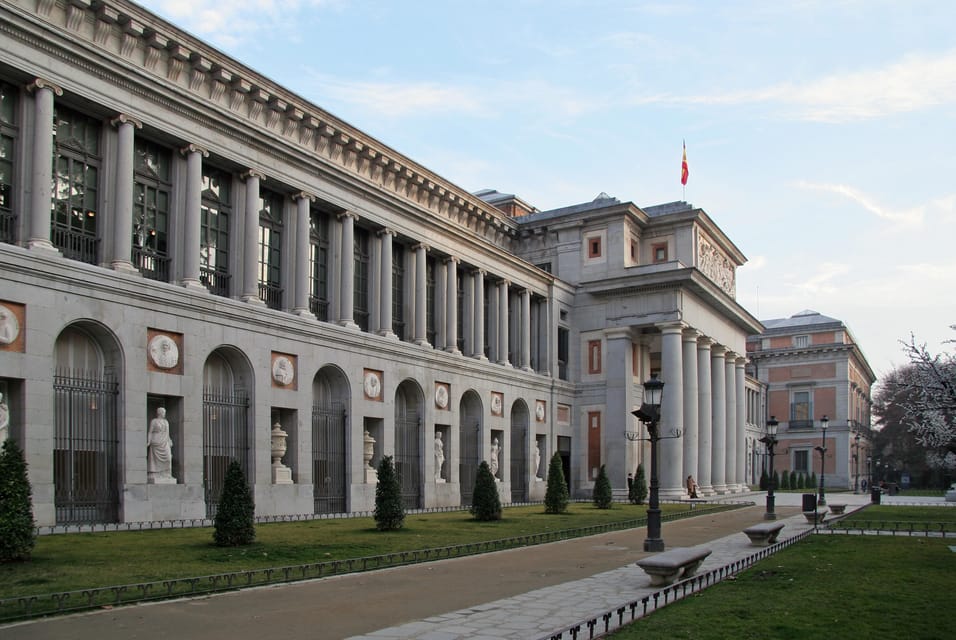
The guided part focuses on main works from the sixteenth to the nineteenth century. That gives you a broad sweep rather than a narrow checklist. You’ll hear about major artists including Bosch, Velázquez, Rubens, and Goya—the names that anchor the Prado’s reputation.
Here’s what that translates to for you in real terms. You’re not just getting titles and dates. The tour is structured to contextualize each painting and each author, with your guide putting the work into perspective so you understand what you’re seeing and why it matters. Art can be intimidating when you don’t know what to look for. This format helps you start making connections—style to era, subject to artist, symbolism to historical mood.
The experience also includes the idea of “secrets,” meaning the guide points out the kinds of details that often get missed when you’re reading labels on your own. You’ll typically get this through explanation that’s built into the walk-through, not through you trying to figure it out mid-stroll.
A helpful detail from the guides described in the experience: there’s often a clear awareness of group needs. People have shared that their guide was especially attentive—checking in on well-being in a crowded museum environment. Another shared theme is that the guide may ask what you want to see before the visit gets underway, then incorporate those interests into the route. That’s exactly how you want a Prado guide to work: you get structure, but it still feels personal.
How the guided time fits your Prado visit
The tour duration is listed as 78 minutes to 1.5 hours, and the guided session is also described as about 2 hours in the visit plan. Either way, the core takeaway is consistent: you’re getting a short, high-value introduction, not an all-day guided tour.
That’s a good thing. The Prado is huge, and an all-day guided “see everything” plan can turn into a blur. With this time window, you can actually do two things well:
1) Get context for the big masterpieces and the eras you’re seeing
2) Choose what to return to during your independent time
When you’re done with the guided portion, you continue exploring the museum as long as you want. That freedom is valuable because you’ll naturally develop preferences once you’re inside. Maybe you’ll want to circle back to a particular artist. Or maybe you’ll want to slow down on a painting the guide helped you decode.
One small note to keep your expectations aligned: the live tour is in Spanish. The experience also notes that some content is shown in its original language. If you don’t speak Spanish well, you might miss parts of the explanations. You can still enjoy the paintings, but you may not fully benefit from the “why this matters” layer that’s the whole point of booking a guided start.
Tickets, line-skipping, and the real value of the $45 price
At around $45 per person, this tour looks like it’s priced for what you actually receive: an official guide plus museum entry. Tickets and entrance fees are included, and you skip the ticket line.
The value isn’t just the price itself. It’s the way the tour removes friction. Prado tickets are one more task on an already task-heavy day. When your ticket entry is handled and you’re skipping the line, you can spend your energy where it belongs: inside looking at art.
You also don’t have to arrange your own entry strategy for a guided experience. You show up at the meeting point (near Goya), the guide gets you moving, and you settle into the museum with context.
Two practical tradeoffs to be aware of:
- Food and beverages aren’t included, and food isn’t allowed during the tour. Plan to eat before you meet or afterward so you don’t end up hungry and distracted.
- Hotel pickup isn’t included. You’ll be coming on your own to the meeting area, so build in a bit of normal city-walking time.
If you want a straightforward way to reduce museum stress while still getting expert context, the package makes sense.




After the guide: how to use the rest of your time wisely
The best part of this format is that the guided time doesn’t box you in. After the tour, you explore on your own for as long as you like. That’s where you turn the guide’s context into personal discovery.
Here’s how I’d use it if I were planning your day with this tour:
- Start by returning to a few pieces your guide discussed. When you see them again with the explanation fresh in your mind, the paintings start to “click.”
- Let one artist lead your next move. Since the tour names major figures like Bosch, Velázquez, Rubens, and Goya, it’s easy to pick a thread and follow it.
- Don’t feel like you must see everything. The Prado is not the kind of museum where more always equals better. The guided intro is there to help you choose what to linger on.
Because the group is small and the route is guided, you’ll likely feel less lost than you would on your own. That alone makes the rest of the museum time more enjoyable. You can focus on slowing down, reading labels at your own pace, and spotting details that the guide flagged.
Spanish-language tours: who should book and who should double-check
This is a Spanish live tour. That’s not a deal-breaker for everyone, but it matters.
This experience is a great fit if:
- You want art history context in a live, guided format
- You like small-group pacing
- You can follow Spanish explanations (or at least follow enough to catch the key points)
It may be less ideal if:
- You want an English-led tour and you’re relying on live explanation to understand the paintings
- You prefer reading labels on your own and don’t want narration
The good news is that even with the Spanish narration, the Prado’s masterpieces are visual first. You’ll still enjoy the museum. The difference is how deeply you’ll connect to the “why” behind each work.
Wheelchair access is noted for the tour, so it’s worth considering if mobility is a concern.
Practical notes that keep your visit smooth
A few details from the tour information are worth keeping in mind before you go:
- Meeting point: next to the Goya statue, with the guide’s accreditation and Madrid con guía logo visible.
- Small group: limited to 7 participants, which helps with pace and questions.
- Language: Spanish live guide; some content shown in original language.
- Duration: listed as 78 minutes to 1.5 hours, with the guided segment described as about 2 hours in the plan. Plan for roughly 1.5 to 2 hours for the guided portion.
- Restrictions: food isn’t allowed during the tour, and alcohol/drugs are also not allowed.
Also, the tour is described with free cancellation up to 24 hours in advance and a reserve now & pay later option. That’s useful if your Madrid schedule is still a bit flexible.
Should you book this Prado guided tour?
I’d book this if your goal is to enjoy the Prado without feeling lost. The mix of an official guide, small-group pacing (up to 7), and tickets included is a strong combination. You’re paying for time savings and for context, not for a generic walk-through.
Skip booking if you’re uncomfortable with Spanish narration or if you want a long guided day that covers the entire museum in one go. This tour is best as a smart first step: a concentrated start you can build on during your self-guided time.
If you’re deciding between wandering solo versus having a focused introduction, this one is built for the people who want structure first, then freedom afterward.
FAQ
How long is the Prado Museum guided tour?
The duration is listed as 78 minutes to 1.5 hours, and the guided tour is described as about 2 hours in the plan. Plan for roughly 1.5 to 2 hours for the guided portion.
What is the price per person?
The price is $45 per person.
Is the entrance fee included?
Yes. Entrance fees are included, and you also skip the ticket line.
What group size is it?
It’s a small group, limited to 7 participants.
What language is the live tour guide?
The live tour guide speaks Spanish.
Where do you meet the guide?
Meet next to the statue of Goya (Monumento a Goya). The guide will have official accreditation and the Madrid con guía logo visible.
If you want, tell me your Spanish level and what artists you most care about (Goya, Velázquez, Rubens, Bosch, etc.). I’ll suggest a simple strategy for what to prioritize during the free time after the guided portion.