Madrid’s modern face is everywhere, if you know where. This 2-hour-20-minute walk stitches together Madrid center landmarks with a guide in English, from Puerta del Sol all the way to El Retiro Park. It’s a simple route, mostly outside, with a mobile ticket and free viewing stops along the way.
I especially liked the way the guide turns street-level details into big-picture meaning. The stops range from Royal symbols at Puerta del Sol to the language power of Instituto Cervantes, and the stories help you see Madrid as a living timeline. I also really enjoyed the energy of guides like Tambo, Tomas, Maikel, Marta, and Alba Gallego, who managed to make the city’s architecture and history feel clear instead of heavy.
One thing to consider: this is not about getting inside major attractions. Also, while tips aren’t included, plan to budget extra for tipping at the end, and be aware there was an instance where a guide asked for a minimum tip to cover extra costs.
In This Review
- Key Highlights You’ll Feel Walking This Route
- Why This Modern Madrid Walk Feels Like a Story
- Price, Time, and What $3.59 Really Buys You
- Puerta del Sol: Where Madrid’s Center Energy Starts
- Calle de Alcalá: The Long Street That Teaches City Scale
- Casino de Madrid and the Newest Power Facades
- Gran Vía: The Big-City Street With Theaters and Tempo
- Instituto Cervantes: Language Power Hiding in Plain Sight
- Cibeles Fountain and Banco de España: Madrid’s Symbols of Authority
- Cibeles Lounge and Paseo del Prado: City Hall Meets a UNESCO-Listed Walk
- Puerta de Alcala: A Gateway Built for Meaning
- Retiro Park Finish: When the City Lets You Breathe
- Guides Make or Break It: Marta, Tambo, Tomas, Maikel, Alba Gallego
- Practical Tips to Make This Walk Work for You
- Should You Book This Walking Tour of Madrid Modern?
- FAQ
- How long is the Walking Tour of Madrid Modern?
- Where does the tour start and end?
- Is the tour offered in English?
- Do I need to buy entry tickets to sites?
- What is the maximum group size?
- Can I cancel for a full refund?
Key Highlights You’ll Feel Walking This Route
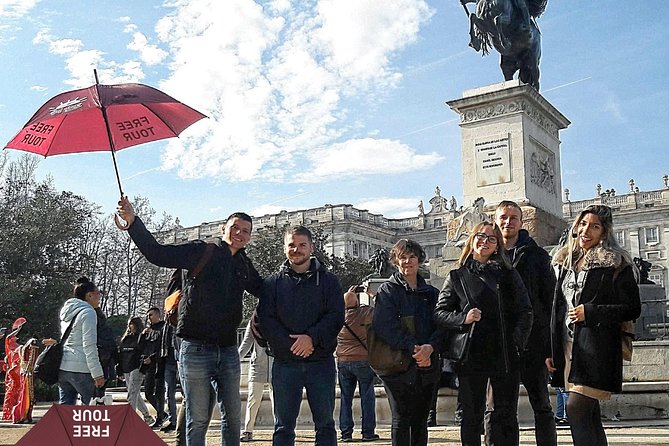
- A “modern Madrid” arc: from Gran Vía and major banking icons to the institutions that shape culture today
- Free viewing stops: you get great sights without entry-ticket hassles
- Guides who make it click: Marta, Tambo, Tomas, Maikel, and Alba Gallego bring the details to life
- Paseo del Prado with UNESCO status: an elegant boulevard framed by major museums and historic trees
- End in Retiro: a calm finish after the city’s busiest streets
Why This Modern Madrid Walk Feels Like a Story
This tour works because it doesn’t treat Madrid like a list of monuments. It moves in a logical line, so each stop explains the next. In practice, you walk away getting the city, not just taking photos.
You start in the thick of it at Puerta del Sol, where Madrid’s “center” energy is real. From there the route leans into the city’s power, institutions, and modern identity—Gran Vía’s theater street energy, banks and public buildings, and the cultural authority of places like Instituto Cervantes.
And because the pace is steady and breaks are built in, you can actually follow along. You’re not sprinting between stops. You’re looking, listening, and learning how the pieces fit.
You can also read our reviews of more walking tours in Madrid
Price, Time, and What $3.59 Really Buys You
At about $3.59 per person for roughly 2 hours 20 minutes, this is a value play. The trade-off is clear: you’re paying for a guided walk and support materials—not for paid museum entry or long indoor visits.
Here’s what you do get for that low price. You get a local guide, printed material and teaching tools along the route, plus a link to personalized recommendations for what to do in Madrid. You also get personalized attention after the tour, which matters if you want help turning the walk into a real plan for the rest of your trip.
So think of it like this: you’re buying orientation plus context. That’s the best kind of travel bargain—help you understand the city so the rest of your days go smoother.
Puerta del Sol: Where Madrid’s Center Energy Starts
The tour begins at Puerta del Sol, right by the Royal Post Office area near Carlos III, Km 0, plus classic Sol markers like Tío Pepe and the Bear and the Madroño. This is a smart start because the place is instantly recognizable even if it’s your first day.
Your guide uses this stop to set the baseline: who Madrid belongs to, how the city measures itself, and why certain icons keep showing up in conversation. Even if you’ve seen photos online, standing here helps you understand how this square functions as a reference point for everything else.
This stop is short—about 15 minutes—but it’s the kind of “reset” that makes the rest of the walk easier to understand. You’ll know where you are and why the route is laid out the way it is.
Calle de Alcalá: The Long Street That Teaches City Scale
Next comes Calle de Alcala, one of Madrid’s longest main streets. This is where you start sensing the city’s rhythm: wide avenues, major facades, and the kind of movement that makes Madrid feel like a big capital rather than a quiet town.
The guide’s job here is to connect the street length to how Madrid grew and how people used to travel and trade through the center. Ten minutes sounds brief, but this stop gives your brain a sense of scale before you hit the heavier landmarks.
If you like walking tours that feel practical, this is one of the stops that delivers fast. It helps you stop thinking in “squares and statues” and start thinking in “routes and systems.”
Casino de Madrid and the Newest Power Facades
Then you move toward the Casino de Madrid area, with the modern skyline layers right in front of you. Your route highlights the “golden mile” vibe—where grand institutions, luxury hotel presence, and major corporate buildings share space.
This is where the tour name makes sense. You’re not only seeing old stone; you’re seeing how modern Madrid presents power. You’ll also notice design details tied to the big-bank look, including BBVA’s famous quadrigas on nearby buildings.
This stop is around 20 minutes, and it’s a good one for photos and slow looking. Give yourself a moment to compare old-style grandeur with newer architectural confidence.




Gran Vía: The Big-City Street With Theaters and Tempo
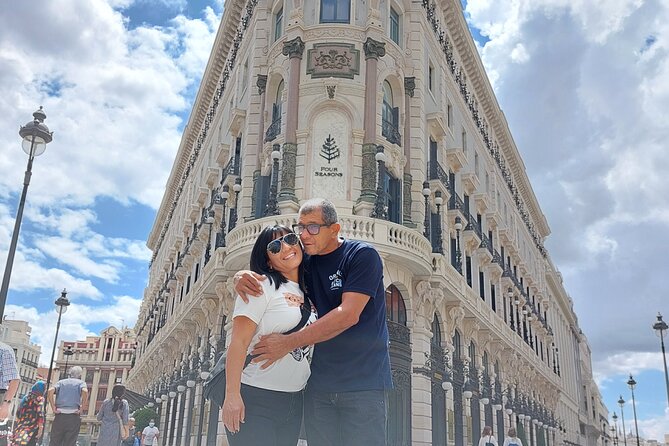
Gran Via is Madrid’s famous central artery, full of theaters, bars, and shops. The tour uses it as a quick “feel check” for how the city operates on a human scale: storefronts pull you in, and the street’s constant motion keeps you alert.
The stop is short—about 10 minutes—but it’s useful. Gran Via can feel chaotic if you don’t have context, and a guide helps you read the street like a map. You learn what to remember and what to use later when you plan evenings out.
If you want a walk that doubles as a mental rehearsal for your nights in Madrid, this part delivers.
Instituto Cervantes: Language Power Hiding in Plain Sight
Next up is Instituto Cervantes, a former bank building that now anchors one of the most important institutions for the Castilian language. This is one of the most interesting stops because it shows how Madrid repurposes prestige.
Ten minutes here is enough to get the point: the building signals seriousness, and the institution turns culture into something organized and global. You’ll understand why this place matters even if you don’t speak Spanish at an advanced level.
It’s also a nice break from pure street-scene watching. You shift from facades and traffic energy into ideas—how a language gains authority, spreads, and gets protected.
Cibeles Fountain and Banco de España: Madrid’s Symbols of Authority
From Cibeles Fountain you get an immediate icon lesson. This is one of the most recognizable “Spain” images, so your guide uses it as a quick visual anchor for what Madrid wants to represent.
Then you move to Banco de Espana—the bank where the country’s gold is held. Whether you love finance or not, this stop adds weight to the story. Madrid’s modern identity isn’t only art and design; it’s also the machinery of national power.
You’ll likely feel these stops as a pair. Cibeles gives you the public face, and Banco de España gives you the institutional spine. Together, they explain why Madrid’s skyline includes both theatrical symbolism and serious economic presence.
Cibeles Lounge and Paseo del Prado: City Hall Meets a UNESCO-Listed Walk
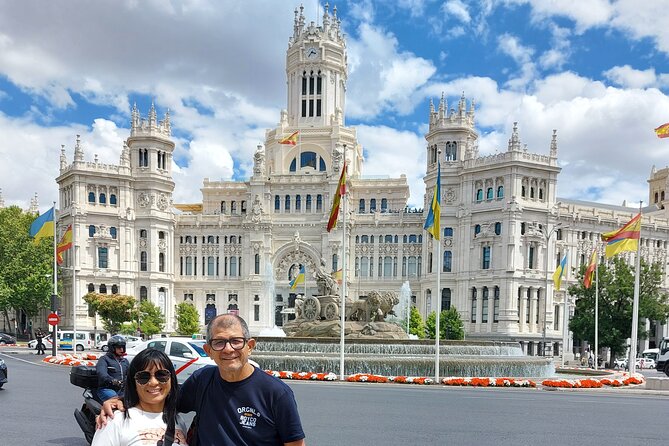
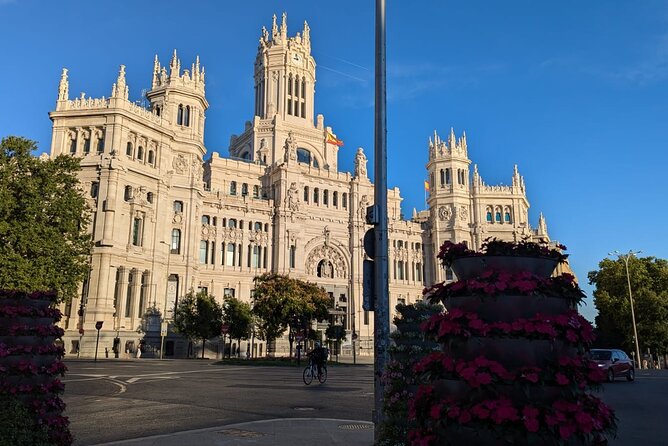
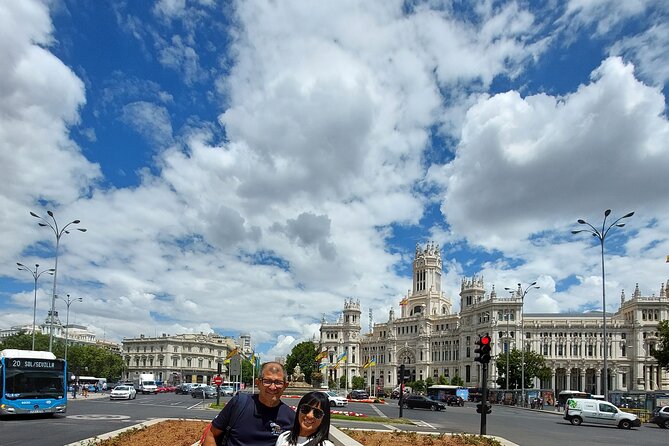
The tour then brings you to Cibeles Lounge, the Palace of Cibeles and current seat of the city council. This building is the kind of architecture you can’t ignore—your eyes keep returning to the details because it’s meant to project importance.
After that, you get one of the most satisfying stretches: Paseo del Prado. This boulevard has historic roots dating back to the 16th century style of urban design, lined with older trees and connected to major museums and cultural spaces along the way.
What matters for you as a traveler: this is a high-value walking corridor. You’re not just passing it—you’re getting the “why” behind the museums and cultural venues. Since 25 July 2021, the boulevard is recognized as a UNESCO World Heritage Site, which adds extra weight to your walk through it.
Even if you’re not entering museums right now, you’re building a mental map for later. You start to see how your museum day could fit into a smoother route.
Puerta de Alcala: A Gateway Built for Meaning
Then you reach Puerta de Alcala, one of Madrid’s most famous city gateways. This monument is credited to King Charles III, and it works as a strong landmark finish before you shift into open park space.
Gateway monuments are rarely just decorative. Your guide uses it to explain how cities mark entrances—what they wanted people to feel arriving, and how authority gets carved into stone.
It’s another short stop, about 10 minutes, but it’s timed well. You’re not tired yet, and you still have enough energy to appreciate the structure.
Retiro Park Finish: When the City Lets You Breathe
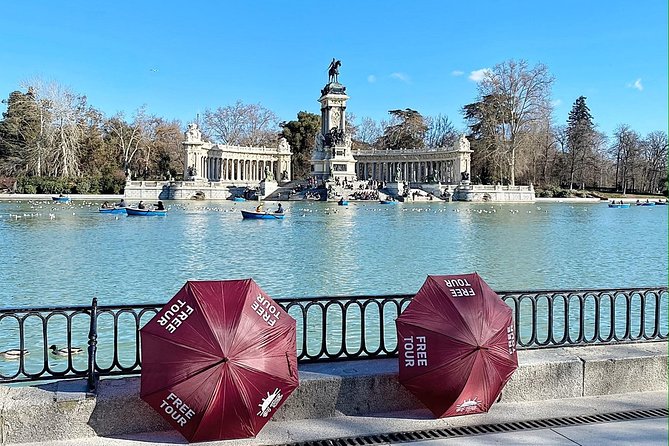
Finally, you end in El Retiro Park, finishing around Park Lake with about 25 minutes for the end stretch. This is where Madrid’s intensity drops. You go from city walls and monuments into shade, space, and an easy atmosphere.
The tour ends here for a reason: it gives you a natural transition. After a walk that explains the city’s identity, Retiro offers downtime so the information sticks.
If you want an easy next step after the tour, plan a slow stroll right away. Sit if you can. Let the park do what parks do best.
Guides Make or Break It: Marta, Tambo, Tomas, Maikel, Alba Gallego
A walking tour lives or dies by the guide’s ability to turn confusing details into clear stories. This one has strong guide performance, and names you might hear include Marta, Tambo, Tomas, Maikel, and Alba Gallego.
Here’s what stands out about the guiding approach you’ll experience. The best guides keep answers flowing, not just delivering a script. They also give you time at each stop so you don’t feel rushed.
If your Spanish is limited, don’t worry. The guides in this route tend to explain context in a way that doesn’t require you to already know everything. That’s why history-heavy stops like Instituto Cervantes can still feel approachable.
Also, it helps that the guides share practical pointers after the tour. You’ll get personalized recommendations for what to do in Madrid, and that can save you from the usual early-trip guesswork.
Practical Tips to Make This Walk Work for You
This tour is offered in English and uses a mobile ticket, which keeps check-in simple. It’s also designed for typical visitors—you should be able to participate with normal mobility, and the group maximum is 30 travelers.
Because it’s an outdoor walk with frequent photo points, wear comfortable walking shoes. Madrid can change its mood quickly, so bring a light layer even in decent weather.
You’ll also want to budget a bit for guide appreciation at the end. Tips are not included, and there’s at least one account of a guide asking for a minimum tip to cover extra costs related to taxes. That doesn’t mean it will happen to you, but it’s smart to keep some extra euros handy so you’re not stuck improvising.
Finally, book early. On average, this kind of tour gets booked about 14 days in advance, so popular dates go first.
Should You Book This Walking Tour of Madrid Modern?
Yes, if you want an organized way to see modern Madrid without a museum day. This walk is built to help you connect the dots between street life, major institutions, and the symbolic architecture that shapes how the city feels.
Book it if you:
- want a route that starts in the center and ends in a park
- like learning through streets and buildings, not through one single museum
- value a guide with strong explanations and clear answers
Skip it if you:
- only want indoor ticketed entries
- are looking for a super-long stop at a single major attraction
- hate walking for over two hours unless there are lots of breaks
If you’re new to Madrid, this is a helpful first-day orientation. If you’ve been before, it still gives you a different lens—less “where’s the postcard,” more “how the city runs and why it looks like this.”
FAQ
How long is the Walking Tour of Madrid Modern?
The tour runs for approximately 2 hours 20 minutes.
Where does the tour start and end?
It starts at Puerta del Sol (Puerta del Sol, s/n, Centro, 28013 Madrid) and ends at El Retiro Park near Park Lake (Retiro, 28009 Madrid).
Is the tour offered in English?
Yes. The tour is offered in English.
Do I need to buy entry tickets to sites?
No. Entries are not required, and the stops have free admission tickets.
What is the maximum group size?
The tour has a maximum of 30 travelers.
Can I cancel for a full refund?
Yes. You can cancel for a full refund if you cancel at least 24 hours in advance.