REVIEW · MADRID
Centro Cultural Flamenco Madrid Admission Ticket
Book on Viator →Operated by Centro Cultural Flamenco · Bookable on Viator
Small-room flamenco hits different. At Centro Cultural Flamenco Madrid, you watch a traditional flamenco quartet in a very tight space, where the emotion travels fast. The room is intentionally small, and that closeness is a big part of the appeal.
I especially like the no amplification setup. It lets you hear the cante (singing), guitar, and footwork with a more natural sound, instead of a stagey, mic-driven performance. I also like that this ticket is about the show itself, with no included food & drink that can turn the night into a dinner-and-drinks detour.
One thing to consider: this is a small cultural center performance, not a big polished tourist spectacle. The stage and seating are tight, and there are limited introductions or explanations, so you’ll get the best experience if you are ready to listen and watch closely.
In This Review
- Key highlights worth aiming for
- Centro Cultural Flamenco Madrid: what you’re really buying
- The intimate venue setup: 54 seats, narrow stage, and no-mic sound
- Your 50–60 minute show: what happens inside Centro Cultural Flamenco
- The dances and props: shawls, castanets, tambourines, and bata de cola
- Singing, guitar, and the emotional punch of cante flamenco
- Seats, sightlines, and why you should not arrive too early
- Check-in and ticket timing: how to avoid the day-of stress
- Language and expectations: what to know before you go
- Kids, noise, and the photography rules in a no-distraction space
- Price and value: $33.86 for an hour of close-up flamenco
- Getting there in Madrid: near public transport
- Who should book this Centro Cultural Flamenco ticket
- Should you book this show?
- FAQ
- How long is the Centro Cultural Flamenco Madrid show?
- What is included with the ticket price?
- Is food and drink included?
- How large is the venue?
- Do I need a printed ticket, or will a mobile ticket work?
- Is there confirmation after I book?
- Is the show accessible for most people?
- Is the show near public transportation?
- Can I bring children?
- Is there any limit on cancellations?
Key highlights worth aiming for
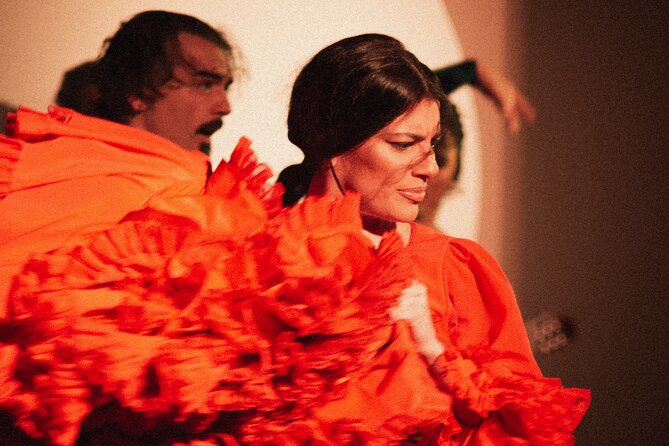
- An intimate room for real flamenco energy: the venue seats only 54 people, so the performance stays close and intense
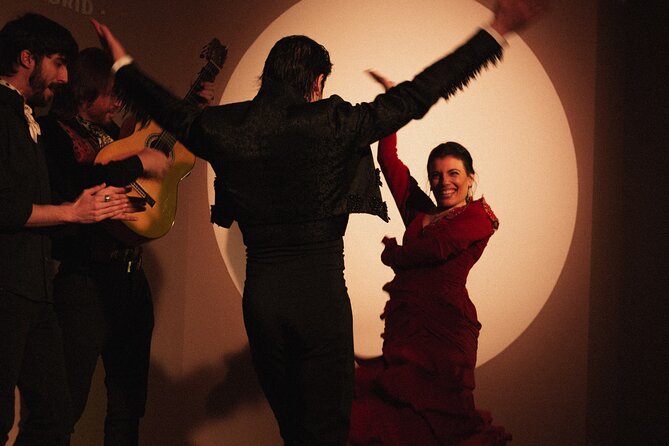
- Traditional quartet format: two bailaoras, one cantaor, and one guitarist
- Dances using classic flamenco tools: shawls, castanets, tambourines, and bata de cola (the long flowing dress)
- No amplification: you hear the art the way it’s meant to land
- A focused show window: plan on about 50 minutes to 1 hour
- Staff that helps with entry issues: when ticket timing gets messy, the front desk is reported as accommodating
Centro Cultural Flamenco Madrid: what you’re really buying
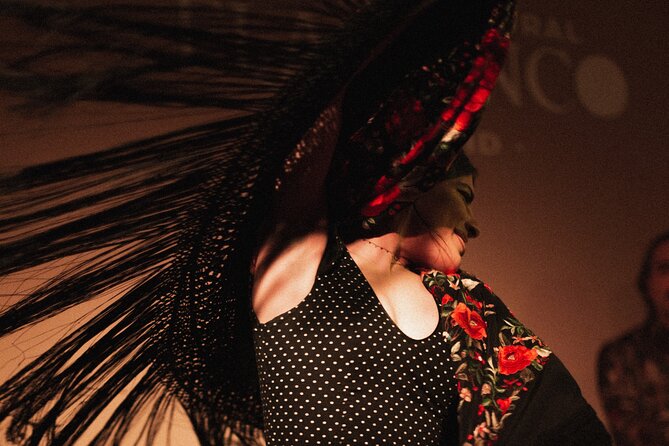
You’re buying a close-up flamenco show where the artists can’t hide behind lights and sound systems. The best part is the format: a traditional quartet (two dancers, one singer, one guitarist) built for rhythm, tension, and voice. When flamenco is done well, you don’t need a giant cast—you need precision and feeling.
This also isn’t a show that comes with the usual extras. No food or drinks are included, and that keeps your attention on the performance. In practice, it means fewer interruptions and less pressure to turn the night into a consumption event.
You can also read our reviews of more tours and experiences in Madrid



The intimate venue setup: 54 seats, narrow stage, and no-mic sound
The venue’s size is the whole point. With seating for only 54 people, you get a front-row feel no matter where you sit. That closeness shows up in the details: the footwork lands harder when you can feel the vibration, and the singing carries because the room is meant to hold it.
The performance is also described as happening without amplification. That matters because flamenco depends on subtle vocal variations, attack and texture in the guitar, and the percussive snap of hands and shoes. In a mic-amplified setup, some of that natural balance can get flattened. Here, the art stays more acoustic and raw.
The trade-off is simple: the stage is narrow and the room is small. That can look slightly odd if you expect couples dancing across a big floor. If you’re coming for dramatic, wide, cinematic staging, this might feel constrained. If you’re coming for intensity and technique, it’s a feature, not a bug.
Your 50–60 minute show: what happens inside Centro Cultural Flamenco
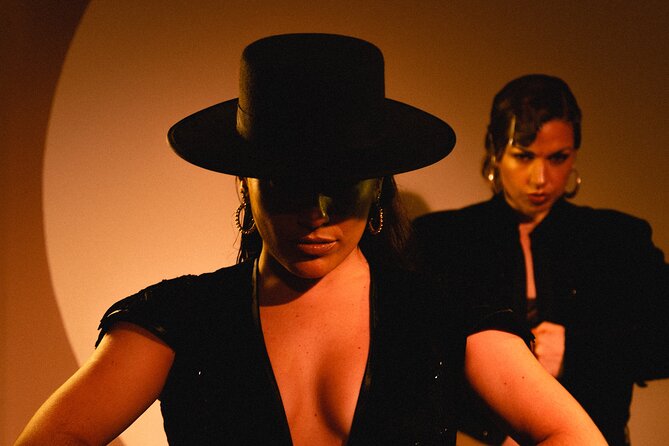
Your ticket gets you admission to the flamenco show itself, and the runtime is about 50 minutes to 1 hour. That time box is part of the value. You get a full, concentrated performance night without needing to plan a half-day outing.
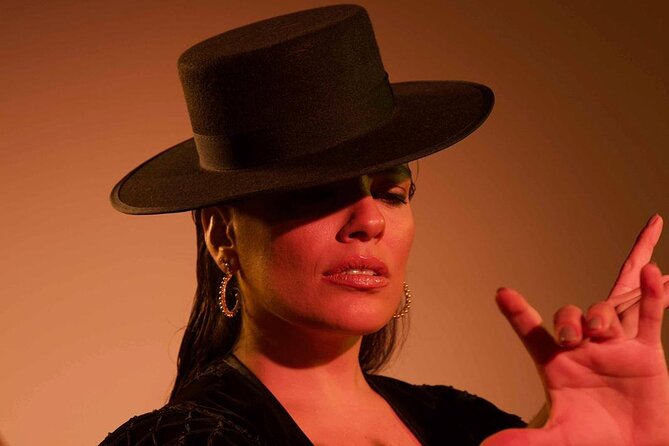
Inside the show, you can expect a traditional sequence built around the quartet. The bailaoras bring the dance elements—shawls, castanets, tambourines, and the dramatic long-flowing bata de cola. The cantaor (the singer) provides the emotional spine, while the guitarist supports with rhythm and harmonies that push the dancers forward.
One review notes a short prerecorded video at the beginning, then the live performance takes over. If you’re hoping for a lecture-style explanation of what every song means, plan on less of that. Some international visitors found the experience less communicative because the show doesn’t provide much explanation of songs or choreography. If you don’t speak Spanish, you may still follow the core story through body language, rhythm, and musical cues.
Also, don’t expect gimmicks. This is flamenco as a living art form, with improvisation and momentum. Some people love that the energy feels immediate and one-of-a-kind. If you prefer a tightly scripted, narrated program, that spontaneity may take a few minutes to click.
The dances and props: shawls, castanets, tambourines, and bata de cola
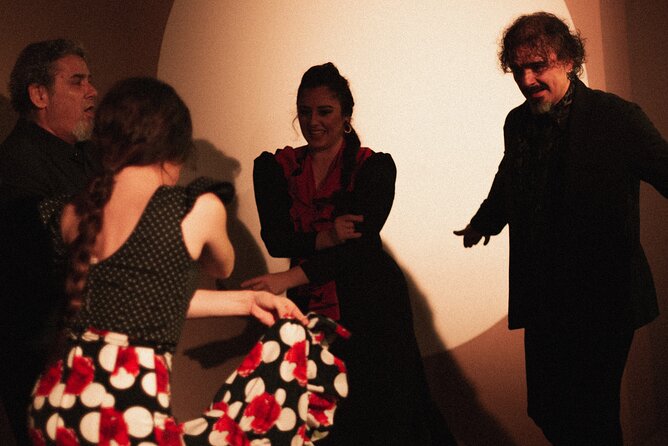
The dance program leans into classic flamenco textures and props. A shawl can become both a visual frame and a rhythmic instrument when it moves in time with the music. Castanets and tambourines add sharp accents, so you can track the rhythm even if you’re not reading subtitles or explanations.
The bata de cola is the big visual payoff when it appears. The dress creates a sweeping motion that looks gorgeous from close range, and the floor-space constraints actually make the movement feel more dramatic. In a small room, the fabric’s flow stands out because the audience is so near.
One caution: the experience can feel intense. If you’re sensitive to loud stomping or footwork percussion, this show is not subtle. People have specifically flagged that very young children may find the noise challenging, and that’s a good clue for adults too if you’re used to quieter performances.
Singing, guitar, and the emotional punch of cante flamenco
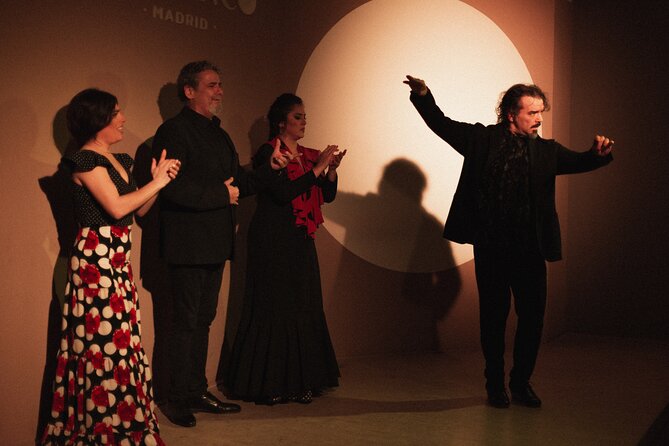
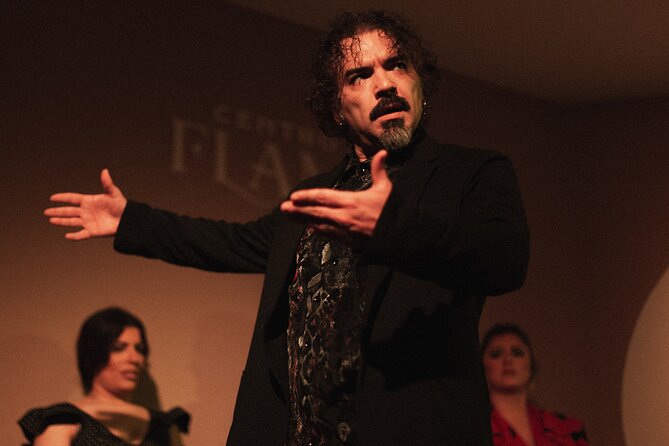
Flamenco singing (cante) can sound rough at first if you’re new to it. One person described the vocals like moaning, while others praised how powerful and soulful the voices were. That’s not a contradiction—it’s a recognition of how flamenco can sound unfamiliar before it sounds beautiful.
If you’ve never listened closely to cante, here’s what to do: stop trying to match it to Western pop singing standards. Instead, listen for the tonal shifts, the way notes bend, and the intensity that comes from sustained control. When it lands, it can give you goosebumps in a way more “cleanly produced” vocal styles sometimes don’t.
The guitarist plays a major role in keeping the dancers in motion. Even when the dancers pause, guitar phrasing can change the mood fast. If your favorite part of music is the rhythm and the conversation between instruments, you’ll likely enjoy this setup.

Seats, sightlines, and why you should not arrive too early
In a room this small, seat selection usually isn’t the main issue—your view is naturally good. Multiple comments mention that seating is stadium-like but limited, and that you can see well from most spots. That’s one of the practical wins of small venues: there usually aren’t any truly bad seats.
Timing is still worth getting right. One review advises not to arrive too early, which usually means staff want the room to stay controlled until closer to showtime. I’d aim to arrive about 10–20 minutes before the start, give yourself time to find the entrance, and then settle in.
Check-in and ticket timing: how to avoid the day-of stress
You’ll get a mobile ticket, and confirmation comes at booking time. Still, one review reports a ticket time mix-up caused by the system not picking up a modified time. The front desk staff reportedly handled it smoothly and got the group seated for the show they intended to see.
So here’s my practical advice: double-check the show time printed in your confirmation before you head over. If anything looks off, go to the desk early enough to ask. In a tiny venue, small timing errors can feel bigger than they really are, and good staff can fix them if you catch it quickly.
Language and expectations: what to know before you go
This show isn’t designed like a narrated, English-friendly tourist performance. One concern from reviews is that the venue is tiny and there may be little explanation of what songs or dances are about. Another comment mentions that the content felt Spanish-focused.
What that means for you: you’ll get a lot out of it by watching and listening rather than trying to translate every lyric line. If you’re comfortable with cultural experiences that are mostly sensory and less explanatory, you’re in the right place.
If you need constant commentary to enjoy the experience, you might feel slightly disconnected. The flip side is that flamenco often works like jazz in that way: the meaning comes through performance choices and emotional pacing.
Kids, noise, and the photography rules in a no-distraction space
Flamenco needs focus. The show is set up to keep attention on the artists, and that includes venue rules about recording. One review includes the practical note that no videos are allowed, and another mentions that people taking photos were a distraction for the room.
If you’re bringing kids, plan carefully. Children are allowed, and staff can ask parents to step outside if a child becomes restless or noisy. One response explicitly says the show is not recommended for children under 4, especially because in an intimate, acoustic room, even small noises can disturb the concentration of artists and audience.
There’s also a practical comfort detail: sound-reducing headphones are available at the entrance for little ones who may need them. That’s a helpful compromise if you really want flamenco as a family activity. Still, if your child can’t handle a full hour of sitting, dancing stomps, and silence expectations, you may want to leave this one for an adults-only night.
Price and value: $33.86 for an hour of close-up flamenco
At $33.86 per person for about 50 minutes to 1 hour, this isn’t a bargain in the sense of a street-level museum ticket. But it also isn’t trying to be. The value comes from what you’re getting: a small-room, no-amplification experience featuring a full quartet, with the art as the main product.
In bigger flamenco shows where you’re paying for scale and a buffet-style night, a lot of your money goes toward extras: stage volume, added pacing, and often meal/drink packages. Here, you’re not paying for dinner or drinks, and you’re paying to be close enough that technique feels physical.
Also, the venue holds only 54 seats. That limited capacity is real value. Fewer seats usually mean fewer compromises: better sightlines, better atmosphere control, and a stronger sense that the artists are performing for attention, not background noise.
A small planning tip: the show is often booked about 11 days in advance on average. If you’re traveling in peak weeks, I’d book sooner rather than later.
Getting there in Madrid: near public transport
The experience is listed as near public transportation, which matters in Madrid because you’ll often arrive by metro or bus and then walk the last stretch. Since the venue is small, the walk from transit is usually the part where timing matters most. Build in a little buffer so you don’t feel rushed at the door.
Who should book this Centro Cultural Flamenco ticket
This is a smart choice if:
- You want pure flamenco in an intimate space rather than a show with food and tourist pacing
- You care about the craft: singing, guitar, and dance technique in close range
- You’re okay with limited spoken explanations and you’re happy to watch and listen
- You want a shorter, focused evening rather than a long event block
It may not be the best fit if:
- You need English narration or detailed song-by-song context
- You’re bringing very young children who struggle with quiet sitting (especially under about 4)
- You dislike loud stomping and percussive footwork
Should you book this show?
If your goal is authentic-feeling flamenco up close, I’d book it. The best version of this experience is simple: let the room be small, let the sound be natural, and let the quartet’s timing do the talking.
On the other hand, if you’re expecting a big stage, lots of introductions, and a more tourist-friendly presentation, you may feel under-satisfied. This isn’t trying to be that.
If you’re flexible and ready for concentrated flamenco in a tiny cultural center, this one is worth your evening.
FAQ
How long is the Centro Cultural Flamenco Madrid show?
The show runs about 50 minutes to 1 hour.
What is included with the ticket price?
Your ticket includes admission to the flamenco show.
Is food and drink included?
No. Food and drink are not included.
How large is the venue?
The space is very small and holds 54 people.
Do I need a printed ticket, or will a mobile ticket work?
A mobile ticket is provided.
Is there confirmation after I book?
Yes. Confirmation is received at the time of booking.
Is the show accessible for most people?
Most travelers can participate, and service animals are allowed.
Is the show near public transportation?
Yes, it is near public transportation.
Can I bring children?
Children are allowed, but the venue is intimate and quiet matters. If a child becomes noisy or restless, parents may be asked to step outside so the show is not disturbed.
Is there any limit on cancellations?
Free cancellation is available up to 24 hours in advance for a full refund.