REVIEW · MADRID
Madrid: Reina Sofía Museum Ticket with In-App Audio Guide
Book on GetYourGuide →Operated by Naturanda Turismo Ambiental · Bookable on GetYourGuide
Big canvases, big feelings, and no group herding. The Reina Sofía ticket gives you skip-the-line entry plus an in-app audio guide so you can move at your pace through 20th-century Spanish art, including Picasso’s Guernica. My favorite parts are the museum’s Picasso-and-Dalí weight and the freedom to slow down where you care most—though the biggest catch is that the audio is internet-dependent and may be patchy without steady connection.
You’ll be walking into a museum that’s housed in an 18th-century neoclassical building that once served as Madrid’s General Hospital, and it opened as the Reina Sofía in 1992. The location in the Atocha area also means it’s easy to pair with a full day of walking and nearby sights instead of treating it like a standalone chore.
One more practical note: the audio guide is not the museum’s official one, and you should plan to bring your own headphones. If your phone can’t load the audio content or the app link arrives late, you may end up buying the official audio on-site for the artworks you most want to hear about.
In This Review
- Key things to know before you go
- Reina Sofía in Atocha: a hospital turned 20th-century art powerhouse
- What’s included with your ticket (and what that really means for value)
- Picasso’s Guernica and the 20th-century Spanish core: a smart way to structure your day
- Using the in-app audio guide: your best setup, and what to do if it fails
- The 18th-century building experience: where you’ll feel the museum more than the signage
- Adding the Retiro venues: Palacio de Cristal and Palacio de Velázquez
- Price and logistics: when this $35 ticket is a smart buy
- Who this is best for (and who should consider a different approach)
- Should you book this Reina Sofía ticket with in-app audio?
- FAQ
- What does my ticket include?
- How long is the visit?
- Which languages are available for the audio guide?
- Do I need an internet connection?
- Are headphones included?
- Is the in-app audio guide the official museum guide?
- When will I receive my tickets?
Key things to know before you go
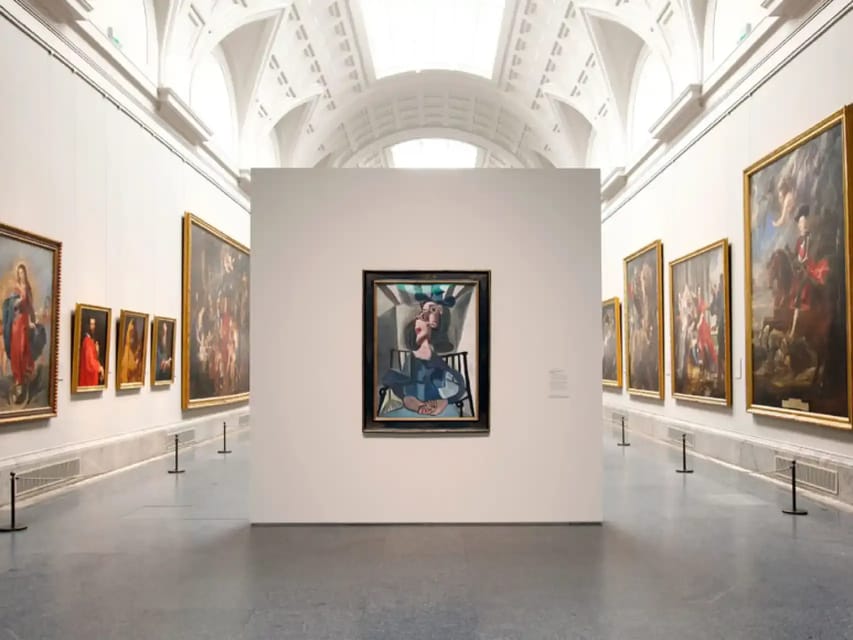
- Skip-the-line entrance saves time at a busy ticket office.
- 20th-century Spanish art focus puts Picasso, Dalí, and Miró front and center.
- In-app audio guide needs internet to access the audio content.
- Audio isn’t the official museum guide and may be thinner in coverage.
- The museum has multiple sites in Parque de El Retiro, with temporary exhibitions in extra venues.
Reina Sofía in Atocha: a hospital turned 20th-century art powerhouse
The Reina Sofía sits in the Atocha area, in a striking 18th-century neoclassical building that used to be Madrid’s General Hospital. That mix matters: you’re not just seeing modern art in a plain box. The architecture gives you scale, light, and a sense of walking through something older that has made room for newer ideas.
The museum opened in 1992, and it’s built around Spanish art of the 20th century. That time period is a sweet spot if you want the story behind what Spain was thinking and feeling as the world changed—without needing to be an expert first.
If you like museums where you can choose your tempo, this one fits. There’s no group tour requirement. With your ticket and in-app audio, you can go straight to the works you came for, then follow your curiosity wherever it tugs.
You can also read our reviews of more tours and experiences in Madrid



What’s included with your ticket (and what that really means for value)

Your ticket includes entry to the Museo Nacional Centro de Arte Reina Sofía and a digital audio guide available in Spanish, English, French, and Italian. You also get skip-the-line access at the ticket office through a separate entrance, which is the main time-saver here.
That’s the good news for value: you’re paying for both admission and a self-paced audio layer, not just a museum gate. At about $35 per person, it can be a solid deal if the audio guide works smoothly on your phone.
Here’s the part to take seriously: the audio guide is not the museum’s official one. It’s an extra resource meant to enhance your visit, and it may not cover every artwork you’ll see. That’s not a deal-breaker, but it changes your expectations. You’re buying convenience and extra context, not a guaranteed full replacement for the museum’s own guide.
Also, headphones are not included, so you’ll want to plan to use your own wired or wireless earbuds. And yes, you need internet to access the audio content—so don’t count on low-signal luck on a busy day.
Picasso’s Guernica and the 20th-century Spanish core: a smart way to structure your day

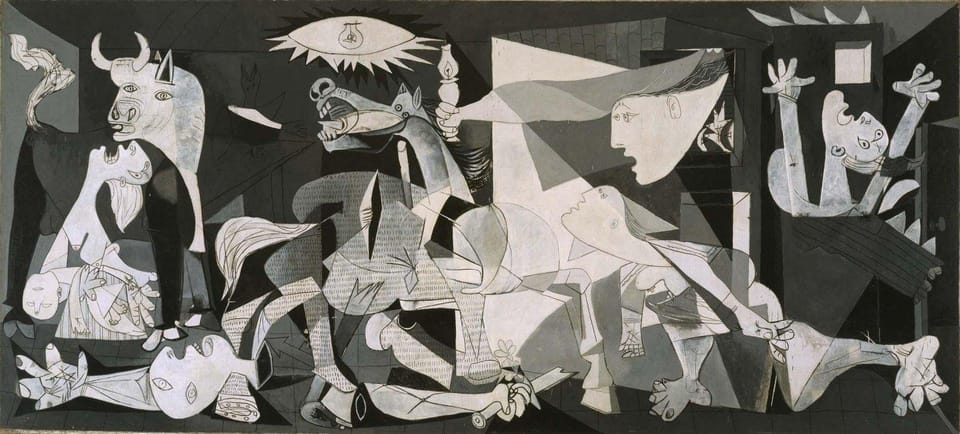
The heart of Reina Sofía is 20th-century Spanish art, and the museum doesn’t hide its major cards. Picasso’s Guernica is the headline work most visitors connect with immediately, not because it’s famous (it is), but because it hits emotionally in a way that’s hard to forget.
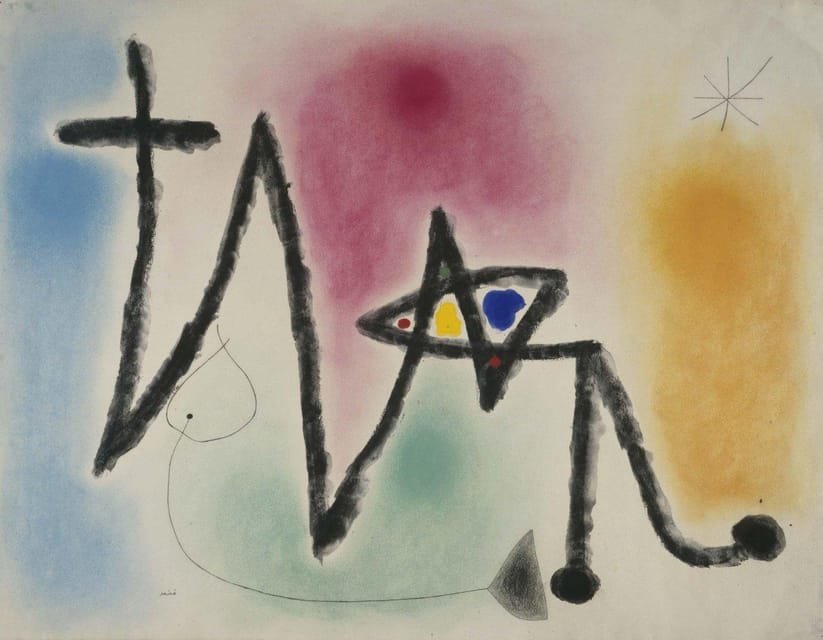
Dalí appears too, including the intriguing work Rostro del gran masturbador. Miró’s presence rounds out the mix, so you’re not stuck with one style or one kind of genius. It’s more like seeing a country’s modern mindset reflected through different artistic languages.
A practical, low-stress plan for your one-day visit:
1) Start with the anchor works
Give yourself a fixed goal first—Guernica if you’re prioritizing emotional impact, or Dalí’s Rostro del gran masturbador if you want the surreal energy early. You’ll avoid the classic museum trap of wandering for an hour and then realizing you never reached the artwork that mattered most.
2) Then switch to browsing mode
After your first hits, use the audio guide to guide your stops between rooms. This is where the self-paced format really pays off: you can linger with the pieces that pull you in without worrying about keeping up.
3) Finish with whatever surprises you
Leave time at the end for works you didn’t plan to find. Reina Sofía’s strength is in the way the collection shows how Spanish modern art evolved—so your last hour often becomes the most personal.
One more consideration: some museum spaces may be under renovation or temporarily unavailable. That’s not unusual for major institutions, and it can affect which floors or rooms you can access on your day. If you notice signage pointing to closures, don’t assume you’re missing the full experience—just reroute.
Using the in-app audio guide: your best setup, and what to do if it fails
The in-app audio guide is the centerpiece of this ticket’s concept: you get self-paced commentary so you’re not standing in front of a wall of art with zero context. Languages include Spanish, English, French, and Italian, which is helpful if you’re traveling with someone who wants the same experience in their own language.
But the guide comes with a set of practical constraints that directly affect whether you feel you got your money’s worth:
- Internet is required to access the audio content.
If your signal is weak, the guide can stall or not load. Plan to have a reliable connection.
- Headphones are not included.
Bring your own so you’re not forced into a last-minute purchase or awkward sharing.
- The audio guide is not the official museum guide.
Coverage may be more limited, and some works you expect to hear about might not appear in the app.
I’d also treat the timing around your ticket link seriously. Your tickets are sent the day before your tour, and the email is your key to getting everything you need. There’s a real risk that if you get your information late—or if your phone can’t connect when you open the audio—you’ll lose time at the worst possible moment: right when you’re arriving at the most important artworks.
If things go sideways, there’s precedent for fast support and possible remedies. In at least one case, customer service stepped in quickly and even handled a refund for an audio guide that couldn’t be used. That’s reassuring, but it still means you should have a backup plan.
Backup plan that actually helps:
- Use your own phone data (not just hotel Wi‑Fi) if possible.
- Bring headphones and keep your volume ready so you don’t spend the first hour troubleshooting.
- If your in-app guide doesn’t cover the works you care about most, consider buying the museum’s official audio on-site for the key pieces.
The goal isn’t perfection. It’s reducing friction so you can spend your mental energy on the art.
The 18th-century building experience: where you’ll feel the museum more than the signage
Reina Sofía’s building gives you a different kind of museum rhythm than modern glass-and-steel spaces. You’ll likely notice the contrast between older stone and the sharp, sometimes unsettling energy of 20th-century art.
That setting also means you’ll benefit from moving with intention. Some areas can feel more complex to navigate than you expect, and you might find it harder to map a route without doing a little mental planning. A good approach is to decide your sequence early: anchor works first, then fill the gaps.
Wayfinding can be a little hit-and-miss in large museums. So if you arrive and you’re not sure where to go, take ten minutes to get your bearings before you commit to a path. That tiny reset saves time later and prevents the scramble that happens when you finally realize you’re going the long way back to the main highlights.
You can also read our reviews of more guided tours in Madrid






Adding the Retiro venues: Palacio de Cristal and Palacio de Velázquez
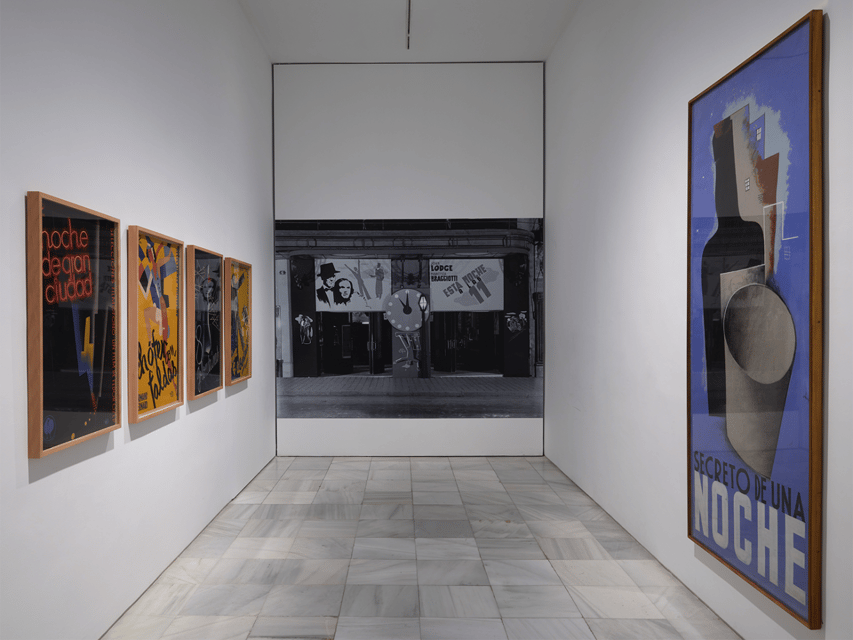
The Reina Sofía isn’t only in one building. The museum also has two other venues in Parque de El Retiro: Palacio de Cristal and Palacio de Velázquez. These spaces host temporary exhibitions and artistic installations, and they come with a different mood than the main museum.
If you have energy left after the main collection, this is where your day can change shape. Palacio de Cristal is known for its glass architecture, so you might find the light and atmosphere make the temporary work feel more immediate. Palacio de Velázquez brings a historic setting that can make installations feel grounded and theatrical at the same time.
One key practical point: your ticket information here clearly includes entry to the main Reina Sofía museum, and it describes the Retiro venues as additional locations. Since it doesn’t explicitly say your entry automatically covers all sites, you should check whether the ticket you receive is valid for those specific spaces on your visit day. If it is, it’s a great way to stretch a one-day plan without turning it into a second museum day.
Price and logistics: when this $35 ticket is a smart buy
At about $35 per person, you’re paying for three things: museum entry, skip-the-line convenience, and an in-app audio guide (not official). That can be excellent value if:
- you arrive during a busy time and the separate entrance truly saves you time,
- your internet connection is stable enough to load the audio,
- and you’re comfortable with the idea that the audio guide might not be comprehensive.
It’s less of a great deal if you’re the kind of visitor who expects the audio to be a complete, artwork-by-artwork roadmap. Some users have found the in-app coverage thin or inconsistent compared with the museum’s own offerings. Others have run into app connectivity problems that make the guide hard to use in practice.
Also remember: the ticket is delivered via email, and you should check your inbox the day before to get everything sorted. The meeting point details depend on what’s in your email instructions, so don’t assume you can show up blindly.
One last practical note: the activity is wheelchair accessible. If you need accessibility support, plan to use signage and ask staff on-site for the most direct route once you enter the building.
Who this is best for (and who should consider a different approach)
This ticket style suits you if you like control. You want to see Guernica and other 20th-century Spanish masterpieces, but you don’t want to be paced by a group schedule.
It’s also a good fit if you travel with someone who enjoys audio. Having language options in-app can keep everyone aligned, and you can decide when to speed up and when to pause.
You might want to think twice if:
- you know your phone struggles with unstable internet in public buildings,
- you hate troubleshooting apps while standing in front of art,
- or you want maximum artwork coverage from a structured guide and not an extra resource.
If that sounds like you, you can still enjoy Reina Sofía—but consider whether you’ll be happiest with the museum’s official audio guide instead of relying on the in-app one alone.
Should you book this Reina Sofía ticket with in-app audio?
I think this is worth booking if your priorities are skip-the-line entry, self-paced exploring, and you’re comfortable bringing headphones and using your phone data. The museum itself is built for independent wandering, and the chance to prioritize Guernica and other major works without a group schedule is a real quality-of-life win.
Skip it only if you’re likely to be annoyed by app glitches or you absolutely need a full, official-style guide for every key artwork. In that case, the in-app audio may feel like a gamble, and it could slow you down at the exact moments you want to be fully focused on the art.
If you do book, do one simple thing that pays off: check your email the day before, then confirm you can access the audio content on your device before you walk into the museum halls.
FAQ
What does my ticket include?
Your ticket includes entry to the Museo Nacional Centro de Arte Reina Sofía, a digital in-app audio guide in multiple languages, and skip-the-line access through a separate entrance.
How long is the visit?
The experience is valid for 1 day.
Which languages are available for the audio guide?
The in-app audio guide is available in Spanish, English, French, and Italian.
Do I need an internet connection?
Yes. An internet connection is required to access the audio content.
Are headphones included?
No. Headphones are not included.
Is the in-app audio guide the official museum guide?
No. The audio guide provided with this ticket is an extra resource and not the museum’s official audio guide.
When will I receive my tickets?
You receive your entry tickets the day before the tour, and you should check your email for the details.