REVIEW · MADRID
Inquisition, The Executioner, Witches, Expulsion Jews and Muslims
Book on Viator →Operated by Tours Madrid | TOURSTILLA · Bookable on Viator
Madrid has a way of hiding big stories in plain sight. This Inquisition walk links churches and plazas to the methods, accusations, and consequences of the Spanish Inquisition. You’ll move site to site with a local guide and a short stop at each place, building a clear timeline of fear and punishment.
What I liked most is the storytelling. Guides here don’t just point at buildings. They connect each stop to what the Inquisition claimed, what it did, and how it shaped everyday life for Christians, Muslims, and Jews. Second, I really appreciated the route design: 2 hours 15 minutes, central locations, and teaching materials that keep the pacing easy to follow.
One thing to consider: the subject matter is heavy. You’ll hear about torture, execution methods, and accusations targeting Jews and Muslims, so it’s not the “light and breezy” kind of tour.
In This Review
- Key highlights you’ll feel on the walk
- Why this Inquisition tour works in Madrid
- Where the walk starts: Plaza Mayor to the plaza ending at Plaza de la Armería
- Stop 1: Iglesia de Santa Cruz and the three monotheistic religions
- Stop 2: Plaza de la Provincia, the executioner, and forced confessions
- Stop 3: Casa de la Carnicería and the big trial connection
- Stop 4: Basilica de San Miguel and edicts of faith
- Stop 5: Casa Cisneros and the Cisneros vs Torquemada story
- Stop 6: Plaza de la Cruz Verde—symbols of the Inquisition and the mechanics of punishment
- Stop 7: Almudena Cathedral area—Vatican Archives, a pardon, and 1974 garrote vil
- Stop 8: Plaza de la Armería—religious conflict today and a closing reflection
- Price and value: what $3.61 per group buys you
- The guides: when the story becomes unforgettable
- What to bring and what to expect on the ground
- Who this tour suits best (and who should think twice)
- Should you book this Madrid Inquisition tour?
- FAQ
- How long is the tour?
- Where does the tour start and end?
- Is the tour offered in English?
- Do I need to buy tickets to enter the sites?
- How big is the group?
- Do I get a mobile ticket?
- Are service animals allowed?
- Can I cancel for a full refund?
Key highlights you’ll feel on the walk
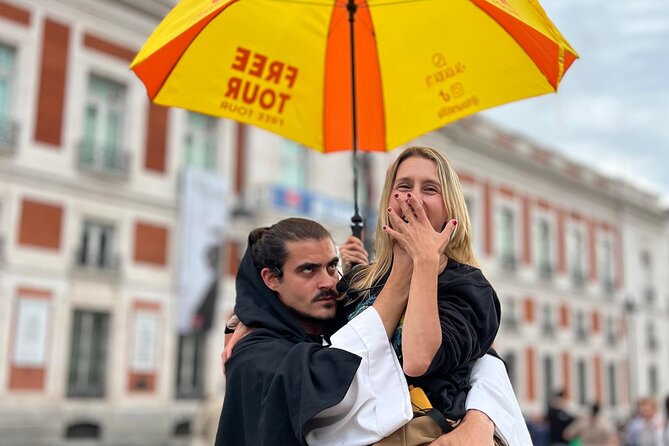
- Madrid’s Inquisition story told through real stops in the city center, from plazas to major churches
- Execution methods explained plainly, including the garrote vil and public punishments
- Edicts of faith and accusations tied to specific places, not just vague background
- John Paul II and a Catholic Church pardon included in the storyline of the Inquisition’s end
- A modern closing reflection on religious conflict and legacy in Spain
Why this Inquisition tour works in Madrid
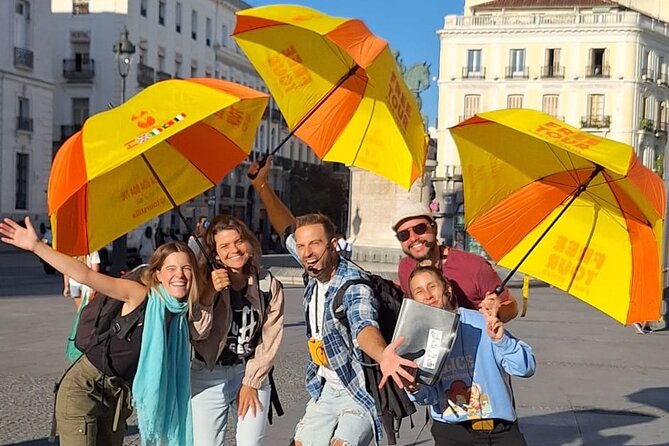
If you’ve ever walked past a church or plaza in Madrid and wondered what happened there before it became scenery, this tour answers that question. It follows the Spanish Inquisition through central landmarks, but the focus isn’t on spooky theatrics. It’s on claims, investigations, forced confessions, and the way authority tried to sort people into categories of loyalty and purity.
I like that it’s structured. You’re not lost in a museum labyrinth. You’re out in the street, with a sequence of stops that builds momentum. Each one is short—about 10 to 20 minutes—so you keep moving while the guide keeps the story coherent.
And yes, it covers witches and the expulsion of Jews and Muslims as part of the big picture. It’s all tied back to how the Inquisition justified control. That means you’ll hear both the human side of fear and the institutional side of procedure: accusations, interrogations, and punishments.
You can also read our reviews of more tours and experiences in Madrid.

Where the walk starts: Plaza Mayor to the plaza ending at Plaza de la Armería
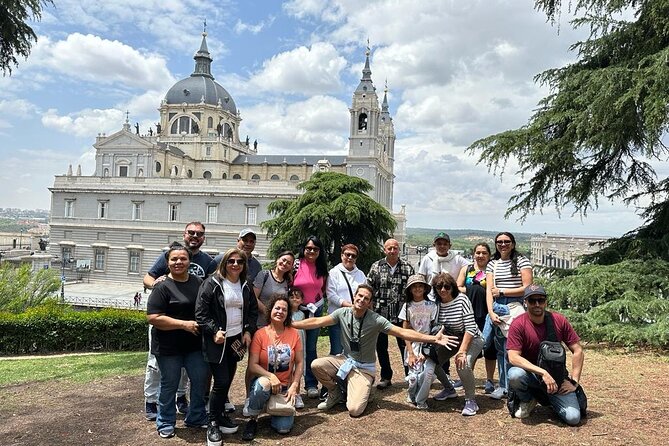
You meet in Plaza Mayor (Centro) and end at Plaza de la Armería. It’s easy to plug into the day because the meeting point is well served by transit. The route also stays in the core of Madrid, so you’re not wasting energy on long transfers.
The tour is capped at a maximum of 30 people, which matters more than you might think. With smaller groups, you can actually hear the guide and follow the links between stops. The tour also runs in English, and you get a mobile ticket. That’s convenient if you’re juggling multiple bookings while you’re in town.
It runs about 2 hours 15 minutes, and you’ll be outdoors for much of it. If you’re sensitive to heat or cold, plan accordingly. Also, bring a bottle of water. The pace is active even if each stop is brief.
Stop 1: Iglesia de Santa Cruz and the three monotheistic religions
The walk opens at the Iglesia de Santa Cruz, where the guide sets the frame: the Spanish Inquisition and its relationship with Christianity, Islam, and Judaism. This is the “why these places matter” stop. You’ll be taught how the Inquisition tried to define belonging in religious terms—and how that turned into suspicion.
This early stop helps because it puts later, darker moments into context. If you jump straight to execution and edicts, it can feel random. Starting with the relationship between the faiths makes the accusations and investigations feel like a system, not just a string of cruelty.
One practical note: since each stop is around 15 minutes and admission isn’t required, you’ll likely focus on what you can see and how the guide explains the symbolism and history of the location rather than touring inside for a long time.
Stop 2: Plaza de la Provincia, the executioner, and forced confessions
Next up is Plaza de la Provincia, where the tour turns sharper. This stop focuses on the executioner and the Inquisition’s investigation process—including torture and confessions.
It’s here that you’ll start to understand the Inquisition logic the hard way: interrogation wasn’t just about finding truth. It was about producing answers the system could use. The guide ties that procedure to the reality of public punishment, so the “process” stops being abstract.
Drawback to keep in mind: if you don’t like hearing details about torture or coercion, you’ll want to mentally prepare for this stop. The tour is explicit about the steps in the investigation story.
Stop 3: Casa de la Carnicería and the big trial connection
At Casa de la Carnicería, the theme shifts slightly into how power played out through public story and symbolism. You’ll hear about “cars of faith” in Madrid—plus the idea of the big trial and the most famous painting associated with this period.
This is one of the stops where a guide’s explanation matters a lot. Without context, it’s easy to see a historic building as “just another old façade.” With the explanation, it becomes part of the machinery: public meaning, not just private fear.
If you’re the type who likes to connect art and architecture to events, this one is worth your full attention. Even with a short time window, it gives you a thread you can use later when you spot more references around town.
Stop 4: Basilica de San Miguel and edicts of faith
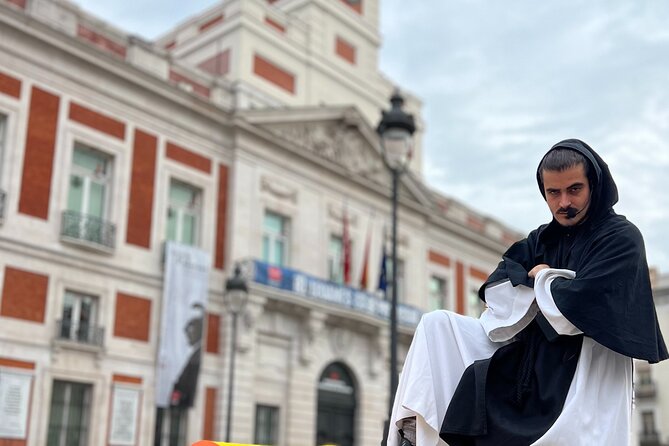
The tour’s most accusatory content comes at the Basilica de San Miguel. Here you’ll address the Inquisition’s claims about alleged identities—specifically how authorities said they could identify a false Jew and a false Moorish. You’ll also hear about the proclamation of edicts of faith and the role of false allegations.
This is the stop where the tour’s tone can feel unsettling, because it doesn’t treat religious difference as harmless doctrine. It treats it as something used as a weapon. The guide explains how proclamations and accusations created pressure, and how people could be targeted through claims rather than evidence you’d recognize today.
I found it helpful that the guide frames it as process and policy. It reduces the chance you’ll treat it like isolated bad actors. This was a system.
Stop 5: Casa Cisneros and the Cisneros vs Torquemada story
At Casa Cisneros, you’ll get a “who’s who” moment. The tour highlights historical characters, especially Cisneros vs Torquemada.
This stop gives you a break from procedure-heavy material. It helps you keep the story human and political: leaders, influence, and the tension between different approaches within the same religious-political world.
Even if you only catch a few names, that’s enough to improve your understanding of later references you might see around Madrid. Without this, the Inquisition can blur into one faceless force.
Stop 6: Plaza de la Cruz Verde—symbols of the Inquisition and the mechanics of punishment
At Plaza de la Cruz Verde, the tour focuses on a symbol of the Inquisition and the tools of punishment. You’ll hear about implementation, the gallows, beheading, the garrote vil, and burning at the stake. The tour also references a comparison point called Bruges, likely to help you visualize how punishment could travel across regions or show up in different places.
This is one of the stops that most strongly answers the tour title. It’s not just “the Inquisition happened.” You learn what the Inquisition used in public and how the fear was designed to work.
If you’re the type who needs grounding, this is where the guide’s pacing helps. The stop is set for about 20 minutes, and the guide keeps the story moving so it doesn’t turn into just a list of grim words.
Stop 7: Almudena Cathedral area—Vatican Archives, a pardon, and 1974 garrote vil
The route then reaches Catedral de Sta Maria la Real de la Almudena, where the story stretches forward. You’ll hear about Vatican Archives, and the tour includes John Paul II and the pardon of the Catholic Church. Then it turns toward the end of the Inquisition and asks: what counts as an “ending” when legacies remain.
A striking part of the storyline is the mention of the last execution tied to the garrote vil in 1974. The tour presents that as the last execution connected to the theme it’s tracking. You’re also taught about legacies of Jews in Spain and Muslims in Spain, so the ending isn’t just a date on a timeline.
This stop is longer, around 20 minutes, and it often feels like the emotional reset point of the tour. You move from punishment methods into consequences—how communities carry history even after official systems are declared over.
Stop 8: Plaza de la Armería—religious conflict today and a closing reflection
The tour ends at Plaza de la Armería, and the guide brings it into the present. You’ll talk about current religious conflicts and the idea of holy wars, plus legacies and a closing reflection.
This final section is valuable because it stops the story from living only in the past. It doesn’t pretend modern conflicts are identical. Instead, it reminds you how religion can be politicized—and how fear can be justified with language about purity, threats, and wrongdoing.
In a short tour, this is a big job. Ending here helps you leave with something more useful than dates: you leave with a lens for understanding intolerance as a repeatable pattern.
Price and value: what $3.61 per group buys you
The price is listed at $3.61 per group (up to 15), with the tour running about 2 hours 15 minutes. On paper, that sounds almost too low to be real, but what you’re paying for is a guided route with structured storytelling and materials.
You also get more than just a walking lecture. The tour includes a local guide, printed materials and teaching tools throughout the route, and a link to personalized recommendations about what to do in Madrid. You’ll also get personalized attention after the tour, described as lasting, which is a nice perk when you want follow-up tips rather than a generic “good luck out there.”
There’s no need to buy entries because site admission isn’t required. That makes budgeting easier if you’re already doing other paid attractions.
Just note: the “low ticket price” doesn’t mean it’s a flimsy experience. The standout factor is the guide’s delivery. In the best runs, guides use dramatic skill to keep you engaged. On the flip side, if someone cancels last minute (rare, but it happens), you might need to rebook.
The guides: when the story becomes unforgettable
This tour lives or dies on the guide. I saw that clearly in the way the experience is described by people who loved it.
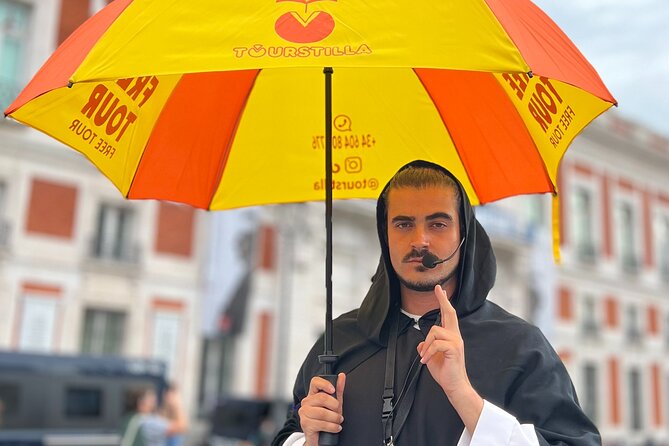
One guide, Jackie, is singled out for being knowledgeable and for making the tour easy to follow. Another guide, David Onion, gets extra praise for explaining the Inquisition while using dramatic talents, keeping the group engaged the whole time.
Even better: the tour is designed so there’s no pressure for tips during the experience. Still, guides explain the usual process at the end in a tactful way. That balance is important. You get the story without feeling sold to.
If you care about how history is told, not just what happened, this tour is a strong bet.
What to bring and what to expect on the ground
Because every stop is short and central, you don’t need a complicated plan. Still, a few practical things help.
Wear shoes you can walk in comfortably, since you’ll be hopping between plazas and church areas. Bring a light layer if it’s cool in the morning or evening. The topic is emotionally heavy, so if you want a breather, plan to take a short pause at the end of the more intense stops like Plaza de la Provincia and Plaza de la Cruz Verde.
Also, since the tour is in English, you’ll get the full explanation without needing translation support. That’s a big plus for comprehension, especially when the content includes specific terms like edicts of faith and garrote vil.
Who this tour suits best (and who should think twice)
This is perfect if you like: history that feels connected to streets, explanations of how institutions worked, and a tour that links religious policy to real-world consequences.
It’s also a good fit for anyone who wants a guided route that doesn’t require entry tickets. You get the story without stacking another set of timed museum tickets.
Think twice if you prefer light cultural walking tours. This one includes torture, executions, and accusations targeting Jews and Muslims. It also touches witches as a themed component. You’ll need the right mindset for it.
If you’re bringing kids, consider age and sensitivity. The itinerary is built for adults who can handle dark material with context.
Should you book this Madrid Inquisition tour?
I’d book it if you want a clear, guided path through Madrid’s Spanish Inquisition era without paying for site entries or dealing with long museum time. The price is unusually approachable for a guided, multi-stop route, and the stops are chosen so the story makes sense as you walk.
I’d skip it only if you know you can’t handle the subject matter or you don’t like tours that treat history as more than postcard scenery. If you can handle heavy topics and you enjoy explanations that connect buildings to events, this is a strong value way to understand Madrid beyond the usual highlights.
FAQ
How long is the tour?
The tour lasts about 2 hours 15 minutes.
Where does the tour start and end?
It starts at Plaza Mayor (Centro, Madrid) and ends at Plaza de la Armería (Centro, Madrid).
Is the tour offered in English?
Yes, the tour is offered in English.
Do I need to buy tickets to enter the sites?
No. Site entries are not required.
How big is the group?
The tour has a maximum of 30 travelers.
Do I get a mobile ticket?
Yes, it includes a mobile ticket.
Are service animals allowed?
Yes, service animals are allowed.
Can I cancel for a full refund?
You can cancel up to 24 hours in advance for a full refund. If you cancel less than 24 hours before the start time, you won’t get a refund.