REVIEW · MADRID
Madrid: Afternoon Prado Museum Tour with Skip-the-Line Entry
Book on GetYourGuide →Operated by Satguru Experiences · Bookable on GetYourGuide
Prado masterpieces hit different when you’re guided. This small group afternoon tour uses an official guide to steer you through the Prado’s biggest sights without turning the visit into a sprint. You get a focused path through major Spanish and European art highlights, built around the works many people come to Madrid for.
I especially like how the tour balances emotional paintings with smart context, so you actually understand what you’re seeing. The second big win is the practical skip-the-line access, which can save real time when crowds are thick. One consideration: it’s only 2 hours, so you’ll leave with a great overview, not a museum-length “see everything” day.
In This Review
- Key takeaways before you go
- Two hours at the Prado: why this afternoon tour makes sense
- Where you meet: easy start near Monument to Velázquez
- Skip-the-line entry: what it really buys you
- Goya first: The Third of May 1808 and the weight of history
- Velázquez and Las Meninas: how to look at what looks like a mirror
- El Greco: The Burial of the Count of Orgaz and the meeting of earth and heaven
- Rubens and the Baroque punch: Descent from the Cross and motion
- How the route keeps you from getting overwhelmed
- Guides you may hear: Blanca, Ruben, Juan, Eva, and others
- Price check: is $67 worth it for a Prado afternoon?
- Who this tour fits best
- Quick practical tips to get more out of it
- Should you book this Prado skip-the-line tour?
- FAQ
- What’s the duration of the Prado tour?
- Where do I meet the group?
- Does this tour include skip-the-line tickets?
- Is the tour guide live and what language is it in?
- Is the tour wheelchair accessible?
- Is food or drink included?
- Does the tour run every day?
- How many people are in the group?
- What if I’m late to the meeting point?
- When can I cancel for a full refund?
Key takeaways before you go
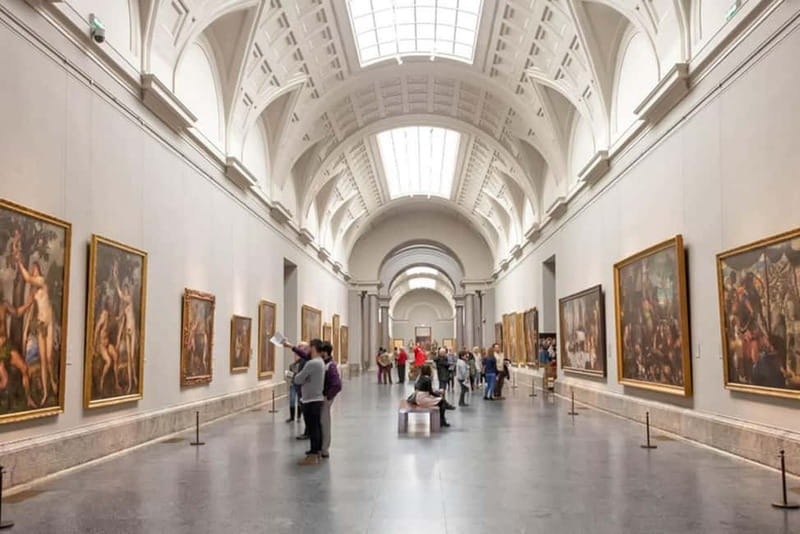
- Official guide with live explanations in English: you’ll get clear, on-the-spot context at the paintings.
- Skip-the-line tickets via a separate entrance: fewer delays means more time looking closely.
- A short, structured route: you’ll cover major works like Goya, Velázquez, El Greco, and Rubens without getting lost.
- Goya at the center: expect stops tied to The Third of May 1808 and the Black Paintings.
- Las Meninas focus: you’ll get help reading perspective and meaning in Velázquez’s masterpiece.
- Renaissance to Baroque in one afternoon: El Greco and Rubens give you a clear style timeline.
Two hours at the Prado: why this afternoon tour makes sense
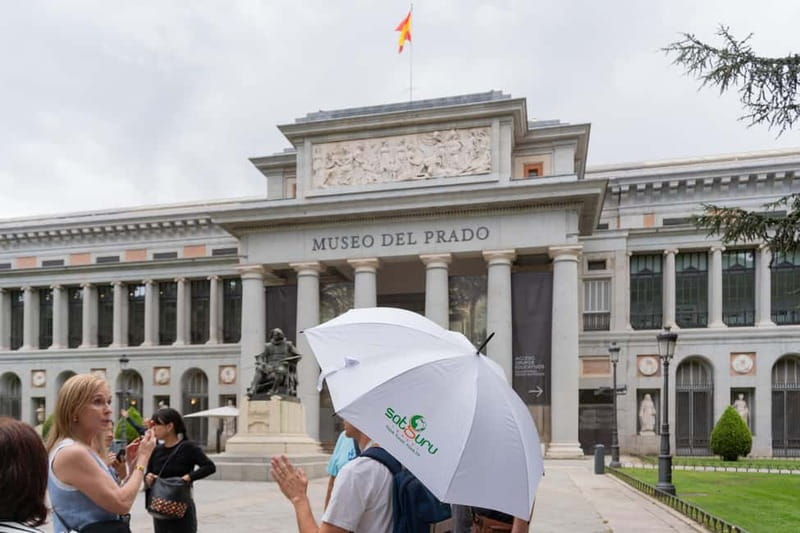
The Prado is big enough that even confident museum-goers can start drifting. This is the kind of place where “I’ll just wander” can easily become “I missed the best parts.” A 2-hour guided format solves that problem. You’ll still see major works, but you won’t spend your time zigzagging through rooms that look similar when you’re standing there with no plan.
This tour is also timed well for an afternoon slot. Morning in Madrid can be busy; evenings can run late. An afternoon visit often hits the sweet spot where you’re awake and alert, but you’re not trying to beat the whole day.
You can also read our reviews of more museum experiences in Madrid


Where you meet: easy start near Monument to Velázquez
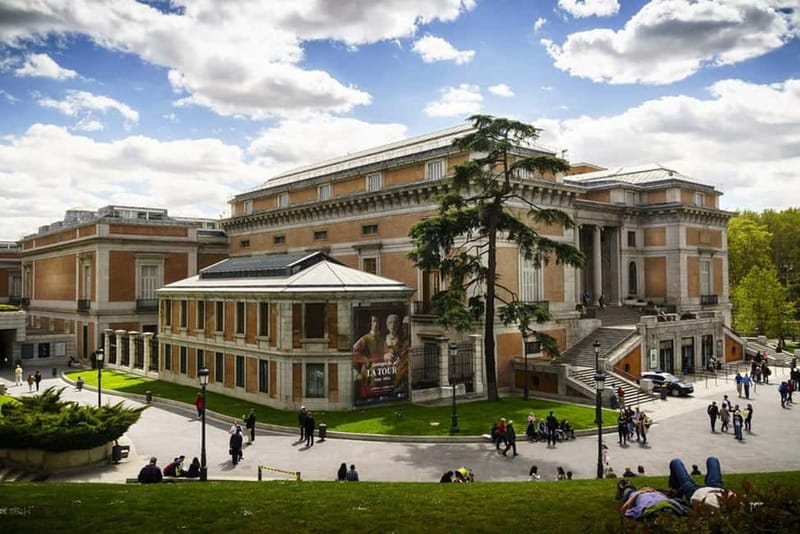
You meet at Paseo del Prado, 11, at the Monument to Velázquez. That’s a helpful choice because it puts you right in the Prado area, and you don’t need extra navigation tricks once you’re on-site. The tour also ends back at the same meeting point, so you’re not forced into a weird end-location hunt.
The key practical note is to show up on time. The courtesy waiting time is 10 minutes, so give yourself margin for arrival, bathroom breaks, or an extra coffee if you’re the type who needs one first.
Skip-the-line entry: what it really buys you
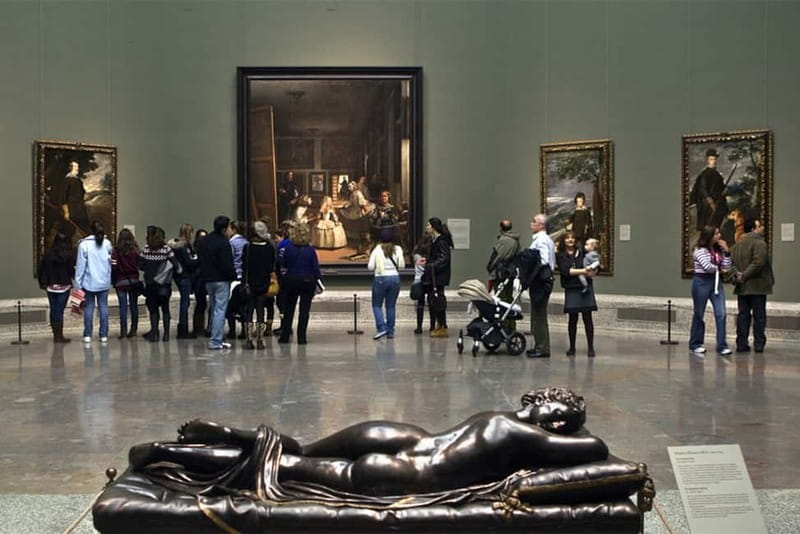
Skip-the-line here means more than convenience. It’s time you can spend where it matters: in front of the paintings.
The Prado is one of those attractions where lines can balloon. One review specifically called out that waiting could be around two hours without the fast entry. Whether that exact number matches your day or not, the point is the same: if you don’t start quickly, you’ll feel rushed by the time you reach the artworks.
This tour’s value comes from the combo:
- Skip-the-line access through a separate entrance
- A guide who helps you use that time efficiently
So instead of arriving, queuing, and then compensating by rushing through rooms, you get to look, listen, and take your time with the set of works the tour prioritizes.
Goya first: The Third of May 1808 and the weight of history
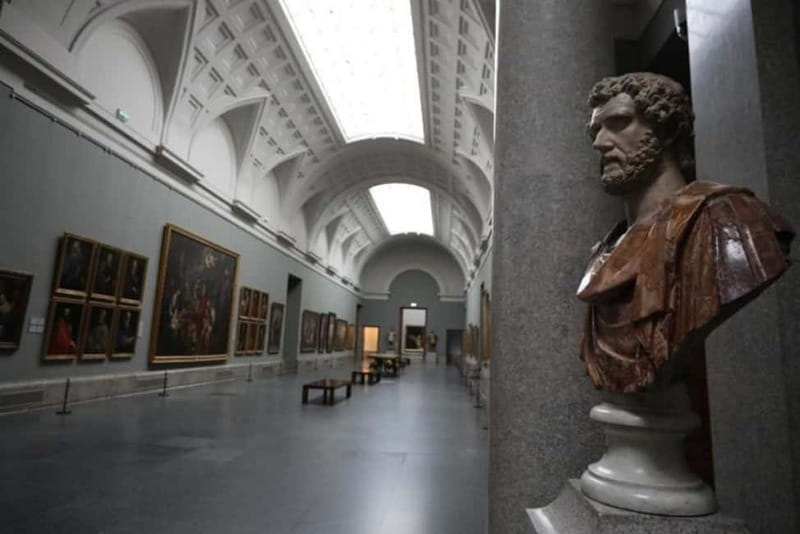
A great Prado tour doesn’t just point. It frames. That’s especially true with Goya, and this route puts him early, where his work can shape how you read everything afterward.
You’ll look at The Third of May 1808, a painting that’s hard to forget even if you’ve only seen reproductions before. Your guide’s job here is crucial: they’ll help you understand why it feels so intense. Expect discussion tied to Spain’s turbulent moments—so the painting isn’t floating in art-history trivia, it’s connected to real human events.
You’ll also spend time with the Black Paintings (or works connected to that darker body of Goya’s later work). That part matters because it changes the mood of your museum visit. After bright portraits and polished compositions, this is where you notice Goya’s darker edge—his willingness to show what’s uncomfortable.
And if you’re the type who normally thinks, I like art, but I don’t know what I’m supposed to see—Goya is often where the “aha” happens. The paintings are strong enough to meet you halfway, and a good guide helps you meet them back.
Velázquez and Las Meninas: how to look at what looks like a mirror
Next comes Velázquez, and specifically Las Meninas. This is one of those paintings people talk about because it challenges your eyes. It’s not just a “pretty court portrait.” It’s a puzzle.
Your guide will walk you through the layers—especially how the work plays with perspective and reality. That matters because Las Meninas can feel confusing if you don’t have a starting point. With an explanation in place, the painting stops being a static image and starts being a set of decisions: who stands where, who looks at whom, and why the composition feels so intentional.
What I like about this stop is that it trains your eye for the rest of the Prado. Once you learn to ask what a painter is doing with viewpoint and staging, other works feel easier to read.
You can also read our reviews of more tours and experiences in Madrid



El Greco: The Burial of the Count of Orgaz and the meeting of earth and heaven
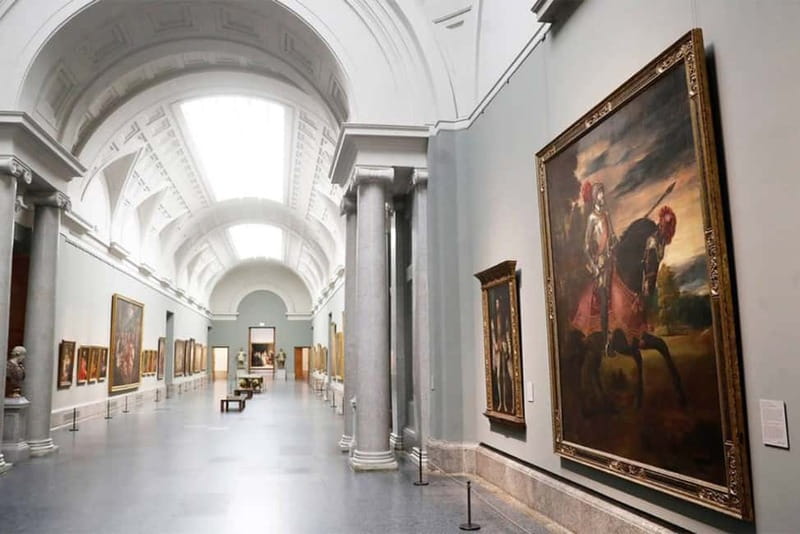
Then you’ll move into El Greco, the artist known for dramatic figures and striking color choices. The highlight here is The Burial of the Count of Orgaz—a painting that blends the spiritual and the worldly in one scene.
Your guide’s explanation is key for this one. Without context, you might see religious subjects and admire the technique. With context, you start noticing how the painting communicates belief—how it handles the sense of ceremony, and how the figures are arranged to signal the “divine” portion of the story.
This stop is also a nice tonal shift. After Goya’s historical pressure and Velázquez’s optical puzzle, El Greco gives you something more theatrical. It’s a different kind of intensity—less about shock and more about symbolism and mood.
Rubens and the Baroque punch: Descent from the Cross and motion
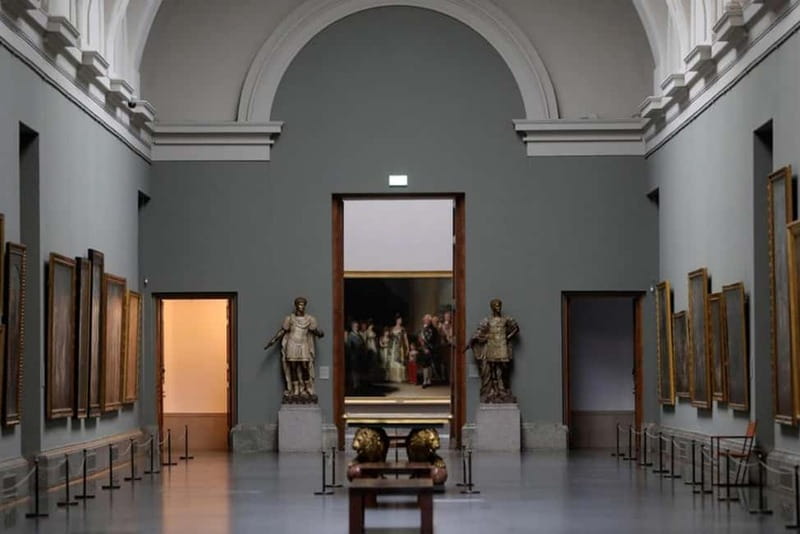
Finally, you’ll land in Baroque territory with Peter Paul Rubens. The tour includes works such as Descent from the Cross and gives you a sense of how Rubens paints with energy—movement, emotion, and heavy use of color.
This part helps you understand the broader European arc, too. You’re not only seeing “Spanish highlights.” You’re seeing how Spanish artists sit inside a bigger European conversation that includes dramatic Baroque styles and myth/biblical themes.
Rubens is where the Prado can feel extra theatrical. If you tend to get impatient in galleries, this is the stop that usually keeps your attention. The paintings feel like they’re doing something, not just posing.
How the route keeps you from getting overwhelmed
A big reason this tour works is that it’s structured. In a museum like the Prado, you can waste the first half hour “figuring out where to go,” then spend the second half feeling behind.
Here, you’re guided through a logical arc: Goya → Velázquez → El Greco → Rubens. That lineup covers different eras and different artistic goals. And because the guide is selecting the most essential works for you, you get a sense of what matters without having to read a guidebook the size of a phonebook.
In practical terms, you’ll walk away with an overview you can build on later. If you want to return, you’ll know what you liked and what to search for on your own.
Guides you may hear: Blanca, Ruben, Juan, Eva, and others
One of the strongest signals from past participants is how central the guide is to the experience. Names that have come up include Blanca (praised for making art accessible and pointing out fun facts), Ruben, Alejandra, Juan, Jorge, Javi, Eva, Lorena, Nerea, and Maria.
A lot of the feedback shares the same theme: guides don’t just recite facts. They explain in a way that makes the paintings feel like stories you can follow. Some tours are also described as English-and-Spanish bilingual, which can be helpful if you’re comfortable in both languages.
Even if you don’t recognize the guide name, the pattern is consistent: the tour’s value depends on commentary quality, and these guides seem to deliver.
Price check: is $67 worth it for a Prado afternoon?
At $67 per person for 2 hours, the price feels fair for what you’re getting: skip-the-line entry plus a live guide at the works that matter.
Here’s how I think about value in cases like this:
- If you visit the Prado on your own, you’re paying for admission either way, but you often lose time sorting out what to see.
- If you pay for a guided plan, you’re buying two things at once: time savings and better understanding of the art.
Because this tour is short, the guide’s selection matters even more. You’re not buying an all-day museum pass; you’re buying a high-impact route that helps you see the Prado’s major signals quickly.
If your goal is an art-focused Madrid highlight without spending half your day guessing, this price is usually easy to justify.
Who this tour fits best
This is a great fit if:
- You want a hit list of major Prado works, especially Goya, Velázquez, El Greco, and Rubens
- You don’t want to manage ticket lines and museum navigation alone
- You’d rather spend your energy looking closely than reading everything on your phone
It may feel less perfect if:
- You’re aiming to stay for long stretches in only one wing or you want total freedom to wander
- You plan to spend lots of time studying smaller details beyond the main highlights (a longer self-guided visit may suit you better)
Quick practical tips to get more out of it
- Plan to arrive a few minutes early at Paseo del Prado, 11. The tour waits 10 minutes.
- Wear shoes you can stand in. Prado rooms often mean a lot of stopping and looking.
- If you have preferences, set them in your mind before you start. The guide can shape how you experience the stops, but you still want to know what you care about (war/politics in Goya, perspective in Velázquez, etc.).
Should you book this Prado skip-the-line tour?
Yes, I’d book it if you want a smooth, guided Prado experience that helps you see the museum’s headline works without wasting time. The skip-the-line piece is a real advantage, and the structure of the afternoon route makes it feel relaxing rather than frantic.
If you’re deciding between this and a self-guided visit, choose this tour when you care about understanding as much as you care about seeing. Choose self-guided if you already know what rooms/paintings you want and you can handle the lines and decision fatigue on your own.
FAQ
What’s the duration of the Prado tour?
The tour lasts about 2 hours, and starting times vary by availability.
Where do I meet the group?
You meet at Monument to Velázquez, Paseo del Prado, 11, 28014 Madrid, Spain.
Does this tour include skip-the-line tickets?
Yes. It includes skip-the-line tickets to the Prado Museum and uses a separate entrance.
Is the tour guide live and what language is it in?
It includes a live tour guide in English.
Is the tour wheelchair accessible?
Yes, it is listed as wheelchair accessible.
Is food or drink included?
No. Food and beverages are not included.
Does the tour run every day?
No. It does not run on some holidays, such as December 25 and January 1.
How many people are in the group?
The experience is described as a small group tour, but the exact group size is not specified in the main details.
What if I’m late to the meeting point?
There’s a 10-minute courtesy waiting time, so try to arrive on time.
When can I cancel for a full refund?
You can cancel up to 24 hours in advance for a full refund.