REVIEW · MADRID
Madrid Historic with an architect : Arabs, Austrias and Bourbons
Book on Viator →Operated by architoursmad · Bookable on Viator
Madrid’s buildings explain the city fast.
This architect-led walk strings together Arabs, Austrias, and Bourbons through real streets, not slideshows, with plans and historical photos in hand. Two things I really like: the guide’s professional eye for how the city grew, and how the route mixes famous landmarks with lesser-seen corners that make the big-picture history click. One thing to consider: the Royal Palace stop is mainly about the facade and what you see from outside, not a full interior visit.
You’ll cover a lot of ground in about three hours, with short stops that keep your legs moving and your attention sharp. Most admissions are free on the day, which helps the budget, but you should be ready for the one notable exception tied to the Royal Palace experience. If you only want architectural details and absolutely nothing about political or social context, this might feel heavier on history than you expect.
In This Review
- Key moments that make this tour work
- A 12-century architecture route with real street context
- Meet your architect guide: plans, photos, and the “why”
- Stop-by-stop: Teatro Real, Plaza de Oriente, and the Palace story
- Old churches, a Mudejar tower, and the marks left by centuries
- La Almudena viewpoint, the Arab Wall remnants, and Plaza de la Villa
- Mercado San Miguel, Plaza Mayor, and the walk’s final snap into place
- Price and value: what $65.89 buys you in Madrid time
- Timing, weather, and how to enjoy it on a real day
- Who should book this tour, and who might not love it
- Should you book this Madrid historic architecture walk?
- FAQ
- How long is the Madrid Historic with an architect tour?
- Is this tour private or shared?
- What language is the tour offered in?
- What does the tour include?
- Are tickets included for the stops?
- Where does the tour start and end?
- Is there a place to eat or drink during the tour?
- What if the weather is bad or I need to cancel?
Key moments that make this tour work
- An architect guide who uses plans and historical photos to connect design choices to city changes
- Arab + Mudejar landmarks in the same walk, including the Arab Wall remains and San Nicolas tower details with horseshoes arches
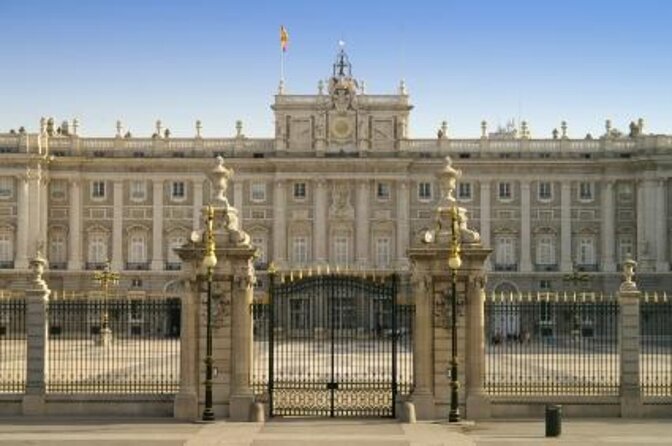
- Royal Palace facades without interior pressure, so you still get the architectural story even if you skip tickets
- Old Madrid squares as checkpoints, from Plaza de Oriente and Plaza de la Villa to Plaza Mayor and Puerta del Sol (Kilometer 0)
- Mercado San Miguel stop where you can eat and drink at your own pace without derailing the tour
A 12-century architecture route with real street context
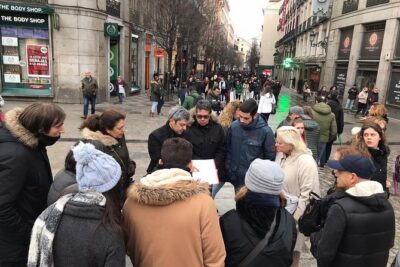
Madrid can feel like a patchwork—new facades next to older bones. This tour is designed to show the seams. You walk through the historic center while your guide explains how different eras shaped what you see: walls, churches, palaces, and the public squares that organized daily life.
The time is short per stop (often about 5–10 minutes), so the goal isn’t to linger in one place forever. Instead, it’s about grabbing the key design idea and then moving on to the next clue. That pacing is great if you want understanding, not just photos.
Also, it’s truly private in the sense that it’s only your group on the tour. That matters, because questions can actually happen while you’re outside in the middle of the city, not at a crowded meeting hall.
You can also read our reviews of more historical tours in Madrid

Meet your architect guide: plans, photos, and the “why”
A big reason this tour earns a high rating is the guide’s background as a practicing architect and long-time resident—one name you’ll hear is Emilio. That matters because the commentary isn’t just dates and names; it’s about how form follows power, faith, and money.
You’re not left guessing. The tour includes plans and historical photos as you walk, so you can compare past and present versions of the same area. It turns Madrid into a puzzle you can actually solve: why streets feel the way they do, why certain buildings cluster where they do, and how styles shift across centuries.
And because your guide is guiding in English, you’re less likely to lose the thread if architecture vocabulary starts flying. If you’re the type who likes asking quick questions—materials, renovations, architects, why a facade looks the way it does—this format gives you room.
Stop-by-stop: Teatro Real, Plaza de Oriente, and the Palace story
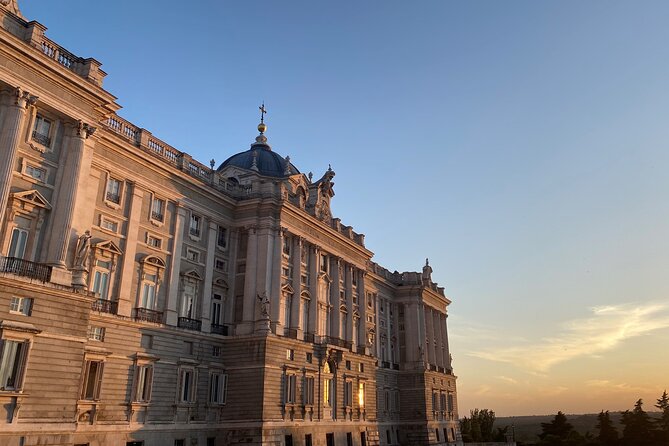
You start at Pl. de Isabel II, 4 (Centro) and begin with the Teatro Real. Even though the stop is brief, it’s a smart opener: you get the history of Madrid’s opera theater and how cultural buildings anchor the identity of the city. If you’ve ever wondered why the grand arts show up where they do, this is a good first lesson.
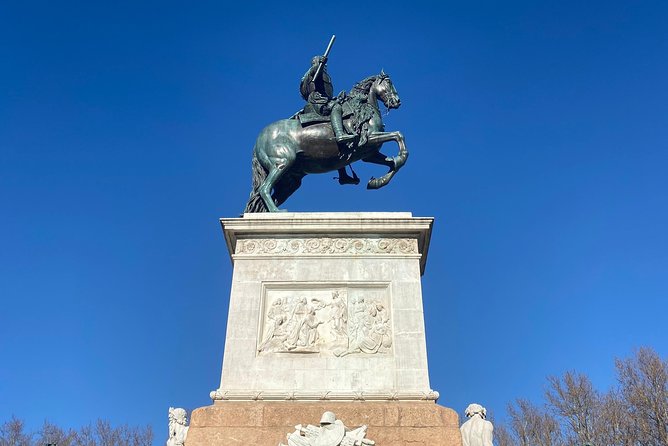
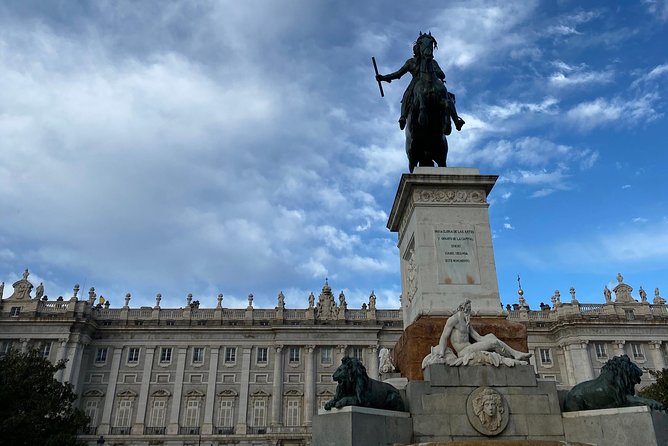
Next is Plaza de Oriente, where the focus is the square’s urban development from the period linked to the Arabs through today. Squares are never neutral in a royal city. They organize movement, display power, and define the views from important buildings—so learning the square’s growth helps you understand why adjacent architecture looks the way it does.
Then comes the main national-level star: the Royal Palace of Madrid. Here’s the practical expectation: you’ll admire the facades and the architectural changes, and you’ll hear about different architects and kings involved in the project, but the tour does not include the interior. You’re essentially getting the “outside explanation” version—useful if you want context for the building without spending extra time in lines or ticketed spaces.
If you want interior rooms later, you can add them on your own. But for an architectural orientation walk, skipping the interior keeps the tour from becoming a time sink.
Old churches, a Mudejar tower, and the marks left by centuries
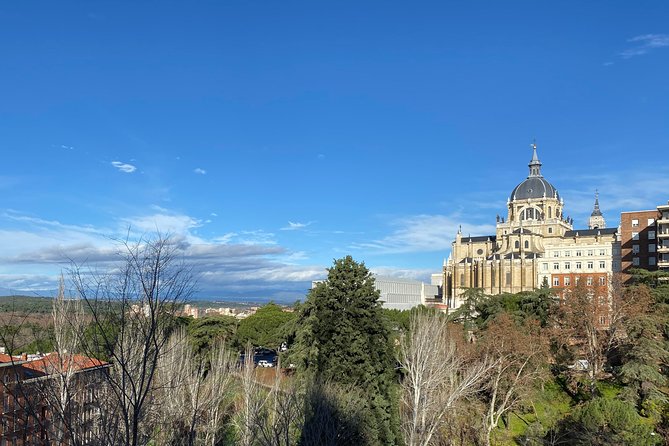
After the palace area, the route shifts into the older religious and neighborhood layers that make Madrid feel textured.
At Plaza de Ramales, you’ll see the ruins of the Church of San Juan, where the painter Velázquez is said to have been buried, plus the Church of Santiago nearby. Ruins can be frustrating on tours when the guide just says, Look, old stones. Here, the value is connecting those remains to how Madrid’s spiritual centers moved and changed.
Then you stop at Real Iglesia Parroquial de Santiago y San Juan Bautista, a church honoring the apostle Santiago. This is the kind of stop that doesn’t need a long lecture. It works because it’s placed after the ruins, so the story shifts from “what’s gone” to “what still stands.”
One of the most visually memorable stops is San Nicolas de las Servitas (Church of St. Nicholas of the Servitas). You’ll visit the oldest church in Madrid and focus on its Mudejar tower, including the horseshoes arches detail. This is exactly the type of architectural element you’d miss on your own. Even if you’re not a design nerd, you’ll probably have that little moment of, Oh, that’s what people mean by Mudejar influence in the built environment.
La Almudena viewpoint, the Arab Wall remnants, and Plaza de la Villa
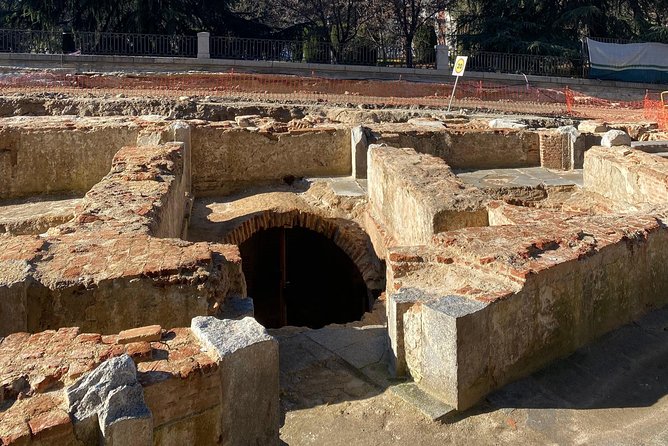
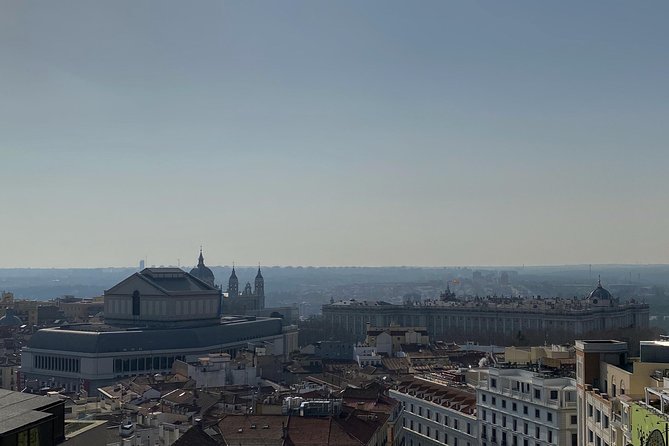
The tour continues to Museo de la Catedral de la Almudena, where you’ll get a quick history of the Cathedral of La Almudena from a viewpoint described as seaview. Don’t stress about the wording. The practical point is that you’re shown how the cathedral area fits into the wider urban picture, not treated like an isolated postcard.
Then you hit the Arab Wall, described as the only remains of old Arab walls built in the 9th century. This stop is short, but it’s high-impact. City walls are one of the clearest ways to understand survival—how a settlement protected itself, where it drew boundaries, and why later eras built around existing lines instead of starting from scratch.
From there, you reach Plaza de la Villa, one of those older civic anchors that makes Madrid feel grown-up. You’ll see the old City Hall and surrounding buildings like Casa de Cisneros and Casa de los Lujanes. The best takeaway here is that politics and architecture are partners. The people who governed needed visible spaces, not secret ones.




Mercado San Miguel, Plaza Mayor, and the walk’s final snap into place
To keep the energy human, the tour includes Mercado San Miguel—the market with a structure made of steel. You get a break that also makes sense architecturally: the market is where you can see a mix of modern structure and historic purpose.
There’s time to eat and drink on your own during this stop, so you can grab tapas or a drink without feeling like you’re disappearing for half the day. If you’re traveling with someone who doesn’t care as much about facades, this stop gives them a natural, easy motivation to stay engaged.
Then you finish in the big public-squared climax at Plaza Mayor—highlighted as a social and commercial center from the last 400 years, with Castilla-style design influence. Plaza Mayor is where all the prior lessons snap together. After you’ve seen walls, palaces, and religious buildings, the square reads differently. It becomes the stage where the city showed itself.
Finally, you end at Puerta del Sol, at Kilometer 0. It’s a tourist finish point, yes, but it’s also practical: you can orient yourself instantly, then branch off to whatever you want next.
Price and value: what $65.89 buys you in Madrid time
At $65.89 per person, this is priced like a mid-range guided walk. The value comes from a few factors, not just the guide’s personality.
First, the duration—about 3 to 3.5 hours—is long enough to cover multiple architectural eras without dragging. Short stops add up fast when you’re moving through the historic center.
Second, the tour includes an architect-led approach with plans and historical photos. That kind of teaching tool is the difference between a scenic stroll and something that actually changes how you look at the city.
Third, most stops list admission as free, which keeps your day from turning into a hidden add-on parade. The one exception is tied to the Royal Palace interior, which the tour doesn’t include anyway—so your budget risk is low if you’re expecting mostly exterior viewing.
Timing, weather, and how to enjoy it on a real day
This experience requires good weather. That means if rain is heavy, the operator may shift dates or offer a refund. If you’re visiting in a shoulder season, I’d plan a backup slot for architecture anyway, because Madrid’s outdoor storytelling is weather-dependent.
The route is mostly walking. That’s not a problem for most people, but bring sensible shoes and expect uneven sidewalks near older areas. If you’re the type who gets cold fast, consider layers—because you’ll be outside through multiple points, not indoors between stops.
Also, because the tour ends at Puerta del Sol, I like using that as a planning trick: after the tour, you’re well-positioned for quick metro hops and easy navigation.
Who should book this tour, and who might not love it
This works best if you want a structured way to understand how Madrid formed—especially if you like architecture that includes cultural layers, not just one style at a time. The Arab Wall stop plus the Mudejar tower detail at San Nicolas is a strong combo if you’re curious about Spain’s blended design history.
It’s also a good fit for first-timers who feel overwhelmed by the city’s size. A guided route that ends at Puerta del Sol gives you confidence for the rest of your trip.
If you want an interior-heavy day with long museum time and palace rooms, this might not be your top pick. The Royal Palace is treated as an exterior story here, and many stops are intentionally short.
If you prefer purely architectural analysis with zero history context, you might feel the tour spends time on political and social background. This isn’t a drawback for me, but it’s worth knowing.
Should you book this Madrid historic architecture walk?
I’d book it if you want to walk the center and come away with a clear mental map of Madrid’s design evolution. The architect-led approach, the Arab/Mudejar stops, and the way the tour ties squares and facades together make it a smart first-pass tour.
Skip it only if you mainly want interior ticket time or you strongly dislike any historical context. Otherwise, for a focused 3–3.5 hour architecture-and-city story, this is one of the most practical ways to get answers without spending the whole day chasing them.
FAQ
How long is the Madrid Historic with an architect tour?
It runs about 3 hours to 3 hours 30 minutes.
Is this tour private or shared?
It’s private, meaning only your group participates.
What language is the tour offered in?
The tour is offered in English.
What does the tour include?
You get a visit led by a local architect with artistic and historical context, supported by plans and historical photos.
Are tickets included for the stops?
Most stops are listed as free admissions. The Royal Palace stop notes that the admission ticket is not included, and the tour does not include the interior.
Where does the tour start and end?
It starts at Pl. de Isabel II, 4, Centro, 28013 Madrid and ends at Plaza Mayor, Centro, Madrid.
Is there a place to eat or drink during the tour?
Yes. There’s a stop at Mercado San Miguel, where you can have a drink and eat tapas on your own.
What if the weather is bad or I need to cancel?
The experience requires good weather; if canceled due to poor weather, you’ll be offered a different date or a full refund. You can cancel for a full refund up to 24 hours in advance.