REVIEW · MADRID
Madrid: Lázaro Galdiano Museum Entry Ticket with Audio Tour
Book on GetYourGuide →Operated by Clio Muse Tours - Spain · Bookable on GetYourGuide
A museum visit gets easier when your guide fits in your pocket. This ticket bundles skip-the-line entry with an offline smartphone audio tour, so you can move at your pace without hunting for answers. You’ll download the tour ahead of time and then use it inside the museum, even if your phone signal is spotty.
I especially like the way the audio tour points you toward specific masterpieces by name, including the El Greco’s St Francis in ecstasy and Goya’s Aquelarre. That focus helps you avoid the common museum problem: seeing a lot of art but remembering very little.
One thing to watch: this is not a live guide, and the audio tour depends on having a compatible smartphone plus working headphones. If you miss the activation email or your device isn’t supported, the experience can turn into frustrating dead ends.
In This Review
- Key things to know before you go
- Skip-the-line entry that actually saves time
- Your phone becomes the guide: offline audio plus maps
- Getting there and starting the tour outside the museum
- The museum highlights the audio tour calls out
- Johannes Hispalensis’s Triptych
- The portrait of Lady Sondes
- El Greco’s St Francis in ecstasy
- Miguel Jacinto Meléndez’s Immaculate Conception
- Goya’s Aquelarre
- How to pace a self-guided museum day without getting tired
- Booking value: what you’re paying for at $20
- Logistics that matter: headphones, storage, and compatibility
- When this museum-audio format really fits you
- A practical mini-plan for your visit day
- Should you book this Lázaro Galdiano audio-ticket combo?
- FAQ
- Do I need to download the audio tour before I visit?
- Is there a live guide included?
- Is the audio tour available offline?
- What language is the audio tour in?
- Where does the self-guided audio tour start?
- How do I get there using public transport?
- What do I need to bring?
- What devices are compatible?
- Can I book for multiple people using one ticket?
Key things to know before you go
- Skip-the-line access with an e-ticket so you can use a separate entrance instead of waiting at the main queue
- Offline audio, text, and maps downloaded to your phone (helps you avoid roaming surprises)
- Audio highlights specific works like Johannes Hispalensis’s Triptych and the portrait of Lady Sondes
- Start outside the museum where the tour is designed to begin
- Metro directions are straightforward: Line 5 to Rubén Darío, Castellana exit
- Device compatibility matters (Android and iOS supported; Windows phones and older Apple models are not)
Skip-the-line entry that actually saves time
The Lázaro Galdiano Museum experience starts with something simple and valuable: your entry is handled as an e-ticket, with skip-the-line service through a separate entrance. That matters in Madrid, where “a quick detour” can quietly become a long wait. Here, the ticket is set up so you can get inside and start your self-guided visit without burning time in a queue.
You don’t just get admission, either. The ticket includes an audio tour designed to run on your phone, so you’re not spending your energy trying to figure out where to look or what you’re seeing. Think of this as paying for entry plus a ready-to-use explanation that you control.
Practical note: you receive the ticket by email, and you should plan to download the tour content before you arrive. This is one of those experiences where being prepared makes the day feel smooth.
You can also read our reviews of more tours and experiences in Madrid



Your phone becomes the guide: offline audio plus maps

This is a self-guided tour, and the structure is clear. You download the app and the tour content via an activation link sent to your email. The tour is then available on your smartphone with offline support: text, audio narration, and maps are included so you can keep listening even if your data doesn’t cooperate.
I like that you can use the audio tour more than once, and at any time, before or after your visit. That means you can do a quick preview at home, walk in with your head already in the right place, and then replay sections if something catches your eye.
Content is delivered as short, original stories based on research. That’s a good format for a museum day. Long essays can feel like homework. These tracks are built to keep you moving and help you connect the dots while you’re standing in front of the art.
One more practical advantage: audio is included in English, and the offline maps reduce the usual “Where am I?” moments. If you prefer a plan that doesn’t feel rigid, this is a strong fit.
Getting there and starting the tour outside the museum

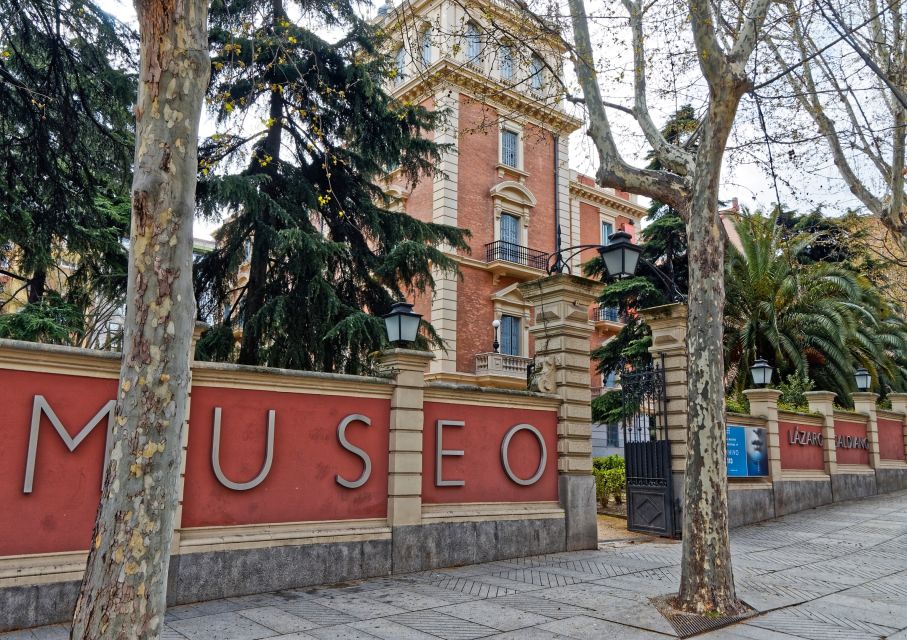
The tour is designed to start outside the Museo Lázaro Galdiano. That’s not just a technical detail; it changes your first few minutes. Instead of stepping inside and fumbling around, you should have your phone ready to go when you reach the entrance area.
For directions, the easiest metro option is Line 5 to Rubén Darío, using the Castellana exit. Once you’re there, focus on getting your phone set up with the audio tour started before you move deeper into the visit.
If you like getting your bearings fast, this setup is exactly the kind of “small help” that improves the whole day. When the tour starts outside, you’re less likely to waste the best part of your energy wandering without a purpose.
The museum highlights the audio tour calls out
The audio tour is built around named works, so you’re not guessing what’s important. Here are the key pieces the tour spotlights, and what you’ll get from using the narration in front of them.
Johannes Hispalensis’s Triptych
The tour’s mention of the Triptych of Johannes Hispalensis is a clue to how the audio is meant to guide you: you’ll go looking for major works, not random corners. A triptych format can be visually demanding, especially if you’re only looking for a quick glance. Using the audio narration while you’re in front of it helps you slow down without getting stuck.
Tip: keep your phone at a comfortable viewing distance and pause the story only when you need to look closely. The goal is to use the audio to guide your attention, not to replace your eyes.
You can also read our reviews of more museum experiences in Madrid





The portrait of Lady Sondes
Another named highlight is the portrait of Lady Sondes. Portraits can be the kind of work you either connect with instantly or walk past without much thought. Having a short, researched story attached to the piece helps you look longer and remember more.
If you tend to forget what you saw on a museum day, this is one of the reasons the tour is worth it: it helps your brain label what you’re looking at. That makes the visit feel more personal and less like sightseeing footage.
El Greco’s St Francis in ecstasy
The audio tour also spotlights El Greco’s St Francis in ecstasy. El Greco’s work often creates immediate visual energy, and the tour narration gives you a way to understand what you’re reacting to while you’re still standing there. Instead of just feeling impressed, you’ll have a story thread to follow.
This is one of the pieces most visitors recognize by name, and using the audio here makes it easier to go beyond the title and actually take in the details the tour points you toward.
Miguel Jacinto Meléndez’s Immaculate Conception
The tour calls out Miguel Jacinto Meléndez’s Immaculate Conception, which is a good example of why a self-guided audio tour can work well. Religious-themed art can feel intimidating if you don’t have context. You don’t need a live guide for that. You just need a clear starting point, and the audio is designed to provide those brief explanations right where you need them.
Goya’s Aquelarre
Finally, the audio highlights Goya’s Aquelarre. Goya is one of those artists where many people arrive with expectations, but the real win is getting a focused way to look at the work rather than relying only on what you remember from school or books.
The best approach here is to let the narration set the pace. Listen, look, then listen again if the piece keeps pulling you in.
How to pace a self-guided museum day without getting tired
Because this is self-guided, the biggest challenge isn’t finding art. It’s choosing when to stop and when to keep moving. The audio tour makes pacing easier because you can use it like a set of walking checkpoints: press play, follow the story, spend time with the work, then move on when you’re ready.
You’ll also notice the audio is built as a series of short original stories, not one long lecture. That format is easier on your feet and your attention span, especially if you’re combining the museum with other Madrid plans.
A small “make it better” habit: when you like a piece, don’t immediately rush to the next track. Give yourself a moment to read the label and then replay the audio segment if you want. The tour can be used repeatedly, so there’s no downside to taking your time.
Booking value: what you’re paying for at $20
At around $20 per person, this ticket is essentially a bundle of three practical things:
1) museum admission,
2) skip-the-line entry,
3) an offline English audio tour you can replay.
That’s good value if you want a guided feel without paying for a live guide. It’s also a fair deal if you hate museum stress. The biggest costs on a museum day aren’t always money; they’re time, confusion, and the mental effort of figuring things out.
One balanced way to think about it: if you already plan to spend time in the museum and you’ll actually use the audio, the ticket cost makes sense. If you’re the type who only wants to skim highlights, you might feel like you paid for something you won’t use.
Logistics that matter: headphones, storage, and compatibility
This experience is simple, but it has a few “don’t overlook this” requirements.
You should bring:
- Headphones (not included)
- A charged smartphone
You also need:
- Storage on your phone, listed at 100–150 MB
- A compatible device: Android (version 5.0 and later) or iOS. The audio is not compatible with Windows phones, and it’s not compatible with iPhone 5/5C or older devices, iPod Touch 5th gen or older, iPad 4th gen or older, or iPad Mini 1st gen.
If that sounds picky, it is. The good news is that most modern phones meet the requirements. The key is to confirm before you go so you don’t arrive ready to listen and then hit a dead end.
Also pay attention to email. Your access depends on an email with instructions and an activation link. If your email filters anything into spam, you can lose the whole setup time. Check your spam folder before you leave.
Finally, the tour is booked per device, not per participant. If you’re traveling with a group and want everyone using separate audio devices, plan that ahead.
When this museum-audio format really fits you

This ticket works especially well if:
- you like self-paced museum wandering, not a schedule
- you enjoy listening while you look
- you want a story-based guide focused on major works
- you prefer offline access because roaming data is annoying (or expensive)
It’s less ideal if:
- you don’t want to rely on a phone during your visit
- you’re traveling with a device that might not meet the compatibility list
- you’re hoping for a live Q-and-A style guide (there isn’t one)
If you want to experience Madrid art at your own rhythm, this format is one of the smarter ways to do it.
A practical mini-plan for your visit day
You don’t need an exact route, but you do need a flow. Here’s a simple rhythm that matches how this audio tour is designed.
1) Before you leave: download the tour using the activation link in your email. Save yourself the last-minute stress.
2) Arrive and start outside: get to the museum area near the entrance and start the audio track where the tour expects you to begin.
3) Pick your “must sees” first: use the narration to lead you toward the named highlights like Johannes Hispalensis, Lady Sondes, El Greco, Meléndez, and Goya.
4) Work in layers: once you find a piece you like, slow down. Read the label, listen, then look again.
5) Replay what you loved: because the tour can be used repeatedly, you can go back to a favorite section without feeling like you’re breaking a schedule.
That approach keeps the day from becoming a blur and gives you a better chance of walking out with real memories.
Should you book this Lázaro Galdiano audio-ticket combo?
Book it if you want skip-the-line entry plus a focused, offline English audio tour that helps you connect with specific works like El Greco’s St Francis in ecstasy and Goya’s Aquelarre. It’s a smart value when you’ll use your phone as a guide and you’re the type who likes moving at your own pace.
Skip it if you’re not comfortable relying on your smartphone, you don’t have working headphones, or you’re worried about device compatibility. This experience is excellent when the tech part is ready. It turns frustrating when it isn’t.
FAQ
Do I need to download the audio tour before I visit?
Yes. You’ll receive instructions by email with an activation link, and you’re meant to download the app and audio tour onto your smartphone before your visit.
Is there a live guide included?
No. This is a downloadable self-guided audio tour. There is no live guide.
Is the audio tour available offline?
Yes. The tour includes offline content (text, audio narration, and maps) to help you avoid roaming charges.
What language is the audio tour in?
The audio tour is in English.
Where does the self-guided audio tour start?
It’s designed to start outside the Museo Lázaro Galdiano.
How do I get there using public transport?
The easiest route is metro Line 5 to Rubén Darío, using the Castellana exit.
What do I need to bring?
Bring headphones and a charged smartphone.
What devices are compatible?
Android (version 5.0 and later) and iOS smartphones are required. It is not compatible with Windows phones, and it’s not compatible with older iPhone and iPad models listed in the requirements.
Can I book for multiple people using one ticket?
It’s booked per device, not per participant. So each device you want to use needs its own booking.