REVIEW · MADRID
Madrid Spanish Omelet Cooking Class and Bottomless Wine brunch
Book on Viator →Operated by The Cooking Clubhouse · Bookable on Viator
You start by cracking eggs and end with churros. This hands-on Madrid brunch workshop teaches you 4 Spanish recipes you can repeat at home, while you sip bottomless cava or wine. It’s also built for conversation, with a small group size that keeps things friendly.
What I like most is the mix of practical technique and actual food. You learn the Spanish tortilla step-by-step, then you make the brava-style sauce and a Mallorca-inspired tapa, and you’re guided through the why, not just the what. The other big win is the setting: The Cooking Clubhouse feels lively, but still relaxed, with staff who keep drinks coming.
One thing to consider: it’s not a huge multi-course feast. You’ll leave full from what you cook and eat, but the class focuses on a tight set of recipes, so if you’re chasing a long, lecture-heavy experience, this won’t be that.
In This Review
- Key takeaways before you go
- A Hands-On Spanish Brunch Where You Actually Cook
- Unlimited Drinks While You Cook (Tea, Coffee, Cava or Wine)
- What You’ll Make: Tortilla, Brava Sauce, Mallorca-Inspired Tapa
- Spanish tortilla, the national-plate style lesson
- Salsa brava and potatoes, the spicy-sweet anchor
- A Mallorca-style tapa starter: ensaimada, sobrassada, and honey
- History and origins, folded into cooking
- The Cooking Clubhouse Setup: Small Groups, Real Tools
- From Workshop to Table: How the Meal Finishes
- Price and Value: Is $96.12 Fair for 1h45?
- Who This Class Suits Best in Madrid
- A Few Practical Notes (So Your Booking Goes Smooth)
- Should You Book This Madrid Spanish Omelet Brunch Workshop?
- FAQ
- FAQ
- What is the duration of the cooking class?
- Where does the class meet?
- What time does it start?
- What’s included in the price?
- Is wine or cava included?
- What recipes will I learn?
- Is the class offered in English?
- How big are the groups?
- Is there a cancellation option if my plans change?
- Does the activity accommodate service animals?
- Do I need a physical ticket?
Key takeaways before you go
- Small class size (max 16) means more hands-on time and easier chat with your cooking partner
- Bottomless cava or wine (plus tea and coffee) keeps the meal mood light while you cook
- 4 classic recipes are taught in a way that helps you recreate them back home
- Communal table dining turns your finished tortilla into the start of the social part of the day
- Churros with chocolate and freshly brewed coffee is a proper, satisfying send-off
A Hands-On Spanish Brunch Where You Actually Cook
Madrid can overwhelm you fast. Between museums, markets, and neighborhoods, it’s easy to fill your day with lots of looking and not much doing. This workshop is refreshingly different: you’re in a cooking space, working with tools and ingredients, learning techniques you can bring back to your own kitchen.
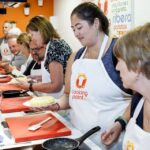
The format also does something smart for first-timers. You’re put to work in pairs, so you’re never stuck staring at a cutting board wondering what comes next. It keeps the energy moving, and it helps you learn without feeling like you’re on stage.
The vibe fits the location. The Cooking Clubhouse sits in central Madrid at C. de Atocha, 76, near public transportation, so you can build it into your day without stress. And because it’s 1 hour 45 minutes (approx.), you get a complete experience without losing your whole afternoon.
You can also read our reviews of more cooking classes in Madrid

Unlimited Drinks While You Cook (Tea, Coffee, Cava or Wine)
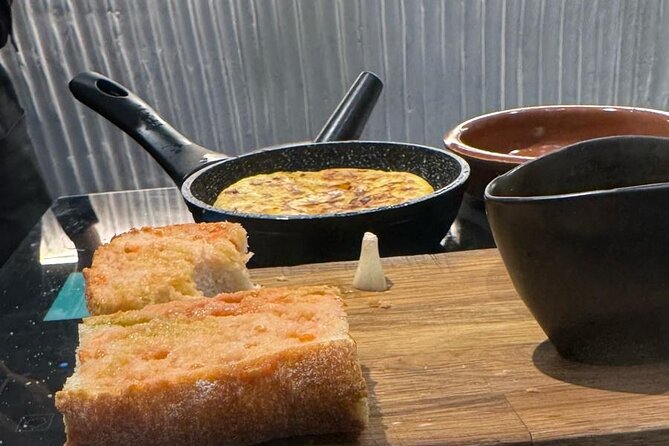
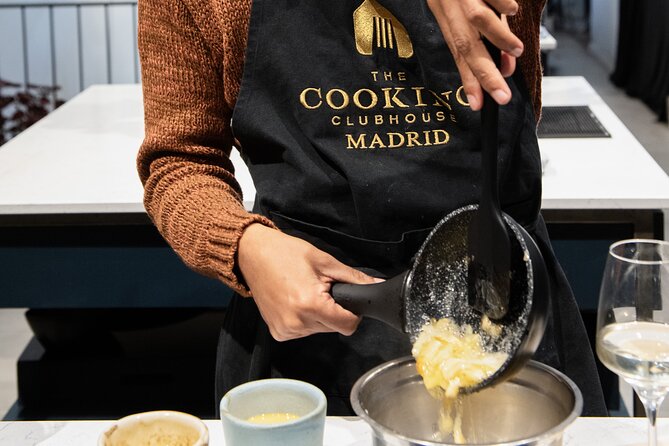
Food classes are usually either educational or social. Here, the workshop ties both together with unlimited drinks. Throughout the class, you can enjoy tea and coffee, plus wine or cava while you cook and socialize.
For me, the practical value is this: the drinks make it easier to relax while you’re learning something that takes a little attention. Making Spanish tortilla is timing and temperature. Sauce needs patience. If you’re tense, it’s harder to notice when things start doing what they’re supposed to do.
From the feedback, instructors like Jaime, Vasco, Pao, and Eric are repeatedly praised for keeping the room friendly and the guidance clear. In plain terms, you’re not left to figure it out yourself while your glass runs empty. That matters when you’re learning at restaurant pace, not homework pace.
What You’ll Make: Tortilla, Brava Sauce, Mallorca-Inspired Tapa
The menu is built around Spanish comfort food and the flavors people associate with a typical brunch-style spread. You’ll work on four recipes during the session, and you’ll eat what you cook.
Spanish tortilla, the national-plate style lesson
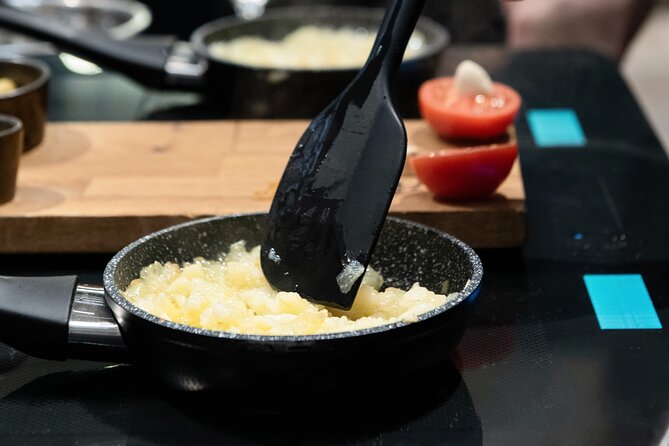
The big star here is the traditional Spanish tortilla. This is the iconic Spanish omelet often made with potatoes and eggs, and it’s also one of those dishes where technique beats luck. You’ll learn the process in a way meant to be repeatable at home, not just impressive in a classroom.
What makes this class useful is the structure. You’re not only cooking. You’re learning how to think about the steps, so you understand what to watch for (texture, doneness, and timing). That’s the difference between getting a tasty result once and being able to recreate it later.
Salsa brava and potatoes, the spicy-sweet anchor
Next up is salsa brava and potatoes. Brava sauce is the kind of thing that can feel vague when you only taste it at bars. In this class, you get coached through the method so you understand how it comes together.
If you love tapas culture, this is a strong addition because it gives you one of the classic flavors people expect in Spain. You’ll leave knowing how to treat brava sauce like a real part of a dish, not just a store-bought shortcut.
You can also read our reviews of more wine tours in Madrid




A Mallorca-style tapa starter: ensaimada, sobrassada, and honey
You also start with ensaimada, sobrassada y miel. This is a great example of how Spanish cuisine varies by region. It’s not just one-style, one-flavor Spain. You’re tasting something with a different personality than tortilla and bravas, which keeps your palate awake and your cooking skills flexible.
What you get out of it: it broadens what you think Spanish food means. You’re learning that the country’s food identity isn’t one single dish. It’s a set of regional traditions that show up at meals.
History and origins, folded into cooking
You’ll also get history and origins for these national dishes. The class doesn’t treat food like trivia. It uses the story to explain what you’re making and why those flavors became “classic” in the first place.
That context helps a lot if you’re the type who likes to understand what you’re eating, not just what it tastes like. And if you’re more casual about it, the stories just add a bit of charm while you work.
The Cooking Clubhouse Setup: Small Groups, Real Tools
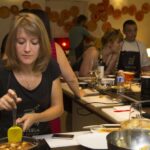
This is one of those classes where the room seems designed to help you succeed. Feedback points to an organized space with induction cooktops and quality utensils, plus ingredients that are prepped in advance. That makes the class feel smooth rather than chaotic.
The small group size also changes how you experience the food. When your class maxes at 16, you get a calmer flow. You can ask questions, you can watch your partner’s technique, and you can actually enjoy the social part instead of shouting over commotion.
For solo diners, this matters too. One of the most common themes in the feedback is how welcoming the class can be for people traveling alone. Even if you walk in by yourself, the cooking partner format turns the group into a quick community.
From Workshop to Table: How the Meal Finishes
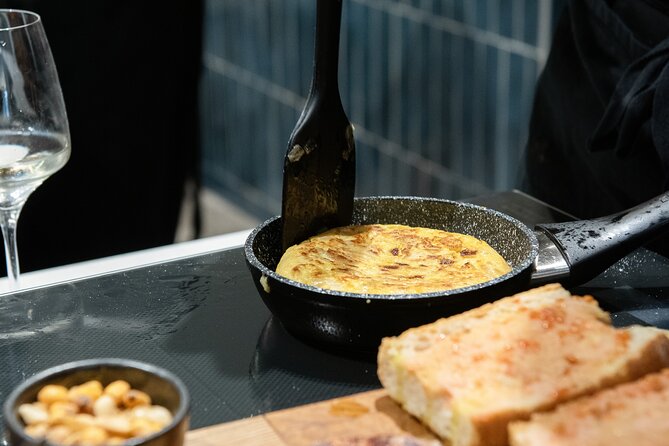
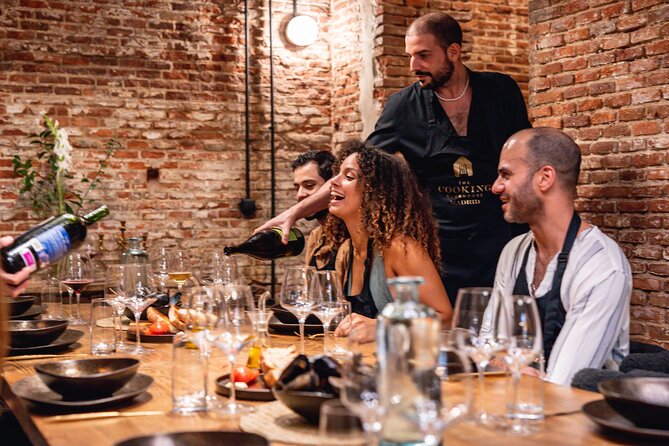
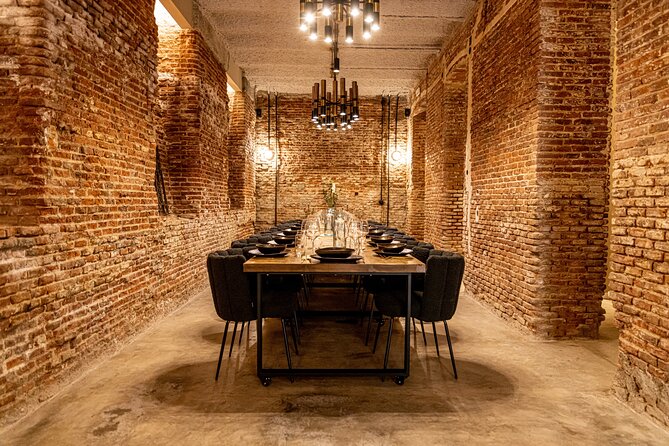
The class doesn’t just end when the cooking stops. You wrap up seated at a communal table where you savor what you made. That shift from kitchen stations to shared dining is smart. It lets you enjoy your tortilla and brava-style potatoes while the experience still feels like one continuous hangout.
Then comes the sweet finish: churros and chocolate, plus freshly brewed coffee. This part is worth paying attention to because it turns your cooking win into a full meal. It’s not an extra bite. It’s a proper closing that matches the brunch theme of the workshop.
Price and Value: Is $96.12 Fair for 1h45?
At $96.12 per person for about 1 hour 45 minutes, you’re paying for three things at once:
- time with an instructor in a small group
- ingredients and a guided cooking process
- a food-and-drink experience that keeps going past the cooking station
If you compare it to doing a meal plus a cooking activity separately, this bundles a lot. You’re not just eating tortilla somewhere. You’re learning how to cook it, plus you’re tasting multiple Spanish items in the same sitting, with coffee and alcohol included.
Is it a budget activity? Probably not. But for what you get, it leans toward good value. Reviews also show a strong satisfaction signal, with a 4.9 rating from 50 reviews and 96% recommended. That’s not a guarantee, but it’s a decent sign that the experience delivers what it promises.
Also, it’s scheduled at 12:00 pm, which is ideal if you want lunch plans that actually take up the time. You’ll leave feeling like your day had a “core” activity, not a quick stop.
Who This Class Suits Best in Madrid
This workshop is a great match if you:
- want a hands-on food experience without over-planning your whole itinerary
- like learning techniques you’ll actually use later
- enjoy meeting people, especially in a small group
- want a classic Spanish menu with a brunch vibe
It’s also a good choice for couples and groups. The pair-work format naturally creates teamwork, and the communal table makes it easy to mingle without forcing it.
If you’re traveling with dietary needs, the class can still work in many cases, since feedback notes vegetarian accommodation was handled smoothly. But since details about specific diets aren’t spelled out here, I’d recommend you message the provider before booking if you need something specific.
A Few Practical Notes (So Your Booking Goes Smooth)
- Language: offered in English.
- Tickets: you’ll use a mobile ticket.
- Location: easy to reach in central Madrid near public transportation.
- Group size: maximum 16 travelers, which supports a relaxed feel.
- Animals: service animals allowed.
One more thing: the class is popular. It’s typically booked around 36 days in advance, so if you have a tight schedule, don’t wait too long.
Should You Book This Madrid Spanish Omelet Brunch Workshop?
I’d book it if you want something you can taste and recreate, not just something you watch. The class’s biggest strength is the combination of technique + social energy + a full food finish. Spanish tortilla is the headline, but the brava sauce and Mallorca-style starter make it feel like a real slice of Spanish dining culture, not a one-dish demo.
That said, go in with realistic expectations. This is focused and hands-on, not a massive banquet. If you’re looking for a long culinary marathon or a slow-paced tasting-only tour, you might prefer something else.
FAQ
FAQ
What is the duration of the cooking class?
It runs for about 1 hour 45 minutes.
Where does the class meet?
Meet at The Cooking Clubhouse, C. de Atocha, 76, Centro, 28012 Madrid, Spain.
What time does it start?
The start time listed is 12:00 pm.
What’s included in the price?
Inclusions include breakfast, coffee and/or tea, alcoholic beverages, and the cooking class.
Is wine or cava included?
Yes. You can enjoy bottomless cava or wine during the workshop, along with tea and coffee.
What recipes will I learn?
You’ll learn four classic Spanish recipes: traditional Spanish tortilla, salsa brava and potatoes, and a Mallorcan tapa starter including ensaimada, sobrassada y miel. The class also includes churros and chocolate as part of the session.
Is the class offered in English?
Yes, it is offered in English.
How big are the groups?
There is a maximum of 16 travelers per class.
Is there a cancellation option if my plans change?
Yes, you can cancel for a full refund up to 24 hours before the experience start time.
Does the activity accommodate service animals?
Yes, service animals are allowed.
Do I need a physical ticket?
No. It uses a mobile ticket.